
Bathroom Lighting, Ventilation & Heating
Return to category.
Go to categoryBathroom mirrors with built-in LEDs have become one of the most popular choices in modern renovations. They look clean, modern, "collect" the lighting in one object and often give the bathroom the image of a hotel that the owners want. But behind the word "illuminated mirror" there are several different solutions, which do not all do the same job.
The main confusion starts from the following: a mirror can have LEDs and still not illuminate the face properly. It can create a very beautiful light on the wall, highlight the tile and give atmosphere, but when the user stands in front of it to shave or make up, see shadows under the eyes and nose. Another mirror, again, may not look as impressive in the photo, but be much more practical in everyday use.
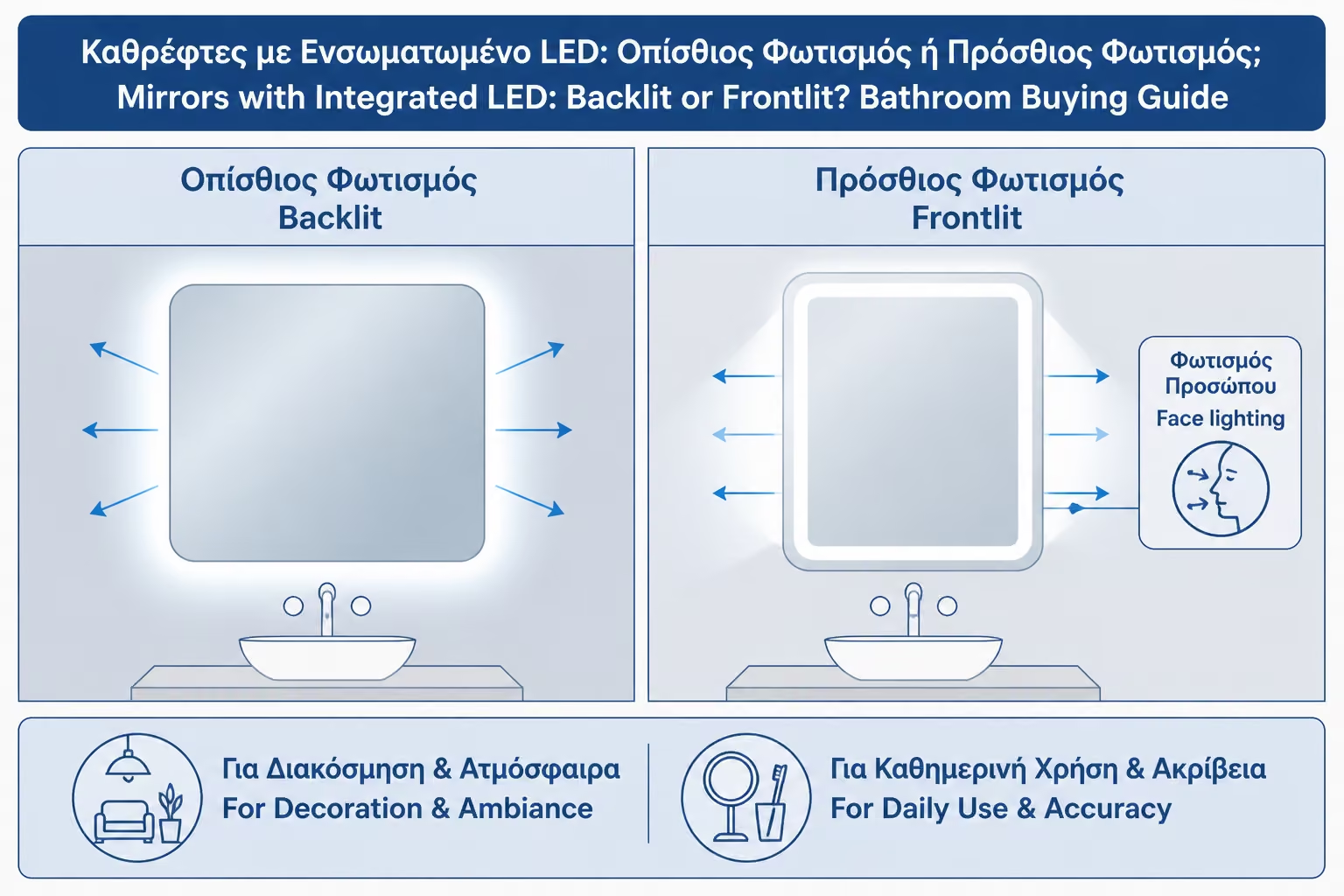
The big difference is in the direction of the light. Backlit mirrors, i.e. mirrors with rear hidden lighting, mainly illuminate the wall behind the mirror. They create a "halo", a bright outline that gives depth and a sense of luxury. Frontlit mirrors, on the other hand, have illumination directed towards the user, usually through sandblasting zones or light strips on the surface of the mirror. These are closer to real work lighting.
In practice, the right choice is not always "one or the other". It depends on the use of the bathroom. A guest WC may need mostly atmosphere. A master bathroom, where daily makeup, shaving or facials are done, needs much more functional lighting. A large master bathroom can combine both. The mistake is to buy a mirror just because it looks impressive when lit, without checking what it actually lights up.
The following guide explains the differences between backlit and frontlit mirrors, what perimeter sandblasting means, which features are worth checking before buying, what to look out for in prices and installation in the Greek market of 2026 and how to avoid a beautiful but practically inadequate option.
A built-in LED mirror is a mirror that has its own lighting, usually integrated behind the glass, in the frame or in specially treated zones of the surface. A separate sconce or lamp above the mirror is not necessarily needed, although in many cases it can be combined with additional lighting.
Its main value is that it combines two functions: mirror and lighting. This is especially helpful in small bathrooms, where there is not enough space left and right for sconces. It also helps aesthetically, because the sink wall looks cleaner, without a lot of separate components.
But the term "LED mirror" is general. It can mean a simple mirror with decorative hidden lighting at the back, a mirror with a perimeter light zone at the front, a mirror with anti-glare function, touch switch, volume adjustment, color temperature change or even smart functions. All of these are not necessarily useful in every bathroom.
An owner can buy an economical LED mirror for a small WC and be completely satisfied, because the question is mainly about appearance. The same mirror, however, may prove inadequate in the master bathroom if the user relies on it for daily make-up. The choice should start from the use, not the product photo.
The backlit mirror has the LEDs mounted on its back. The light is not mainly directed towards the face, but towards the wall behind the mirror. This creates a rear, hidden lighting that makes the mirror visually "float" and gives depth to the wall of the sink.
This lighting is great for ambiance. In a bathroom with a nice tile, printed pattern, decorative wall or dark background, the backlit mirror can highlight the surface in a very elegant way. The light around the mirror reduces the feeling of "heaviness" and makes the space calmer.
The problem is that many owners expect a backlit mirror to double as basic face lighting. It usually doesn't do enough. Because the light is directed towards the wall, the face is illuminated indirectly rather than directly. If there is good general lighting in the bathroom, this may be acceptable for simple use. But if the mirror is the main point for make-up, shaving or detailed care, the backlit lighting alone is often not enough.
A practical example: in a guest WC, a round backlit mirror above a small washbasin can be ideal. It gives atmosphere, looks modern and doesn't need a lot of lighting precision. In a family's master bathroom, however, where the mirror is used every morning, the same type of lighting can prove more decorative than functional.
The frontlit mirror has lighting that goes forward, i.e. towards the user. Usually this is done through sandblasting zones on the surface of the mirror. Sandblasting removes or modifies the reflective layer in specific places so that the light from the LEDs passes out in a more diffused manner.
This type of lighting is much more practical for the face. It doesn't just illuminate the wall. It sends light towards the person standing in front of the mirror. If the light zone is properly designed, it can reduce the shadows under the eyes, nose and chin, especially when the lighting is on the left and right or around the perimeter.
The difference is visible in daily use. A backlit mirror can make the bathroom look impressive when it's empty. A good frontlit mirror makes the user see their face better. This is the practical difference that is often not explained in stores.
Of course, it does not mean that every frontlit mirror is automatically good. If the light zones are too narrow, if the brightness is low, or if the light is too cold and of low quality, the result may be mediocre. Frontlit lighting makes better sense to use, but also needs proper build quality.
Perimeter sandblasting lighting is one of the most common solutions in LED bathroom mirrors. Usually we see a light strip around the perimeter of the mirror or two vertical light zones on the right and left. The light passes through the treated area and out towards the user.
But the word "perimeter" needs attention. There is a difference between a mirror that illuminates the perimeter towards the wall and a mirror that has light sandblasting on the front surface. Both may be described by the vendor as “perimeter LED”, but their function is not the same.
The most practical solution for a face is usually vertical light zones on the right and left. These mimic, to a degree, the logic of lateral simplexes. They illuminate the face more evenly than a light only on the top. Full perimeter lighting can also be useful, but if the light at the top and bottom is too bright while the sides are weak, the result is not always ideal.
On a makeup mirror, sandblasting shouldn't just be a decorative design. It must have practical width, proper diffusion and sufficient light output. A very thin light line can look elegant, but not give enough light to the face.
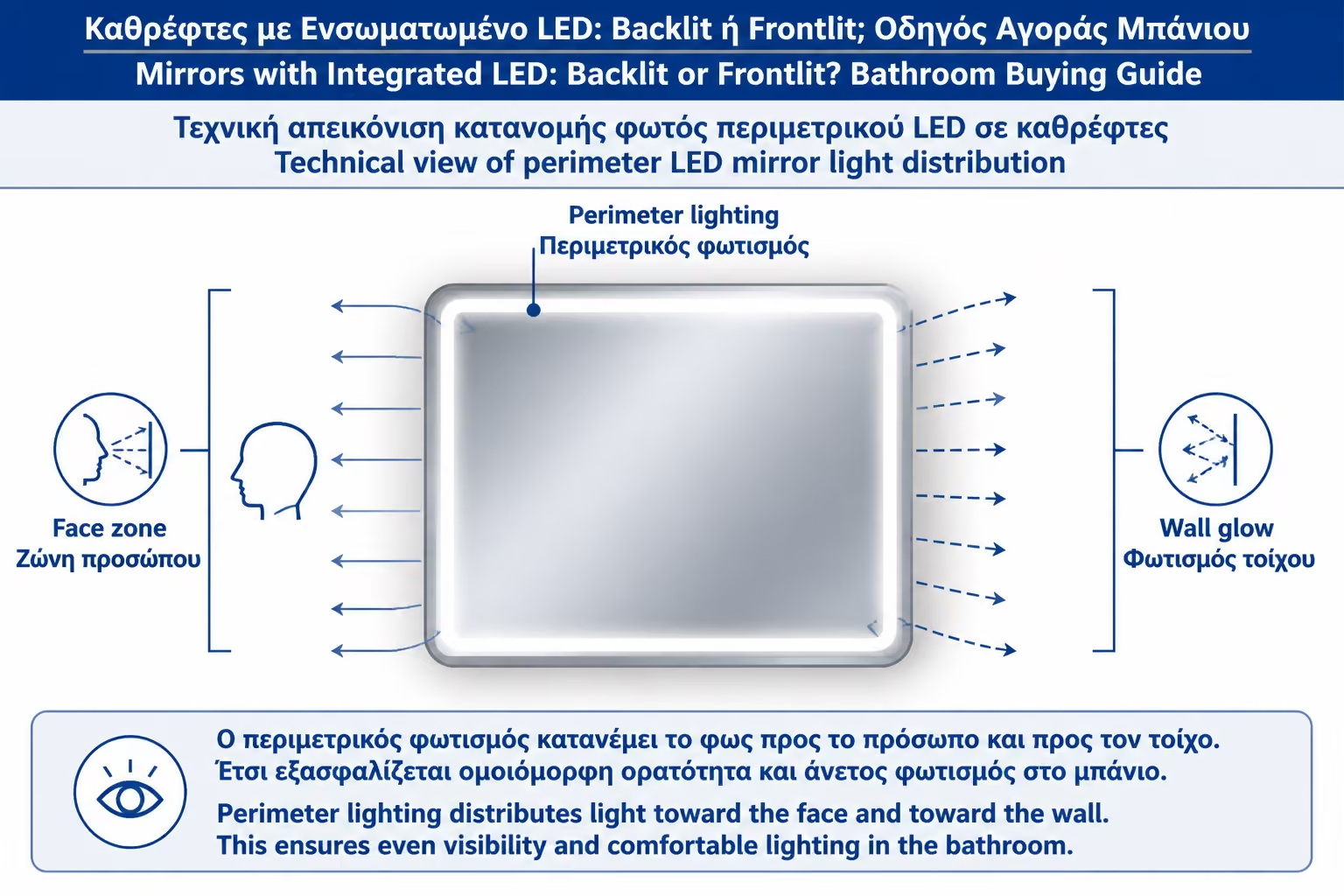
The simplest question for the owner to ask is: "Do I want mainly atmosphere or practical light on the face?" If this question is answered correctly, the choice becomes much easier.
| Feature | Backlit mirror | Frontlit mirror |
|---|---|---|
| Light direction | Towards the wall behind the mirror | To the user |
| Main role | Atmosphere and decorative depth | Practical face lighting |
| Ideal use | WC, atmospheric bathrooms, auxiliary lighting | Master bath, makeup, shaving, grooming |
| Shadows on the face | It doesn't always solve them | It reduces them more if it is properly designed |
| Aesthetic effect | Very elegant, "floating" effect | More functional, clean and practical |
| Need for additional lighting | Additional light is often needed | It can stand better on its own |
In practice, the best solution may be a combination. There are mirrors with frontlit and backlit lighting together. These can offer both atmosphere and practicality, as long as they are not just a product with many functions on paper but little real performance.
The choice should be made based on the use of the space. For a small WC, backlit can be perfectly adequate. For the bathroom where daily makeup is done, frontlit lighting or side sconces are a much safer choice.
The backlit mirror is the right choice when the goal is the atmosphere, the highlighting of the wall and the softer feel of the bathroom. It is particularly suited to spaces where there is already good general lighting and we are not asking the mirror to do all the work.
In a guest WC, for example, the mirror is mainly used for a quick check. It doesn't have to give perfect light for makeup. There the backlit lighting can be ideal, because it creates a more "precise" feeling without many interventions.
It also suits bathrooms with a strong design on the wall of the washbasin. If there is a textured tile, stone, mosaic, or printed pattern behind the mirror, backlighting can highlight the surface much better than a simple light fixture. It gives depth and makes the wall look more worked.
But it is not the best solution when the user says: "I want to look very good for makeup". In this case, the backlit mirror can remain as an atmospheric element, but must be combined with a frontlit zone, side sconces or other task lighting.
The frontlit mirror is a better choice when the mirror is used daily and the user needs clear light on the face. This includes master bathrooms, family bathrooms, areas where make-up, shaving, skin care or contact lens wear is applied.
The practicality of the frontlit mirror is particularly evident in bathrooms where there is no room for sconces. Many Greek bathrooms have a narrow sink wall, corners, columns, windows or restrictions from furniture. There a good frontlit mirror can solve a problem that would otherwise require more difficult electrical intervention.
The most functional design is usually with light zones on the sides or with a uniform light surface that sends light towards the face. If the mirror has a light zone only at the top, then it is closer to the logic of an overhead light, so it can create shadows. Not necessarily bad, but needs to be evaluated based on usage.
A good frontlit mirror doesn't need to be overly bright. It must be uniform, non-glaring and render colors correctly. In makeup, the quality of the light is often more important than the intensity.
Mirrors that combine frontlit and backlit lighting are among the most complete solutions, when properly constructed. Backlighting gives atmosphere and depth, while front lighting helps the practical use of the mirror.
This combination is ideal for master bathrooms where the owner wants both good looks and functionality. In the morning, the frontlit lighting can be used for a clear image of the face. At night, only the backlit lighting can be turned on for a softer feel. If there are separate switches or settings, the experience becomes even better.
The point of caution is that "has both" does not automatically mean "is good". There are affordable products that add a lot of functionality, but with average brightness, low LED quality, or poor diffusion. If the frontlit lighting is weak, the mirror remains mainly decorative. If the backlit lighting is too bright and the front light is low, the face may still not be properly lit.
It is worth the combination when the mirror has clear specifications, good light quality and correct electrical forecast. Otherwise, two simple but correct sconces can be more useful than a mediocre "multifunctional" mirror.
Color temperature is one of the characteristics that strongly influence the feeling of the bathroom. In market products we often see mirrors with 3000K, 4000K, 6000K or 6500K. The question is what really fits in housing.
Very cold light, such as 6000K–6500K, may look “clean” at first glance, but often makes the bath harsh and the face unnatural. It looks impressive in product photos because it makes the LED look bright. In daily use, however, it can be tiring, especially in a small bathroom with white glossy tiles.
3000K is warmer and friendlier. It gives a more relaxed feel, but in some cases it is not the most accurate for makeup. 4000K is often considered a practical middle ground for a master bathroom, because it offers a clear picture without becoming too cold.
Many modern mirrors offer color temperature change. This is useful as long as it is not used as a substitute for quality. A mirror with three temperatures but low color rendering or poor diffusion does not automatically become better. The right temperature helps, but the overall light quality is more important.
The color rendering index, known as CRI, shows how naturally light renders colors. For a bathroom mirror used for makeup, this is of great importance. It is not enough to have strong light. Skin, foundation, blush, lipstick and facial details should look as close to reality as possible.
In many budget products, the specifications mention dimensions, power, color temperature and functions, but not always CRI. This does not necessarily mean that the product is bad, but it does mean that the owner does not have a complete picture of the quality of the light. For makeup use, it's worth looking for a higher color rendering, ideally at a level that supports a more natural facial image.
A cheap LED can be bright enough, but make the colors flat or unnatural. The problem won't necessarily show up on day one. It will show when the wearer goes out into natural light and finds that the makeup looks different than it does in the mirror.
If the mirror is intended for WC or decorative use, the CRI may not be decisive. But if it is the basic daily care mirror, it is one of the features worth checking.
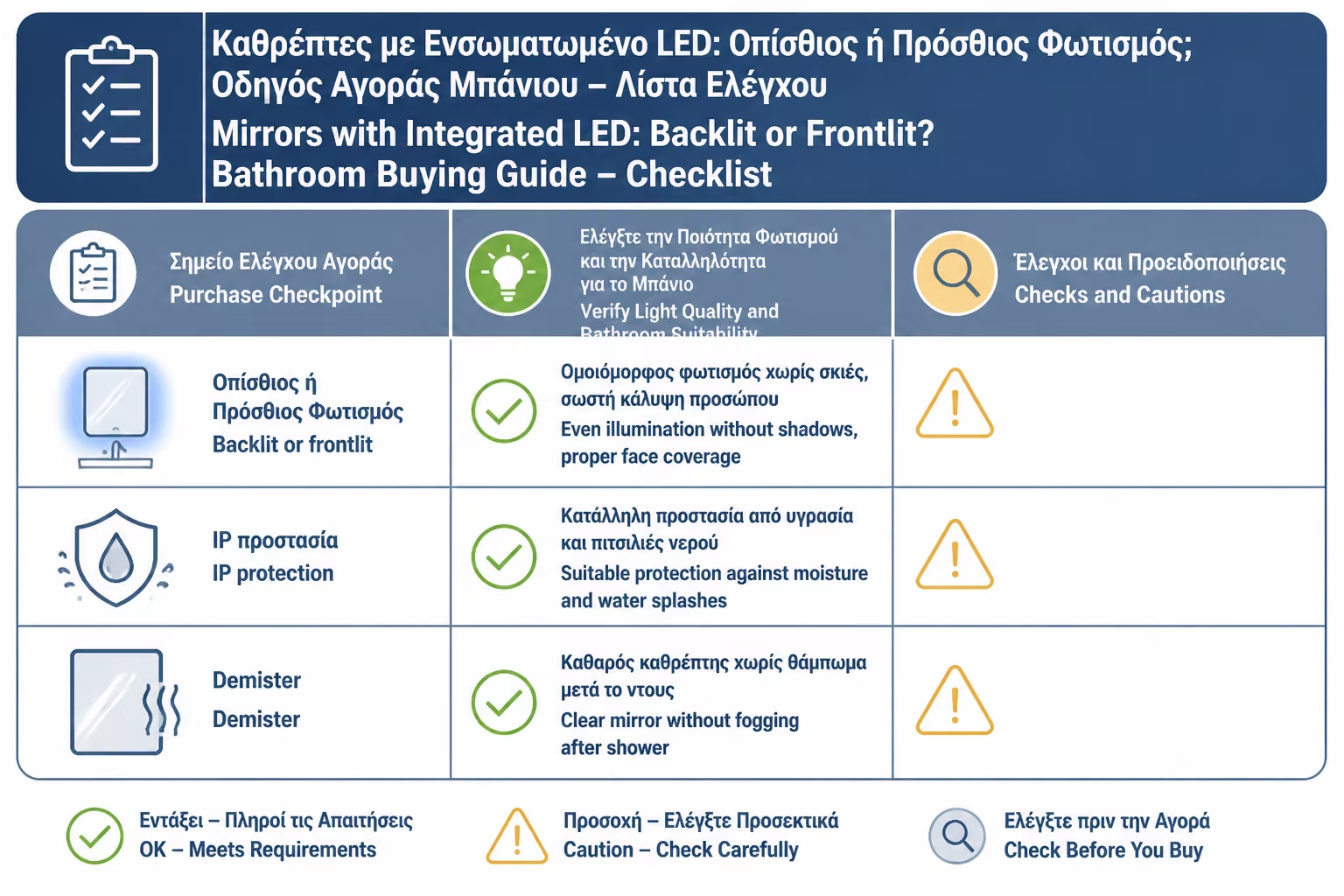
The anti-glare function is one of the most practical additions to a bathroom mirror. It usually works with a heating pad behind the surface, which reduces puffiness after a hot shower. It doesn't magically eliminate all moisture in every condition, but it can greatly improve everyday wear.
It is particularly useful in small bathrooms without good ventilation, in bathrooms with a walk-in shower near the sink or in homes where the bathroom is used continuously by several people. There the mirror often fogs up and the user is forced to wipe it, leaving marks and moisture on the surface.
It is not necessary in every case. In a WC without a shower, it doesn't make much sense. In a large bathroom with good ventilation and distance from the shower area, it may be less critical. But in the master bathroom, especially when the mirror is more expensive and used daily, it is a feature worth considering.
It also needs to be properly designed electrically. The anti-glare function needs power and is usually activated by a switch, touch button or together with the lighting. It is good for the owner to know exactly how it works before buying.
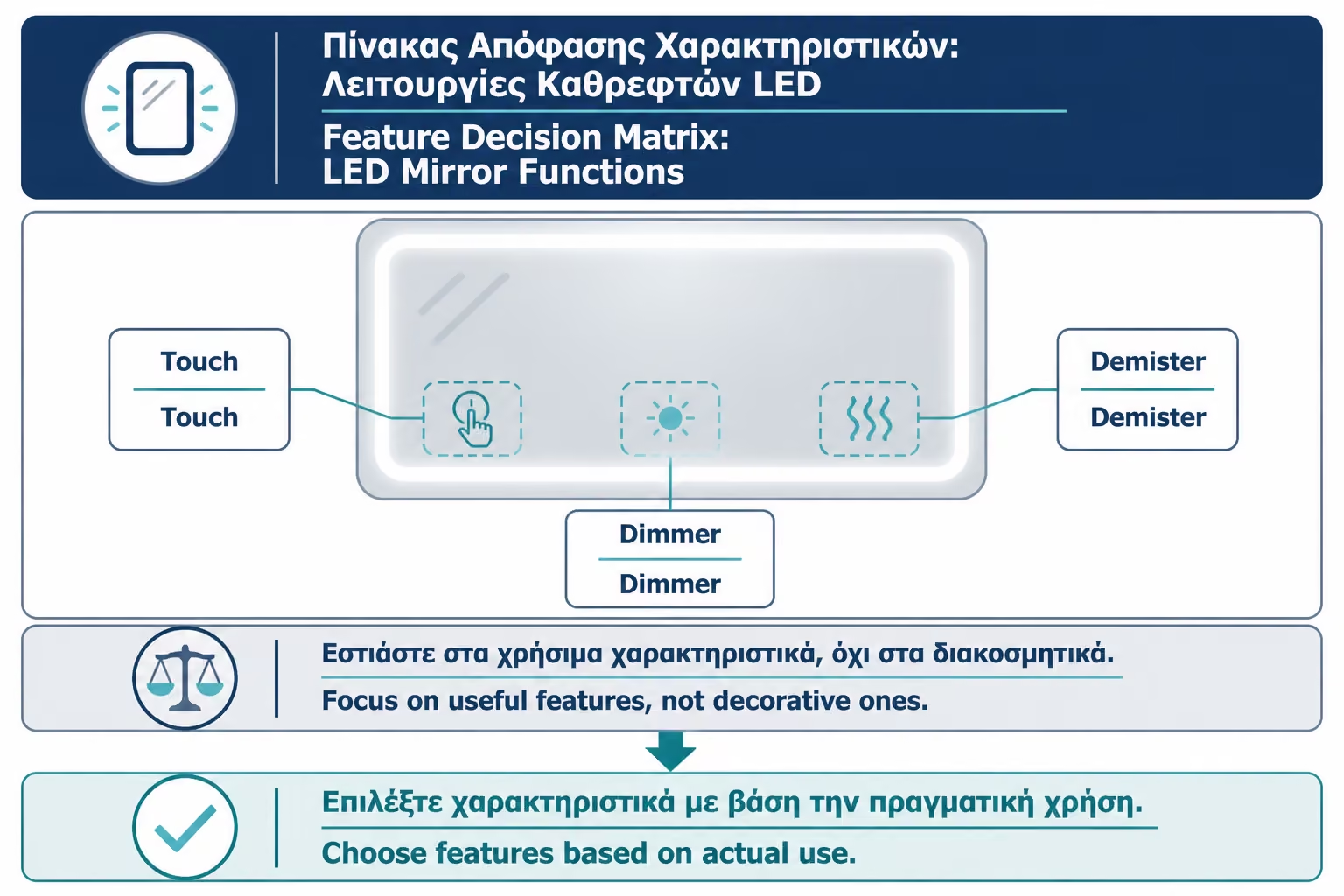
Most LED mirrors today offer a touch switch. It is practical, modern and aesthetically clean. However, proper consultation with the electrician must be done: will the mirror be permanently powered and opened by touch? Will there also be a switch on the wall? Will it turn on with the general lighting? These must be decided before installation.
The dimmer is particularly useful when the mirror has enough brightness and we want different use in the morning and at night. For make-up we want stronger, clearer light. For nighttime use or leisurely bathing, we might want a lower volume. If the mirror supports volume adjustment, everyday life becomes more comfortable.
Care needs to be taken in compatibility. Not all LEDs are dimmable with an external wall dimmer. Many mirrors have a built-in driver and their own handling. If the owner buys a mirror without informing the electrician, there may be confusion in the connection or functions that end up not working as expected.
Simplicity is often preferable to many functions. A mirror with clear lighting, correct temperature and reliable switch is a better choice than a mirror with many "smart" features but mediocre light.
The shape of the mirror affects both aesthetics and lighting. Round mirrors are very popular, especially in modern bathrooms and guest toilets. They give a softer image and combine beautifully with hanging furniture. But if they are only backlit, they mainly provide atmosphere. If they have a frontlit zone, it must be checked whether the bright surface is enough for practical use.
Rectangular mirrors are more versatile for master bathrooms. They offer a larger surface area, fit easily over vanity units and can have vertical light zones on the left and right, which helps to illuminate the face.
Pill or capsule mirrors, with rounded corners, are an intermediate aesthetic solution. They look softer than rectangular ones and more practical than perfectly round ones in some cases. If they have the right frontlit layout, they can work well in modern bathrooms.
The dimension should be related to the furniture and the sink. A very small mirror above a large piece of furniture looks "lost". A mirror that is too large can cover fixtures, make it difficult to place lighting, or bring light too close to corners and side walls. Before purchase, clear widths, heights, distances from switches, sockets and side obstacles must be measured.
The LED mirror is an electrical device in a wet room. This means that it should not be chosen based on looks alone. It must be suitable for use in a bathroom and be placed according to the requirements of the specific location.
IP protection indicates the degree of protection against dust and water. It does not mean that every mirror can go anywhere in the bathroom. One to be located above a sink in a well-ventilated area and another to be placed very close to a shower or bathtub. Exact suitability should be checked by a licensed electrician based on location, humidity zones and existing installation.
Attention is also needed on the back side of the mirror. Connections, driver, cables and support must be protected and properly positioned. A cheap mirror with a sloppy back, poor sealing or unclear installation instructions can create maintenance problems.
The owner does not need to assess electrical safety himself. But he needs to ask for a product with clear specifications and installation by a professional. In the bathroom, "we'll hook it up somehow" is not acceptable logic.
Prices on LED bathroom mirrors vary widely. In the Greek market there are economical lighted mirrors that start at around €70–90, more complete models with anti-fog, touch and front/back lighting around €120–250, and special or custom solutions that can exceed €400–600 depending on dimensions and functions. For example, Greek online stores display simple LED mirrors from around €70, models with anti-fog and sandblasted lighting from around €120–180, while more special constructions or larger dimensions often start higher.
| Mirror class | Indicative range 2026 | When does it make sense? |
|---|---|---|
| Simple LED mirror | 70–150€ | WC, auxiliary bathroom, basic use |
| Backlit mirror | 100–250€ | Atmosphere, decorative wall, soft lighting |
| Frontlit mirror with sandblasting | €140–€350 | Master bathroom, better face lighting |
| Frontlit + backlit with anti-fog | 180–500€+ | More complete solution for everyday use |
| Custom LED mirror | 300–800€+ | Special dimensions, special design, demanding design |
The prices depend on the region, the supplier, the dimensions, the thickness and quality of the mirror, the type of LED, the presence of anti-fog, dimmer, touch, IP protection, warranty and whether VAT or transport is included. The product purchase price is one thing and the final cost with installation, electrical supply, maintenance and possible changes to the wall is another.
Low price is not always a problem. For a WC it can be reasonable. But for a master bathroom, where the mirror will be used daily, it is worth paying more attention to lighting quality and reliability. A mirror that looks economical but doesn't illuminate properly can lead to additional sconces, benefit changes or replacement later.
The installation of an LED mirror should be planned before the tiles are finished. We need to know the exact width, height and mounting point, as well as where the power supply is located. If the supply is left in the wrong place, it can obstruct the back of the mirror, show a cable or require transfer to a finished wall.
The mode of handling must also be decided. Will it turn on from a wall switch? Will it have a permanent power supply and will it work from a touch button? Will there be a separate switch for anti-fog? Will it be connected to the general lighting or will it work independently? These decisions sound small, but they affect everyday use.
A frequent mistake is to buy the mirror after completing the electrical work. Then the owner discovers that the cable comes out at the wrong height, that the mirror does not cover the supply, that the touch switch is not convenient or that there is no separate line for the function he wanted. The problem is not the mirror. It is the turn of decisions.
The correct sequence is simple: first the lighting logic is chosen, then the dimensions of the mirror, then the benefits and finally the purchase and installation. When it is reversed, compromises are almost certain.
The most common mistake is buying only from a photo. LED mirrors almost always look beautiful in product photos because they are photographed lit up, in a darker environment and with controlled exposure. This does not necessarily indicate how well they illuminate the face.
| Error | What happens in practice | A more correct approach |
|---|---|---|
| Backlit option for makeup | Nice effect, but shadows on the face | Frontlit or additional sconces |
| Very cold light | Hard image, unnatural skin | Neutral light, usually around 4000K |
| Unknown LED quality | Unevenness, poor color rendering | Check specifications |
| Wrong supply behind the mirror | Messy or visible wires | Mirror decision before electrical ones |
| Buy an oversized mirror | Covers benefits or does not fit minutes | Wall and furniture measurement |
| Lots of features, low quality | Impressive on paper, mediocre in use | Priority in light quality |
| No IP/eligibility check | Risk in wet environment | Check by an electrician |
A typical example is the round mirror with a beautiful halo behind it. He looks impressive in the photo. At home, however, if it is the only illumination of the sink, the user may find that he sees mainly an illuminated wall and not a clean face. The solution is not necessarily to avoid backlit mirrors. It is to be used in the right role.
| Inquiry | Yes / No |
|---|---|
| Do you know if the mirror is backlit, frontlit or a combination? | Yes / No |
| Does the light come out towards the face or mainly towards the wall? | Yes / No |
| Will the mirror be used for makeup or just for casual use? | Yes / No |
| Has the color temperature been checked? | Yes / No |
| Any info on CRI or light quality? | Yes / No |
| Is the light sandblasting zone practical enough or just decorative? | Yes / No |
| Is there an anti-fog function if the bathroom has strong steam? | Yes / No |
| Is the mirror suitable for use in a bathroom? | Yes / No |
| Has the IP protection been checked based on the mounting position? | Yes / No |
| Is the power supply provided in the right place? | Yes / No |
| Has it been decided whether it will work with a touch or a wall switch? | Yes / No |
| Does the quote make it clear if it includes installation, VAT and electrical work? | Yes / No |
If you have to keep only one purchase criterion, keep the light direction. The backlit mirror mainly illuminates the wall and is great for ambiance. The frontlit mirror illuminates towards the face and is much more useful for make-up, shaving and daily care. Don't buy an LED mirror just because it looks cool lit up. Ask what it lights, at what temperature, what quality LED and how it will be connected before the tiles and supplies are turned off.
The mirror with built-in LED can significantly upgrade a bathroom, but only if it is chosen with the right criteria. The important thing is not just that it has LEDs. It is to know what kind of LED it has, in which direction it illuminates and what role it will play in the space.
The backlit mirror is great for atmosphere, depth and decorative effect. It can make a plain wall look neater and give the bathroom a calm, modern look. But it should not automatically be considered sufficient for makeup or shaving. There you need light towards the face.
The frontlit mirror, especially with properly designed sandblasting zones, is more practical for everyday use. It reduces shadows, helps with grooming and can replace side sconces to some extent, especially when space does not allow them. If combined with backlit lighting, it can offer a very complete solution, as long as the light quality is real and not just a commercial promise.
The best choice is the one that suits the use of the bathroom. For a WC, a beautiful backlit mirror may suffice. For a master bathroom, prefer a frontlit or combination solution with good brightness, correct color temperature, reliable construction and safe installation. And above all, decide on the mirror before the electrical supplies. This way you avoid errands, wrong positions and choices that only look good in the first photo.
Return to category.
Go to categoryReturn to the central guide.
Go to guide