
Bathroom Lighting, Ventilation & Heating
Return to category.
Go to categoryClassic radiators — whether we're talking about panels or older Akan type radiators — have been the usual heating solution in the bathroom for decades. A metal body under the window, next to the basin or on an available wall, connected to the central heating network of the house. Simple, familiar, functional and relatively cheap when a radiator was already installed.
In modern bathroom renovations, however, classic fixtures are being phased out more and more often. They are replaced by heated towel rails, underfloor heating, infrared panels or combinations of solutions. The reason is not only aesthetic. It is practical, ergonomic and technical. The bathroom is a small, wet and demanding space. A bulky metal fixture low on the wall can take up valuable space, block furniture or sanitary ware, not dry towels properly, and rust underneath.
Rust is the most typical problem. In the bathroom there is steam, splashes, condensation, wet floors, cleaning agents, salts and often insufficient ventilation. The lower part of the body is closer to water, mops, cleaning sprays and moisture that stays low. If the paint is chipped or a small spot opens, the metal is exposed and oxidation begins. Rust on bathroom fixtures is common because the reaction of metal, oxygen and moisture is favored in an environment with steam and water.
This does not mean that every classic body should be thrown away. If it is in good condition, has proper thermal performance, does not obstruct the new layout and does not have deep corrosion, it can be preserved. But it needs proper maintenance: cleaning, sanding the rust spots, anti-rust primer for metal and special radiator paint that withstands the temperature. Simple plastic wall paint on a radiator body is not the right solution.
The key question before you decide is: is the body worth saving, or are you just keeping it because it's "there"? In a complete bathroom renovation, replacing with a towel rail or other solution may be more practical. In an economical refresh, the right rust protection can add several years of life to an existing body.
Panel bodies are the familiar flat steel bodies with one or more plates and often internal heat transfer fins. They are efficient, relatively thin, economical and widely used in homes. In the bathroom, however, they usually do not offer a towel spreader function, unless a separate bar is added.
AKAN type bodies are an older category of bodies, often with a larger volume, heavy metal construction and different aesthetics. In many old apartments, especially before modern renovations, we still find them in the bathrooms. They may have good thermal mass and retain heat, but are often bulky and difficult to clean.
Both categories are metallic bodies of water. So they have two kinds of wear hazards: internal corrosion from the heating circuit and external oxidation from moisture/bumps/cleaners. In the bathroom, we are mainly concerned with external rust, especially at the bottom and at the edges.
Modern heated towel rails are not always more efficient as heaters, but they are functionally more suitable for the bathroom: they dry towels, take up less horizontal space and fit better into the design.
The first reason is ergonomics. The modern bathroom has a vanity unit, a cabinet, a hanging basin, storage spaces and often a walk-in shower. Available wall space is limited. A classic body low on the wall can block drawers, doors, basins, baskets or the user's path.
The second reason is using a towel. The bathroom needs a place to dry towels. A panel radiator is not ideal for this. A towel can be placed over it, but this reduces performance to the space, holds moisture, and often stains or wears the paint. The towel rack is made exactly for this use.
The third reason is aesthetics. Classic bodies often look "foreign" in a bathroom with modern tiles, hidden faucets, black faucets and minimal furniture. A vertical towel rail or an infrared panel can be incorporated more clearly.
The fourth reason is maintenance. In humid bathrooms, classic bodies need more frequent paint control, cleaning and rust protection. If this is ignored, the bottom starts to swell, peel and oxidize.
Rust is the result of metal oxidation. To create, it needs metal, oxygen and moisture. The bathroom offers all three on a daily basis. After showering, the air fills with water vapor. If the surfaces are cold, condensation forms. If the body is near a shower or sink, it also receives splashes.
The bottom of the radiator is most at risk because it is close to the floor. Drops fall there, water remains from mopping, they touch mops, buckets or cleaners. If the paint is etched, the bare metal is exposed. Even a small scratch can become the beginning of rust.
Bathroom cleaners make it worse. Acidic scale cleaners, chloride products, sprays and hard water salts can damage paint and metal surfaces. If they are sprayed close to the body or if they are not washed off, the protective layer suffers.
In a bathroom without good ventilation, the body stays in a humid environment for longer hours. Rust does not appear in a day, but constant moisture accelerates wear.
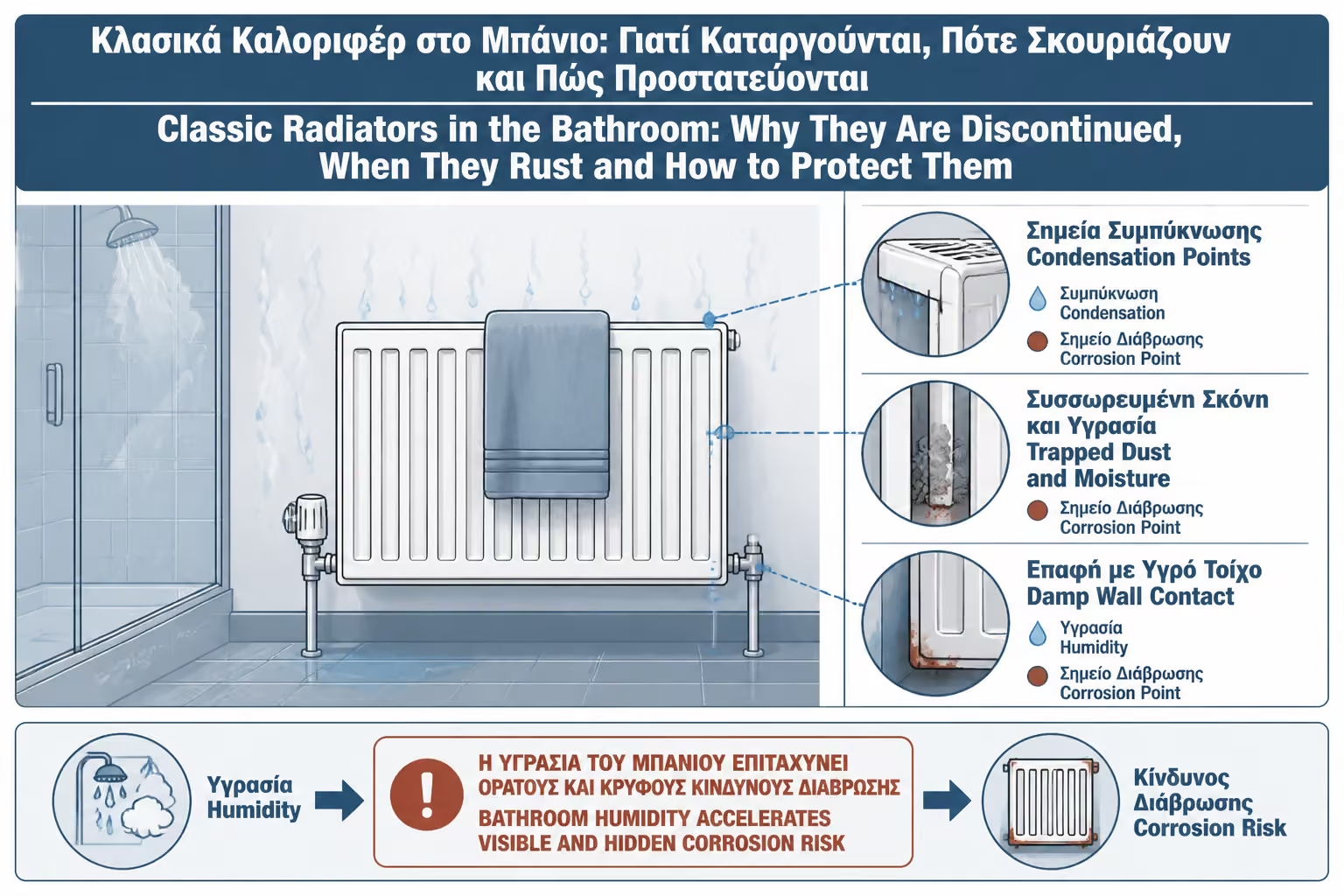
Rust doesn't always start as a bright brown mark. First you may see a little swelling in the color, especially on the lower edges. Then small orange dots appear. Then the paint peels off and the metal looks rough. If it progresses, the rust becomes deep, the metal thins, and leakage can occur.
| Mark | What does it mean? |
|---|---|
| Small orange dots | Original surface rust |
| Bloated color | Moisture or oxidation under the paint |
| Flaking at the edges | Loss of protective layer |
| Rough brown metal | Advanced surface corrosion |
| Moisture around plugs/fittings | Possible leakage or condensation |
| Dripping/green or white salts on connection | Plumbing problem, not just paint |
| Thin or perforated metal | Replacement, not painting |
The right thing is to intervene at the first signs. As long as the rust is superficial, it can be cleaned and protected. When the metal is eaten, paint is not a solution. It's grooming on top of wear and tear.
If you see moisture, dripping or scale around connections, call a plumber. There may be micro-leakage that is mistaken for rust.
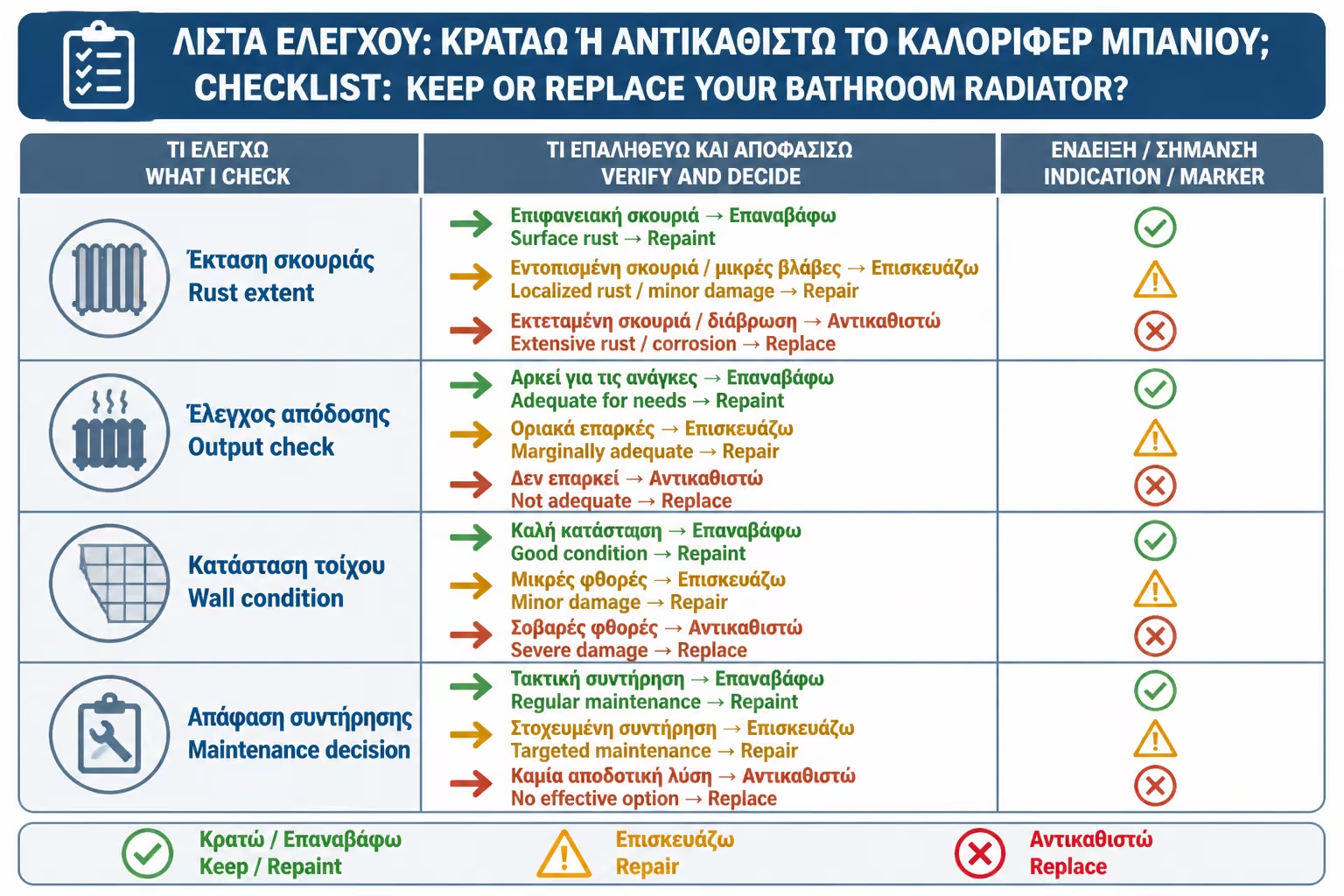
It's worth keeping when it's structurally sound, doesn't have deep rust, doesn't leak, heats the bathroom adequately, and doesn't get in the way of the new layout. If the body is in good condition and the budget is tight, maintenance can be financially reasonable.
It is also worth it when the heating system of the house is already designed around these bodies and you do not want plumbing changes. Replacing with a towel rail may require piping, new brackets, performance changes, and possible circuit balancing.
If the bathroom is small and the body is large, it can get extremely hot. A sleek, low-wattage towel rail may look better but perform less. That's why we don't replace based on appearance alone. We check Watt/BTU and thermal needs.
But if the body has extensive rust, poor placement, beaten metal, or doesn't fit the new layout, preservation can be a false economy.
Replacement is best when rust is extensive, when the metal has thinned, when there are signs of leakage, when the body prevents the new layout, or when you want a towel drying function. In a full restoration, replacement often makes more sense than repainting a body that will remain a weak point.
If the body is of the AKAN type, very old, with many layers of paint and difficult to clean, maintenance can cost disproportionately in time. Sanding, priming and painting may make it more presentable, but it doesn't change the ergonomics or age.
The replacement is also an opportunity to recalculate the heating of the bathroom. A towel rail of the correct power, electric assist, underfloor or a combination can be fitted. If the house has a low-temperature heat pump, it may need a different body than the one designed for a high-temperature boiler.
If there is even a suspicion of a puncture or leakage in the body, we do not paint it. We replace it or have a plumber check it.
An old classic body may be ugly, but it delivers enough heat. A small towel rack can be pretty, but it doesn't warm up the bathroom. That is why the replacement must be based on thermal power, not just design.
The efficiencies of radiators in Europe are given based on standards such as EN 442, which specifies methods of testing and determining the nominal thermal power of radiators and convectors. In practice, you should be looking at Watts at a specific ΔT, usually ΔT50 or even lower, especially if you have a heat pump.
If you are replacing a panel body with a towel rail, ask to compare quotes. If the old body gave 1,000W and the new one gives 400W, the bathroom will get cold, no matter how beautiful it is. If the towel rail is full of towels, the heat to the room is reduced even more.
The right question in the quote is: "How many Watts does the new body put out in my system conditions?". Not "how nice it is".
Before painting the body, you need to make sure that there is no leakage, deep corrosion or hydraulic problem. Turn off the heat, allow the body to cool, and check all connections, bottom edges, plugs, valves, and any areas where bulging is visible. If there is moisture or a drop, painting is postponed and a plumber is called.
If the rust is superficial, the procedure makes sense. If the color is just dull or yellowed, it can be cleaned and painted. But if the rust has eaten away at the metal, the primer does not rebuild the body. It just covers temporarily.
Empty the space around the radiator. Protect tiles, floor, valves and wall. Do not paint when the body is warm. Painting must be done on a cold, clean and dry surface.
Bathroom body maintenance is small metal work. Not a simple brush stroke.
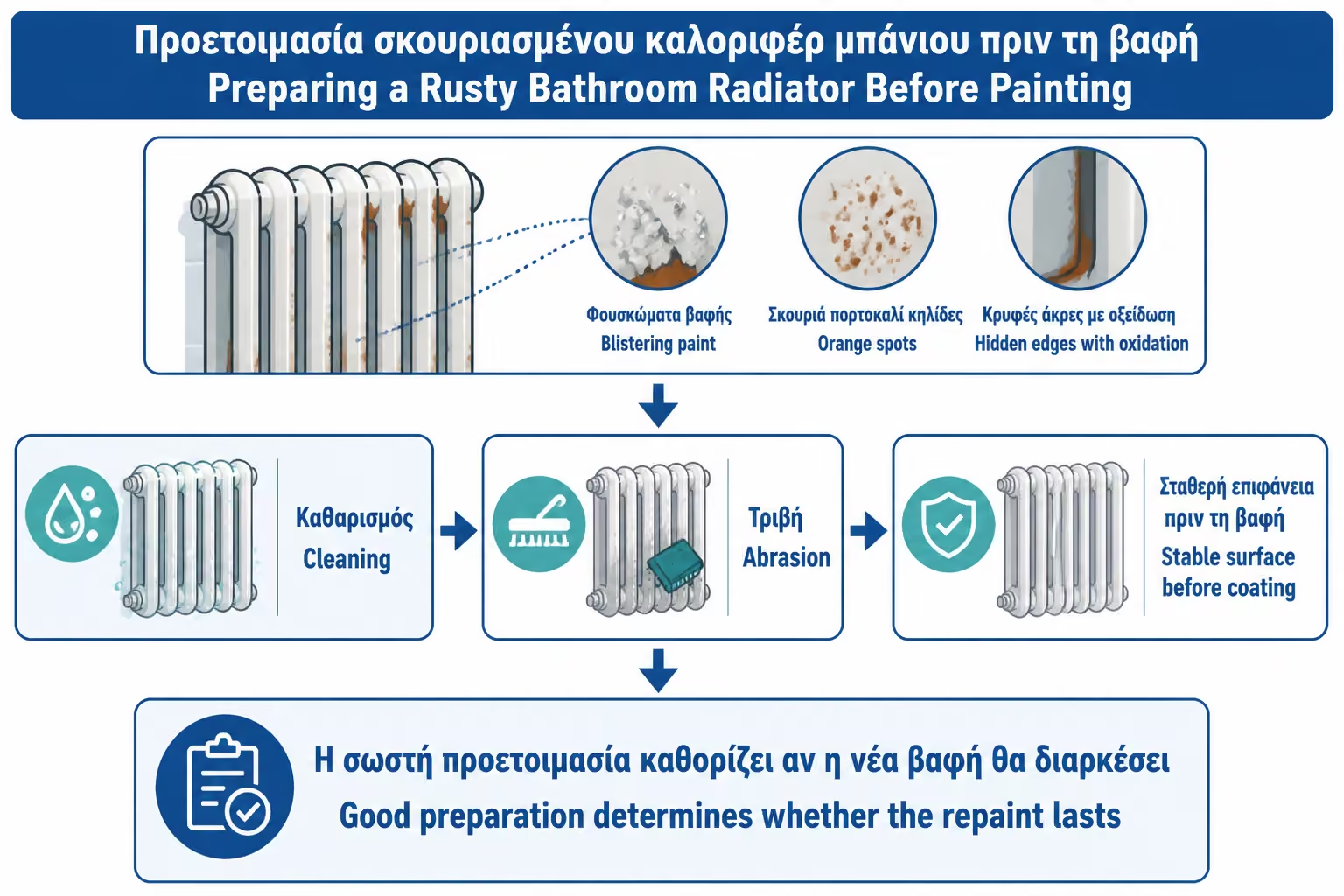
The most important stage is preparation. Remove loose paint, burrs and rust with sandpaper, wire brush or suitable tool. The goal is to reach a stable surface. If you leave rust under the new paint, it will come back.
Then clean the dust well. The surface must be dry, clean and free of grease, salts or detergent residues. If there are salts from water, they must be removed. If there is oiliness, it needs to be degreased with a suitable product.
Body paint guides stress that peeling paint and rust should be removed, sanded, cleaned and then primed on bare metal before special radiator paint.
Do not paint over powder. Do not paint over active rust. Do not paint on wet body. These three mistakes almost always lead to failure.
Anti-rust primer is needed when bare metal has been exposed or when rust has been removed. Its role is to create a protective layer between the metal and moisture, and help the final paint to adhere properly. In the bathroom, where the body is exposed to water vapor, primer is critical.
There are metal primers, anti-rust primers, zinc-rich primers and corrosion-inhibiting undercoats. Some guides for rust on bathroom fixtures state that zinc-rich primers and anti-corrosion primers are used to restore a protective barrier to a cleaned steel surface.
The primer must be compatible with the finished radiator color. We don't put random primer and random paint on top. We read technical brochures or ask for a system from a paint store: cleaning, primer, final.
If the rust is only superficial and most of the old paint is intact, only the bare spots can be primed. If the body is generally distressed, it may need a full prep and paint job.
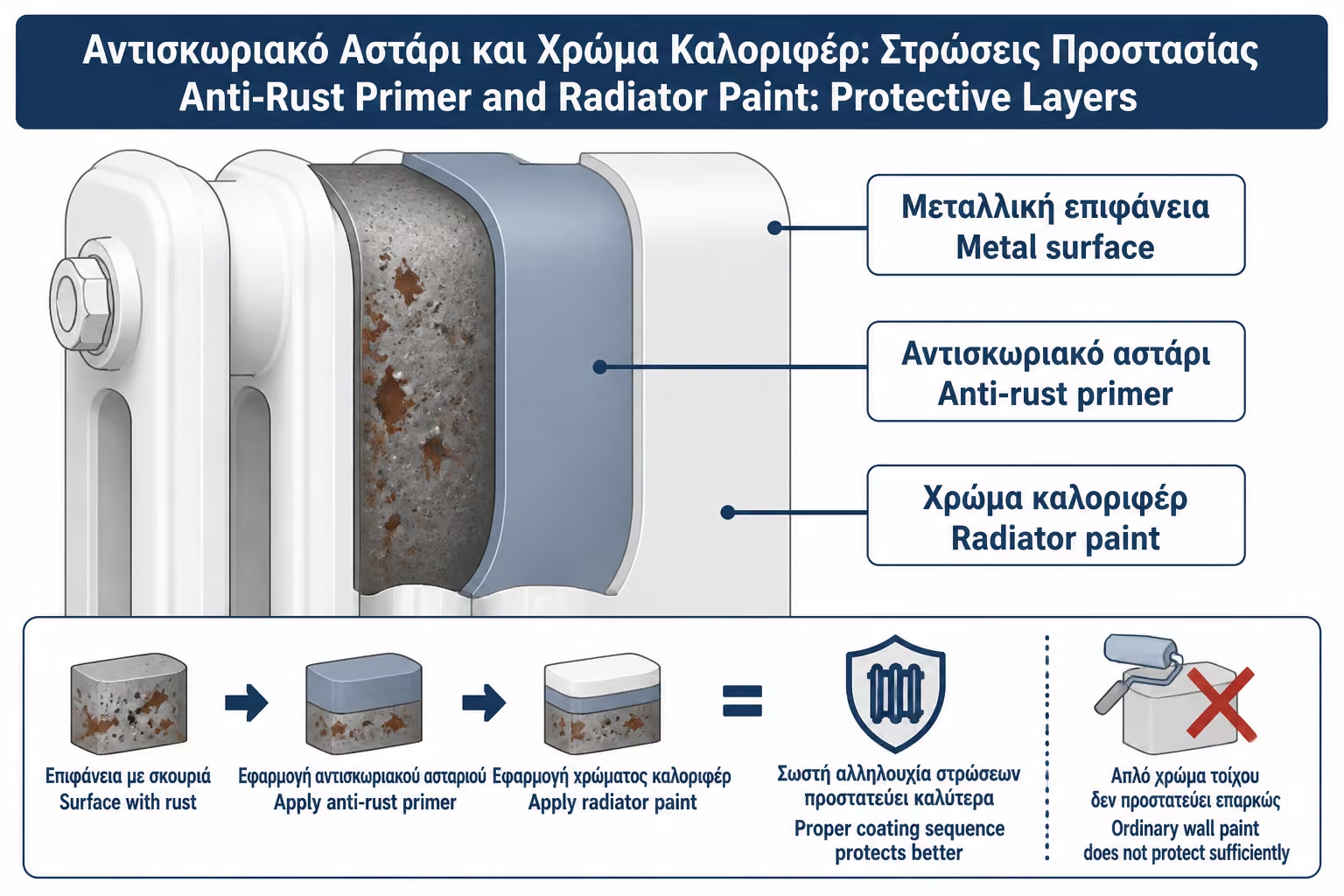
The radiator body heats and cools repeatedly. The paint must withstand temperatures, expansions, yellowing and cleaning. A simple plastic wall paint is not designed for this use. It may soften, yellow, peel or not provide adequate protection.
Special radiator paints or temperature-resistant metal paints are more suitable. It can be water or solvent, spray or brush/roll. For bathing, we want resistance to heat and humidity. Maintenance guides state that radiator-specific or heat-resistant metal paint should be used, not common wall paint, because the latter does not protect properly and can peel.
The choice of finish also affects cleanliness. Very matte ones can hold dirt. Glossy ones are easier to clean but show imperfections. Satin is often a balanced solution.
If the body has many corners or fins, the spray gives more uniform access, but needs very good space protection and ventilation. In a residential bathroom, brush/roller can be more controlled.
First we turn off the heating and let the body cool down completely. We do not paint hot metal. Then we clean the dust and surface residues. Then we remove loose paint and rust with sandpaper or a wire brush.
Followed by degreasing and wiping. The surface must dry completely. We apply an anti-rust primer to the bare metal parts. Allow to dry as directed. Then we apply a special radiator color on thin hands. Many thin hands are better than one thick one.
| Step | Work |
|---|---|
| 1 | Shut off heating and complete body cooling |
| 2 | Floor, tile and wall protection |
| 3 | Dust and scale cleaning |
| 4 | Sanding loose paint and rust |
| 5 | Degreasing and complete drying |
| 6 | Anti-rust primer on bare metal |
| 7 | Special radiator color in thin hands |
| 8 | Wait for complete drying before turning on the heating |
Do not ignite the body immediately after painting. Allow the time given by the manufacturer. If you heat it prematurely, it may smell strongly, soften the paint, or cause marks.
Body cleansing should be done gently. Dust and moisture create dirt and can hold moisture on the paint. Clean with a dry or slightly damp cloth, not with a lot of water. Do not pour water between the panels or fins. Water left inside can accelerate rust.
Avoid harsh scale cleaners, bleach, acid sprays and wire sponges on the paint. These can scratch or damage the protective layer. If you use cleaners in the bathroom, do not spray towards the body. Spray onto the cloth and pass only the surface you are cleaning.
After mopping, be careful not to leave any water on the bottom of the body or on the bases. If the body is low and often receives water, consider changing its position or replacing it with a vertical towel rail.
Maintenance isn't just painting every few years. It is also a daily prevention of moisture on the metal.
The rust we see on the outside is not the only problem. Radiator bodies can also corrode internally, especially if the circuit has the wrong water, oxygen, mud, leaks or poor maintenance. This is not always visible on the outside until there is poor performance, cold spots, noises or leakage.
In closed heating systems, corrosion inhibitors and circuit cleaning/flushing are often used when necessary. This is the job of a plumber or heating technician. We don't randomly throw chemicals into the system.
If a body has external rust because the bath is wet, it can be painted. If it has internal corrosion, mud or leaks, painting won't solve anything. Diagnosis is made by performance, circuit pressure, bleed water and installer check.
In an old apartment building with central heating, intervention in the circuit must be done by agreement. We do not isolate or change bodies without knowing the system.
Dust, moisture and mold can collect behind a classic body in the bathroom. The space is difficult to clean and air circulation is limited. If the back wall is exterior or cold, moisture can condense there.
When doing renovation or maintenance, check the wall behind the body. If it has black marks, color swelling or smell, it should be cleaned and dried. If the body stays in place, there should be sufficient distance from the wall for air circulation and cleaning.
Body heat can help dry the wall when the heating is on. But when the heating is off and the bathroom has steam, the area behind the body can become a moisture trap.
A body that cannot be cleaned and that hides mold behind it is not an ideal solution for a modern bathroom.
Cost depends on body size, extent of rust, if DIY or handyman, if disconnection required, if plumber needed, if replacing with new body or towel rail, and if there are tiling/piping issues.
| Task / choice | Indicative range 2026 | Comment |
|---|---|---|
| DIY cleaning and topical scrubbing | 10–40€ materials | For minor surface rust |
| Anti-rust primer + radiator paint | 20–80€ materials | By quality and surface |
| Body painting by craftsman | 80–250€+ | By size and preparation |
| Body Disconnect/Reconnect | 80–200€+ | If a plumber is needed |
| New panel body | 80–250€+ device | By size/type |
| Water heated towel rail | 100–400€+ | Per power/design |
| Pipeline transfer | 150–600€+ | Large variation due to tiles |
| Full replacement in renovation | Wide variation | Depends on system and finish |
If the rust is minor, maintenance is economical. If it needs disassembly, sandblasting, painting and reassembly, it can approach the cost of a new body. In a complete renovation, it is often better to choose a new heating solution than to maintain an old body.
The quote must clarify whether it includes stripping, new valve, venting, painting, VAT and tiling/wall restoration.
| Error | What does it cause? | A more correct approach |
|---|---|---|
| Painting over the rust | Quick respawn | Grinding and anti-rust primer |
| Simple wall color | Peeling/yellowing | Special radiator color |
| Ignore lower edge | Corrosion is progressing | Regular check low |
| Spraying cleaners on the body | Paint wear | Spray on cloth |
| Cover with wet towels | Humidity and low performance | Towel rack or proper drying |
| Replacement without Watt calculation | Cold bath | Comparison of returns |
| Leaky body retention | Risk of damage | Plumber/replacement |
| No maintenance behind the body | Dust/mold | Wall cleaning and inspection |
| Rubbing without protection | Dust/dirt | Mask, space masking |
| Warm body painting | Bad finish | Complete cooling and drying time |
The most common mistake is "I'll pass it by." Unless the rust is removed and a proper primer applied, the new paint will just cover up the problem temporarily.
| Inquiry | Yes / No |
|---|---|
| Does the body only have surface rust? | Yes / No |
| Are there no leaks at fittings, caps or bottoms? | Yes / No |
| Is the bathroom heated enough? | Yes / No |
| Does it not block furniture, basin or shower? | Yes / No |
| Can it be cleaned back and down? | Yes / No |
| Is there room for proper painting/maintenance? | Yes / No |
| Does the new solution you are considering perform equally or better? | Yes / No |
| Want towel drying that the panel doesn't offer? | Yes / No |
| Does the heating system work when you use the bathroom? | Yes / No |
| If there is a heat pump, has the low water temperature been checked? | Yes / No |
| Does maintenance cost less than a proper replacement? | Yes / No |
| Does the body aesthetics match the new renovation? | Yes / No |
If most of the answers are “yes”, conservation makes sense. If you see a lot of "no's", replacement is probably more correct than painting.
Don't scrap an old body just because it's not modern, but don't keep it just because it "still works". Check three things: metal condition, thermal performance and ergonomics. If it has a little surface rust, it is sanded, primed with anti-rust and painted with special radiator paint. If it has deep oxidation or leakage, paint won't save it. And if you replace it with a towel rail, compare Watts, not just looks — otherwise the new bathroom will be beautiful but colder.
Classic panel radiators or AKAN do not disappear from modern bathrooms because they cannot heat. Many of them heat up very well. They are being removed mainly because they do not suit the new ergonomics and aesthetics of the bathroom, they do not practically dry towels, they take up space low on the wall and they are more vulnerable to rust due to moisture.
Oxidation at the bottom is the classic problem. It is caused by water vapour, splashes, mopping, cleaners, knocks on the paint and poor ventilation. If it appears early, it can be treated with proper preparation: sanding, cleaning, anti-rust primer and special radiator paint. But if the rust is deep or there is a leak, painting is not a solution.
In financial renewal, maintaining a healthy body can be worth it. In a complete renovation, replacing with a heated towel rail, underfloor or other solution often gives a better result. The decision must be made with technical criteria: power, location, condition, cost and heating system.
The most important thing is not to sacrifice thermal comfort for design. A beautiful new low-power body can make the bathroom colder than before. Correct renovation keeps or replaces the body by calculation, not by habit or impression.
Return to category.
Go to categoryReturn to the central guide.
Go to guide