
Bathroom Lighting, Ventilation & Heating
Return to category.
Go to categoryYou can install the best towel rail, electric underfloor heating, infrared panel, fan heater or Wi-Fi thermostat. But if the bathroom window is old, single-glazed, warped, draughty or fitted with a metal frame that turns icy cold, the heating system will constantly be fighting a major weakness in the building envelope.
The bathroom is a small space. This means that even a small window can disproportionately affect the temperature sensation. An old single pane of glass acts as a cold plate inside the room. The cold passes through the glass, the frame and the joints. The air near the window cools, sinks, creates drafts and makes the bathroom feel colder than the thermostat indicates.
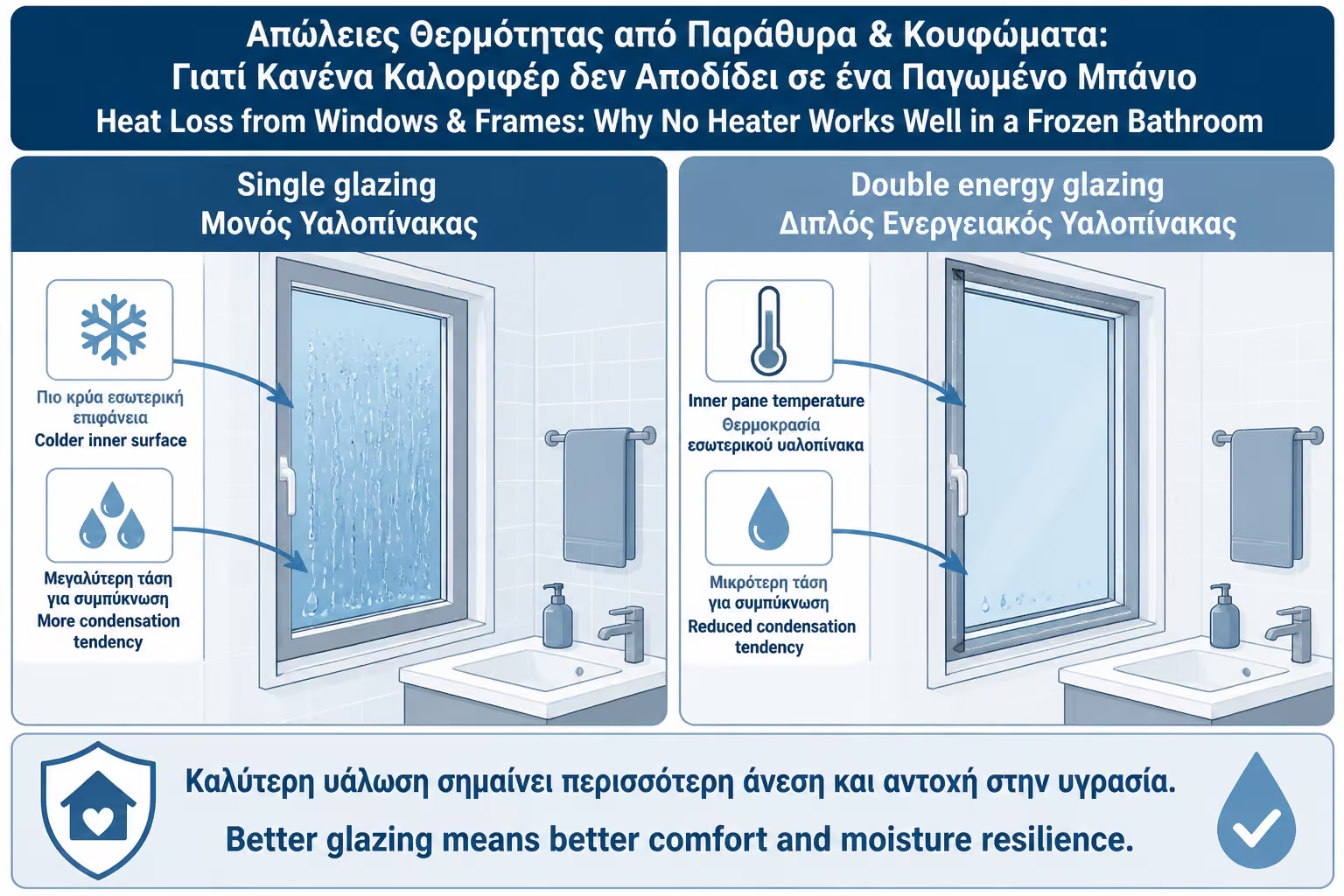
The problem is not only heat loss. It is also condensation. When warm humid shower air hits cold glass or a cold metal frame, water vapor turns into droplets. If this happens every day, water runs onto the sill, blackens the silicone, damages paint, creates odors and encourages mold around the frame. Double glazing helps reduce both heat loss and condensation because the inner face of the glass stays warmer than a single pane.
That's why, before we increase the heating watts, we need to look at the window. A powerful heater in a bathroom with bad framing is not a solution; it is compensation for a loss. It will heat up for a while, consume more and once it turns off, the bath will quickly cool down again. Heating works properly when the shell keeps the heat inside.
In modern bathrooms, the window should be treated as a technical element of the renovation, not as a simple "opening for light". The material of the frame, the thermal break, the rubbers, the quality of the installation, the type of glass, the spacers, the gas between the panes and the proper sealing around the frame directly affect the heating, moisture and mold.
The bathroom is a place with high humidity and frequent thermal swings. Within minutes, a cold room can fill with hot steam. This abrupt change makes the window one of the first places where problems appear. If the glass is cold, it fogs up. If the frame is cold, it sweats. If the seals do not close properly, cold air comes in. If the perimeter joint is not sealed correctly, drafts and moisture build up around the wall.
In a bedroom, a mediocre window can simply be an energy waste. There is also a moisture problem in the bathroom. Water that condenses on the window does not disappear. It rolls on the windowsill, stays in the corners, goes behind silicones and creates stains. If the frame is wooden and old, it can swell. If it is metal without a thermal break, the frame itself may "sweat".
This is why many bathrooms with seemingly good ventilation still have black marks around the window. The fan blows out moist air, but if the glass is too cold, condensation begins before the moisture can escape.
The window is therefore simultaneously a point of illumination, ventilation, heat loss and condensation. It cannot be evaluated only aesthetically.
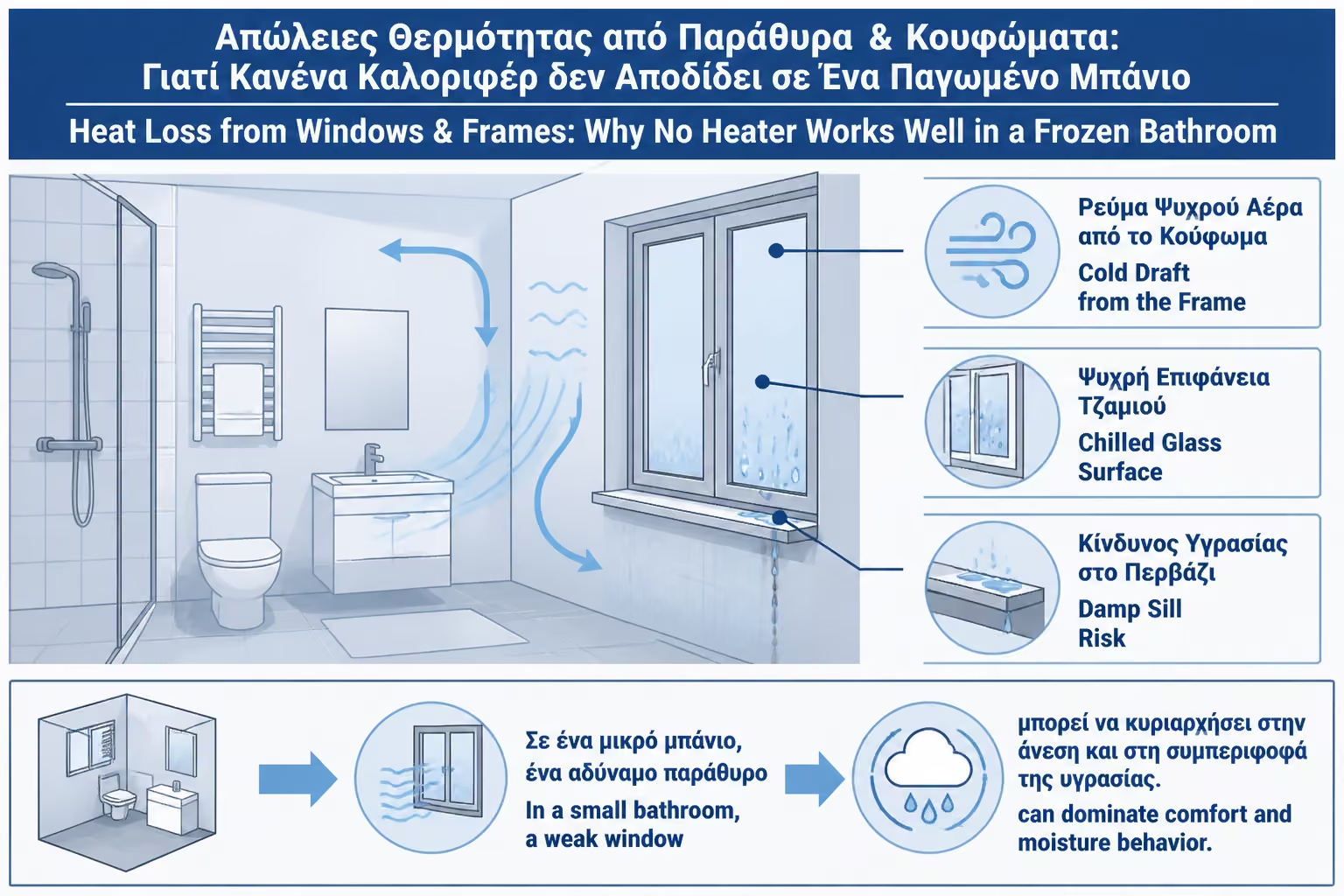
Heat leaves the window in three main ways. First, through conduction through the glass and the frame. Second, through air leakage at cracks and joints. Third, through thermal bridges around the frame, where cold transfers from the exterior into the surrounding structure.
Single glazing has a very low thermal insulation capacity compared to modern double glazing. Its inner surface cools quickly. Aluminum without a thermal break also easily transfers heat to the outside. This is why old sliding or opening aluminum frames can become frosty to the touch.
The index we use to evaluate thermal losses is the U-value. The lower the U-value, the better thermal insulation the element has. In windows, not only the glass is important, but the whole set: pane, frame and spacer. The Passive House Institute emphasizes that the overall U-value of the window is critical and is affected by the type of glazing, frame and spacer.
So, when we say "I installed double glazing", it is not enough. We need to know what double glazing, in what frame, with what spacer and with what placement.
The old single glass is one of the weakest points of a bathroom. It has a thin glass surface between the inner and outer environment. In winter, the inner glass becomes very cold. When the shower steam meets it, it condenses almost immediately.
The result is familiar: foggy window, drips, water on the sill, black marks in the lower corner and often peeling paint around the case. If the bathroom is small or blind with a window in a skylight, the moisture is trapped even more.
A radiator can heat the air, but it cannot easily change the thermal behavior of the single glazing. It will constantly need energy to compensate for the loss. As soon as the heating is switched off, the glass freezes again.
The replacement of single glazing with modern double glazing is one of the most essential interventions in bathrooms suffering from condensation around the window. It doesn't just solve heat loss; it also reduces the cold spot where the steam sits.
Double energy glazing consists of two panes of glass with a gap between them. That gap may contain air or a gas such as argon. In many modern units there is also a low-E, or low-emissivity, coating that reflects heat back into the room. The Energy Saving Trust notes that the most energy-efficient double or triple glazing uses low-E glass with a thin metal-oxide coating that reflects heat back into the home while still allowing light through.
In practice, the inner glass stays warmer. This means less feeling of cold near the window, less condensation and better comfort. It doesn't mean it will never get cloudy. If the bathroom fills with steam without ventilation, even a good glass can become cloudy. But the intensity and duration of the phenomenon is reduced.
The quality of double glazing matters. A plain old double glazing without low-E and without a good gap is not the same as a modern energy glass. Pilkington states for a specific low-E product that it can achieve a Ug-value of 1.0 W/m²K when incorporated into a standard insulating glass unit.
For a bathroom, the question is not only the low Ug of the glass. It is also the moisture resistance, the correct sealing and the frame that does not create a new thermal bridge.
A modern energy glass is not just "two panes". The low-E coating reduces radiation losses. Argon in the gap reduces heat transfer because it is more insulating than plain air. Warm edge spacers reduce thermal bridging at the periphery of the glass, where condensation often occurs.
In bathrooms, the perimeter of the glazing is especially important. Very often the center of the double-glazed unit performs well, but the edges and bottom still collect condensation. This can be due to the spacer, the frame, the seals or poor air circulation near the lower part of the window.
| Element | What does it do? |
|---|---|
| Low-E coating | Reflects heat towards the interior |
| Argon in the gap | Reduces heat transfer between the panes |
| Warm edge spacer | Limits the cold zone at the edge of the glass |
| Good unit sealing | Prevents fogging inside the double glazing |
| Correct context | Reduces thermal bridges and air leaks |
If you see fogging between the two panes, we are not talking about surface condensation from the shower. We are talking about a possible failure of the double glazing. Cleaning or venting is not enough there; unit replacement is required.
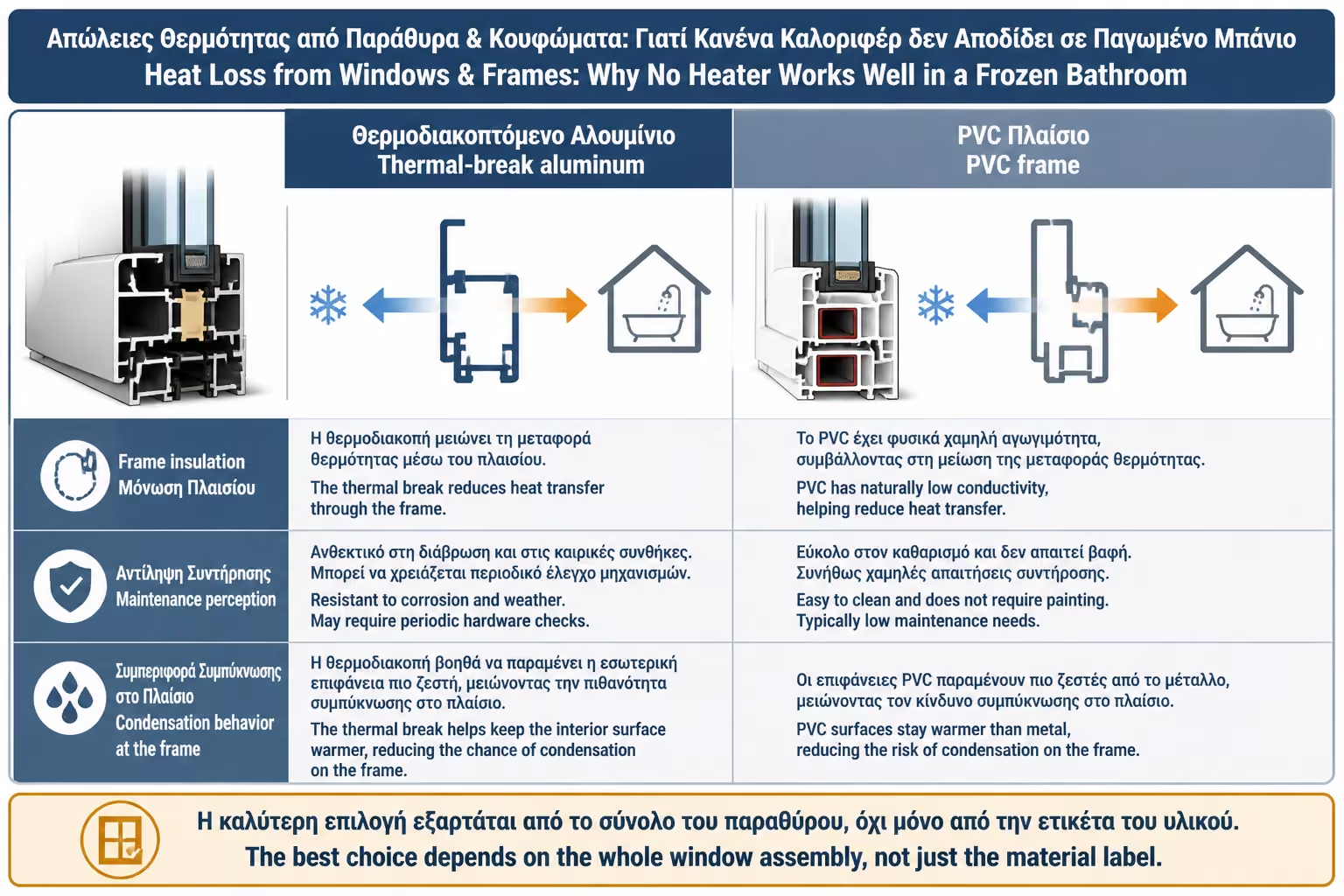
Aluminum is durable, slim, stable and very common in Greece. But it is also a very good conductor of heat. An old aluminum frame without a thermal break can transfer outside cold directly to the inside face of the frame. That is why it often feels icy to the touch and collects condensation.
In a bathroom, that is a real problem. Shower humidity condenses not only on the glass but also on the frame. You may see drips on the frame, black marks in the corners, moisture on the sill or deterioration of the silicone around the perimeter.
The solution to modern aluminum is thermal break. The frame is thermally separated with a special material, usually polyamide, to limit heat transfer from the outside to the inside. So the inside of the frame stays warmer and condensation is reduced.
If you want aluminum in the bathroom, choose a thermally broken system. Plain non-thermal aluminum may be cheaper, but in a wet bathroom you often pay for that saving with condensation and heat loss.
PVC frames naturally offer better thermal insulation than simple aluminum because the material does not transfer heat as easily. They have multi-chamber profiles, seals and the ability to pair well with double or triple energy glazing. In bathrooms where the main goal is thermal insulation and condensation reduction, PVC is a very strong option.
But the decision should not be made on material alone. There are excellent and mediocre PVC systems, just as there are excellent and mediocre aluminum systems. The profile, seals, hardware, glazing quality and installation all matter. A good PVC frame installed badly can leak air. A good thermally broken aluminum system can perform extremely well.
In the bathroom, PVC has another advantage: it does not rust and oxidize like metal elements. But it needs cleaning, proper drainage, good ventilation and resistance to the cleaning agents used in the area.
If aesthetics or thin cross-sections are a priority, aluminum often wins. If thermal insulation and cost are top priorities, PVC is very competitive.
There is no one answer for all homes. PVC offers good thermal insulation at a competitive cost. Thermal break aluminum offers strength, thinner profiles, a wide variety of colors and high mechanical stability. In the bathroom, the choice depends on the size of the opening, aesthetics, exposure to moisture, budget and thermal insulation requirements.
| Criterion | PVC | Aluminum with thermal break |
|---|---|---|
| Thermal insulation | Very good | Good to very good, per system |
| Moisture resistance | Very good | Very good, if it is a quality system |
| Thinness of profile | Usually bulkier | Usually thinner |
| Cost | Often lower | Usually higher |
| Design / colors | Lots of options | Very high flexibility |
| Maintenance | Low | Low |
| Large openings | Needs attention | Advantage of aluminum |
| Small opening bathroom | Very good choice | Also good if there is a thermal break |
For most small bathroom windows, both solutions can be correct. The mistake is simple aluminum without a thermal break or a cheap frame with bad mounting and bad rubbers.
The final rendering of the window is a system result. Not just hardware.
You can put in excellent energy-saving double glazing, but if the window does not close properly, you will lose heat through cracks. Air tightness is critical in a small bathroom. A small draft of cold air next to the window is enough to make the room feel icy.
Seals must close properly. Hinges and mechanisms must be adjusted. The sash should not be distorted. The frame must be sealed correctly to the building. If there are gaps around the frame, exposed foam or poor silicone work, the product itself may be good but the installation will still fail.
In a bathroom, cracks create another problem: the cold current cools surfaces locally. Mold can form there, not because the glass is bad, but because the air is passing through the wrong place.
Proper framing includes mechanical support, perimeter thermal insulation, water and air sealing, and proper internal/external sealing. "Putting a window in" is not enough.
Many bathrooms rely on the window for ventilation. This can help, especially if the window opens easily and leads to an outside area with real air circulation. But the window is not always enough. If it faces a narrow skylight, if it is kept closed in the winter, or if it is only opened for a short time, moisture may remain.
There is also the paradox of winter: if you open the window for a long time, moisture escapes but the surfaces freeze. In the next shower, the condensation may become more intense. The correct use is short, intense ventilation and then rewarming, not a permanent ice bath.
In an energy frame, there may be tilting, micro-ventilation or a special mechanism. These help, but are not always a substitute for a timer/humidistat fan, especially in blind or very humid bathrooms.
The window must be combined with mechanical ventilation when the use of the bathroom is intense or when the opening is insufficient.
A window facing a lightwell is common in apartment buildings. It can provide light and some ventilation, but thermally and hygienically it is not always ideal. The lightwell may be cold, damp, poorly ventilated or carry odors from neighboring spaces.
If the window is old and faces a skylight, you may have two problems: heat loss to a cold space and odor/moisture return. In this case, a good frame with proper tightness and controllable opening is even more important.
Be careful, though: if you replace an old loose-fitting frame with a very airtight new one, the bathroom may lose the uncontrolled ventilation it used to have, even if that old leakage was energetically wasteful. That is better for energy performance, but proper ventilation must then be provided. Otherwise the moisture will remain inside.
In skylights, the solution is not only a better window. It is better window and controlled ventilation.
Very often, the problem is not only the frame itself but the area around it. If the frame was installed without proper insulating fill, if there are gaps, if the surrounding reveal stays cold, or if the external insulation is interrupted around the opening, a thermal bridge is created. There the surface temperature drops and mold appears.
The signs are typical: black dots in the corners around the window, peeling paint on the top or bottom, moisture on the sill, silicone that turns black quickly. If you keep cleaning but the mold comes back in the exact same spot, you probably have a cold surface or an air leak.
Replacing the frame is an opportunity to correct the thermal bridge. The gap around the frame must be properly insulated, properly sealed and the foam must not be left exposed or unprotected. In the bathroom, the inner seal must withstand moisture.
A good energy-efficient frame installed into a poor opening detail will not deliver the result you paid for.
If you see moisture or fogging between the two panes, the problem is not the steamy bathroom. It is possible failure of the insulating glass unit. The double glazing seal has lost its integrity and moisture has entered the gap.
This is not cleaned from the inside. It is not solved with a fan, anti-mold or heating. It is usually necessary to replace the double glazing, not necessarily the whole frame, if the frame is good.
It is important to distinguish surface blur from internal blur. The first appears on the inner side after showering and wiping. The second stays between the panes, changes with the temperature and is not wiped off.
If there is internal moisture in the double glazing, the energy efficiency of the unit has probably decreased. In a bath, this again adds to condensation and losses.
Roller shutters and shutters can reduce losses at night because they create an extra layer of air and protection from the cold. But in the bathroom they need attention. If they keep air stagnant near the cold glass, condensation can increase on the inside surface, especially if the area is humid.
Screens do not have a serious thermal effect, but can trap dust and moisture if not cleaned. In skylights, a dirty screen reduces ventilation and can trap odors. Indoor blinds, if they are too close to the glass, can trap moisture between the fabric and the window.
For a bathroom, shading solutions should be easy to clean and withstand moisture. Avoid fabrics that stay wet. Prefer materials that can be wiped and do not completely block ventilation.
Thermal protection is useful, but it should not create a new moisture trap.
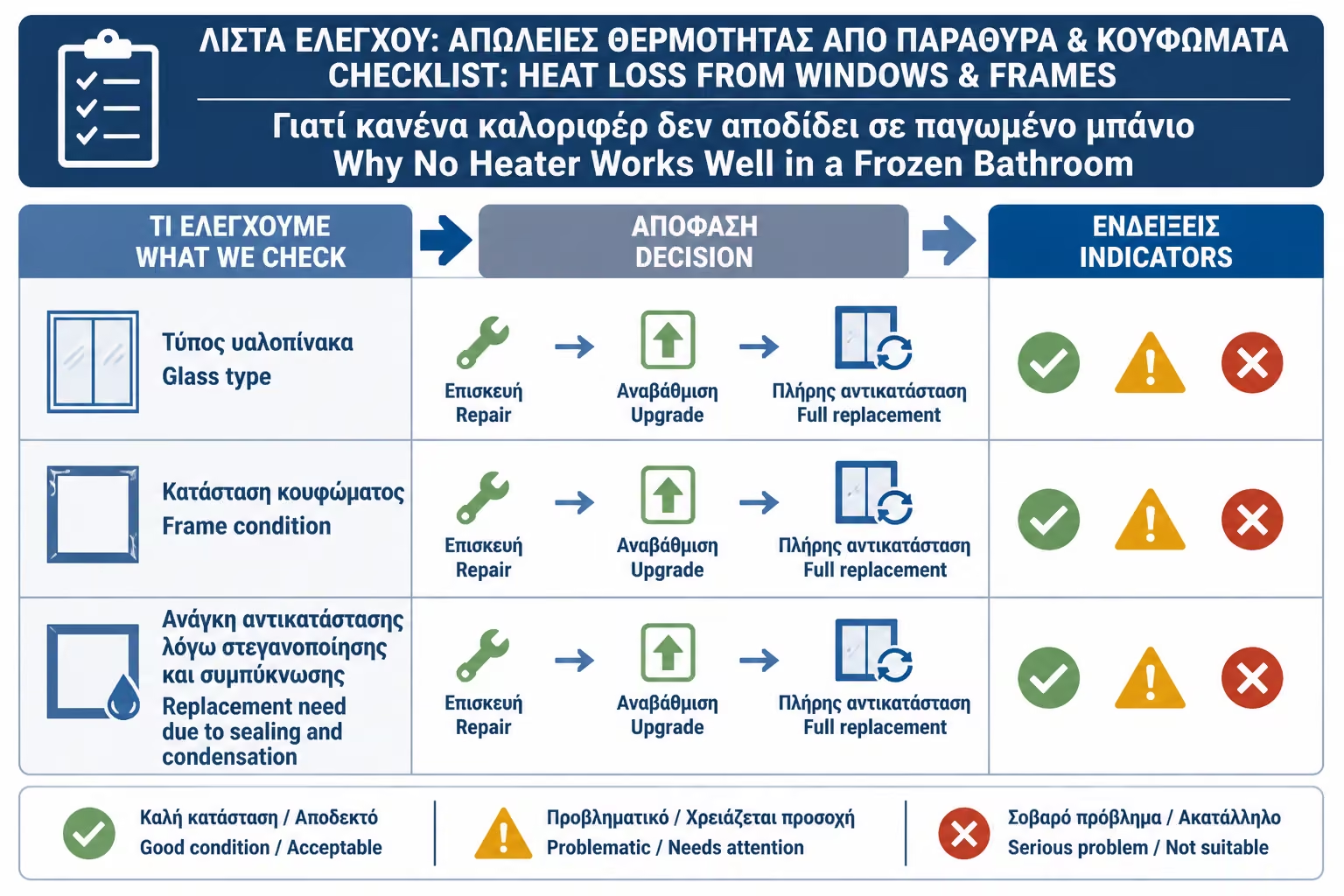
It is not always necessary to replace the whole frame. If the window is relatively modern, already has double glazing, and only shows small air leaks, it may be enough to adjust the hardware, replace the gaskets, reseal around the frame, or change the glazing unit. If the frame itself is sound, replacing only the glass can be an economical solution.
But if it is old single glazing, aluminum without a thermal break, crooked leaf, bad rolling, worn tires, oxidized frame or has permanent condensation, replacement makes more sense. In a complete bathroom renovation, it is a shame to keep a problematic window because it "still opens".
| Situation | Possible solution |
|---|---|
| Worn gaskets | Replace the gaskets |
| The sheet does not press properly | Setting mechanisms |
| Gaps around the frame | New sealing and insulation |
| Fog inside the double glazing | Glass replacement |
| Old-style single glazing | Upgrade to energy-efficient glazing |
| Aluminum without a thermal break that sweats | Thermally broken aluminum or PVC |
| Rotten/crooked/corroded frame | Full replacement |
The decision should be based on repair cost versus the actual result. Spending money on minor repairs to a very old frame may simply delay the inevitable replacement.
The cost depends on dimensions, material, type of opening, energy glass, color, screen, roller, stripping, accessories, access and VAT. Small bathroom windows may seem simple, but they have particularities: humidity, tiles, a narrow skylight, the need for waterproof installation and often difficult access.
| Work / product | Indicative range 2026 | Comment |
|---|---|---|
| Tire change / leaf adjustment | 40–150€ | If the frame is good |
| Replacement of double glazing only | 80–250€+ | By dimensions and type of glass |
| Small PVC bathroom window | 250–600€+ | Per profile/glass/placement |
| Small aluminum thermal break | 350–800€+ | By system and finish |
| With screen/tilt/special color | +50–250€+ | By options |
| Removing and fixing tiles/lamps | 100–500€+ | Wide variation |
| Complete replacement with sealing | €400–€1,200+ | Depends on the case |
Prices are indicative and vary by region, workshop, profile quality and access. In an apartment building, there may be face, color or regulation restrictions. In a bathroom with tiles around the opening, it must be calculated whether there will be breaks and restoration.
The offer must clearly state: profile material, thermal break or not, type of glass, Ug/Uw if available, tires, mechanism, screen, stripping, installation, seals and VAT.
| Error | What does it cause? | A more correct approach |
|---|---|---|
| We keep single glazing in complete renovation | Constant losses and blurring | Double low-E glazing |
| Choice of simple aluminum without thermal break | Cold frame and condensation | Thermally broken aluminum or PVC |
| Buy based on price only | Moderate insulation/mechanisms | Profile and glass control |
| Poor sealing around the frame | Drafts and mold | Proper perimeter sealing |
| Very airtight frame without vent | Moisture stays inside | Combination with mechanical ventilation |
| Open window for hours in winter | Surfaces are freezing | Short intense ventilation |
| Illuminator ignored | Odors/moisture return | Backflow/vent control |
| Fog between panes is considered “steam” | Delays IGU replacement | Check the glazing unit |
| Sealing with simple silicone without preparation | Leaks and water ingress | Suitable materials and clean surface |
| Sill drafts are not controlled | Water remains in the base | Proper drainage |
The most common mistake is to try to solve with a bigger heater a problem created by the window. If the frame is a thermal hole, the heating will work continuously and the humidity will return.
| Control | Yes / No |
|---|---|
| Is the glass single or old double? | Yes / No |
| Does the frame freeze to the touch in winter? | Yes / No |
| Is there condensation on the frame or bottom? | Yes / No |
| Is there fog between the two panes? | Yes / No |
| Are the gaskets still sealing properly? | Yes / No |
| Is air coming in through cracks? | Yes / No |
| Is there mold around the frame? | Yes / No |
| Has the seal around the frame been checked? | Yes / No |
| Will the new frame have a thermal break or a PVC profile? | Yes / No |
| Will the new glazing be double low-E energy glass? | Yes / No |
| Is there a way of controlled ventilation or a fan? | Yes / No |
| Does the quote mention U-values or technical characteristics? | Yes / No |
| Have tiles/lamps been calculated? | Yes / No |
If your bathroom has old single glazing or cold aluminum without a thermal break, don't start with a bigger towel rail. Start with the window. It is often the coldest surface in the bathroom, and that is where steam condenses first. A good PVC frame or thermally broken aluminum frame with low-E double glazing can reduce heat loss, fogging, and mold around the opening. But the more airtight the bathroom becomes, the more important proper ventilation becomes. Insulation without ventilation just traps moisture inside.
No heating source performs properly when the bathroom window acts as a refrigerator. An old single-glazed window, aluminum without a thermal break or a frame that lets in air forces the heating to work harder, makes the space cool quickly and creates the ideal conditions for condensation.
Modern PVC frames or thermally broken aluminum frames, combined with low-E double glazing, significantly change how the bathroom feels. The inner pane stays warmer, heat loss is reduced, fogging is limited, and the risk of mold around the frame drops. The difference shows up not only on the heating bill, but also in the everyday comfort of the space.
However, window replacement must be done correctly. A good frame profile and good glazing are not enough. You also need proper installation, perimeter sealing, insulating filler, durable gaskets, proper water drainage, and provision for ventilation. A very airtight new window without any ventilation strategy can reduce losses but keep moisture trapped inside.
The right solution is balance: well-insulated window, controlled ventilation, gentle heating and proper use after showering. When these work together, the bathroom stops being cold, cloudy and wet, and becomes a truly comfortable space.
Return to category.
Go to categoryReturn to the central guide.
Go to guide