
Bathroom Lighting, Ventilation & Heating
Return to category.
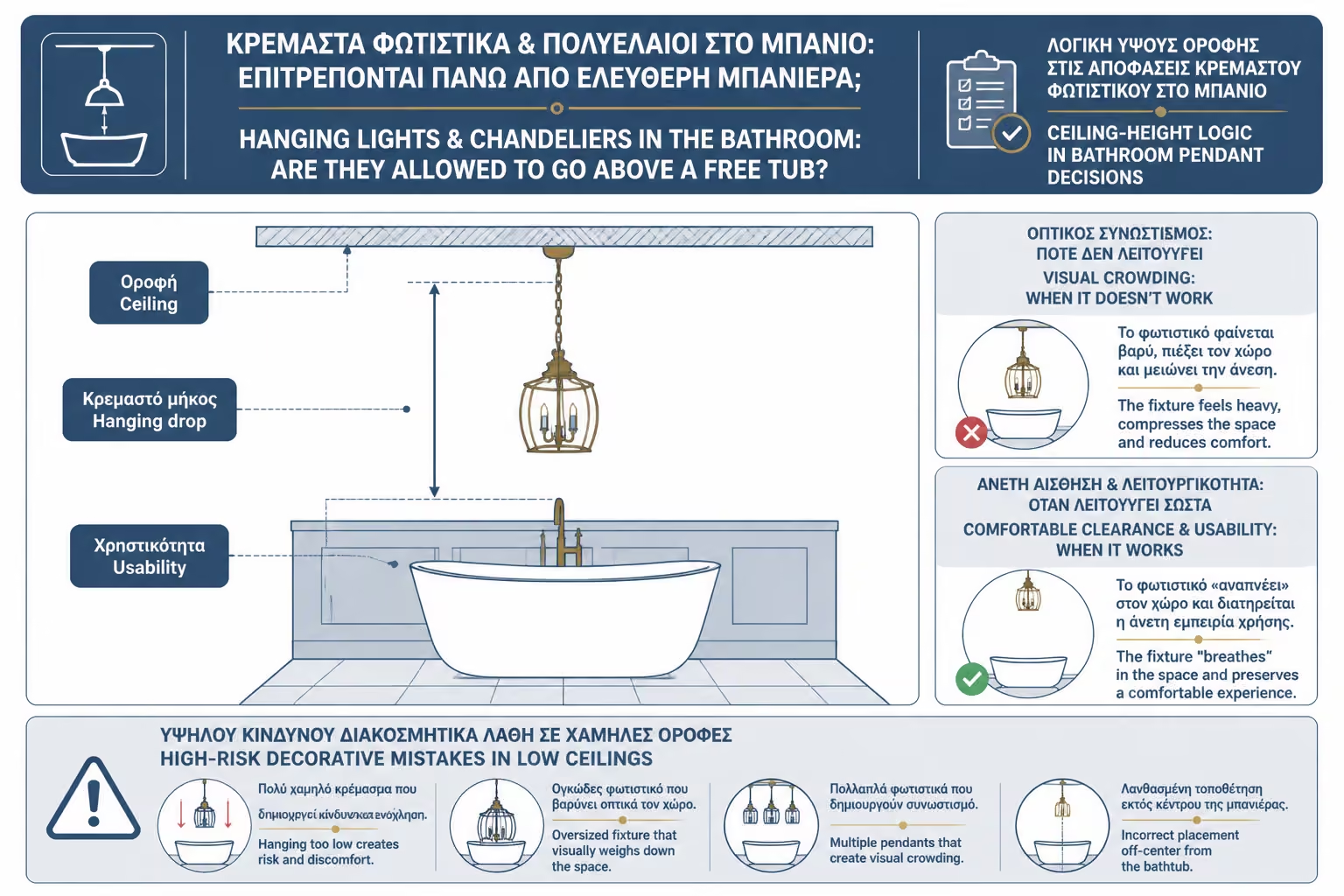
Go to categoryHanging lamps and small chandeliers in the bathroom are among the most impressive trends in modern interior design. A free-standing bathtub under a special pendant can be reminiscent of a boutique hotel, spa suite or high-end residence. Light is no longer just practical. Scenography is being done. It creates a center of interest, gives height to the space and turns the bathtub into the protagonist of the bathroom.
But this is also one of the cases where the photo can be misleading. On Pinterest or in interior design magazines we often see chandeliers right above bathtubs, low pendant lights next to showers or impressive installations that look "easy". In fact, a lamp above the bathtub is not only judged by the design. It is judged by seat belts, height, distance from water, IP protection rating, electrical installation and whether it can be touched while in water.
In the bathroom, aesthetics cannot come before safety. Greece follows a regulatory framework for low-voltage electrical installations, and for rooms with a bath or shower there is a special part of the ELOT standard HD 60364-7-701:2024, which specifically concerns rooms containing a bathtub or shower. This standard is in effect and addresses specific requirements for such spaces, so decisions about fixtures near a bathtub should not be made empirically or based on image alone.
The critical question is not simply "do I like this chandelier?". Is it: located within a bathing zone? How high does it hang? Can someone reach him from the bathtub? Does it have proper IP protection? Is it low voltage or 230V? Is there a leakage relay? Has the position been approved by a licensed electrician? These questions are not excessive. It is the reason that a beautiful design can be safely implemented or rejected before it becomes dangerous.
In this guide we will see when a pendant light can go into the bathroom, why the area above the bathtub is so sensitive, what safety zones mean, what practical scenarios there are for a free-standing bathtub, what to look out for in IP, height, humidity and installation, and when it is better to choose a safer alternative.
For many years the bathroom was treated purely functionally. A ceiling light, a light above the mirror and that's it. In recent years, however, the bathroom has begun to be designed more like a normal living space. Free-standing bathtubs, large tiles, wooden textures, hidden lighting, special mirrors and decorative lighting have changed its image.
The pendant lamp acts as a statement. In a space with a free bathtub, it can provide a vertical axis, visually fill the height and create a feeling of luxury. A small chandelier or a pendant made of glass, metal or opal sphere can make the bathroom look less "technical" and more like a personal relaxation space.
This trend is particularly suitable for large bathrooms, master bathrooms and areas where the bathtub is not crammed into a corner but has real space around it. There the lamp can act as a decorative centerpiece without necessarily being in the danger zone.
The problem appears when the image is copied in a small Greek bathroom without the same distances, the same height and the same technical conditions. What looks safe in a large photographed villa, in an apartment building bathroom may be right inside a zone of increased danger.
The short practical answer is: not arbitrarily. It may only be allowed under certain conditions, and these must be checked by a licensed electrician based on location, height, zone, fixture type and installation.
The area above the bathtub is considered particularly sensitive, because the user can be in the water, with reduced body electrical resistance, and can touch objects around him. A pendant light is not like a recessed spot on the ceiling. It hangs in the space, has a cable or suspension, can be lower, and often has metal or glass elements.
If the lamp is inside the zone above the bathtub, the assessment becomes very strict. In practical bathroom zoning guides, the zone above the bath or shower is usually described up to a height of about 2.25m from the floor or bath area, while the perimeter zone around it extends about 60cm outside the bath or shower.
This means that in a bathroom with a standard height of 2.60 m or 2.70 m, a pendant that descends quite low above a bathtub can be found in a zone where the requirements are strict or the solution is not practically acceptable. That is why the chandelier should never be bought first and then "figured out how it will fit". First it is checked if the position is allowed.
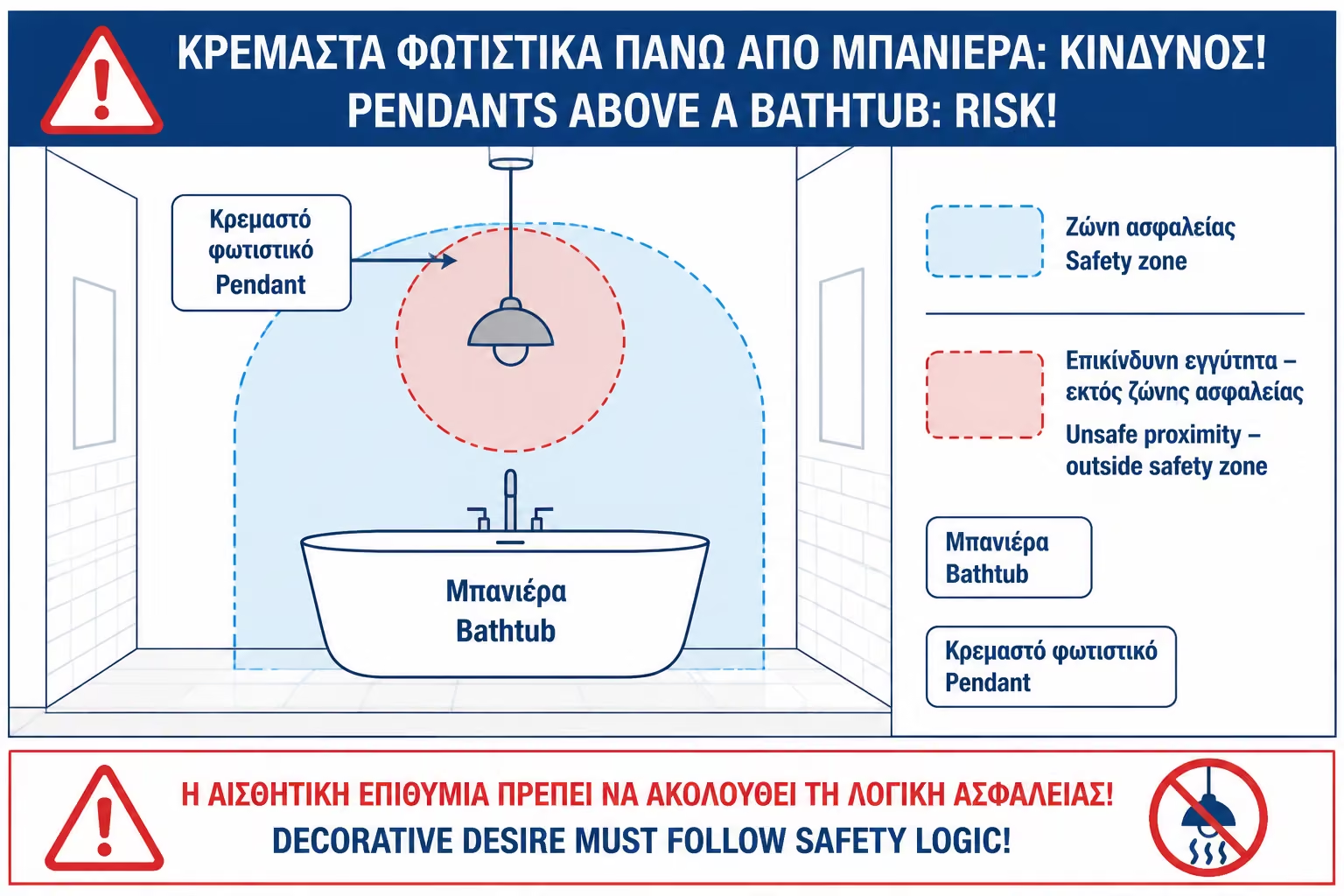
Safety zones exist to determine how close electrical equipment is to water and what requirements apply. It is not a decorative theory. It is a practical way of assessing risk.
In general description, Zone 0 is the inside of the bathtub or shower, i.e. where water can collect. Zone 1 is the area above the bathtub or shower up to a certain height. Zone 2 is the area around Zone 1, usually at a distance of about 60 cm from the edge of the bath or shower and up to a corresponding height. Beyond these zones, the space is considered out of zones, but remains a bathroom, i.e. a wet environment.
| Region | Practical description | What does it mean for a pendant light? |
|---|---|---|
| Zone 0 | Inside the bathtub or shower base | It does not concern a pendant. Only special equipment of very strict specifications enters here |
| Zone 1 | Above bath/shower up to approx. 2.25 m. | Very problematic area for a pendant light |
| Zone 2 | Approximately 60 cm around the bath/shower | It wants proper IP protection and control |
| Out of zones | Further away from tub/shower | Greater flexibility, but not without criteria |
For bathroom lighting, practical guides often list IP44 as a base for Zone 2 and higher protection, such as IP65, for locations over a bath or shower, depending on the zone and water exposure.
Importantly, the zones are measured based on the actual tub, shower, height, floor plan and obstructions. It is not enough to say "it is a little further". It must be measured.
Height is critical. A pendant lamp that in a room with a height of 3.20 m can be quite high, in a typical Greek bathroom with a height of 2.55–2.70 m can go down dangerously low. If the bottom of the fixture is within reach of the bathtub, the solution must be discarded or redesigned.
In many photos, chandeliers over bathtubs look safe because the space is very tall, the bathtub is centrally located, and the light fixture is high up, out of direct reach. In an apartment, the same idea might mean that the light fixture hangs almost over the user's head.
A practical example: if the ceiling is at 2.60 m and the pendant has a suspension of 50–60 cm, its bottom can be found at around 2.00–2.10 m. If it is above a bathtub, this is usually problematic, because it can fall into the zone above the bath and be accessible. It is not enough that they are "high so as not to hit the head". It must be electrically correct.
In such cases, instead of a pendant above the bathtub, an impressive lamp outside the zone can be chosen, for example in the center of the bathroom or above a free corridor, and the bathtub can be illuminated with safe indirect lighting, wall washers or recessed watertight lamps.
The free-standing bathtub gives more design freedom, but also more confusion. Because it doesn't necessarily rest against a wall, the owner often wants to highlight it with a light directly above. By design, this makes sense. Technically, however, it must be considered very carefully.
In a classic wall-mounted bathtub, the zones are easier to perceive: above the bathtub, around the bathtub, near the wall. In a free bathtub in the middle of the space, the zones "spread" around it. A light fixture that appears to be in the center of the room may actually be right above the bath tub.
Also, around a free-standing bathtub there is often a floor that can get wet. The user gets in and out, touches a towel, moves around the tub. Electrical safety must account for actual use, not just the pretty floor plan.
If the bathroom is large, with enough space around the bathtub and a high ceiling, a solution can be found that maintains the aesthetics of the pendant without violating the zones. If the bathroom is small, it is usually safer to move the pendant light out of the tub area and use another way of highlighting it.
Many chandeliers and pendants intended for the living room, dining room or bedroom do not have adequate protection for the bathroom. They may be IP20 or not even mention an IP rating. This means they are not designed for splashes, water vapor or use in a wet environment.
In areas near a bathtub or shower, fixtures with splash protection or higher protection are often required, depending on the zone. Practical bathroom lighting guides often list IP44 for Zone 2 and IP65 as the usual or recommended choice for more exposed areas above a bath or shower.
The problem with chandeliers is that many impressive models are not made for such zones. They may have fabric caps, open dowels, crystal elements, metal chains, joints, and places where moisture can cause oxidation or damage.
So the question is not only "is he handsome?". It's "is it declared suitable for bathing? Does it have an IP? Can it fit in the particular position? Does it have the manufacturer's instructions for wet areas?". If the answer is unclear, it should not be placed in a critical zone.
The most dangerous version of the trend is the chandelier directly above the bathtub, low and impressive. In the photo he may look spectacular. In practice, it is precisely the case that requires the most attention.
A pendant light above the water has multiple themes. It is in a zone of increased risk. It can be accessed by the user. May have metal parts. May collect water vapor. May need cleaning or lamp replacement in a difficult position. It may, if not properly secured, create a mechanical risk.
Even if the luminaire is high, it must be checked whether it is within the zone and whether the IP protection and the installation are suitable. It is not enough for someone to say "I can't do it easily". Regulations are not only based on ease of access, but electrical safety in a water area.
In many homes, the most correct option is to avoid the pendant directly above the bathtub and move it a little further outside, to a point outside the zones. In this way, the design statement is maintained without the lamp entering the most sensitive area.
A pendant light can work in the bathroom when it is in a safe location, has the proper specifications and is approved by an electrician. It is not a prohibited category of lighting. Forbidden or problematic may be the wrong position.
The safest logic is to place the pendant outside the bath and shower zones. For example, it can be hung in the center of a large bathroom, above a free circulation area, next to but not above the bathtub, or in a place where it cannot be reached from the water.
In larger bathrooms, two small pendants can be placed near the mirror, on the right and left, as long as they are kept at a distance from the sink, shower and bathtub and there is adequate protection. This solution is often more practical than a chandelier over the bathtub.
In bathrooms with very high ceilings, a more dramatic pendant can be considered, but still with care. Extra height helps, but it does not eliminate the electrical safety zones. The electrician must confirm the final location, the required protection, and the installation method.
If the goal is to create a luxurious feel around the tub, there are safer alternatives than a chandelier directly above it. The design can achieve the same, or even a better result, with indirect lighting, wall-washer lighting, concealed lighting, or sealed recessed fittings.
A very good solution is wall lighting behind the bathtub. If there is decorative tile, marble, stone, or a textured finish, a properly placed wall washer can highlight the surface and create a spa feel without anything hanging over the water.
Another option is hidden lighting in a false ceiling or in a perimeter recess. A soft light around the bath area can give a sense of relaxation, especially if it is dimmable and warmer, around 3000K.
Also, waterproof recessed spots with proper IP protection can be used, depending on the zone and the installation. These are less theatrical than a chandelier, but often much more practical and safe.
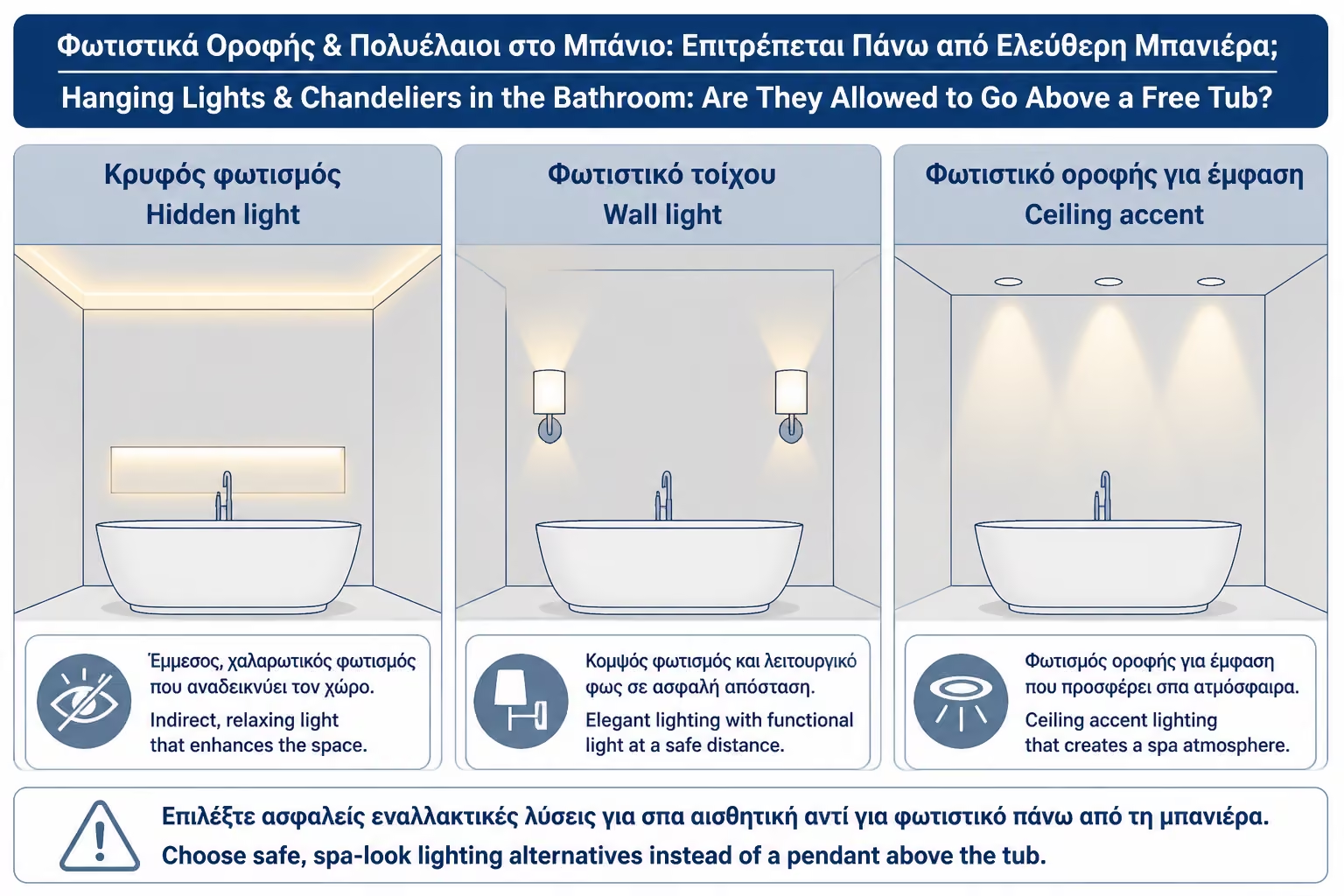
| Target | Safer alternative |
|---|---|
| Statement above bathtub | Pendant outside the zone, not directly above the water |
| Spa atmosphere | Concealed perimeter lighting with dimmer |
| Bathtub wall highlight | Wall washer or linear lighting |
| Practical bathroom light | Waterproof recessed spots of suitable IP |
| Luxury image without the risk | Combination of indirect light and decorative light outside zones |
Good decoration does not mean copying the most dramatic element in the photo. It means achieving the same feeling in a safe way.
Even if a pendant light sits outside the zones, the bathroom is still a wet space. Water vapour rises to the ceiling, condenses on cold surfaces, and affects metal, glass, and fabric elements. That matters when choosing materials.
A chandelier with many crystals may look great on day one, but in a bathroom it will collect moisture, salts, and dust more easily. A lamp with a fabric shade may not perform well in a humid environment. A lamp with unprotected metal can oxidise.
In practice, for bathrooms, lighting fixtures with materials that are easy to clean and resistant to moisture are preferred: suitable metal, glass, sealed structures and products that the manufacturer allows for such an environment. If the lamp requires frequent cleaning or has many small parts, you need to think about whether it will remain beautiful after a year of use.
Aesthetics must be combined with maintenance. A bathroom is not a showroom. It has steam, salts, cleaners and daily use.
If the pendant lamp is placed in a safe position, the right light must be selected. For a bathroom with a free-standing bathtub, a warmer and more relaxed atmosphere is usually preferred, around 2700K–3000K, especially if the pendant has a decorative role. If the fixture also functions as general lighting, a more neutral temperature can be considered, but usually the mirror and general lighting take over the practical use.
The dimmer is particularly useful in decorative bathroom lighting. In the morning it can work at a higher intensity, while at night it is low for relaxation. But, as with all LEDs, there must be compatibility between the lamp, the driver and the dimmer. Not all LEDs dim properly.
For chandeliers with many small bulbs, the choice of bulbs is important. If the lamps have a different color temperature or quality, the result will look sketchy. If they have a low CRI, bathroom materials may look less natural. If they are too bright and exposed, they can be dazzling.
A pendant in the bathroom should create atmosphere, not compete with the mirror or blind the user in the bathtub.
Chandeliers and large pendant lights have weight. This is a point that is often underestimated. If there is a false ceiling, it is not enough to screw the lamp to the plasterboard. Appropriate support is needed on the supporting frame or plate, depending on the weight and type of luminaire.
In the bathroom, the false ceiling can accommodate ventilation, spot, wiring or hidden lighting. If a hanging lamp is added, the support position must be foreseen from the beginning. Otherwise, adjustments or reinforcements may be needed afterwards.
Also, it must be possible to access the connection, especially if there is a driver, transformer or smart module. Clean design should not mean an unmaintainable installation.
A spectacular light fixture that does not have proper mechanical support is a mistake, even if it is electrically suitable. The safety is both electrical and structural.
The handling of a pendant lamp in the bathroom must also be planned properly. The switch should not be placed where it is merely aesthetically convenient. Must be in a location suitable for bathing, based on zones and electrical rating.
Often, bathroom switches are located at the entrance or outside the room. This is practical and safe. If there are internal switches, dimmers or smart panels, they must be suitable for their location and installed by an electrician.
If the pendant is decorative, it should have a separate circuit from the general lighting. So it can only be lit when we want atmosphere. If it is connected together with all the lights, it loses some of its value. The ideal scenario is: practical lighting for use, mirror for work, pendant or indirect lighting for atmosphere.
The right lighting experience in the bathroom does not result only from the lamp. It results from the control of the lighting fixtures.
Costs vary widely. A simple pendant can cost a few tens of euros, while a designer chandelier can easily exceed €500-1,500. In the bathroom, however, the cost is not only the purchase of the lamp. It is also the suitability, the installation, the support, the electrical safety, possible changes to the false ceiling and the inspection by an electrician.
| Selection / task | Indicative range 2026 | What affects the price? |
|---|---|---|
| Simple pendant outside of belts | 40–180€ | Material, design, brand |
| Quality lamp suitable for wet areas | 120–400€+ | IP, materials, manufacturer |
| Small chandelier / statement lamp | 250–1,500€+ | Design, weight, materials, brand |
| Reinforcement of support in false ceiling | Wide variation | Weight, access, existing construction |
| Electrical supply / separate circuit | Wide variation | Digging, switches, errands |
| Dimmer / smart control | 40–250€+ | Compatibility, quality, system |
| Inspection and installation by an electrician | Wide variation | Area, project, old facility |
Prices depend on area, floor, access, condition of existing installation, whether VAT is included, whether the work is on a new renovation or a finished bathroom, and whether the quote is for installation only or a complete electrical fit-out.
The low price of a pendant is not necessarily a problem if the lamp is outside the zones and is suitable for the environment. But on or near a bathtub, saving money in the wrong place is a bad decision. If special IP, amplification, electrical control and secure installation are required, these must be included in the quote.
A pendant is worth it when the bathroom has enough space, the right height and a clear decorative intention. It fits in master bathrooms, in bathrooms with a free-standing bathtub, in areas with a high ceiling or in cases where the lamp can be placed outside the zones but looks visually connected to the bathtub.
It is also worth it when the rest of the lighting is already solved properly. That is, there is good general lighting, proper mirror lighting, safe shower lighting and proper ventilation. The pendant then functions as an aesthetic addition, not as a sole source of light.
It's not worth it when it comes in to "save" a poorly designed bathroom. A chandelier doesn't fix wrong mirror lighting, poor sealing, a small tub or inadequate ventilation. It can even make the space look more crowded.
The pendant is like a piece of jewelry. It needs a proper base, proper position and measure.
Avoid the pendant light above the bathtub when there is insufficient height, when it falls within a zone that does not allow safe application, when it does not have adequate IP protection, when it can be touched by someone from water, or when the electrician does not approve the position.
Also avoid it in very small bathrooms with low ceilings. There the pendant can make the space look narrower and more crowded. In bathrooms without good ventilation, water vapor can damage the lamp. In bathrooms that are heavily used by a family with children, practicality and durability must come before image.
If the chandelier has fabric elements, open curtains, sensitive metals or does not indicate suitability for a wet area, it is better to choose it for another room. The bathroom is not a suitable environment for all decorative lighting.
The best decision sometimes is to keep the idea of the statement lighting, but change the position or type of light fixture.
Mistakes in such applications are often made because the owner gets excited by the picture and delays asking the electrician. When the lamp has already been purchased, the discussion becomes more difficult.
| Error | What can it cause? | A more correct approach |
|---|---|---|
| Chandelier directly above bathtub without control | Serious security issue | Belt check before purchase |
| Living room lamp in a wet area | Oxidation, damage, unsuitability | Lamp suitable for bathroom |
| Ignore IP protection | Wrong product in wrong place | IP selection by zone |
| Low suspension | Accessible from bathtub | Sufficient height or other position |
| Screwing in false ceiling without reinforcement | Mechanical risk | Proper support beforehand |
| All lights in one switch | No atmosphere | Separate circuit for pendant |
| Fabric or sensitive materials | Moisture wear | Materials that are easy to clean |
| Copy photo without dimensions | A solution unsuitable for a small space | Adaptation to the actual floor plan |
| Purchase before electrician inspection | Possible unusability of product | Check first, then buy |
| Missing installation relay/control | Insufficient electrical safety | Full installation control |
A typical example is an owner who buys a small chandelier to hang over a free-standing bathtub because "that's how he saw it in a hotel". At the construction site it is found that the ceiling is low, the luminaire falls within a zone and does not have proper IP protection. The correct solution would be to either move the lamp outside the zone or choose another type of lighting.
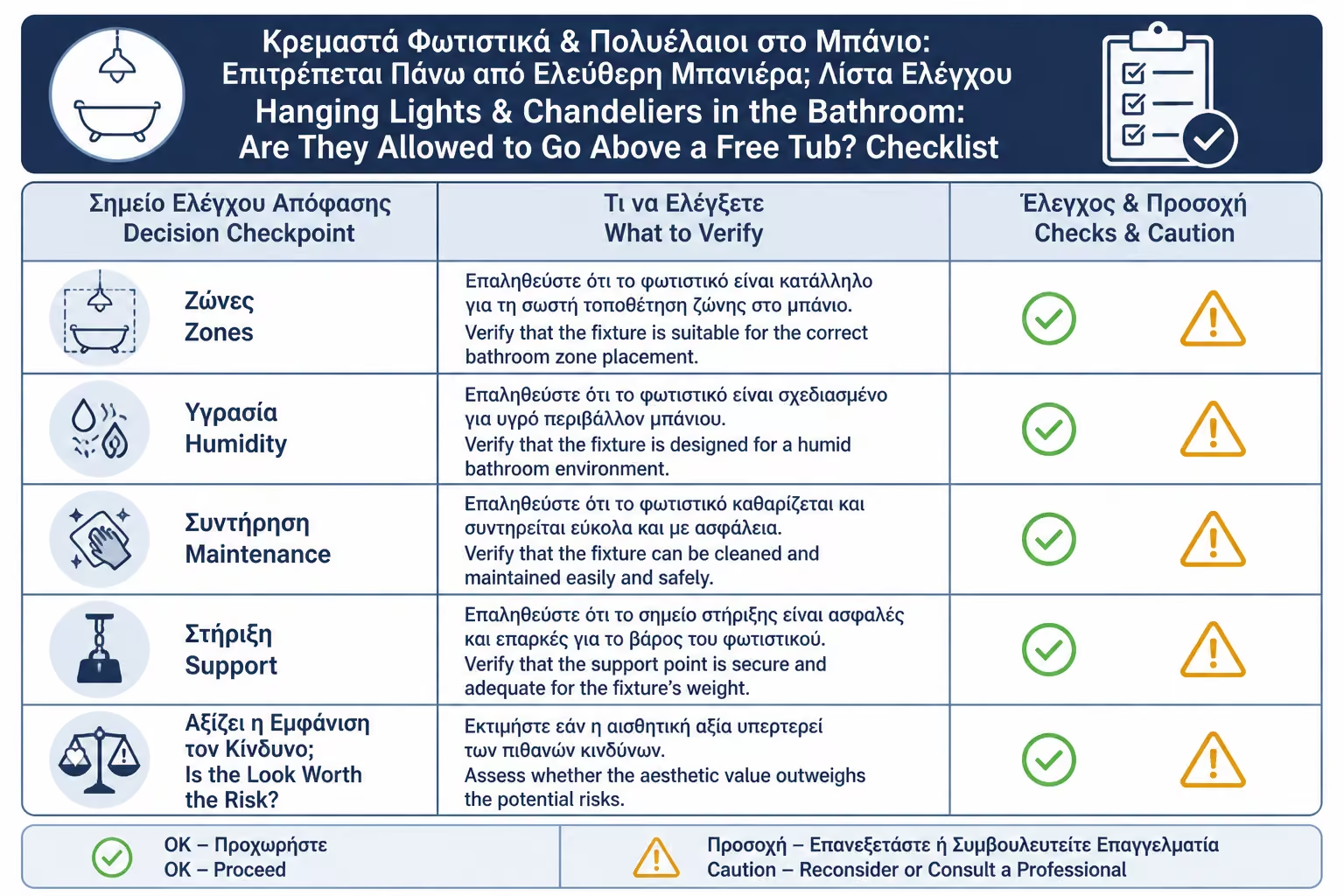
Before buying a pendant or chandelier for a bathroom, ask for a location check first. Where exactly will it fit? How far is it from the bathtub? At what height will its lowest point be? Is it in Zone 1 or Zone 2? Can someone touch it from the bathtub? Is there a shower nearby? Is there good ventilation?
Then check the product. Does it have an IP address? Does the manufacturer allow it for bathing? Is it suitable for wet environment? What materials does it have? How is it cleaned? How to change a light bulb? Is it dimmable? What weight does it have? How is it supported?
Finally, check the installation. Is there a proper supply? Does it need a new circuit? Is there a leakage relay? Does the suspended ceiling hold up? Will a separate switch or dimmer be included? Does the job include VAT, utilities and electrical inspection?
If these cannot be answered, the market is premature. In the bathroom, the right lamp is not only the one that fits aesthetically. It is what can be properly placed.
| Inquiry | Yes / No |
|---|---|
| Has it been checked whether the luminaire is in Zone 1, Zone 2 or out of zones? | Yes / No |
| Has the distance to the bathtub or shower been measured? | Yes / No |
| Is the lowest point of the fixture at a safe height? | Yes / No |
| Can someone touch it while in the bathtub? | Yes / No |
| Does the fixture have an appropriate IP for its location? | Yes / No |
| Does the manufacturer allow it for use in a bathroom or wet area? | Yes / No |
| Are its materials resistant to water vapor and cleaning? | Yes / No |
| Is there proper mechanical support, especially if there is a suspended ceiling? | Yes / No |
| Is there a leakage relay and has the electrical installation been checked? | Yes / No |
| Is the switch or dimmer in the right position? | Yes / No |
| Does the pendant have a separate circuit from the main lighting? | Yes / No |
| Has the final location been approved by a licensed electrician prior to purchase? | Yes / No |
If you want an impressive pendant or chandelier in the bathroom, don't start with the lamp. Start from the belt. Measure the tub, the ceiling height, the distance and the lowest point of the suspension. If the light falls into the area above the bathtub or can be touched by someone from the water, the idea needs to change. The right design in the bathroom is not what a photo copies. It's what achieves the same feel without compromising electrical safety.
Hanging lamps and chandeliers can give the bathroom an impressive, hotel-like image. Especially in spaces with a free-standing bathtub, a properly placed pendant can act as a central design element and transform the feel of the space.
But the bathtub area is not a simple decorative area. It is a zone of water, humidity and increased electrical risk. That is why a chandelier should not be placed above the bathtub just because it looks nice. Seat belts, IP protection, height, accessibility, support, handling and overall electrical installation must be checked.
In many Greek bathrooms, the most correct solution is to move the impressive lamp out of the zone and highlight the bathtub with indirect lighting, wall washers, hidden lighting or waterproof recessed lighting. This way you keep the feeling of luxury without risking a problematic placement.
The best decision is simple: first check by an electrician, then choose a lamp. If the position is safe and the product suitable, the pendant can become an excellent detail. If not, there are many more correct alternatives that give a spa look without technical risk.
Return to category.
Go to categoryReturn to the central guide.
Go to guide