
Bathroom Lighting, Ventilation & Heating
Return to category.
Go to categoryThere is a small everyday annoyance that many owners do not think about when renovating the bathroom: the late-night trip to the WC. The house is dark, the eyes have adjusted to low light, and suddenly the main bathroom light comes on at full intensity. The room lights up abruptly, the user is "blinded" for a few seconds, and often wakes up more than they would like.
This problem becomes even more pronounced in bathrooms with lots of white tiles, glossy surfaces, strong ceiling LEDs, or cool light. The same light that is useful in the morning for cleaning, shaving, or applying make-up can feel excessive at night. No one needs the bathroom to feel like daylight at 3 a.m. They just need to move safely, see the floor, the toilet, the sink, and the way out.
This is where the night light comes in, with a motion sensor. This is a low-intensity light that turns on automatically when it detects motion, usually only when the room is dark. It can be placed under a hanging piece of furniture, low on the wall, behind the mirror, on a skirting board, in a false ceiling with low intensity or even in a special socket light, depending on the bathroom and the level of renovation.
The correct application is not to fill the bathroom with light. It's just the opposite. Good night lighting should be discreet. To show the way, not to illuminate the face. To aid movement, not to wake the user. Turn on when needed and turn off by itself, without the owner thinking about switches in the night.
But like any electrical addition in the bathroom, it needs proper planning. The sensor must be placed in the right position, the light must have the right intensity and color temperature, the materials must suit a wet area, the wiring should be planned before tiling wherever the installation is permanent, and the final connection must be made by a licensed electrician. A night light can be simple, but it should not be improvised.
Night lighting is a low level of light that is not meant to replace the bathroom's general lighting. It is not for shaving, make-up, cleaning, or showering. It is for safe, comfortable movement when the space is used at night or in very low light.
In its simplest form, it can be a small socket light with a sensor. In a more complete renovation, it can be a hidden LED strip under a hanging piece of furniture, low linear lighting on the wall or lighting on a skirting board. In more modern systems, it can be connected to smart automation, time, ambient brightness and usage scenarios.
What matters is its role. Night lighting should provide enough light to prevent tripping, but not so much that it fully wakes the user. That means low lumens, a warm color temperature, proper diffusion, and low or indirect placement.
A practical example is a wall-hung vanity. If a thin LED strip with a diffuser and sensor is placed underneath, the light gently "washes" the floor. The user sees where they are stepping, but does not look directly at the light source. This is much more comfortable than a harsh ceiling spotlight.
Some owners think they can simply install a weaker lamp in the bathroom or put a dimmer on the general lighting. These solutions may help, but they do not always solve the night-light problem.
General lighting, even dimmed, usually comes from the ceiling. It lights up the whole space, often also the face. If someone wakes up in the middle of the night, even a ceiling light at 30% can be brighter than necessary. Additionally, if the switch is outside the bathroom or next to the door, the user must first find it.
A night light works differently. It turns on automatically and usually at a low level. It does not ask the user to search for a switch. It does not unnecessarily light the mirror, the face, or the ceiling. It simply provides gentle visual guidance.
Ideally, night lighting is a separate level of lighting, not just dimmed general lighting. The bathroom can have bright light in the morning, proper light on the mirror for details and a separate dim light for night. When these levels are properly separated, the space becomes much more practical.
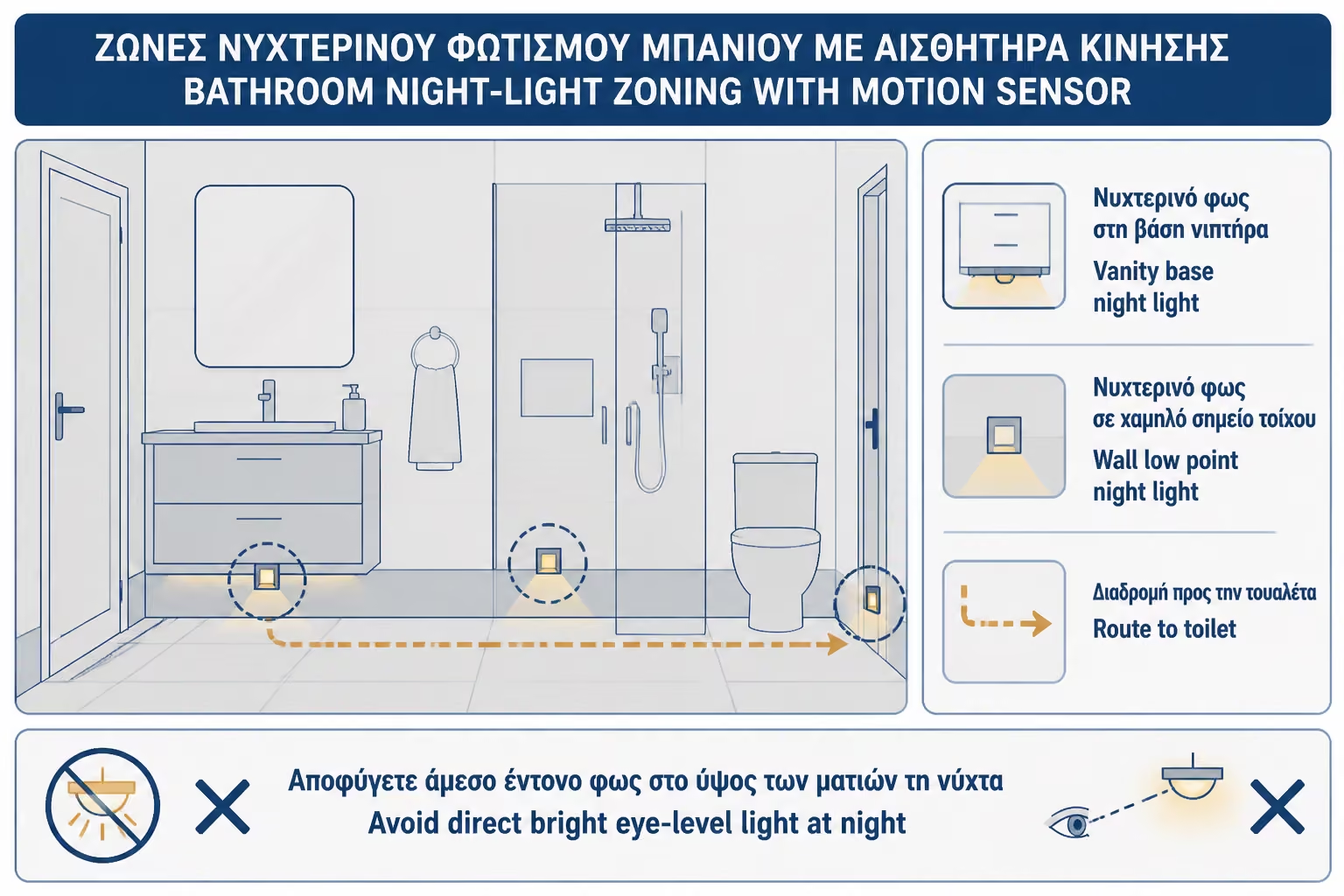
The position of the night light is perhaps more important than the intensity itself. If the light goes in wrong, it can dazzle, create reflections or activate unnecessarily. The best position is usually low or indirect.
The most popular solution is under hanging bathroom furniture. The light is not directly visible, it illuminates the floor and creates an elegant floating effect. It is practical, discreet and aesthetically clean. If there is already hanging furniture, this solution often blends in very nicely.
Another option is low wall lighting, near the skirting board or at the entrance. This mainly helps with wayfinding. In larger bathrooms, a low light can be placed near the toilet or along the route from the door to the sink. In small bathrooms, a single point may be enough.
The lighting behind the mirror can work as a gentle night light, but needs attention. If it is too bright or if it directly illuminates the wall in front of the field of view, it can be annoying. More suitable for night light is usually low lighting on the floor, not lighting at eye level.
| Lighting position | Advantage | What to watch out for |
|---|---|---|
| Under hanging furniture | Ideal for discreet floor light | The LED strip should not be visible |
| Low on the wall | Guides the route | Needs correct sensor placement |
| Behind a mirror | Nice atmosphere | It may be more intense than it needs to be |
| LED skirting / low line | Very subtle effect | He wants foresight in the renovation |
| Socket light | Budget-friendly solution without renovation work | Limited aesthetics and position |
The motion sensor is what makes the night light really comfortable. The user does not have to turn on a light, remember which switch is which or search in the dark. The light turns on when it detects presence and turns off after a while.
A simple switch might work, but it loses some of the convenience. It is useful when the owner wants full control or when the sensor cannot get into a good position. But for real night use, automation is more practical.
The sensor should ideally also have a photocell or ambient brightness adjustment. That is, to light up only when it is dark. Otherwise, it may also activate during the day for no reason. In smart systems, this can be set based on time or brightness. In simple installations, a sensor with a built-in day/night function is chosen.
However, the dwell time must also be set correctly. If it goes off too quickly, it can be annoying. If left on for too long, it loses some of the economy and can be annoying if the light is visible from the hallway or bedroom.
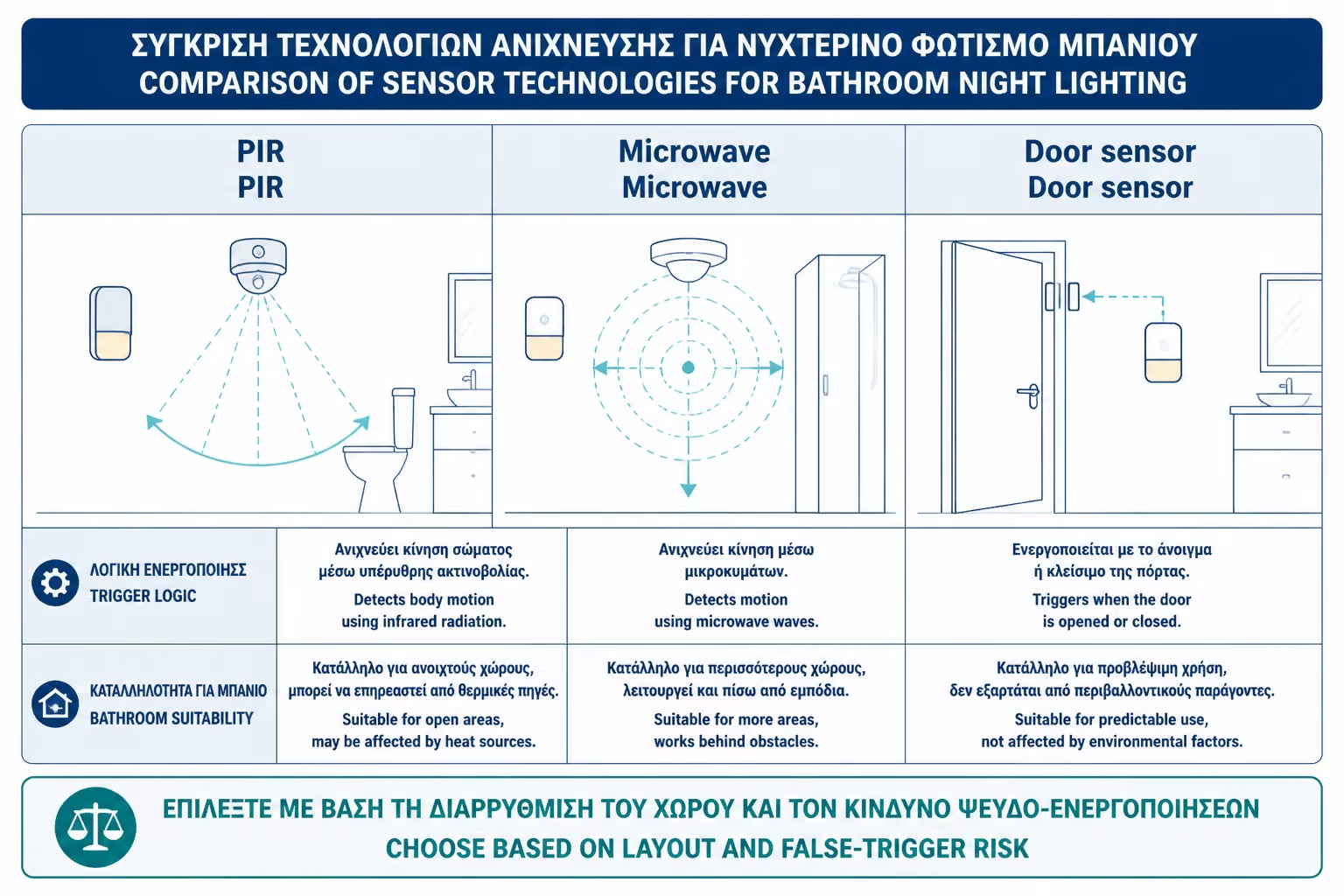
The most common motion sensors are PIRs, i.e. infrared sensors that detect thermal motion. They are popular, economical and work well in many applications. For a small bathroom, a properly placed PIR sensor may be sufficient.
There are also microwave sensors, which detect movement with different technology and can "catch" movement even behind certain materials. This can be an advantage, but also a disadvantage. If they are very sensitive, they may be triggered by movement outside the bathroom or behind the door.
Another option is a door sensor, which activates the light when the door opens. It is simple, but it does not always know whether it is day or night unless it is combined with a photocell or a smart automation rule. Also, if the door is left open, the system behavior must be set correctly.
For most homes, a PIR sensor with adjustable sensitivity, time and brightness is the most practical solution. In more complex smart systems, presence, door or brightness sensors can be used, but this only makes sense if the owner wants complete automation.
The sensor should "see" the correct movement, not all irrelevant movement. If it goes in across the door and has a lot of sensitivity, it can light up every time someone walks down the hall. If it goes too far into the bathroom, it may not activate before the user enters. If hidden behind a piece of furniture or glass, it can be unstable.
In a small bathroom, the sensor can be placed close to the entrance, so that it is activated as soon as the door is opened or as soon as someone enters. In a larger bathroom, a seat facing the path to the basin or sink may be needed. If the bathroom has corners, furniture or a shower that cuts the field of view, the position needs more study.
Height also plays a role. A sensor too low can be triggered by pets or small movements. A sensor that is too high may not capture properly in a small space or have a wider field than needed. The manufacturer's instructions must be followed and a test performed before the installation is shut down.
A frequent mistake is to insert the sensor where the cable "fits" and not where it works best. In automation, position is half the effect.
Night lighting should be low intensity. If it is too strong, it loses its purpose. It should not illuminate the bathroom like general lighting. It should give just enough visibility for safe movement.
The right intensity depends on the size of the bathroom, the colors, the tiles and the position of the light. A white glossy floor reflects more light, so a lower intensity is needed. A dark matte floor absorbs light, so a little more power may be needed.
In LED strips, it is good to have the option of setting or dimming. So the electrician or owner can find the voltage that is comfortable in practice. In theory, a light may appear low. In the dark, however, it can be much more intense than we expected.
In practice, the right night light should not draw the eye. If the user enters the bathroom and immediately looks at the light source, it is probably misplaced or too strong. If it just sees its path without thinking about the light, then it is designed correctly.
For night lighting, warm light around 2700K–3000K is usually more comfortable than neutral or cool light. Cold white, especially in a small bathroom, can be harsh and give the feeling that the space is over-lit, even if the intensity is low.
Warm light is gentler on the eyes. It creates a less "sudden" feeling and is better suited for sleep/night use. If the night light is under a piece of furniture or low on the wall, 3000K usually works very well.
This does not mean that the whole bathroom has to be 3000K. The mirror can have 4000K for makeup and shaving. General lighting can also be 4000K for clarity. The night light, however, has another role. There warmer light is often preferable.
In smart systems, there can also be an hourly temperature change. More neutral in the morning, warmer in the evening. But for most homes, a simple warm low LED for the night is enough.
The lighting under hanging furniture is one of the most successful solutions for night light in the bathroom. The furniture hides the light source, the LED tape illuminates the floor and the user is not dazzled. At the same time, a nice floating effect is created that improves the image of the space and the day.
The application must be done with an aluminum profile and diffuser. Bare LED strip under furniture looks sketchy, collects dust, can peel off and creates dots of light. The profile protects the film, helps diffusion and gives a cleaner result.
It must also be foreseen where the power supply will go. If the furniture has room, it can be placed in an accessible place inside or behind it, depending on the construction and the electrician's assessment. If trapped without access, a simple breakdown can become difficult to repair.
This solution is ideal in a new renovation, because supply can be foreseen from the beginning. In an already finished bathroom, it can be done, but often requires more careful handling so that no wires are visible.
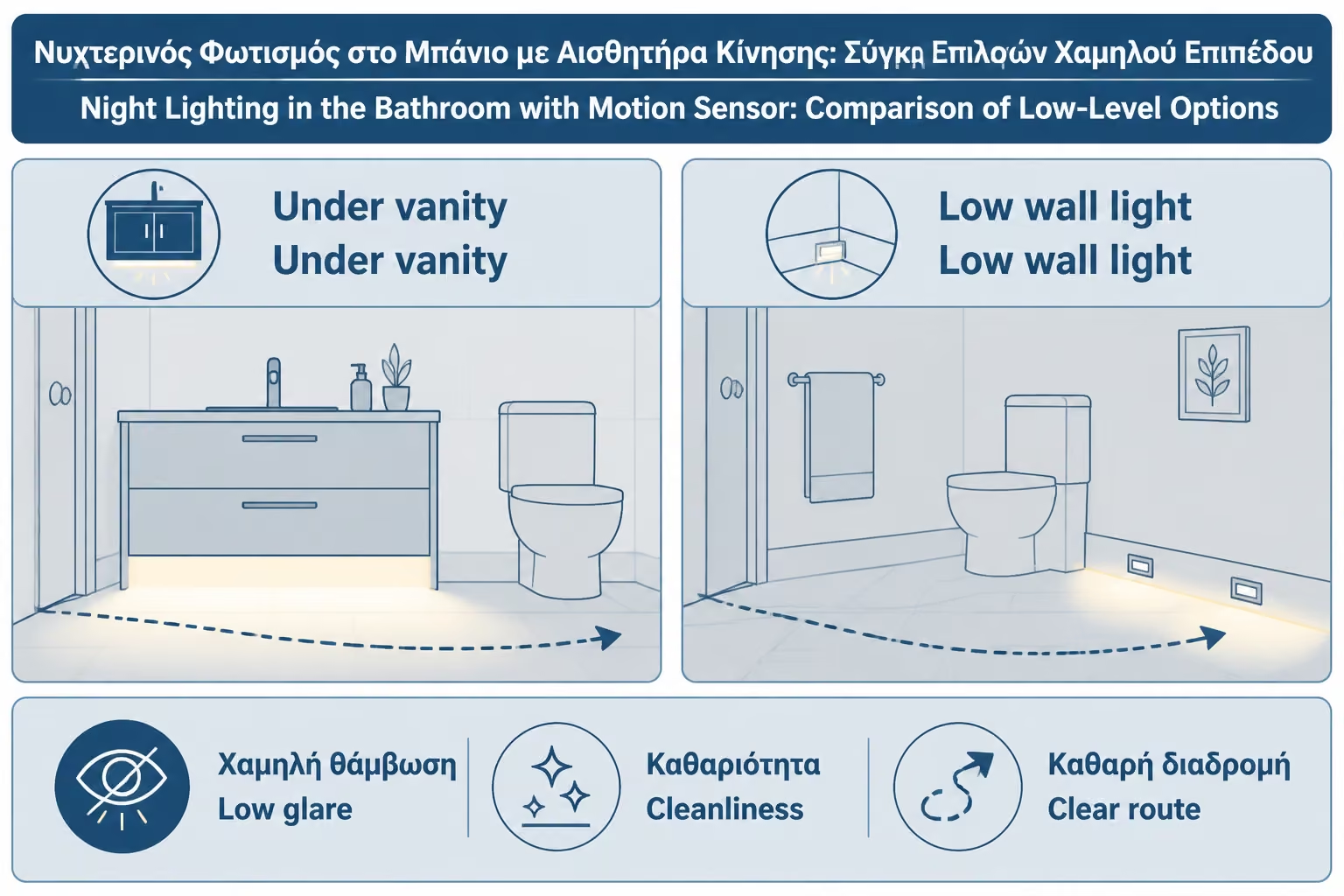
Low lighting on the wall or skirting board is a more architectural solution. It can work great in larger bathrooms, master bathrooms or areas where there is a path from the door to the basin or shower. The light is low, so it doesn't bother the eyes and helps orientation.
In simple form, they can be small low-height recessed lights. In a more modern form, it can be a linear LED inside a special profile. The result can be very elegant, but it needs foresight before finishing. It is not a solution that is easily introduced after the fact without consideration.
Care is needed in the location in relation to water, mopping and cleaning. Downlights may receive moisture, knocks or cleaners. So they must be suitable for bathing and have protection commensurate with their position.
This solution is not always necessary in a small bathroom. There LED under furniture is usually more practical. In a larger space, however, low wall lighting can have a very serious effect.
There are products that directly illuminate the pelvic area, even small lamps that fit into the pelvis or are sensor-activated. They may look practical, but they don't always fit in a seriously designed bathroom.
In temporary solutions or rental homes, a small stand-alone light can be an economical option. In a normal renovation, however, it's usually better to design subtle floor lighting or dimmed space lighting, rather than lighting the basin exclusively.
The reason is aesthetic and practical. A good night light should show the route and the space, not create a "gadget" image. Also, fixtures too close to the sink may need more frequent cleaning and look less premium.
If the goal is a serious, timeless effect, it is better to integrate the night lighting into the furniture, the wall or the overall lighting system of the bathroom.
A smart night light can be connected with time, motion sensor, ambient brightness and scenarios. For example, from 23:00 to 07:00, if motion is detected, only the low LED under the furniture turns on at 15%. During the day, the same sensor may not trigger anything.
This is very useful when the home already has a smart ecosystem or when the owner wants full control. It can also help families with children or the elderly, where nighttime safety is more important.
But it is not necessary in every bathroom. A simple system with a motion sensor and photocell can do the job reliably, without apps, Wi-Fi, updates or platform dependencies. In spaces of daily use, simplicity is an advantage.
Smart makes sense when it offers real function, not when it's thrown in just because it sounds modern. If the user ultimately only needs a dim light that turns on at night, a simple properly configured solution may be better.
Night lighting in the bathroom should be chosen based on its location. If it is under a piece of furniture near a floor, it can get wet, mopped or splashed. If it is located near the shower, the requirements are stricter. If it is low on the wall, it must withstand the environment and cleaning.
Just any LED strip is not enough. It needs proper protection, correct profile, correct joints and safe power supply. The same goes for the sensor. If placed in the bathroom, it must be suitable for its location and not a simple indoor sensor intended for a hallway.
The exact IP requirement depends on the location in relation to the shower, bath, sink and possible splashes. The electrician must check the band and the suitability of the equipment. The owner doesn't need to know every regulatory detail, but they do need to ask for bathroom-friendly products.
"Low light" does not mean "low safety requirements". Even a small LED can be part of a permanent electrical installation in a wet room.
Most LED strips work with a power supply or driver. This should be in a safe and accessible place. If it gets behind tiles, inside a closed piece of furniture without access, or in a damp spot, it can cause a problem later.
In under-furniture lighting, the power supply can often go inside the furniture, in a special place, as long as there is ventilation and proper protection. In skirting or low wall lighting, it must be foreseen from the beginning where the cables will end. In smart or dimmable solutions, an additional controller or compatible driver is needed.
Wiring should be hidden but not uncontrolled. "Disappearing" a power supply behind a structure out of sight is bad practice if it cannot be maintained. Night lighting is a small application, but if designed incorrectly it can create a disproportionate inconvenience.
Before tiles, furniture or false ceilings are closed, it must be known where the cable goes, where the driver is, how it is replaced and which switch or sensor controls it.
There are two main categories of night lights: standalone battery solutions and permanent installations. Battery solutions are economical, fast and do not require electrical intervention. They can be useful in rental houses, temporary solutions or small WCs.
Their downside is that they often have a more limited aesthetic, shorter battery life, lower light quality, and less clean integration. They may also need frequent changing or charging, which gets annoying after a while.
Permanent installation is cleaner and more reliable, especially in a new renovation. It can be integrated into the furniture, the wall, a profile or a smart system. It costs more and requires an electrician, but gives a better end result.
If a complete bathroom renovation is done, it is worth providing a permanent night light from the beginning. If the bathroom is already finished and you don't want clutter, a neat freestanding solution can be an acceptable compromise.
The cost depends on whether the solution is standalone or permanent, on the quality of the LED strip, the profile, the sensor, the driver, the wiring, the access, whether there is a smart system and whether the work is done in a new renovation or in a finished bathroom. It is also affected by the area, the floor, the condition of the existing installation, whether VAT is included and whether the offer is for materials only or a complete installation.
| Solution | Indicative range 2026 | What affects the price? |
|---|---|---|
| Autonomous battery light with sensor | €10–€40 | Quality, charging, sensor, autonomy |
| Socket light with sensor | 8–30€ | Simple solution, limited aesthetics |
| LED under furniture with profile | 80–220€ | Length, profile, driver, LED quality |
| Motion / presence sensor | 20–90€ | Type, settings, suitability for bathing |
| Smart sensor and controller | 40–180€+ | Protocol, implementation, compatibility |
| Electrical work | Wide variation | Provisions, digging, errands, access |
| Complete permanent night light installation | 120–350€+ | Equipment, wiring, sensor, VAT |
A low price is not necessarily bad if we are talking about a temporary light fixture. But if it's a renovation and you want a clean result, it's worth paying attention to the quality of the film, the profile, the sensor and the installation.
The higher price is justified when the solution is properly integrated into the furniture or the wall, has a reliable sensor, secure driver, proper IP protection and no visible cables. It is not justified simply because the solution is described as “smart”.
Night lighting is worthwhile in almost every master bathroom, but especially in homes with children, the elderly, bedrooms close to the bathroom or families who often use the WC at night. It is also worth it in bathrooms with very strong general lighting, because it offers a soft alternative.
In a master bathroom, it's almost an obvious upgrade. If the bathroom is connected to a bedroom, the strong light may disturb the sleeping person. A low night light solves the problem without the need for full lighting.
In a small guest WC, it may not be necessary, but still useful if the WC is used at night. In cottages or rentals, a simple battery or plug solution can provide convenience at low cost.
If a complete renovation is done, it is one of the small provisions that are worth it. The cost is relatively small compared to the total renovation, but the daily comfort is great.
The night light should be avoided or simplified when it cannot be installed properly. If there is no safe place for the driver, if the wiring will be visible, if the sensor cannot be placed in a good position, or if the installation will be rough, it is better to choose a simpler solution.
In very small bathrooms, an overly sensitive sensor may turn on constantly. In homes with pets, the low sensor may trigger unnecessarily. In bathrooms with a door that is often left open, the light can be annoying if it is directed towards the corridor or the bedroom.
Also, if the bathroom already has proper dimmable recessed lighting with an easy switch, the sensor may not be necessary. A low light scenario may suffice.
The solution must fit the use. You don't need automation just for automation's sake. He needs comfort without discomfort.
Errors in the night light are quickly seen, because the user experiences it at the most sensitive moment: when he is half asleep. A light that seems correct during the day can turn out to be too intense at night.
| Error | What it causes in practice | A more correct approach |
|---|---|---|
| Very powerful night light | It dazzles and wakes the user | Low intensity or dimming |
| Cold light at night | Sharp, hard feeling | Warm light 2700K–3000K |
| Sensor in wrong position | It lights up unnecessarily or does not catch on time | Detection field test |
| Bare LED strip under furniture | Thumbnail and bullet points | Aluminum profile with diffuser |
| No photocell | It also lights up during the day | Sensor with day/night function |
| Extinguishing time too short | Turns off while space is in use | Delay setting |
| Extinguishing time too long | It's annoying and stays on unnecessarily | Balanced setup |
| Driver without access | Difficult repair | Accessible maintenance point |
| Material not suitable for bathing | Moisture damage | Adequate IP protection per location |
| Too smart solution | Complexity without reason | Simple, reliable script |
A typical example is the LED under a piece of furniture that goes in without a dimmer and without a diffuser. At first test it looks impressive. At night, however, it over-illuminates the floor, reflects on the glossy tiles and is ultimately annoying. With lower volume and a proper profile, the same idea would work much better.
| Inquiry | Yes / No |
|---|---|
| Has it been decided whether the night light will be a permanent fixture or a battery solution? | Yes / No |
| Is the light low or indirect so it doesn't glare? | Yes / No |
| Is the volume low enough for nighttime use? | Yes / No |
| Color temperature is warm, about 2700K–3000K? | Yes / No |
| Does the sensor only turn on when there is low ambient light? | Yes / No |
| Is the light on time set correctly? | Yes / No |
| Does the sensor see the input or path without triggering unnecessarily? | Yes / No |
| Does the LED strip, if present, fit into a profile with a diffuser? | Yes / No |
| Are the materials suitable for bathing and humidity? | Yes / No |
| Is the driver or power supply in a safe and accessible place? | Yes / No |
| Has the installation been checked by a licensed electrician? | Yes / No |
| Does the quote mention LED, sensor, driver, labour, VAT and possible wiring changes? | Yes / No |
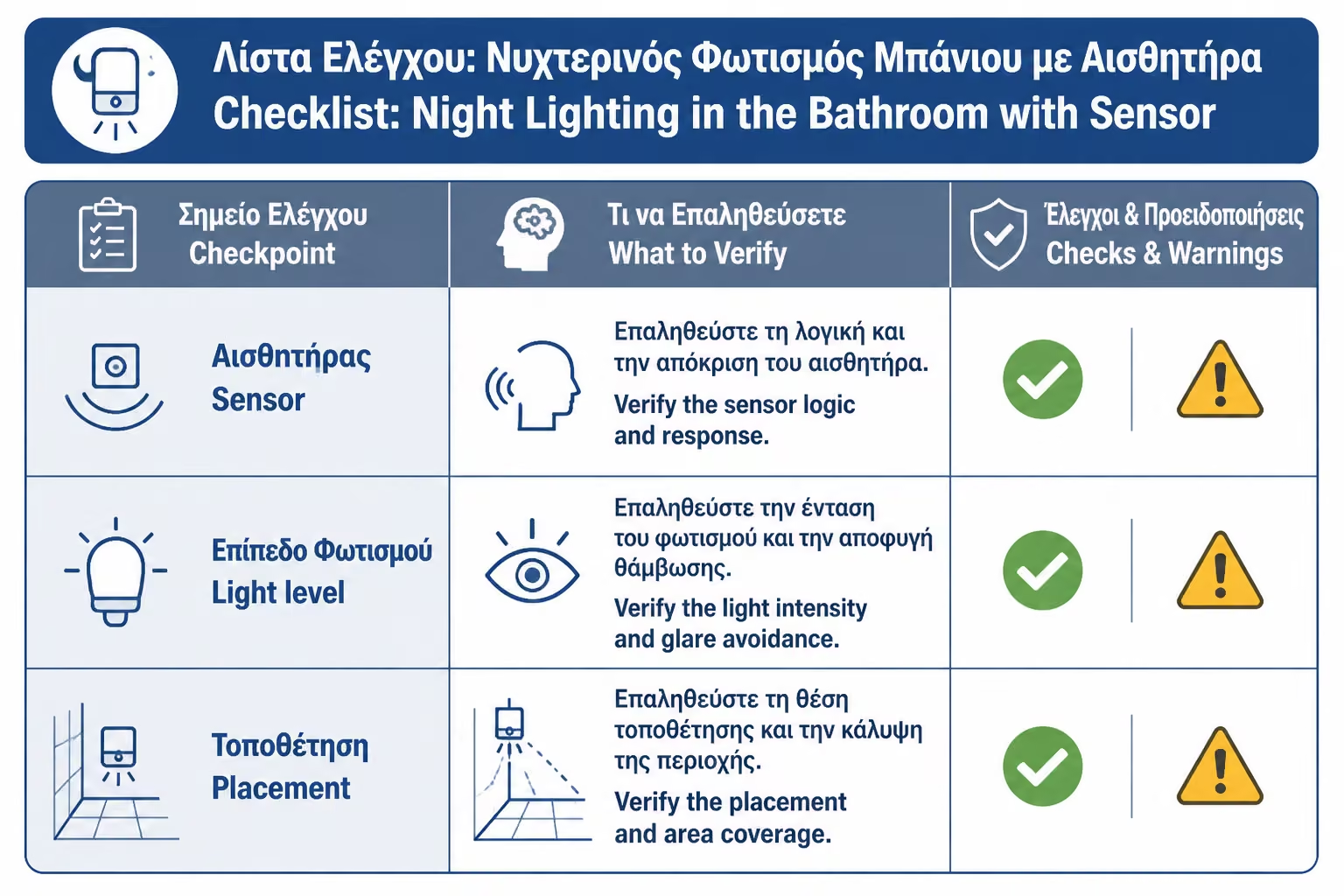
If you want night lighting in the bathroom, don't try to make the bathroom "a little brighter". Make it just as bright as needed for safe driving. The best night light is low, warm, indirect and automatic. It ideally illuminates the floor under a hanging piece of furniture or a low wall zone, not the face and the mirror. Pay attention to sensor location, time setting, IP suitability and driver access. Comfort at night is gained with a few right lumens, not more light.
Night lighting with a motion sensor is one of the small upgrades that really improve everyday life. It doesn't necessarily impress like a large LED mirror or a lighted alcove, but it makes the bathroom more comfortable, safer and friendlier to use at night.
The right solution is subtle. Low light, warm shade, correct position, sensor that activates only when needed and volume that does not disturb. If the light is blinding, if it lights up unnecessarily, or if the LED strip is sketchy, the application has lost its purpose.
In a new renovation, it is worth planning from the beginning. The supply, driver, profile, sensor and control mode can be integrated cleanly, without cables and clutter. In a finished bathroom, there are also simpler solutions, but attention needs to be paid to the aesthetics and suitability for a wet area.
The important thing is to remember the role of the night light: it is not work lighting, it is not a display decoration and it is not a substitute for general lighting. It's a gentle, intelligent level of light that makes nighttime bathroom use safer and more humane.
Return to category.
Go to categoryReturn to the central guide.
Go to guide