
Bathroom Waterproofing & Moisture Protection
Return to category.
Go to categoryIn a modern bathroom renovation, the shower is no longer treated as a simple point where "water falls". Especially in walk-in solutions, where the shower floor visually joins the rest of the bathroom, waterproofing becomes one of the most critical stages of the project. It does not show in the final result, it does not impress like a large tile or a linear drain, but it is what decides whether the bathroom will function properly after months and years of use.
The big question that comes up more and more often is which waterproofing technology is worth using: classic liquid-applied materials or waterproof fleece membranes, in other words the sheet membranes installed under the tiles. Both solutions can work if they are used correctly. But they are not the same, they do not forgive the same mistakes, and they do not suit every situation equally well.
In the Greek market, for many years the most common solution was the spreadable sealant: primer, one or two layers of liquid material, reinforcement in the corners and then tile adhesive. It is a familiar technique for many garages and can give a very good result when done with proper consumption of material and respect for drying times. The problem is that in practice it is often applied hastily, too thinly, or without proper reinforcement at critical points.
Fleece films are starting to gain traction precisely because they limit some of these mistakes. They come as a ready-made sheet of a certain thickness, are installed with glue or a special adhesive system and create a more controlled waterproofing layer under the tiles. It does not mean that they are a "magic solution" nor that they do not require technical attention. But it does mean that, especially on the shower floor, they give a more predictable base when the crew knows how to apply them.
The important thing for the owner is not to choose material based on an advertisement or a general phrase like "this is better". The important thing is that he understands where the risk is in his own bathroom: the floor, the mixer, the corners, the leaks, the joints, the substrate or the quality of the application. Only then can the sealing system be chosen correctly.
Spreadable sealants are materials that are applied in liquid or pasty form to the substrate, usually by roller, brush or spatula. After drying, they create a waterproofing layer under the tile adhesive. They can be cementitious, acrylic, polyurethane or other chemical based, depending on the system and use.
In the bathroom they are mainly used to protect floors and walls in wet areas. Their logic is simple: the material is passed over a clean and properly prepared substrate, dries, and then tiles are placed on top of it. In corners, floor-wall joints and pipe passages it is combined with strips or special pieces.
Their great advantage is flexibility. They can follow odd surfaces, small irregularities, niches, spots around pipes and details that a sheet of film has difficulty covering without cutting. It is also a familiar solution for many garages and, in simple applications, can be more economical.
The downside is that the quality is very application dependent. If the material is too thin, if the required layers are not inserted, if it does not dry properly or if the corners are not reinforced, the theoretically correct solution becomes practically weak. The owner cannot easily check this after the tiles are in, because the critical layer is now covered.
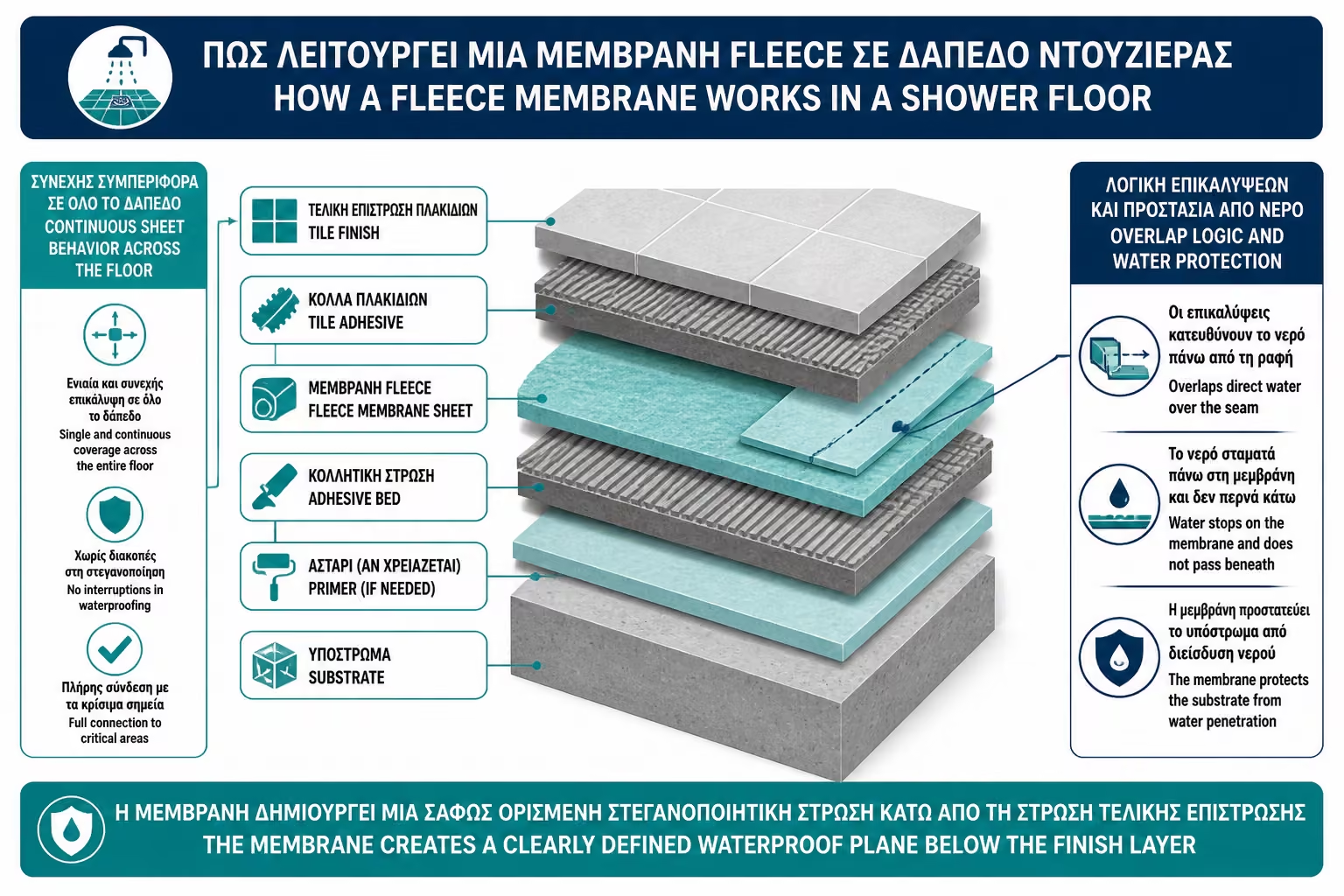
Waterproof fleece membranes are waterproofing sheets that are placed under tiles. They usually consist of a waterproof core and fleece surfaces on both sides, so they can be mechanically "bonded" with the glue or adhesive system. Fleece is not necessarily the waterproof element itself. Its role is to help bond the membrane to the substrate and to subsequent materials.
Their logic is more like laying a ready-made layer than creating a layer in situ. The technician applies glue or suitable material, places the membrane, presses it properly so that there are no gaps or bubbles, and then seals the joints with special tapes, coatings or pieces of the same system.
In European technical evaluation frameworks for wet areas, waterproofing systems are treated as “kits” with individual compatible components, such as membranes, adhesives, tapes, primers, special pieces and siphon connections. This is important, because it shows that waterproofing is not a single product but a system that must work as one.
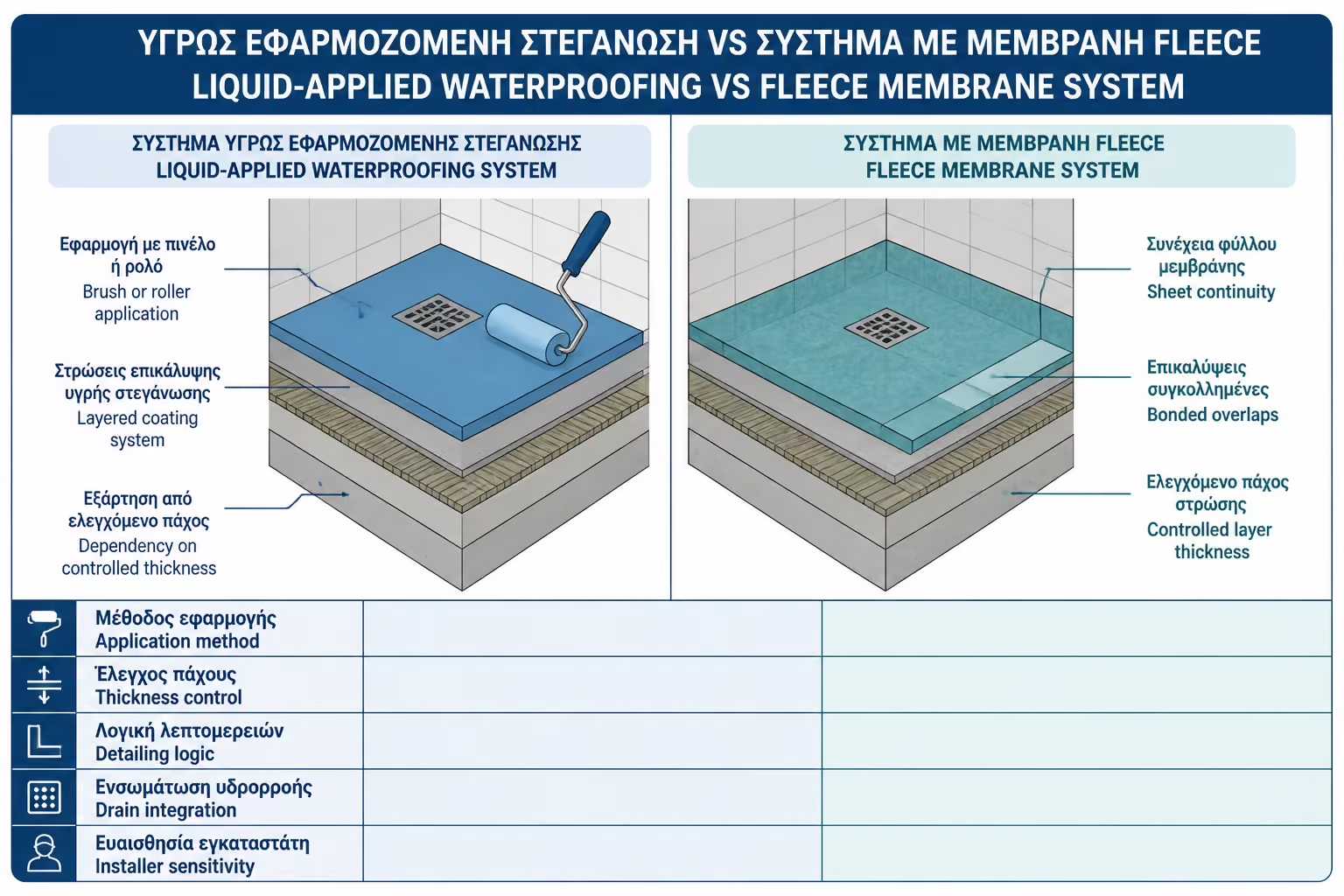
The main advantage of the fleece film is that it has a controlled thickness and a continuous form. It does not depend so much on whether the technician "pulled" the material too much or if the layer came out thinner in some places. This doesn't eliminate the need for proper application, but it does reduce a common problem with spreads: uneven consumption.
If we have to choose the most sensitive point in a shower, it is the floor. That's where the water collects, that's where the siphon is, that's where the user steps every day, that's where there are leaks, tile cuts and connections with the walls. In a walk-in shower, the floor acts almost like a small drainage basin without looking like one.
Water doesn't always just sit on the surface of the tile. It can pass through joints, micro-cracks, joints and points around the siphon. If there is no reliable waterproofing layer under the tile, the cement mortar can retain moisture. This does not necessarily mean that you will immediately see water on the ceiling of the lower floor. More often the first signs are more insidious: smells, blackened joints, moisture on the skirting board, swelling on the adjacent wall or the feeling that the bathroom "never dries".
On the floor, spreadable materials can work well, but they need thoroughness. They must be inserted in the correct layers, with the correct thickness, on mature cement mortar and with reinforcement at the level change points. Fleece membranes, on the other hand, give a more stable and uniform base, especially when the shower has large surfaces, a linear siphon or demanding use.
An owner may not know the difference on day one. Both systems will be hidden under the same tiles. The difference can be seen in the durability of the system when the shower is used daily, when it is cleaned with chemicals, when there are small movements and when the joints begin to strain over time.
The success of a spreadable system starts with preparation. The substrate must be stable, clean, free of dust, loose spots, oils or residues of old materials. The cement mortar must be cured as required by the system and must not release moisture that will affect adhesion.
The appropriate primer is then applied, when provided by the system. This stage is often underestimated, but it is critical. The primer helps to control the absorbency of the substrate and create better adhesion. If the substrate pulls sharply or is too tight and smooth, the sealant may not work properly.
Then the first layer of sealant is applied. In the corners, at the floor-wall joints, around pipes and around the siphon, reinforcing strips or special pieces must be inserted. A second layer follows, usually after the first has dried. The end result should be continuous, without gaps, holes, tears or very thin spots.
The problem in practice is that these stages are often compressed. In a bathroom that needs to be finished quickly, a thin coat may be applied, tapes may be omitted, or tiles may be installed before the material dries properly. Outwardly, nothing seems wrong. Under the tiles, however, the waterproofing does not have the strength it should.
Fleece membrane works differently. We do not expect the thickness of the seal to be created by the hand of the craftsman. The sheet already has its own fixed body. The job of the craftsman is to glue it correctly, integrate it into the substrate and reliably seal the joints.
The application here also starts from a clean, stable substrate. The appropriate adhesive or material provided by the system is applied and the membrane is installed without creases, bubbles or gaps. It is then pressed well so that it comes into full contact with the substrate. The strips must be joined in the manner specified by the system: with a coating, with a special tape, with a sealing glue or a combination of these.
The most critical point is the joints. Membrane as a sheet can be very reliable, but if the joints between the sheets, the corners or the connection to the siphon are made rough, the system loses its advantage. So it is not enough for someone to say "we have set sail". We need to know how it was joined, how it was sealed and if the siphon is compatible with such a system.
In a well-executed project, fleece membranes make very clear technical sense: ready-made waterproofing layer, less dependence on application thickness, quick work continuity and more controlled application. This is one of the reasons why walk-in showers are gaining ground, especially when the owner wants a more "sure" solution on the floor.
There is no single answer that fits every bathroom. Liquid-applied systems and fleece membranes follow a different logic. The right choice depends on the substrate, the drain, the project geometry, the intended use, the installer, and the budget.
Before you finalize the choice or installation, review the following points first:
| Criterion | Spreadable materials | Fleece membranes |
|---|---|---|
| Thickness control | It depends on the consumption and the hand of the craftsman | More stable, because the leaf has a specific shape |
| Application in complicated places | Very versatile solution for niches, pipes and details | It needs cuts, special pieces and careful joints |
| Speed of resume work | Depends on drying times | It often allows for more controlled continuity, depending on the system |
| Risk of application error | High if applied thinly or hastily | High mainly in joints and siphon |
| Suitability for shower floor | Good, if applied thoroughly | Very powerful choice, especially in walk-in and linear siphons |
| Material cost | Often lower | Usually higher |
| Experience required | It wants knowledge of thickness, times and reinforcements | It wants knowledge of system, compounds and details |
If the crew has real experience with liquid-applied systems and follows the application instructions properly, the result can be excellent. But if the project is demanding, or there is a risk that the work will be done approximately rather than carefully, a fleece membrane offers an extra level of control. It does not turn a poor installer into a good one, but it does reduce some variables.
Fleece sheets didn't become popular just because they are newer technology. They are gaining ground because they answer a real market problem: variable application quality. On many projects, the owner has no way of knowing if the coating material was applied to the correct thickness, if two hands went in, or if the times were met. With the membrane, at least the basic waterproofing sheet is visible and inspected before it is covered.
A second reason is the rise of walk-in showers and linear drains. These structures have a greater demand on the floor because there is no ready shower to hold the water. The seal must cooperate with the slope, siphon and joints. Fleece films fit this logic well, especially when there are ready-made pieces for corners, siphons and joints.
The third reason is predictability. In a renovation project, time is of the essence. Spreadables require waiting between coats and attention to drying conditions. Diaphragms, when properly applied, can give cleaner programming. This does not mean that the work should be done in a hurry, but that certain uncertainties are reduced.
Finally, sheet membranes give the owner a more tangible sense that a real waterproofing layer has been installed. That is not the most important technical criterion, but in practice it does help. The owner can see the membrane before the tiles are laid and better understand the stage being paid for.
Just because fleece liners are gaining ground doesn't mean they're without weaknesses. The first pitfall is a false sense of security. Because the material looks more "ready", some people think that it is enough to lay it on the floor and the problem is solved. It's not like that. The joints, corners and siphon are just as critical as the sheet itself.
The second pitfall is poor placement. If the film is not properly pressed into the adhesive, gaps or bubbles may be left. If the overlays are not the right width or are not sealed properly, weak points are created. If the wrong cut is made around the siphon, water can pass right through where it is supposed to be most protected.
The third pitfall is material incompatibility. Not all systems are the same. A membrane may require a specific adhesive, specific tapes, specific pieces or a specific way of joining. If the technician randomly combines products from different companies without technical logic, the result may be uncertain.
There is also the issue of cost. Fleece films usually raise material costs compared to a simple spread. In a small bathroom, the difference may not be huge in the overall project, but it is there. The question is not whether it is a cheaper or more expensive solution. The question is whether the extra cost actually reduces the risk in that particular build.
Spreadable materials have one basic characteristic: they look simple, but their correct application is not simple. The owner sees a craftsman rolling a material and may consider the job done. But whether this layer has sufficient thickness, whether it has properly covered the corners and whether it has dried properly is not easy to see with the naked eye.
Many failures start with consumption. Each material has a suggested consumption per square meter. If too little is applied, the layer becomes thin and vulnerable. On construction sites where there is cost pressure, the material can be "stretched" more than it should be. This is not necessarily visible on the day of application, but affects durability.
Another problem is the times. If the second layer is applied too early or if the tiles are stuck together before curing is complete, adhesion issues may arise. In a bathroom without good ventilation, with low temperature or high humidity, the times may change. The application should not be done mechanically, as if all conditions were the same.
Finally, smears are more susceptible to injury before they are covered. If someone walks on the layer, if tools are dropped, or if subsequent work is done carelessly, minor damage can occur. That is why construction site organization is needed and not just "we passed waterproofing".
For the shower floor, especially in walk-in constructions, fleece membranes have a strong advantage when applied as a complete system. The reason is that the floor receives the most stress, has the siphon, has leaks and is connected to the walls. A ready-made, continuous film can give more confidence than a spread which depends on the thickness and care of the application.
This does not mean that liquid-applied systems should be dismissed. In many cases, a quality liquid-applied system with a proper primer, two coats, corner tapes, and a careful connection to the drain can be entirely adequate. Especially on walls, alcoves, small details, or areas with awkward geometry, liquid-applied materials remain very useful.
In practice, a very good solution is often the combination: fleece membrane on the floor of the shower and in the critical points, spreadable or compatible system on the walls and details. But this must be done as a planned system, not as an improvisation. We don't mix ingredients because "something will last". It needs compatibility.
If the owner wants a clear practical answer, it is this: for a walk-in shower floor, especially with a linear drain or large tiles, it is seriously worth asking about a fleece membrane system. For simpler showers, or for walls, liquid-applied materials can be a very good solution as long as they are applied correctly.
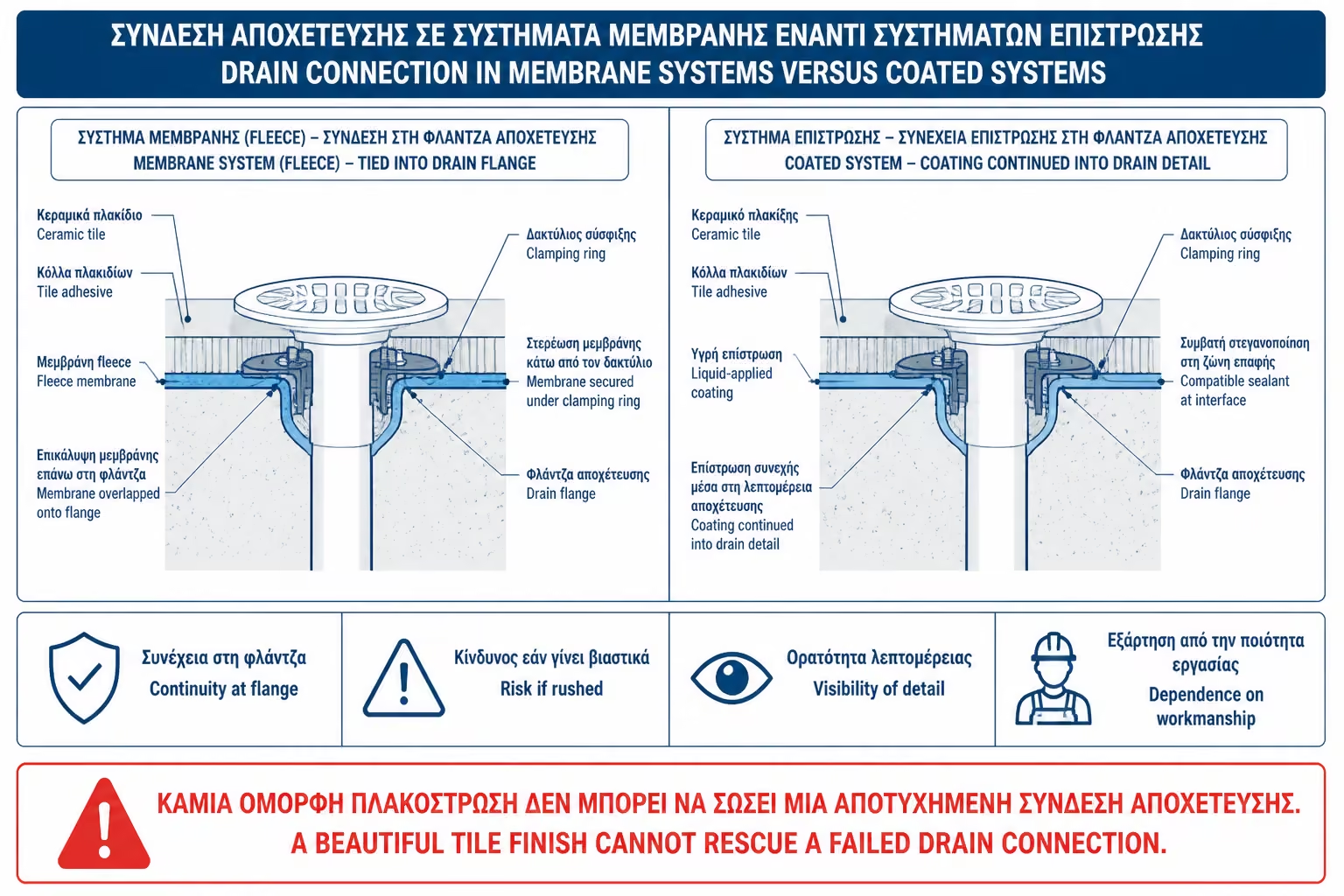
Whatever technology is chosen, the siphon remains the most dangerous point. It is the point where the seal breaks to allow water to pass down the drain. If the connection is not done correctly, water can seep under the tiles, even if the rest of the floor is properly sealed.
In systems with a fleece membrane, a siphon designed for such an application, with a flange or a special connection piece, is ideally used. The membrane must be joined to the siphon in the manner specified by the manufacturer. It should not be roughly cut around the grill and then "sealed" with some silicone.
In greased systems, the same problem is addressed with special collars, tapes or reinforcements around the drain. And here silicone is not the main seal. It is a final auxiliary sealant in certain places, not a solution for connecting the drainage to the waterproofing.
A common mistake is to first buy the siphon based on appearance and then have the workshop try to fit it to the sealing system. The correct order is reversed: first the technical solution is selected, then the siphon compatible with it.
The walls do not receive the same kind of stress as the floor, but they receive water, steam and cleaning agents every day. In a proper construction, the waterproofing does not stop at the floor. It rises to the walls of the shower zone at a height that makes sense for the use and layout of the bathroom.
On walls, plastered materials are often very practical. Corners, niches, batteries, piping and irregularities are easily followed. If properly applied with tapes at the corners and suitable collars at the passages, they can give reliable protection.
Fleece films can also be used on walls, especially when we want a complete system. On large flat surfaces they work well. In many small details, however, they require more cutting and correct joints. There you need a craftsman who knows the system, otherwise the theoretical superiority of the material can be lost by bad application.
In many projects, the best practical solution is membrane on the floor and low critical points, with a spreadable system on the walls and details. But this must be done with materials that cooperate with each other. The phrase "we will put a little of this and a little of that" is not a technical study.
Neither the best film nor the best spreadable material can work properly on a bad substrate. If the cement mortar is loose, if it has dust, if it has moisture, if it rubs or if the wrinkles are wrong, the waterproofing already starts with a disadvantage.
In old bathrooms, the substrate is often more problematic than it appears. After stripping, old fillings, cracks, rough repairs or old damp spots may be revealed. If these are covered in haste, the new system will rest on a weak foundation.
For fleece membranes, the substrate must be smooth enough for the sheet to bond properly without gaps. For liquid-applied systems, the substrate must be stable and correctly primed so the material can form a continuous layer. In either case, the floor slopes must already be right. Waterproofing does not correct bad geometry. It simply follows the error.
A practical example: if there is a small low spot on the shower floor before the drain, water will pool there whether you use a membrane or a liquid-applied product. Waterproofing may protect against leakage, but it will not solve the functional problem. That is why the correct sequence is always substrate, screed work, waterproofing, then tiles.
Sealing costs depend on shower size, area, workshop, access, floor, substrate condition, material system, whether VAT is included and whether the quote is for materials only or materials plus labour. That is why prices should always be read together with the scope of work.
In general, spreadable materials have lower material costs, especially in simple applications. Fleece films usually have a higher cost per square meter because they include the sheet, special tapes, corners, collars and often more demanding work at the joints. However, in the totality of a bathroom renovation, the difference is not always as great as the owner thinks.
Before you finalize the choice or installation, review the following points first:
| Selection | Indicative picture of costs | When is it justified? |
|---|---|---|
| Lubricated system | Usually cheaper in terms of material | In simple showers, walls, details and when there is an experienced application |
| Fleece membrane on the floor | Higher material and detail costs | In walk-in, linear siphons, large surfaces and an increased need for safety |
| Combined system | Medium to higher cost, depending on materials | When we want membrane on the critical floor and flexibility on the walls |
| Complete branded system with special parts | More accurate but more controllable solution | In demanding bathrooms, hotel use, frequent use or high reliability requirements |
In practice, for a shower, the economy in waterproofing is one of the most dangerous economies. If a better solution raises the overall cost of the bathroom by a small percentage, but seriously reduces the risk of leakage, it is usually worth it. Conversely, a very cheap quote that does not mention system, tapes, siphon and materials can prove expensive when tiles need to be stripped.
A good quote shouldn't just say "shower waterproofing". This is very general. It must describe what materials will be used, where, how and if the necessary system components are included.
If the quote is for a spreadable material, it must state if a primer will be included, how many coats will be applied, if corner tapes will be installed, what will be done around the siphon and how high the waterproofing will go up the walls. If it concerns a fleece membrane, it must state whether joint strips, corners, special pieces for piping and connection to the siphon are included.
It is very important to ask for the system to be listed and not just the generic item. Another "fleece film" and another "fleece film with the corresponding strips, corners and compatible glue". Another "waterproofing" and another "two layers of primer and sealing tapes at the joints".
If the technician cannot explain how to seal the siphon, this is a warning sign. The siphon is not a detail. It is the center of the drainage system.
Spreadable material is a good choice when the application is done by an experienced crew and when the project has many details that need flexibility. On shower walls, alcoves, areas around mixers and small surfaces, it can work very well.
It is also a reasonable solution when the bathroom does not have a particularly demanding walk-in layout, when the mixer is simple and properly integrated, and when the owner has a clear, detailed offer that describes the application steps. The key is thoroughness, not just material selection.
I wouldn't choose it as a "cheap fix" on a shower floor where fit is in doubt. If the repair shop does not specify thickness, coats, times and tapes, the coating can easily become a standard coating that simply reassures the owner without providing the protection they expect.
Simply put: the spreadable is a good tool in the right hands. However, it is not a solution that should be applied casually because "this is how we always do it".
Fleece membrane is a particularly good choice for walk-in shower floors, linear drains, heavy-duty bathrooms and homeowners who want a more controlled solution under tiles. It is also useful when we want to reduce the uncertainty of the application thickness.
It is especially worth it when the shower is on the same level as the rest of the floor, when there is no "basin" to hold the water, when the floor has a large surface or when failure would create serious repair costs. In such cases, the extra cost of the membrane is often justified.
But it is not enough to simply put "a cloth". A proper system must be put in place. The joints must be sealed, the corners reinforced, the siphon compatible and the membrane glued without gaps. If these are not done, the membrane loses its main advantage.
The best option is to ask the authority for a full description: which membrane, which tapes, which glue, what is done in the corners, what is done in the siphon and how it is connected to the walls.
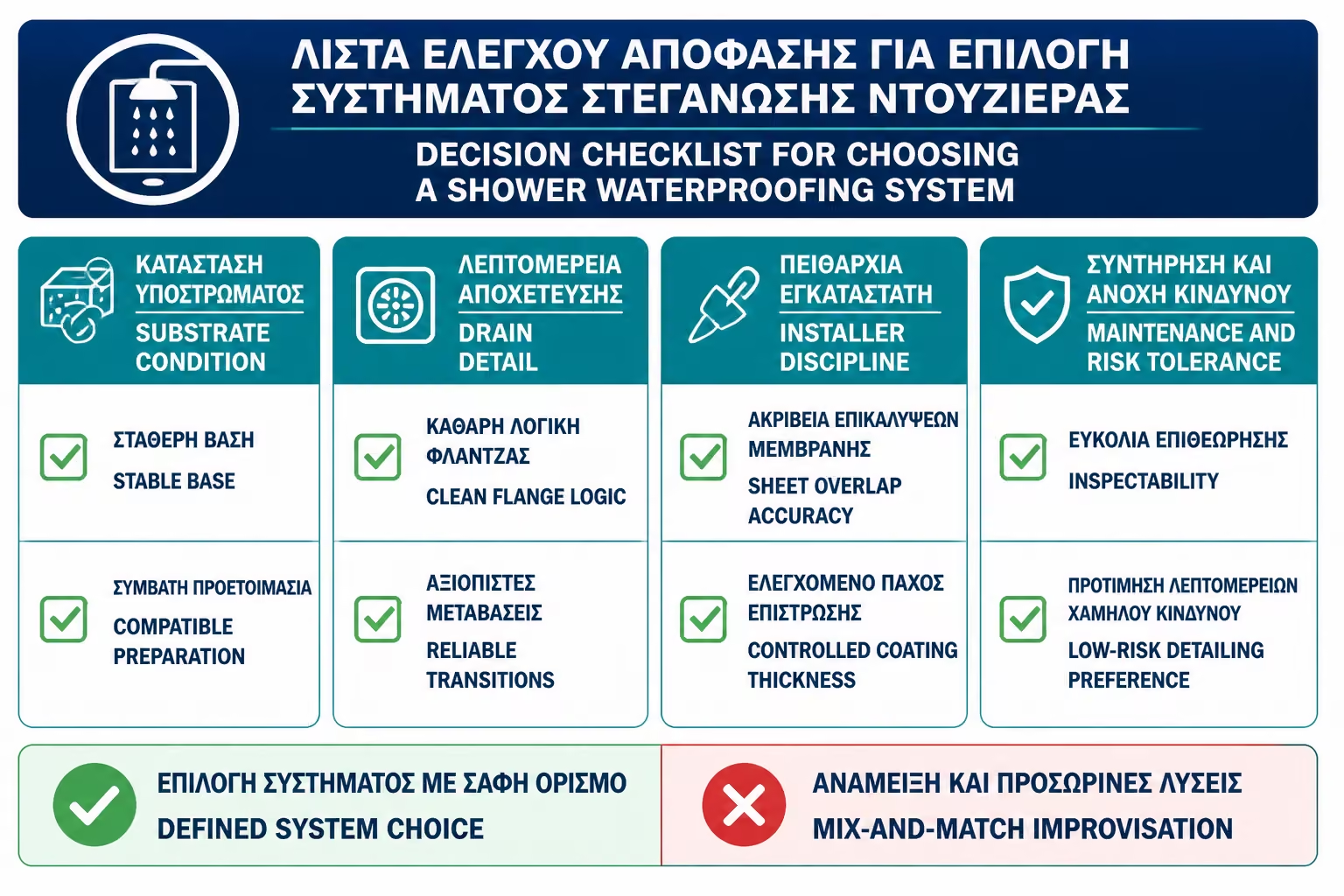
Before deciding between a fleece membrane and a spreadable material, it's worth asking some very practical questions. You don't have to be a techie. But you need to ask for clear answers.
Before you finalize the choice or installation, review the following points first:
| Question | Yes / No |
|---|---|
| Is the shower a walk-in without a ready basin? | Yes / No |
| Is there a linear siphon or a demanding drain? | Yes / No |
| Has the siphon been checked for compatibility with the sealing system? | Yes / No |
| Does the quote mention specific material and not just "waterproofing"? | Yes / No |
| Are tapes included in the corners and joints? | Yes / No |
| Is there a special solution around piping and siphon? | Yes / No |
| Is proper primer provided where appropriate? | Yes / No |
| Will the substrate and leaks be tested before waterproofing? | Yes / No |
| Does the workshop have experience with this particular system? | Yes / No |
| Does the offer separate materials, labour, VAT and what is included? | Yes / No |
| Has it been agreed how high the waterproofing will go up the walls? | Yes / No |
| Is there a clear waiting time before tiling? | Yes / No |
If the answers are vague, the problem is not necessarily the hardware. It is that the task is not described correctly. And in sealing, ambiguity is often the beginning of failure.
If you have to keep only one thing, keep this: for the floor of the walk-in shower, the fleece membrane is worth serious consideration, not because it is "fashionable", but because it gives a more controlled waterproofing layer in the most difficult part of the bathroom. But don't just pay for "cloth". Ask for a complete system: proper gluing, joint tapes, corners, compatible siphon and clean connection to the walls. If these are missing, the membrane simply becomes a more expensive material on top of a rough application.
The comparison between waterproof fleece membranes and spreadable materials should not be made in absolute terms. Both technologies can provide reliable sealing, but only when used correctly, in the right place and as part of an integrated system.
Spreadable materials remain very useful, especially in walls, details and applications where flexibility is important. However, they want meticulous application, correct thickness, adherence to times and reinforcements at critical points. Fleece membranes, on the other hand, offer greater predictability on the shower floor and are therefore gaining ground, especially in walk-in constructions.
For an owner, the best decision is not to simply ask for “the best hardware”. It is to ask for a purely technical solution. Which system will go in? How will it connect to the siphon? How will the corners be protected? How will the floor join the walls? How will the substrate be tested before it is covered?
If the shower is a walk-in, if there is a linear siphon or if you want to reduce the risk in the most sensitive part of the bathroom, the fleece membrane on the floor is a very serious choice. If the project is simpler or if there is a lot of detail on the walls, a good paintable system can be perfectly suitable. In many cases, the best solution is not one or the other, but the right combination of them.
Return to category.
Go to categoryReturn to the central guide.
Go to guide