
Bathroom Waterproofing & Moisture Protection
Return to category.
Go to categoryOne of the most common and dangerous myths in bathroom renovation is that "if we put good grout, we don't have to worry about moisture". Even more often the phrase is heard: "We will put expensive water-repellent grout, so water will not pass through". The phrase sounds logical, because the joint is the point between the tiles, so it looks like the natural barrier against the water. Technically, though, this logic is wrong.
Grout is not waterproofing. It is a joint filler. It protects the finished surface, improves cleanliness, reduces absorption, stabilizes the appearance of the paving and, depending on its quality, can have better resistance to moisture, stains, mold and cleaning agents. But it is not designed to be the basic waterproofing layer of a bathroom or shower.
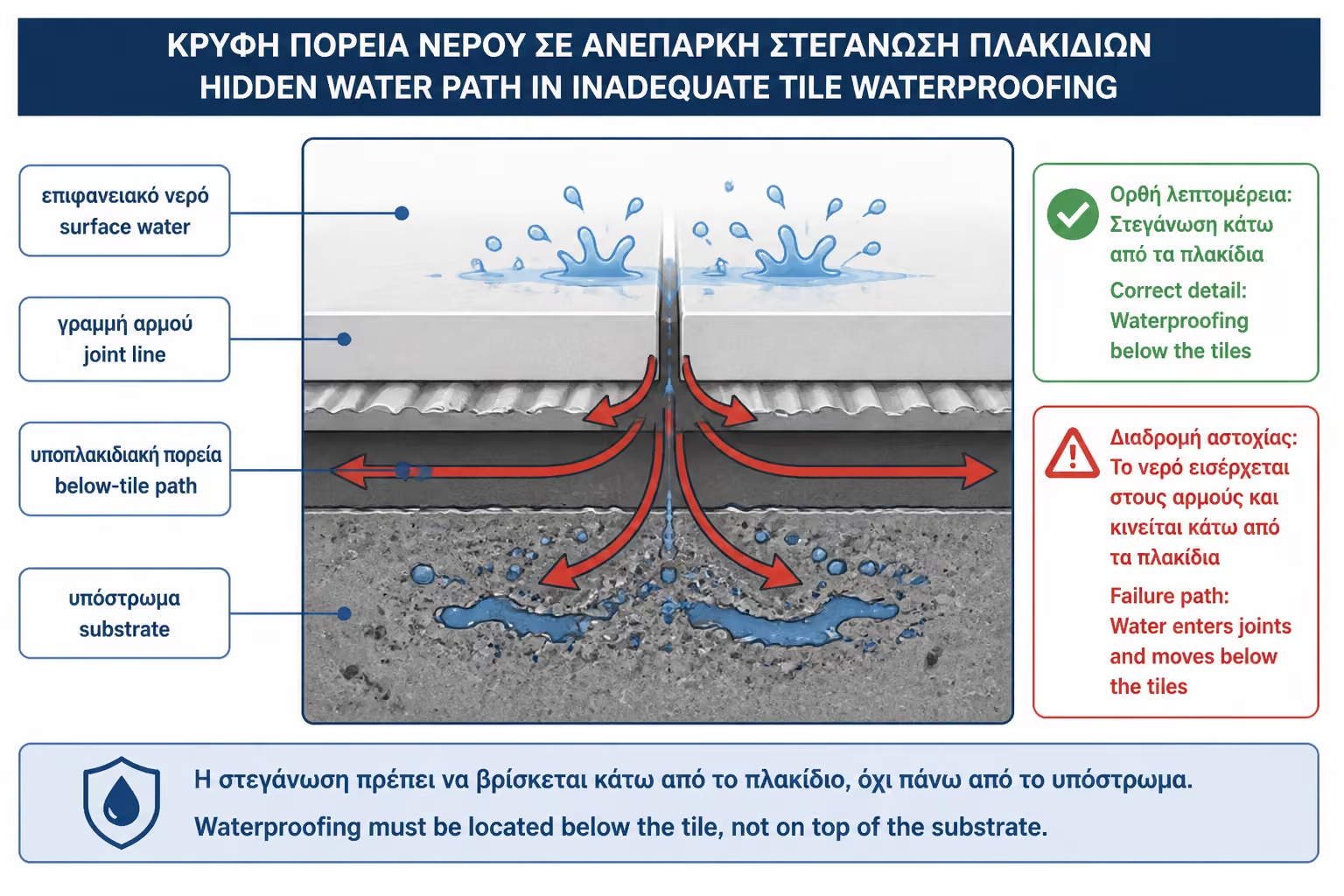
Water in a bathroom does not move only "over" the tiles. Over time, it can work its way through micro-pores, micro-cracks, imperfect joints, corners, aging silicone, cuts around drains, mixer penetrations, and any point where the finished surface is interrupted. Even when grout is water-repellent, that does not make it a fully waterproof membrane. It only means that it slows down water absorption. It does not take over the role of waterproofing.
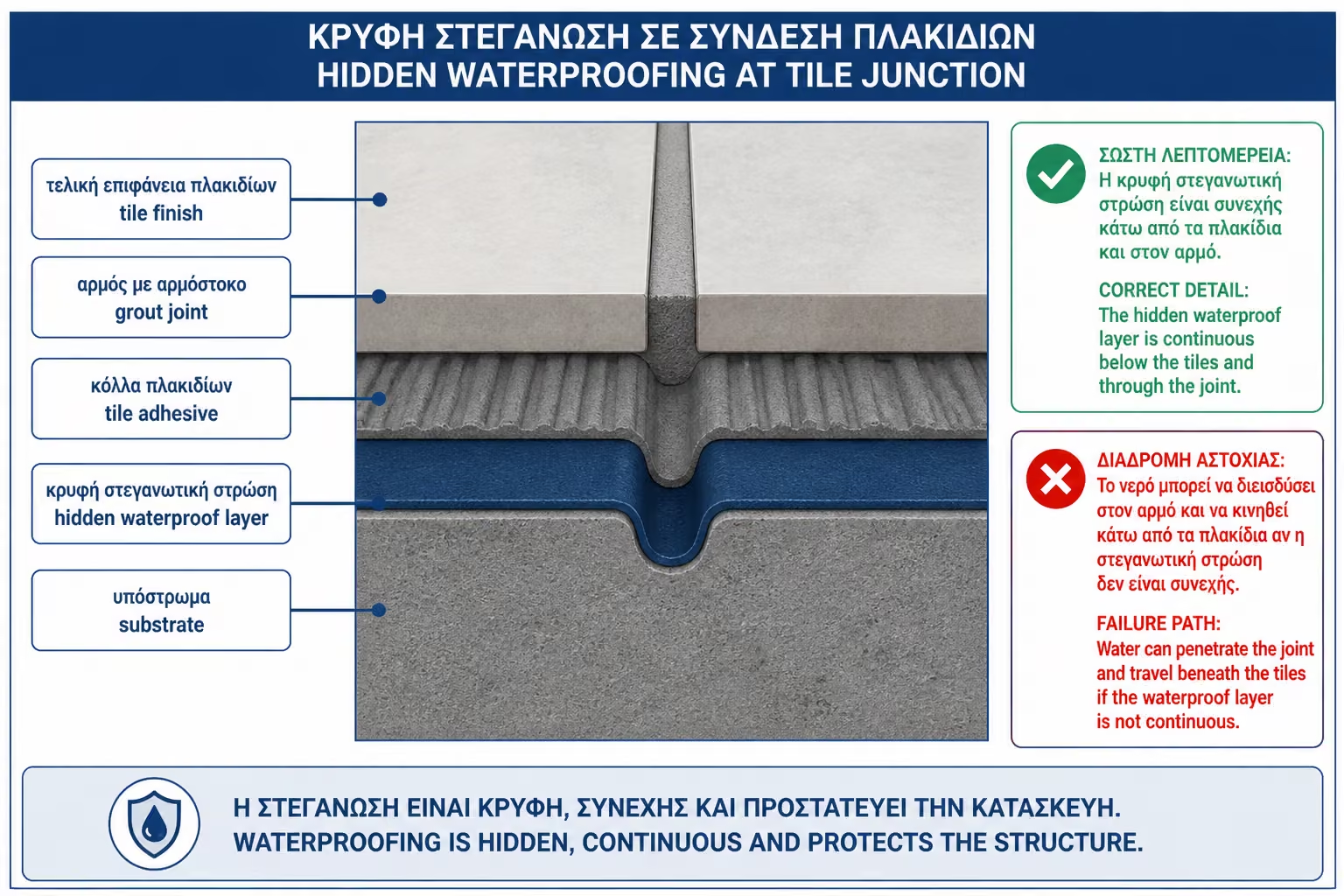
Correct bathroom construction is based on another logic: there must be a waterproofing system under the tiles. Tiles and grout are the finishing touches. Waterproofing is the real defense. If the water passes through the finished surface, it must find a continuous membrane underneath, correct corner tapes, cuffs on the supply and a correct connection to the siphon. If this system is not in place, then water can reach the adhesive, cement mortar, plaster, drywall or even the slab.
This guide explains what grout actually does, why even expensive water-repellent grout isn't waterproof, how water gets under tiles, what the difference is between cementitious, enhanced, and epoxy grout, and what a homeowner should check before believing that "good grout" is enough to protect the bathroom.
The grout fills the gaps between the tiles. Without it, the paving would have open lines where dirt, moisture, salts and microorganisms would collect. The joint helps the surface to be cleaned more easily, gives a final aesthetic image and protects the edges of the tiles.
In addition, the grout helps to manage small tolerances in the paving. The tiles must not be placed close to each other. They need a joint for expansions, tolerances, temperature changes and construction behavior. The joint is part of the finished lining, not an unnecessary gap.
In wet areas, the right grout is of great value. A good water repellent grout can reduce water absorption, stain less, resist mold better and maintain a better look for more years. But this does not turn it into a waterproofing membrane.
The key point is that the grout is on the finished surface. Under it there is glue, tile, substrate and, if the bathroom is done correctly, waterproofing. If the construction relies on the grout as the only defense against water, then the sequence of layers has been designed incorrectly.
Waterproofing must create a continuous, controlled and durable barrier against water. It must cover surfaces, corners, siphons, supplies and material changes. It must have a specific thickness, be applied in layers, cooperate with tapes, cuffs and flanges, and be under the final lining.
Grout does not have this function. It is a linear filler between the tiles. It does not cover the entire surface, does not create a continuous layer under the tile and does not protect the places where moisture can pass through corners, siphons or supplies. Even if it has low absorption, it cannot function as a single membrane.
Also, the grout is exposed to use. It is pressed, cleaned, rubbed, accepts soaps, salts, cleaners and temperature changes. It may wear, crack, stain or peel off locally. Waterproofing, on the other hand, must be protected under the tiles so that it is not easily injured.
The correct phrase is: grout reduces the penetration of water into the finished surface, but does not replace waterproofing. If water gets through the joint, the system must be ready to deal with it from below.
The term "water repellent" is often misinterpreted. Many people hear him and think "no water gets through". In practice, water repellent means that the material has reduced absorption and better resistance to water than a simple grout. It does not mean that it is a completely waterproof barrier.
A water-repellent grout can cause water to collect in droplets on the surface for a period of time. May delay penetration. It can resist stains and mold better. But if the water stays on it for a long time, if there are microcracks, if it is worn or if the application was not done correctly, the protection is reduced.
Also, grout is not the only possible entry path for water. Even if the joints are very good, there are still corners, drain joints, pipe penetrations, silicone joints, shower-enclosure profiles, and tile cuts. If these areas are not properly sealed underneath, water-repellent grout cannot save the system.
So the term should be read correctly: better behavior in water, not a substitute for waterproofing.
Water can get under tiles in several ways. It can slowly seep through porous or worn joints. It can pass through small cracks that are hard to spot. It can enter from corners where the silicone has opened. It can pass around drains, mixer penetrations, or enclosure profiles. It can also seep through areas where the adhesive does not fully support the tile and voids remain underneath.
When water passes under the finished surface, it does not necessarily mean that a leak will occur immediately. It can stay in the glue, move under the tiles, find a slope, reach a corner or siphon, be absorbed by cement mortar or plaster. This is why many leaks are slow to appear. The water works slowly and quietly.
In a proper construction, there is waterproofing under the glue. So even if water passes through the joint, it does not reach the substrate. It may surface on the membrane and return to the runoff or dry out over time. In a wrong construction without waterproofing, the water reaches directly into the cement mortar or the wall.
This is why the waterproofing must be under the tiles. We don't design the bathroom with the assumption that water will never seep through the joints. We design it knowing that some amount of water can get through, and we make sure there is a second, real defense underneath.
Expensive grout can be a very good choice. It can have better workability, higher strength, lower absorption, better color stability, anti-mold behavior and better appearance. This does not mean that it can take on the role of waterproofing.
The mistake is to use expensive grout to justify skipping other steps. For example: "We didn't put waterproofing on the walls, but we put very good grout." Or: "No corner tape needed, good joint and silicone will do." These logics transfer responsibility to a hardware not designed for this role.
The grout is the last visible layer. Waterproofing is the hidden technical layer. If the second is missing, the first cannot make up for it. It is like wearing a good coat but not having a roof over a house. It may help for a while, but it is not the main protection.
The correct approach is to use good grout over proper waterproofing. Not instead of her.
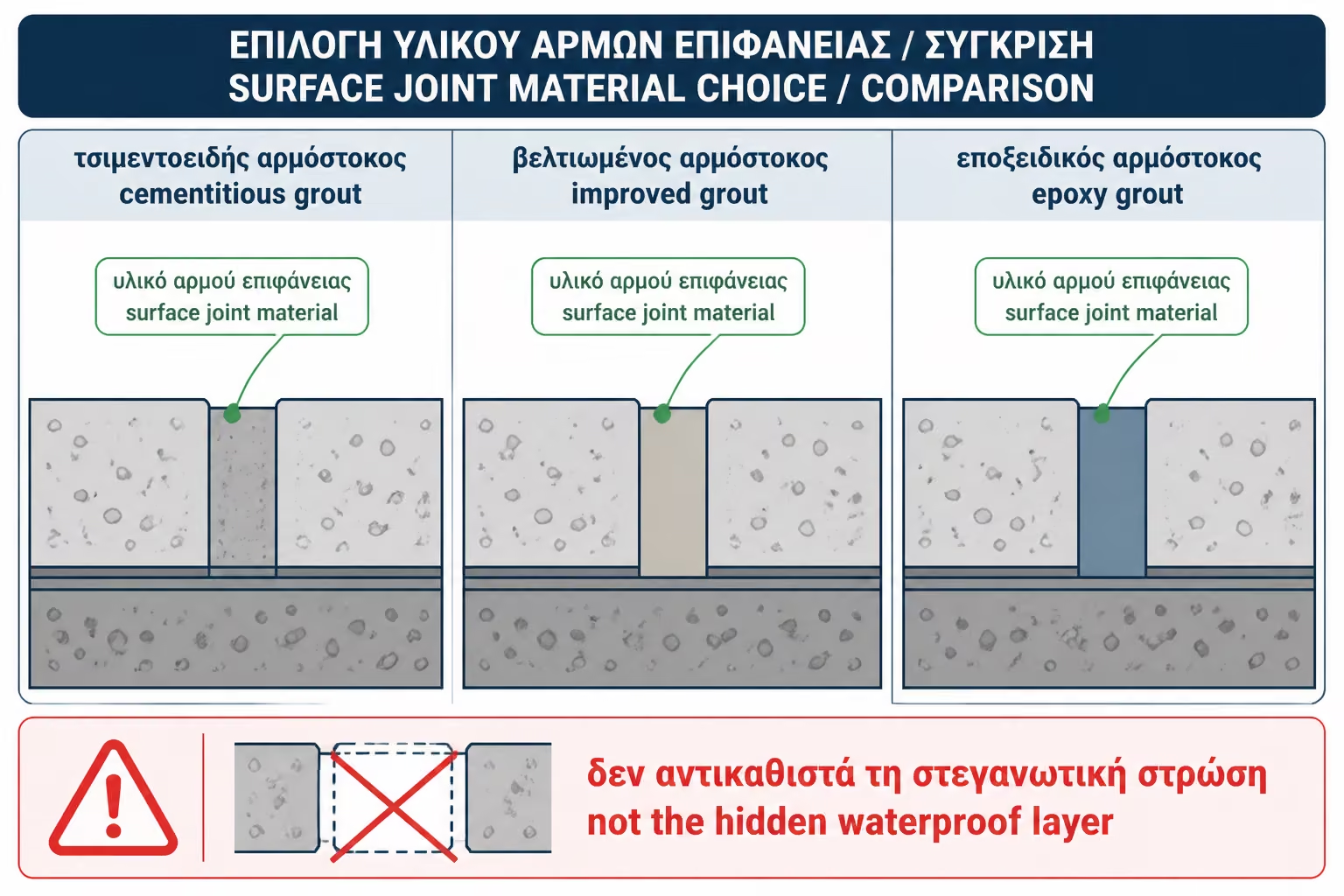
The most common grouts are cementitious. Plain cementitious grouts have basic performance and may be suitable for less demanding applications. In bathrooms and showers, improved grouts with water repellent, anti-mold or polymer additives are usually preferred because they have better behavior in moisture and cleaning.
There are also epoxy grouts, which have very low absorption, high chemical resistance and better stain behavior. They are more demanding to apply, more expensive and often used in demanding areas, professional kitchens, swimming pools or high stress showers. However, even epoxy grout should not be used as an excuse for not waterproofing under tiles.
The difference is significant: an epoxy grout can greatly reduce water penetration from joints. However, it does not seal the siphon, supplies, corners, cabin perforations or gaps under tiles. It does not create a uniform membrane under the lining.
So, choosing the best grout is right when it comes to complementing a good system. It is wrong when used to replace the system.
Even a good grout lives in a difficult environment. In the shower, he receives daily water, soaps, shampoos, cleaners, salts, scrubbing, temperature changes and small movements. Over time, it can get dirty, lose some of its water repellency, open in places or show microcracks.
Wear and tear does not necessarily mean poor quality. It means that the grout is the final exposed surface and needs maintenance. However, if there is proper waterproofing underneath, the wear of the grout does not directly lead to construction leakage. If there is no waterproofing underneath, then any deterioration of the joint becomes a possible entry of water into the substrate.
This is the basic meaning of multi-layer protection. The finish must be good, but it shouldn't be the only defense. As the years go by, the grout may need cleaning, repair or replacement. However, the waterproofing must continue to protect the construction.
Joint maintenance is important, but is no substitute for proper initial sealing.
At wall-to-wall and wall-to-floor corners, simple rigid grout should not be used as if it were a flat surface. Corners are level change and often micro-motion joints. That is why the final surface usually needs an elastic sealant, such as a suitable silicone, while there must be sealing strips underneath.
If a corner is filled with only cementitious grout, it may crack with movement. The crack may be very thin, but still allow water to pass through. If there is no tape and waterproofing underneath, the water will move towards the substrate.
The silicone finish on the corners helps, but it's not the essential waterproofing either. The correct sequence is: elastic tape under the tiles at the waterproofing level, correct tiling, then elastic final sealing at the level change. If the tape is missing, the silicone takes on too much of a role.
Corners are exactly where the grout myth becomes most dangerous. "Good joint" is not enough. Needs proper sealing detail.
Water does not pass only through the joints between tiles. It also moves through cuts around drains, supply penetrations, pipes, mixers, enclosure supports, and special fittings. These points are often covered by escutcheons, grilles, or silicone, but the real protection has to be underneath.
Around the siphon, the grout cannot replace the sealing gasket. The siphon-cement-mortar-waterproofing joint must have been done before paving. If water gets under the tile around the drain, it needs to find a tight connection to the trap, not just grout around the grate.
Around mixer penetrations, grout does nothing if water gets behind the escutcheon. At that point, pipe collars or cuffs are needed at the waterproofing level. The visible escutcheon is a cover, not a membrane.
All of these cuts are where the finish lining is interrupted. So protection cannot be based on grout. It must be based on proper waterproofing underneath.
When there is no waterproofing, water passing through joints or details reaches the adhesive and the substrate. If the substrate is cement mortar, it can absorb moisture. If it is plaster, it may show swelling or moisture. If it's drywall or drywall, the damage can be more severe. If it's wood or OSB, moisture can cause swelling and decay.
At first it may not seem like anything. The bathroom can function normally. But over time, signs appear: blackened joints, damp smell, swelling in adjacent walls, dampness downstairs, peeling tiles or a hollow sound. By the time the problem shows up, it has usually already been working under the surface for some time.
If there was proper waterproofing, the water would stop under the tile. Without it, the water continues until it finds absorbent or weak material. That's why serious bathroom renovations don't just rely on "good joints."
The tile, glue and grout are final cladding. But the bathroom must be watertight before we get to the final lining.
Even the best grout can't fix tiles that are stuck with gaps underneath. If the adhesive does not have full coverage, especially on a shower floor, micro spaces can be created under the tile where water collects. This can lead to blackened joints, hollow sound, adhesive wear and local delamination.
In showers and wet zones, the adhesive must be compatible with the waterproofing and applied correctly. On large tiles, a double coat is often required for better coverage. If there are gaps under the tile, the grout on the surface just hides the situation until the problem starts.
Grout also does not correct misalignments. If the water pools on the floor, the joints will be stressed more. Even a good water repellent joint will tire if it is constantly under standing water.
Sealant, adhesive, grout and grout must all work together. One material cannot at the end correct all previous mistakes.
Epoxy grout makes sense in demanding applications where we want very low absorption, high stain resistance and better cleaning behavior. In showers, business areas, spas, swimming pools or high-use areas, it can be an excellent choice.
But even epoxy grout should not be used as a substitute for waterproofing. It significantly reduces how much water passes through the joints, but it does not protect every other vulnerable point. It does not connect the membrane to the drain. It does not seal supply penetrations behind escutcheons. It does not replace corner tapes. It does not protect against unsealed enclosure fixings.
Additionally, epoxy grout requires expert application. If applied incorrectly, it can leave residue, make cleaning difficult or create aesthetic problems. It's good stuff, but it's not a magic solution.
Its best use is as an upgrade to the finished surface over an already properly sealed substrate. Not as a replacement for waterproofing.
The grout myth leads to repeated mistakes. Some seem small at first, but pose a serious risk over time.
Before you finalize the choice or installation, review the following points first:
| Error | Possible consequence | Correct approach |
|---|---|---|
| We believe that water-repellent grout is waterproofing | Failure to properly seal | Waterproofing under the tiles |
| Using good grout instead of corner tapes | Corner cracks and water ingress | Sealing tapes under tiles |
| Joint support around siphon | Leakage in drain | Sealing gasket and membrane connection |
| Rosettes without pipe collars | Water behind facilities | Cuffs at the level of waterproofing |
| Grout on poor paving | Hollow tiles, water in gaps | Proper glue and full coverage |
| Rigid grout in corners | Cracks from micro-movements | Rubber sealant at the end and tape underneath |
| Poor joint maintenance | Tanning, microcracks, absorption | Cleaning and repair where necessary |
| Epoxy grout as a "magic solution" | False security | Epoxy as a complement to a proper system |
A typical example is a shower where the walls were not waterproofed because "expensive grout was used". For a while, everything looked fine. After a few months, moisture appeared behind the mixer wall. The problem was not that the grout was poor. It was that it had been asked to do a job that was never its role.
Grout costs vary depending on type, grade, color, joint width, tile size and labor. A simple cementitious grout is more economical. An improved water repellent costs more. Epoxy is clearly more expensive and more demanding to apply.
In a typical bathroom of about 5 sq.m. in the Greece of 2026, where a simple to medium renovation can cost around €3,200–5,500 and more demanding solutions with walk-in, linear siphon, full waterproofing and custom cabin can reach around €6,000–7,500 or more, choosing a good grout is a small but important part of the project. However, it should not be used to cut waterproofing.
Before you finalize the choice or installation, review the following points first:
| Grout type | Advantage | Limit |
|---|---|---|
| Simple cementitious | Economical for simple applications | Limited behavior in humidity |
| Improved water repellent | Better resistance to water and stains | It is not a waterproofing membrane |
| Epoxy | Very low absorption and high resistance | More expensive, difficult application, does not replace waterproofing |
| Elastic silicone on the corners | Absorbs movements on the finished surface | It does not replace tapes under tiles |
The right economic choice is not "cheap insulation and expensive grout". It is a proper waterproofing and suitable grout for use.
A proper quotation should not present the grout as waterproofing. It must clearly distinguish the stages: substrate, primer, waterproofing, tapes, cuffs, siphon gaskets, tile adhesive, tiles, grout and final silicones.
If the offer says "water-repellent grout for waterproofing", clarification is needed. The grout can be waterproof, but the waterproofing must be done by a special system under the tiles. If waterproofing, tapes and cuffs are not mentioned, the offer is technically incomplete.
It should also state what type of grout will be used and where. In a shower floor, improved or epoxy may be recommended, depending on the project. The corners must be provided with elastic sealant and not simple cementitious grout. Around siphons and fittings there must be corresponding sealing details below.
The quotation must indicate that the grout is part of the final cladding, not the basic protection of the bathroom.
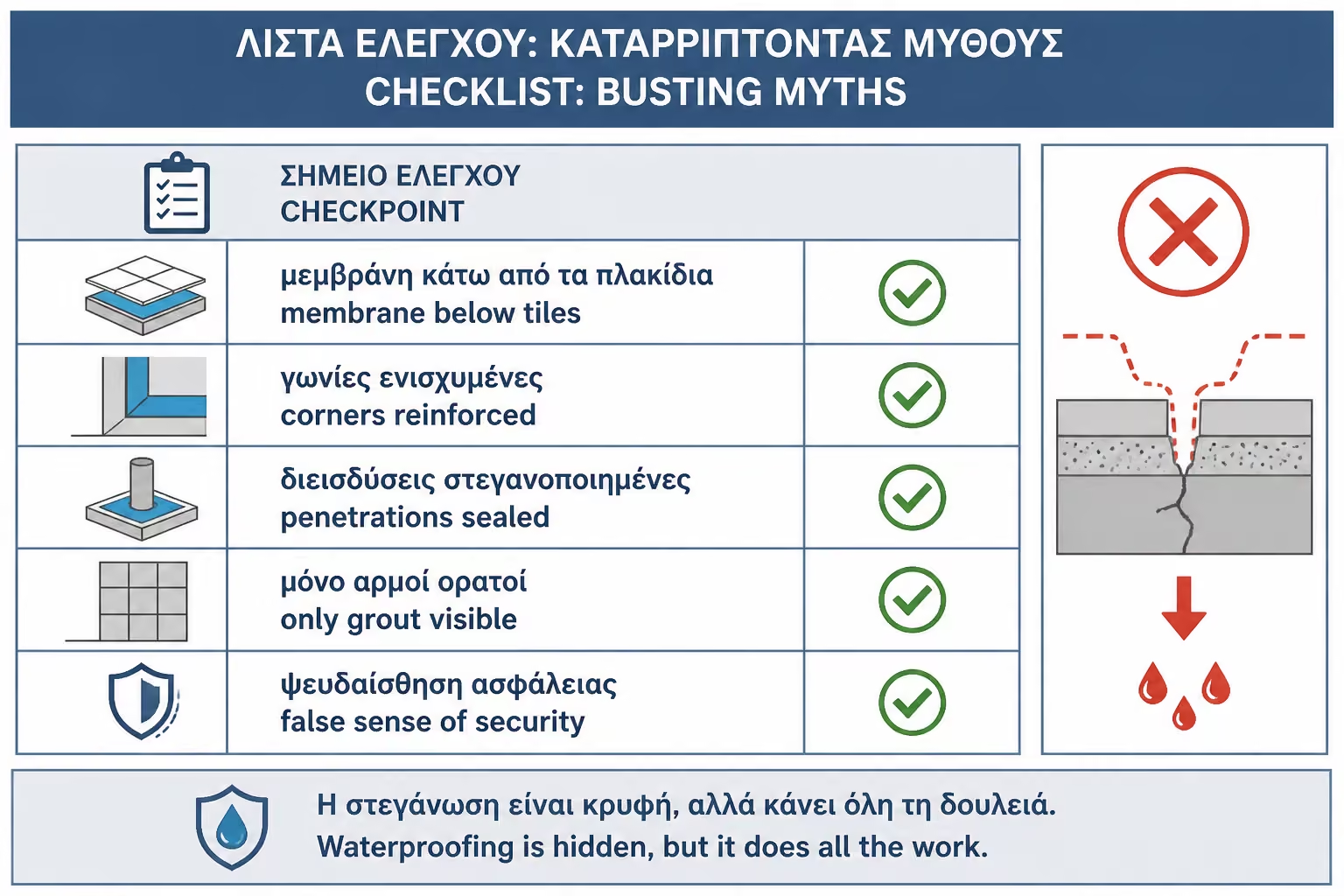
Before grouting, first ask if the waterproofing has been completed and checked. Did they get tapes in the corners? Did they put cuffs on benefits? Was the siphon properly connected to the membrane? Was a compatible tile adhesive used? These questions are more important than the color of the grout.
Then ask what grout will be used. Is it plain, enhanced, water repellent or epoxy? Is it suitable for the joint width and use? Is it suitable for a shower floor? How will it be cleaned and maintained?
Also ask what will be done in the corners. Will elastic silicone be inserted or will they be filled with the same grout? At level changes, rubber sealing is usually the right choice, while there should be waterproofing tapes underneath.
Finally, ask that grout not be used to fill large gaps or fix bad cuts. The joint must be of correct width and depth. If the gap is excessive, the problem is the installation, not the grout.
Before you finalize the choice or installation, review the following points first:
| Question | Yes / No |
|---|---|
| Is there waterproofing under the tiles in the shower area? | Yes / No |
| Do the corners have sealing strips under the tiles? | Yes / No |
| Does the siphon have a gasket or a proper connection to the membrane? | Yes / No |
| Do the mixer penetrations have pipe collars or cuffs? | Yes / No |
| Is tile adhesive compatible with waterproofing? | Yes / No |
| Are the tiles stuck without large gaps underneath? | Yes / No |
| Was the grout selected for the use and joint width? | Yes / No |
| Will the corners be sealed with rubber material and not just grout? | Yes / No |
| Is water repellent grout treated as a supplement rather than insulation? | Yes / No |
| Is there provision for joint and silicone maintenance over time? | Yes / No |
If most of the answers before the putty are "don't know", then the putty is called upon to hide technical uncertainty. This is not a correct construction.
If you must keep only one thing, keep this: grout, however good it is, is not bathroom waterproofing. It is the final filling of the joints. Water can over time pass through joints, corners, siphons, supplies and silicones. The real protection must be under the tiles, with membrane, tapes, cuffs and a proper connection to the siphon. Good grout is essential for strength and cleanliness, but should never carry the burden of sealing alone.
The myth that grout is waterproof has created many problems in bathrooms. A good water repellent or even epoxy grout can greatly improve the finished surface, reduce absorption and make the bathroom cleaner and more durable. However, it cannot replace the waterproofing layer under the tiles.
Water doesn't need a big crack to get through. It can move slowly through worn joints, corners, cuts, supplies, siphons and small gaps. If there is proper waterproofing under the tiles, the system is protected. If there is not, the water will reach the substrate and the damage may appear much later.
The correct logic is to see the grout as a final protective and aesthetic material, not as a basic waterproofing. Waterproofing must have been done before tiling. The corners must have tapes. The amenities cuffs. The siphon flange. The glue must be compatible. And then, on top of that system, a good grout completes the construction properly.
For the owner, the practical question is not only "what grout to put?". It's "what's under the grout?". If the answer is correct, then good grout has value. If the answer is vague, then even the most expensive grout is just hiding a bathroom that has no real waterproofing.
Return to category.
Go to categoryReturn to the central guide.
Go to guide