
Bathroom Waterproofing & Moisture Protection
Return to category.
Go to categoryGrout is one of the materials that seems small in the overall renovation project, but has a big impact on the daily look and maintenance of the bathroom. It is the material that fills the spaces between the tiles, gives the final line of the paving, protects the edges, affects the cleanliness and accepts daily water, soaps, cleaners, salts and use. In a shower, grout is not just an aesthetic finish. It is exposed material in a difficult environment.
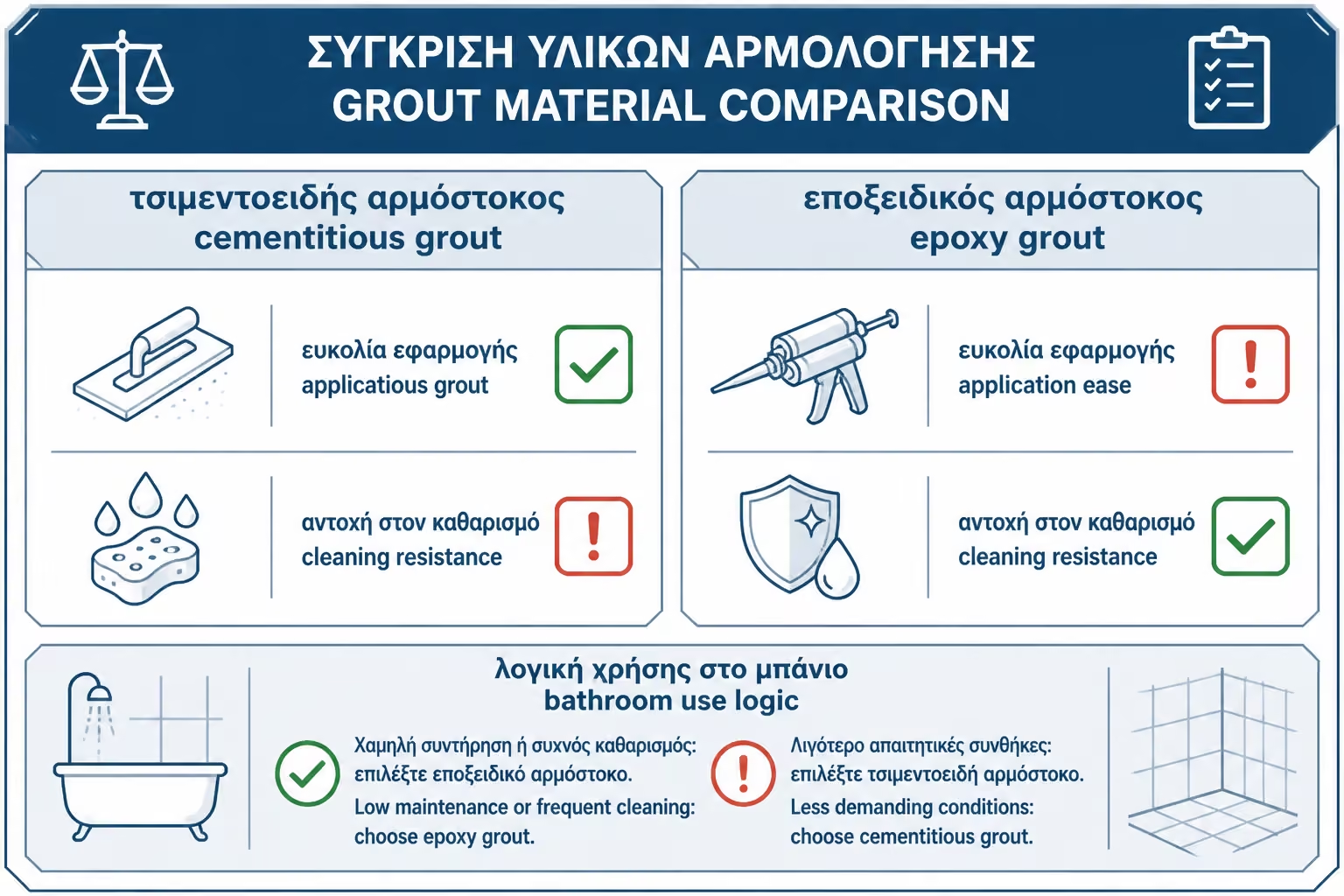
The most common choice in most bathrooms is cementitious grout, plain or enhanced. It is economical, easy to apply, available in many colors and good enough for many household uses, especially when a quality water repellent is chosen. On the other hand, epoxy grout is considered the premium choice: it has very low absorption, very high resistance to stains, cleaners and moisture, and is kept cleaner in demanding areas.
But here there is also a new myth. Because epoxy grout is much more durable than simple cement, it is often presented as a "100% waterproof solution" that solves all problems. This is not technically correct wording. Epoxy grout can be extremely low-absorbing and much more water-resistant than a standard cement grout, but it doesn't replace waterproofing under tiles, corner tapes, drain cuffs, or a siphon gasket.
So the real question is not "which grout is waterproof?". The right question is: "In which parts of the bathroom is it worth paying for an epoxy joint, because the requirements for cleanliness, humidity and durability are higher?" In many showers and floors the answer may be that epoxy is too serious an upgrade. In other cases, a quality cementitious water-repellent grout may be sufficient and more practical.
This guide compares epoxy and cementitious grouts, explains where each excels, when epoxy grout becomes almost a one-way street in showers and floors, what mistakes to avoid, and what the homeowner should ask before making a decision.
Cementitious grout is the most common type of grout. It is based on cementitious binders, aggregates, pigments and additives that improve workability, strength, water repellency or mold behavior. It is usually mixed with water, applied to the joints, and then the surface is cleaned.
There are simple cementitious grouts and improved ones. Simple ones are economical and can work in less demanding applications. Improved water repellents behave better in moisture, are easier to clean and often contain additives that reduce the formation of stains or mold. For a typical domestic bathroom, a good improved cementitious grout is often a reasonable choice.
Its limit is that it remains a more porous material than the epoxy joint. It can absorb moisture, especially if the quality is poor, if it is applied incorrectly, if it is cleaned with aggressive cleaners or if it is often left wet. Over time it can turn black, get dirty, lose some of its water repellency or require maintenance.
This does not make it "bad" material. It makes him material with specific limits. When we know these limits, we can use it properly.
Epoxy grout is a two-component grout, based on epoxy resin and hardener, often with special aggregates and pigments. When the ingredients are mixed, the material polymerizes and creates a very dense, durable and low absorption surface. Compared to a typical cement joint, it has a much better resistance to water, stains, chemical cleaners and everyday stress.
That is why it is often used in demanding applications: professional kitchens, swimming pools, spas, high-use sanitary areas, floors that get dirty easily, and of course showers where we want joints that are easier to clean and absorb much less water. In a walk-in shower, especially one with small tiles and lots of joints, epoxy can make a big difference in cleanliness.
Its great value is that it does not behave like a porous cementitious material. It doesn't stain as easily, it doesn't absorb water to the same degree and it stays more stable in tough conditions. But this does not mean that the basic waterproofing of the bathroom is done. It is located on the finished surface, between the tiles. It does not cover the entire substrate, it does not seal siphons, it does not seal pipe passages and it does not replace corner tapes.
Simply put: epoxy grout is an excellent grout. It is not a waterproofing system.
The phrase "100% waterproof" sounds very attractive, but in technical practice it must be used with great care. Epoxy grout has very low absorption and excellent water resistance compared to a cementitious grout. But no final grouting material should be presented as the only and absolute waterproofing of a shower.
First, grout only covers the joints. It does not cover the tile backing, the adhesive bed, the drain, the corners, the service penetrations, the drill holes, or the transitions between materials. Second, the bathroom surface has many places where water can find a path without passing through the joint at all: escutcheons, silicone joints, grilles, enclosure profiles, and tile cuts. Third, the grout itself can be stressed mechanically or chemically over time.
So, the epoxy joint greatly reduces the risk of joint absorption and makes the surface much more durable. However, it does not eliminate the need for proper waterproofing under the tiles. If someone suggests "we don't need waterproofing, we'll put in an epoxy joint", the approach is wrong.
The correct wording is: epoxy grout is very low absorption, highly durable and very useful in wet zones, but works in addition to a proper waterproofing system.
Epoxy grout excels first in absorption. Compared to a typical cement joint, it absorbs much less water. This is important in showers, floors and areas where the surface gets wet frequently. The less water gets into the joint, the easier the finished surface dries and the less chance there is of blackening.
It also excels in stain resistance. In bathrooms with dark shampoos, salts, detergents, hair dyes or heavy use, a cement joint can stain more easily. Epoxy is usually easier to clean and holds a more stable image.
Another advantage is chemical resistance. In areas where stronger cleaners are used, epoxy holds up better than many cementitious grouts. This makes it a good choice in professional or semi-professional applications, but also in domestic bathrooms where cleanliness is a priority.
Finally, he excels in healthy behavior. Because it is more closed and less absorbent, it gives less "space" for dirt and organic debris inside the joint. That doesn't mean it doesn't need cleaning. It means maintenance is usually easier.
Cementitious grout remains popular for good reasons. It is more economical, easier to apply, more familiar to workshops and more tolerant of minor application errors. For many bathroom surfaces, especially on walls outside the immediate shower zone, a good improved cementitious grout is a perfectly reasonable choice.
It also has a wide range of colors and is often easier to spot-fix in the future. If it gets dirty or worn, it can in some cases be cleaned, renewed or repaired more easily than an epoxy. Its application does not require the same speed and precision that epoxy requires.
In simple domestic conditions, where there is proper waterproofing under the tiles, good ventilation, no heavy use and no constant standing water, the cement joint can work well. Not every square meter of the bathroom needs to have an epoxy joint.
Its advantage is practicality. Its downside is that it needs more attention in wet zones and more maintenance over time.
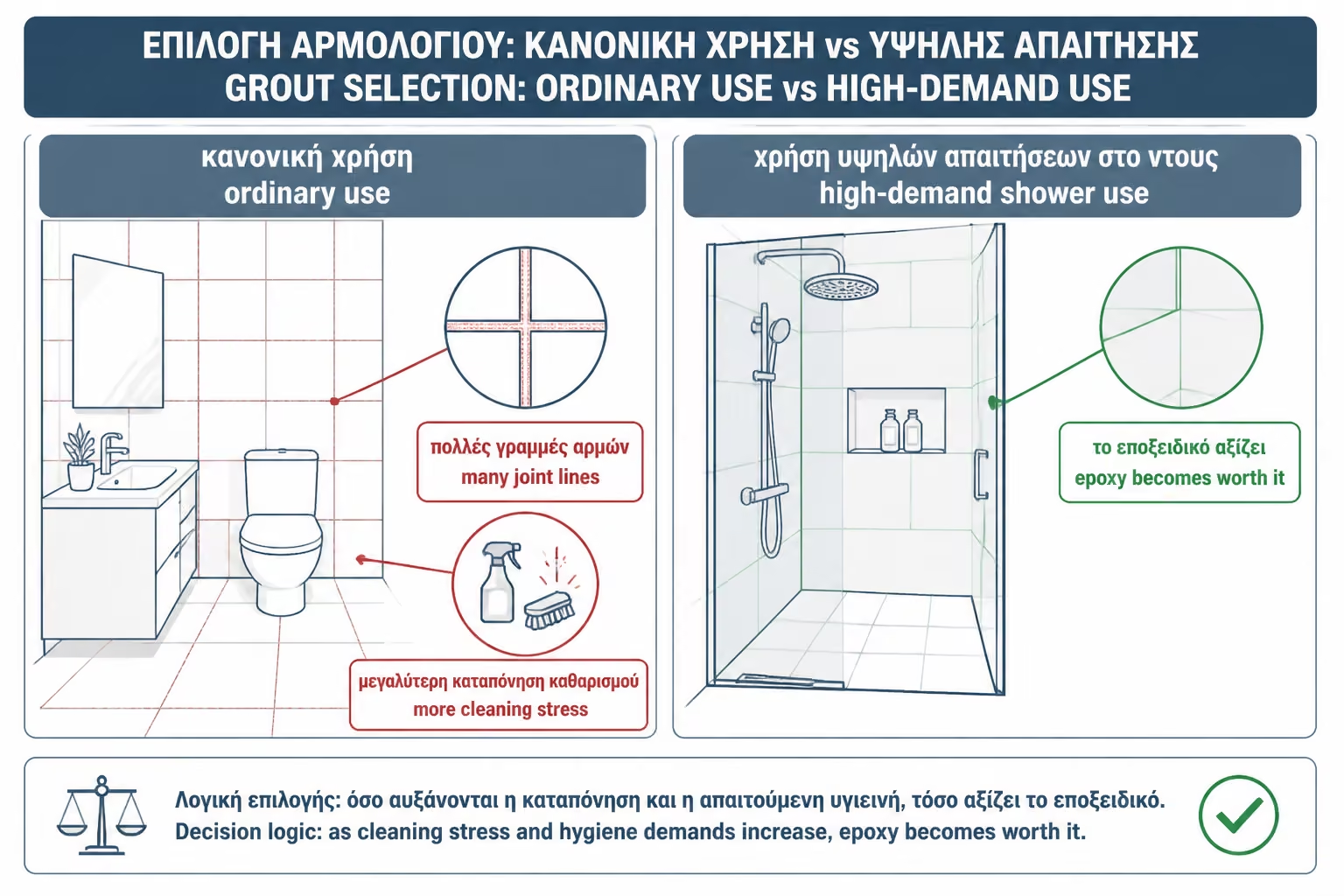
There are applications where epoxy grout is such a strong choice that it practically becomes almost a one-way street. The first is the shower floor, especially when small tiles or mosaics are used. The more joints a surface has that gets wet every day, the more value a very low absorption joint has.
The second is the walk-in showers, especially the flat and open ones. There, the water spreads more, the surface receives frequent wetting and cleaning is more difficult. Epoxy joint helps to limit joint browning and absorption.
The third is high use bathrooms: rental apartments, Airbnb, hotel bathrooms, gyms, spa areas or business facilities. There the use is much more intense than a simple domestic bathroom. Resistance to dirt and cleaning agents is of great value.
The fourth is the floors with light colored joints. A white or light cement grout on the shower floor can get dirty quickly. Epoxy doesn't make the paint invulnerable, but it does go a long way in maintaining a cleaner image.
No need for epoxy grout everywhere. On bathroom walls that do not receive direct water, in areas away from the shower, in decorative zones or in bathrooms with limited use, a good improved cementitious grout may be sufficient.
Also, if the budget is tight, it's better to prioritize proper waterproofing, corner tapes, supply cuffs, siphon gasket, and proper tile adhesive rather than cutting any of these to pay for epoxy grout everywhere. Epoxy is an upgrade to the finished surface. Waterproofing is structural protection.
There's also the issue of implementation. If the contractor is not experienced with epoxy grout, the choice can create problems: residues on the tiles, difficult to clean, dullness or the wrong end result. A perfectly applied enhanced cementitious can be better than a poorly applied epoxy.
Proper logic is selective use. Epoxy where stress warrants it. Good quality cementitious where requirements are lower.
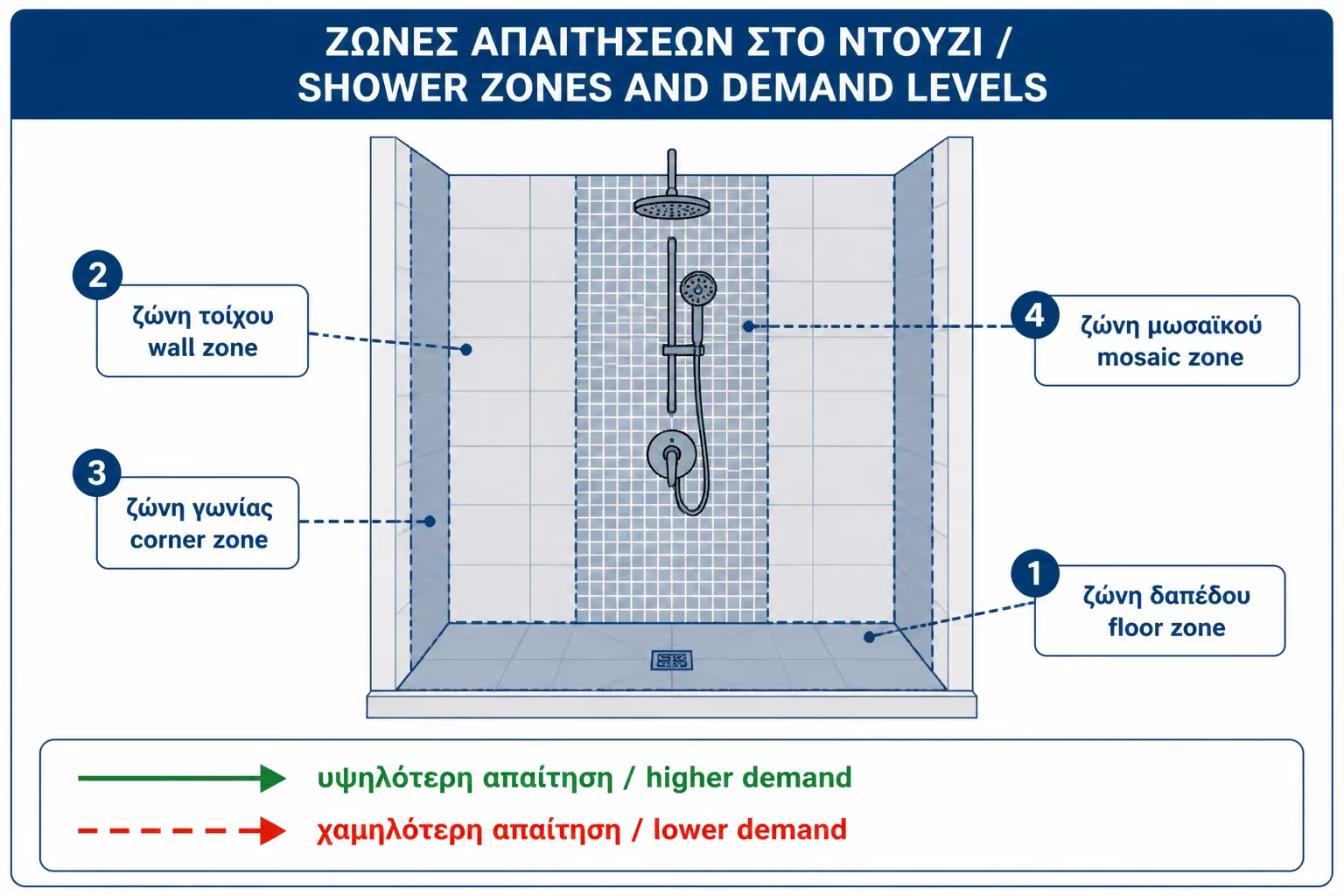
In a shower, the floor and low areas take the most stress. There the water stays longer, we step on it every day, there are soaps, hairs, cleaners and salts. If we want to use epoxy grout selectively, the shower floor is one of the first places worth considering.
Shower walls also get wet, but usually dry more easily than the floor. That's where epoxy is useful, especially in frequent use or if we want low maintenance, but it's not always absolutely necessary. A quality cement based waterproofing can work well when there is proper waterproofing underneath.
Corners are a special case. They should not be filled with rigid grout, either cementitious or epoxy, when it is a level change joint. The corners need a resilient end seal, usually a suitable silicone or sealant, and under the tiles there should be sealing strips. Epoxy grout does not replace rubber joints.
So in a proper shower we can have epoxy in the tile joints, rubber sealant in the corners and complete waterproofing underneath. Each material has its role.
On floors, grout takes more stress than on walls. We step on it, it cleans more intensively, it accepts water, dust, soaps, hair and mechanical wear. If the bathroom has a walk-in, the floor can get wet on a large surface. If there is a bad cleaning habit or insufficient ventilation, the floor joints get blackened more easily.
In such applications, epoxy grout has practical value. It reduces absorption, is easier to clean and maintains a better image. This is especially true on light-colored joints and small tiles with many joints. The aesthetic benefit can be significant.
However, if the floor is leaking incorrectly and the water is pooling, epoxy does not solve the underlying problem. It will withstand better than a cementitious one, but the permanent presence of water will stress the whole system: joints, silicones, glue, tiles and waterproofing.
Epoxy is a great flooring material, but it must be put on top of the right construction. Does not correct bad geometry.
The smaller the tile, the more joint there is per square. On shower floors with mosaics, mosaics or small tiles, the joint rate is much higher than on large porcelain tiles. This means more lines where dirt, salts and moisture can collect.
In such applications, epoxy grout has a very strong advantage. Low absorption and better cleanliness are seen more. A mosaic shower floor with a cement joint may require more frequent cleaning and may tarnish more quickly. With epoxy, maintenance usually becomes easier.
But the application must be perfect. Small tiles and mosaics have many joints, so more work and cleaning time. Epoxy does not easily forgive delays or sloppy cleaning. If residue remains on the surface, it can be difficult to remove later.
In such cases, epoxy is technically a very good choice, but only with an experienced crew.
In large tiles, the joints are less. This reduces the places where the finished surface can get dirty or absorb water. In a shower wall with large porcelain tiles, a quality cementitious water repellent grout can often be sufficient as long as there is proper waterproofing underneath.
This is not to say that epoxy has no value. It may offer better cleanliness and lower absorption, but the benefit is less than a tiled floor. If the budget has to be allocated intelligently, epoxy can be chosen on the floor and good cementitious on the walls.
In large tiles, the biggest technical issue is often the adhesive and the coverage under the tile. If there are gaps under large tiles, water can move under the surface regardless of the grout. So we should not overestimate the role of the joint and underestimate the placement.
Epoxy is part of the final grade. It does not replace proper glue, proper waterproofing, and proper drainage.
Many epoxy or enhanced grouts are advertised as being anti-microbial, anti-mold or hygienic. These qualities are useful, but they do not mean that the bathroom does not need cleaning or ventilation. Mold doesn't grow just because the joint absorbs water. It also grows when there is moisture, organic residue, soaps, poor ventilation and stagnant water.
Epoxy grout gives a more closed and less absorbent surface. This makes it difficult for dirt to penetrate the material. But if the surface is constantly wet and not cleaned, salts and residues can sit on it. The surface can be externally soiled even if the joint does not absorb deeply.
Correct daily practice remains important: good ventilation, drying the shower where possible, gentle cleaning and avoiding aggressive chemicals that are incompatible with bathroom materials. Epoxy reduces maintenance, not eliminates it.
Antimicrobial behavior is a plus. It is not permission to leave the bathroom.
Epoxy grout is more demanding to apply than cementitious grout. It has a specific working time after mixing, it needs a correct ratio of ingredients, quick and clean application, and very careful cleaning of the surface before it hardens. If the craftsman has no experience, the result can be problematic.
A frequent problem is the epoxy film that remains on the tiles. If not cleaned properly in time, it can leave a dull or sticky feeling that is difficult to remove. On embossed, matte or porous tiles, the difficulty increases. Before choosing an epoxy, it should be checked whether the tile is suitable and whether a small spot test is required.
Also, epoxy is more difficult in very narrow or very uneven joints. The surface must be properly prepared and the joints clean. It should not be used to correct bad spacing, dirty lines or glue residue.
The choice of epoxy must be accompanied by a correct workshop. Otherwise, the theoretically best material may give a worse aesthetic result than a well-applied cementitious material.
Not all tiles behave the same with epoxy grout. Polished, matte, embossed, natural stone, handmade or porous tiles may require different preparation. On some surfaces, epoxy residue can sit in micropores or raised areas and be difficult to clean.
Natural stones, such as marble or travertine, require special care. There may be staining, discoloration or difficulty cleaning if not tested. In such cases, the technician should follow the grout and tile instructions, and perhaps use a sealer before grouting.
On porcelain tiles, the application is usually safer, but still needs proper cleaning. Matte tiles may retain a film if cleaning is done casually. Embossed tiles are more demanding.
Before choosing an epoxy, it is a good idea to test it on a small spot or on a leftover tile. This is especially useful when the tile is expensive or has a special texture.
Epoxy grout costs more than cementitious grout, both in material and labor. Its application is more demanding and often requires more time, better cleaning and an experienced craftsman. This means that it should not be mechanically selected for the whole bathroom for no reason.
In a typical bathroom of about 5 sq.m. in the Greece of 2026, where a simple to medium renovation can be around €3,200–5,500 and more demanding solutions with walk-in, linear siphon, full waterproofing, large tiles and custom cabin can reach around €6,000–7,500 or more, the epoxy joint is a relatively small but noticeable additional cost. It's worth more when strategically placed in high stress areas.
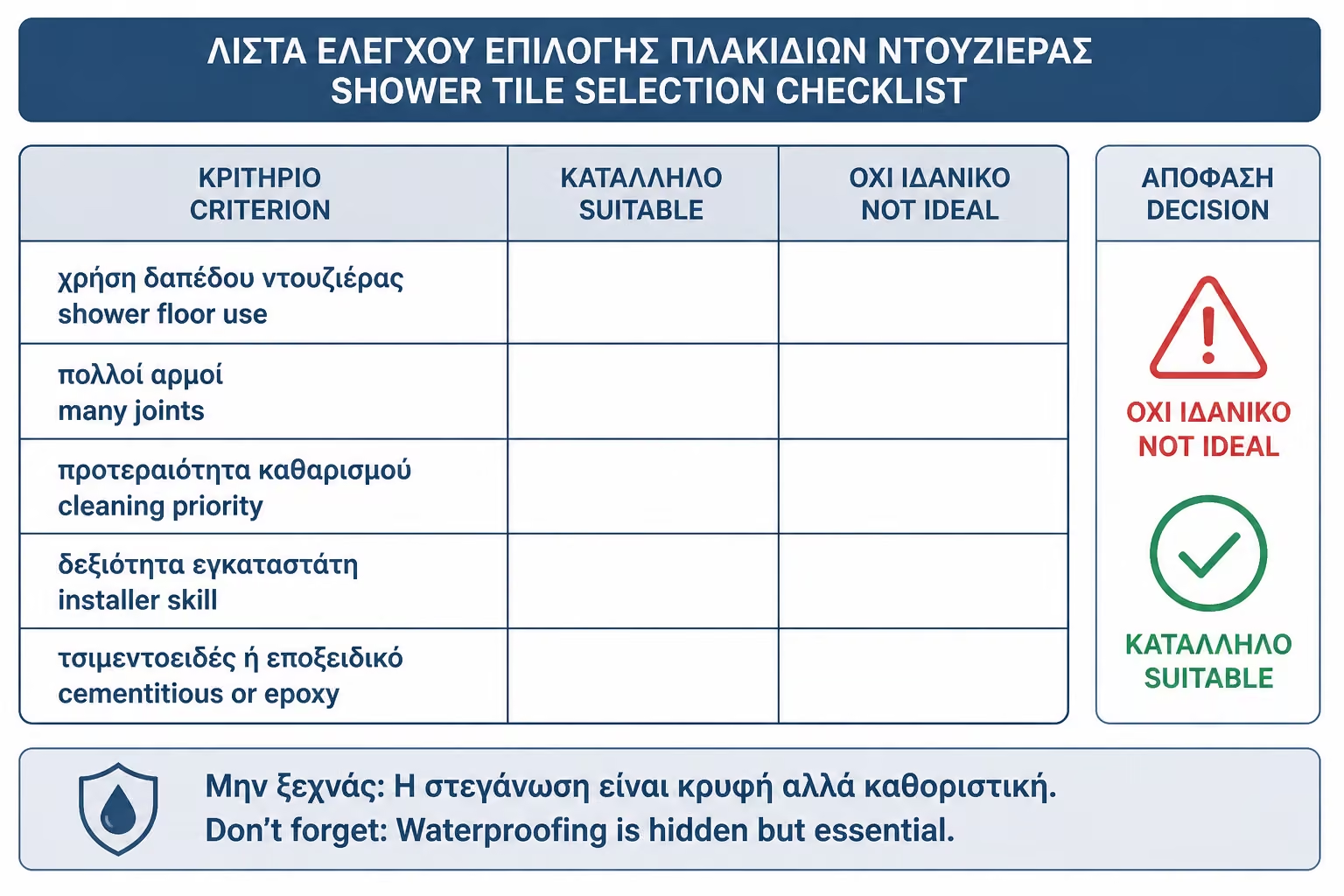
Before you finalize the choice or installation, review the following points first:
| Selection | Cost | Where it is worth more |
|---|---|---|
| Simple cementitious | Low | Undemanding, dry or less exposed zones |
| Improved water repellent cementitious | Medium | Typical domestic bathrooms, shower walls, well maintained floors |
| Epoxy | Higher | Shower floors, walk-ins, mosaics, Airbnb, hotels, high use |
| Combination | Balanced | Epoxy on floor/shower, cementitious on less demanding walls |
The smartest choice is often not "epoxy everywhere", but "epoxy where the bathroom is really pressed".
Before choosing an epoxy grout, some practical questions must be answered. First, does the repair shop have experience in applying it? If not, there is a risk of poor cleaning and an aesthetic problem. Epoxy is not a material that is applied "like a simple joint".
Second, is the tile suitable? If it is embossed, porous, natural stone or matte with a strong texture, it needs testing. Third, what points will be grouted with epoxy? The whole bathroom or just the shower and the floor? Selective use may give better cost-benefit ratio.
Fourth, is there proper waterproofing underneath? If not, choosing epoxy doesn't solve the underlying problem. Fifth, what will happen to the corners? Corners should not be filled with rigid epoxy if they are level joints. A rubber sealant is needed there.
Epoxy is an excellent tool when chosen consciously. Not when it is used as a "magic solution" to bypass other stages.
Before you finalize the choice or installation, review the following points first:
| Error | Possible consequence | Correct approach |
|---|---|---|
| We consider epoxy waterproofing | Omission of membrane under tiles | Epoxy as a final upgrade, not insulation |
| Epoxy by an inexperienced crew | Haze, residue, poor finish | Experienced craftsman and testing |
| Epoxy on unsuitable tile without testing | Stains or difficult to clean | Test on a small surface |
| Rigid joint in the corners | Cracks from micro-movements | Rubber seal at level changes |
| Cementitious plain in high use shower floor | Tanning, absorption, difficult maintenance | Enhanced or epoxy based on use |
| Selection based on color only | Material unsuitable for use | First technical requirement, then color |
| Epoxy everywhere for no reason | Increased cost without commensurate benefit | Selective use in critical areas |
| Poor joint preparation | Uneven result or failure | Clean, correct depth joints |
A common example is a walk-in floor with small tiles and a white cement joint, in an Airbnb with daily use. After a few months, the joints become black and difficult to clean. That's where epoxy would have more practical value from the start.
A proper quote should clearly state what type of grout will be used and in which zones. It is not enough that it says "tile grouting". It must state whether it is a cementitious, enhanced water repellent or epoxy grout, and whether the price is for the entire bathroom or specific areas.
If epoxy is proposed, the quote should explain where it will go in and why. For example, epoxy on the shower floor and bathroom floor, but enhanced cementitious on the walls. Or epoxy all over the shower due to heavy use. This distinction helps the owner understand the technical logic.
It must also be stated what will be done in the corners. If the corners are level joints, they should not be filled like simple joints. A suitable rubber sealant must be provided. If there is natural stone or special tile, it is good to mention that a test will be done or that the instructions of the material will be followed.
Finally, the offer must separate materials, labor and VAT. Epoxy has a higher application cost and this should be clearly visible, not hidden in an overall price.
Before deciding, first ask where the epoxy is actually needed. Is it for the shower floor? For the whole bathroom? For the walls? For high use areas? If the answer is "everywhere because it's better", ask for a more specific technical justification.
Then ask if the repair shop has experience. Epoxy requires proper mixing, application and cleaning. Ask if a tile will be tested, especially if the surface is matte, textured or porous. Also ask what will be done in the corners and if rubber sealant will be used.
Ask if there is full waterproofing under the tiles. If the answer is “no need for epoxy”, stop there and ask for a reconsideration of the proposal. Epoxy grout does not remove the membrane, tapes, cuffs and proper connection to the siphon.
Finally, ask about maintenance. With what cleaners can it be cleaned? When can the shower be used after grouting? How are residues avoided in the first phase? These practical details affect the final result.
Before you finalize the choice or installation, review the following points first:
| Question | Yes / No |
|---|---|
| Does the belt get wet every day? | Yes / No |
| Are there many joints, small tiles or mosaics? | Yes / No |
| Is the floor a walk-in or high-use shower? | Yes / No |
| Do we want very low absorption and easy cleaning? | Yes / No |
| Does the workshop have experience in epoxy grouting? | Yes / No |
| Is the tile suitable or has it been tested? | Yes / No |
| Is there proper waterproofing under the tiles? | Yes / No |
| Will the corners be sealed with a rubber material rather than a rigid joint? | Yes / No |
| Is the cost justified by the usage? | Yes / No |
| Does the quote clearly state where epoxy goes in and where it doesn't? | Yes / No |
If most of the answers are “yes”, epoxy grout is a very serious choice. If there are enough "no's", perhaps a good improved cementitious is a more balanced solution.
If you have to keep only one thing, keep this: epoxy grout is a great upgrade for showers, floors and high-use areas, but it's not bathroom waterproofing. The correct sequence is first full waterproofing under the tiles, then correct adhesive and tiling, and finally a suitable grout. If you want to invest smartly, put epoxy where joints get wet and dirty the most: shower floors, walk-ins, mosaics and heavily used bathrooms.
The comparison between epoxy and cementitious grout does not have one answer for all bathrooms. Epoxy is technically superior in absorption, stains, cleanliness and durability. That is why it is particularly suitable for shower floors, walk-in solutions, mosaics, light-colored joints and areas with heavy use. There the extra cost can pay back as less maintenance and a better image over time.
Cementitious grout, especially the improved water repellent, remains a good and practical choice for many bathroom surfaces. It is more economical, easier to apply and sufficient in less demanding areas, as long as there is proper waterproofing underneath and proper maintenance.
The biggest mistake is to present epoxy as a magic solution that eliminates waterproofing. It does not remove it. It completes it. The bathroom must be technically watertight before we get to the grout: with the right membrane, tapes on the corners, cuffs on the fittings, flange on the siphon, the right glue and the right flushes. On this system, the epoxy joint can give excellent ultimate strength.
For the owner, the practical choice is to not only ask "which joint is better?". To ask "where is the best joint worth?". In a well-designed bathroom, epoxy goes in where it makes real sense and cementitious is used where the requirements are lower. This is how we achieve technical safety, correct costs and a bathroom that remains clean and functional over time.
Return to category.
Go to categoryReturn to the central guide.
Go to guide