
Bathroom Waterproofing & Moisture Protection
Return to category.
Go to categoryWater leakage in a house is not only a technical problem. It is also insured. It can start from a broken pipe in the wall, a leaky drain, a bathtub faucet, a water heater connection, a faucet, or a shower failure. The first stress is to stop the water. The second is to repair the damage. The third, which often comes up a bit later, is whether home insurance will cover anything.
This is where the misunderstandings begin. Many homeowners believe that since they have "home insurance," any water damage is covered. It's not like that. Another is the coverage of broken or leaking pipes. Flooding from weather phenomena is another. Civil liability to a neighbor is another. The exploratory work to find the damage is another. Another is the loss of water in the account. Another thing is damage from chronic moisture or poor maintenance, which are often treated differently than insurance.
The crucial point is the cause. An insurance company does not pay because there is just a stain on the wall. He wants to know where the water came from, whether the damage was sudden or gradual, what part of the facility broke or leaked, what exactly was damaged, what work was done to locate and what to restore. If the technical description is unclear, compensation may be delayed or disputed.
That is why the technical report is of great importance. It shouldn't be a simple piece of paper that says "bathroom leak repair." It must describe the incident with technical accuracy: point of failure, possible cause, method of detection, work done, photographic documentation, relationship of failure to damages, materials replaced and remedial work. The correct report does not in itself guarantee compensation, but it helps the insurer or the expert to correctly assess the incident.
This guide explains what the basic home insurance terms mean in practice when talking about leaks, what the difference is between burst pipes, investigative work and water loss, what the owner should look out for before starting work and how a technical report should be drawn up to be useful for compensation.
Each insurance policy has its own terms, limits, exemptions and exclusions. The phrase "water damage is covered" can mean different things from company to company and plan to plan. Damage to the building may be covered, but not to the contents if there is no contents insurance. Damage from a broken pipe may be covered, but not the actual replacement of old pipes beyond the point of failure. Investigative work may be covered up to a certain limit, or may not be covered if not expressly stated.
The owner needs to see three things. First, what coverage has he purchased: building, contents, liability, water damage, burst pipes, investigative work, water loss. Second, what are the compensation limits and exemptions. Third, what exclusions are there: age of installation, lack of maintenance, gradual dampness, shoddy workmanship, pre-existing damage or unauthorized work.
It is not enough to verbally ask "does it cover me?" The special terms need to be read. In case of serious damage, the insurer or the company must be informed before major work is carried out, as an expert opinion may be required.
Insurance doesn't work well when the owner fixes everything first and then looks up what's covered. The correct sequence is update, document, identify, approve where appropriate, then remediate.
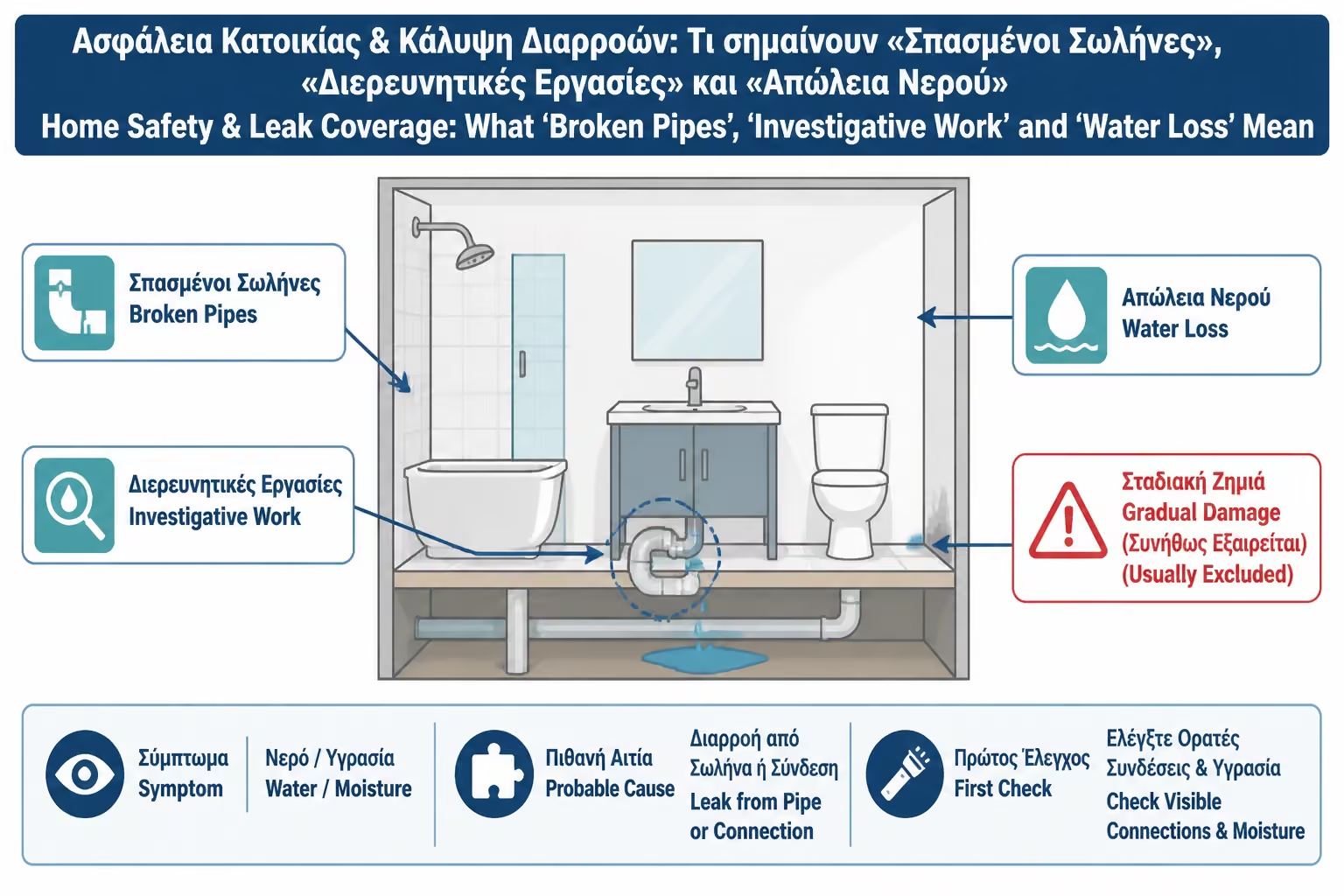
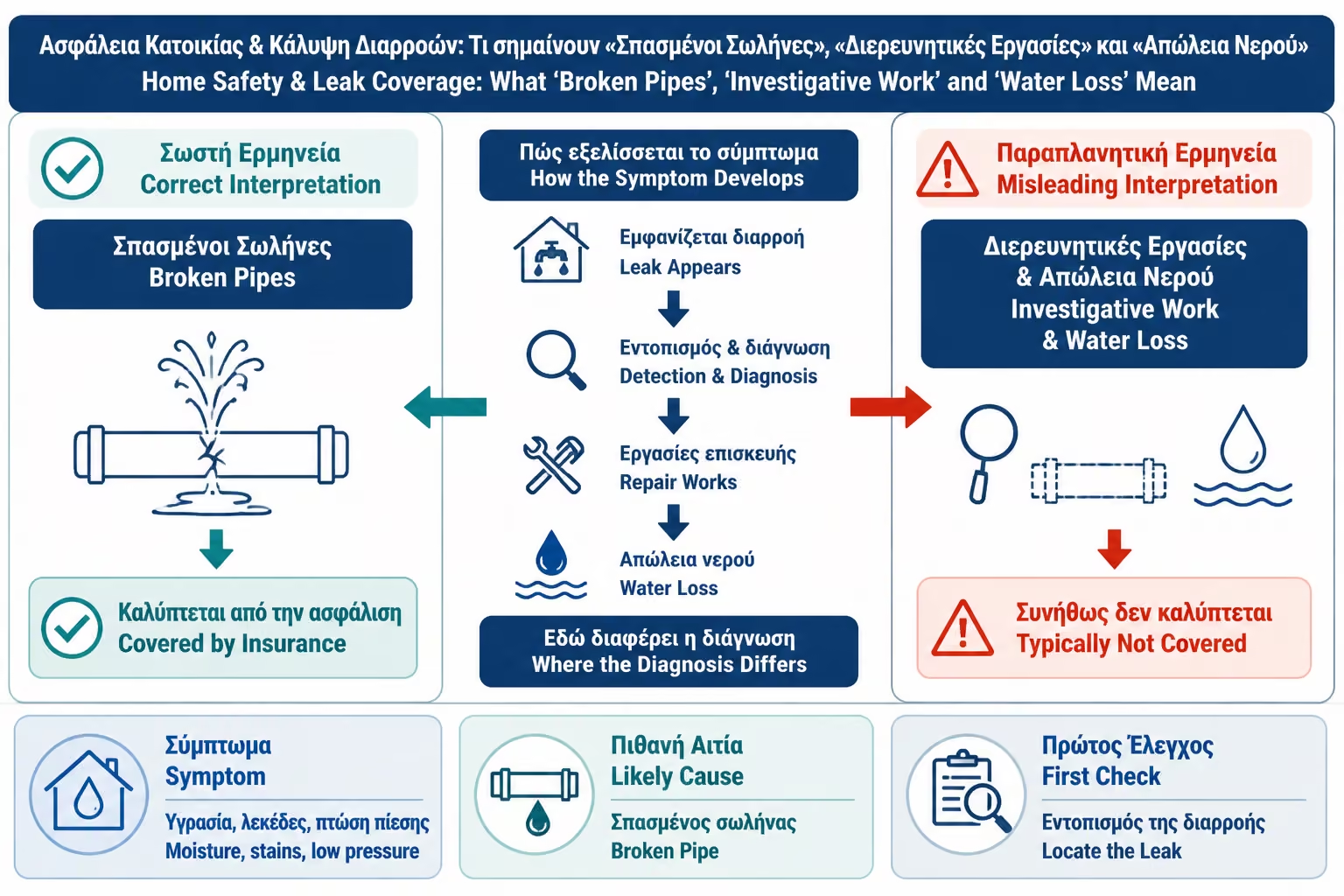
The term "pipe burst" usually refers to a sudden failure of a pipe or installation that causes water to leak. It may concern water supply, heating, cooling, air conditioning or drainage, depending on the policy. In practice, the insurance company wants to know if there was a specific damage to a pipe or connection and if it caused the damage.
The word "break" does not always mean that the pipe spectacularly broke in two. There may be a crack, corrosion, connection failure, leak in fitting or flange, depending on the conditions. But the coverage is usually associated with a specific incident and not with a general dampness that developed over years.
If the technical report just says "moisture from a bath", it doesn't help. It must write, where it can be documented, that a leak was detected in a particular pipe, connection or fitting. For example: "Leak detected at junction of bathtub drain with siphon" or "Leak detected in hot water pipe FH in masonry behind wash basin".
If there is no obvious pipe break but shower seal failure, coverage may be assessed differently. That is why the diagnosis must be technically accurate.
Many insurance policies separate or group terms such as breakage, leakage and overflow. A break indicates damage to a pipe or installation. A leak can mean a loss of water from a pipe, connection or installation without necessarily an obvious 'break'. Overflow refers to water that has gone beyond the prescribed limit, such as a cistern, tank, bathtub, water heater or other installation.
For compensation it matters which of these terms fits the incident. If a sink faucet broke and flooded the bathroom, the description is different than a bathtub overflowing because the faucet was left on. If the cistern has been running for months and caused moisture, the insurance may see it differently than a sudden connection break.
The technical report should avoid general words when there is a specific fact. We don't write "bathroom flood" if we're talking about a crack in a pipe. We don't write "broken pipe" if no pipe was found. We write what was technically established.
Accuracy protects both the owner and the technician. An exaggerated or wrong wording can cause trouble rather than help.
Exploratory work is the work done to locate the source of the leak. They may include opening a wall or floor, removing tiles, using a thermal camera, hygrometer, pressure test, drain camera, dye testing or other methods. They are not always the same as repair work. It is the search stage.
In insurance policies, investigative work may be covered up to a certain amount, covered only if a covered loss is eventually found, or have special conditions. Sometimes it covers opening and repairing the point that was opened to find the leak. Other times not. That is why the insurance policy needs to be checked.
Technically, we must distinguish exploratory from restorative work. Another to remove two tiles to find a pipe. Another thing is to rebuild the entire shower because it had poor waterproofing. If the invoice or report gets it all mixed up, the insurer may have a hard time understanding what is tracing and what is restoration.
It is good practice to report separately: detection work, immediate damage repair work, damage repair work.
"Water loss" usually refers to the amount of water lost due to leakage and shows up as an increased water bill. It's not always coverage that's on every insurance policy. When it exists, it usually has limits, conditions and requires documentation: meter readings, before and after bills, certificate of damage, date of location and repair.
Water loss is mostly about leaking water under pressure, where the meter is constantly ticking. If the problem is a drain or a bad shower seal, there may be water damage, but not necessarily "water loss" on the bill in the same sense.
The technical report must state whether the leak was in a water supply network and whether there was a continuous loss. If it was checked with the watch, it is good to mention it. If a section of water pipe was replaced, it must be described. If the leak stopped after the repair and the meter stopped moving, this is useful information.
Water loss is not documented only by the phrase "water lost". It wants connection with meter, account and breakdown.
In home insurance we must distinguish three categories. The building refers to the structural elements: walls, floors, tiles, pipes, plasters, paints, fixed installations. Content refers to objects: furniture, electrical appliances, clothing, movable objects. Civil liability concerns damages caused to third parties, such as the downstairs neighbor in an apartment building.
If only the building is insured, damage to furniture or personal effects may not be covered. If there is no liability, damage to the neighbor may not be covered by your policy or require a different process. If apartment building insurance is in place, it may cover common areas and not a private facility.
The technical report must distinguish which part was damaged. Repairing a pipe in your own bathroom is another. Another painting of the downstairs ceiling. Another is the damage to a neighbor's wooden floor. All these must be described separately.
The insurance company evaluates based on the coverage that exists. The technical report should make clear the relationship of cause and damage, not confuse categories.
A problem arises when the cause is not clear. For example, the technician writes "moisture from bathroom" without saying if it was a pipe, siphon, drain or seal. There is also a problem when the work was done before the insurance company was notified and there are no photos. Or when the broken parts were thrown away and there is no evidence of damage.
Another problem is chronic humidity. If the damage seems to have been developing for months or years, with mold, loose plaster and old wear and tear, the insurance company may treat it differently than a sudden incident. Maintenance matters. Worn silicones, old joints or obvious cracks that were overlooked can create difficulties.
A problem also arises when the repair looks like a renovation. If for a small leak the entire bathroom was replaced without documenting why it was necessary, it can be disputed what is repair and what is improvement/renovation.
Compensation needs a clean line: cause, damage, necessary work, cost. The cleaner that line is, the better.
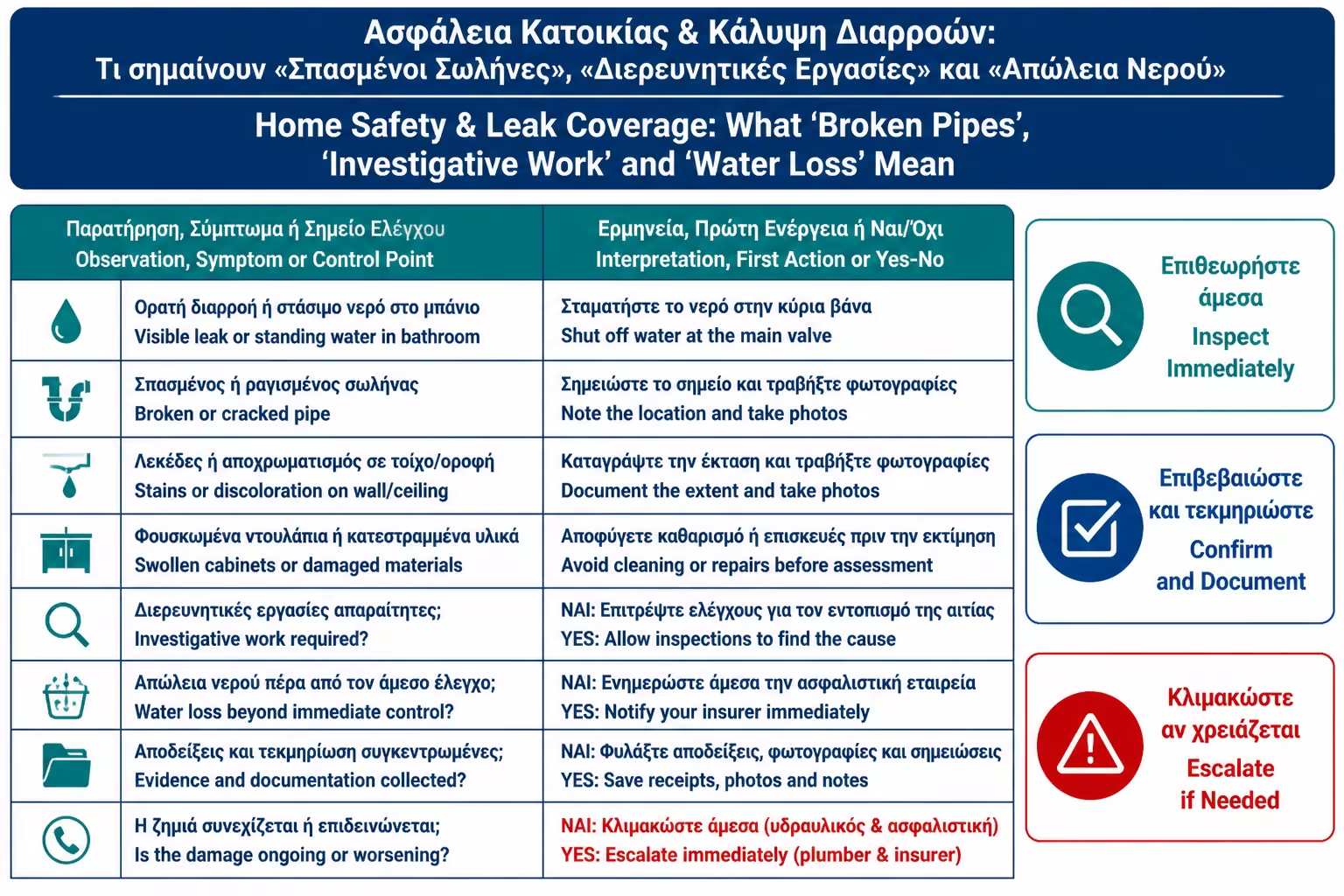
Limit the damage first. Turn off supplies, stop using the suspect component and protect electrical points. If there is water near power, an electrician or circuit breaker is needed. If a lower floor is affected, immediately notify the neighbor and management where appropriate.
Then take photos and videos. Before you clean, before you break, before you throw away materials. Photographs of the stain, damage site, water meter, wet surfaces, damage to furniture or floors. If there is a drip, dated video helps a lot.
Call your insurer before doing major work unless there is an urgent need to limit damage. Ask if an expert should pass. Keep invoices, receipts, technical reports and any parts removed, especially if they show breakage.
Do not paint or close the point until documentation is complete. A quick "out of sight" can cost you compensation.
The technical report must be specific, dated and technically clear. It must state who carried out the inspection, when, on which property, what the obvious symptom was, what tests were carried out and what was found. It should not be full of exaggerations or vague formulations.
A good report describes the cause as far as it is technically known. If a crack is detected in a pipe, it is written. If a leak is detected in a siphon connection, it is written. If there is only an indication from a thermal camera but no opening, it should be written as an indication, not an absolute finding.
It must also describe the relationship of cause and damage. For example: "Leaking from the bathtub drain connection caused dampness on the slab and a stain on the ceiling of the lower apartment." This connection is important for compensation.
Finally, it must separate tasks: detection, damage repair, surface restoration. If everything falls into one general line, the evaluation becomes difficult.
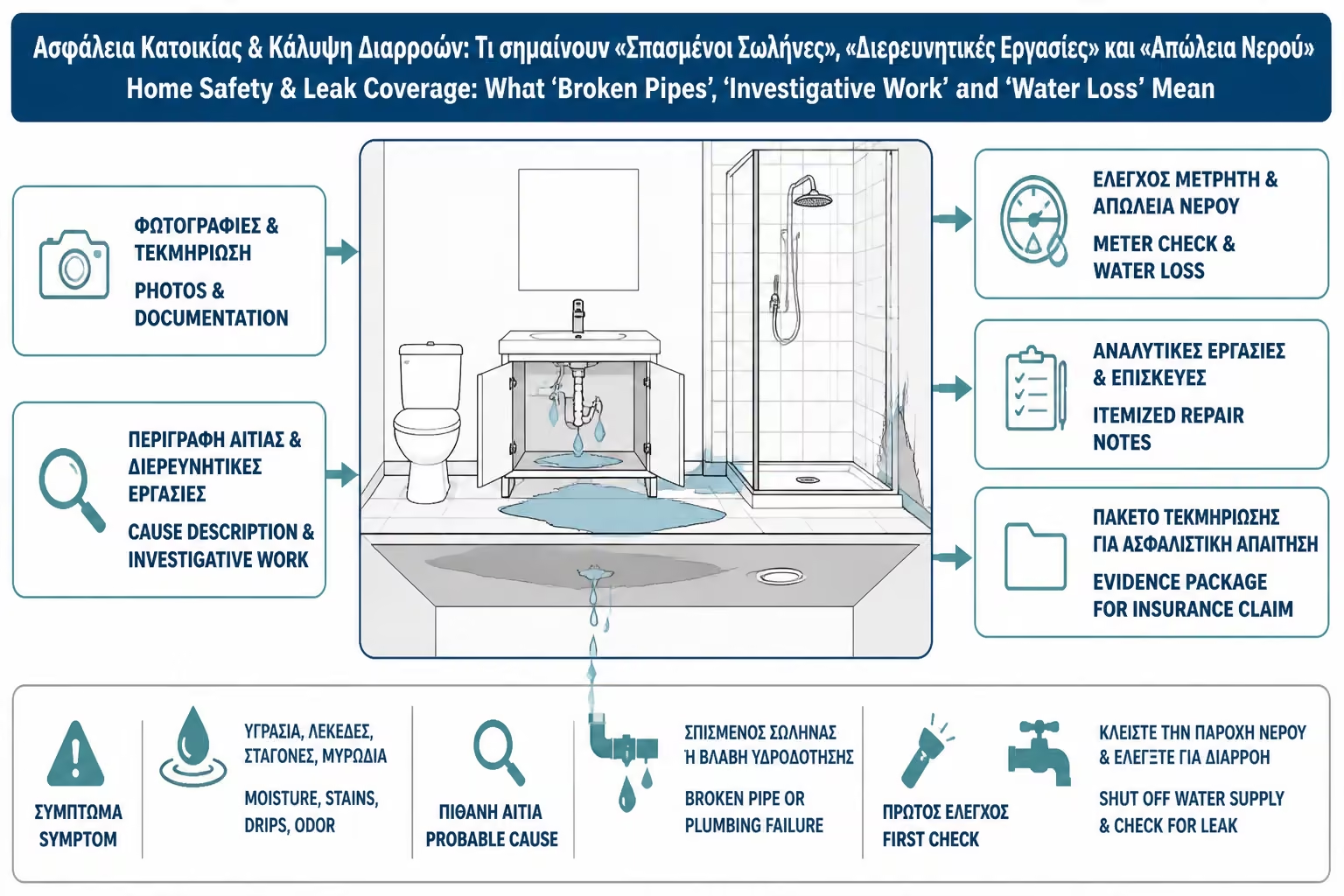
A complete technical report for a leak insurance case should include basic property and owner information, date of inspection, description of damage, probable or confirmed cause, method of detection, photographs, work done and proposed remedial work.
It must state if a water meter test was performed, if a thermal camera, hygrometer, dye testing, drain camera or pressure test was used. If investigative work was done, what was opened and why should be described. If tiles were removed, it should be stated that the removal was done to access and locate the leak.
It must also list the parts replaced: pipe, socket, connection, siphon, valve, flange, fitting, drain section. If there is a photo of the faulty part, that would be very helpful.
The report should be technical, not legal. There is no need to write "the insurance company must compensate". It needs to provide the information to determine the coverage.
A weak wording is: "There was a leak in the bathroom and it was repaired." It doesn't say anything useful. A better wording is: “During the inspection, a leak was detected in the connection of the bathtub drain to the faucet. The leak occurred when the tub was in use and caused moisture in the area under the tub and a stain on the downstairs ceiling."
For water supply, correct wording could be: "With all loads closed, movement of the water meter was detected. After isolating lines a leak was found in a hot water pipe within the masonry behind the sink. The defective part was replaced and after the repair the meter remained stationary.”
For exploratory work: “Two tiles were locally removed in the area under the battery to access and locate the leak. The removal was necessary due to a hidden passage of piping within the masonry.”
The correct wording is not more "impressive". It is more specific.
The technical report should avoid vague and redundant phrases. We do not write "total bathroom destruction" if the damage concerns a specific point. We don't write "pipe break" if no pipe is found. We do not write "flooding" for a local wetness, unless there really was an uncontrolled outflow of water. We don't write "definitely the neighbor's fault" without technical detection.
It must also avoid turning an old deterioration into a sudden event if there is no evidence. If the wall has years of mold, salts and loose plaster, the exposure must be honest. There may also be a recent leak, but the age of the damage must be distinguished.
Don't confuse upgrade with repair. If the owner decided to change all the tiles for aesthetic reasons, this should not be presented as mandatory exploratory work, unless it was technically necessary.
The insurance report must be reliable. If it exaggerates, it loses power.
Photos are one of the most important elements. There must be photos before any operation: stain, swelling, dripping, moisture, damaged materials, point where the problem is visible. Then, photos of the exploratory work: open wall, pipe, siphon, valve, wet substrate. Finally, photos of the repair and restoration.
Every photo should make sense. A close-up photo without a general shot does not show where the spot is. It is good to have general and close-up shots. If there is a lower floor, the damage is also photographed there. If there is a moving water meter, it is photographed or videotaped.
If a defective part is removed, it is photographed before it is thrown away. If there is a crack in a pipe, it is photographed. If there is a failed gasket, it is held as an item until the process is completed.
Photos should tell the story: symptom, detection, cause, repair.
Invoices should be as detailed as possible. If they only write "bathroom chores", they are not helping. They are best divided into categories: exploratory locating work, plumbing repair, replacement materials, tile restoration, plastering/painting, third-site damage restoration.
If materials were purchased, it should be shown what they were: pipes, fittings, siphon, valve, flanges, glue, tiles. If the insurance only covers specific tasks, the detailed description helps to distinguish what is covered and what is not.
The technician must describe the work as it was done. For example: “Remove tiles to locate leak”, “replace defective pipe section”, “check tightness after repair”, “restore local lining”. Not generally "bathroom renovation".
The invoice and the technical report must agree with each other. If the report says one thing and the invoice says another, there is a problem.
In minor damages, a plumber's or workshop's technical report may be sufficient, depending on the insurance. In larger damages, in multi-family buildings, in liability disputes, in lower floor damage or in dispute of cause, an expert or engineer may be needed.
The insurance adjuster assesses the cause, extent and cost. The engineer can help in more complex cases, especially when there is shared piping, structural deterioration, moisture in slab, multiple owners or the need for independent technical documentation.
In cases where there is damage to a neighbor, documentation should be more careful. It should be seen whether the cause is a private network, a shared network, or a seal failure. This affects insurance and liability.
The more extensive the damage, the more important the documentation before restoration.
Without being able to generalize for all contracts, common gray areas are gradual dampness, lack of maintenance, worn joints, old silicones, shoddy workmanship, pre-existing damage and non-sudden damage. These should be checked in the special conditions.
For example, if a shower has been leaking water for years from open joints and there has been no specific pipe break, the insurance company may treat it differently than a sudden crack in a hot water pipe. If a tub valve has been leaking for a long time, it needs to be documented when the damage was noticed and what was found.
Another gray area is the distinction between root cause repair and upgrade. If a leak requires tiles to be removed for access, this may be exploratory or remedial work. If by chance the entire bathroom changes, this is not necessarily an insurance claim.
The technical report should assist in the separation. Not to cloud him.
| Inquiry | Yes / No |
|---|---|
| Was the insurance informed before the major works? | Yes / No |
| Are there any pre-op photos? | Yes / No |
| Has a specific cause of the leak been identified? | Yes / No |
| Is there separate water supply, drainage or waterproofing? | Yes / No |
| Has a water watch been checked where a water supply was suspected? | Yes / No |
| Were investigative tasks recorded separately? | Yes / No |
| Are there pictures of the faulty part? | Yes / No |
| Is there a dated and signed technical report? | Yes / No |
| Do the invoices detail the work? | Yes / No |
| Is building damage separated from content damage? | Yes / No |
| If there is a neighbor, has the damage to the downstairs area been recorded? | Yes / No |
| Has it been checked for an exemption or coverage limit? | Yes / No |
If several answers are "no", the insurance process can become difficult even if technically the damage is real.
A practical technical report can have the following structure:
| Unity | What does it include? |
|---|---|
| Project details | Address, owner, date of inspection |
| Event description | When did the moisture appear and where? |
| Visible damage | Stains, swelling, dripping, building/content damage |
| Control methods | Water meter, hygrometer, thermal camera, opening, dye testing |
| Technical finding | Point and type of damage detected |
| Causal connection | How the damage caused the damage |
| Research papers | What was opened or checked to find the fault |
| Repair work | What was replaced or repaired? |
| Restoration work | Tiles, plasters, paints, floors |
| Photographic documentation | Link to before/before/after photos |
| Conclusion | Summary technical assessment and proposed next steps |
This structure helps to ensure that critical information is not lost.
> If you have to keep only one thing, keep this: the insurance company doesn't just need to hear that "there was a leak". He needs to see documented where it came from, what damage it caused, what work was needed to locate it and what work was done to restore it. The technical report should describe facts, not assumptions. The more clearly it separates broken pipes, investigative work, water loss and damage restoration, the more useful it is for compensation.
Home insurance can greatly help with a leak damage, but it doesn't work automatically and it doesn't cover every damp situation in the same way. The terms "pipeline break", "exploratory work" and "water loss" have different meanings and must be read within the specific policy.
Pipe breakage or leakage refers to the technical event that caused the damage. Exploratory work refers to the work of locating the damage. Water loss refers to the consumption recorded due to a leak in the water supply network. Building, contents and liability are different insurance categories. If we mix it all up, the process becomes more difficult.
Proper technical exposure is key. It must have dates, photos, cause, method of detection, repair work and a clear connection between the damage and the damage. It should not exaggerate, assume or turn a renovation into an insurance claim. It must be clean, technical and documented.
For the owner, the practical order is simple: limit the damage, inform the insurance company, take pictures, identify the cause, keep the parts and invoices, and ask for a proper technical report. The more organized this is, the more likely it is that the case will be evaluated fairly and without unnecessary delays.
Return to category.
Go to categoryReturn to the central guide.
Go to guide