
Bathroom Waterproofing & Moisture Protection
Return to category.
Go to categoryWhen damp is suspected in a wall, ceiling, floor or sub-floor, one of the first questions is whether there is a leak in the water mains. That is, if a clean water pipe is leaking in the wall, under the floor, behind the bathroom or in some hidden place of the installation. Unlike drainage, which usually only leaks when we use a fixture, water supply is under pressure. This means that a small hole, crack or bad connection can leak continuously, even when all the taps are closed.
The simplest first test is the water meter test. No need to break tiles, open walls or make assumptions. We turn off all water supplies in the house, make sure no appliances are running, and observe if the meter continues to tick. If it reads, while theoretically no water is consumed, then there is a strong indication that there is a leak or unwanted consumption somewhere.
The test is very useful, but it must be done correctly. If a faucet is barely running in the basin, the meter may be ticking and we think there is a broken pipe. If a water heater, pressurizer, automatic watering, washing machine or some supply that we forgot to open is working, the result will be misleading. If the house is in an apartment building with particularities in the provision, it also needs attention.
Checking with the watch does not tell us where the leak is. It tells us if there is a possible loss of water in the water supply network after the meter. From there, a plumber is needed to locate: isolation of lines, pressure control, control of cisterns, boiler, collector, supplies and possibly use of instruments. Nevertheless, it is the simplest and most important first step in distinguishing whether we are chasing a water leak or something else, such as a drain, a bad shower seal or condensation.
This guide explains how to properly test the meter, what the results mean, what points confuse the diagnosis and when you should call a plumber immediately.
The water meter measures the amount of water passing from the supply to the property. If all intakes are closed and the meter continues to run, then water is still flowing through the supply. This could mean a leak, but it could also mean that an appliance or component is consuming water without us realizing it.
The test mainly concerns the water supply network, i.e. clean water that comes under pressure. It does not directly control drainage. If a faucet only leaks when we shower, the watch won't show anything when everything is closed. If the waterproofing of the shower stall has failed and water passes under the tiles only when the wall gets wet, the meter can still stand still.
This is very important for diagnosis. If the meter says no use, then water is first on the list. If the meter does not read, it does not mean that there is no moisture problem. It means that there is probably no continuous loss of clean water from the mains under pressure.
In other words, the watch answers a specific question: "Does water flow from the supply while everything is closed?" It does not answer all bathroom humidity questions.
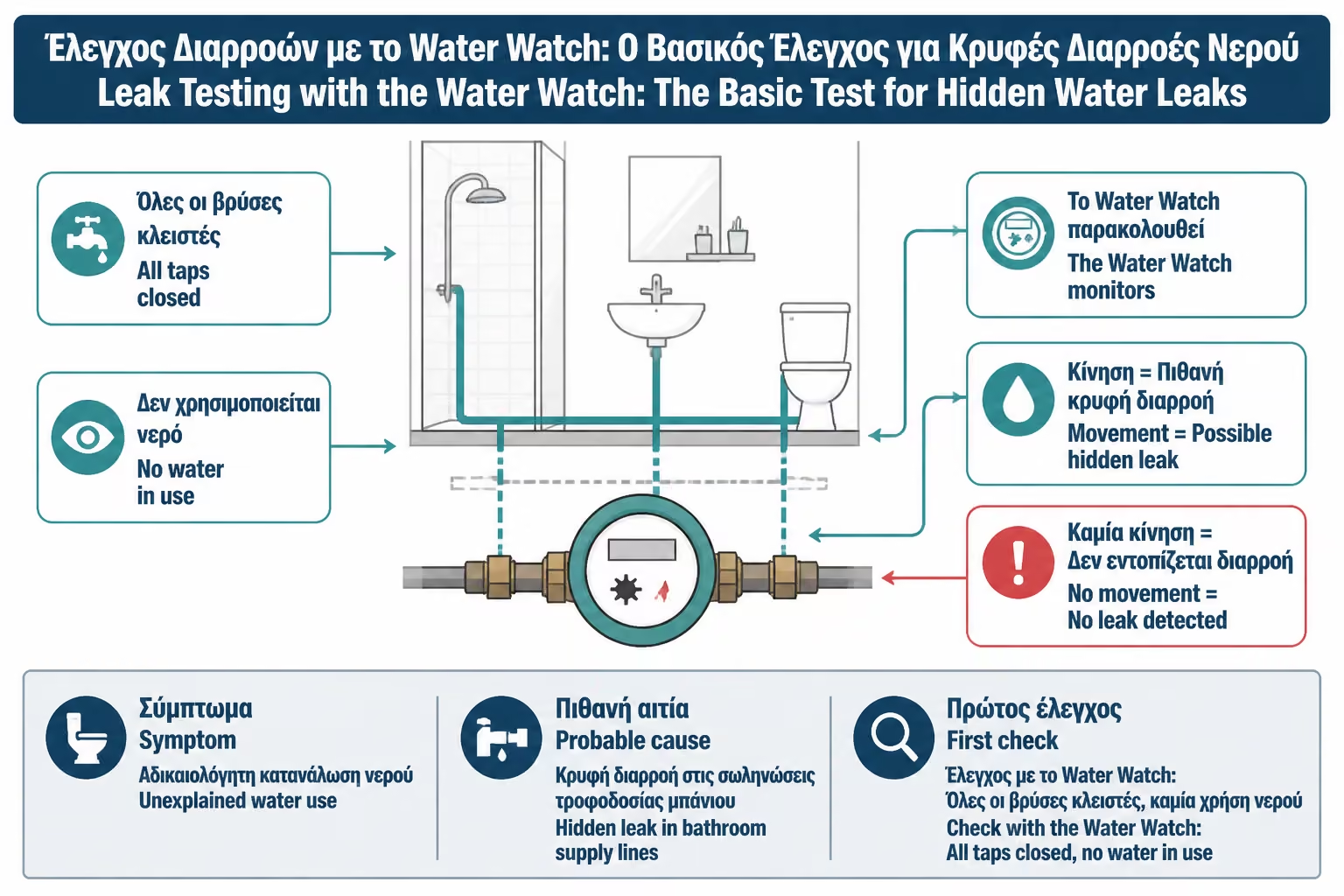
The test makes sense when you see moisture that is not easily explained. For example, peeling paint on a wall behind a bathroom, a stain on the downstairs ceiling, moisture that builds up without use, a wooden floor swelling, a damp smell or a stain near pipes.
It's especially helpful when the problem seems persistent. If the wall remains wet even when not showered, if the stain grows overnight, or if the ceiling drips without using a drain, then the water supply should be checked immediately. The watch is the first simple tool.
The test is also useful before breakouts start. Many times someone sees moisture behind the bathroom and thinks that the shower joints are to blame. But if the meter reads while everything is closed, the suspicion shifts to a water pipe, cistern, or other pressurized component.
If there is a heavy leak, water near electrical or damage downstairs, we don't just wait to observe for days. We shut off the supply where possible and call a technician.
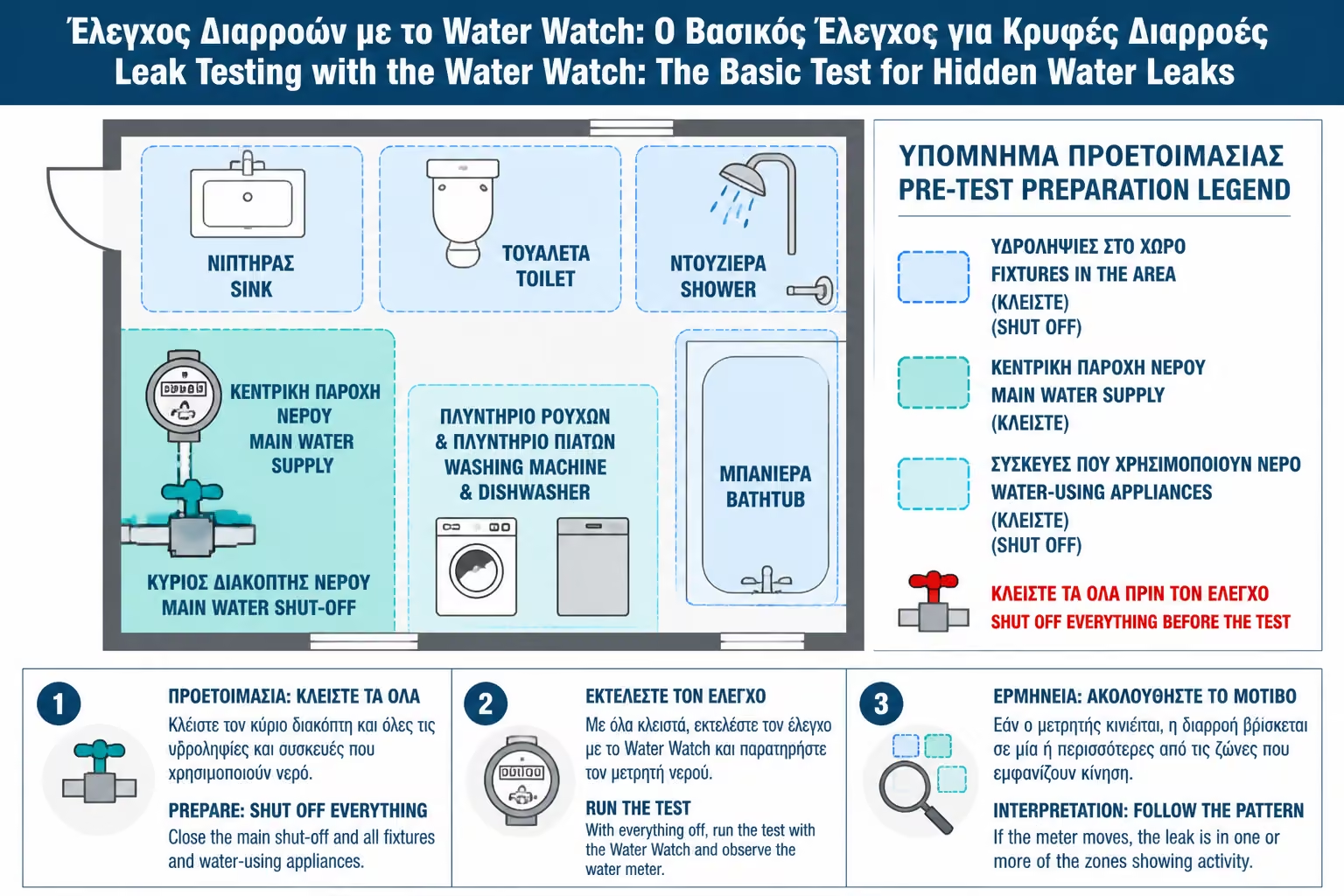
Before checking the meter, you must make sure that all normal water intakes are closed. We turn off all taps, shower mixer, sink, kitchen, outside taps, washing machine, dishwasher and any watering supply. We do not use a cistern during the test.
We also need to check the cisterns. A cistern that leaks a little into the basin can cause the meter to read continuously. Often this leakage is not heard loudly and is not visible at first glance. A simple way to observe is to look for a subtle flow or ripple within the basin. If there is, the cistern is first fixed or isolated.
If there is a water heater, boiler, solar, filter, softener, pressure or automatic system, we need to know if it can draw or expel water. In homes with more complex installations, the test may need plumbing for proper isolation.
The rule is simple: for the test to have value, we must be sure that no one and nothing uses water.
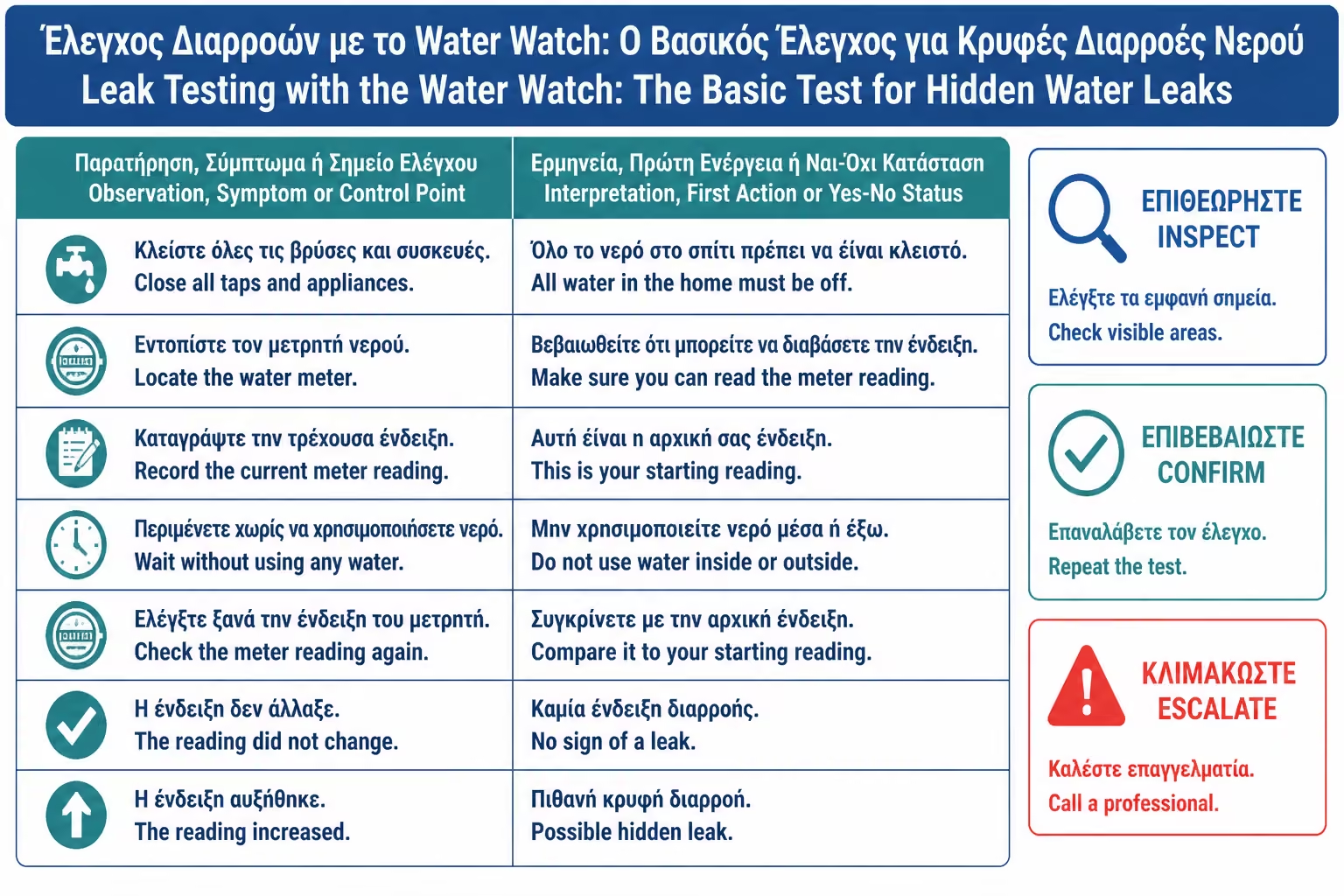
Go to the water meter and note the reading. If the watch has a small flow pointer or “star”, observe if it moves. In many watches there is a very sensitive small hand that turns even with a small flow. This is more useful than large cubes for micro leaks.
After making sure everything is closed, see if the little pointer moves. If it spins continuously, there is an indication that water is passing through. If it doesn't move at all, wait a few minutes and check again. For small leaks, it may take longer to see a change in the reading.
A practical way is to take a picture of the meter with time and then take a picture of it again after 15, 30 or 60 minutes, without using any water. If the reading has changed, then water has passed through the supply. If it has not changed at all, there is no indication of a continuous water supply leak during this time.
If the meter is moving, don't immediately panic that a pipe broke in the wall. First block the cisterns and appliances. If everything is really closed, then a plumber is called.
There are two ways to read the meter. The quick test is direct observation of the small pointer. If the pointer moves while everything is closed, the indication is direct. This is useful when the leak is quite large.
The standby test is most useful for small leaks. You note the reading, do not use any water for a certain period of time and look at the reading again. If the reading changed even a little, then there was consumption. This test can be done for 30 minutes, an hour or even longer, depending on the severity and conditions.
In a very small leak, the pointer may move so slowly that you hardly notice it with the eye. The before and after photo helps. In more severe leakage, the movement is immediately visible.
The standby test should be done at a time when the house can be left without water. For example, late at night or at a time when everyone knows they shouldn't turn on the tap.
If the meter moves while everything is closed, it means water is flowing through the supply. This can be due to a hidden leak in a pipe, a running cistern, a safety valve, a boiler, a dripping outdoor faucet, an automatic watering system, a filter, or another device that was not accounted for.
The first action is to rule out simple causes. We check cisterns, faucets, water heaters, washing machines, balcony supplies and any accessory. If after this the meter still reads, the suspicion of a hidden leak in the water supply network is serious.
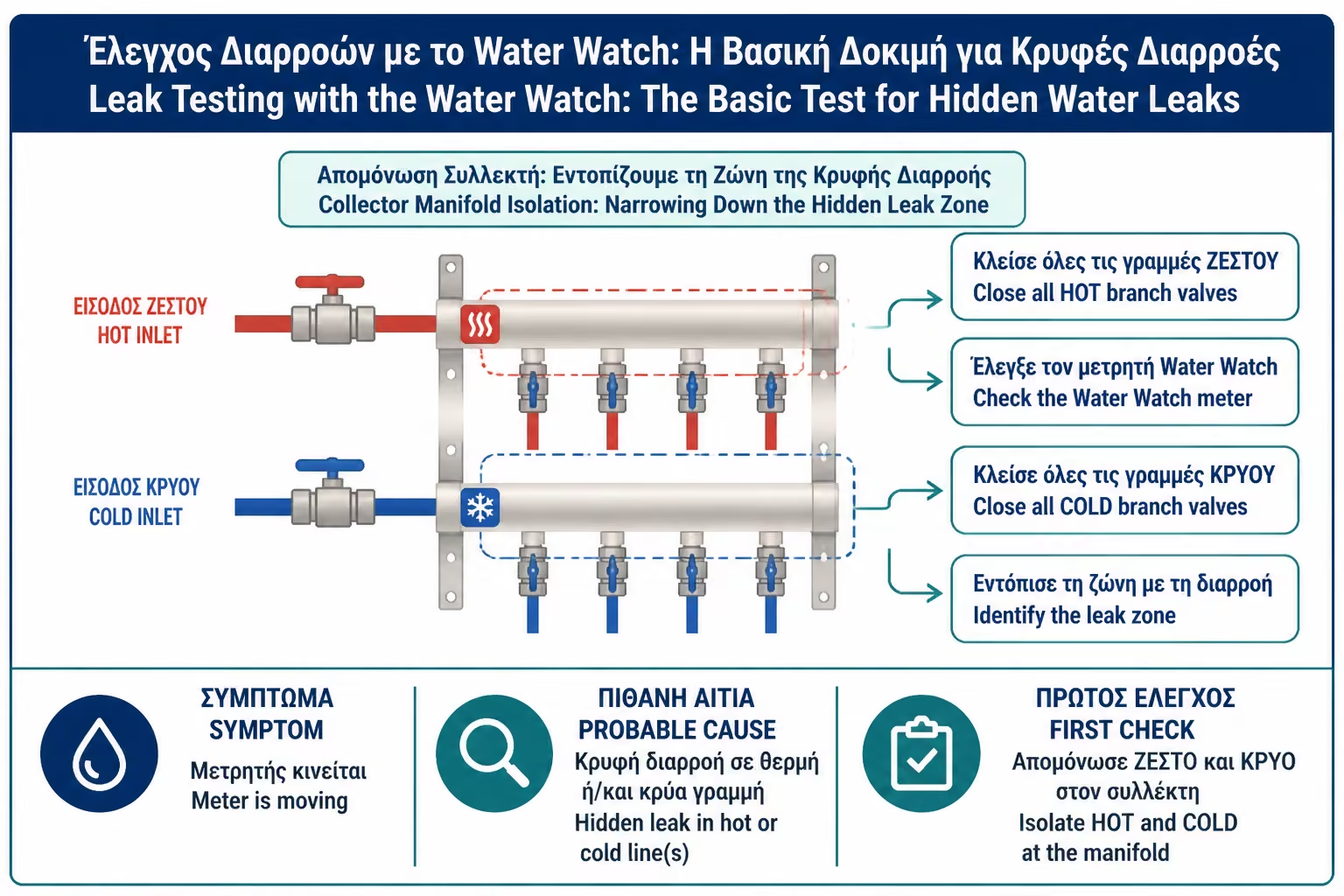
If it is possible to isolate lines, for example from a collector, the plumber can close individual lines and see which one stops the consumption. This helps identify whether the problem is in the bathroom, kitchen, water heater or another area.
The important thing is not to keep the supply open if there is an active leak. As the meter ticks, the water goes somewhere.
If the meter does not move while everything is closed, then there is no indication of a continuous water leak. That's good news, but it doesn't mean the issue is resolved. There may be a drain leak that only occurs when you use a sink, shower, washing machine, or faucet. There may also be waterproofing failure that only occurs when the surfaces get wet.
For example, if the downstairs ceiling only drips after a shower, the meter may be stationary all day. The problem may be in the siphon, the drain or the sealing of the shower. If the wall behind the bathroom gets wet only after using the sink, we are probably checking the sink drain.
So, the stationary watch mainly excludes the continuous loss of pure water. It does not rule out all leaks. The next step is controlled use of the components, one at a time, to see when moisture occurs.
The watch is a diagnostic filter, not the entire diagnosis.
A leaky cistern is the most common reason the meter ticks when the owner thinks everything is off. The water slowly passes from the cistern to the basin and ends up in the drain. It doesn't necessarily create moisture in a wall, but it causes constant consumption and can confuse control.
Sometimes a very light fill is heard every few minutes. Other times nothing is heard. The basin may have a thin stream of water at the back that is not easily seen. In such a case, the meter moves but there is no broken tube.
Before you panic, check all the drains in the house. If you can, close the cistern valve and see if the meter stops. If it stops, the cause was there. If it continues, we look elsewhere.
This simple step can save unnecessary opening of walls.
In more modern installations, supplies may start from a collector. This helps a lot with diagnosis because the plumber can shut off lines one by one. If a particular line closes and the meter stops, then the leak is most likely in that line or in a component that supplies it.
For example, the bathroom, the kitchen, the water heater or a specific supply can be isolated. This reduces the need for blind excision. In older installations without manifolds, the diagnosis can be more difficult, because the pipes branch out into the walls or the floor.
The manifold doesn't solve the leak, but it makes locating it more reasonable. If you have a collector, it is useful to know which line serves which point and that there is marking. In many renovations this is omitted, and then diagnosis becomes more difficult.
The correct organization of benefits is important not only in construction, but also in future maintenance.
In an apartment building, the meter can help distinguish whether the leak concerns a specific apartment or a possible shared line. If the upper compartment meter reads while everything is closed, there is an indication that the loss is after the meter of that compartment. If it doesn't read, but the leak is on the lower floor, then the drain, waterproofing or shared piping should be checked.
But there must be caution. Some apartment buildings have old layouts, common facilities, central boilers or pipes that are not easily distinguishable. In such cases, the diagnosis must be made by a plumber who knows how to distinguish between a private and public network.
If there is damage to the lower floor, it is advisable that the inspection be done with the presence or information of both parties. Photos of the meter, time, closed taps and remarks help to avoid misunderstandings.
The watch is not responsible for itself. It gives an indication of whether there is consumption after a specific supply.
If the test shows that there is a possible hidden water supply leak, the next step is to contain the damage. Turn off the central supply of the apartment when you do not need water, especially at night or until the plumber comes. If there is a local valve that isolates the problem section, use it.
Call a plumber and give him the information: how fast the meter is moving, if there is moisture, at what point, if there is a cistern that has been checked, if there is a collector, if the leak occurs downstairs. This information helps to organize the audit.
The plumber can do pressure testing, line isolation, thermographic testing, acoustic detection or targeted opening. The method depends on the type of installation, the age of the house and the intensity of the leak.
Don't leave a meter ticking for days without reason. Even a small leak can cause a lot of damage if it continues.
| Error | What can happen | Correct approach |
|---|---|---|
| We don't check the cisterns | We think there is a broken pipe | First we rule out a leaky cistern |
| Someone turns on a faucet during the test | Wrong indication | We inform everyone at home |
| We only watch for 10 seconds | We lose microleakage | We also do waiting tests |
| We do not photograph the indication | We don't know if it changed | Photo before and after |
| We consider a stationary watch to exclude any leakage | We ignore drainage or waterproofing | We continue with a usage test |
| We do not shut off the supply while there is evidence of a leak | Damage increases | Shutdown until inspection |
| We don't call a technician | The leak continues in secret | Plumber to locate |
| We are confusing public and private network | Unfair charge or delay | Line technical confirmation |
The test is simple, but its reliability depends on correct execution.
| Inquiry | Yes / No |
|---|---|
| Are all the faucets in the house turned off? | Yes / No |
| Washing machine, dishwasher or irrigation not working? | Yes / No |
| Were the cisterns checked for low continuous flow? | Yes / No |
| Has the original meter reading been photographed? | Yes / No |
| Is the small flow indicator stationary? | Yes / No |
| Waited 15–60 minutes without using water? | Yes / No |
| Did the reading change after waiting? | Yes / No |
| If it changed, were cisterns and appliances excluded? | Yes / No |
| Is there a collector for line isolation? | Yes / No |
| Has a plumber been informed if the meter is ticking? | Yes / No |
| Is the supply shut off if there is an active leak? | Yes / No |
| If the meter doesn't read, does the check continue to drain/seal? | Yes / No |
If the meter is ticking and all normal loads have been blocked, don't ignore it. It is one of the clearest indications that water is being lost somewhere in the water supply network.
> If you have to keep only one thing, keep this: the water meter is the first simple test to distinguish whether there is a continuous loss in the water supply network. Turn off all the faucets, check the cisterns, take a picture of the reading and wait without any use. If the meter is ticking, the water is going somewhere. If it doesn't say no, it doesn't mean there isn't a leak; it means you need to look at a drain, siphons, or seal that are activated only by use.
Checking with the water watch is the simplest and most useful first step when a hidden water leak is suspected. It requires no tools, causes no damage, and can detect continuous water consumption while everything is closed. If the meter is moving, the water supply should be checked immediately.
But the test must be done correctly. All taps should be turned off, no appliances should be in operation, cisterns should be checked and the reading should be observed for a sufficient time. A leaky cistern can confuse the diagnosis. A micro leak can only be seen after waiting.
If the meter does not move, this is a useful indication but not a complete exemption. Damp can come from a drain, siphon, poor shower seal, joints or condensation. There a different control is needed, using the components one by one and observation.
For the owner, the correct sequence is simple: meter first, then block cisterns and appliances, then plumber if there is an indication, then check drain or seal if the meter stays still. Thus the diagnosis is made in a logical order and not blindly.
Return to category.
Go to categoryReturn to the central guide.
Go to guide