
Bathroom Waterproofing & Moisture Protection
Return to category.
Go to categoryThe built-in bathtub is one of the most common solutions in Greek bathrooms. The bathtub is installed, built around, covered with tile and gives a clean, permanent image. From the outside it looks finished and solid. But from the inside it hides one of the most critical parts of the bathroom: the valve, the siphon, the overflow and the drain connection.
If these points are properly connected, the bathtub will work for years without a problem. But if there is a loose connection, a worn gasket, a bad drain slope, a leak in the overflow or a small drip in the valve, water can be hidden under the tub. And because the tub is built in, the owner often doesn't see anything until moisture appears on the adjacent wall, downstairs ceiling, or on the floor outside the bathroom.
This is where the visit box comes in. The locker is not a "quick solution" nor does it necessarily spoil the aesthetics. It is the access point that allows the plumber to check the valve, siphon and connections without breaking tiles. In a built-in bathtub, the absence of a hatch means that the most critical plumbing point of the structure is permanently closed behind a wall. This is technically bad practice.
The problem is compounded because under-tub leaks are often small and insidious. We are not always talking about a major flood. It could be a few drops each time the tub is filled, a leak only when the overflow is working, a small trickle from the siphon connection, or water passing through the tub-toilet perimeter joint and collecting underneath. If there is no visual access, the diagnosis is delayed and more expensive.
This guide explains why the manhole is necessary in practice, what points should be checked, where it should be placed, what are the dangers of a bad valve and siphon connection, and how a built-in bathtub should be designed so that it can be maintained without tearing it down.
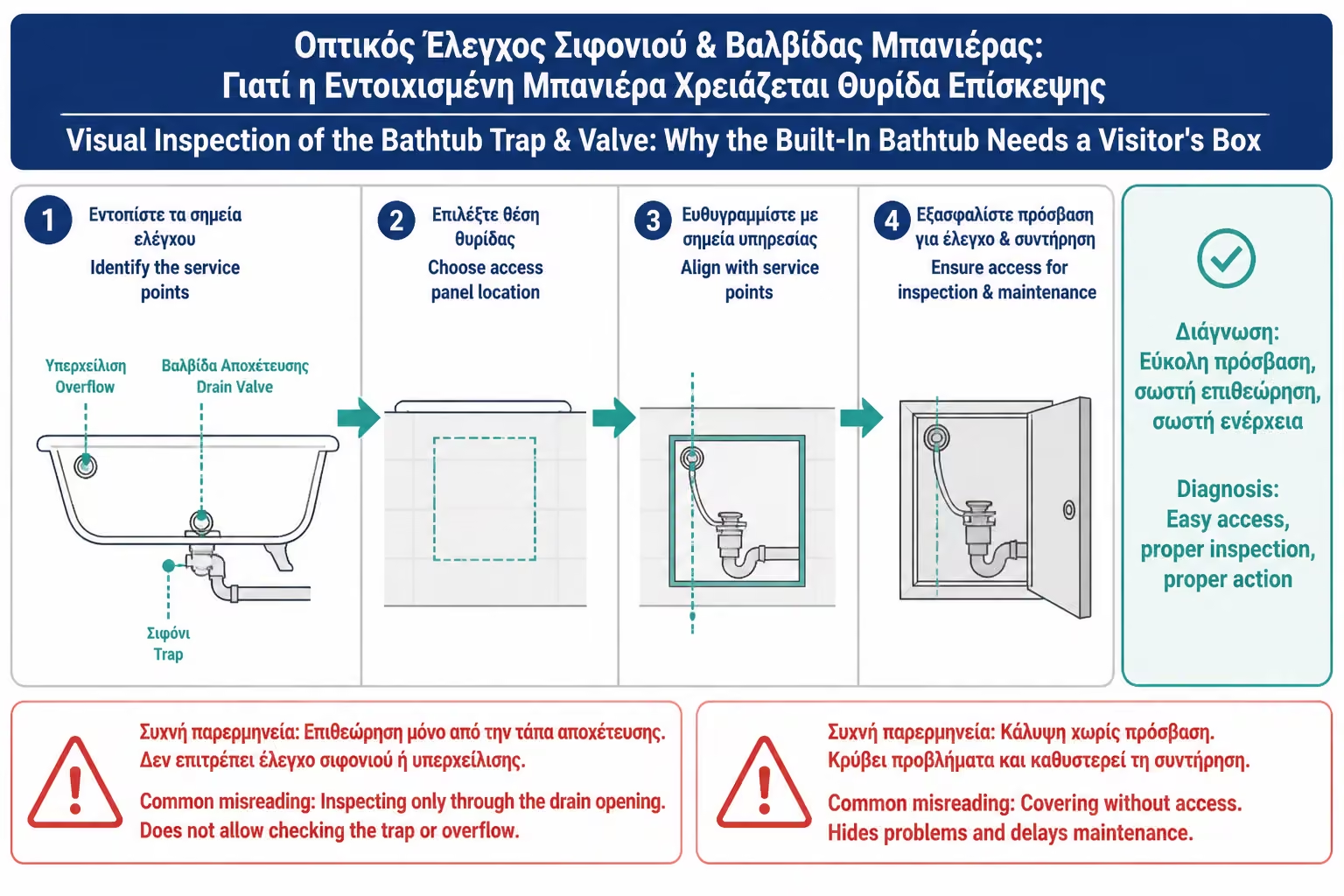
Under a bathtub there is no "empty space" without meaning. There is the drain valve, the pipe leading to the siphon or drain, the overflow connection, possible joints of plastic parts, brackets, tub legs, gaps around the masonry and often places where water can pass through the perimeter joint.
The valve is where the water leaves the tub. The overflow is the safety point if the level rises too high. The siphon or drain connection is the path of water to the mains. All of these have flanges, fittings, nuts, rubber or plastic connections. None of them should be considered eternal and uncontrollable.
If a joint comes loose or is not seated properly, the leak may not be visible on the surface. The water falls under the tub and is absorbed by the cement mortar, plaster or tile. If there is a lower floor, a stain may appear on the ceiling. If there is an adjacent wall, the paint may swell. If there is a wooden floor outside the bathroom, it can swell from moisture moving down.
So the point under the bathtub must be controllable. Everything that has a joint, flange and drain must be able to be inspected.
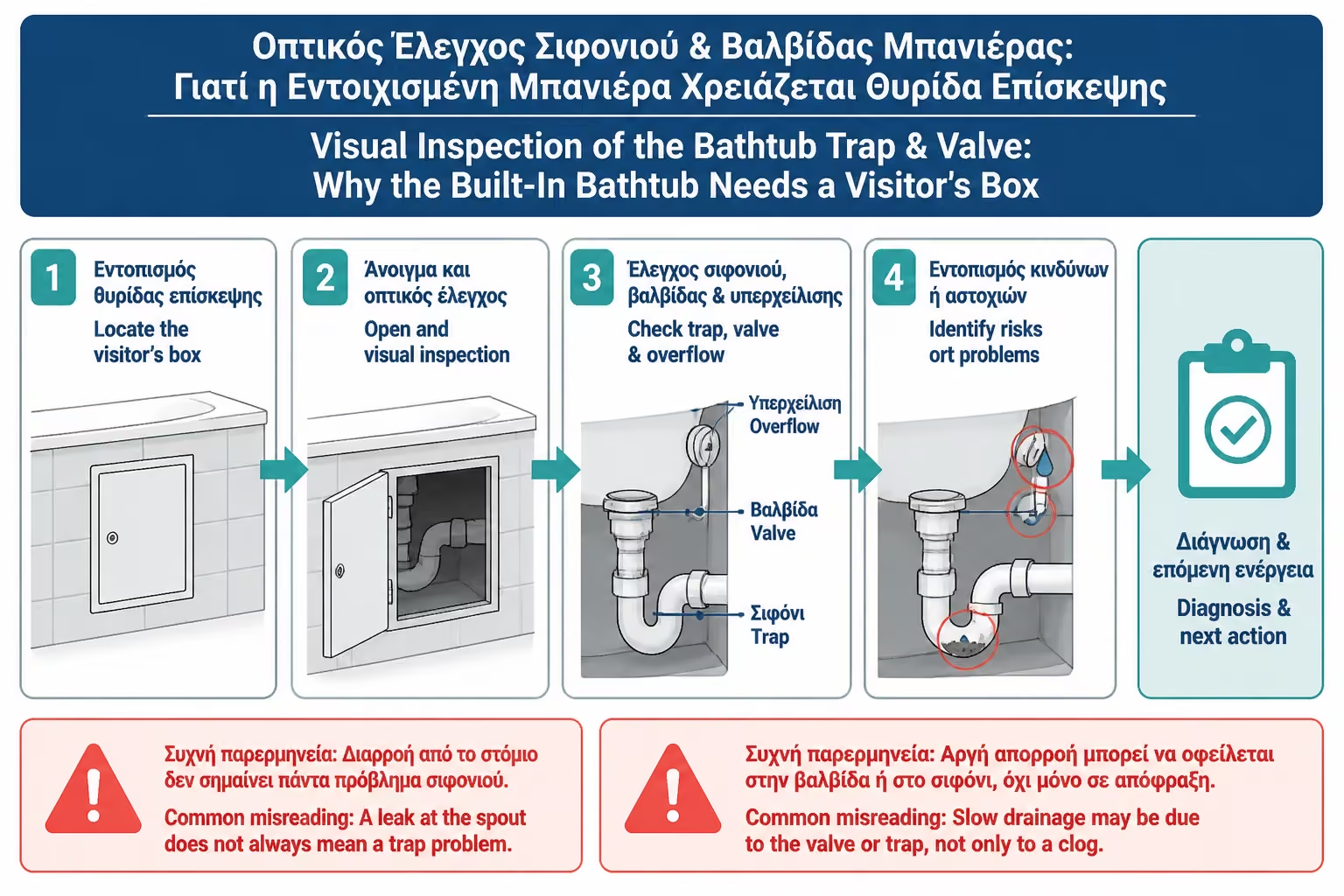
A manhole is an access opening in the built-in tub apron or other suitable location so that the technician can see and touch the valve, siphon and connections. It can be a plastic or metal lid, a removable tile with magnets or a special access system built into the lining.
Its role is not simply to ventilate the space. The key role is access. Be able to visually check for drops, salts, moisture, loose joints, odors or blocked siphon. A small repair or cleaning can also be done without breaking the bathtub apron.
The box must be large enough and properly positioned. A small decorative cap in the wrong place does not help. If the plumber can't reach the valve or siphon, the hatch is only there by default. The opening must correspond to the actual point of the connections.
In a properly built tub, the hatch is designed before the apron is built. It is not decided at the end, when it does not fit.
The absence of a hatch turns a simple leak into a major operation. If there is a small leak from the valve and we do not have access, the only solution may be to break tiles in the apron or floor. If the tiles are old and there are no replacements, the repair can become aesthetically difficult. If the bathtub is encased in a custom liner, the cost goes up.
But the most serious thing is the delay. Without a valve, the leak can exist for months without being seen. Each use of the bathtub adds some water under the structure. By the time a stain appears on the bottom floor, the moisture may have spread. Then we don't just fix a gasket. We dry subfloors, repair plasters, paint ceilings and maybe strip more spots.
The locker is cheap compared to the cost of a hidden leak. It is like the visiting cap of a machine. If there is none, every check becomes an operation.
That is why the built-in bathtub without a door must be considered technically deficient, even if it looks beautiful from the outside.
The bathtub valve is a high risk point. This is where all the water collects before it goes down the drain. Its connection to the body of the bathtub must be correct, with clean surfaces, a suitable gasket, correct tightening and compatible components. If the flange is pressed wrong, if the surface is dirty, if the nut is overtightened or left loose, leakage may occur.
Valve leakage is not always visible from above. Maybe the bathtub is emptying normally and dripping slowly from the bottom. This is only visible if there is access. The plumber can fill the tub a little, pull the plug, and observe if any drips appear at the connection. Without a locker, this simple test becomes nearly impossible.
In old bathtubs, the gaskets may have hardened or lost their elasticity. In new installations, the problem may come from incorrect placement. In both cases, access is essential.
The valve is a small part with a big responsibility. It must not be permanently closed behind tiles.
Bathtub overflows are often overlooked because they don't work every day like basic drains. But when used, it must be absolutely correctly connected. If the overflow flange is loose or if the overflow pipe is not properly connected to the siphon, water can fall behind the tub.
The sneaky thing is that the overflow leak only occurs in a specific use: when the tub is filled high enough or when water hits the overflow area. If the owner mainly showers in the bathtub, it may not be seen for a long time. If at some point the bathtub fills up, then the problem appears suddenly.
The visit box allows control of this connection as well. A fill to overflow test and observation from below can be done. If drops appear, the cause is found without breaking.
In any new tub installation, the overflow should be tested before the apron is closed. It is not enough to test only the base runoff.
The bathtub faucet does not only have a drainage role. It also acts as an odor trap, holding water so that odors do not return from the drain. Over time it can collect hair, soaps, salts and residues. If the flow is reduced, the water drains slowly and can put more stress on the connections.
Access to siphon allows cleaning, inspection and replacement of parts. Without access, every plug becomes more difficult. The owner may resort to strong chemical sealants, which are not always a good idea for old piping, gaskets or plastic fittings. Mechanical access is safer when needed.
Also, a drain smell can be related to a siphon that is not working properly, a bad connection, or a lack of water in the odor trap. If there is no locker, control becomes much more difficult.
So the box is not only useful in case of a leak. It is also useful for maintenance.
The box should fit where the valve, siphon and drain connection are located. Usually this is on the tub apron, on the side near the drain. If the layout of the bathroom does not allow an opening there, alternative access must be found from a side wall, cupboard, adjacent space or special removable lining.
The key criterion is actual access. The technician must be able to see, illuminate, place a hand or tool and intervene. If the box is too small or too far, it has no practical value. Many times we see boxes that exist only to "appear to be accessible", but do not allow any serious work.
The location must be agreed before the apron is built. The plumber knows where the connections are. The tiler knows how to cut the tiles. The owner wants aesthetics. The right solution combines all three.
In small bathrooms, the location of the door can be difficult, but the difficulty does not mean that it should be removed. It means it needs to be designed better.
There is no one size fits all, but the locker must be functional. A very small cap may allow one to see that there is a siphon, but not to clean it or change a gasket. In many cases, the box must be large enough to accommodate a hand and tool.
The required dimension depends on the position of the valve, the depth of the tub, the type of siphon and whether there are any obstructions. If the drain is too far back, a larger opening or a different access solution may be needed. If there is a pop-up mechanism or special valve system, access becomes even more important.
The aesthetic solution can be a removable tile instead of an obvious plastic cap. But this should be truly removable, not stuck in a way that on the first visit it will break. Magnetic systems or special frames can help.
The box should not be designed based on the smallest possible opening. It should be designed based on the actual work that may be required.
There are two basic aesthetic logics. The first is the visible cap, usually plastic or metal. It is economical, practical and easy to open, but may not be aesthetically pleasing. The second is the hidden tile compartment, where one or more tiles act as a removable lid. This one is more subtle, but needs proper construction.
The hidden locker must have a solid frame, open without breaking and close properly. It should not be based only on silicone which after years will have hardened. If magnets are used, they must be suitable for a wet environment. If there is a joint around the tile being removed, it must be clean and controlled.
The visible cap has the advantage of simplicity. In technical areas or in places that are not very visible, it may be the most logical solution. In high aesthetic bathrooms, the hidden locker is preferable, as long as it remains functional.
The best locker isn't the one that can't be seen. She is the one who opens up when we need her.
The door creates an opening in the bathtub apron. So it must be designed so that the same water path does not take place. The area around the port should have a proper finish, clean edges and proper sealing where necessary. If water from the floor or shower can hit the hatch, the choice of cover and seal must be more careful.
But there must be a balance. The box must be opened. If it is permanently sealed with hard glue or grout, it loses its role. If sealed with too much silicone, each check will require cutting and resealing. The system must allow access and at the same time protect against accidental ingress of water.
In bathtubs that are also used as showers, the apron can often receive splashes. There, the location of the door must be protected as much as possible from direct wetting. If this is not possible, a cap suitable for a wet environment and controlled sealing is chosen.
The window should not be the weak point of the construction. It must be controllable, but also properly integrated.
Before the tub is built and closed, a runoff test must be performed. Fill the bathtub with a controlled amount of water, open the valve and observe from below if there is any dripping. We check the valve, the fitting, the siphon, the drain pipe and the connection with the overflow.
An overflow test should also be done. The overflow should not go untested because it "will never be so full". It only needs to be used once to reveal a problem. If the tub has a pop-up mechanism, this should also be checked.
The support of the bathtub is checked. If the tub moves, the connections are strained. An acrylic tub that flexes can open perimeter silicone or fatigue the valve. The tub must be properly pressed and stable before closing.
Finally, the connections are photographed before they are covered. These photos are valuable in future diagnosis.
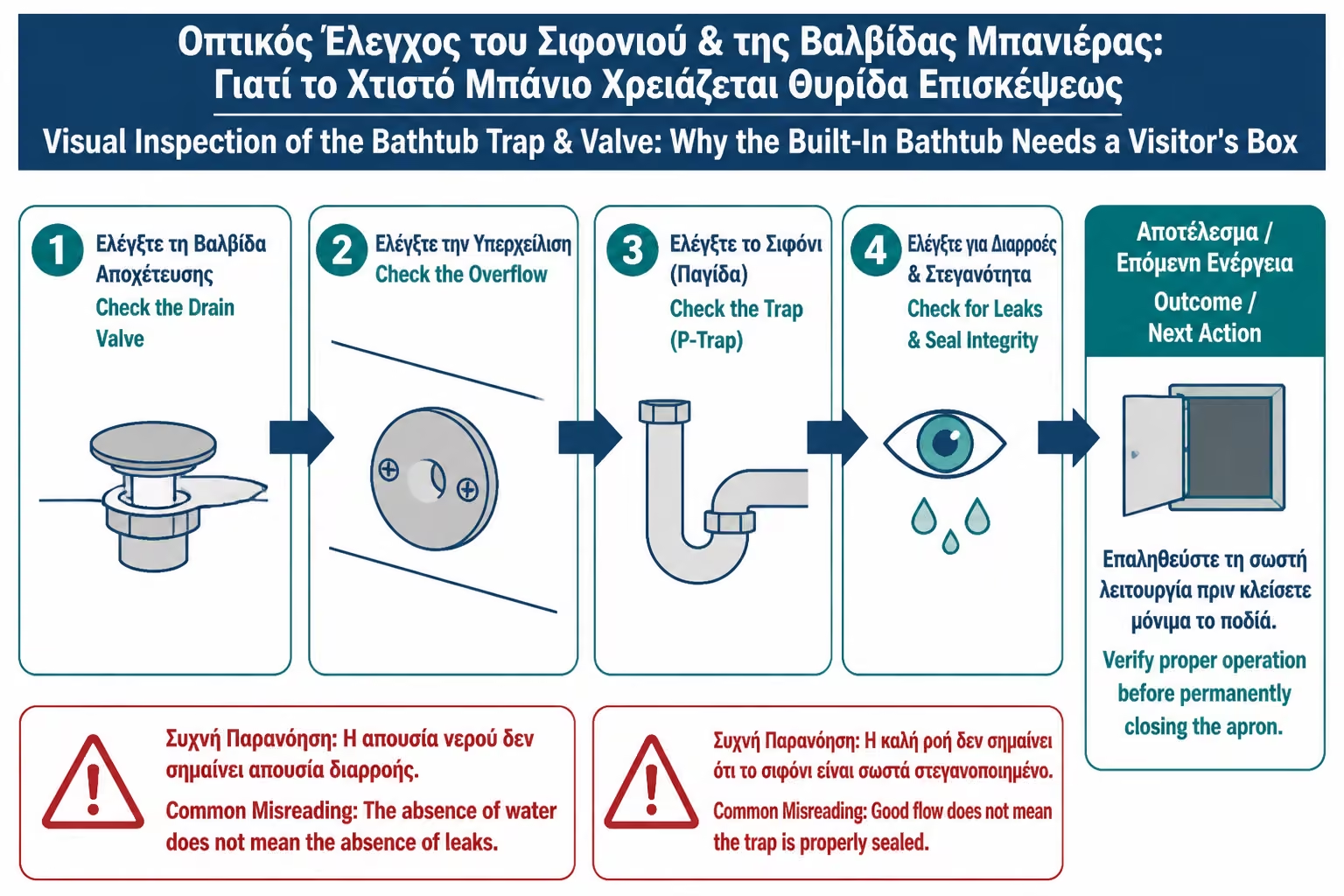
After delivery, the box allows periodic checking. It does not need to be opened every week, but at regular intervals or when there is an indication of a problem. We check if there are drops, salts under the valve, sewage smell, wet substrate, black spots, traces of soaps or color change in wood and plaster.
After using the tub, a simple visual inspection can be done. If there are fresh drops, it must be identified where they come from. If there is white scale around a connection, it may indicate a small old leak that is evaporating. If there is a smell, there may be a problem with the siphon or drain.
The locker also helps with cleaning. If runoff is slow, the technician can check the siphon instead of just pouring chemicals over the top. If a part needs to be changed, the access greatly reduces the operation.
Maintenance is cheaper than uprooting. The locker makes maintenance possible.
We must not forget that water under the bathtub does not always come from the valve or the siphon. It can enter through the perimeter tub-toilet joint, especially when the tub is used as a shower. If the silicone has opened, if the tub is moving, if there isn't a proper second line of defense behind the joint, water can back up and end up underneath.
The porthole helps to determine if water appears under the tub after a shower, even if the drain is not leaking. For example, if we pour water only on the perimeter joint and then see drops below, the cause is not necessarily the siphon. It is the perimeter sealing or waterproofing behind it.
This is important in diagnosis, because many times the valve is changed while the water is entering from the bathtub joint. Or vice versa, new silicone is passed while the valve is dripping. Without visual access, assumptions multiply.
The port does not solve the perimeter leak, but it helps to see it.
When the bottom floor shows a stain under the bathtub, the diagnosis must be made in order. First we check if the leak is continuous, so possible water supply. Then we check if it appears using the drain. Then we check if it appears when the perimeter joint or the wall around the bathtub gets wet.
The visit box is crucial in this process. It allows to see if the siphon is dripping at the time of the test. Allows to see if the overflow is missing. It allows you to see if water is coming in from behind and falling on the floor under the tub. Without a slot, the technician is often forced to work with indirect indications.
If there is no hatch, opening from the bath apron may be required. This is often the first dislocation to be performed, because without visual access there is no definite diagnosis. If there was a proper porthole in the first place, this break would have been avoided.
In apartment buildings, the locker also helps with liability management. It quickly shows if the problem is a private tub connection or something else.
| Error | Possible consequence | Correct approach |
|---|---|---|
| Built-in bathtub without locker | Break tiles in every control | Predict access from the start |
| Box too small or in wrong position | It cannot be repaired | Box in front of the valve/siphon |
| Overflow is not tested | Hidden leak when the tub is full | Test before the apron closes |
| Bad valve tightening | Dripping under bathtub | Proper gasket and runoff test |
| Unstable bathtub | Silicone opening and connection stress | Proper support before closing |
| Perimeter silicone as the only defense | Water behind bathtub | Proper support, waterproofing and sealing |
| Chemical occlusives without access | Wear or temporary solution | Checking and cleaning from locker |
| No photos before closing | Difficult future diagnosis | Piping and connection documentation |
Most errors are not visible on the day of delivery. They appear when control is needed.
The cost of a manhole is small compared to the cost of a hidden leak under a bathtub. Even a more discreet solution with a removable tile or special frame makes economic sense if we consider what it means to break the apron, find the same tiles, repair the siphon, rebuild and re-grouting.
In a typical bathroom of about 5 sq.m. in the Greece of 2026, where a simple to medium renovation can cost around 3,200–5,500€ and more demanding solutions reach around 6,000–7,500€ or more, the door is a small detail with a high maintenance value. It is not a point where it is worth saving.
| Selection | Cost | Technical value |
|---|---|---|
| Simple clear cap | Low | Easy access, less aesthetic inclusion |
| Metal/quality case | Medium | Better durability and appearance |
| Concealed locker with tile | Medium to higher | Very good aesthetics, needs proper construction |
| No locker | It seems zero cost | High future risk of dislocation |
The phrase "nothing can be seen" should not mean "nothing can be checked".
A proper quote for a built-in bathtub should specifically mention the drop-in box. It must describe location, type, approximate dimension and method of access. The general phrase "building a bathtub with tiles" is not enough.
It must also report runoff and overflow testing prior to closing. If the tub is acrylic, proper support must be indicated. If there is a perimeter seal, sanitary silicone or a suitable sealing system must be mentioned, but also make it clear that the silicone is a final seal, not a substitute for a proper hydraulic connection.
If a hidden tile box is used, it must be shown how it opens. With magnets? With a frame? With a removable panel? Will it be able to open without breaking? These must be answered before the task is completed.
The offer must protect both the owner and the technician. When the details are written down, misunderstandings are reduced.
Before turning off the tub, ask where the valve and faucet are. Ask where the hatch will go in and if the plumber can actually reach the connections from there. Ask if it has been water-drained and overflow-tested.
Ask if the tub is firmly supported. If it clicks correctly. If there are pictures of the connections before it was closed. If the perimeter joint with the tile will be done after the tub has taken its position under normal load, especially in acrylic tubs.
Also ask what will happen if a valve needs to be changed in two years. If the answer is "we will break the apron", then the access has not been designed correctly. The correct answer must include opening a hatch.
The best time to request a locker is before the tub is built. Then it's late and more expensive.
| Inquiry | Yes / No |
|---|---|
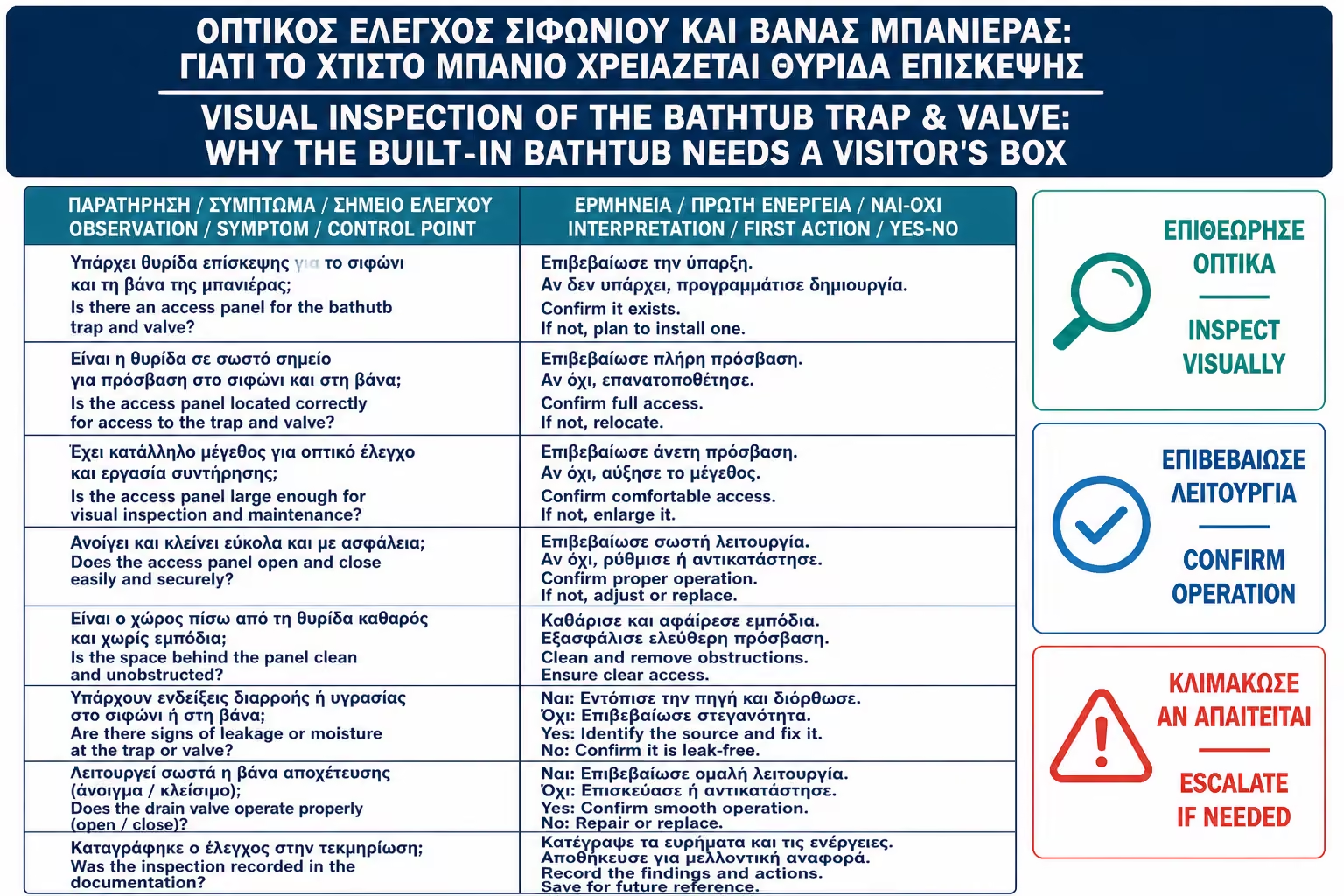
| Is there a visitor's box in the built-in bathtub? | Yes / No |
| Is the port in front of the valve/syphon? | Yes / No |
| Is it big enough for real access? | Yes / No |
| Can it be opened without breaking tiles? | Yes / No |
| Has the base runoff been tested before the apron is closed? | Yes / No |
| Has overflow been tested? | Yes / No |
| Is the tub properly supported and not moving? | Yes / No |
| Is the perimeter joint with the tiles properly sealed? | Yes / No |
| Are there any pictures of the pipes before they were closed? | Yes / No |
| Can a future cleaning or siphon change be done? | Yes / No |
| Is the locker protected from direct wetting where appropriate? | Yes / No |
| Does the offer specifically mention the drop-in box? | Yes / No |
If most of the answers are “no”, the bathtub may look finished, but it is not properly maintainable.
> If you must keep only one thing, keep this: practically every bathtub built must have access to the valve, the siphon and the overflow. The visit box is not an aesthetic concession. It's technical security. Without it, a simple gasket or small leak can lead to broken tiles, dampness downstairs and an expensive repair. Anything that cannot be controlled will sooner or later become a problem.
The built-in bathtub can be beautiful, stable and practical, but only if it remains controllable. Under its apron are components that work every time water is emptied: valve, siphon, overflow, drain pipe and flanges. These points should not be permanently closed behind inaccessible tiles.
The visit box allows for visual inspection, cleaning, leak diagnosis and minor repairs without demolition. It is especially important in apartment buildings, where a small leak under a bathtub can appear as a stain on the ceiling of the lower floor and create a lot of tension. It is also critical in bathrooms where the tub is used as a shower, because water can enter the perimeter joint and pool underneath.
Correct construction is not "seeing nothing". It's about looking beautiful, but being able to be controlled when needed. A discreet tiled hatch or properly fitted lid is a small price to pay for the cost of a hidden leak.
For the owner, the question before turning off the tub should be simple: "If the valve leaks tomorrow, how will we see it?" If the answer is “out of the box”, the construction has been predicted correctly. If the answer is "we will break", then the bathtub is not designed with maintenance in mind.
Return to category.
Go to categoryReturn to the central guide.
Go to guide