
Bathroom Waterproofing & Moisture Protection
Return to category.
Go to categoryA basement ceiling leak is one of the most stressful problems in an apartment building. It usually starts with a stain: some yellowing on the neighbor's ceiling, blown paint, drips around the light fixture, a damp smell, or a dark stain that grows after using the bathroom above. And that's where the hard part begins: who's to blame? The upstairs bathroom? The siphon? Worn out joints? The drain? Or some shared central piping of the apartment building?
The problem is that water doesn't always appear directly below its source. It can start from the shower, move through the cement mortar, go around the siphon, follow the slope of the slab or a gap and appear half a meter further. It can also come from a drain that runs only when the shower is in use, a water supply that runs continuously, or a shared standpipe that runs through a manhole or wall.
That is why the first reaction should not be either "the neighbor's fault" or "the utilities are to blame". It needs a diagnosis. It should be noted when the leak occurs, if it is connected to the use of a particular fixture, if there is continuous water consumption, if it is affected by the shower, cistern, sink or washing machine, and if the problem piping is private or shared.
In practice, most apartment building disputes begin because liability is assigned before causation is established. Downstairs sees the damage and reasonably pushes. The upper owner is afraid that he will pay through no fault of his own. Management is wondering if this is a shared fault. And the plumber is often called when tension has already built up. The correct order is first safety and damage limitation, then technical detection, then liability and cost.
This guide explains how to read a basement ceiling leak, how to tell if worn joints or a seal, siphon, drain, water supply or communal piping are more likely to blame, and how to deal with the issue of liability without unnecessary conflict.
When water appears in the ceiling, the first issue is not attribution. It's security. If the leak is near a light fixture, electrical box, panel, or cables, the power supply to that circuit or area must be shut off, with the help of an electrician where necessary. Water and electricity do not allow delays.
Then the water supply must be limited. If the leak is suspected to be coming from the upper apartment, the upper owner should temporarily stop using the bathroom, close local valves where available and check whether the cistern, battery, washing machine or water heater is running. If there is an indication that a water pipe is constantly running, the apartment's central supply must be shut off until a plumber arrives.
If water drips into the lower compartment, it is advisable to protect furniture, lighting and floors. Photos and videos should be taken before repairs are made, not to create conflict, but for documentation. In multi-family housing and insurance proceedings, documentation is important.
Diagnosis comes later. If we continue to use the bathroom "to see", we may increase the damage of the lower floor.
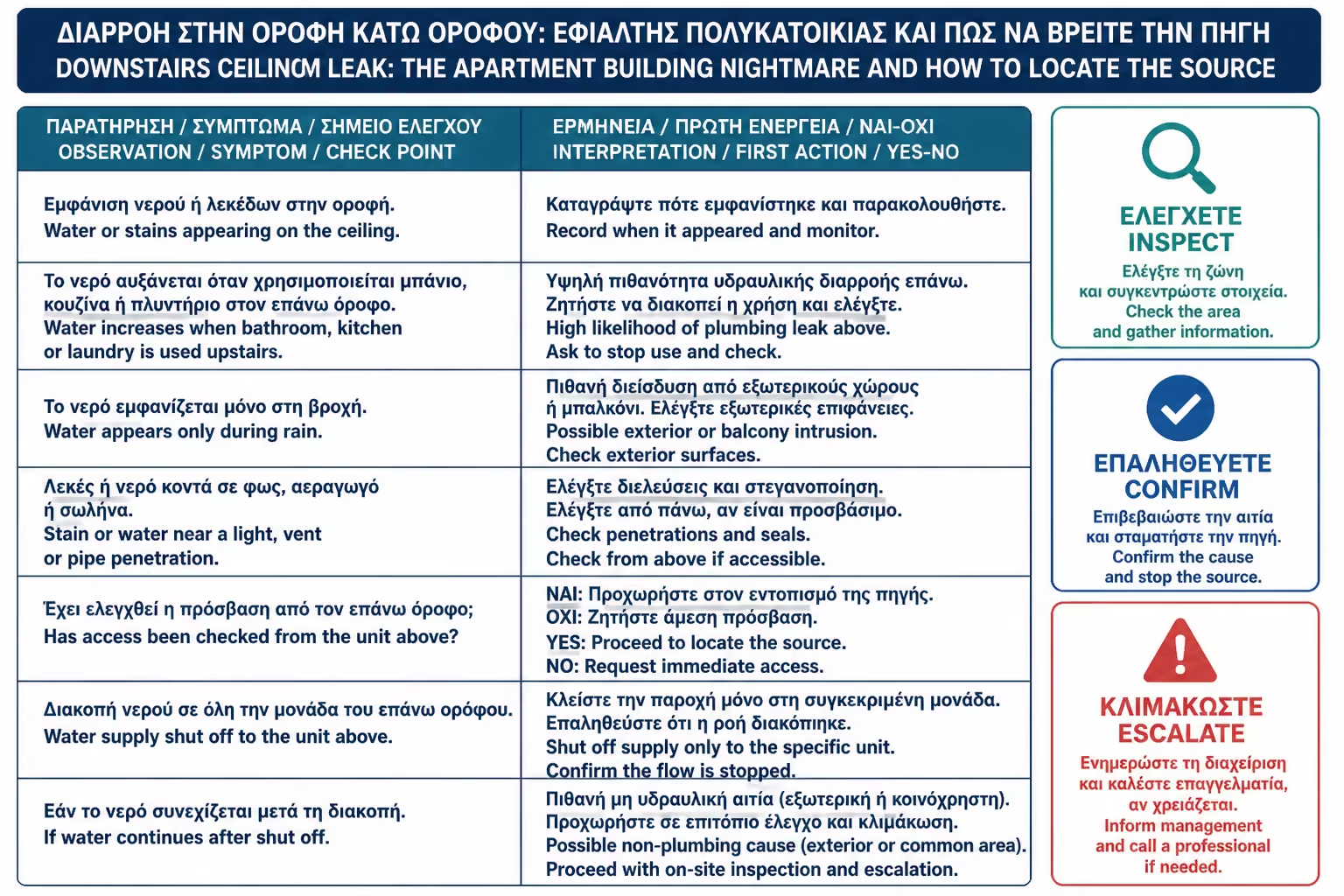
The temporal behavior of the leak is the first diagnostic element. If the stain or drip grows even when no one is using the bathroom, then the suspicion goes to a pressurized water pipe. Supply pipes have water constantly. If they leak, they can feed the stain day and night.
If the leak only occurs after a shower, then it is most likely related to the shower, its spout, the drain, the floor seal or the walls getting wet. If it occurs after using a cistern, the cistern, basin and drain are examined. If it appears after using a sink, check the sink and its faucet.
If the leak occurs after the washing machine has been run, the cause may be a supply, drain, overflow or hose. If it appears after rain, especially on a top floor or exterior wall, it may not be the bathroom but the roof, balcony, or exterior masonry.
The question "when does it drip?" is often more useful than the question "where is it dripping?". Water can travel. But time betrays the use that activates it.
One of the most common causes of leaking downstairs is a failed shower enclosure. This can be due to worn joints, open silicones, a poor connection with the siphon, lack of sealing under the tiles, a crack in the corners or water coming behind the battery.
But we have to make one thing clear: worn joints are not always the real cause. It may be the point where water gets in, but the problem only becomes serious if there is no proper waterproofing underneath. In a properly sealed bathroom, some amount of water passing through the joint should not reach the slab and the floor below. If it reaches, it means that the system under the tiles is not working or does not exist.
The indication for such a problem is when the leakage occurs after a shower and not continuously. There may be a delay: the water passes under the tiles and appears on the ceiling of the lower floor after an hour. It can also get worse when water hits a specific spot, such as a corner, line siphon, or battery wall.
The repair should not be started with a simple application of new grout if the waterproofing has not been checked. If the problem is deeper, the new joint will just delay the next appearance.
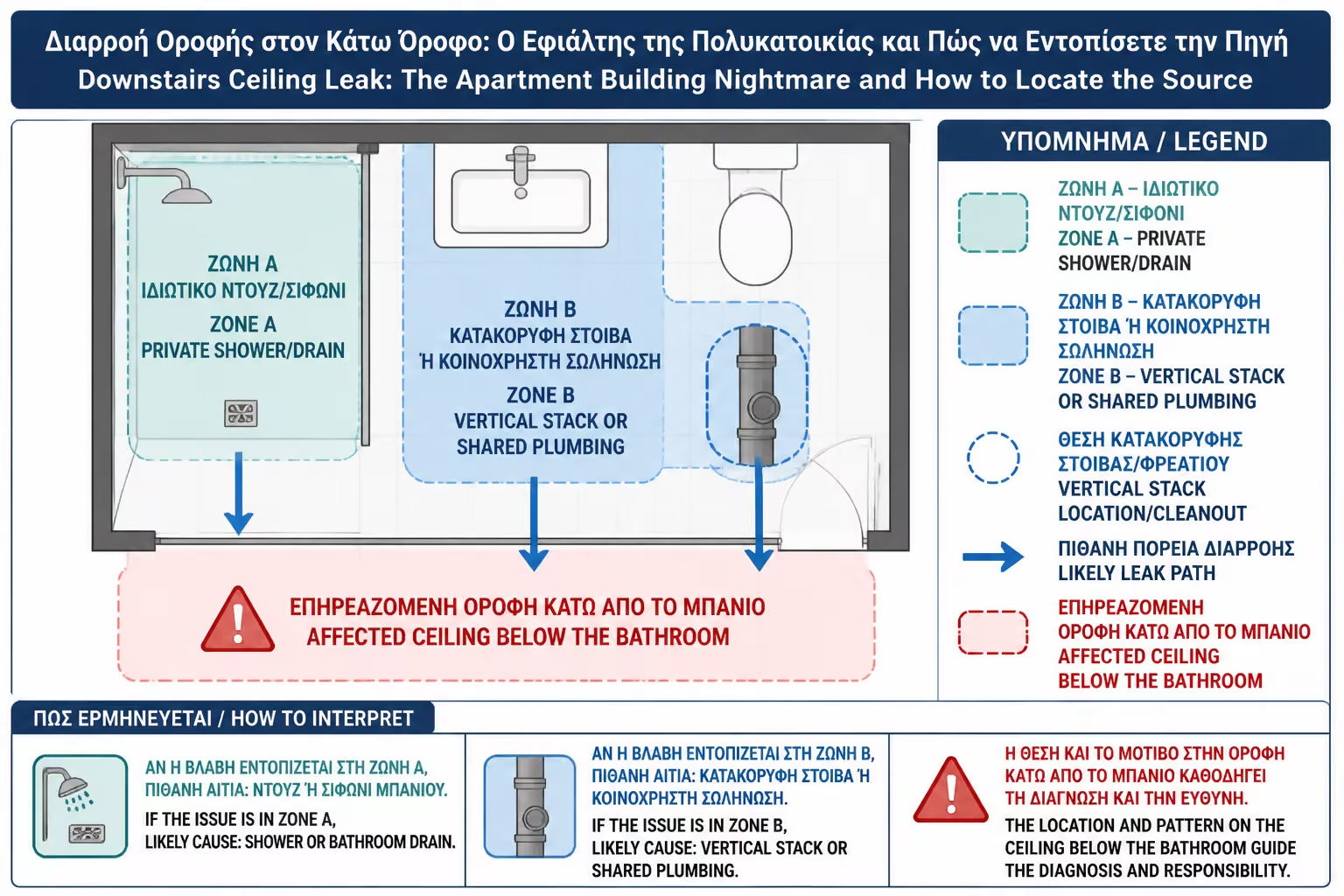
The siphon is one of the first points to be checked. If the leak occurs mainly when water is running down the drain, without necessarily getting the walls wet, then the problem may be in the siphon or drain connection.
In built-in showers, the faucet has two vulnerable areas. The first is the hydraulic connection to the sewer. If the pipe or body of the siphon is leaking, the water passes under the plate. The second is the connection of the waterproofing with the siphon. If there is no proper sealing gasket or if the membrane stops next to the siphon, service water can pass around the drain.
In old bathrooms, the floor drain may have a worn connection, cracks, poor sealing or old metal fittings. In new renovations, a mistake may have been made in the level, the flange or the joint with the cement mortar.
Control is often done by controlled pouring of water directly into the siphon, without wetting other surfaces. If a leak then occurs, the drain or siphon body is suspect. If it only appears when walls or corners get wet, surface waterproofing is more suspect.
The central piping of the apartment building is a different case. It may be a shared vertical drain, a shared water column, piping serving multiple apartments or a shared part of the facility. If the damage is there, it's not just a matter of the next-door neighbor.
Suspicion of shared piping increases when the leak is not related to the use of only one apartment, when it passes through a common well, when it affects more than one apartment, or when moisture is located near vertical columns. If, for example, the stain appears around a point where the common sewer passes, it must be checked whether the leak comes from a common network.
This is where cooperation with management is needed. An owner cannot alone decide that "it is shared" or "it is private" without technical control. A plumber or engineer is needed to locate the point and explain which line serves whom.
In an apartment building, the distinction between private and public is not only technical. It is also a matter of regulation, establishment of horizontal ownership and use of the pipeline. That is why technical documentation is necessary before money is requested.
If the leak is from a pressurized water supply, the damage can progress quickly. In this case, the water runs regardless of whether the bathroom is being used. The stain may grow continuously, the ceiling may remain wet, or even drip steadily.
The first practical check is the water meter of the upper compartment, if possible. If all the faucets are turned off and the meter continues to read, there is an indication of a leak in the water supply. This does not always prove the exact point, but it does indicate that the problem may be in a pressurized line.
In such a case, the upstairs owner should shut off the supply and call a plumber. Delay can increase the damage to the floor below. There is no point in checking joints and silicones first if water is constantly running from a pipe.
The water leak can be in a private apartment supply or in a shared column. This is critical to accountability. That is why it must be recorded exactly which piping has a problem.
Drains are often more difficult to diagnose because they only work when water is flowing through them. A private sink, tub or shower drain serves a specific apartment. A central vertical drain can serve several apartments. If the leak is in a private sector, the responsibility usually lies with the owner of the apartment. If it is in a shared column, the topic is about the apartment building.
Tracking is done with controlled usage. Does the upstairs shower only run water? Is it dripping? Does it only run when the sink is in use? Does it run when any partition of the same column is in use? These tests can direct control.
In old apartment buildings, drains may run through the slab or in hard-to-reach places. A drain camera, ceiling opening or opening from the upstairs bathroom may be needed. The choice is made based on the most likely point and the least possible damage.
Not every sewer leak should be assumed to be communal. Nor that every leak under a bathroom is private. The line serving the problem determines the answer.
Worn joints or open silicones in the bathroom of the upper compartment are a serious indication, but are not in themselves a complete diagnosis. They may actually allow water to seep under the tiles. But it must be proven that this is where the leak towards the lower ceiling comes from.
In an old bathroom without proper waterproofing, worn joints can cause a significant problem. The water passes through the finished surface, reaches the cement mortar and finally the slab. In a new bathroom with proper waterproofing, worn joints should not by themselves lead to a leak downstairs if the system below is working.
So the blame should not be placed just because the joints look bad. Need to test: if the joints get wet and leak, if use stops and the stain dries, if other components do not cause a problem, then the indication becomes stronger.
The right approach is technical documentation. Worn joints may be the cause, but it may just be a visible problem next to a deeper failure.
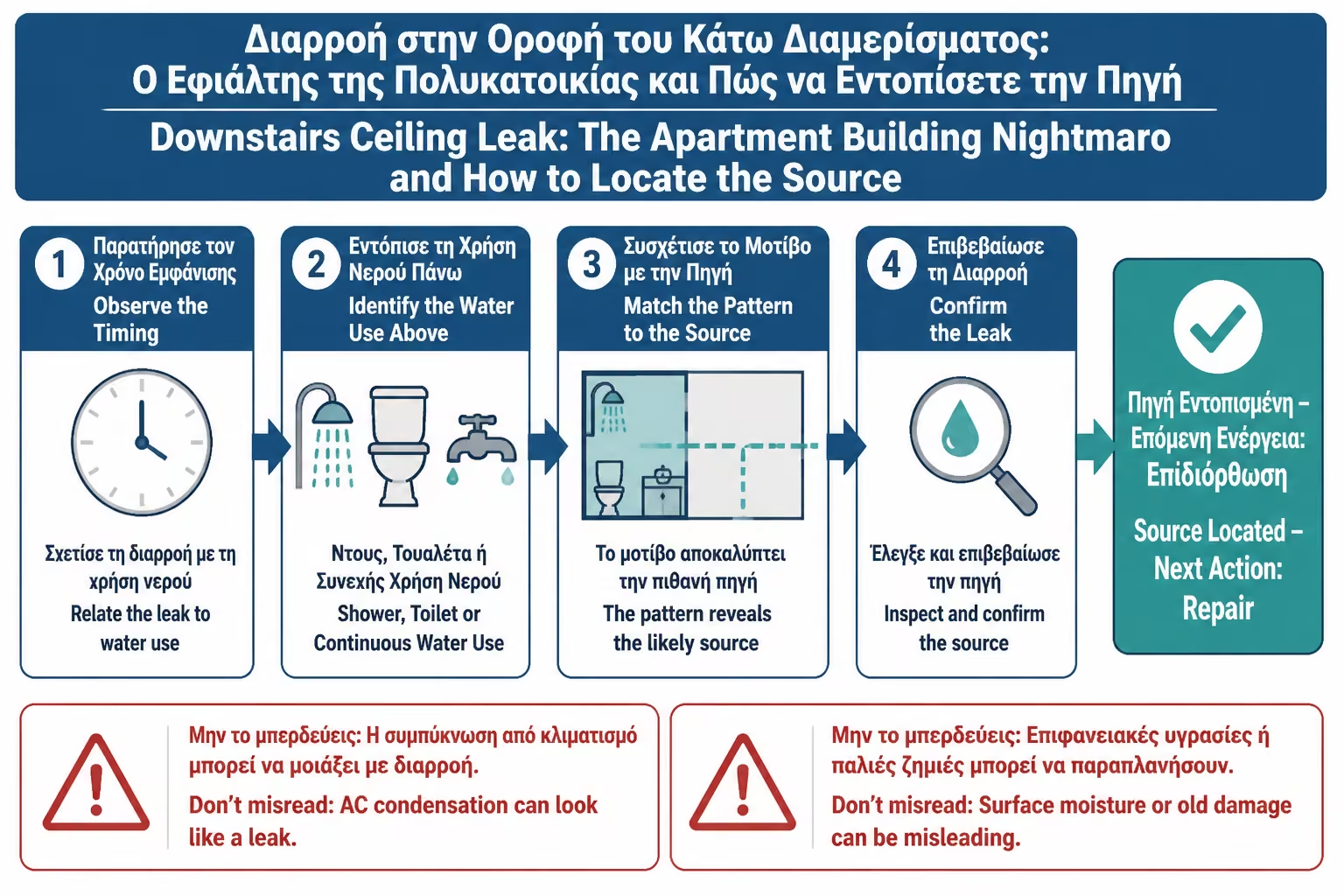
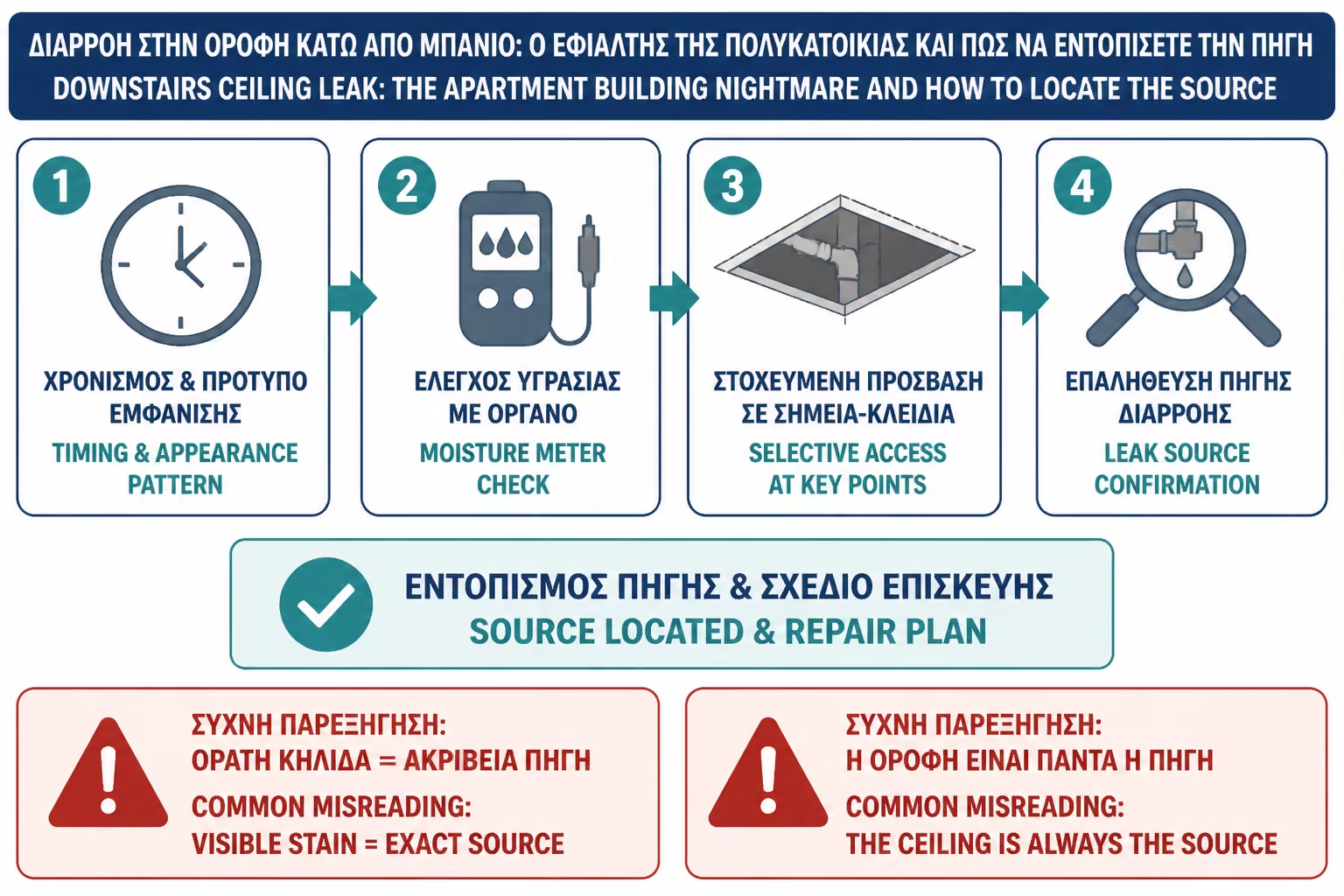
Correct detection starts with observation and testing, not breaking. First the use of certain components is stopped and the stain is monitored. Then the water meter is checked. Then the components are used one by one: sink, cistern, shower, washing machine. If necessary, controlled water is thrown in specific areas of the shower.
A hygrometer can be used to see the spread of moisture. The thermal imager can help, especially when there is active moisture, but it needs expert interpretation. A sewer camera can detect problems in pipes. A pressure test can detect a water supply leak.
If an opening is needed, it must be done in the most likely place. Sometimes it is best to open the downstairs ceiling to show the piping. Other times it is better to open up the upstairs bathroom, especially if the problem is the shower seal. The choice depends on the likely cause, access and damage.
The goal is not to never break anything. The goal is to break as little as possible and in the right place.
Liability depends on the source of the damage. If the leak originates from a facility that serves an apartment only, such as a private supply, private faucet, bathroom, shower, joints, battery or sewer of that apartment, the responsibility usually rests with the owner of the apartment. If it comes from a shared/shared installation, such as a central vertical column or a shared network section, the cost is for the multi-dwelling building according to the regulation and the millimetres/shared.
In practice, the discussion should not start from "who pays", but from "where it comes from". Only when there is a technical diagnosis can liability be attributed. If the cause is private, the owner of the upper apartment undertakes to repair the cause and usually the damage it caused. If the cause is shared, management and co-owners are involved.
But there are gray cases. For example, piping that runs through a property but serves multiple apartments. Or owner intervention in shared piping. Or old construction without clear access. In such cases, an apartment building by-law, technical report, insurance expert or legal advice may be needed.
The important thing is not to charge someone without documentation. And the repair should not be delayed because the parties disagree.
A practical issue is the cost of detection. Who pays for the plumber, the opening, the thermal camera or the technical visit? The fairest approach is to initially treat it as an investigative cost that must establish cause. If it turns out that the damage is private, the cost is usually borne by the responsible owner. If it turns out to be shared, the cost goes to the apartment building.
In practice, in order not to waste time, often the management or the directly involved owner calls a technician and then a division is made based on the finding. This should be done by consultation, not arbitrary charges.
If there is home or apartment building insurance, the insurance company must be informed early, because they may ask for photos, an expert or a specific procedure before any repairs are made. If everything is repaired without documentation, compensation may be lost.
Finding the fault is part of the repair. Without tracking, any discussion of cost is incomplete.
Restoration is divided into two parts: repairing the cause and repairing the damage. The cause may be a pipe, siphon, waterproofing, joints or shared piping. The damage can be the ceiling of the lower floor, paints, plasters, light fixtures, furniture or floors.
Usually the leak must be stopped first. It does not make sense for the lower owner to paint the ceiling before it dries and before the cause is solved. If dyed too soon, the stain will return. Needs drying time, possibly desiccation and then restoration.
Costs may include technical diagnosis, plumbing repair, opening and closing, tile or waterproofing restoration, plastering and painting of the lower floor. If there is damage to items, documentation is required.
Exactly what is paid depends on the cause, liability, apartment building regulations and any insurance policies. That is why the technical report and photos are important.
Many home insurance policies cover water damage, but terms vary. The damage caused to a third party is covered in one way, the repair of the piping in another, the detection surveys in another, and the damages caused by chronic moisture in another. If there is insurance, the company or insurer must be informed immediately before major operations are carried out.
In apartment buildings there may be common users' insurance that covers common pipes or damage to common areas. That doesn't mean it covers every private leak. The contract needs to be checked.
Insurance companies often ask for photos, a technical report, invoices and a clear reason. If the cause is not documented, compensation can be difficult. If the damage is from chronic wear and tear or lack of maintenance, there may be exceptions.
So, in a serious spill, the insurance dimension must come into the process early. Not since everything has been revealed and there is no proof.
Leakage in an apartment building is a technical problem, but it quickly becomes a social one. The lower owner is pressed by the damage. The upper owner feels blamed. Management fears shared costs. To avoid tension, transparency is needed.
First, everyone involved is informed in writing, even with a message: when it appeared, where, what it looks like, what actions were taken. Then a technician is called who can check both apartments. Before and after photos are kept. If there is management, it is updated immediately, especially if there is a possibility of shared piping.
It is good to avoid absolute phrases before the diagnosis: "it's your fault", "it's common", "it's your joints". The correct phrase is: "there is a leak that needs to be detected". Liability will arise from the finding.
When there is technical exposure, the discussion becomes much easier. Without exposure, it usually results in cases.
| Error | Possible consequence | Correct approach |
|---|---|---|
| Direct category without diagnosis | Conflict between owners | Technical detection first |
| Painting the lower ceiling before the cause is solved | Back stain | First repair and drying |
| Breaking tiles randomly | Unnecessary damage and cost | Targeted control |
| We find that worn joints are always the cause | Wrong repair | Check siphon, drainage, water supply |
| Missing possible shared column | Unfair owner charge | Check the line served by the piping |
| The insurance company is not informed | Potential loss of coverage | Contact before major works |
| There are no photos | Documentation difficulty | Photography of all stages |
| Continue to use bathroom with active leak | More damage | Temporary suspension of use |
The biggest mistake is to treat the leak as a matter of "who will pay" before answering "where is it coming from".
The correct procedure can be done in sequence. First we limit use and close benefits where there is a risk. Then we photograph the ceiling, the upper bathroom and any obvious spots. Then we check if the leak is continuous or related to use. We look at the water meter of the upper apartment. We test the components one by one. We check siphons, corners, batteries, cisterns and drains.
If the data shows a private part, the upper owner arranges a repair. If they show a shared column, management is informed and a shared network technician is called. If it is not clear, a technical report or expertise may be needed.
Once identified, the cause is repaired. Only after the leak has stopped, is the sub-floor damage dried and plaster/paint restored. If dyed early, the stain may return.
The order matters: containment, documentation, diagnosis, cause repair, drying, restoration.
| Inquiry | Yes / No |
|---|---|
| Is the leak near electrical points? | Yes / No |
| Temporarily stopped using the upstairs bathroom? | Yes / No |
| Are there any pictures of the stain and the upstairs bathroom? | Yes / No |
| Does the leak happen all the time or only after use? | Yes / No |
| Does the water meter move while everything is closed? | Yes / No |
| Was the sink, cistern, shower tested separately? | Yes / No |
| Has the floor or shower faucet been checked? | Yes / No |
| Checked corners, joints, silicones and battery supplies? | Yes / No |
| Is there a possibility of shared vertical piping? | Yes / No |
| Has management been informed if there is a shared suspicion? | Yes / No |
| Has insurance been informed if there is a contract? | Yes / No |
| Is there a written technical estimate before costing? | Yes / No |
If most of the answers are “no”, the case is not ripe for charging liability. It is still in the diagnosis stage.
> If you must keep only one thing, keep this: in a basement ceiling leak, liability follows cause. If it is a private bathroom, private supply, siphon, joints or waterproofing of a particular apartment, the burden falls there. If a shared column or a shared network is to blame, the apartment building comes in. But none of this should be decided by assumptions. First we technically locate the source, then we talk about cost.
The leak in the ceiling of the lower floor is one of the most difficult problems of an apartment building, because it combines technical diagnosis, financial responsibility and relations between neighbors. The water can be seen downstairs, but the cause can be in many different places: in the upstairs bathroom, in the siphon, in the drain, in the shower seal, in a water supply or in a communal pipe.
Correct treatment begins with observation. If it drips continuously, we suspect a pressurized supply. If it drips after the shower, we check the shower head, siphon and sealing. If it drips with the sink or the cistern, check drainage and connections. If it concerns a common column, the administration enters the process. Each scenario has different responsibilities and different costs.
The most wrong thing is to assign responsibility before there is a technical conclusion. The second mistake is to repair only the ceiling of the lower floor without stopping the source. The third mistake is to randomly break tiles without a diagnostic order.
For the owner and management, the practical solution is clear: damage limitation, photographic documentation, technical identification, written assessment, repair of the cause, drying and then restoration. This is the only way to avoid unfair charges, duplicate work and repeated leaks.
Return to category.
Go to categoryReturn to the central guide.
Go to guide