
Bathroom Waterproofing & Moisture Protection
Return to category.
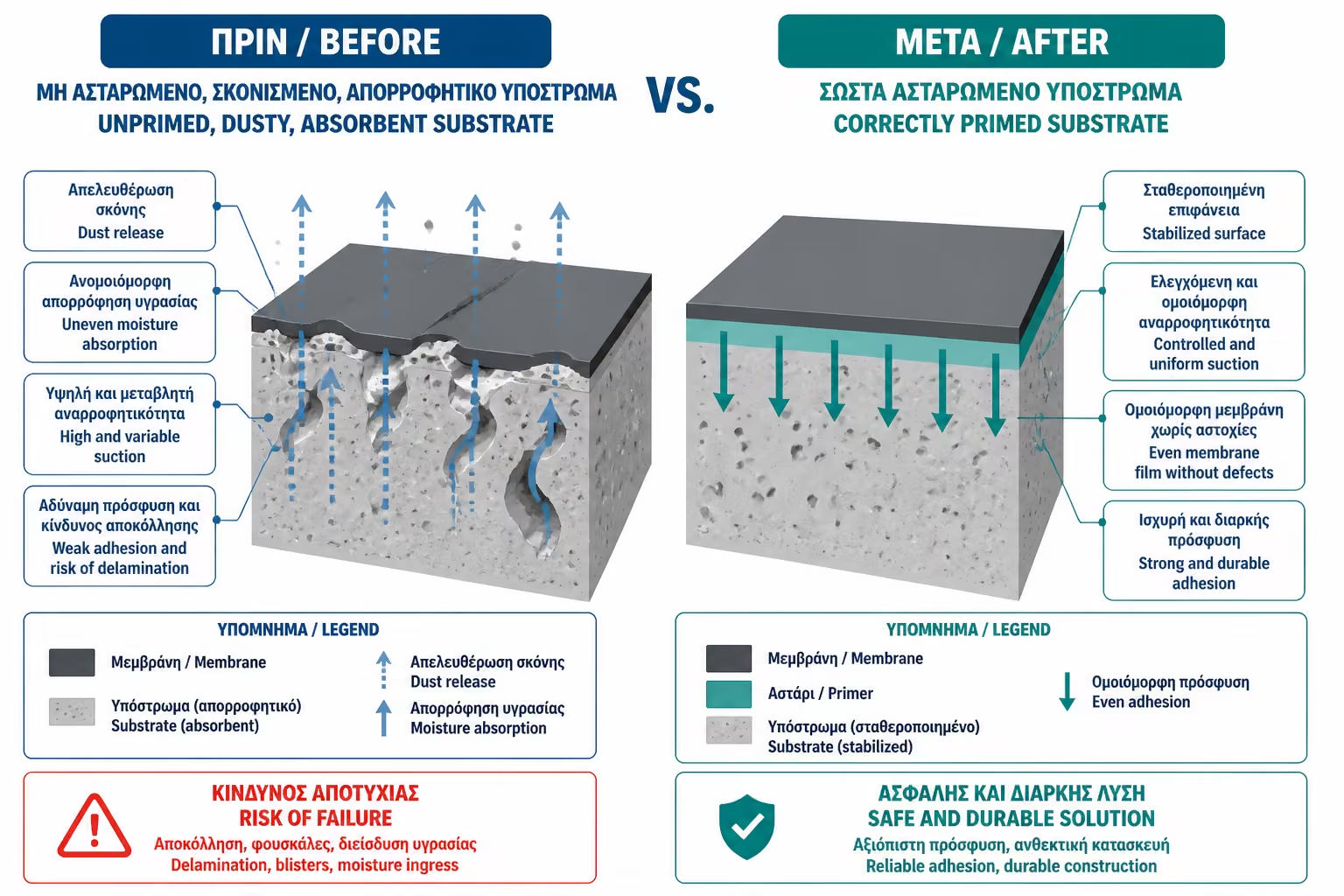
Go to categoryIn a bathroom renovation, the owner usually sees the big and obvious stages: stripping, piping, cement mortar, tiles, faucets, cabinet, furniture. The primer, however, is one of the stages that passes almost imperceptibly. It can be applied in a few minutes, doesn't look impressive, doesn't have to be detailed in the quote and can be covered immediately after sealing. And yet, in many cases it is what determines whether the sealant will "bond" properly with the substrate or whether it will remain on dust, absorbent cement mortar or an unstable surface.
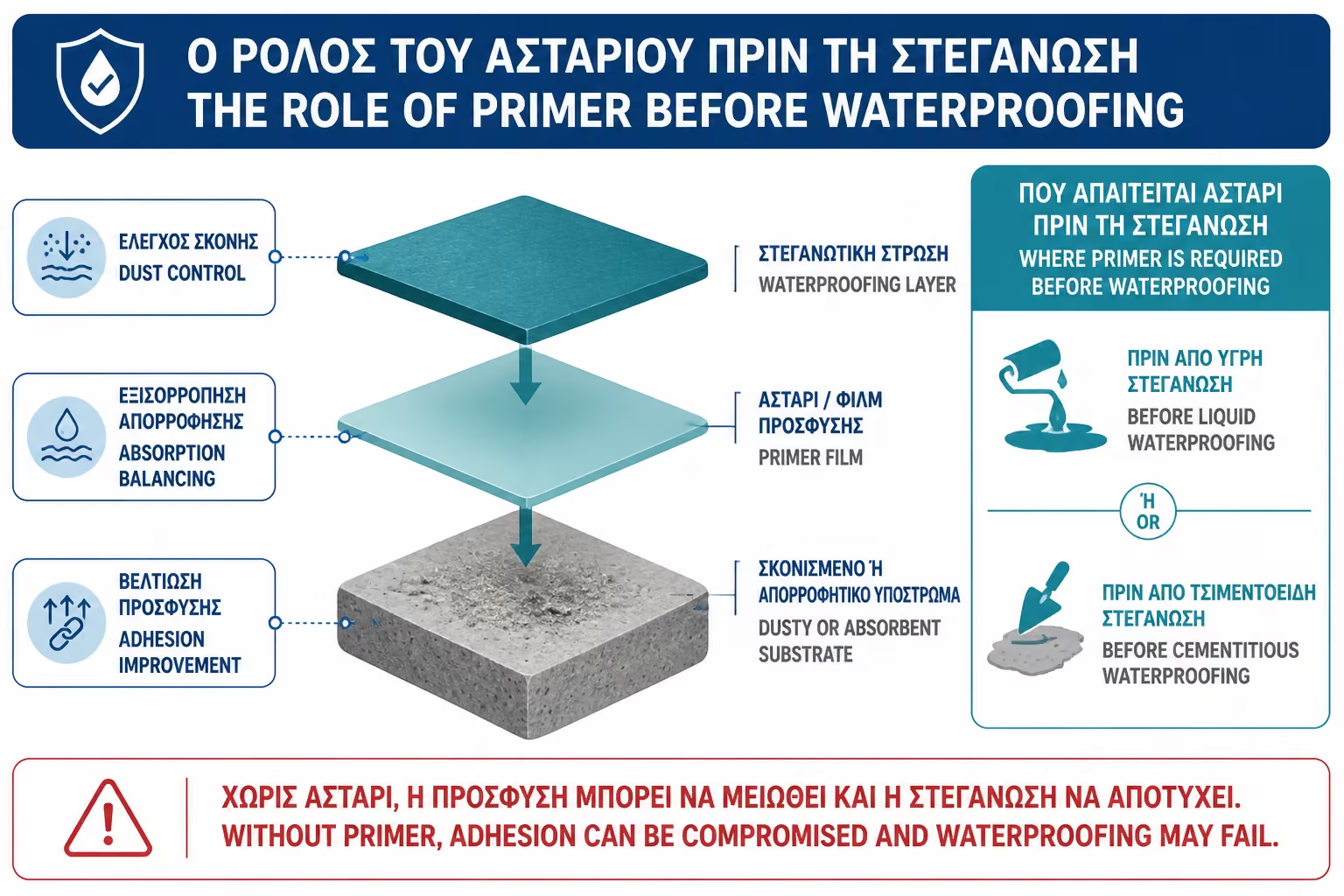
The primer is not just an auxiliary material. It is the intermediate step between the substrate and the waterproofing. Adjusts absorbency, stabilizes micro-particles and dust that are not always completely removed by wiping, improves adhesion and helps the next material to spread more evenly. When omitted on surfaces that need it, the sealant may appear properly applied, but in reality may not have set as well as it should.
In practice, many sealing problems are not due to the base sealant being of poor quality. They are due to the fact that it was applied on a wrongly prepared substrate. A cement mortar may appear dry, but rub off on the surface. An old plaster may look firm but have a little dust. A repaired corner may have a different absorbency than the rest of the wall. If the sealant is applied directly, each point reacts differently.
The problem with primer is that many consider it a "detail". In a stressful renovation, where everyone wants to finish the bathroom quickly, it is easy to hear the phrase "no need, it will catch on". Sometimes indeed it may not be needed if the system and substrate do not require it. But this decision should be based on the instructions of the material and the condition of the surface, not on haste or empirical shortcut.
This guide explains what the primer actually does before waterproofing, when it is necessary, when it may not be, what mistakes are often made in its application and what the owner should ask before covering the bathroom with sealants and tiles.
A primer is a preparatory material that is applied to the substrate before the base sealant, adhesive or coating material. In the case of the bathroom, it is mainly used before spreadable sealants, liquid membranes, cementitious systems, acrylic or polyurethane materials, depending on the product and the surface.
Its main role is to prepare the surface for the next material to adhere properly. This can mean different things depending on the situation. In a highly absorbent cement mortar, the primer limits excessive absorption. On a lightly rubbed surface, it helps to stabilize the powder. On a substrate with uneven absorbency, it helps the sealant work more evenly.
The primer is not a waterproofing in itself, unless it is a special system with a specific technical use. In other words, it should not be considered that "a primer was applied, therefore the surface was protected". Its job is to create a better foundation for the waterproofing to come.
Think of it as proper preparation before a serious paint job. If you paint over powder, the color may look good the first day, but it hasn't really set. The same applies to waterproofing, with a much greater risk, because here we are not talking about aesthetic wear but about moisture under tiles.
In a theoretically perfect construction site, the cement mortar would be stable, clean, dust-free, properly cured and uniformly absorbent. In practice, bathrooms have many different surfaces and materials. New cement mortar on the floor, old plaster on the walls, repairs around pipes, patches, concrete boards, areas with old glue, spots that were rubbed off, corners that were filled with mortar.
Each of these surfaces can absorb differently. A fresh cement mortar can quickly draw water from the sealant. An old plaster may have surface dust. A repair spot may be more porous than the rest of the wall. If the sealant is applied directly, it may dry unevenly, lose adhesion or not create a continuous layer with the properties promised by the product.
In old bathrooms, the problem becomes more pronounced. After stripping tiles, the substrate often has adhesive residue, small irregularities, dust from scraping and spots that do not have the same strength. It is not enough to "look clean". It must be really suitable to accept waterproofing.
Here the primer acts as a bridge between the reality of the construction site and the requirements of the waterproofing material. It does not correct loose substrates, but helps significantly when the surface is firm but absorbent, dusty or uneven.
Dust is one of the biggest enemies of traction. It can come from grouting, plastering, sanding, tile cutting, stripping, or a simple construction site environment. Even if the surface is wiped, fine dust may remain in the pores or on the surface of the substrate.
If a sealant is applied over this powder, the material does not really bond to the substrate. It catches on the dust layer. This is like taping a floured surface. It may appear to be stuck, but the adhesion is weak. With humidity, temperature and subsequent layers, the problem can appear as peeling or blistering.
The primer, when suitable for the substrate, penetrates the pores and binds the microparticles. It creates a more cohesive surface that the sealant can adhere to better. This is not to say that priming replaces cleaning. First, dust, loose spots and debris must be removed. Primer is the next step, not an excuse for sloppy preparation.
A practical example is the cement mortar on the shower floor. After forming the pours, the surface may look good, but if you rub by hand it will give off a fine dust. If waterproofing is passed directly, adhesion may be uncertain. With proper cleaning and priming, the surface becomes much more suitable.
Absorbency is critical in sealant application. If the substrate absorbs water or liquid components of the material too quickly, the sealant may dry unevenly and not perform as it should. Instead of creating a smooth layer, it can "burn" on the surface, remain weak or show unevenness.
This often happens in porous cement mortars, old plasters or repaired areas. The technician may see the sealant "get lost" in the substrate or dry too quickly. If he tries to fix it by thinning the material or going more "by eye", he is not solving the problem properly.
The primer reduces and balances this absorption. It helps the sealant stay on the surface as long as it needs to spread, form a proper layer and develop adhesion. Especially in spreadable cementitious, acrylic membranes and polyurethane systems, this balance can be decisive.
But there is also the opposite case: very smooth or closed substrates, where absorption is low. A different type of primer may be needed there, not deep penetration but adhesion. That's why there is no "one size fits all". The choice must suit the substrate and the material to follow.
In cementitious sealants, primer may be required or optional, depending on the product and substrate. Many cementitious materials are applied on a well-wetted or properly prepared mineral substrate, while other systems provide for a specific primer. The decision should be based on the instructions of the material.
In absorbent or dusty cement mortars, the primer helps a lot. It stabilizes the surface and reduces the risk of the substrate suddenly absorbing moisture from the cementitious material. This helps the material work properly and develop better adhesion.
In some applications, instead of priming, the manufacturer may require wetting the substrate to saturation without standing water. This is not the same thing as priming, but it is also a way of controlling absorbency. The technician must follow the specific system and not apply a general rule.
The mistake is to assume that because cementum "has cement", it always sticks to anything mineral. Does not adhere well to dust, loose spots, old paint, oils or unprepared substrates. Primer helps, but first there must be a sound foundation.
Acrylic liquid films often seem easy to apply because they are applied with a roller or brush. But this makes the primer even more important in several cases. If the acrylic film is applied on a very absorbent substrate, it may dry unevenly. If applied over powder, it may come off.
Primer before acrylic film helps to create a more stable base and reduce excessive absorption. On shower walls, cement boards, old plasters or repaired surfaces, it can be critical to the quality of the application.
But it must be compatible. We don't use any primer because "it's for walls". A paint primer is not necessarily suitable for a waterproofing membrane under tiles. The system must predict which primer is used and at what dilution, if any.
A common mistake is to thin the acrylic film itself too much and use it as a "first coat primer", without this being allowed by the product. Some systems provide for this, others do not. If done arbitrarily, the final protection may be altered.
In polyurethane systems, the primer is often even more critical. Polyurethane materials have high adhesion requirements and are more sensitive to moisture, the wrong substrate or incompatibility. The right primer can make the difference between a stable film and an application that will blister, peel or dull.
Depending on the substrate, a different primer may be needed: for absorbent cement mortar, for old tiles, for natural stone, for metal, for non-absorbent surfaces or for surfaces with increased humidity. The same polyurethane finish does not mean that it uses the same primer everywhere.
In repairs over existing tiles with transparent polyurethane resins, the preparation is particularly demanding. The tiles must be cleaned of salts, soaps, greases and old silicones. The adhesion primer must be suitable for non-absorbent surfaces. If omitted or applied to a poor surface, the clear film may peel off or exhibit visual defects.
In new constructions under tiles, the polyurethane system primer must also be combined with the adhesive that will follow. It is not enough for the sealant to stick to the substrate. It has to cooperate with the next layer as well.
The word "primer" is generic. There are deep penetration primers, adhesion primers, primers for absorbent surfaces, primers for non-absorbent surfaces, epoxy primers, polyurethane primers, acrylic primers and special system primers. Each has a different role.
A deep penetration primer is commonly used to stabilize absorbent and slightly dusty surfaces. An adhesion primer for non-absorbent surfaces may have a different consistency, often with quartz or other additives to create mechanical “bite”. An epoxy or polyurethane primer can be used in more demanding systems, but requires experience and proper application.
The mistake is to use whatever primer is available on site. A wall primer is not necessarily suitable under shower waterproofing. An absorbent plaster primer is not necessarily suitable over old tile. A primer of another chemical base may not be compatible with the sealant.
The right question is not "will primer go in?" only. It's "what primer will go in and why is it suitable for this substrate and this sealant?".
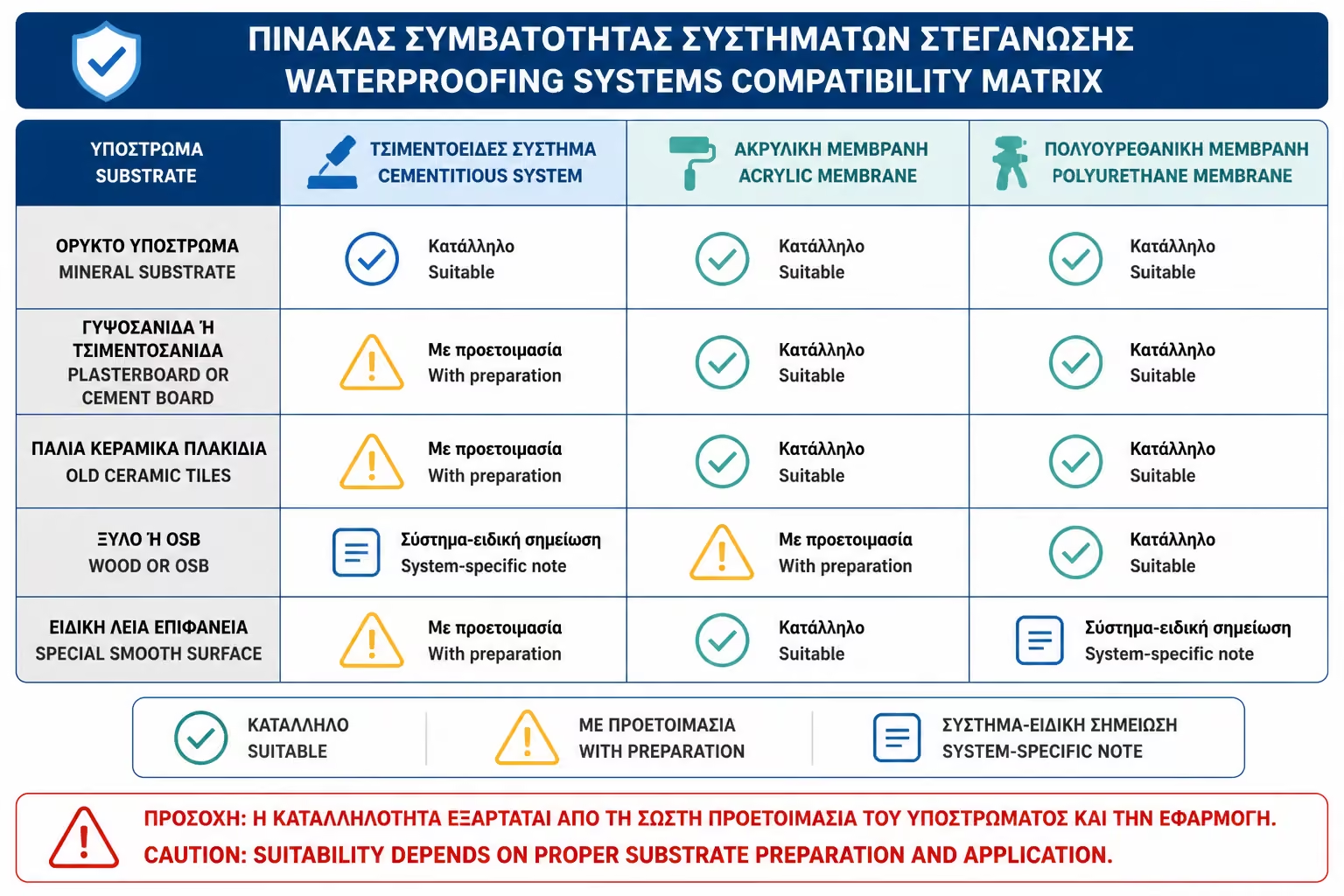
Primer is usually necessary when the substrate is very absorbent, dusty, uneven or when required by the waterproofing system. On new cement mortar that rubs off lightly, on old plaster, on repaired areas, on cement board or on surfaces with different absorbencies, the primer is often critical.
It is also essential in many polyurethane membrane systems and in applications over non-absorbent surfaces such as old tiles. There without an adhesion primer, the sealant may not bond properly.
In showers, where the risk of failure is high, it is advisable to strictly follow the system. If the sealant manufacturer calls for a primer, it should not be omitted. If he does not request it, the technician must evaluate the surface and select the correct preparation.
A practical sign that the substrate needs attention is when it "sucks up" water immediately, when it gives off dust on the hand or when it has areas of different texture. In these cases, skipping a primer increases the risk.
There are cases where primer may not be needed, but this should be determined by the system instructions and the condition of the substrate. Some cementitious sealants are applied to a well-wetted mineral substrate without a separate primer. Some systems have their own primer that acts as a primer. Other times the substrate is already suitable and does not require additional material.
The important thing is not to skip out of haste. The phrase "no primer needed" must be accompanied by a technical explanation: because the product is applied that way, because the substrate is suitable, because other prescribed preparation has been done. Not because "that's how we always do it".
There is also the risk of over or incorrect priming. If you put in an unnecessary primer or the wrong type of primer, it can create a film that makes adhesion difficult rather than improving it. If it is applied too thick and is left shiny or sticky, the next material may not work properly.
So the primer is neither always automatically necessary nor ever unnecessary. It is a technical choice that must fit the system.
Proper application begins with cleansing. The surface must be wiped clean, loose spots, debris, dust, oil and anything else that can prevent adhesion removed. Primer is not a glue to hold loose pieces. If the plaster or cement mortar is loose, it must be repaired first.
The primer is usually applied by roller, brush or spray, depending on the product. It must be spread evenly, without pools and without excess material. On highly absorbent surfaces, a second application may be necessary if the product provides for it. In others, one layer is enough. The amount should not be decided "by eye", but based on absorbency and instructions.
After application, the waiting time must be observed. Sealant should not be applied too early when the primer is still wet beyond the allowable, nor too late if the system has a specific coating time window. Some products, if too much time passes, may need to be redone or another preparation.
A frequent mistake is to put a primer and immediately after, out of haste, to pass the waterproofing without it having dried properly. This can trap moisture or affect adhesion. Proper application takes patience.
When priming is skipped over a surface that needs it, the problem may not be immediately apparent. The waterproofing may appear normally past. It can even dry visually properly. The weakness is in the adhesion and the continuity of the layer.
Over time, flaking, blistering, cracking, or areas where the sealant has not set well may appear. If there are already tiles on top, the problem becomes difficult to detect. It can be seen as a hollow tile, blackened joint, dampness or peeling in corners.
On wet films, omitting a primer can result in a film that peels off the surface. In cementitious, it can lead to weak adhesion or uneven curing. In polyurethanes, it can cause blisters or localized failures, especially if moisture or the wrong substrate is present.
What's worse is that the owner will see the problem much later, when the repair will require stripping. A low-cost, short-duration stage can become the cause of great damage if omitted where it is needed.
Using the wrong primer can also cause problems. If applied too thick, too thick, or in too many layers for no reason, it can create a shiny surface that does not allow the sealant to adhere properly. If the wrong type is used, there may be an incompatibility.
Another mistake is applying on a wet or dirty surface. The primer cannot penetrate oils, salts, soaps or old silicones. If it runs into such debris, it simply traps the problem under a new layer.
On old tiles, for example, a simple primer of absorbent surfaces is not enough. Tiles are usually non-absorbent and require a special adhesion primer or other mechanical/chemical preparation, depending on the system. If the wrong primer is inserted, the film may not bond.
Using a primer correctly requires knowing three things: the substrate, the sealer to follow, and the application conditions. Without them, the primer becomes a random choice.
In the shower, there are places where preparation is even more important. The floor, especially if it is built with cement mortar, must be stable and properly prepared. Floor-to-wall corners should be thoroughly cleaned before taping and caulking. The area around the siphon must be free of dust, cement residues and oils.
Around the battery and supplies, the substrate has often been repaired with different materials. There can be patches, quick mortars, old plasters and new interventions. There the absorbency can be uneven. The right primer helps create a more even base before caulking and cuffing.
In shampoo recesses, the inner surfaces and corners must be well prepared. The recess has many small surfaces, cuts and corners. If there are dust or loose spots, the waterproofing can fail right where water will pool.
On parapets or places where a glass cabin will step, the primer and waterproofing must be applied with thought, because then perforations can be made for profiles. Each subsequent stage is based on the quality of preparation.
Primer is usually not a big expense in a bathroom renovation. Its cost depends on the type, the surface, the substrate, whether a special adhesion or deep penetration primer is required, the area, whether VAT is included and whether we are talking about materials only or application by a workshop.
In a typical bathroom, the financial burden of primer is small compared to tiling, plumbing, sanitary ware, furniture or tiling work. But its technical importance is disproportionately large. It's one of those stages where trying to save can cost dearly later.
In a bathroom renovation of about 5 sq.m. in the Greece of 2026, where a simple to medium solution can indicatively move around €3,200–5,500 and a more demanding solution with a walk-in shower, linear siphon, membranes and custom glass can reach around €6,000–7,500 or more, the correct primer is a small but critical part of the technical package.
| Factor | How does it affect cost? |
|---|---|
| Primer type | Plain acrylic, deep penetration, adhesion, epoxy or polyurethane have different costs |
| Application surface | The more square footage, the more consumption |
| Substrate absorbency | Highly absorbent surfaces may need more |
| Special systems | Polyurethane or non-absorbent substrates often require a special primer |
| Preparation work | Cleaning, sanding and setting can cost more than the primer itself |
The correct approach is not to ask for "primer everywhere" for no reason, but to ask that the correct primer be used where the system and substrate require it.
A good sealant quote should not only list the basic sealant. It must also describe the preparation of the substrate. If a primer is required, it must be stated. If not required, it is good to be clear what preparation will be done.
For example, in the shower zone the quotation may mention substrate cleaning, application of a suitable primer where required, waterproofing in two layers, corner tapes, cuffs on fittings and connection to the siphon. This is a much clearer description than the general phrase “bathroom waterproofing”.
If the job involves polyurethane membrane or application over old tile, reference to the primer is even more important. That's where traction is critical and shouldn't be left to chance.
The offer must also clarify whether materials, labor and VAT are included. A quote that omits priming and preparation may appear cheaper, but may not include the same technical scope as a full application.
The right questions can prevent many problems. They need not be done with distrust, but with a practical interest in the work.
Ask first if the substrate needs a primer. If the answer is yes, ask to know what formula will be used and why. If the answer is no, ask what preparation the material requires: cleaning, soaking, sanding, or something else.
Also ask if the primer is compatible with the sealant. This is important especially when the materials are from different companies. If the technician is using a complete system, it is good to be able to explain it. If it uses a combination of materials, it must make technical sense.
Finally, ask for the drying time to be observed before the waterproofing is applied. The primer should not be passed and covered immediately if the system requires waiting. Proper traction takes time.
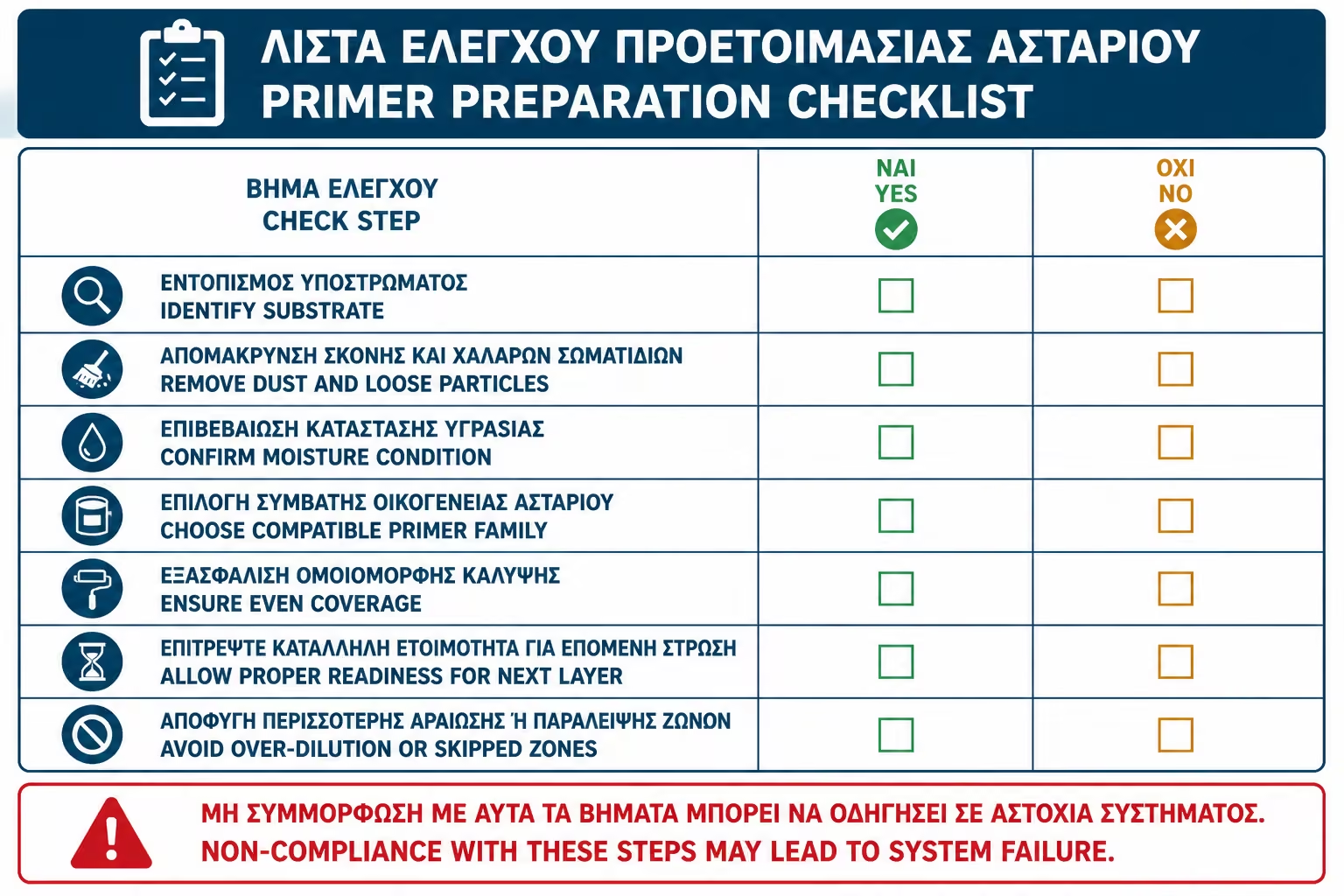
Before applying the sealant, it's worth doing a quick check. It is the stage where problems are easily fixed that will later be hidden under the tiles.
| Inquiry | Yes / No |
|---|---|
| Has the substrate been cleaned of dust and loose spots? | Yes / No |
| Is the surface stable and does not rub strongly on the hand? | Yes / No |
| Has the absorbency of the cement mortar or plaster been tested? | Yes / No |
| Does the waterproofing system require a primer? | Yes / No |
| Has a primer suitable for the specific substrate been selected? | Yes / No |
| Is the primer compatible with the sealer that will follow? | Yes / No |
| Has it applied evenly, without pools or excesses? | Yes / No |
| Has the product dried as required before waterproofing? | Yes / No |
| Are the corners and siphons surface clean before tapes are applied? | Yes / No |
| Are patches and dust cleaned around batteries and supplies? | Yes / No |
| Does the offer mention preparation, primer, waterproofing and technical stages? | Yes / No |
If several answers are "I don't know", the application of waterproofing should not be rushed. Adhesion of the sealant is judged before the sealant itself is applied.
> If you must keep only one thing, keep it this: the primer is neither decorative nor a standard stage. It is the bridge between the substrate and the waterproofing. If the surface is dusty, highly absorbent or uneven, the sealant may not work properly no matter how good it is. Have the substrate inspected, compatible primer used where required and drying time adhered to. The right grip is not seen at the end, but is proven over time.
Priming is one of the most underrated stages in bathroom waterproofing. It doesn't show in the end result, doesn't impress the owner, and is often omitted for reasons of speed or cost. But on many surfaces it is what allows the sealant to grip properly, spread evenly and perform as the system intended.
Its value lies in stabilization and preparation. It binds microparticles, adjusts absorbency and creates a better adhesion base. It does not replace cleaning, it does not fix loose substrates and it is not waterproof in itself. But it is a critical link between the cement mortar, the plaster or the old tile and the sealant that will follow.
The owner should ask for a clear answer: does he need a primer? If so, which one and why? If not, what preparation is provided? These questions are much more important than they seem. Because when the tiles are inserted, the adhesion of the waterproofing will no longer be easily controlled.
In bathroom waterproofing, quality is not only in the finished material. It is in the sequence of correct steps. And priming, when required, is one step that should not be skipped.
Return to category.
Go to categoryReturn to the central guide.
Go to guide