
Bathroom Waterproofing & Moisture Protection
Return to category.
Go to categoryIn bathroom waterproofing, for many years the most familiar image was cementitious spreadable material: a mortar that is brushed or rolled on before the tiles are set. In recent years, however, the so-called liquid membranes, mainly acrylic and polyurethane, have also gained ground. These are waterproofing materials that are applied in liquid form and, after curing, create a single elastic layer of protection.
Their logic is attractive: instead of a rigid or semi-rigid waterproofing layer, we create a continuous membrane that can follow micro-movements, bridge small imperfections and act as an "invisible basin" under the finished surface. In a shower, especially a walk-in or level one, this concept is of great importance. The water should not just not reach the plate. It must be checked in the entire zone that can get wet: floor, corners, siphon, walls and details.
But not all liquid films are the same. Another acrylic membrane for lighter internal wet zones, another polyurethane membrane with increased elasticity and strength, another transparent polyurethane resin for repair over existing tile and another system designed specifically for application under tiles. The word "membrane" alone does not guarantee a correct result.
In practice, the most critical question is not just "acrylic or polyurethane?". It's whether the material is suitable for permanent moisture or only occasional exposure, whether it can withstand standing water, whether it can accept tile adhesive on top, whether it works with corner tapes and siphons, and whether the substrate can accept it properly. A great material on the wrong or wet substrate can fail. A simpler material, if put in the right place and with the right system, can work better.
This guide explains what liquid acrylic and polyurethane membranes are, how they are applied, where they excel, where they need attention, what standing water resistance means, and how to properly create the single elastic "basin" under the tiles.
Liquid membranes are waterproofing materials that are applied in liquid, pasty or semi-liquid form and, after drying or polymerizing, create a continuous layer of protection. Unlike ready-made fleece films, which come on a roll and are laid as a sheet, liquid films are formed in situ on the substrate.
This gives them a key advantage: they can follow the geometry of space. In corners, niches, piping, small irregularities and difficult spots, a liquid material can be worked more easily than a sheet that needs cuts and overlaps. If applied correctly, it creates a continuous protective surface with no obvious joints in the base field.
The word "wet" does not mean that the material remains soft or wet. It means that it is applied in liquid form. After curing, the membrane acquires its final properties: elasticity, adhesion, water resistance and the ability to accept or not subsequent layers, depending on the product.
In bathrooms, liquid membranes can be used either under tiles or, in special cases, over existing tiling as a transparent surface protection. These two applications should not be confused. Another material and another process is needed for new construction under tiles, and another for repair without stripping.
Acrylic liquid films are usually ready-to-use or easy-to-apply materials based on acrylic resins. They are applied with a roller, brush or spatula and create an elastic or semi-elastic sealing layer. They are popular because they are easy to work with, don't always require mixing two components and offer a practical solution for many interior wet zones.
On bathroom walls, around sinks, on surfaces that receive moisture but not constant flooding, they can be quite useful. Also, in less demanding applications under tiles, when the product is designed for that use, they may offer adequate protection.
The problem occurs when they are used in the wrong place. Not every acrylic film is suitable for a shower floor, for areas with daily standing water or for intense mechanical stress. If a material is good for moisture protection, it does not automatically mean that it is suitable for the base of a walk-in shower where water falls and remains systematically.
Ease of application is also a pitfall. Because they look like thick paint, they are sometimes passed off as plain paint: a thin hand, no proper thickness, no reinforcement in the corners, and no primer. This is not serious waterproofing. It is a surface covering that can give a false sense of security.
Polyurethane liquid films are based on polyurethane resins and are generally considered a stronger and more resilient category. They are widely used in applications where strength, elasticity and the ability to create a continuous sealing film are required. In bathrooms, they can have a place in both new constructions and repairs, depending on the product.
Their advantage is the ability to create a more elastic membrane. This helps on surfaces subject to micro-movements, in joints of different materials and in cases where we want better bridging of small cracks. In a shower, this property can be important, especially in corners, near faucets, in flat walk-in structures or in complex details.
But polyurethanes require more attention. They need a proper substrate, often a special primer, strict timing, protection from moisture during application and adequate ventilation. They are not materials that should be applied casually because "they are stronger". Their power is only seen when used in the right system.
In some forms, especially the clear polyurethane resins, they are also used over existing tiles to repair leaks of surface origin. But this is a different application than creating a waterproofing basin under new tiles. It must be clearly separated.
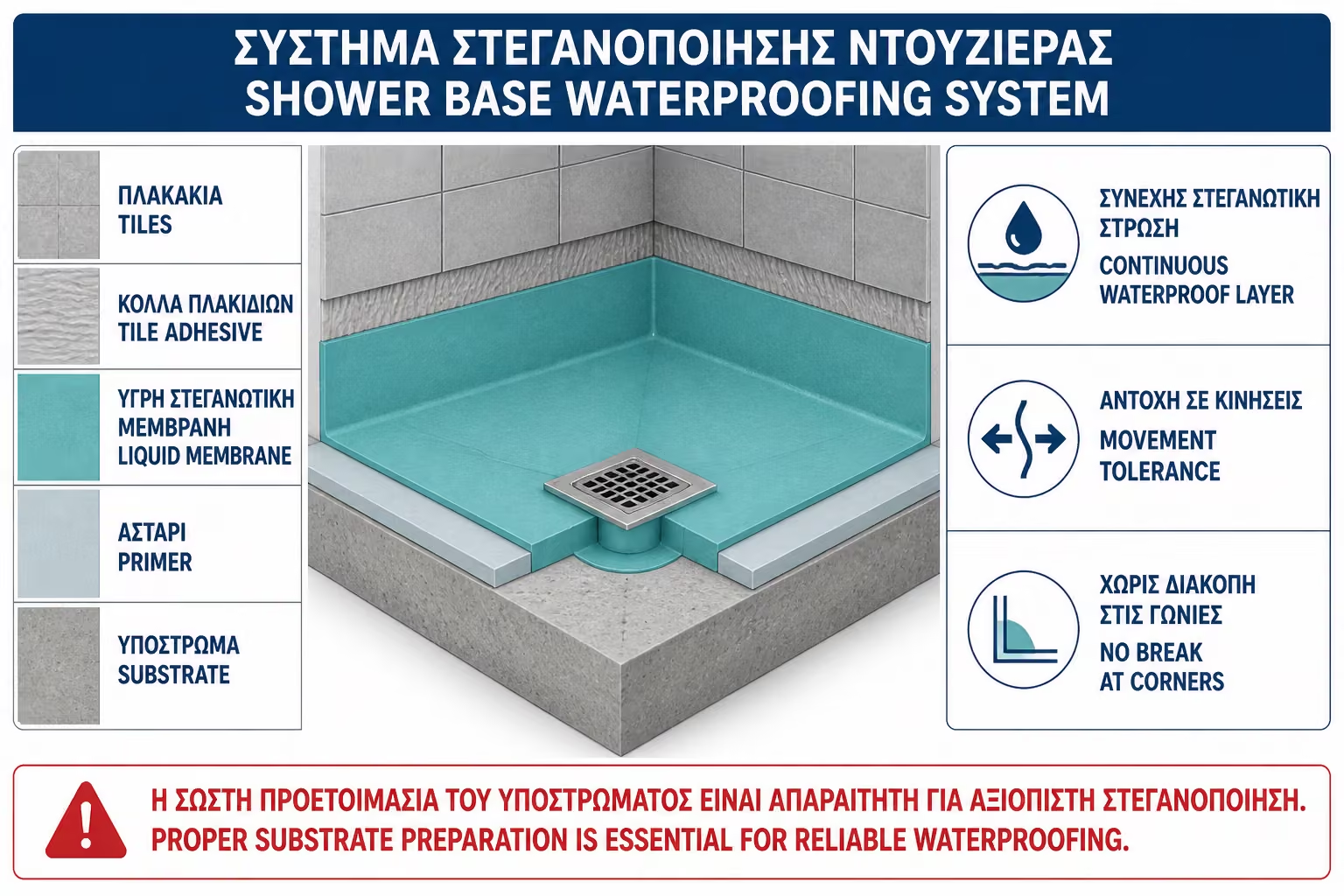
The most useful image to understand the proper sealing of a shower is the image of the invisible basin. Before the tiles are put in, the shower must already have a continuous protected surface that directs the water to the siphon and does not allow moisture to pass into the cement mortar or masonry.
Liquid films can help with this logic because they are applied as a continuous layer. On floors, corners and low walls, the material can create a resilient envelope if properly reinforced at critical points. But the word "uniform" does not mean that it is enough to pass one material everywhere. Corners, siphons, supplies and level changes need tapes, cuffs or special pieces.
The membrane must go up the walls of the shower, connect to the siphon, cover the zone that receives water and cooperate with the flows of the cement mortar. If the floor has the wrong slope, the rubber basin will just hold water. If the siphon is not connected correctly, the water can pass to the most critical point.
The right "basin" is not only material. It is geometry, continuity and detail. The liquid membrane is the medium, not the whole system.
The phrase "resistance to standing water" needs attention. It does not mean that it is right to design a shower to hold water. It means that the material can better withstand conditions where water remains on the surface for some time, without rapidly degrading or losing its properties, provided it has been applied according to its specifications.
In the bathroom, stagnant water is always undesirable. They strain joints, silicones, corners, siphons and seals. Even a material with good water resistance should not be used as an excuse for poor cement mortar or incorrect pours. The drain must work properly.
Polyurethane membranes, depending on the product, can perform better in moisture and standing water than simple acrylics. This is one of the reasons they are often chosen for more demanding applications. But the actual strength depends on the specific product, application thickness, primer, curing time and compatibility with the final coating.
Acrylic membranes, on the other hand, can be very useful in interior wet zones, but should not be taken for granted to withstand permanent or repeated standing water. The technical specification of the product must be checked. The general name "acrylic sealant" is not enough.
One of the most common points of confusion is that liquid membranes are used in both new construction and repairs. In new construction, they are applied over the substrate and under the tile adhesive. In repair, some transparent systems are applied over existing tiles. These applications have different technical logic.
Under tiles, the material must be compatible with the adhesive that will follow. It must create an adhesion surface, have the right thickness and withstand moisture that will pass through joints or micro-gaps. Also, it must be connected with tapes, corners and siphons.
Over existing tiles, the membrane acts as a final protective layer. Adhesion to the tile, aesthetic change, non-slip resistance, resistance to cleaning agents and the ability not to trap already existing moisture are important there. It is a repair solution, not a complete reconstruction of the waterproofing under the tiles.
The homeowner should always ask, “Is the product being recommended for under tile or over existing tile?” If the answer is not clear, there is a risk of using the right material in the wrong application.
Fluid membranes are particularly sensitive to prepn. The substrate must be firm, clean, dry as required by the system, free of dust, oils, loose spots, salts or residues of old materials. If the film does not adhere properly, the seal fails no matter how good the product is.
In new cement mortar, the required curing must be completed. Application on a very wet base may result in blistering, poor adhesion or trapped moisture. On an old substrate, loose mortars, old silicones, paints and materials that are not stable must be removed.
The primer is often critical. Many polyurethane systems, but also several acrylic membranes, require a specific primer depending on the substrate. Another primer may need an absorbent cement mortar, another a smooth surface, another an old paving stone. Primer is not an "optional luxury" when the system calls for it.
A practical mistake is to apply a wet film immediately after cleaning with water or chemicals, without the surface being thoroughly dried. Water left in pores or joints can affect adhesion. Proper application starts with patience.
Application is usually done by roller, brush, trowel or a combination of tools. The roller helps on large flat surfaces. The brush helps in corners, details, around faucets and fittings. Spatula is used in some thicker systems or when a specific thickness is required.
Most serious applications require two or more coats. The first layer creates the base and incorporates tapes or special pieces. The second completes the thickness and continuity. In some cases, reinforcement with mesh or fabric may be needed in certain places, especially in corners or surfaces with increased movements.
Consumption per square meter is of great importance. If the material is applied too thin, it may appear to cover the surface but not create an adequate sealing film. If it goes in too thick without the system allowing it, it can be slow to mature or have problems.
The time between coats must be respected. So is the time before paving. Haste is a frequent cause of failure. Just because a surface doesn't stick to the hand doesn't mean it's reached its ultimate strength.
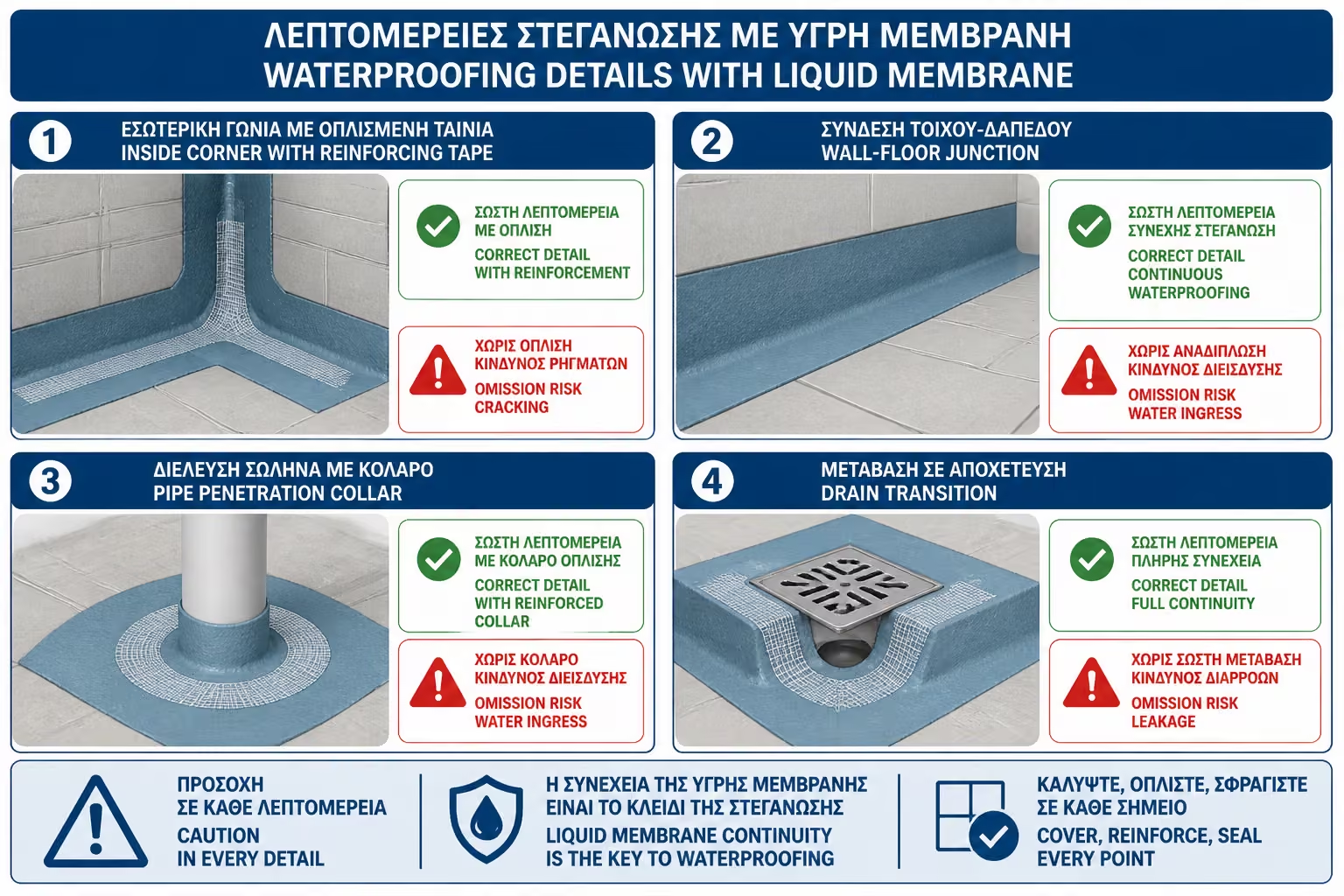
The large surface is usually the easy part. Difficult spots are corners, floor-to-wall joints, vertical corners, recesses, parapets, outlets and siphons. There it is not enough to simply pass the liquid membrane with a roll. They need reinforcements.
The sealing strips are integrated into the membrane and give elasticity at the level change points. In a shower, this is essential. If the membrane is passed continuously but without corner tape, it may crack or detach locally due to micro-movements over time.
Cuffs or similar special pieces are needed around pipes and batteries. Around siphons, especially linear ones, there must be a compatible flange or connection method. The membrane must "tie" to the siphon, not just stop next to it.
In a correct application, before the tiles are inserted, the owner must see not only a colored surface, but a system: tapes in the corners, reinforcements in the transitions, continuity in the floor and connection to the siphon.
For application under tiles, the choice between acrylic and polyurethane membrane must be made based on the zone of use. In lighter interior wet areas, an acrylic membrane specially designed for under tiles can be a practical and economical solution. In more demanding zones, such as a walk-in shower floor, linear siphon or flat construction, more durable and resilient systems are often preferred, where polyurethane technology can have an advantage.
The critical thing is that the product is compatible with the tile adhesive. A polyurethane topcoat that is designed as an exposed membrane is not necessarily suitable to have tiles attached to it. Accordingly, an acrylic membrane for general moisture does not mean that it will hold up on the shower floor.
Ripening time must also be considered. Some systems allow relatively quick work continuity, others take more time. In renovations where the schedule is pressing, this must be calculated in advance.
A good practice is to use complete systems: primer, membrane, tapes, special pieces and compatible adhesive. The more the workshop improvises with materials from different companies, the greater the risk.
The table below helps to show the basic difference in the philosophy of the two categories. It does not replace the technical instructions of each product, but gives practical insight.
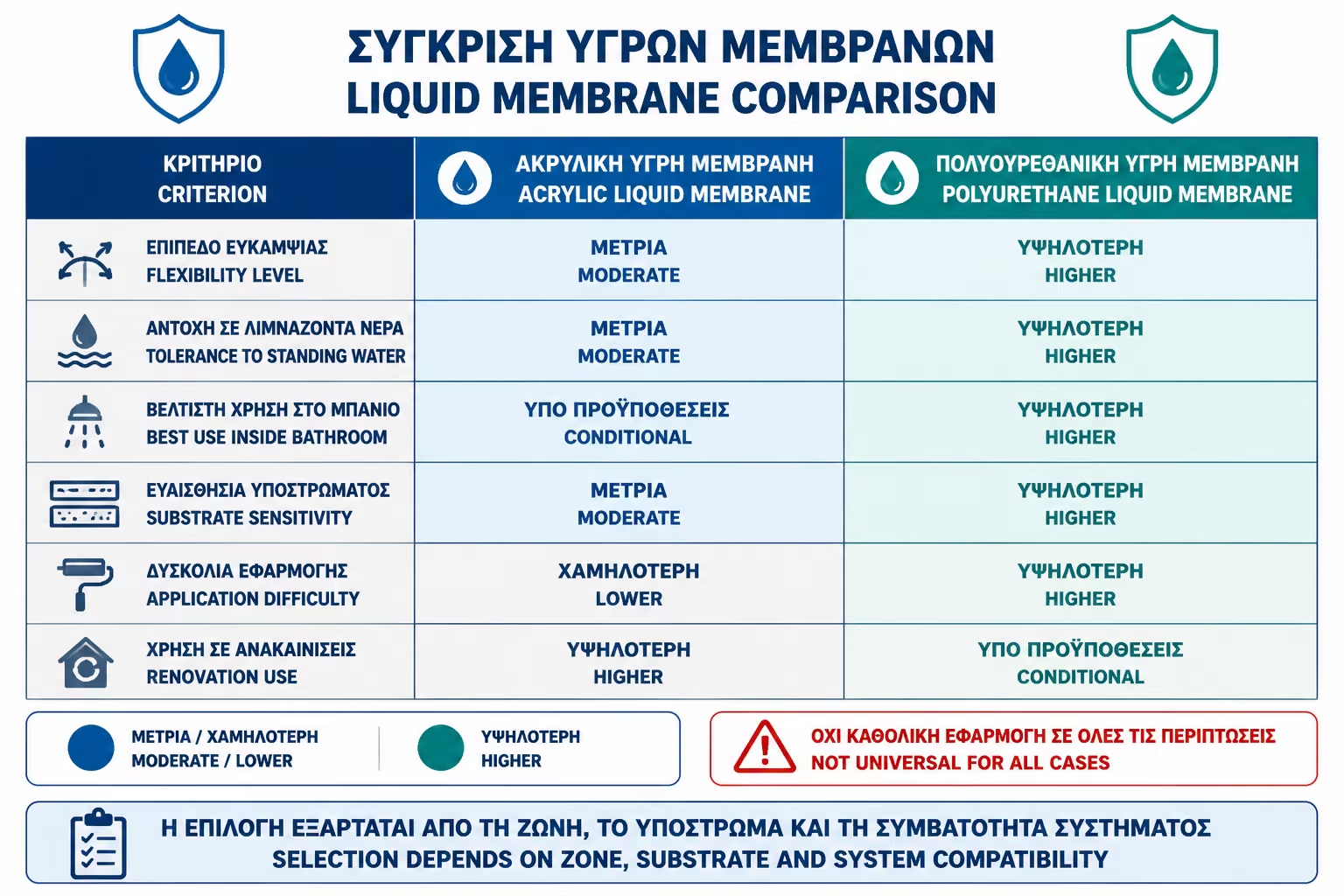
| Criterion | Acrylic liquid films | Polyurethane liquid membranes |
|---|---|---|
| Ease of application | Usually high, often ready to use | More demanding, they often need a special primer |
| Elasticity | Good in light/medium applications | Usually higher |
| Resistance to standing water | It depends a lot on the product, needs attention | Usually better in proper systems |
| Ideal use | Walls, internal wet zones, less demanding spots | Showers, special applications, high stress, repairs |
| Cost | Usually lower | Usually higher |
| Compatible with tiles | Only if the product is intended for under tiles | It depends on the system and the finished surface |
| Trap | To be used as a simple "color" | To be applied without proper preparation |
| Aesthetic change in transparent applications | Limited by product | Surface gloss/feel may change |
In practice, acrylics are often more practical and economical, while polyurethanes offer greater capabilities in harsh conditions. But no category should be chosen in general. The appropriate product for the specific use must be selected.
If there is one place where we have to be strict in choosing a membrane, it is the shower floor. There is constant exposure to water, spills, siphoning, daily pressing, cleaners and the possibility of standing water. Not a point for general purpose hardware.
In a walk-in shower floor, especially without a step, the liquid membrane must create a uniform protection and be connected to the siphon. If it is a linear siphon, there must be a connection provided with a flange or a special tape. If the material stops next to the metal and the compound is based on silicone, the solution is weak.
Standing water resistance is particularly important here, but it does not replace rain. If the cement mortar has bellies, the membrane will be constantly stressed in the same places. If water stays in front of the siphon, the joints and finish will wear out faster.
For such applications, polyurethane membranes or other highly resilient systems can have an advantage as long as they are suitable for under tiles. In several cases, they can also be compared to fleece membrane solutions. The final choice should be made based on space, workshop and system compatibility.
On the walls of the shower, wet films can work very well, because they follow the surface and the details. The waterproofing should rise to a practical height, often at least about 2 meters from the finished floor, and in demanding cases even higher or up to the height of the paving.
The belt around the battery is critical. There are facilities, holes, rosettes and places where the water often hits. The liquid membrane must be combined with cuffs or special pieces around the piping. It is not enough to thread material around the hole and then cover it with a rosette.
In built-in batteries, the requirements are even greater. The hidden body must be correctly installed, tested for leaks before the wall is closed and integrated into the waterproofing. The liquid film must work with the battery system, not around it.
On walls, an acrylic membrane may be sufficient in several applications as long as it is suitable for wet areas. In more demanding zones, polyurethane or another stronger system may be justified. The choice depends on the use and the substrate.
Liquid films have an advantage in complex geometries such as shampoo recesses, built-in shelves, parapets and low walls. They can be applied inside corners and provide continuous protection as long as they are properly reinforced.
In recesses, the bottom shelf should have a slight slope outwards. Film should not be used as an excuse for a horizontal shelf that holds water. If the water stays behind the bottles, the membrane and the joints will be stressed every day.
On parapets where a glass cabin steps, the top should also have a slight slope towards the shower zone and be fully sealed. If it is then drilled to attach a crystal, each hole must be sealed. Otherwise the membrane is canceled locally.
In such details, wet film is a useful tool, but tapes and special pieces remain essential. The more complex the construction, the less the technician must rely on simple smearing.
If the liquid membrane goes under tiles, the adhesive that follows must be compatible. This is critical. A film may be great as a sealant, but not provide proper adhesion for any adhesive. System instructions need to be checked.
In many cases, a specific type of adhesive is required, especially for non-absorbent or elastic surfaces. If plain adhesive is used without compatibility, tile delamination or failure at the adhesive-membrane interface may occur.
The issue becomes more important with large tiles, porcelain, shower floors and areas with temperature changes. There the glue must have the required adhesion and deformability. It is not enough to glue "general" tiles.
The owner may ask: "Is the adhesive to be used suitable for over this membrane?" This is a simple question, but a very important one. Waterproofing and paving are not independent stages.
Errors in liquid films usually have a common cause: the material is treated as a paint and not as a technical system. This leads to thin layers, poor preparation, missing primer and lack of reinforcements.
| Error | Possible consequence | Correct approach |
|---|---|---|
| Apply like a plain color | Very thin layer, insufficient protection | Compliance with consumption and layers |
| Omission of primer | Poor adhesion, peeling or blistering | Primer where the system requires it |
| Application on wet substrate | Entrapped moisture, adhesion failure | Check drying before application |
| Use of acrylic on heavy zone without specification | Wear and tear in standing water or heavy use | Choosing a product suitable for a shower |
| No corner tapes | Cracks and small leaks | Reinforcement of all compounds |
| Bad siphon connection | Leakage at the lowest point | Compatible flange or special detail |
| Wrong tile adhesive | Detachment of final lining | Compatible adhesive system |
| Hasty paving | Moisture entrapment or poor ripening | Compliance with drying times |
A typical example is a shower where acrylic membrane was passed in a thin layer, without tapes in the corners, and the next day tiles were put in. The surface looked "insulated", but in practice the system was weak. The problem wasn't just the hardware. It was the application without technical process.
The cost depends on the type of membrane, whether it is acrylic or polyurethane, the need for a primer, the number of layers, tapes, special pieces, the substrate, the area, the floor, access, whether VAT is included and whether we are talking about materials only or full work.
Acrylic films are usually more economical and faster to apply. Polyurethanes often have higher material and application costs, but can be justified in demanding zones or special repairs. The cost difference in the overall bathroom should not be considered in isolation, because waterproofing is a small but critical part of the budget.
In a typical bathroom of about 5 sq.m. in the Greece of 2026, a simple to medium renovation can indicatively move around €3,200–5,500, while more demanding solutions with a walk-in shower, linear siphon, full waterproofing, large tiles and custom glass can reach around €6,000–7,500 or more. In this context, choosing the right membrane is not the biggest cost, but it can prevent a much more expensive repair.
| System | Financial picture | When is it justified? |
|---|---|---|
| Acrylic liquid film | Usually more economical | Walls, moderate wet zones, less demanding applications |
| Polyurethane membrane | Higher cost | Shower floors, increased elasticity, special applications |
| Transparent polyurethane resin | Medium to higher cost | Repair without extraction, subject to conditions |
| Ribbons and cuffs | Small but necessary cost | Corners, amenities, siphons, details |
| Primer | Low to moderate cost | Critical for adhesion to many substrates |
A low bid that does not include primer, tapes, correct number of coats or compatible adhesive is not really economical. It is an incomplete application.
Acrylic film is a reasonable choice when the application is internal, the stress is moderate, the substrate is correct and the product is suitable for use. It is practical, economical and easy to work with. It can be a good solution on walls, secondary wet zones or simple applications under tiles.
Polyurethane membrane is worth more when we have increased requirements: shower floor, walk-in solution, possible micro-movements, need for greater elasticity, surface repair or more difficult substrate that requires a special system. Its higher cost can be justified when it substantially reduces risk.
In many cases, the same material does not need to be used everywhere. A stronger system can be chosen for the shower floor and another suitable system for the walls. But this should be done with a compatibility check and not with improvisation.
The final choice should be based on the specific bathroom. A small enclosed shower with a prefabricated base has different needs than a level walk-in shower with a linear spout and a large tile.
A proper quotation for a liquid membrane should not simply say “waterproofing with elastic insulation”. It must state the type of material, whether it is acrylic or polyurethane, where it will be applied, whether it is suitable for under tiles, whether it will be primed, how many coats will be applied and whether tapes or cuffs will be used.
For a shower floor, the connection to the siphon must be described. For walls, the application height must be stated. For batteries, sealing around supplies must be described. For recesses, the inside corners and slope on the bottom shelf should be reported.
It must also be clear whether the price includes materials, labour, VAT, substrate preparation, cleaning, waiting times and compatible tile adhesive. Otherwise, the owner cannot properly compare offers.
The word "polyurethane" or "acrylic" is not enough. The quote must describe an application, not just a product.
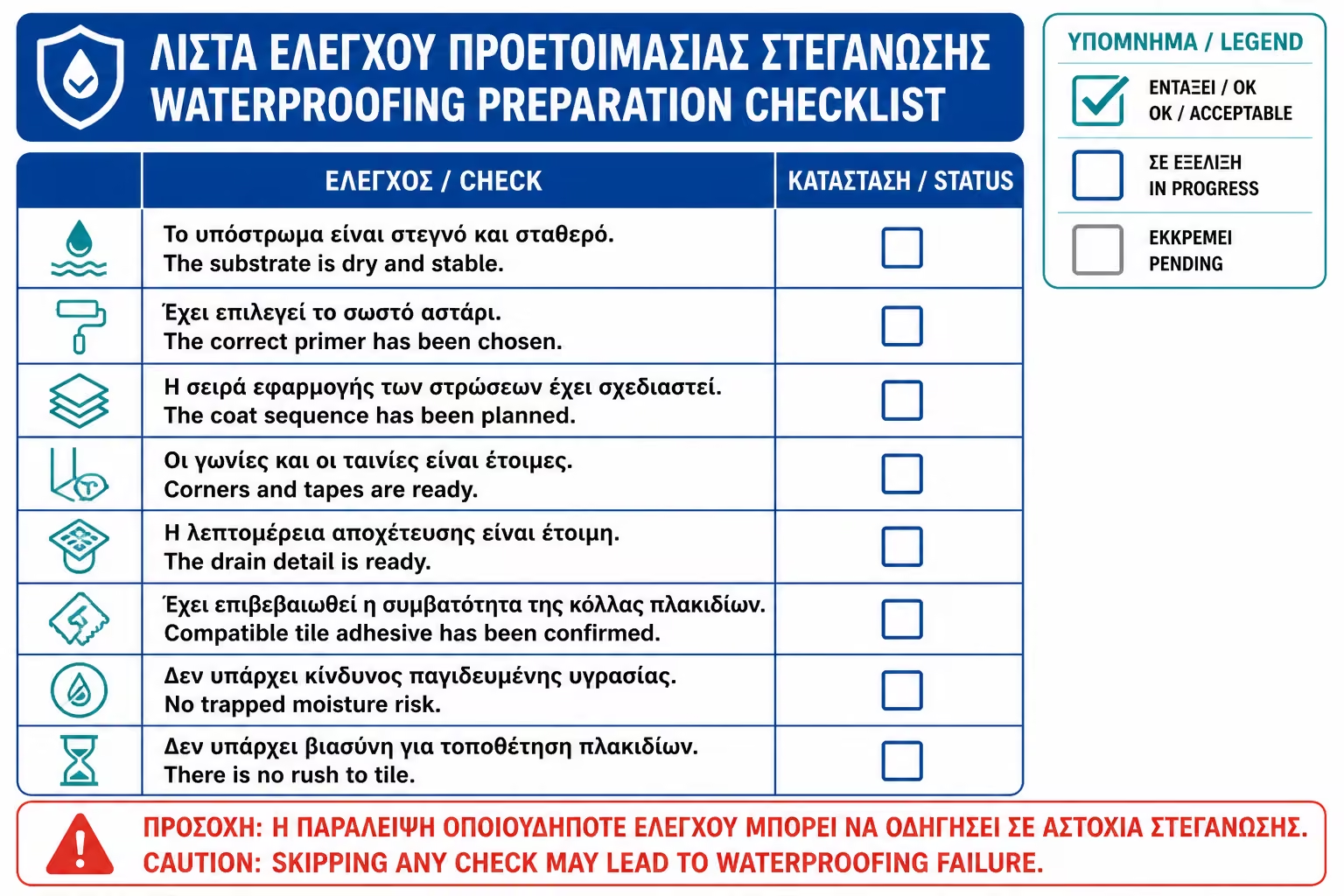
Before starting the application, it is worth doing a practical check. This helps to avoid mistakes that will later be hidden under the tiles.
| Inquiry | Yes / No |
|---|---|
| Is the material acrylic or polyurethane and do we know why it was chosen? | Yes / No |
| It is suitable for the specific zone, e.g. shower floor or wall? | Yes / No |
| Is it suitable for application under tiles if paving is to follow? | Yes / No |
| Is the substrate dry, stable and clean? | Yes / No |
| Is primer provided where required? | Yes / No |
| Will the prescribed layers and proper consumption be applied? | Yes / No |
| Are the corners taped? | Yes / No |
| Are there cuffs around supplies and piping? | Yes / No |
| Is the siphon attached to the membrane in a compatible manner? | Yes / No |
| Have the drains been controlled so that water does not pool? | Yes / No |
| Is the tile adhesive compatible with the membrane? | Yes / No |
| Are drying times agreed before the next job? | Yes / No |
| Does the offer mention materials, labour, VAT and technical stages? | Yes / No |
If most of the answers are vague, the application is not ready yet. Liquid films want a clear process, not a blanket promise.
> If you have to keep only one thing, keep this: liquid membranes can create a very good uniform elastic "basin" under tiles, but only when applied as a complete system. Don't choose acrylic or polyurethane based on the name alone. Ask if it will withstand the specific use, if it will accept tile on top, if it needs a primer, if there will be tapes in the corners and how it will be connected to the siphon. And above all: don't use the material's water resistance as an excuse for wrong showers and stagnant water.
Liquid acrylic and polyurethane membranes are an important tool in modern bathroom waterproofing. They offer flexibility, continuous application and the possibility of creating an elastic protective layer under the tiles. Compared to more traditional solutions, they can give better adaptation to details and, especially in the polyurethane versions, higher elasticity and resistance.
But the new technology does not abolish the basic rules. The substrate must be correct. The drains must lead the water to the siphon. The corners must be reinforced. The siphon must be connected to the membrane. Supplies must have cuffs. The tile adhesive must be compatible. If these are not done, the material alone is not enough.
Acrylic films are practical and economical for suitable indoor applications, but need attention to heavy stress and standing water. Polyurethane membranes offer greater potential in demanding zones, but require better preparation and more technical application. The right choice is not a matter of fashion, but a matter of use.
For the owner, the safest position is to ask for a clear technical proposal: which material, in which places, with which primer, in how many layers, with which tapes and with which glue. So the liquid membrane will not be just a "passed insulation", but a real bathroom protection system.
Return to category.
Go to categoryReturn to the central guide.
Go to guide