
Bathroom Waterproofing & Moisture Protection
Return to category.
Go to categoryWhen moisture appears in a wall, ceiling, downstairs or behind the bathroom, the first thought is usually that "a pipe is leaking somewhere". This may be correct, but it is not enough. There are two very different categories of leaks: water leaks and sewer leaks. And their difference is critical, because they lead to a different diagnosis, a different repair and often a different cost.
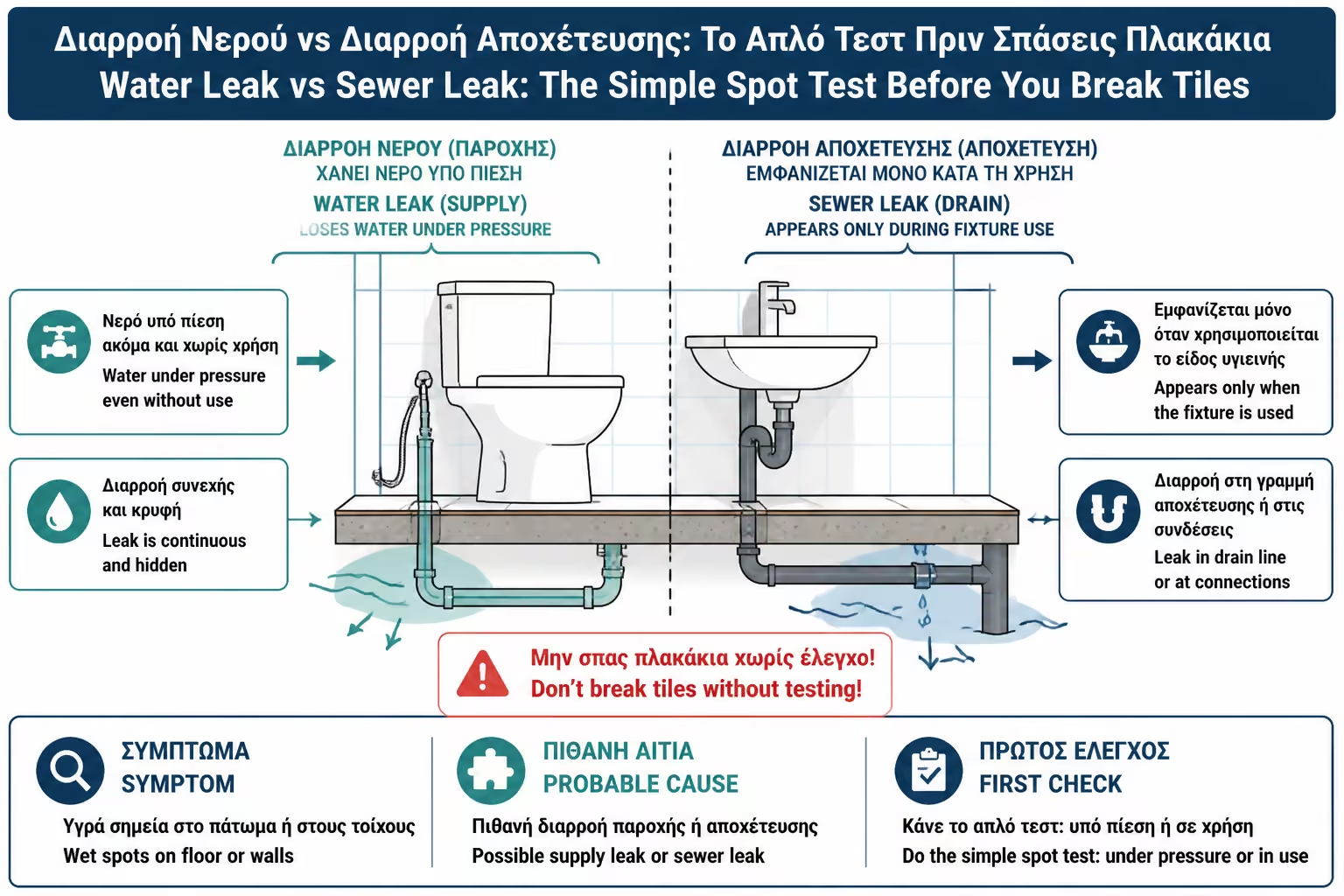
A water leak affects the pipes that bring clean water to the faucets, shower faucet, cistern, water heater or washing machine. These pipes have water under pressure. This means that if there is a hole, crack or bad joint, water can leak continuously, even when no one is using the bathroom.
The drain leak, on the contrary, concerns the pipes that take the water after we use the bathroom: shower trap, sink drain, bathtub, washing machine, basin, cistern. There is usually no continuous water pressure there. The problem occurs when water passes through that particular line. That's why a drain can look "dry" all day and only create moisture after showering or using the sink.
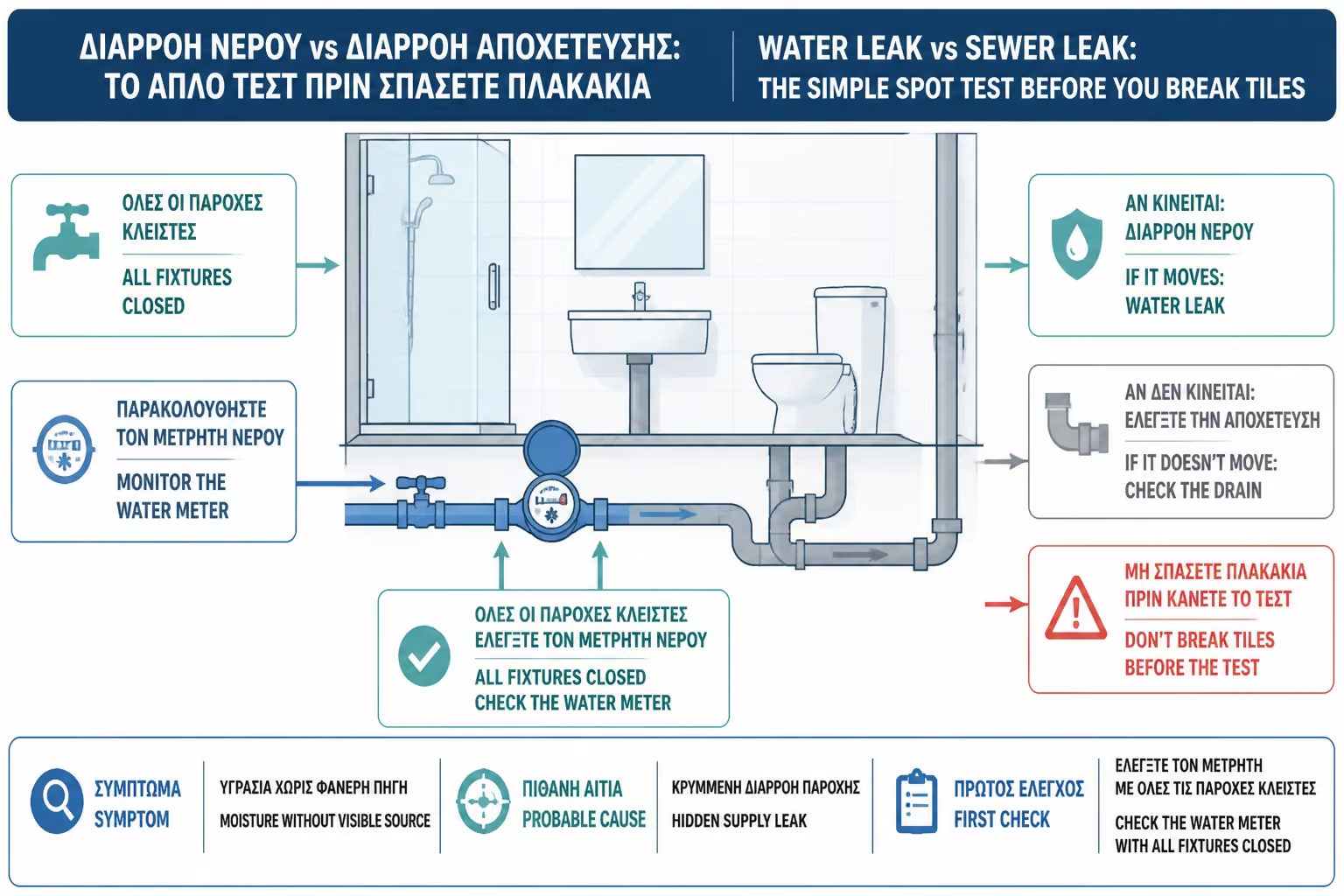
The simple observational test is based on just this difference: does it lose water continuously or only when we use something? If we understand this early, we can properly direct the control and avoid unnecessary extractions.
The water supply leak is lost because the pipe is under pressure. The drain leak loses when water passes through the use.
This means that a water pipe can wet a wall even at night when nothing is being used. Conversely, a problematic shower drain may show nothing for hours, but show moisture shortly after a bath.
This difference is the first diagnostic key. It doesn't always show the exact location of the fault, but it does show which family of problems to look at first.
We suspect a water leak when moisture appears or grows without the bathroom being used. If the stain on the wall or ceiling remains active 24 hours a day, if it drips constantly, if the plaster does not have time to dry, or if the problem gets worse even after no shower, then the water supply should be checked.
Other signs are the movement of the water meter while all the taps are closed, pressure drop, the sound of water inside the wall or moisture near supply points: shower mixer, sink, cistern, water heater, corner switches or collectors.
A water supply leak needs a more immediate response because it is constantly being fed. If suspected, the supply to the apartment or the local valve, where available, should be shut off and a plumber called.
We suspect a drain leak when moisture appears after using a particular fixture. For example, the downstairs sees a stain after a shower. Or the wall behind the bathroom gets wet after using the sink. Or there is a smell and moisture when the washing machine is running.
In this case, the leak is not necessarily continuous. It can only appear when water is flowing through the problematic pipe or siphon. This makes diagnosis more difficult, because if the plumber goes at a time when nothing is being used, the spot may appear dry.
Sewer leakage is often associated with siphons, connections, old piping, hoses, poor slopes, cracks or displaced joints. It can also give off a sewer smell, which is not typical of a clean water leak.
A useful first step is to observe for 24 hours, as long as the leak is not severe and there is no electrical or downstairs hazard. We stop using the suspicious bathroom as much as possible. We don't shower, we don't use a sink, we don't put in a washing machine and we watch if the humidity increases.
If the humidity continues to rise without use, the water supply is high up on the list of possible causes. If the moisture stops or starts to dry, then it is more likely to be related to use: a drain, siphon, shower seal or water passing through surfaces.
This test is not a substitute for a plumber. But it is very useful not to start the audit blindly.
For a possible water supply leak, the simplest practical test is the water meter. We turn off all the faucets, do not use the sink, washing machine, dishwasher, water heater or other device that draws water, and observe the meter.
If the meter continues to read or the small pointer moves while everything is closed, there is an indication that water is being lost somewhere in the water supply network. In this case, the priority is to isolate the lines, check valves, cisterns and pipes, and call a plumber.
Caution: a poorly running faucet can also cause the meter to move. So before we draw a conclusion, we check if the cistern is leaking into the basin. If everything is really closed and the meter is moving, the indication is serious.
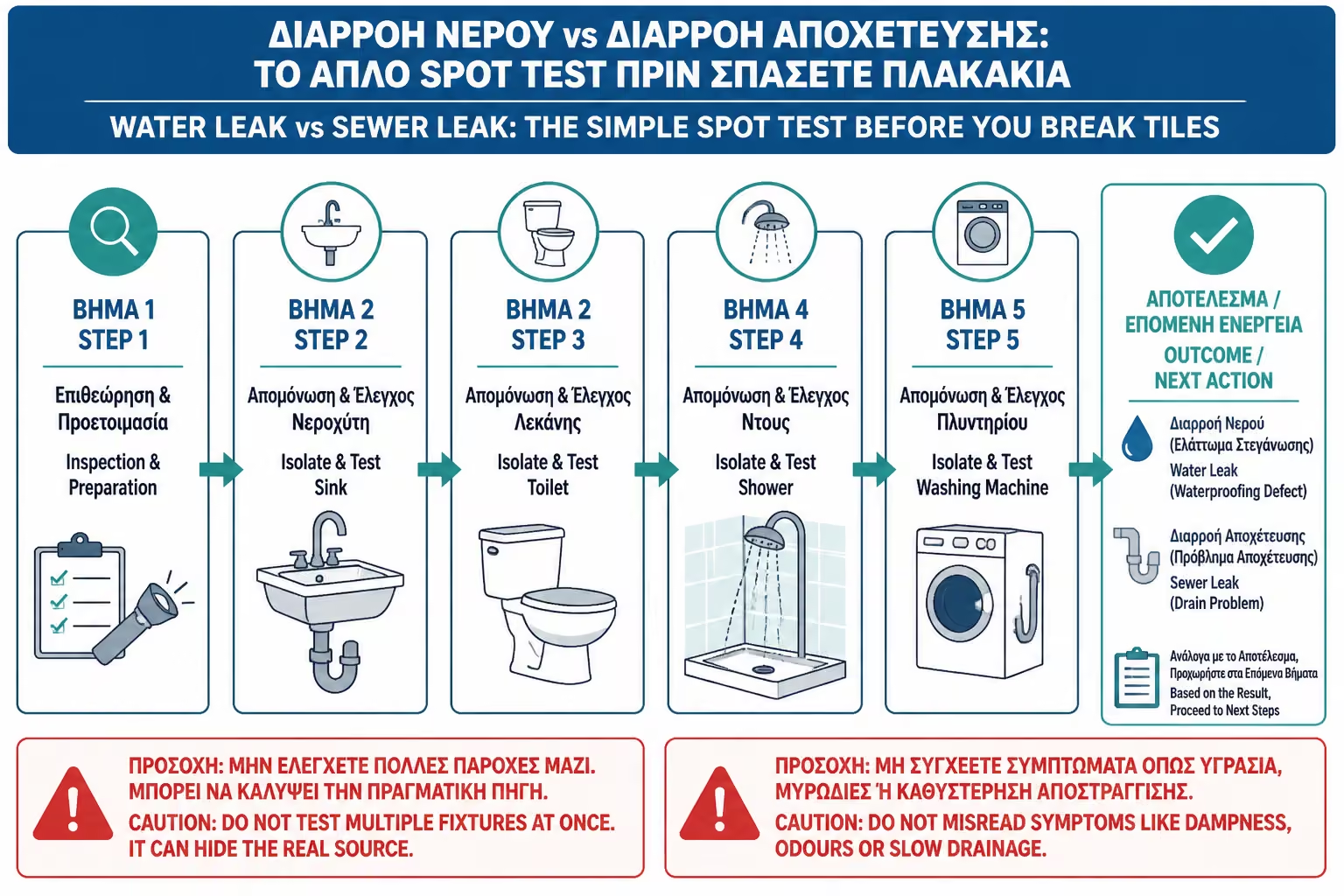
If moisture appears to be related to use, then we test each component individually. First we only use the sink for a few minutes and observe. Then only the cistern. Then only the shower, initially trying to pour water directly into the faucet without wetting the walls. Then we wet the walls of the shower and the corners.
This series helps distinguish whether drainage or sealing is to blame. If we run water directly into the siphon and it leaks, then the siphon or drain is suspect. If it doesn't leak when the water goes to the faucet, but it does when the walls, corners, or joints get wet, then the shower seal is more suspect.
Testing must be controlled and monitored. If the leak is severe, we do not continue testing ourselves.
The most common confusion is between a leaking drain and a bad shower seal. Both appear after using the bathroom. But it is not the same.
If the water passes through the siphon and the leak occurs without wetting tiles, walls or corners, the drain is more suspect. If water has to get on the tiles, corners, or battery area for the problem to occur, then the seal or pipe passages are more likely.
For example, if we fill a bucket and empty it directly into the siphon and the bottom floor drips, then we are looking at a siphon/drain. If this causes nothing, but the shower on the wall causes moisture, then we look at joints, corners, battery, pipe collars and waterproofing.
This simple reasoning often greatly reduces diagnosis time.
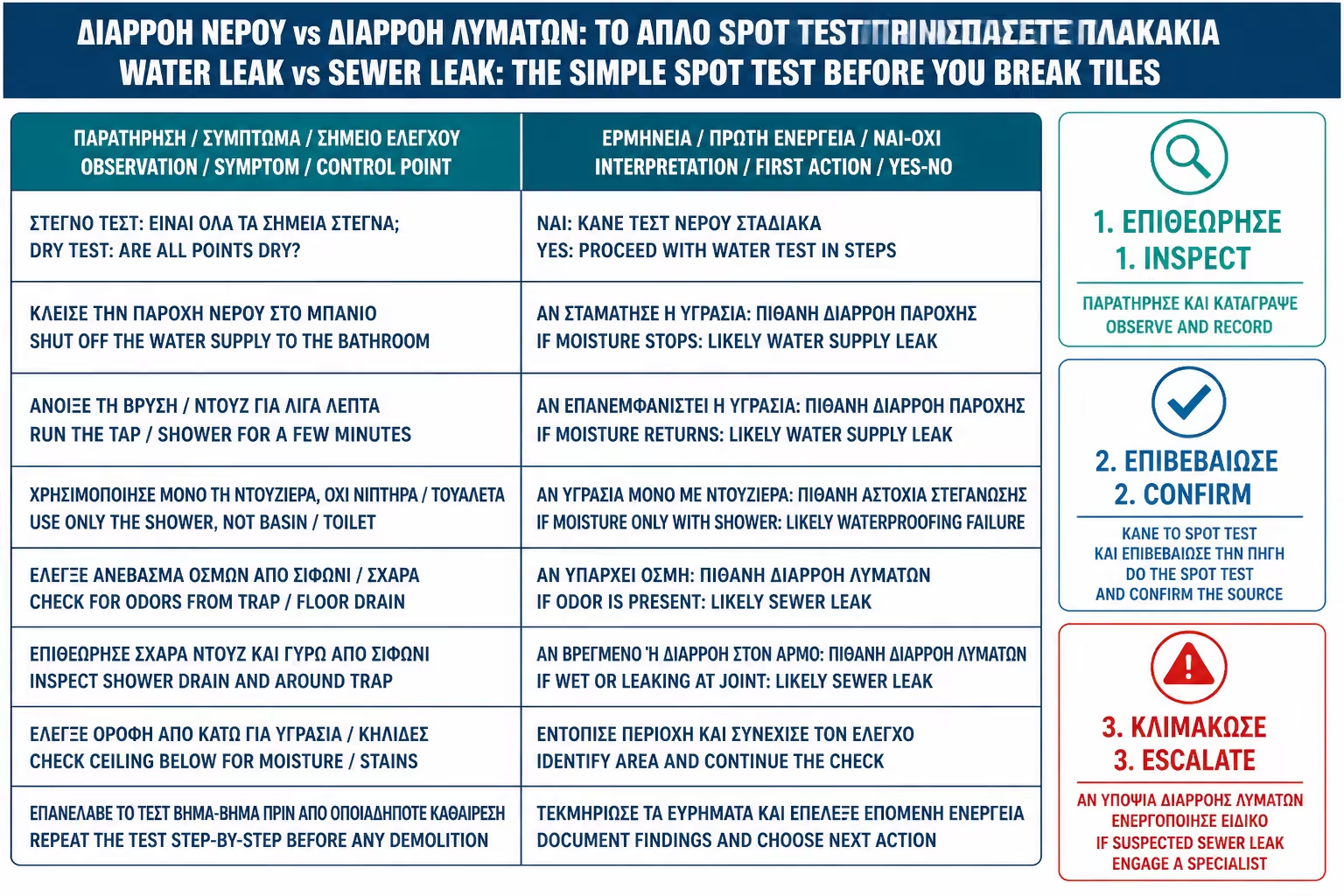
| Observation | More likely cause | What do we control? |
|---|---|---|
| Moisture grows without using a bathroom | Water supply under pressure | Meter, utilities, hidden piping |
| Counter moves while everything is closed | Leaking water supply or cistern | Cistern, valves, hydraulic control |
| Moisture after a shower | Drainage or waterproofing | Siphon, corners, joints, battery |
| Moisture only when the sink is running | Sink drain | Siphon, wall pipe, connection |
| Moisture after the cistern | A cistern or basin drain | Tires, basin outlet, built-in cistern |
| Moisture after washing | Supply or drainage of laundry | Hose, siphon, overflow |
| Sewage smell along with moisture | Drain / odor trap | Siphons, drain ventilation |
| Moisture at the height of the battery | Supply or water behind rosettes | Connections, pipe collars, battery |
The table is a first estimate guide. The final diagnosis should be made by a technician, especially when there is damage to another compartment.
Don't start breaking tiles without being noticed. Don't just replace grout if you don't know if the drain is to blame. Do not paint the bottom stain before the source stops. Do not pour water uncontrollably "to test" if there is already a leak downstairs. And don't assign responsibility to a neighbor, management or repair shop before there's a technical clue.
Also, don't confuse silicone with diagnosis. Sealing off a corner with silicone can temporarily reduce water inflow, but if the problem is a broken drain or water pipe, it won't solve anything.
Correct diagnosis begins with when it loses. Not from where we will break.
We call a plumber immediately when moisture rises without use, when there is a meter reading, when there is dripping on the ceiling, when there is water near electrical, when a lower floor is affected, when there is a smell of damp sewer or when we cannot isolate the cause by simple observation.
If there is a possibility of water supply under pressure, we close the supply until the inspection. If there is a possibility of drainage, we avoid the use of this part. If there is a leak in an apartment building, we inform the lower owner and management where necessary.
The plumber should be informed about the observations: when it appeared, after what use, if the meter moves, if there is a smell, if there is a lower floor. This information reduces detection time.
| Inquiry | Yes / No |
|---|---|
| Damp appears without using the bathroom? | Yes / No |
| Does the water meter move while everything is closed? | Yes / No |
| Is the faucet leaking water into the basin? | Yes / No |
| Does the dampness only appear after a shower? | Yes / No |
| Does it appear when we pour water directly into the siphon? | Yes / No |
| Does it only appear when the walls/corners of the shower get wet? | Yes / No |
| Does it appear after using the sink? | Yes / No |
| Does it appear after using the washing machine? | Yes / No |
| Is there a sewer smell? | Yes / No |
| Is there a stain downstairs or in the next room? | Yes / No |
| Are photos taken and dated? | Yes / No |
| Has the suspect component been temporarily discontinued? | Yes / No |
If the first two answers are "yes", the water supply is a serious suspect. If the answers show a relationship only with a specific use, then we look at drainage or waterproofing.
> If you must keep only one thing, keep this: the water supply leak usually leaks continuously, because the pipe is under pressure. Drainage leakage usually occurs when we use this particular fitting. Before breaking tiles, notice when moisture appears, check the meter and test the components one by one. This simple logic often points in the right direction.
Distinguishing between a water supply leak and a drain leak is the first and most useful step in diagnosing bathroom moisture. The water supply leaks because it has pressure and can cause a problem even without use. Drainage loses when water passes through, so the problem occurs after a shower, sink, faucet or washing machine.
The simple observation test does not replace the plumber, but it reduces wrong moves. If the meter reads without use, the supply must be checked immediately. If the dampness only appears after the shower, we have to distinguish whether it is the siphon/drain or the waterproofing of the surfaces. If it appears only with the sink or washing machine, the check is done there.
In any case, the correct sequence is observation, use isolation, documentation, technical control, and then repair. No blind breaking. Water leaves traces; the point is to read them in the right order.
Return to category.
Go to categoryReturn to the central guide.
Go to guide