
Bathroom Waterproofing & Moisture Protection
Return to category.
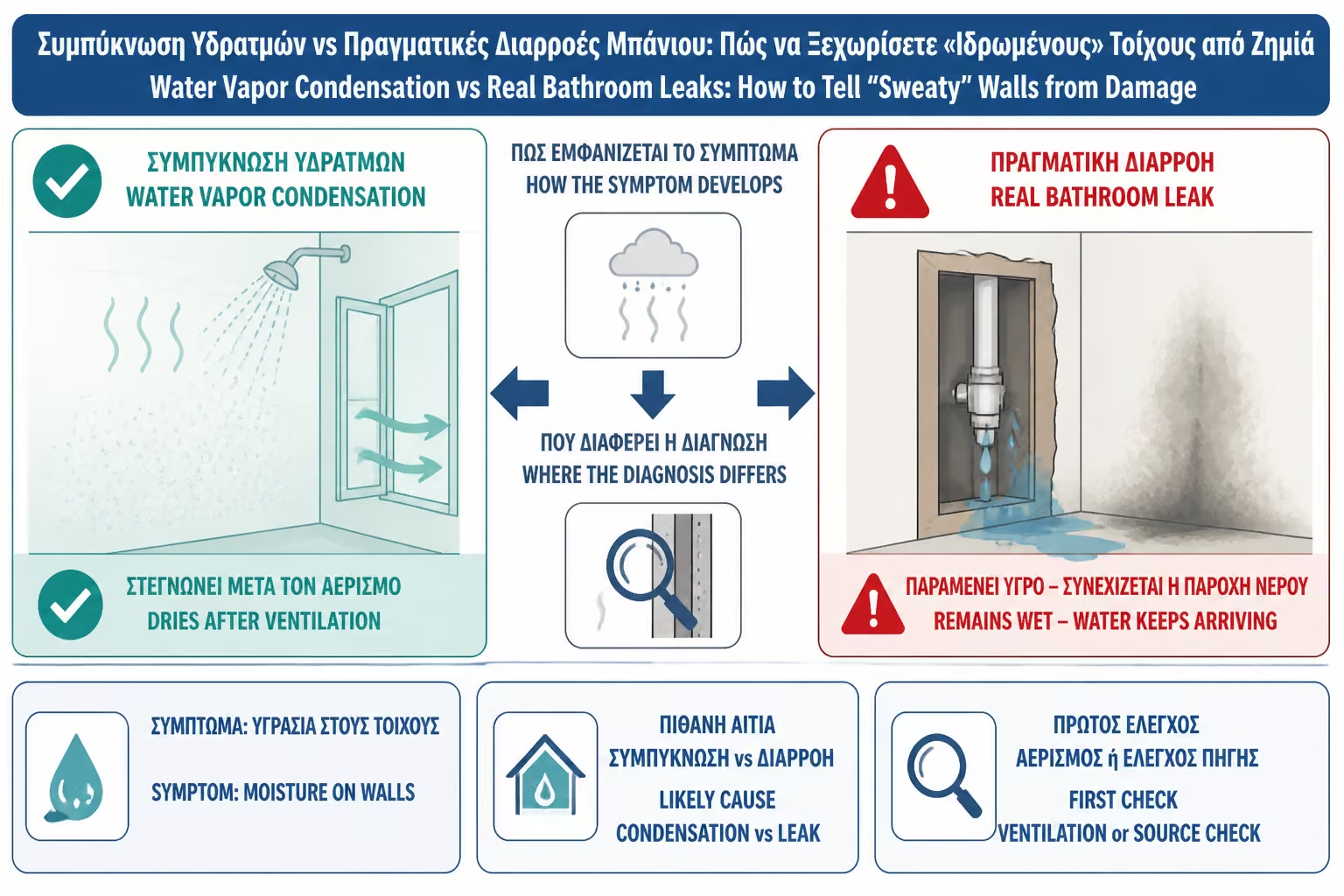
Go to categoryA bathroom that "sweats" after a shower does not necessarily have a leak. Drops on the tiles, on the ceiling, on the mirror or around the window can be simple condensation. That is, the warm, humid air of the bathroom rests on colder surfaces and turns back into water. This is a natural phenomenon and often occurs in bathrooms with poor ventilation, insufficient heating, cold external walls or windows without good thermal insulation.
The problem is that condensation looks a lot like a leak. We see water on the ceiling and worry about a pipe. We see black spots in the corner and think moisture behind. We see swollen paint and assume that water is coming from the shower. Sometimes this is true. Other times, though, the bathroom just never dries properly after use.
The distinction is important because the solution is completely different. If we have condensation, it will not be solved by changing a pipe, nor by breaking tiles. It wants better ventilation, proper air circulation, heating, humidity control and perhaps improvement of cold surfaces. If we have a real leak, it won't be solved with a stronger fan. It wants to locate the source: water supply, drain, siphon, corners, joints or waterproofing failure.
The most difficult thing is that both can coexist. A bathroom can have poor ventilation and at the same time a small leak in the shower. Condensation creates general dampness and mold, while leakage gives localized stain or dampness that persists. That is why observation is needed, not a hasty diagnosis.
This guide explains how to tell condensation from a real leak, what signs indicate poor ventilation, what signs are more worrisome, what simple tests the homeowner can do, and when a service check is needed.
Condensation occurs when warm air containing a lot of moisture comes into contact with a colder surface. After a hot shower, the bathroom air is filled with water vapor. If the walls, tiles, ceiling, glass or corners are colder, the water vapor becomes droplets on them.
This is why the mirror fogs up, the window fills with water and the tiles can look like they have "sweated". It doesn't mean that water is coming from behind. It means that the moisture in the air has condensed on the surface.
The phenomenon is more pronounced in winter, when the surfaces are cold and the bathroom heats up quickly with the shower. It is also more pronounced in bathrooms without a window, with an insufficient fan, with a door that remains closed after use or with external walls without good thermal insulation.
Condensation is not “pipe failure”. But if it is repeated daily and the surfaces remain wet for hours, it can lead to mold, paint wear, silicone blackening and poor air quality.
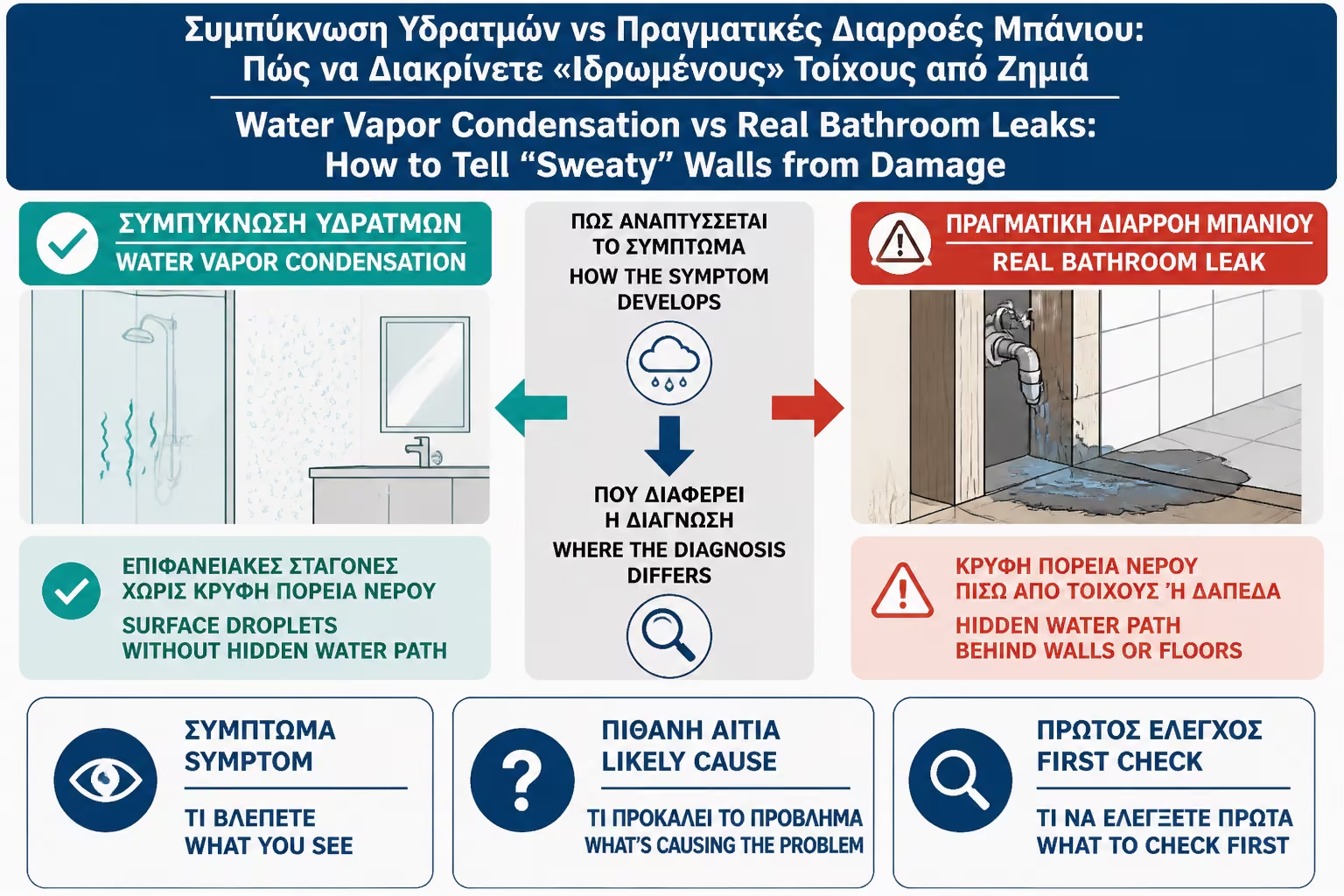
Actual leakage means that water leaves where it should be controlled and passes into a structure, wall, floor, ceiling or adjacent space. It can come from a water pipe, drain, siphon, cistern, sink, washing machine, bathtub or from a failure of the seal in the shower.
Leakage usually has a more localized behavior. It does not appear uniformly on all cold surfaces. It appears in a specific spot or zone: low behind the shower, under the faucet, on the downstairs ceiling, around a faucet, behind a sink, near a cistern, or on an adjacent wall.
If it's a water leak, it can occur all the time, even when the bathroom is not in use. If it is a drain or seal, it most often occurs after use: after the shower, after the sink, after the faucet or after the washing machine.
The leak is not resolved by ventilation. It may be superficially dry, but as long as the source remains, the moisture returns.
Condensation usually occurs immediately after a hot shower or bath. We see drops on a mirror, glass, tiles, ceiling or cold corners. If we open a window or the ventilation works properly, the drops are reduced and the surfaces dry.
Actual leakage does not always depend on hot air. It can appear at a certain point regardless of whether water vapor is generated. If, for example, the stain on the next wall is getting bigger without a shower, or if the downstairs ceiling is dripping with no steam, then we are not talking about condensation.
If the drops appear only when the bathroom is steaming and are on many cold surfaces, condensation is likely. If the moisture always appears in the same place, grows, swells materials or is related to a specific water use, the leak should be checked.
Appearance time is the first and simplest diagnostic filter.
Condensation loves cold surfaces. We see it on windows, mirrors, exterior walls, ceilings, corners and areas with low air circulation. If there is a cabinet or piece of furniture that is against a cold wall, mold can appear behind it because the air is not circulating.
The leak usually follows the hydraulic routes. We find it near pipes, supplies, siphons, drains, shower corners, bathtub joints, cisterns, washing machines or downstairs under a bathroom. It can appear low on the wall or ceiling below, not necessarily on a cold surface.
If the drops are evenly spread across the ceiling after the shower, condensation is more likely. If there is a specific stain with a clear outline, swelling or discoloration, the leak is more likely. If the mold appears in a cold corner up high, it is most likely a vent/thermal bridge. If it appears low behind the shower, it needs a seal check.
The position does not always give a final answer, but it indicates which scenario should be checked first.
Condensation, if the room is properly ventilated, should be reduced. The drips disappear, the tiles dry, the mirror cleans and the ceiling comes back. If the bath dries within a reasonable time after use, the phenomenon is more controllable.
But if surfaces stay wet for hours, if the ceiling drips for a long time after a shower, or if corners never dry, then even condensation becomes a problem. It's not necessarily a leak, but it's a malfunction of the space.
The actual leak insists differently. The stain may not dry completely. It can come back even after painting. It can grow day by day. There can be moisture deep down, not just on the surface. The paint may swell or the plaster may soften.
A simple rule: the condensation dries up when the air conditions change. The leak returns as long as the water source remains.
Black spots are usually mold. Mold needs moisture, time and organic matter to grow. In bathrooms with poor air renewal, it often appears on the ceiling, in corners, around windows, on silicones and behind furniture. This often indicates condensation and insufficient drying.
But mold can also appear above a hidden leak. If a certain low spot near the shower turns black, if the silicone turns black immediately after replacement, if the wall smells musty even when aired, then there may be moisture behind it.
Point and persistence are key. Mold in a cold corner high, especially in winter, often shows condensation. Mold low on the wall behind a bathroom or downstairs most likely indicates a leak or hidden dampness.
Mold cleanup without a solution to the cause is temporary. If the cause is ventilation, it will come back out. If the cause is a leak, it will come back out even more persistently.
Drops on the surface may be condensation. But the swollen color is more worrying. When paint blisters, peels or plaster softens, it means that moisture has affected the substrate or layer of paint. This can happen from intense and chronic condensation, but very often it indicates moisture coming from inside or staying deep.
If the swelling is high on an exterior cold wall and is accompanied by mold in many corners, it may be chronic condensation. If it is low, next to a shower, behind a bathtub, near a cistern or on the adjacent wall, it should be checked for leaks.
On a ceiling under a bathroom, a blown paint or brown stain is not treated as simple condensation. Need control from above: siphon, drain, water supply, waterproofing or bathtub.
Bloating is an indication that the problem has progressed beyond simple surface drops. A more serious diagnosis is needed there.
A practical first test is to temporarily improve ventilation and observe. After the shower, we open a window where there is one, leave the door ajar, run the fan for a long time and remove standing water from glass surfaces or tiles. If drips and moisture are noticeably reduced and there are no localized stains that persist, condensation is a likely cause.
However, if, despite good ventilation, the same spot remains damp, the stain grows or moisture appears in an adjacent area, then it is not enough to talk about ventilation. Leakage should be checked.
The ventilation test does not solve the problem if there is a breakdown. It is a diagnostic filter. If the space dries quickly with proper ventilation, the problem is mainly water vapor management. If not, we need to dig deeper.
In windowless bathrooms, the fan should run well after use, not just while showering. Moisture remains in the air even after the shower is over.
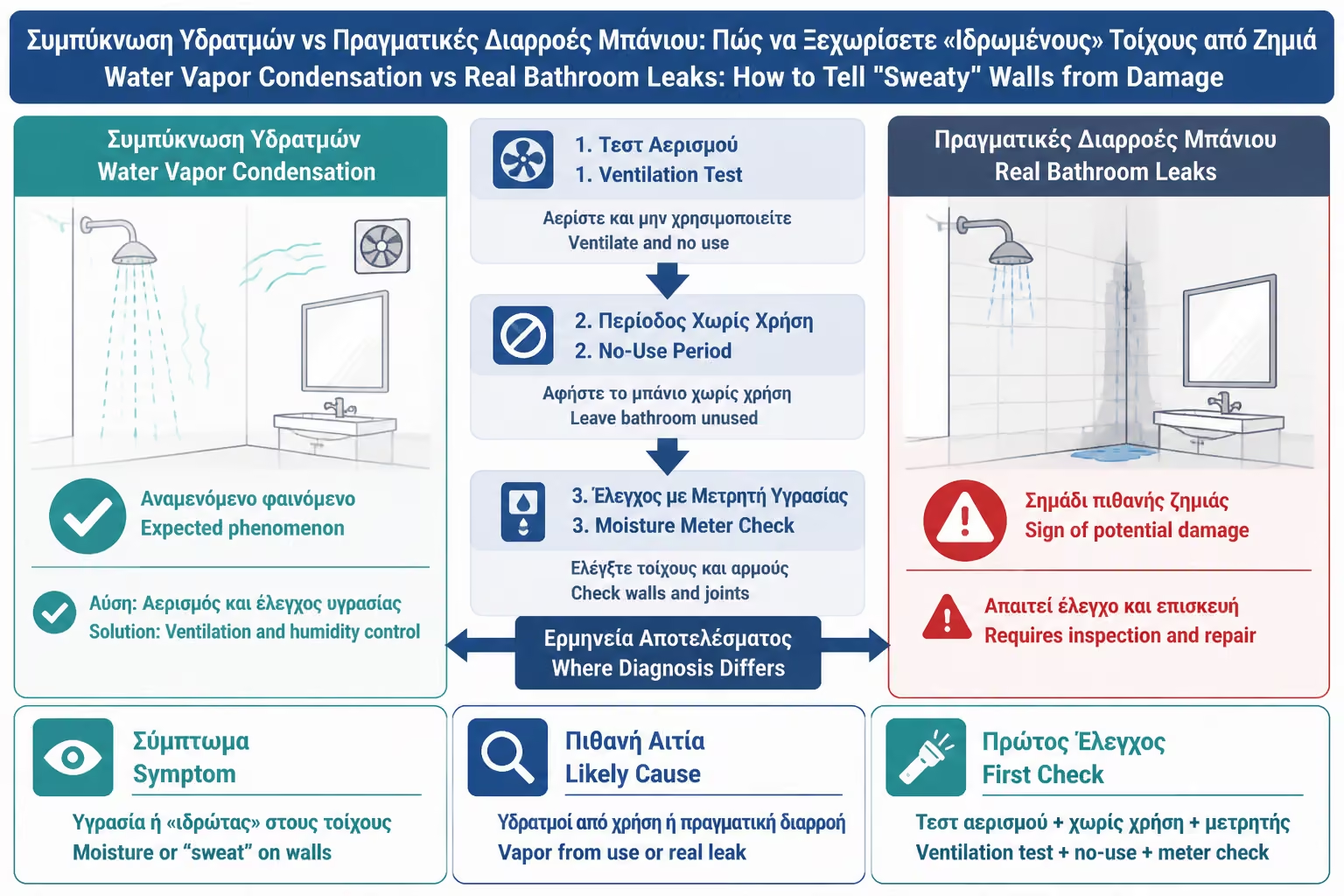
To distinguish condensation from leakage, it helps to observe the bathroom without use. If for a day or two there is no shower and no water vapor is created, the condensation drops should not appear. But if the stain or moisture continues to grow, then there is an active water source.
This is especially useful on walls behind bathrooms and on lower floors. If you stop using the shower and the stain dries, the cause is probably related to water use. If it continues to grow, we are looking at pressurized water supply, public piping or another source.
This test should not be performed if there is active dripping, water near electrical or extensive damage. There, immediate technical control is needed. For mild symptoms, however, discontinuing use gives very useful information.
Condensation needs steam to occur. The leak may continue without steam.
If a water leak is suspected, the water watch is an essential tool. We turn off all taps, do not use a cistern or appliances and observe if the meter continues to read. If it reads, there is an indication of continuous consumption, so a possible water supply leak or leaking faucet.
Condensation does not affect the water meter. If the drops on the tiles are due to water vapor, the meter will not read without use. But if the meter is moving, we are not talking about simple steam. Water is coming through the network somewhere.
If the meter does not read, drainage or poor sealing that appear only with use are not excluded. But it reduces the possibility of continuous water leakage.
The watch does not diagnose condensation, but it helps rule out or confirm one of the more serious scenarios: pipe under pressure.
If the picture is not clear, instruments help. The thermal camera can show cold zones, thermal bridges and possible areas of condensation. It can also indicate thermal anomalies from hot water pipes or moisture behind surfaces. The hygrometer can show if the moisture is on the surface or if there is increased moisture deep down.
In case of condensation, the thermal imager often shows cold corners or exterior walls. The hygrometer may show low or shallow readings that change after aeration. In the event of a leak, a more localized zone of increased moisture that persists may occur.
Both tools need proper interpretation. A cold surface is not always a leak. A high moisture reading alone does not tell whether the cause is a pipe, drain or waterproofing.
Instruments are no substitute for observation. They complete it.
The bathroom ceiling gets a lot of water vapor because the warm air rises. If the ceiling is cold, especially on an exterior slab or under an unheated space, drips may appear after a hot shower. This may be condensation, especially if the droplets are scattered and dissipate with ventilation.
But if the ceiling has a certain stain, brown outline, swollen color or is dripping in a certain place, then the leak should be checked. If there is a bathroom above, the leakage scenario becomes even more serious. If the ceiling is on the lower floor, we are not talking about steam from the lower bathroom, but about water coming from above.
In the same bathroom, the condensation drops are usually many and superficial. The leakage is more localized and leaves a stain that persists.
The ceiling "sweats" from vapors. A ceiling that bulges or stains usually needs inspection.
Tiles are cool, smooth surfaces. After a hot shower, it is normal to see drops, especially if the bathroom is not ventilated. These drops are usually on the surface and are easily wiped off. They do not mean that water is passing behind the tiles.
It becomes a concern when the joints remain wet for a long time, when white salts appear that return, when the joints crack or when there is a tan that quickly returns. There may be water entering or moving through the structure.
If the tiles sweat evenly after the shower, we are looking at ventilation. If a certain joint zone changes color, remains wet or smells, we are looking at possible water ingress.
Drops on the tile are often steam. Moisture in the joint or behind the tile is a different story.
A poorly ventilated bathroom usually has recurring fogging on the mirror, drips on the window, mold in the corners, blackening on the silicone, heavy air feeling and musty smell after use. The marks appear mainly after showering and improve when the area is properly ventilated.
Ventilation may be inadequate because there is no window, because the fan is small, clogged or without a time delay, because there is no air intake under the door, or because the user closes the bathroom immediately after showering. The fan can't blow air unless new air is coming in from somewhere.
Heating also plays a role. An ice bath suddenly filled with hot steam will condense more water. Cold walls and single glazing are classic condensation points.
If ventilation is the problem, sealing is not the solution. It is ventilation, circulation, heating and reduction of water vapor residence time.
Sometimes the phrase "it's just water vapor" is used too easily. If there's a stain downstairs, it's not just water vapor. If the paint is puffing low on the adjacent wall, we don't automatically attribute it to vapors. If the moisture appears in the same spot regardless of the shower, it is not typical condensation.
Also, if the water meter reads while everything is closed, condensation does not explain the consumption. If the problem occurs after using a sink or cistern, we look at the drain. If it appears after wetting a certain corner of the shower, we are looking at sealing.
Condensation is common, but should not be used as an excuse not to get checked. Proper diagnosis looks at all the evidence.
When the mark is local, persistent, evolving, or adjacent/underlying, technical investigation is needed.
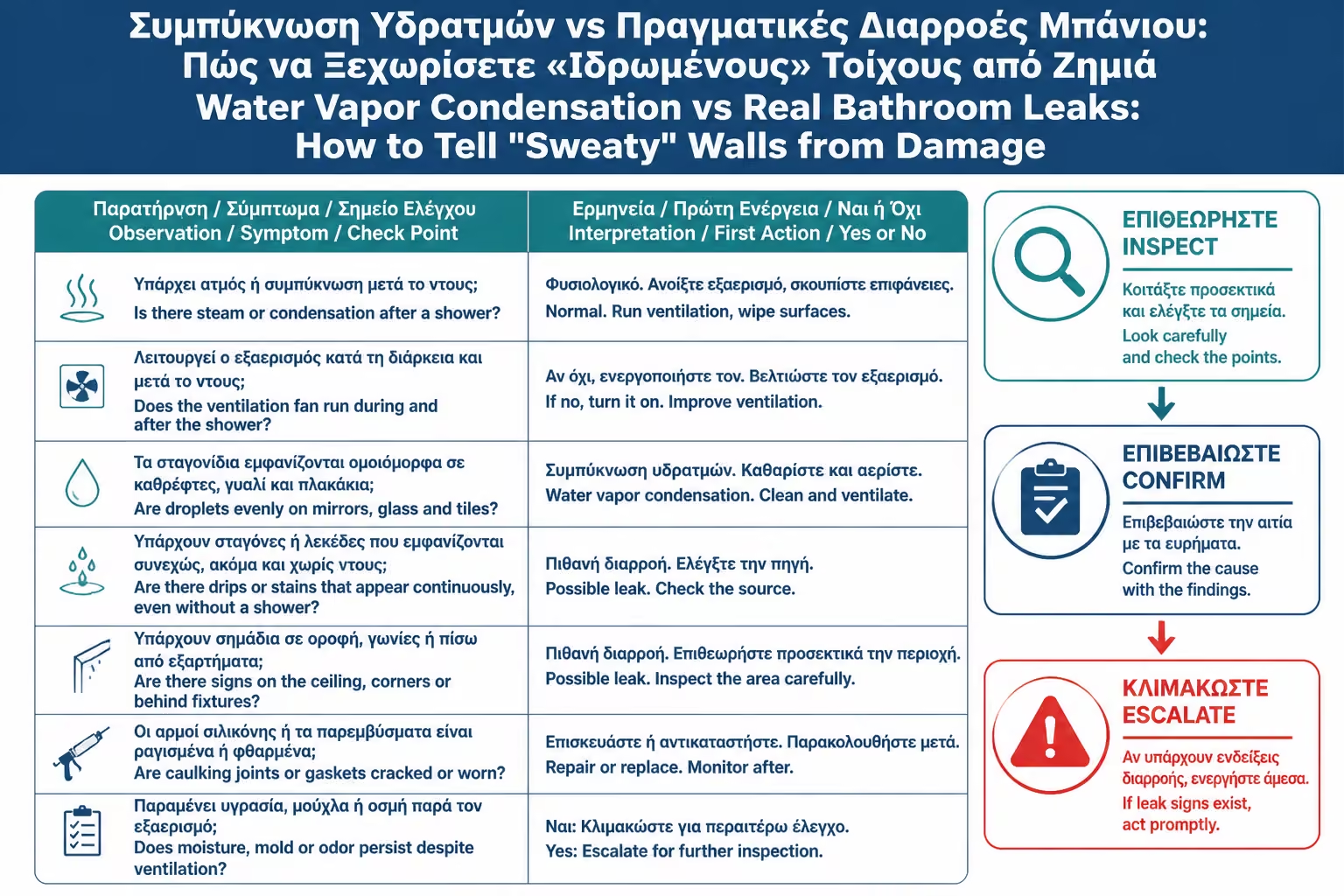
| Observation | More likely scenario | What do we control? |
|---|---|---|
| Drops on mirror, tiles, window after shower | Condensation | Ventilation, heating, drying time |
| Uniform "sweat" on the ceiling after a hot shower | Condensation | Fan, cold plate, ventilation |
| Black spots high in corners | Condensation / thermal bridging | Thermal camera, ventilation |
| Bloated paint low behind shower | Possible leakage / waterproofing | Corners, siphon, facilities |
| Stains on downstairs ceiling | Real leak from above | Water supply, drainage, siphon |
| Water meter reads with everything closed | Leaking water supply or cistern | Clock, cistern, plumber |
| Moisture only after using the sink/cistern | Drainage or connection | Siphons, pipes, use test |
| Mold behind furniture on cold wall | Condensation and poor ventilation | Furniture distance, air circulation |
The table helps in the first direction. It does not replace technical inspection when signs persist.
First photograph the marks. Note when they appear: after a shower, in the morning, after rain, after using a particular accessory, or without use. Try improving the ventilation for a few days and see if the drops decrease. Check if the water meter reads while everything is closed.
If the problem is only surface condensation, improve ventilation. Clean the fan, let it run longer, leave a small gap under the door for air intake, open a window where there is one and remove standing water after showering.
If there is a local stain, swelling, moisture in an adjacent space, a basement ceiling, a reading meter or a persistent musty smell, call a technician. There is not enough ventilation.
Observation for a few days may avoid misdiagnosis, but serious leakage should not be delayed.
| Inquiry | Yes / No |
|---|---|
| Do the drops appear immediately after a hot shower? | Yes / No |
| Do they dry with good ventilation? | Yes / No |
| Does moisture appear on many cold surfaces? | Yes / No |
| Is there a particular stain that grows? | Yes / No |
| Is there blown paint or soft plaster? | Yes / No |
| Is there moisture in the next room or downstairs? | Yes / No |
| Does the water meter read while everything is closed? | Yes / No |
| Does moisture appear after using a certain part? | Yes / No |
| Is there a musty smell even without steam? | Yes / No |
| Are there scales or cracked joints that persist? | Yes / No |
| Is there a fan with sufficient operation after the shower? | Yes / No |
| Have photos and observations been made over time? | Yes / No |
If the first three answers are "yes" and the rest of the worrying signs are "no", condensation is likely. If there are local, persistent or progressive signs, a leak check is needed.
> If you must keep only one thing, keep this: water vapor leaves water on the surface, while seepage supplies moisture from within or from a particular water path. If the drops appear after a hot shower and dry with good ventilation, we first look at ventilation. If there is a local stain, swelling, moisture in an adjacent space, a lower floor or a reading meter, we do not christen it "condensation". We are checking it as a possible leak.
Water vapor condensation and actual leakage can look similar, but behave differently. Condensation occurs mainly after a hot shower, on cold surfaces, and decreases when the room is properly ventilated. The leak is more localized, more persistent and often associated with a specific hydraulic route: pipe, siphon, drain, corner, battery or poor sealing.
The mistake is to treat all drops as damage or all moisture as vapors. If we break tiles for simple condensation, we lose money for no reason. If we ignore a real leak because we think "it's from water vapor", the damage will grow.
The correct diagnosis begins with simple questions: when does it appear, where does it appear, does it dry or persist, is there a reading meter, is there a connection with water use, is there a stain in an adjacent or lower space? These answers lead to the correct next step.
For the owner, the practical attitude is balanced. We improve ventilation when the problem shows condensation. Call a technician when there are signs of a leak. And above all, we don't cover the symptom with paint, silicone or cleaner before we understand where the moisture is coming from.
Return to category.
Go to categoryReturn to the central guide.
Go to guide