
Bathroom Waterproofing & Moisture Protection
Return to category.
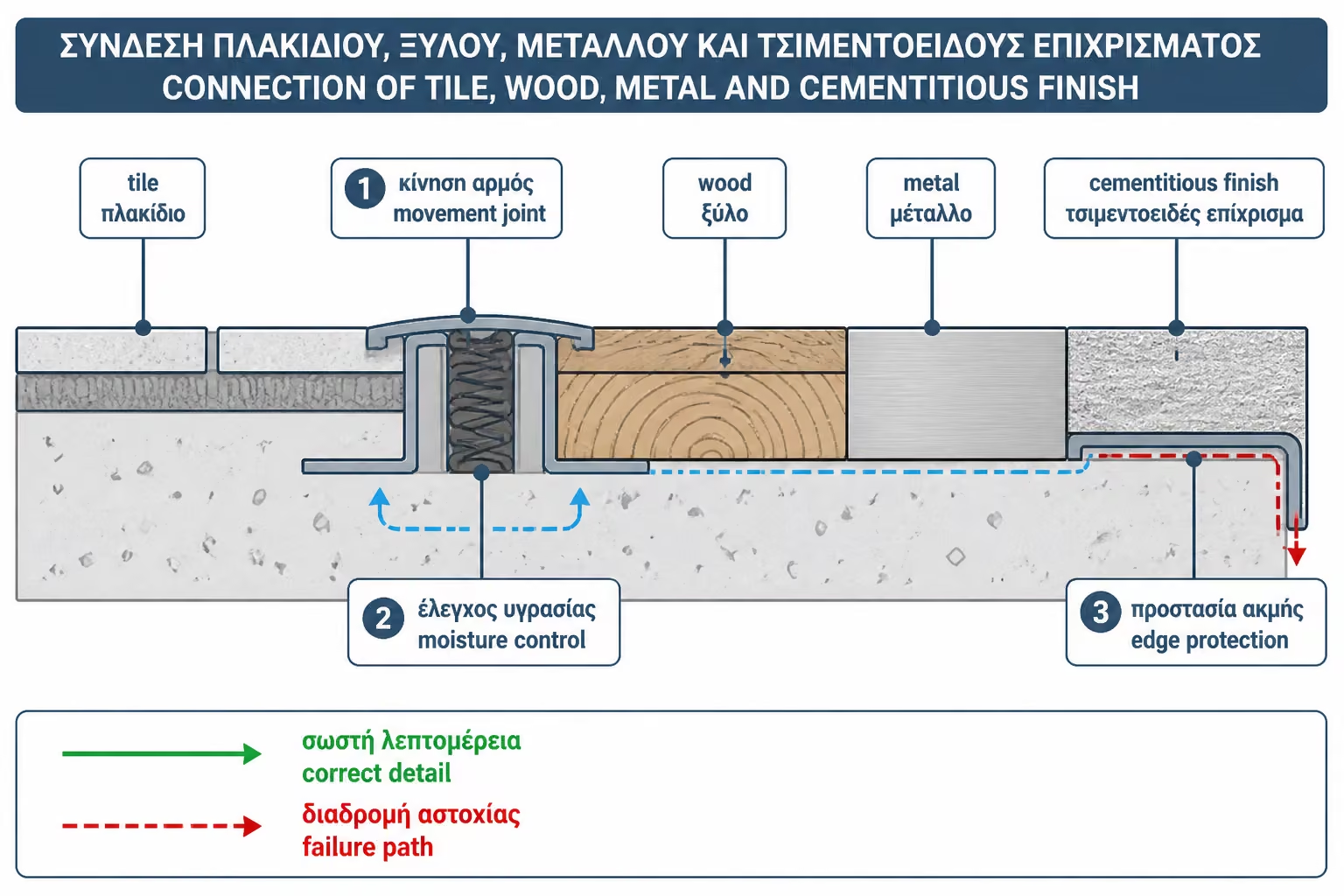
Go to categoryIn a modern bathroom, there is rarely just one material. The tile meets the marble door sill, wooden washbasin cabinet, aluminum profile of the cabin, metal corners, pressed cement mortar, painted wall, mirror, glass or even wooden floor outside the bathroom. Aesthetically, these encounters are what make a bathroom look more polished. Technically, however, it is one of the most sensitive parts of the construction.
The problem is that every material behaves differently. The tile is rigid. Wood expands, contracts and is affected by moisture. Aluminum and metal profiles have their own thermal changes. Pressed cement mortar can have micro-movements or capillary cracks if not applied correctly. Silicone, mastics, grouts and profiles are required to bridge these different materials without allowing water to pass through.
Here lies the basic mistake: many compounds of different materials are treated as "finishes". That is, like lines that just have to look pretty. In fact, transitions are technical joints. They must allow movement, manage moisture, protect the edges of materials and not create water paths to the substrate.
If the tile rests tightly against wood, the wood may swell or compress the joint. If the tile meets aluminum without an elastic joint, cracks or separations may occur. If the pressed cement stops next to a tile without a proper profile or seal, water can pass through the transition line. The problem is not only aesthetic. It is a sealant.
This guide explains how the joints of different materials in the bathroom should be treated, why they should not be filled roughly with grout, when a rubber sealant is needed, when a profile is needed, how the wood is protected and what the owner should check before considering a beautiful transition is also technically correct.
Joints of different materials are the points where two surfaces with different behavior meet. In the bathroom, the most common are tile with wood, tile with metal, tile with pressed cement mortar, tile with glass, tile with marble base, pressed with plaster or paint, and bathroom floor with corridor floor.
These points are not simple joints. They are transition joints. That is, they must allow each material to behave as needed without breaking the joint. Tile will not move like wood. The metal will not absorb water like the press. Natural stone does not behave like a ceramic tile. So the line between them must be drawn.
The right union does three things at once. First, it protects the edge of the materials. Second, it absorbs micro-movements or contractions. Third, it prevents water from finding its way to the substrate. If one of these is missing, the point can become problematic.
In the bathroom, transitions are more important than in a dry space, because humidity accelerates wear. A small gap that in a bedroom would only be aesthetic, in a bathroom can become a water path.
The cementitious grout is suitable for joints between tiles, when they belong to the same surface and have a similar behavior. It is not suitable for all compounds of different materials. When the tile meets wood, metal, tread or casing, we talk about a material change and often a movement joint.
If we fill this joint with stiff grout, the joint may crack. Wood can move from moisture. Metal can expand with temperature. The press may have small movements. The tile remains rigid. The rigid grout is in the middle and takes all the tension. It usually does not have the elasticity to absorb it.
Once the joint cracks, water can pass through. If there is waterproofing under the joint, the risk is reduced. But if the waterproofing has been interrupted in transition, then water can reach the substrate, the wood, the tread or the exterior floor.
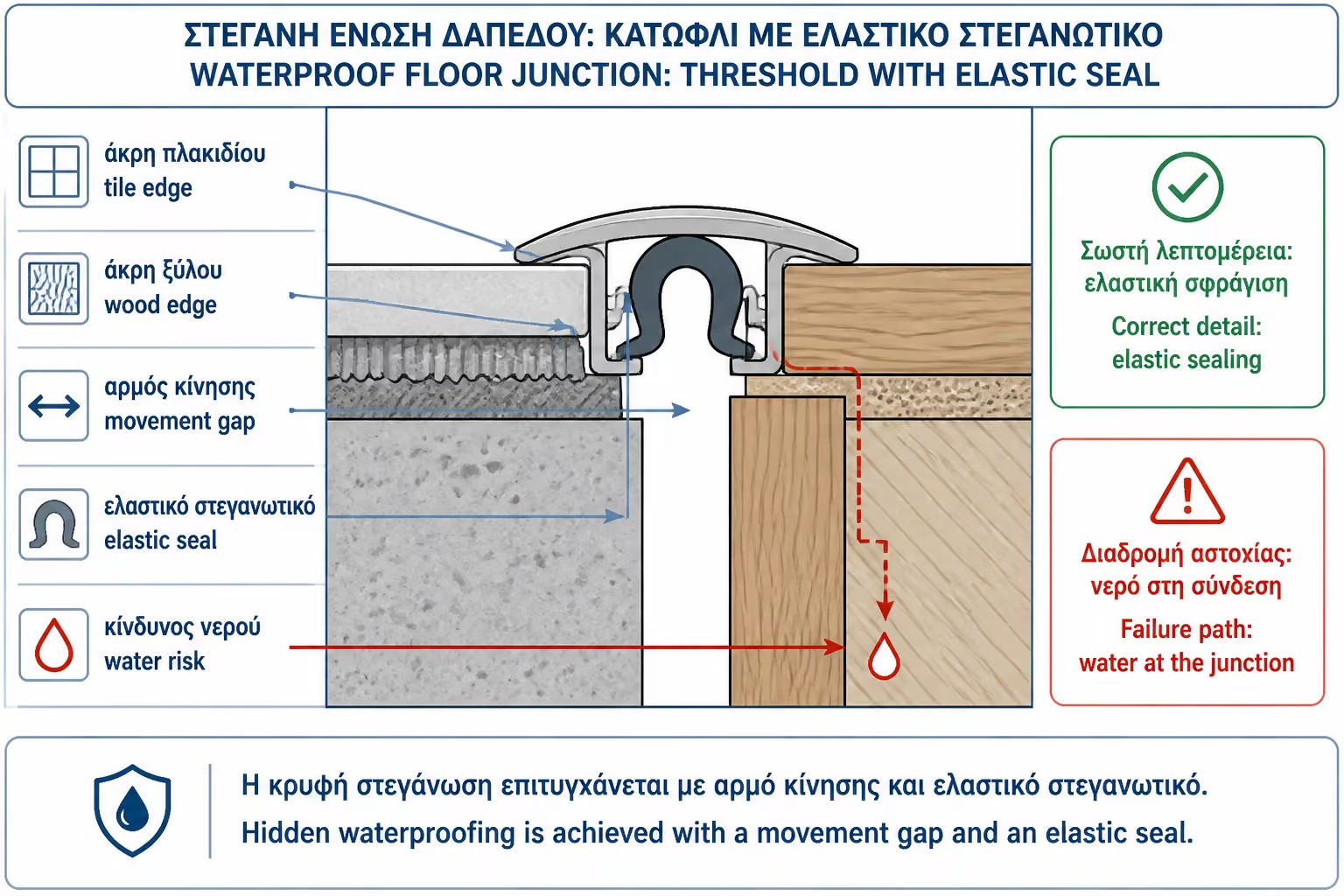
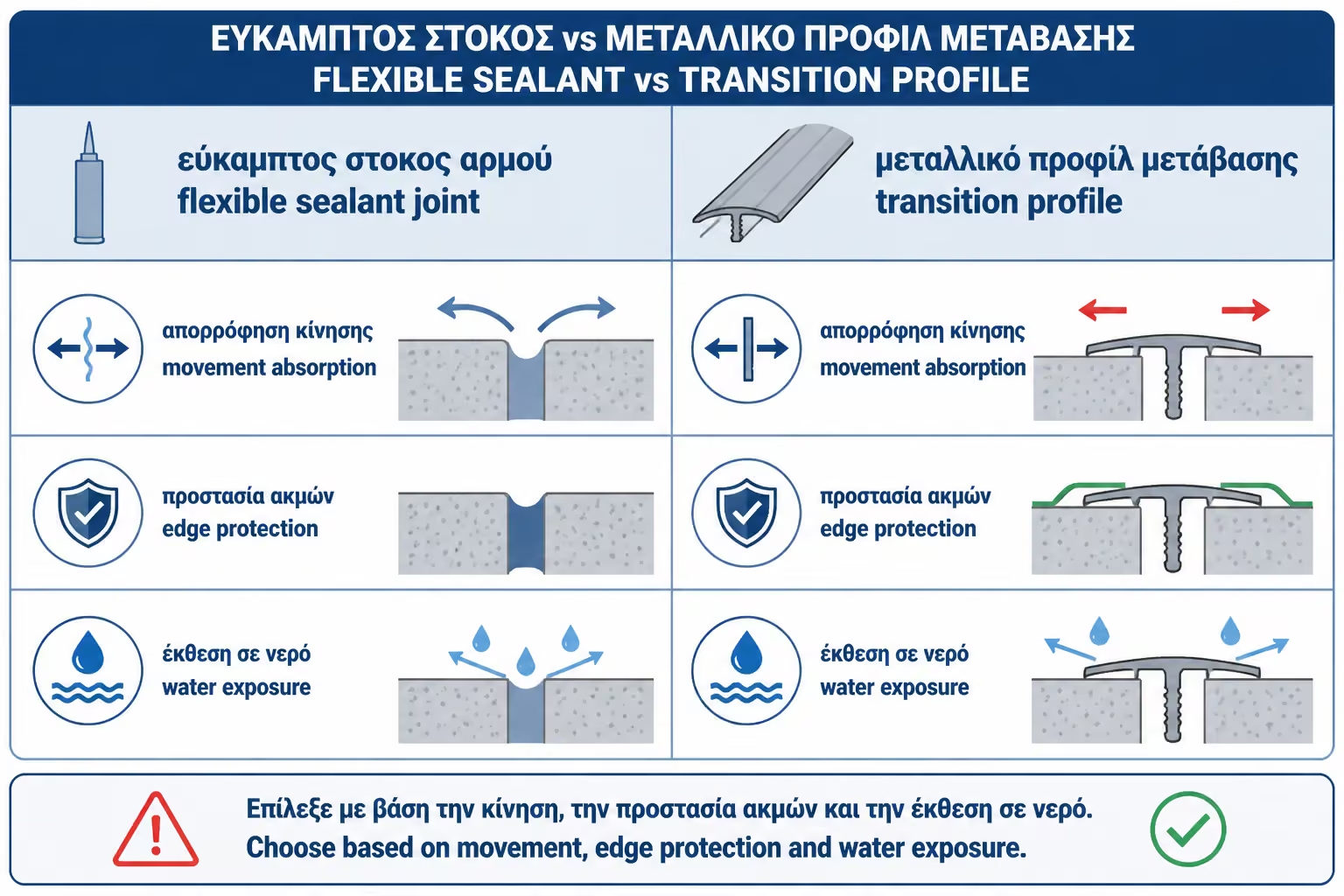
That is why in transitions we usually use elastic sealants, special profiles or a combination of both. Grout is not a tool for every line. It is a tool for specific joints.
The joint of tile with wood is one of the most sensitive in the bathroom. The tile is hard, rigid and water resistant. Wood is an organic material, it moves with moisture, expands, contracts and can swell if wet. If the two materials touch tightly, the joint will be stressed.
The most common spot is the bathroom door, where the tile meets parquet, laminate or wooden hallway flooring. A clear distinction is needed there. The wood must not enter the wettable zone. Its edge must be protected and have room for expansion. The marble skirting or transition profile should act as a boundary, not a simple aesthetic line.
Another frequent point is the wooden washbasin furniture that meets a tile or a tap. If the furniture steps on a wet floor, its lower edges must be protected. If the wall tile rests directly on a wooden frame or bench, a rubber seal is needed. Wood should not be trapped by rigid materials.
The correct tile-to-wood joint usually requires an elastic joint, a suitable sealant and in many cases a profile or marble skirting. Aesthetics should follow technical need, not the other way around.
The edge of the wood is the most sensitive point. On a parquet, laminate or wooden counter, the water does not need to cover the entire surface. It just needs to penetrate from the acne. There the material can swell, open, blacken or peel off. That's why in tile transitions the edge must be protected.
At the bathroom threshold, the marble plinth or profile must create a separation so that the bath water does not reach the wood directly. If there is a small gap between the marble plinth and the wooden floor, this must be treated with an elastic solution that allows expansion and at the same time limits the ingress of water. It should not be rigidly filled with cement or glue.
In bathroom furniture, the lower edges must be raised or protected from floor water. If the furniture steps directly onto the tile, the silicone around the perimeter can trap moisture if done incorrectly. Many times it is preferable for the furniture to have legs, suspension or a controlled distance from the floor.
Wood needs to be able to "breathe" and move. The waterproofing should protect it from water, not trap it in a place where if moisture gets in it can't get out.
Metal profiles, especially aluminum or stainless steel, are often used as tile trims, corner caps, cabin guides, transition profiles or decorative lines. They are practical and aesthetic, but should not be considered automatically watertight. Water can pass behind a profile if the joint is not properly designed.
Metal has a different thermal behavior than tile. It can expand and contract differently. If the tile is wedged onto the profile without an elastic margin where needed, micro-cracks or detachments may appear. If the joint is filled with rigid material, the problem may appear later.
At shower-enclosure profiles, the issue becomes even more critical. Profiles are often screwed to the wall or floor. Every screw is a potential break in the waterproofing. If the profile enters a wet zone, the holes must be properly sealed. Silicone along the visible profile line helps, but it should not be the only defense when there are penetrations behind it.
In tile to aluminum joints, neutral silicone or a suitable rubber sealant is usually preferred to avoid compatibility or corrosion issues. Material selection should be made based on the metal, water exposure and the rest of the system.
A metal profile can protect an edge, give a clean line and help transition two materials. However, it does not replace waterproofing. If there is no proper membrane, tape or seal behind the profile, water can pass through small gaps and move behind the finished surface.
This matters especially at shower corners, low shower-enclosure profiles, and floor transitions. The profile may look clean and "closed", but if it is not properly sealed it can act like a channel. Water can travel underneath it and reappear elsewhere.
In tiling profiles, waterproofing must be preceded where required. If the profile is placed over the waterproofing, it must be compatible with the adhesive and not injure the membrane. If it is screwed afterwards, the holes must be sealed.
The correct logic is: first waterproof base, then profile as finish and protection. No profile as a substitute for a waterproof base.
Pressed cement mortar is often used in bathrooms for a more uniform, minimal look. It can meet tile on floors, walls, showers, countertops or decorative zones. This transition requires care, because the tread is not the same material as the tile and should not be treated as a simple tile joint.
The press is applied in layers, has its own substrate, its own elasticity or stiffness depending on the system, and is usually finished with a protective varnish or sealer. Tile, on the other hand, has glue and grout. Where they meet, there should be a clean transition line and often a flexible joint.
If the press stops next to the tile without a profile or rubber seal, water can pass through the line. If the press has microcracks or if its guard wears down in transit, moisture can get in. If the tile presses against the press, the differential movements can create a crack.
In wet zones, such as a shower or bathroom floor, the tile-to-step transition should be designed as a waterproofing detail. There must be waterproofing under the system, a proper final sealant and a clear way of maintenance.
Pressed cement mortar is often finished in a metal profile, especially at edges, steps, thresholds, showers or floor changes. The profile helps protect the edge of the tread, which can be vulnerable to impact. But the joint must be properly sealed.
The press and the metal do not behave the same. Metal can expand, take bumps or create small lines of motion. If the press fits tightly against it without an elastic margin, a capillary crack may appear next to the profile. If the wrong sealant is put in, it can peel off or stain.
In wet zones, the pressed-metal line must be protected with a suitable sealant and waterproofed underneath. Finishing press varnish should not be considered sufficient to solve every joint. If water finds its way to the profile line, it can get under the treadle.
Press is a beautiful material, but requires disciplined detailing. The transitions are one of the points that judge its durability.
We use rubber sealant when there is a change of material, a change of level or possible micro-movement. This means tile-to-wood, tile-to-metal, tile-to-casing, tile-to-tub, tile-to-press, press-to-profile joints and generally joints that should not be rigidly filled.
The sealant must be compatible with the materials. Natural stone or marble requires products that do not stain. On metals and aluminum, neutral silicones or suitable mastics are often preferred. Wood needs a material that adheres properly and does not trap moisture in the wrong way. The compatibility with the final varnish or sealer must be checked on the press.
The application must have correct geometry. If the gap is deep, a backer rod may be needed. If the joint is too narrow, it won't have enough material to move. If it is too wide, it will look ugly and may misbehave. Correct cross-section of the joint is as important as the product.
Rubber sealant is not "a bit of silicone at the end". It is technical material that must be chosen and applied correctly.
Transition profiles are used when we want to protect edges, cover a level difference, give a clean line between two materials or create a controlled finish. They can be made of aluminum, stainless steel, brass, PVC or other materials.
In a bathroom, profiles are of particular value on thresholds, tile-to-wood joints, tread edges, tile edges and material change lines. They protect the edges from breakage and help with aesthetic continuity. But they must be placed in a way that does not create water paths.
If the profile is on a floor that can get wet, it must be considered where the water will go. It may need sealing at the edges, an elastic joint next to it or waterproofing below the transition line. If the profile simply rests on two materials with a gap underneath, it can become a channel.
Profile selection should not be based on color alone. It must take into account moisture, cleaning agents, galvanic compatibility, wear, slip resistance and maintenance.
The doorway is perhaps the most practical example of transition. On one side there is the bathroom tile, which can get wet. On the other hand, there is often a wooden hallway floor. The joint must protect the wood from any water and at the same time allow the wood to expand.
The marble skirting is a classic solution because it creates a clear border. If it has the right height and is connected to the waterproofing of the bathroom, it can act as a small barrier in case of damage. But if the wooden floor rests unprotected on the marble or if the sides of the casing have gaps, water can pass through.
The marble-wood line needs a solution that respects both materials. Wood needs an expansion joint. The bathroom needs protection from water. Usually this means a controlled transition with elastic material or profile, not rigid padding.
The threshold should be planned together with the floor of the bathroom and the corridor, not solved at the end with "whatever fits".
The joints around the vanity unit are also important. The bench can be wooden, HPL, marble, artificial stone, compact surface or other material. Behind it there is often a tile or a press. Water from the sink, soaps and cleaners fall into this joint.
If the bench is wooden or has a wooden core, the back edge must be protected. The joint with the tile should not be left open, but neither should it be filled with rigid material that will crack. A suitable rubber sealant is needed, usually neutral silicone or special mastic depending on the material.
If the bench is stone or artificial material, it still needs proper sealing. The difference is that the material can have different moisture resistance. If it is natural stone, a non-staining sealer should be used. If it is a compact material, the manufacturer's instructions must be followed.
The sink area doesn't get the same stress as the shower, but daily use can create moisture that slowly destroys edges and joints.
The union of pressed cement mortar with wood is particularly sensitive because both materials have requirements. The press can be relatively rigid or flexible depending on the system, while the wood moves with the moisture. If they meet without a proper joint, the line can open or crack.
In flooring, the plank-to-wood transition must have an expansion joint and wood edge protection. On a wall or bench, there must be a rubber seal that does not stain the presser and does not trap moisture in the wood. If the presser is in a wet zone, the waterproofing underneath must continue properly until the transition.
The final press sealer should not be considered sufficient to protect the transition line. Edges and joints are always more sensitive than the center of the surface. Pure technical detail is needed there.
In minimal designs, where it is requested that "nothing be seen", the joints often disappear. This can be aesthetically beautiful but technically dangerous. The motion doesn't disappear because we disappeared the line. It will just appear later as a crack.
One of the insidious problems in transitions is that water can pass through the line and travel under the materials. It doesn't have to appear exactly at the entry point. It can enter through the tile-wood joint and appear as a bulge next door. It can pass under an aluminum profile and appear in a joint. It can enter from a presser line and peel off the sealer.
That is why the waterproofing must be planned under the final joint. If there is a wet zone, the film should be continued as long as necessary and not randomly interrupted in the material change line. The final sealant helps, but if it fails, there must be a second defense underneath where the risk is high.
Especially on floors, water follows slopes and gaps. If the transition is near a shower, bathroom door, washing machine or sink, it should be considered a potential water contact zone. It is not a "dry" transition because it is a few inches outside the shower.
The right transition is not only a beautiful line. It is a controlled stop that does not allow the water to move uncontrollably.
Before you finalize the choice or installation, review the following points first:
| Error | Possible consequence | Correct approach |
|---|---|---|
| Tile glued tightly to wood | Swelling, pressure, cracks | Expansion joint and edge protection |
| Rigid grout in transition | Cracking and water ingress | Rubber sealant |
| Aluminum profile without stamping | Water behind the profile | Correct waterproofing and elastic detail |
| Pusher that stops abruptly next to a tile | Crack or detachment in the line | Profile or elastic joint |
| Wooden edge unprotected on threshold | Inflating parquet or laminate | Marble skirting/profile and elastic transition |
| Wrong silicone on natural stone | Stains on edges | Special neutral sealant |
| Profile screws without sealing | Water path through holes | Seal each perforation |
| Minimal union without technical joint | Future crack | Concealed or visible movement joint |
A typical example is a bathroom where the tile stops right on the wooden floor of the hallway without a marble skirting or expansion joint. At first the line looks clean and modern. After a small leak, the water goes to the edge of the wood and the floor swells. The problem wasn't just the leak. It was the absence of a proper transition.
The right transitions are not usually the biggest cost of a renovation, but they greatly affect the durability and image of the bathroom. The cost depends on the type of materials, the profiles, the silicones or mastics, the marble base, the treadle, the cuts and the difficulty of application.
In a typical bathroom of about 5 sq.m. in the Greece of 2026, where a simple to medium renovation can cost around €3,200–5,500 and more demanding solutions with a platform, custom furniture, profiles, wooden transitions and a walk-in shower can reach around €6,000–7,500 or more, the combinations of different materials are a small but crucial part of the design.
Before you finalize the choice or installation, review the following points first:
| Transition | What increases the cost? | Because it's worth it |
|---|---|---|
| Tile with wood | Marble base, profile, elastic joint | Protects the edge of the wood |
| Aluminum plate | Quality profile and seal | Protects acne and reduces cracks |
| Tile with presser | Profile, special sealant, careful cutting | Prevents cracks in the transition line |
| Press with wood | Expansion joint and compatible mastic | Manages movement and moisture |
| Cabin profile | Sealing holes and proper silicone | Avoids hidden leaks |
The economy in a transition seems small at first, but a failed joint can lead to wood swelling, tread cracking, or moisture behind tile.
A proper quote should list transitions as separate details. It is not enough that it says "laying tiles" or "applying clicker". It must be seen how the materials will end up where they meet. Will there be a profile? Will there be a rubber seal? What type of silicone or mastic? How is wood protected? How is waterproofing connected?
If there is a wooden floor outside the bathroom, the marble skirting or watertight transition must be mentioned. If there is a taper, the finish of the taper must be indicated in a tile, profile or other material. If there is a metal profile in a wet zone, sealing and protection against water must be mentioned.
The quotation must also clarify whether the sealants are suitable for the materials. Another product for tile-aluminum, another for natural stone, another for wood, another for tread. The general word "silicone" is not enough.
The more carefully the transitions are described, the less "maintenance" will be needed after delivery.
Before the joints are completed, first ask what materials meet and whether they need a movement joint. If the tile meets wood, ask how the edge of the wood is protected and where the expansion joint is. If aluminum is encountered, ask what sealant will be used and if there are screws that penetrate waterproofing.
If there is pressed cement, ask how it ends next to the tile. Will there be a profile or an elastic joint? Is the sealer compatible with the presser sealer? If there is natural stone, ask if the silicone is suitable for stone.
Also ask if the waterproofing continues below the transition or if it stops before it. In wet zones, this is critical. The silicone finish should not be the only defense.
Finally, ask that not all joints be filled with the same grout “to make it look uniform”. The uniform appearance is only good when it does not invalidate the technical function of the joint.
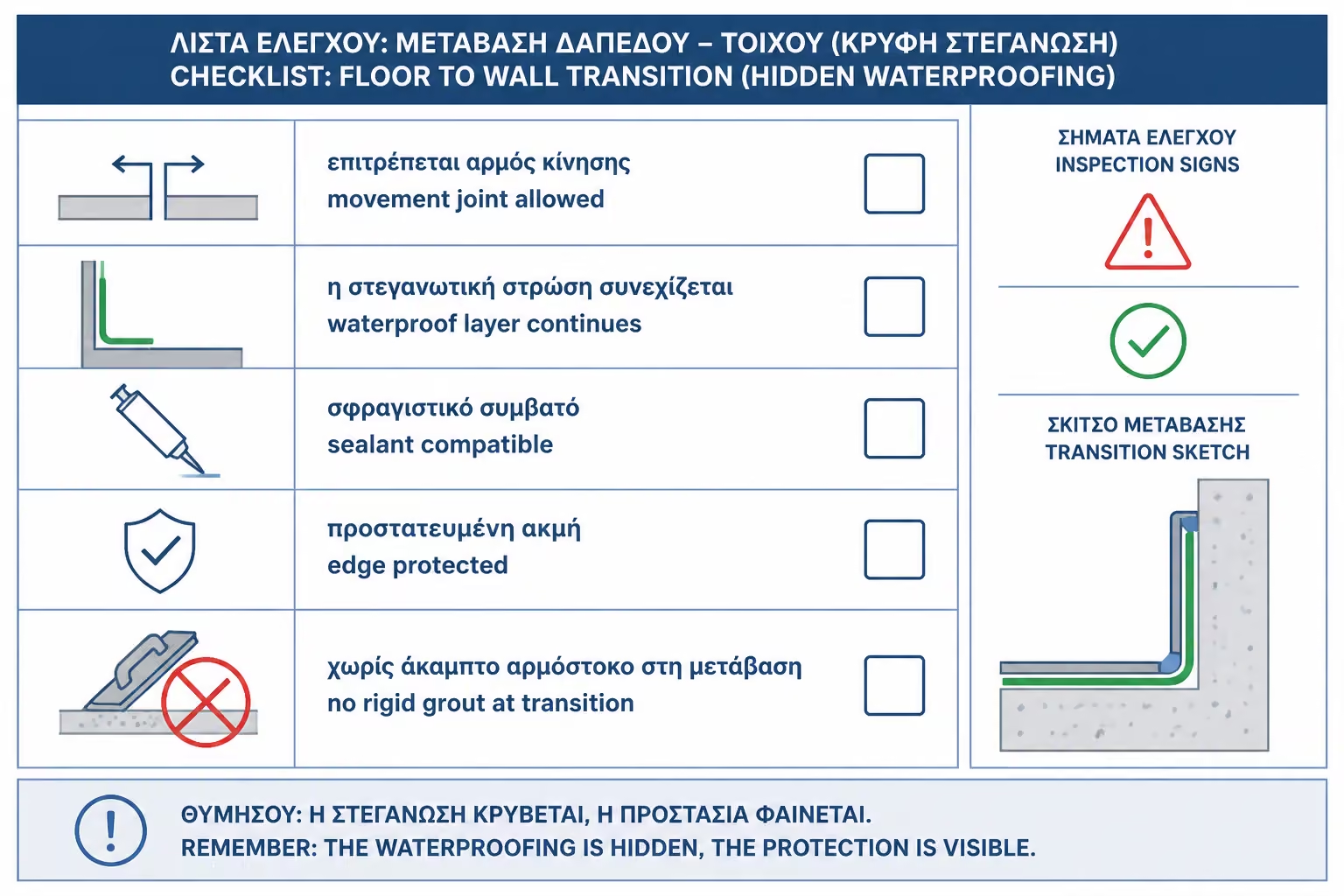
Before you finalize the choice or installation, review the following points first:
| Question | Yes / No |
|---|---|
| Has the compound been identified as being of different materials? | Yes / No |
| Is there a movement joint where needed? | Yes / No |
| Hasn't a stiff grout been used where it needs flexibility? | Yes / No |
| Does the wood have a protected edge and expansion space? | Yes / No |
| Is the metal profile suitable for a wet environment? | Yes / No |
| Are screws or profile holes sealed? | Yes / No |
| Does the press have the correct finish and compatible sealant? | Yes / No |
| Does the waterproofing continue to the transition line? | Yes / No |
| Is the sealant compatible with the materials it encounters? | Yes / No |
| Doesn't the transition create a point where water pools? | Yes / No |
| Does the quote describe the transitions and not just the base materials? | Yes / No |
| Are there pictures before critical lines are covered? | Yes / No |
If several answers are "I don't know", the union has been treated more aesthetically than technically. This in the bathroom is a risk.
If you have to keep one thing, keep this: when tile meets wood, metal, or pressed cement, we don't have a simple joint. We have transitions of different materials. This means different contractions, different absorbency, different moisture resistance and the need for a resilient or protected finish. Do not allow these joints to be casually filled with plain grout. There you need the right profile, compatible sealant and continuity of waterproofing where there is a risk of water.
The combinations of different materials in the bathroom are small lines with great significance. Where tile meets wood, metal or pressed cement mortar, the construction must manage movement, moisture, different temperature behaviors and different strength of the materials. If the joint is done sloppily, the problem can appear as cracking, browning, peeling, swelling of wood or hidden moisture.
The right transition is not only a matter of aesthetics. It's a technical detail. It wants a movement joint where needed, elastic sealant instead of rigid grout, proper profile where edges are protected, proper material compatibility and continuity of waterproofing in wet zones. Especially on the threshold, around cabins, on tread surfaces and on wooden edges, these details make the difference.
The owner must request that the compounds be described in the offer. Not just the big stuff. Not just "tiles", "footprint" or "wooden furniture". The question is: how do these meet each other? If the answer includes a profile, an elastic joint, proper sealing and protection from water, then the construction has a serious foundation. If the answer is "we'll close it at the end", then the joint remains one of the weak points of the bathroom.
In a proper bathroom, transitions are not hidden. They are planned. Because water doesn't stop where the material changes. It only stops where the detail is properly designed.
Return to category.
Go to categoryReturn to the central guide.
Go to guide