
Bathroom Waterproofing & Moisture Protection
Return to category.
Go to categoryWaterproofing in the bathroom is one of the tasks that is rarely seen in the final result, but it determines whether the renovation will last over time. The owner sees tiles, batteries, shower, furniture, lighting and glazing. What he doesn't see, though, is the material underneath the tiles that protects the floor, walls, corners and areas around the faucet from moisture.
In practice, many bathroom failures do not start with a "bad tile". They start from the wrong choice or wrong application of sealing material. Another material needed is a built-in walk-in shower with a linear spout, another a simple wall protection behind tiles, another a repair over an existing surface and another an external or exposed surface that receives sun, temperature changes and standing water.
The problem is that in the market the terms are often used very broadly. You hear "insulating", "sealant", "cementitious", "acrylic", "polyurethane", "membrane", "resin", "rubber" and they all seem to promise the same thing: waterproof. But the materials do not all work in the same way, they do not have the same elasticity, they do not withstand the same conditions and they are not applied on the same substrates.
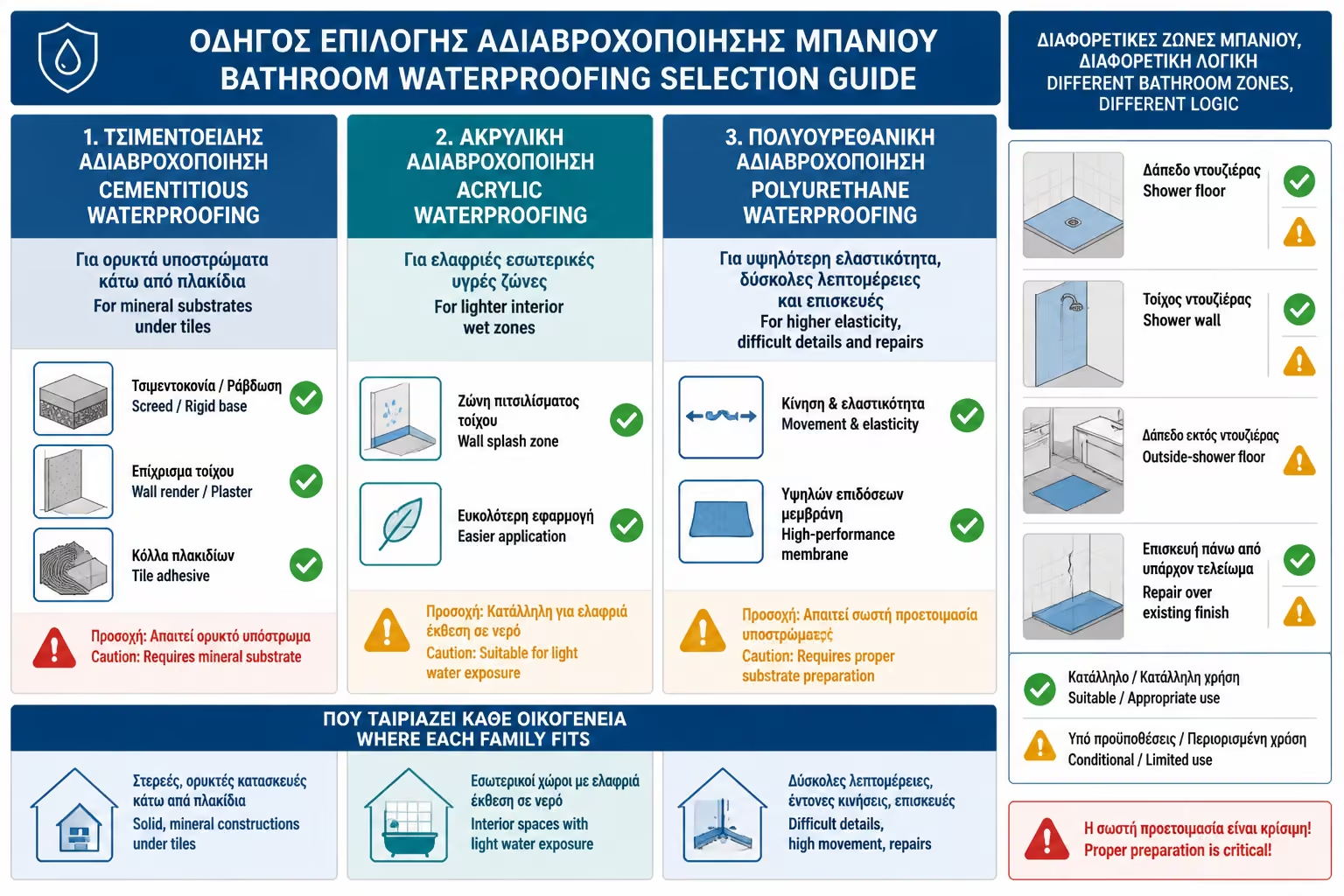
A cementitious sealant can be an excellent solution under tiles, on a stable mineral substrate. An acrylic may be practical for interior wet zones and lighter applications, as long as it is not used where it will receive standing water or heavy stress. A polyurethane can offer high flexibility and strength, but requires proper preparation, compatible primer and technical application. The "best" material is not always the most expensive. It is what suits the use, the substrate and the system to follow.
The aim of this guide is to clarify the basic categories of bathroom waterproofing materials, without exaggeration and without advertising logic. We'll look at how cementitious, acrylics, and polyurethanes work, where each one excels, what to look out for, what to ask the technician, and how to avoid the most common mistake: choosing a material based on its general reputation rather than the actual needs of the bathroom.
In bathroom waterproofing there is no one solution that is ideal for every situation. The bathroom has many different zones: floor, shower, walls, corners, faucet area, faucet, built-in sinks, shampoo recesses, places behind furniture and sometimes surfaces that may get wet occasionally but not daily. Each zone has a different strain.
The shower is the most demanding area, because it receives direct water, soaps, cleaners and temperature changes. There the material must withstand systematic contact with moisture and cooperate with tile adhesive, siphon, corner tapes and grout. A wall behind the sink has clearly less requirements. A floor outside the shower may need protection, but not necessarily the same system as the floor that receives daily water.
The substrate must also be considered. One is a new cement mortar, another is an old plaster, another is a cement board, another is an existing paving, and another is a surface with remnants of old materials. The same sealant can work well on one substrate and fail on another if the correct primer is not used or if the base is loose.
The right question is not "which material is the best?". It is "which system is suitable for this zone of the bathroom, on this substrate, with these tiles and this use?".
Cementitious sealants are cement-based materials, often enriched with polymers or other additives, which are applied in layers over mineral substrates. They are usually mixed with water or a special liquid component and create a waterproofing layer that can then accept tiles.
They are among the most common and reliable solutions for bathrooms because they work well with cement mortars, plasters, concrete and tile adhesives. In built-up showers, floors and walls under tiles, cementitious systems are very often used, as long as they are properly applied and reinforced at critical points.
There are stiffer and more elastic cements. Elastic or two-component systems can follow micro-movements better than a simple rigid material. This is important in corners, floor-wall joints, showers and areas where there are small thermal or structural changes.
Their main advantage is good compatibility with the logic of paving. They are applied under the tile, create a mineral base and work with the adhesives. However, they are not materials that should be taken lightly. They want the right mix ratio, the right thickness, the right substrate and the right timing.
Cementitious materials are of great value in bathrooms because they "speak the same language" as most building substrates. A cement mortar, plaster or concrete are surfaces to which a proper cementitious system can adhere well, as long as the base is clean and stable.
Another advantage is that they are a familiar solution for many garages. That doesn't mean everyone applies them correctly, but it does mean there are enough technicians who know the process: substrate preparation, priming where needed, first coat, corner tapes, second coat, wait time, then tile.
Cementitious materials are also suitable for applications where tiles will then be bonded. They do not usually create as "closed" and shiny a surface as some resins, and offer a good base for the next layer, provided a compatible adhesive is used.
In a built-in walk-in shower, a quality elastic concrete system with tapes, proper connection to the siphon and waterproofing to the walls can be a very good solution. The problem is not hardware as a category. The problem is when it is used as "one hand insulation" without a system.
Cementitious sealants are not all the same and should not be considered automatically elastic or suitable for every location. A stiffer cement may not be the best solution on moving surfaces or details where more flexibility is needed. If applied without corner tapes, it may crack at level transition points.
Another common pitfall is the wrong thickness. If the material is "pulled" too much to get more squares, the layer becomes thin and weak. If it goes in too thick at once, it may burst or not ripen properly. Cementitious materials need specific consumption and usually more than one layer, depending on the system.
They must also be applied on an appropriate basis. If the cement mortar is fresh, wet, loose or dusty, adhesion is affected. If there is old glue, paint, oil, plaster or an unstable substrate, the material may peel off or not work properly. Sealing is not a magic coat that fixes bad preparation.
Finally, special pieces are needed around siphons, supplies and corners. Cementitious alone does not dissolve the metal-to-floor connection, nor does it properly seal an unreinforced pipe hole.
Cementitious materials are particularly suitable for floors and walls to be covered with tiles, especially when the substrate is mineral and stable. They can be used in built-in showers, bathroom floors, shower walls and areas where we want an under-tile system.
In a shower floor, especially if there is a central drain or compatible flange, a good cementitious system can work well. In walk-ins with a linear siphon, even more care is needed in the connection to the siphon, and a combination with a fleece membrane may be considered, depending on the project.
On shower walls, screeds can provide reliable protection as long as they are raised to the correct height and reinforced around taps and corners. In shampoo recesses, built-in shelves or seats, they need careful application and reinforcement of all corners.
It is not the most practical solution for surface repair on old tiles that we want to remain visible, because it is not a transparent solution. Different materials are usually examined there, such as transparent resins or polyurethane coatings.
Acrylic sealants are usually ready-to-use or easy-to-apply materials based on acrylic resins. They are applied with a roller, brush or spatula and create an elastic or semi-elastic film. They are used in many building applications, both interior and exterior, depending on the product.
In bathrooms, they can be used in certain indoor wet zones, especially where there is no constant water pressure or permanent flooding. They are practical, easy to apply and several times friendlier for small interior work. In relation to cementitious materials, they give a more elastic membrane, but their behavior depends a lot on the type of product and the conditions of use.
Their main advantage is convenience. They don't always need two-component mixing, apply relatively quickly and can cover details. But this convenience often leads to misuse. Because they look like "paint", some people apply them like a simple paint, without proper thickness, without primer and without tapes.
Acrylics should not be chosen simply because they are easy. It must be considered whether the specific product is suitable for the wet zone we are interested in and whether it can accept the next layer, usually tile adhesive.
The great advantage of acrylics is practicality. They are easy to apply, often ready to use and can be quickly passed over small or medium surfaces. For bathroom wall protection, for surfaces that receive moisture but not continuous flooding, they can be a useful solution.
They also have good elasticity compared to more rigid systems, which helps with micro-movements. They can bridge small capillary imperfections if applied in the right thickness and with reinforcement where needed. In indoor applications, where conditions are controlled, they can work satisfactorily.
Because they are applied as spreadable materials, they can cover details, corners and surfaces in a relatively simple way. This makes them attractive in small renovations or in cases where the technician wants a quick solution under tiles in a less demanding zone.
Their cost can also be reasonable, depending on the product, and they are often more readily available. But this should not be a reason to use them in places where a more durable or more specialized system is required.
The biggest pitfall of acrylics is that their convenience leads to overconfidence. Because they are applied like a thick paint, there is a tendency to go on lightly, in a thin layer, without proper consumption. This is not serious waterproofing. It's just a painted surface that gives a false sense of security.
Acrylic systems may not be the best choice for areas with continuous water, stagnant moisture or high mechanical stress. On a walk-in shower floor, around a linear siphon or in places where water stays for a while, great care is needed in product selection. Many acrylics are more suitable for moisture protection and less for hard, everyday wet stress.
Another issue is compatibility with tile adhesive. It should not be taken for granted that every adhesive will adhere properly to every acrylic film. System instructions must be followed. Otherwise there may be an adhesion problem between the waterproofing and the paving.
Also, some acrylics are more sensitive to permanent moisture before they are fully cured. If the bath is used early or if the surface is closed before the material dries properly, failure may occur.
Acrylics make sense in interior zones with moderate humidity, on walls that will accept tile but are not at the heaviest point of the shower, to protect substrates around sinks or in secondary wet areas. They can also be used in showers, as long as the specific product is suitable for this use and is applied as a complete system with tapes and proper preparation.
I wouldn't consider them a first choice for a demanding walk-in shower floor with a linear spout unless the product is specifically designed for such use and the technician knows the system. In such applications, stronger systems are usually considered, such as resilient cementitious materials, fleece membranes or polyurethanes, depending on the substrate.
Acrylics can be a good solution when we need ease, elasticity and protection in a less heavy area. However, it is not a solution that should be introduced everywhere because "it is easy".
Choosing them correctly requires reading the technical use of the product: is it for under tiles? Is it for wet areas? Can it withstand permanent humidity? Does it want a primer? Does it want a specific glue? These are more important than whether the material is simply called “acrylic sealant”.
Polyurethane sealants are materials based on polyurethane resins, known for their elasticity, durability and the ability to create a continuous film. They are used in many applications, from roofs and roofs to special coatings and surface waterproofing. In the bathroom they can be used in special cases, depending on the product and the system.
There are opaque polyurethanes, clear polyurethane films, one- and two-component products, primer systems, topcoats and special application requirements. The category is large and should not be treated as one. Another polyurethane for external roof, another clear resin over tiles, another system under pavers.
Their main advantage is elasticity and resistance to stress. They can create a tight membrane that follows micro-movements better than more rigid materials. This makes them useful in cases where there are changes, microcracks or a need for more elastic protection.
But polyurethanes are more demanding in application. They want the right primer, clean and dry surface, adherence to deadlines, attention to substrate moisture, ventilation and technical experience. They are not materials that should be brushed aside because they are "powerful".
Polyurethanes offer high elasticity and continuous film capability. This is important on surfaces subject to micro-movements, where we want better bridging of small cracks and in applications where the waterproofing must act as a more uniform elastic layer.
They also have good water resistance, always depending on the product and the application. In clear surface solutions, they can be used over existing tiles to reduce absorption from joints and micro-cracks. This is useful in repairs where we don't want or can't strip right away.
Compared to simpler acrylics, polyurethanes can offer a more durable solution in difficult conditions. That is why they are often used when the strain is greater or when we want better long-term behavior.
In special applications, such as surface sealing of old tiles, balconies, roofs or visible surfaces, polyurethane technology has an important place. In the bathroom, however, it must be chosen with clear technical logic and not simply because it sounds "louder".
The first disadvantage is sensitivity to preparation. Polyurethane systems require a clean, dry and properly primed surface. If applied over moisture, dust, old soaps, salts, improper joints or silicone residue, they may peel, dull or blister.
The second disadvantage is the possibility of aesthetic change, especially in transparent applications. The gloss may change, the joints may darken or the surface may appear "wet". In some bathrooms this is acceptable. In others, especially with matte tiles, it may be undesirable.
The third issue is anti-slip. A clear polyurethane layer over a shower floor can change the feel of the tile. If a suitable finish or anti-slip additive is not provided, the surface may become more slippery when wet.
There is also the issue of indoor use. Some products have odors or require good ventilation and protection during application. It's not a task to be taken lightly, especially in small residential bathrooms.
Polyurethanes are of interest in special sealings, in surface repairs over existing tiles, in cases where we want transparent protection, but also in applications where high elasticity is required. They can be used on floors or walls, depending on the system, but they need the right product selection.
In an existing shower that has minor surface failures at the joints, a clear polyurethane membrane can be a lifesaver, as long as an active leak from pipes or a siphon is ruled out. In a new build, a polyurethane system can be considered when there is a need for flexibility or a special technical requirement.
But it is not the automatic selection under every tile. In many bathrooms, a good cementitious or fleece membrane may be a more practical, compatible and easier to control solution. Polyurethanes need a technician who knows the product, not just someone who "passes insulation".
Ideally, they are used when there is a specific reason: repair without stripping, need for transparency, high elasticity, special substrate or demanding detail.
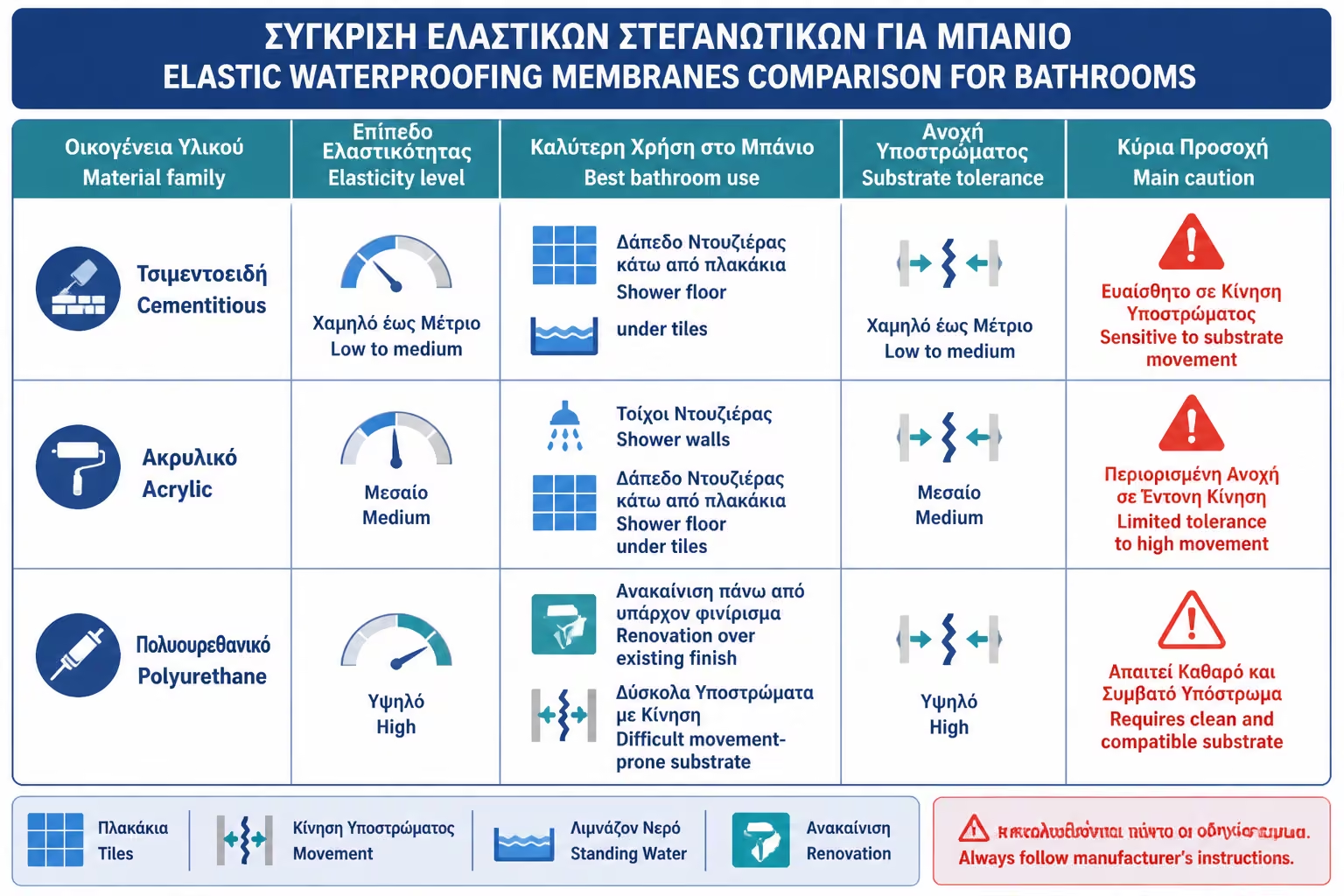
The table below gives a practical comparison. It does not replace each product's instructions, but helps the owner understand the general logic.
| Criterion | Cementitious | Acrylics | Polyurethanes |
|---|---|---|---|
| Basic logic | Mineral waterproofing layer under tiles | Elastic spreadable membrane, often easy to apply | Elastic resin film of higher strength |
| Good use | Tiled floors/walls, built in showers | Internal wet zones of moderate strain | Special applications, repairs, high elasticity |
| Advantage | Good compatibility with cement mortar and adhesives | Ease of application and practicality | Durability, elasticity, possibility of a transparent solution |
| Main risk | Wrong thickness, lack of tapes, bad substrate | Use in an excessively demanding zone | Demanding preparation, possible gloss change |
| Under tiles | A very common choice | Only if the system allows it | Depending on the product and compatibility |
| Over existing tile | Usually not as a final transparent solution | Limited, depending on product | Most common choice in transparent repairs |
| Elasticity | From low to good, depending on the system | Good for light applications | Usually high |
| Craftsman Requirements | Proper mixing, layers, films | Correct thickness and compatibility | Very good preparation and experience |
The comparison shows that materials do not always compete with each other. They often answer a different problem. Cement is very strong under tiles. Acrylic is practical in less heavy interior zones. Polyurethane is a powerful tool in specialty or repair applications.
The shower floor is the most demanding surface of the bathroom. That's where the water collects, that's where the siphon is, that's where there are leaks, and that's where the sealing is stressed the most. For a new build shower, the choice should be made based on the drainage system and the tile.
A resilient cementitious system can be a very good choice if properly applied, with corner tapes and a proper connection to the siphon. In a walk-in shower with a linear spout, it is often worth considering a fleece membrane on the floor, especially when a more controlled waterproofing layer is desired.
Acrylics are not usually the first solution for a heavy duty shower floor, unless it is a special product specifically intended for such use. The same applies to polyurethane systems: they can be very good in certain cases, but must be compatible with tiling or used as a final/surfacing solution where this has been considered.
The crucial detail in the floor is not only the material. It is the connection to the siphon. Even the best sealant will fail if it stops short of draining or if it doesn't bond to the gasket.
On the walls of the shower, things are a little more flexible, but not indifferent. Walls receive direct water and must be sealed in the zone of use, often at least up to about 2 meters or higher depending on the shower layout.
Cementitious systems are often a safe choice under tile, especially when the substrate is plaster, cement board or other mineral material. Acrylics can be used on walls, as long as they are suitable for wet areas and for application under tiles. Polyurethanes are a more specialized solution and are usually chosen when there is a specific technical need.
The battery belt needs special attention. There, a simple passage of material around the facilities is not enough. Cuffs, collars or similar sealing details are needed, depending on the system. The same applies to shampoo niches, supports, perforations and internal corners.
On the walls, the material should be combined with the practical detail. An expensive membrane will not save a hole around the battery left open behind the rosette.
If the bathroom or shower already exists and we want to avoid dismantling, the logic changes. We are no longer talking about waterproofing under tiles, but about surface protection over existing tiles and joints. There, cementitious materials are usually not suitable if we want to preserve the final image, because it is not a transparent solution.
In such cases, transparent polyurethane films or special resins are most often used, provided that the problem is superficial. Pipe leaks, siphon failure, detached tiles and trapped moisture must have been ruled out. Otherwise, the surface solution may trap the problem.
Acrylic transparent or semi-transparent systems exist in some applications, but their suitability for shower floor, abrasion and cleaners must be checked very carefully. It is not enough to be "waterproof". It must withstand the specific use.
For repair without stripping, the key is not the hardware itself. It's the diagnosis. If the cause is worn joints, a surface system can help. If the cause is poor construction underneath, the correct solution may be an excision.
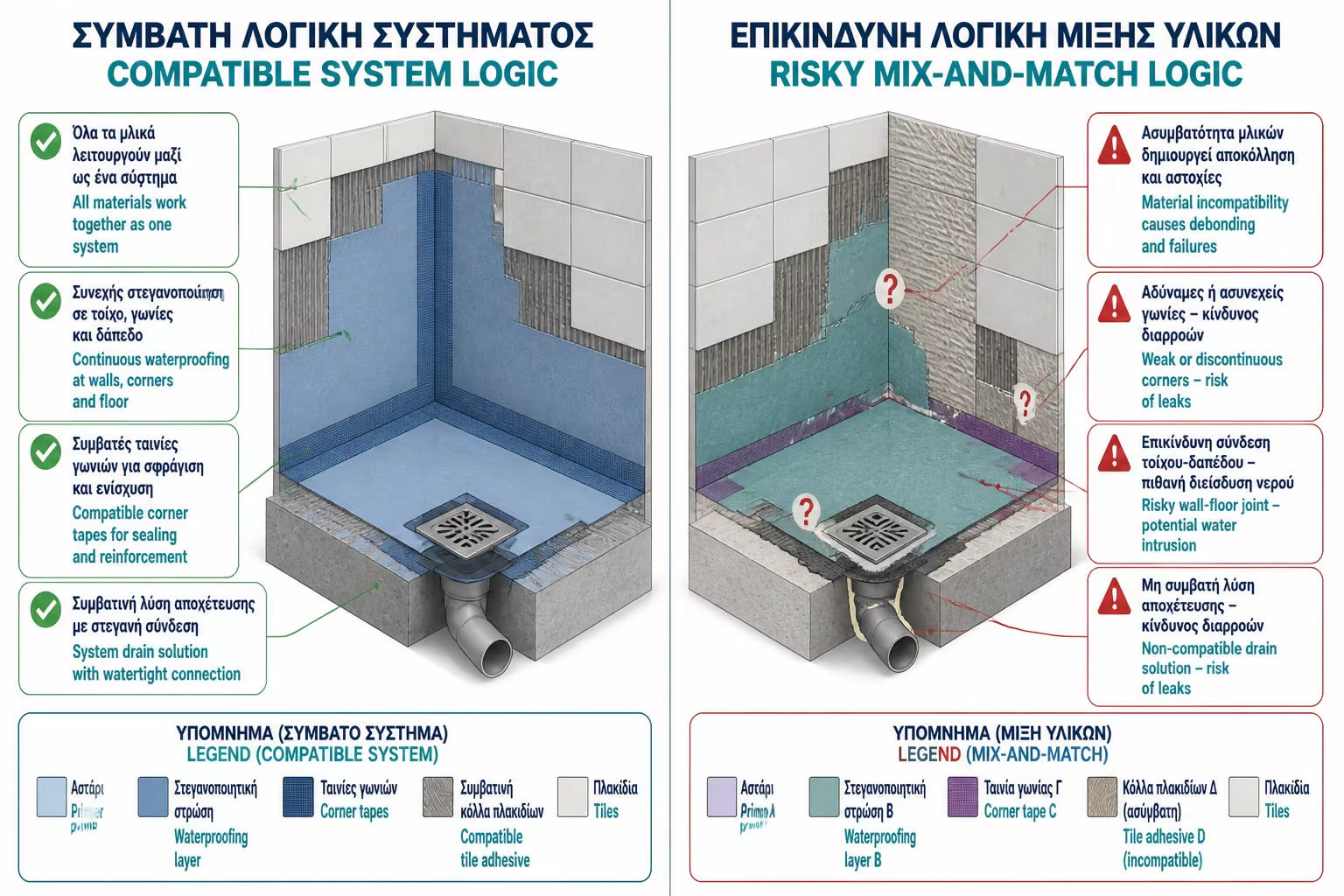
In many bathrooms, not just one material is used. It can be fleece membrane on the floor, cementitious on the walls, special tapes on the corners, cuffs on the supplies and polyurethane sealant on certain end joints. This can be quite correct as long as the materials are compatible.
The danger begins when the combination is made by chance. A primer from one company, a sealant from another, an adhesive from a third and a tape "found" in the garage do not necessarily constitute a system. They may work, but there may also be incompatibility in adhesion, elasticity or application times.
Ideally, for demanding areas such as the shower, an integrated system is used or at least materials that have been tested as compatible with each other. This is especially true around line siphons, outlets, corners and where tiles will be attached.
The owner can simply ask: "Are the materials to be used compatible with each other? Are they all part of the same system or do you have a technical guideline for the combination?" This question often reveals whether there is real planning or improvisation.
The cost of waterproofing depends on the surface, the material, the condition of the substrate, the angles, the siphon, the need for tapes and special pieces, the area, the floor, the access, whether VAT is included and whether we are talking about materials only or a full job with application.
In a full bathroom renovation, waterproofing is usually a smaller percentage of the total cost than tile, fixtures, plumbing, or furniture. But it is one of the most critical stages. For a typical bathroom of about 5 sq.m. in the Greece of 2026, a simple to medium renovation can be indicatively around €3,200–5,500, while more demanding solutions with a walk-in shower, linear siphon, membranes, large tiles and custom glass can reach around €6,000–7,500 or more.
| Hardware / System | Financial picture | When does the cost go up? |
|---|---|---|
| Cementitious | Usually reasonable material cost and good performance ratio | When it is two-component, elastic, with bands and special pieces |
| Acrilyc | Often economical and easy to implement | When multiple layers, primer or special reinforcements are required |
| Polyurethane | Usually higher hardware cost | When it is a clear system, special application or requires topcoats |
| Fleece membrane | Higher cost than simple application | When including tapes, angles, flanges and complete system |
| Special pieces | Small part of the budget | But critical for siphons, batteries, corners and piping |
The most dangerous economy is to cut the tapes, special pieces or the right layers to reduce the cost a little. If the bathroom needs stripping due to moisture, the initial savings will seem insignificant.
A proper quotation should not simply say "bathroom waterproofing". This is very general. It must state which material or system will be used, on which surfaces, in how many layers, if a primer will be put in, if tapes will be put in, what will be done in the corners, how the siphon will be connected and what will be done around the supplies.
For a shower floor, the connection to the siphon must be mentioned separately. For shower walls, it must state how high the waterproofing will rise. For batteries, sealing must be provided around the piping. For shampoo recesses, the inside corners and slope on the bottom shelf must be specified.
The offer must also distinguish whether it includes materials, labor and VAT. Otherwise, the owner may compare a full technical application to a simple smear and think they are comparing the same thing.
Clarity in the offer is not red tape. It's protection. The more clearly defined the waterproofing, the fewer gaps remain under the tiles.
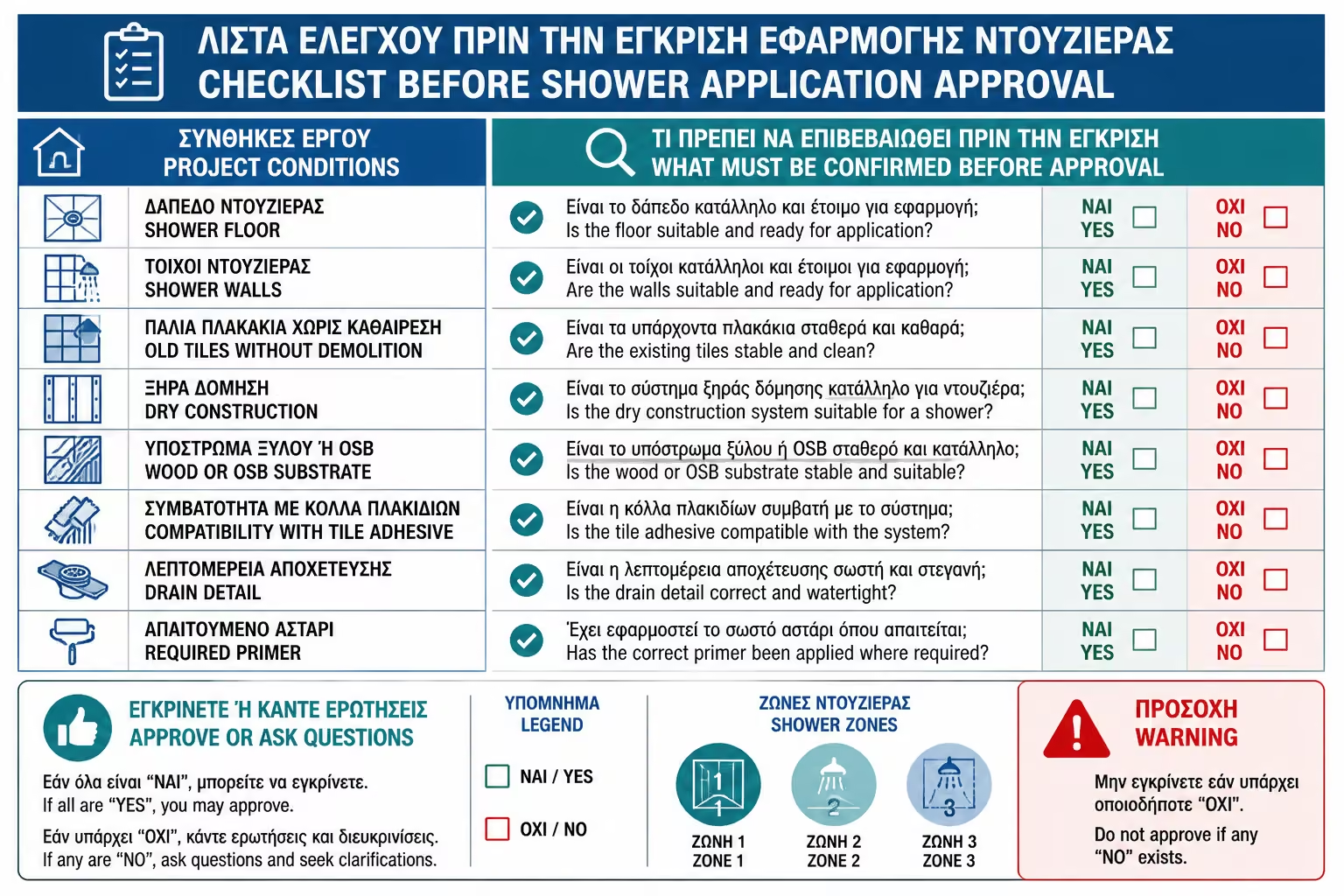
Before you approve waterproofing material for a bathroom or shower, it is worth passing the proposal through a simple practical check.
| Inquiry | Yes / No |
|---|---|
| Do we know if the application is under tiles or over an existing surface? | Yes / No |
| Is the substrate stable, clean and suitable for the material? | Yes / No |
| The material is suitable for the specific zone, e.g. shower floor or wall? | Yes / No |
| Is primer provided where required? | Yes / No |
| Are tapes provided at corners and joints? | Yes / No |
| Is there a special solution for the siphon? | Yes / No |
| Is there a special solution around batteries and piping? | Yes / No |
| Is the material compatible with the tile adhesive that will follow? | Yes / No |
| Have the drying and curing times been met? | Yes / No |
| If it is a clear surface solution, has the slip resistance been tested? | Yes / No |
| Does the offer clearly state the type of material, layers, labour, materials and VAT? | Yes / No |
| Has the technician explained the limitations of the material and not just the advantages? | Yes / No |
If enough answers are "I don't know", it is not time to close the assignment. It's time to ask for clarification.
> If you have to keep one thing, keep it: don't choose a sealant based on its name alone. "Cement", "acrylic" and "polyurethane" are not in themselves a guarantee of a correct solution. Ask where it will be applied, on what substrate, with what primer, in how many layers, with what tapes and how it will be connected to the siphon and supplies. In bathroom waterproofing, the loudest sounding material doesn't win. The system that fits the use and is properly implemented wins.
Bathroom sealants should not be treated as mere alternatives on the same shelf. Cementitious, acrylic and polyurethane have different logic, different behavior and different ideal uses. Cementitious is a very strong choice under tiles on a stable mineral substrate. Acrylic is practical and easy to use in indoor wet zones with reasonable stress. Polyurethane is valuable in special applications, surface repairs and situations where higher elasticity or transparent protection is needed.
Proper sealing does not depend only on the material. It depends on the preparation, the substrate, the application, the angles, the tapes, the siphons, the supplies, the flows and the compatibility with the following materials. A mediocre material in the right system can perform better than an expensive material applied incorrectly.
For the owner, the practical direction is simple: ask for a clear technical proposal. Not "we will put a good insulator", but what material, where, why, in what way and with what additional components. If the shower is built-in, if there is a linear siphon, if the walls receive water or if you want a repair without dismantling, the choice of material must be made based on these data.
A bathroom does not fail because the "wrong class" of material was chosen in general. It fails when the material was not fit for purpose or was applied without a system. That's why the best decision is not to chase the most expensive or the most advertised product. It is to require proper waterproofing design from the beginning.
Return to category.
Go to categoryReturn to the central guide.
Go to guide