
Bathroom Waterproofing & Moisture Protection
Return to category.
Go to categoryWaterproofing in the bathroom is not just a material that is passed over the cement mortar before the tiles are laid. It is a system that must withstand moisture, micro-movements, temperature changes, contractions, angles, joints of different materials and daily use. In many simple applications, a properly selected corner taped spreadable sealant may be sufficient. However, there are cases where simple application is not enough and glass mesh reinforcement is needed.
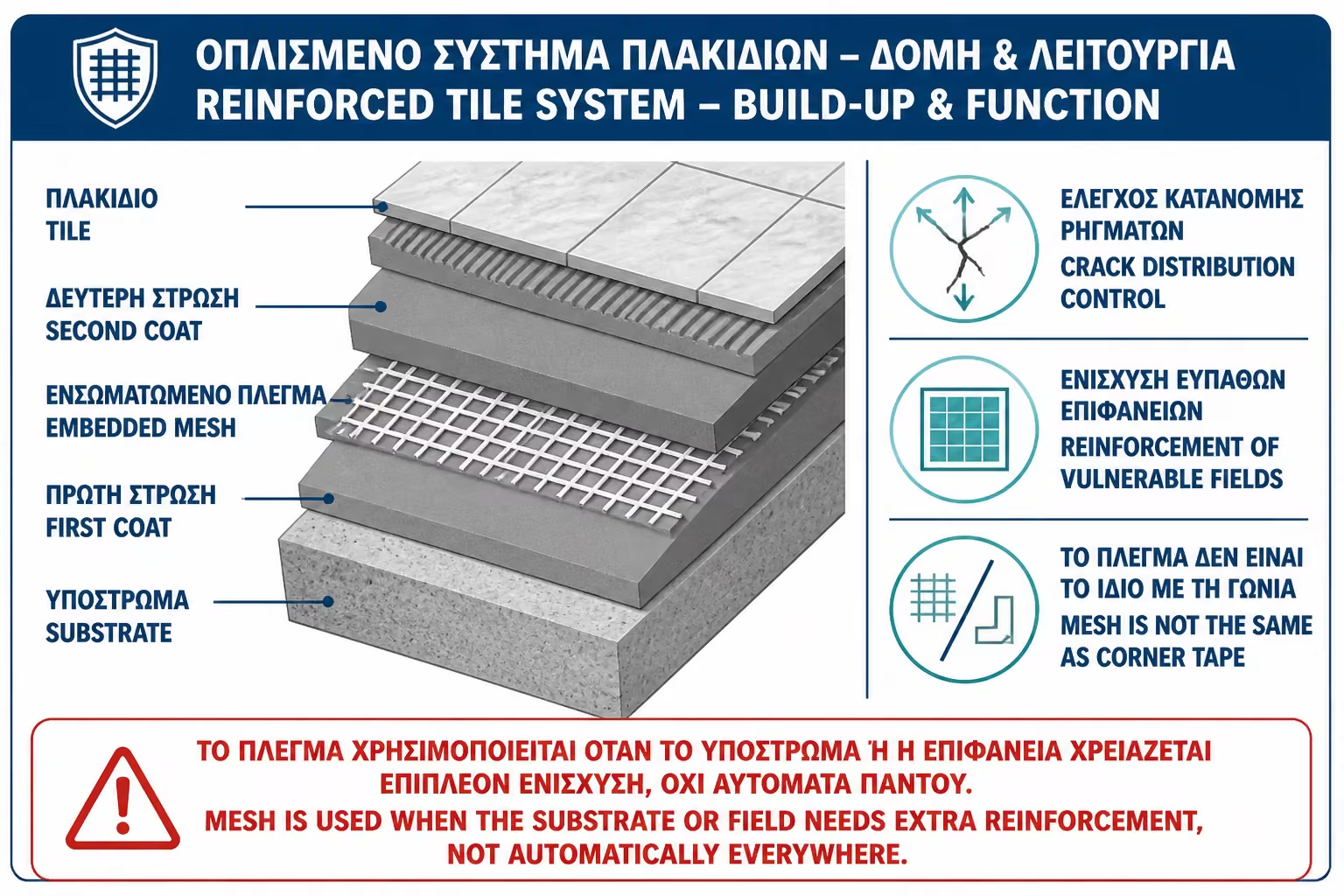
Fiberglass mesh is a special reinforcement net that is embedded in the layers of the sealant. It is not placed to simply make the material "thicker". Its role is to distribute the stresses, limit the risk of cracks and help the membrane to remain single on surfaces that receive micro-movements or have an increased risk. Simply put, it acts as reinforcement within the waterproofing layer.
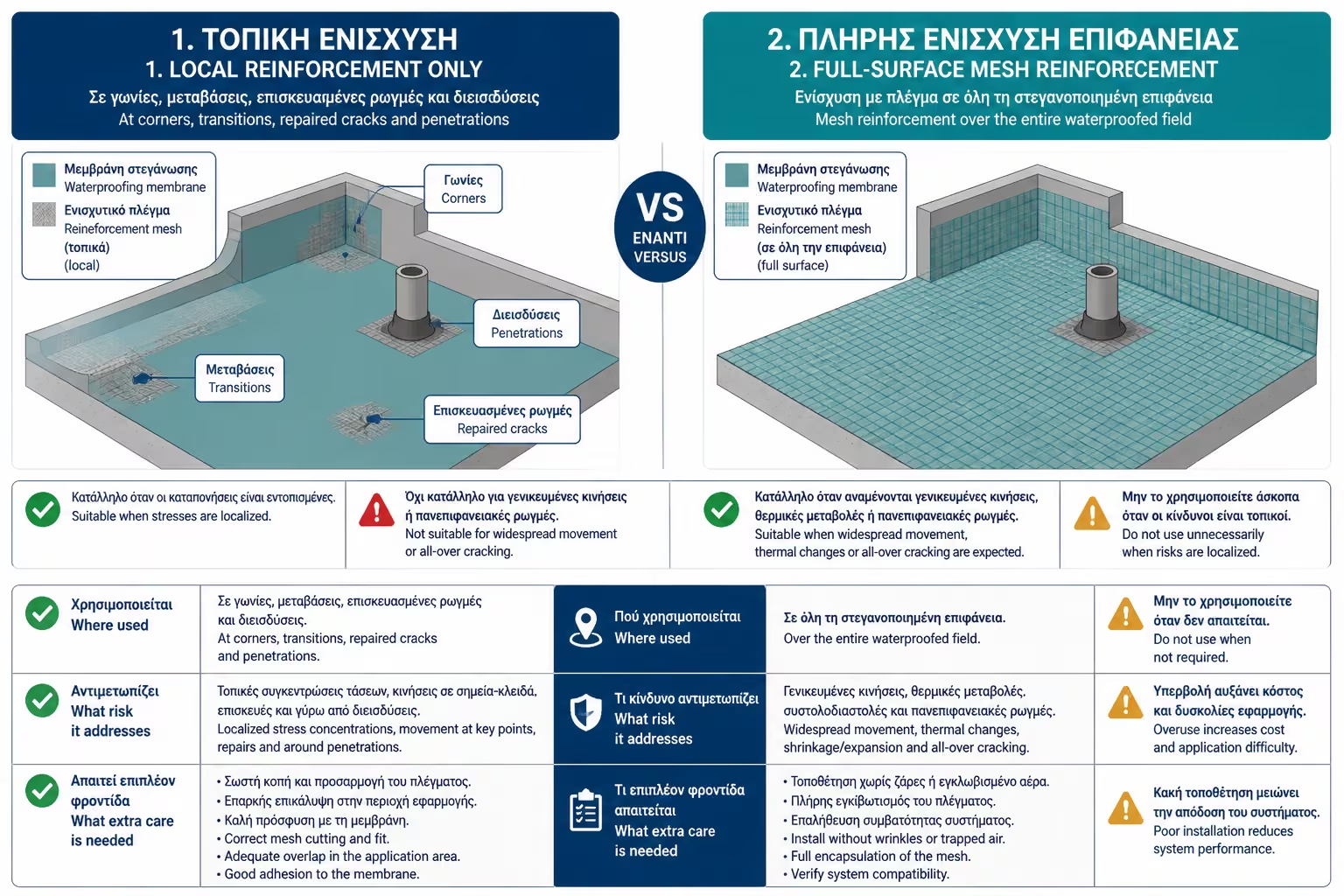
The point is that you don't always need universal armature throughout the bathroom. In many cases, local reinforcement is sufficient: corner tapes, cuffs around pipes, special pieces around siphons. In others, however, especially in built-in walk-in showers, on large floors, on old or repaired surfaces, on substrates with micro-cracks or in places where contraction and expansion are expected, universal mesh framing can be very important.
The most common mistake is to use the grid either not at all or incorrectly. Other times it is omitted for economy and speed. Other times it is spread loosely on top of the first layer without being properly encased. Other times, gaps, wrinkles, or overlaps are left without continuity. Then the reinforcement does not work as it should and can even create weak points under the tiles.
This guide explains what fiberglass is in waterproofing, when it's needed locally and when it's universal, how it's sandwiched between layers of screed, what mistakes to avoid and what the homeowner should ask before waterproofing is covered with glue and tiles.
Glass mesh is a mesh of glass fibers, specially designed to reinforce mortars, plasters or waterproofing layers. In bathroom waterproofing, it is used as reinforcement in spreadable materials, such as cementitious, acrylic or polyurethane liquid membranes, as long as the system provides for it.
Its function is similar to the concept of reinforcement in other building materials: it helps the layer to behave more uniformly. When the substrate exhibits micro-movements, small contractions or stresses, the grid helps to distribute these stresses over a larger surface area, rather than concentrating them in a thin line where a crack could appear.
In practice, the glass mesh does not just go "on top" of the waterproofing. It has to be boxed in. That is, a first layer of spreader is applied, the mesh is placed while the material is still fresh or workable, pressed so that it sinks in properly, and then covered with another layer. The mesh should be in the mass of the material, not exposed or resting dry on the surface.
It is important to use mesh suitable for the specific use. Not all nets are the same. The glass mesh used in thermal facades, plasters or other applications may have different specifications than what a particular waterproofing system requires. Hardware compatibility matters.
Cracks in the waterproofing do not appear because the water "pierces" the material. They usually occur because the substrate or the structure itself moves, contracts, expands or has weak points. The sealing layer, if it cannot follow these movements, can be opened locally.
In the bathroom we have several sources of such trends. Cement mortar can shrink as it cures. Floor-wall corners accept different movements from two planes. The points around piping have different materials. A linear siphon has a metal or plastic body that meets cement mortar. A shampoo recess has many internal corners and small surfaces. A parapet that accepts a glass cabin can be stressed by perforations and micro-movements.
Temperature changes also play a role. In the shower, the floor and walls receive hot water, then cool, then get wet again. These small daily changes are not spectacular, but they are constantly repeated. In an unprotected or rigid layer, fatigue can be seen over time.
Glass mesh reinforcement does not "stop" the natural movement of the structure. But it helps the waterproofing layer to handle it better, reducing the chance of stresses being concentrated in one crack.
Not every seal needs to be reinforced over its entire surface. In many cases local arming is sufficient. This means using corner tapes, cuffs around outlets, special pieces around siphons and reinforcement only in sensitive areas. It is the basic logic in many proper bathroom applications.
Universal reinforcement means that the glass mesh covers the entire surface of the waterproofing or a large critical zone, for example the entire shower floor or the entire walk-in zone. This is done when we don't just want to reinforce the corners, but create a more uniform reinforced membrane over the entire surface.
The choice depends on the substrate, use, sealant and risk. On a stable, new, small floor with simple use, the normal application of the tape system may be sufficient. In an old cement mortar with microcracks, in a large walk-in shower without a step or on a surface with different substrates, universal reinforcement can be a much safer option.
The mistake is to make the decision based on cost alone. Reinforcement takes material and labor, but in demanding zones it can substantially reduce the risk of failure. On the other hand, it should not be inserted casually "for good" without proper framing, because then it does not offer the protection it is supposed to.
Universal glass mesh formwork is of particular value when the surface has an increased risk of cracking or when the waterproofing layer must function to a greater extent as a single resilient protection. It is not necessarily an everyday choice in every bathroom, but there are cases where it should be seriously considered.
The first case is walk-in showers, especially level ones, where the floor of the shower is at the same level as the rest of the bathroom. There the zone that gets wet can be larger and the requirements for waterproofing higher. If the floor consists of new cement mortar with cracks, joints and siphon, universal reinforcement helps to create a more unified system.
The second case is substrates with microcracks or repairs. If old tiles have been stripped, if there are patches, if the base has different materials, or if there are small capillary cracks that have been repaired, reinforcement helps limit the transfer of these stresses to the waterproofing layer.
The third case is large floor or wall surfaces that receive frequent moisture. The larger the surface, the more potential there is for differential movements, small contractions or unevenness. In such applications, the grid acts as an additional safety.
The fourth case is when the sealing system itself requires it. There are products that provide reinforcement throughout the surface for specific applications. In this case it is not a matter of choice of craftsman, but part of the technical specification.
In a typical bathroom with a stable substrate, proper cement mortar and no particular cracks, a universal mesh may not be needed over the entire surface. Local reinforcement at corners and critical points can be sufficient if the system is properly implemented.
For example, on solid plaster or cement board shower walls, spreadable waterproofing with sealing strips at the corners and cuffs around the fittings may be sufficient. In a small shower with a prefabricated base, the floor does not need the same logic of reinforced membrane under tile, because the main drainage surface is the platform itself.
But if there are shampoo recesses, built-in shelves, parapets, material changes or places of increased stress, local reinforcement may be needed even if it is not made universal. It's not all or nothing. An enhanced application can be made to the most sensitive areas.
The important thing is not to confuse local enhancement with simple application. The corner tape, the cuff and the special piece have a specific role. If they are omitted because "we don't put mesh everywhere", the application remains incomplete.
Reinforcement with glass mesh makes more sense on surfaces where the waterproofing receives stresses. The floor of the built-in shower is the first point. There are splashes, siphon, daily use, water and possible micro-movements. If we talk about a walk-in without a step, the risk increases, because the waterproofing has to work in a more open and uniform zone.
Floor-to-wall corners are also critical, but special tapes are usually used there rather than plain glass mesh. The glass mesh can cover the surface, but in the corners it needs material designed for level change and micro movements. One does not always replace the other.
In walls, universal reinforcement can make sense when the substrate is old, repaired, with different materials or when there are micro-cracks. In new, solid walls, local reinforcement may be sufficient. In recesses and built-up details, the need increases because there are many internal corners and small surfaces where water can pool.
In parapets where a glass cabin steps, reinforcement can help, but does not negate the need for proper slope, full waterproofing and sealing of perforations. If the glass is screwed into place where the waterproofing has been punctured, the mesh alone will not protect the hole.
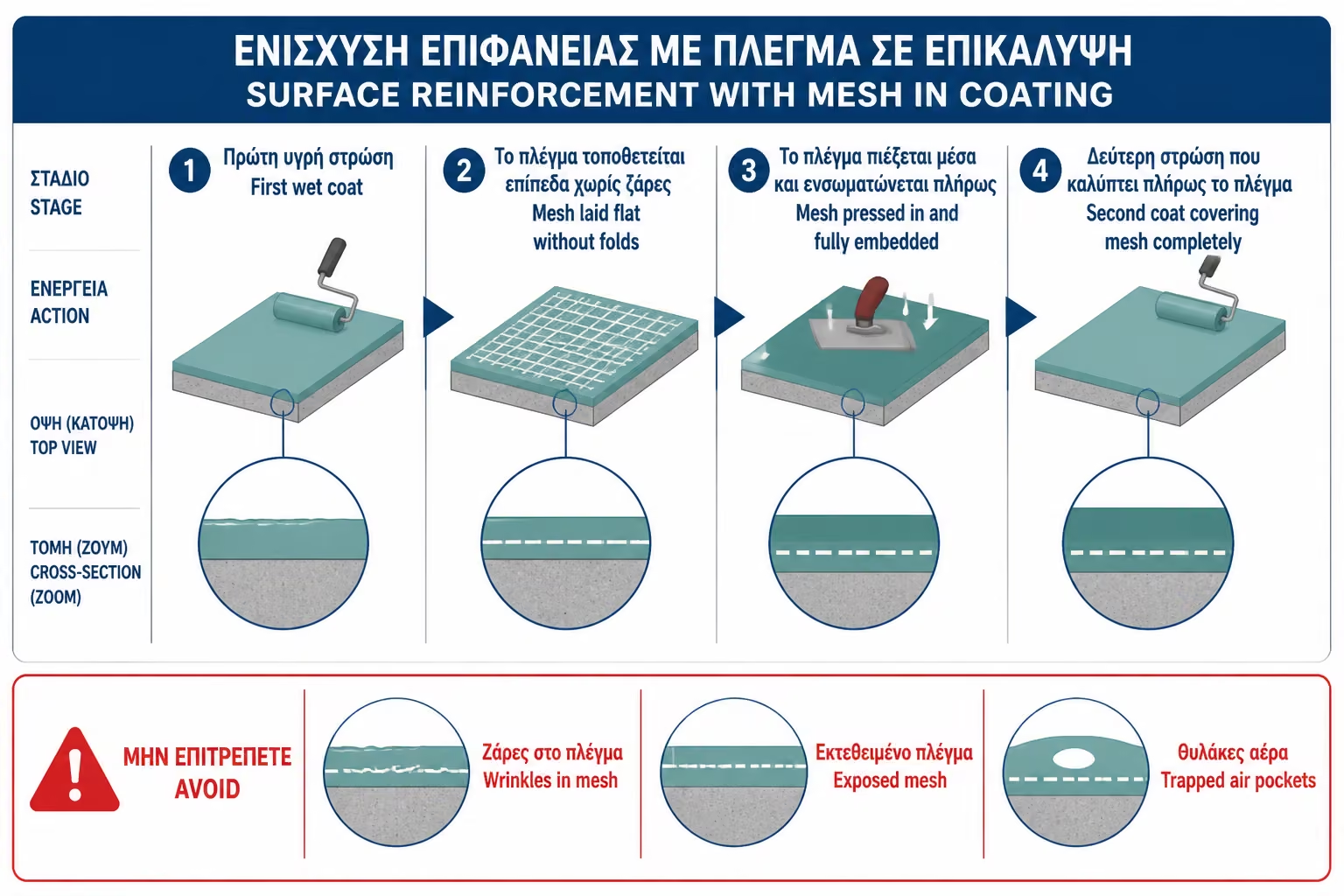
Proper application is usually between two coats of spreadable sealant. First, the first layer is applied to the prepared substrate. The glass mesh is placed on top of the fresh layer and pressed with a spatula, brush or roller, depending on the material, so that it sinks in without creating wrinkles or gaps. Then it is covered with the second layer, so that it is completely encased.
The grid must not remain dry in places. If it shows strongly on the surface after the final coat, it may not have covered enough. On the other hand, an excessively thick layer that does not cure properly should not be created. The right amount of material is critical.
The grid strips must overlap each other. The coating ensures continuity in the reinforcement. If the strips just touch edge to edge, a weak line is created. The overlap required depends on the system, but the logic is always the same: the armature must be continuous.
In the corners, the glass mesh should not crumple roughly and create a gap. Corner tapes or special pieces are usually used. The global mesh of the field should work with them, not randomly replace them.
Glass mesh can be used with various spreadable systems, but not arbitrarily with all of them. Many resilient cementitious, acrylic membranes and polyurethane systems provide reinforcement in specific applications. But the grid must be compatible with the material and boxed according to the instructions.
In 2-component cementitious screeds, reinforcement can significantly increase the cracking resistance of the screed, especially on demanding floors and old substrates. In acrylics, it can help on surfaces with micro-movements, but it must be checked whether the product is suitable for the specific stress. In polyurethanes, reinforcement can be used in special applications, but the technical process is more demanding and often requires a specific primer.
Any glass mesh should not be used with any sealant. The mesh must withstand the alkaline environment where cementitious is present, have an appropriate density and not be altered by the system. An improper net may not function properly or create traction problems.
The owner does not need to know technical grams per square or loop opening, but should ask if the mesh is part of the system or if it is randomly selected. This question has practical value.
One of the most common mistakes is to assume that the glass mesh replaces the sealing strips in the corners. It's not always like that. Glass mesh mainly reinforces flat or large surfaces. Corner tapes are designed for level changes, where there is different mobility and an increased risk of cracking.
At the floor-wall joint, the tape must be able to follow the corner without creating a gap or crease. It usually has a special elastic band or is made for such applications. Plain mesh, if folded roughly at an angle, can lift, create bulges, or not sink properly into the material.
The same applies to internal corners in niches, around supplies, siphons and material change points. That's where special pieces or tapes are needed, not just universal mesh. In a proper fit, the fiberglass covers the field and the tapes reinforce the joints.
If a quote says “reinforced mesh waterproofing”, this does not automatically mean that the corners have been provided. The use of tapes or special pieces must also be mentioned.
The faucet is the most critical part of the shower. Reinforcement can help to strengthen the surface around it, but it is not a substitute for properly connecting the waterproofing to the siphon itself. Especially in linear siphons, the joint of metal or plastic with cement mortar and sealant is a high risk point.
If the siphon has a flange, a factory membrane or a special collar, the waterproofing must be connected to it according to the system. The glass mesh can reinforce the surrounding surface, but sealing continuity must be ensured by the flange or special piece. It is not enough to pass mesh to the tip of the siphon.
In central downspouts, the area around the drain receives concentrated water and often micro-movements from grating placement or tile cutting. There the reinforcement must be done with materials that do not prevent proper drainage and do not create excessive thickness.
A bad scenario is that mesh is put in around the siphon, but it's cut awkwardly, is left loose, or isn't well covered by the sealant. Then the point can become weak instead of strengthened. The detail here needs an experienced craftsman.
In renovations, substrates are rarely perfect. After removing old tiles, there may be different materials, old adhesives, repairs, microcracks, patches from hydraulic interventions and areas of different absorbency. In such cases, universal or extended arming can help significantly.
The grid helps to bridge small unevenness and distribute stresses between areas of different behavior. However, it does not fix a weak foundation. If the plaster is peeling off, if the cement mortar is rubbing strongly, or if there are active cracks, they must be repaired first. Mesh is not a way to hide a substrate that needs to be stripped.
In old bathrooms where a bathtub is converted into a walk-in shower, the area of the floor and low walls often has many interventions. That's where rebar can act as extra security, especially if combined with the right primer and elastic sealing system.
The owner must be careful if the proposal for mesh is accompanied by preparation. If the technician says "we'll put mesh and everything will be covered", but doesn't talk about cleaning, priming and repairing weak spots, the solution is incomplete.
Glass mesh reinforcement increases the overall thickness of the waterproofing layer. This is not a problem when calculated, but can cause difficulties if done sloppy. In floors with siphons, linear channels and precise levels, every extra millimeter counts.
If the mesh does not box correctly and creates wrinkles or local thicknesses, the tile adhesive will be called upon to correct irregularities. This can affect the finished surface, especially on large tiles. In walk-in showers, where the drains must be clean, irregularities under the tiles can create small bellies or difficult cuts.
Proper application should leave a relatively smooth sealed surface, ready to accept adhesive. The grid should be inside the material, not sticking out. The overlaps should be smooth and not thick lines that will show in the paving.
On demanding tiles, such as large porcelain, thin tiles or large dimension tiles, the quality of the surface before gluing is even more important. Reinforcement should provide safety, not create a new flatness problem.
Mistakes with fiberglass are often the result of haste. The mesh is quickly cut, roughly laid out and hastily covered. But weaponry is only valuable when done right.
| Error | Possible consequence | Correct approach |
|---|---|---|
| Mesh without full encasement | Weak adhesion, gaps, possible failures | First layer, mesh into the fresh material, second layer |
| No or little lane overlap | Faint lines between leaves | Correct overlay according to the system |
| Wrinkles or swelling | Uneven surface and local voids | Press and lay the mesh without tension |
| Using an inappropriate grid | Reduced durability or incompatibility | Mesh compatible with sealant |
| Replacement of corner tapes with plain mesh | Cracks in joints | Use of special tapes in the corners |
| Reinforcement on loose substrate | Failure of the entire layer | First repair and stabilization of the base |
| Excessive thickness in overlays | Difficulty in paving | Smooth application and correct consumption of material |
| Rushed tiling | Trapped moisture or insufficient ripening | Compliance with drying times |
A typical example is a shower floor where glass mesh has been inserted, but without an overlap between the strips. The surface looked reinforced, but at the junctions there were weak lines. Over time, if the substrate moves, these lines are the first to receive stress.
Glass mesh reinforcement adds to the cost of a waterproofing, but is usually not the biggest part of the budget. The cost is affected by the surface, the type of mesh, the waterproofing system, the number of layers, the condition of the substrate, the area, the floor, the access, whether VAT is included and whether we are talking about materials only or full labour.
In a complete bathroom renovation, the fittings can seem like an extra detail. But in demanding showers, especially walk-in or level showers, it can be an economically reasonable addition compared to the cost of a future failure. If tile removal is required to fix a crack in the waterproofing, the cost will be much higher than correct reinforcement from the beginning.
For the Greek market of 2026, a typical bathroom of about 5 sq.m. it can be indicatively around €3,200–5,500 for a simple to medium renovation, while more demanding solutions with a walk-in shower, linear siphon, full waterproofing, large tiles and custom glass can reach around €6,000–7,500 or more. Within these amounts, the correct reinforcement of the waterproofing is a small but crucial technical stage.
| Factor | How does it affect cost? |
|---|---|
| Reinforcement area | Local armament costs less than universal |
| Grid type | A mesh of suitable specifications has a higher value than a random mesh |
| Waterproofing system | Another cost with cementitious, another with liquid membrane |
| Substrate | Old or cracked base requires more preparation |
| Work | Proper boxing takes time and attention |
| Details | Siphons, niches, parapets and corners increase the difficulty |
A quote that says “reinforced sealing” should explain what it means. Universal grid across the entire surface? Local movies? Grid only at joints? Without this clarification, the owner does not know what he is comparing.
A correct quotation should describe whether the waterproofing will be plain, locally reinforced or universally reinforced. If glass mesh is provided, it must be indicated on which surfaces it will be inserted: only on the shower floor, on the entire bathroom floor, on the walls, in recesses or in specific repaired areas.
The system of application should also be mentioned: first coat of sealant, grid framing, strip coating, second coat and drying time before tiling. If the offer just says “with grid”, it is not clear enough.
Corner tapes must be listed separately. It should not be assumed that because there is grid, there are also films. The same applies to cuffs around supplies, siphon flanges and special pieces.
Finally, it must be clear whether the price includes materials, labour, VAT and substrate preparation. Reinforcement is only of value if it is applied to a correct base and with a correct sealant.
The owner can ask a few simple questions that reveal whether there is real technical logic or just general reference to “grid”.
Ask first why fiberglass is recommended. Is it due to old substrate? Because of a walk-in shower? Because of microcracks? Because of a hardware requirement? If the technician can answer specifically, that's a good sign.
Then ask if it will be entered globally or locally. On which surfaces? Will it cover the entire shower floor? Will it climb the walls? Will it also fit into recesses? Will there be overlaps between the lanes?
Also ask if corner tapes and special siphon pieces will be inserted separately. If the answer is that "the mesh is enough", attention is needed. In many corners, simple mesh does not replace special tape.
Finally, ask to see the waterproofing before the tiles go in. There you can see if the mesh is boxed or if it just rests on the surface.
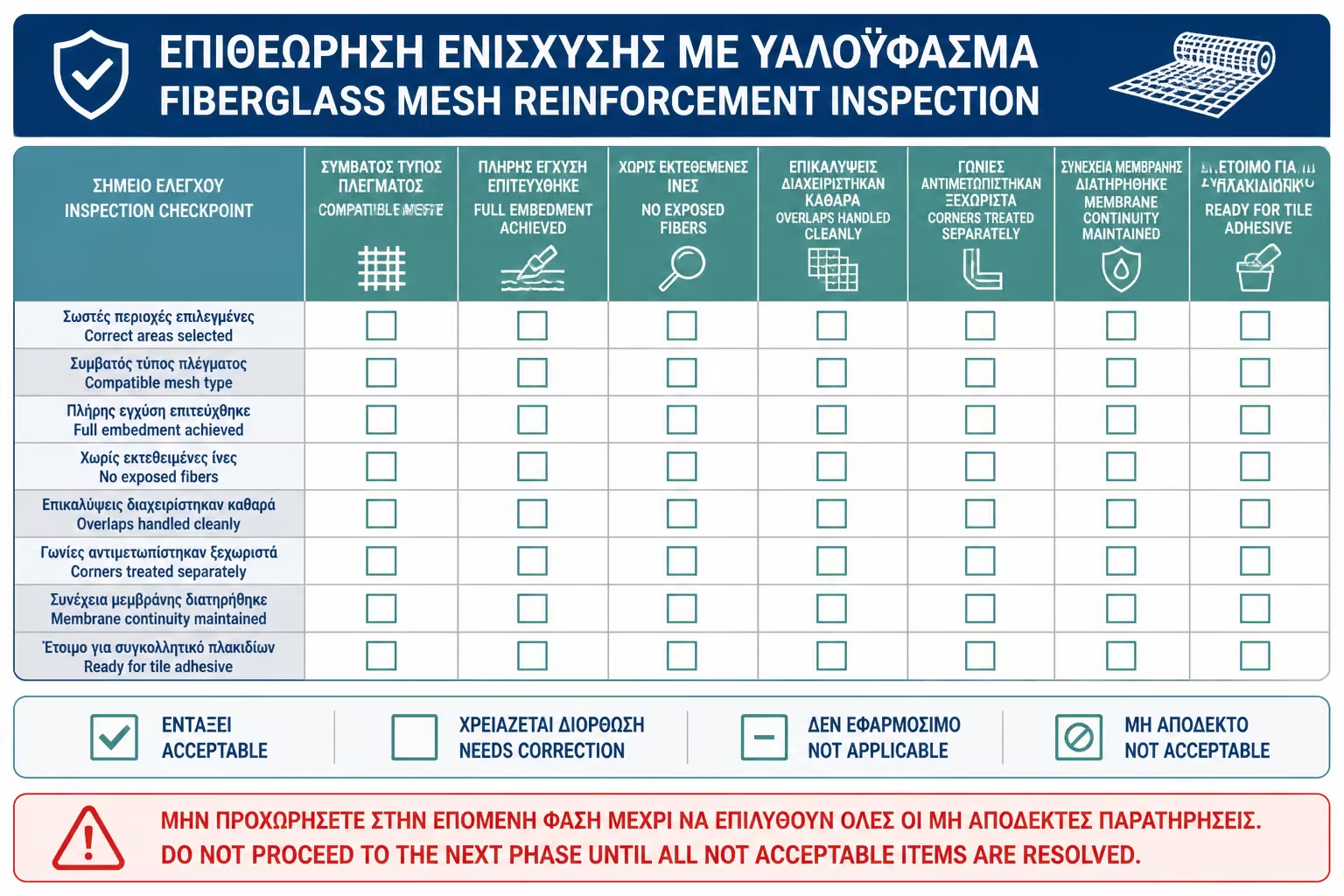
Before covering the reinforced waterproofing with glue and tiles, it is worth doing a practical check.
| Inquiry | Yes / No |
|---|---|
| Is there a technical reason for universal fiberglass reinforcement? | Yes / No |
| Has the substrate been cleaned and stabilized prior to application? | Yes / No |
| Has primer been applied where required? | Yes / No |
| Is the glass mesh compatible with the waterproofing system? | Yes / No |
| Is the grid boxed into the first layer and not just resting on top? | Yes / No |
| Are the grid strips properly overlapped? | Yes / No |
| Are there no wrinkles, bulges or gaps under the mesh? | Yes / No |
| Has the second layer completely covered the mesh? | Yes / No |
| Are the corners individually sealed? | Yes / No |
| Does the siphon have a special connection to the seal? | Yes / No |
| Are there cuffs or special seals around batteries and supplies? | Yes / No |
| Is the finished surface smooth enough to accept tile adhesive? | Yes / No |
| Have drying times been met prior to tiling? | Yes / No |
| Does the offer clearly describe armament, materials, labor and VAT? | Yes / No |
If several answers are "don't know", the application has not been sufficiently tested. The reinforcement of the waterproofing is a hidden stage. After tiling, it won't be easy to tell if it was done right.
> If you must keep only one thing, keep it this: fiberglass is only of value when properly encased in the spreadable sealant and when used where there is a real reason. In walk-in showers, old substrates, microcracks, large surfaces or expansion zones, universal reinforcement can significantly reduce the risk of cracking. But it does not replace tapes in the corners, the correct connection with the siphon or good preparation of the substrate. Mesh doesn't save a bad foundation; it strengthens a properly designed system.
Reinforcement of waterproofing with glass mesh is a technical step that is often not seen, but can play an important role in the durability of a waterproofing. It is not necessary in every application, nor should it be used casually. But when there is an increased risk of cracking, expansion or micro-movements, it can make the waterproofing layer more uniform and more durable.
Its greatest value is seen in demanding zones: built-in and level walk-in showers, old or repaired substrates, floors with ripples, large surfaces and complex details. There the grid helps to distribute the stresses and limit the risk of local cracks in the membrane.
On the other hand, reinforcement is no substitute for proper construction. If the substrate is loose, if the primer is not applied where it should be, if the corners are not taped, if the siphon does not have a proper flange or if the cement mortar has the wrong flow, the mesh will not solve the problem. It will be hidden under the tiles along with the rest of the errors.
For the owner, the correct approach is to ask for a clear description. Will there be glass mesh? Where; Why? Will it be global or local? Will there be overlaps? Will there be films in the corners? How will the system be connected to the siphon? These questions indicate whether the waterproofing is being treated as a real technical system or as a quick application before tiling.
A properly reinforced waterproofing is not visible in the finished bathroom. But it shows over time: fewer cracks, better behavior in movements and greater safety in places that are tested daily by water, temperature and use.
Return to category.
Go to categoryReturn to the central guide.
Go to guide