
Bathroom Waterproofing & Moisture Protection
Return to category.
Go to categoryDamp in the bathroom rarely appears suddenly as a large leak. Too often it starts with small signs that seem insignificant: a bit of blown paint low on the wall, a few black spots on the silicone, white dust on the joints, a caulking smell that returns after the shower, or a tile that sounds slightly hollow. These signs are the "language" of the bathroom. If we read them correctly, we can tell if it's simple condensation, poor ventilation, worn joints, a leaking pipe or waterproofing failure.
The difficult thing is that the symptoms are similar. Mold can be caused by poor ventilation, but it can also indicate hidden moisture behind tiles. Bloated paint can be from condensation on a cold wall, but it can also indicate water rising from the floor or running through the shower. White salts in joints can be simply water residue, but they can also indicate that water is moving through the substrate and carrying salts to the surface.
That is why the diagnosis should not be made hastily. The first question is not "how do I clean it?", but "why did it appear?". If we clean mold without solving the ventilation, it will come back. If we repaint a swollen wall without finding the moisture, it will swell again. If we change the grout while the water is running through the back, we will just hide the problem temporarily.
In a new or renovated bathroom, such signs should be taken seriously. They may reveal errors in corners, siphons, supplies, thresholds, windows, perimeter silicones or in the compatibility of the glue with the waterproofing. In an older bathroom, it can be a sign of natural wear and tear, poor maintenance, or a deeper leak.
This guide explains how to interpret the most common signs of damp in the bathroom, what each one might mean, when it's a simple maintenance issue, and when a technical check is needed before the problem becomes bigger.
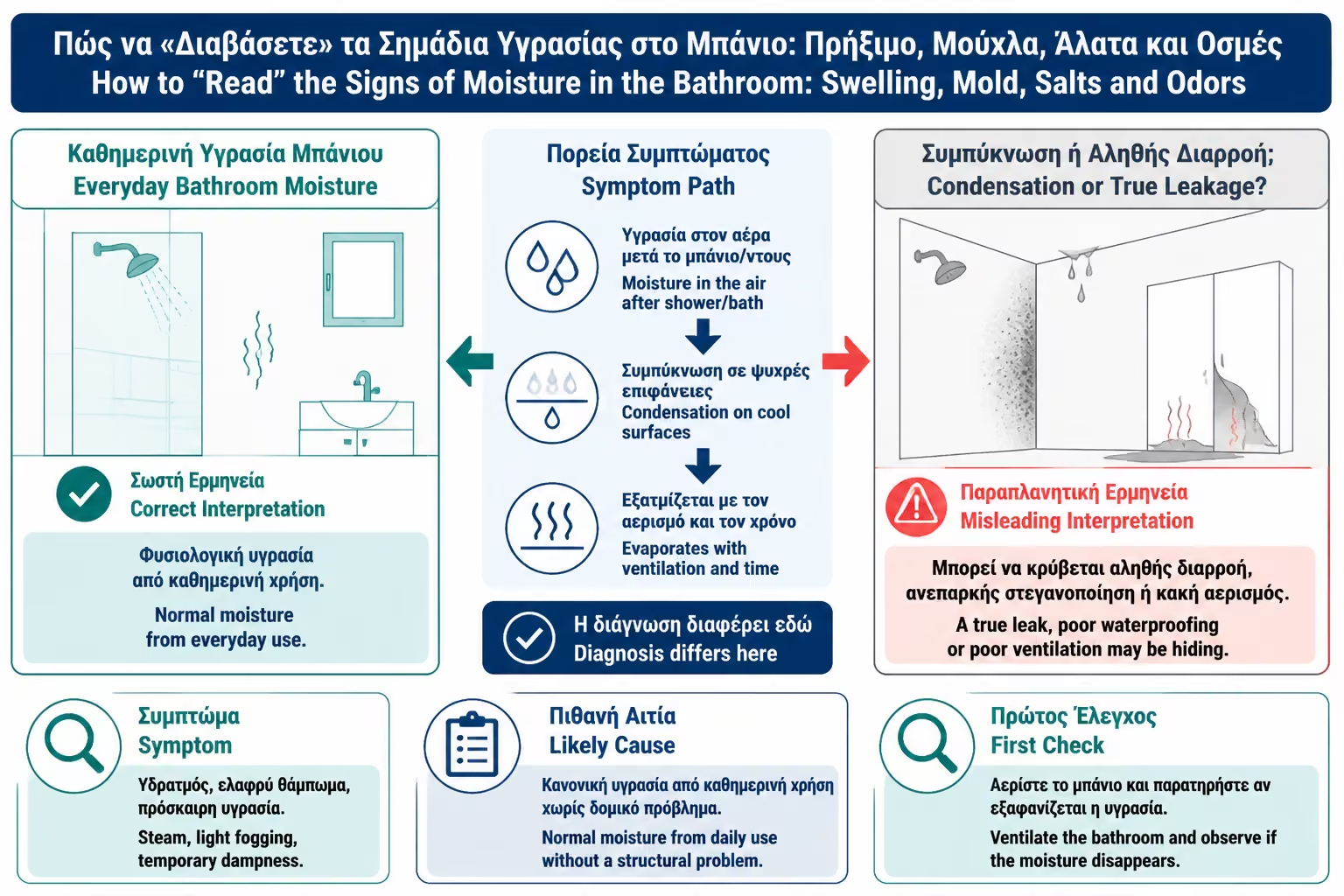
Before looking at the individual signs, we need to distinguish three main causes: moisture from use, condensation and leakage. Usable humidity is the water normally produced in the bathroom: showers, steam, splashes, wet floors. If the bathroom is well ventilated and the surfaces dry, this moisture does not necessarily create a problem.
Condensation occurs when water vapor touches a cold surface and becomes droplets. We usually see it on windows, mirrors, exterior walls, corners or ceilings. It is more common in winter, in bathrooms without adequate ventilation or in walls with thermal bridges.
Leakage is a different matter. It can come from a water pipe, drain, siphon, cistern, battery, washing machine or waterproofing failure. It usually persists, comes back to the same spot, and doesn't always depend on whether you just showered. If moisture appears even when the bathroom is not in use, the suspicion of a leak increases.
The same sign may have a different cause. That is why we observe when it appears, where it is, if it dries up, if it grows and if it is related to water use.
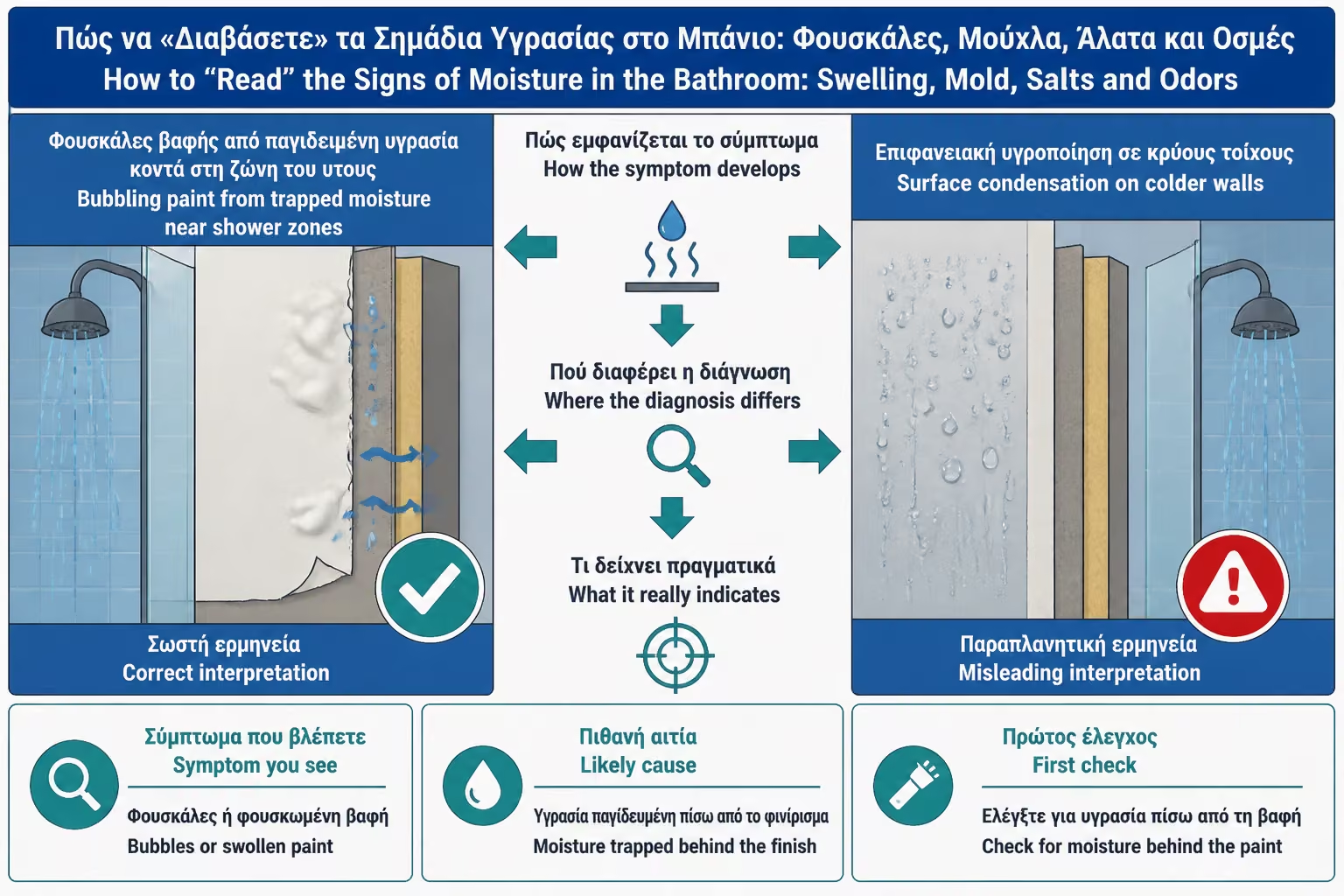
Bloated color is one of the most classic signs of moisture. The paint lifts, blisters, peels or peels off the plaster. This means that moisture is behind or inside the paint layer and is pushing out. The cause can be simple condensation, but it can also be water coming from inside the wall.
If the bulge is high, near the ceiling, or on an exterior cold wall, especially in winter, it is often associated with condensation and poor ventilation. If it is low, close to the floor, next to the shower, behind the basin or near pipes, a possible leak or seal failure should be considered.
If the wall bulges on the outside of the shower or in the adjacent area, the problem may start from the floor-to-wall corner, from the siphon, from the faucet, or from water passing behind the tiles. If it swells under a window, it could be condensation, poor exterior sealing, or a window sill holding water.
Painting over it doesn't solve the problem. It must first be found whether the moisture is coming from steam, from tap water or from a hidden leak.
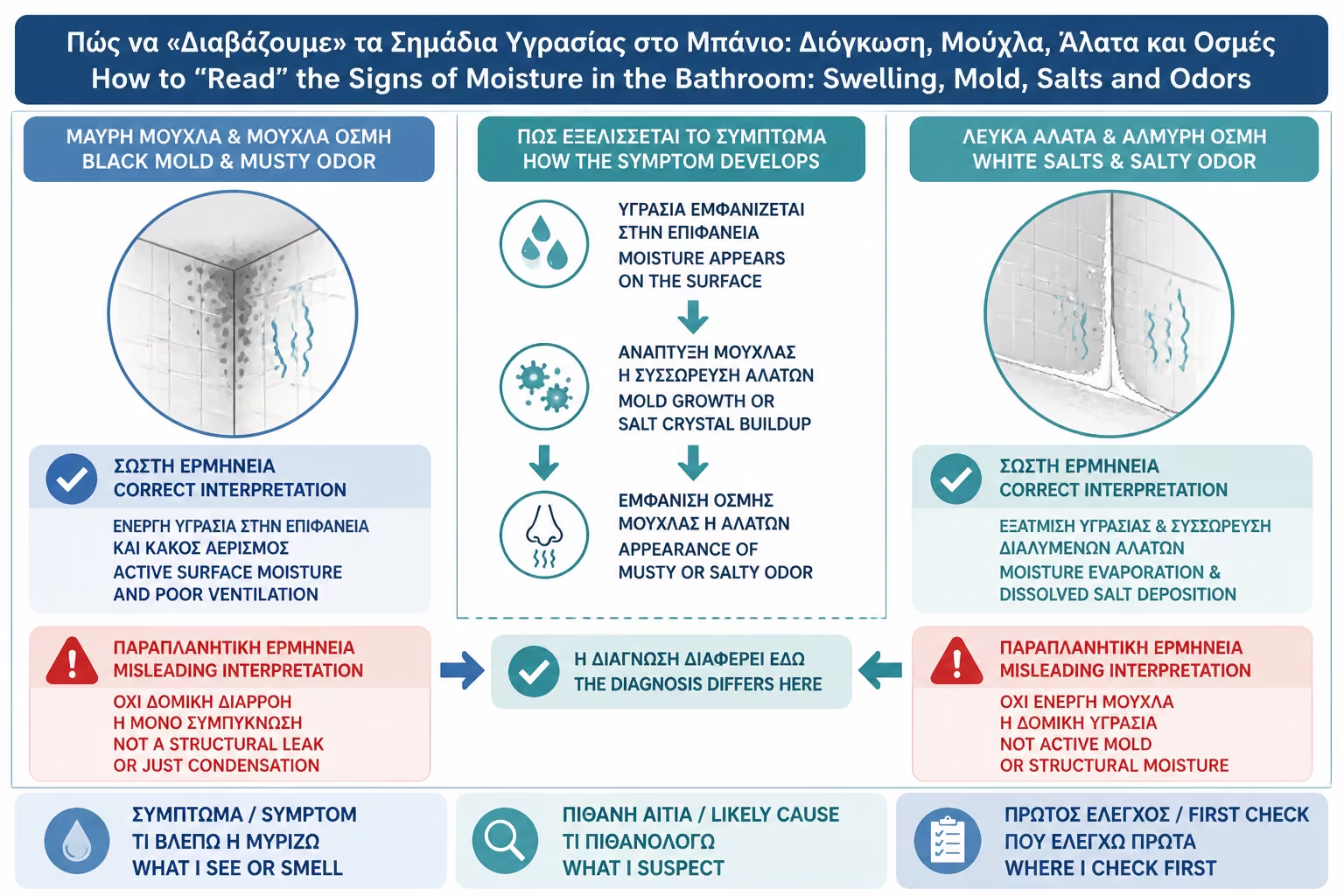
Black spots are usually mold. They appear in places where moisture stays for a while: corners, ceiling above the shower, around windows, in silicone joints, behind furniture or in places with poor ventilation. If they are superficial and appear mainly in cold months, they often show condensation.
But mold should not be underestimated. If it always occurs in the same low spot near the shower or behind tiles that sound hollow, there may be water in the structure. If it returns very quickly after cleaning, there is an active source of moisture. If it is accompanied by a musty smell, swelling or soft plaster, a more serious check is needed.
Black spots on the ceiling often indicate poor ventilation. Warm moist air rises and condenses on cold surfaces. But if there is a bathroom above, they may show a leak from the upper floor. The location and progression of the stain is critical.
Mold is cleared temporarily, but returns if the cause is not changed: ventilation, heating, thermal bridge, hidden moisture or leakage.
Blackening of silicone is very common around bathtubs, showers, glass enclosures and sinks. It is usually caused by mold growing on the surface or in the micropores of the silicone, especially when the area is wet and has soap residue.
If the silicone is old, has lost its anti-mold protection, or is not cleaned often, the browning may be natural wear and tear. Then the solution is complete removal and new application, not passing new silicone on top. The new silicone does not stick properly to the old one.
But if the silicone turns black very quickly after replacement, we need to look deeper. The spot may remain permanently wet due to the wrong slope. There may be tub movement that opens the joint. Water may be leaking behind the joint. There may be poor waterproofing behind the tiles.
Silicone is a maintenance indicator, but also a diagnostic point. When it turns black again and again, it's usually not just the hardware.
White salts in the joints may look like simple dirt, but they often have a bigger meaning. It could be salts from hard water drying on the surface. In this case they are relatively easy to clean and appear mainly in areas where water falls frequently, such as around batteries, shower or floor.
But there is also the case of salt efflorescence, where moisture moves through cementitious materials, dissolves salts and carries them to the surface as it evaporates. Then we see white powder or crystals that reappear even after cleaning. This may indicate that there is moisture under the tiles or in the joints.
If scale appears at a particular joint line, especially near a shower floor, faucet or corner, it should be investigated whether water is passing under the tiles. If they appear under a window, there may be water coming in from the windowsill or condensation that stays for a while.
Salt doesn't always mean a leak, but when it keeps returning to the same spot, it's a sign that water is moving there more often than it should.
Yellow or brown stains on a wall or ceiling often indicate water that has passed through materials and carried dirt, rust, salts or organic debris. If the stain is under a pipe, behind a faucet, near an old metal frame, or under a window, it may be related to a leak or corrosion.
On a ceiling under a bathroom, a brown stain is a serious sign. It can come from a faucet, a drain, a leaking bathtub, a bad shower seal, or a leaking faucet. If the stain grows after using the bathroom above, the connection is more likely.
On bathroom walls, brown stains at the bottom may indicate that moisture has reached the plaster or metal elements. If there is an old metal mesh, screw, casing or pipe, moisture can cause rust to surface.
Brown stains should not just be covered with insulating paint. First the water source must be stopped. Otherwise the stain will return.
Smell is one of the most underrated signs. Sometimes we don't see a stain or swelling yet, but the bathroom smells like mold, mildew, or wet material. If the smell goes away with ventilation and returns after showering, it may be related to condensation and poor ventilation. If it is constantly present, even when the bathroom is left unused, it should be checked for hidden moisture.
The smell of mold can come from silicones, joints, behind furniture, under the bathtub, in false walls or behind tiles. In bathrooms with dry construction, the smell may indicate that moisture has passed through the wall gap. In bathrooms with a bathtub, water can be hidden under the apron.
We must also distinguish the smell of mold from the smell of sewage. If it smells like a "sewer," the problem could be a siphon without water, a bad odor trap, a drain vent, or a drain leak. If it smells like a wet cloth or a closed cupboard, we are usually talking about dampness and mould.
The nose often detects a problem before the eye. Don't ignore a lingering smell.
A tile that sounds hollow when tapped may indicate insufficient adhesive, a void under the tile, or delamination. It doesn't always mean moisture, but in a bathroom it's a sign to watch for. If the hollow point is on a shower floor or around a faucet, the risk is greater.
Gaps under tiles can hold water if it seeps through joints or details. Water can move under the surface, blacken joints, create scale or stress the adhesive. If there is proper waterproofing underneath, damage to the substrate can be limited, but the paving can fail.
If the hollow tiles increase or are accompanied by joint cracks, moisture or movement, a technical inspection is needed. If it's a single spot on a dry zone, it may just be bad bonding. If it's in the shower, it shouldn't be ignored.
Hollow tile is more a symptom of a manufacturing failure than simple moisture. But in a bathroom, construction failure often makes way for water.
Open, cracked or chipped joints indicate that something is stressing the finished surface. It could be poor quality grout, wrong application, excessive moisture, substrate movement, bad adhesive or using a stiff joint where it should have had a rubber sealant.
At corners, cement grout often cracks because corners are level joints. There should be elastic silicone on the finished surface and sealing tape underneath. If the corner was filled with rigid joint, the crack is almost expected.
In flooring, cracked joints may indicate tile movement, gaps in adhesive or underlayment. In a shower, they may allow water to pass under the finished surface. If cracks appear around a faucet, in tile lines, or near a threshold, the cause should be investigated.
Replacing grout can only help if the cause is superficial. If there is movement or water underneath, the new joint will break again.
If the wooden floor outside the bathroom swells, the problem is serious. It usually means that water has come through the threshold, the sides of the case, from a washing machine leak, or from moisture that has moved under the floor. Wood and laminate are particularly sensitive to their edges.
If the bulge is right outside the bathroom door, the threshold, marble base, side seals and bathroom drains should be checked. In a small leak, water can pass through a small gap next to the casing and damage the floor without appearing to be a big problem inside the bathroom.
If the swelling occurs near a wall that borders a bathroom, there may be moisture coming through the wall or under the floor. If there is a washing machine in the bathroom, the supply, drainage and overflow are checked.
Swollen wood is usually the result of water that has already passed through. It's not an early sign. Immediate control is needed to prevent further damage.
Damp low on a wall bordering a bathroom is a classic sign of a problem in the floor zone. It can come from a shower corner, a siphon, a bathtub perimeter joint, poor floor waterproofing or water coming through the threshold. Because the water moves low and sideways, the mark may appear not directly next to the cause, but a little beyond.
If the adjacent wall swells low after using the shower, suspicion turns to the shower seal. If it occurs regardless of use, there may be a hose leak. If it appears after rain and the wall is exterior, it may be related to exterior moisture.
Position matters. Low marks near the floor often indicate that water is moving under the finished surface or into the plaster. It is not a simple matter of steam, especially if the space is not inside the bathroom itself.
In such a case, painting the adjacent wall is the last stage, not the first. First one must find where the water is coming from.
Moisture around a bathroom window can have many causes. It can be condensation from water vapor on cold glass or case. It could be shower water if the window is inside the wetting zone. It could be rain coming in from an external seal. It could be a window sill with the wrong angle.
If we see black spots around the frame in the winter, especially in a bathroom without ventilation, the possible cause is condensation. If we see swelling at the bottom of the window, salt or water remaining on the sill after showering, the slope and sealing of the sill should be checked. If moisture appears after rain, the outside is checked.
In a window in the shower, the problem is more demanding. There, the opening must have complete waterproofing on the sides, tapes on the corners, an inclined sill and a proper connection with the frame. If these are missing, signs of moisture are only a matter of time.
Moisture on the window has no answer. Wants observation: does it appear after the shower, after the rain or in the cold winter?
Many mold problems in the bathroom do not start with a leak but with poor ventilation. If the bathroom has no window, if the fan is weak, if the door remains closed and the water vapor remains, the surfaces stay wet for a while. Then mold appears in corners, ceiling, silicones and around windows.
Signs of more ventilation are mold on top, condensation on the mirror or glass, moisture that escapes when the room is ventilated, and the absence of a particular stain that is growing. If the wall does not swell, does not soften, and there is no localized leak, ventilation is a likely cause.
This does not mean that the problem is innocent. Mold affects air quality and indicates that the space is not drying properly. Better ventilation is needed, possibly a fan with a time delay, cleaning, heating and avoiding permanent moisture on the surfaces.
But if, despite good ventilation, the problem persists in the same place, it must be checked for leakage or hidden moisture.
We suspect a pipe leak when moisture occurs regardless of shower or bath use, when it grows steadily, when it is near faucets, a faucet, faucet, or piping, or when moisture is present even after days of non-use. A water leak can give continuous moisture, while a drain leak often occurs when the particular fixture is in use.
If the stain appears after the cistern, the cistern and the drain are checked. If it appears after showering, it could be a drain, siphon or waterproofing. If it appears unused, it may be a pressurized water supply. If there is a water meter, consumption can be checked when all supplies are off, but diagnosis must be done by a plumber.
Signs such as a consistently wet wall, the sound of water, a drop in pressure, growing blisters and a stain that won't dry are more alarming. In such a case, we don't expect it to "dry by itself".
The pipe leak must be located before surface repairs are made. Otherwise the problem continues behind new colors and joints.
Waterproofing failure is usually associated with surface water use. If the moisture appears after a shower, if it is low near the shower, if there are salts in the joints, if the silicones and joints turn black despite cleaning, if there is moisture on the next wall or on the lower floor, then the waterproofing should be considered.
The most common points of failure are the corners, the siphon, the mixer taps, the tub-to-tile joint, the window in the shower and the cubicle perforations. If the problem is near one of them, the probability increases.
Waterproofing failure does not always mean that no insulation went in at all. It may have gone in but not the right thickness, not banded, not connected to the siphon, punctured afterwards, or covered before it dried. The adhesive or tiles may also have voids that hold water.
Repair depends on the cause. Superficial joint problem can be solved locally. Failure under tiles often requires excavating the area.
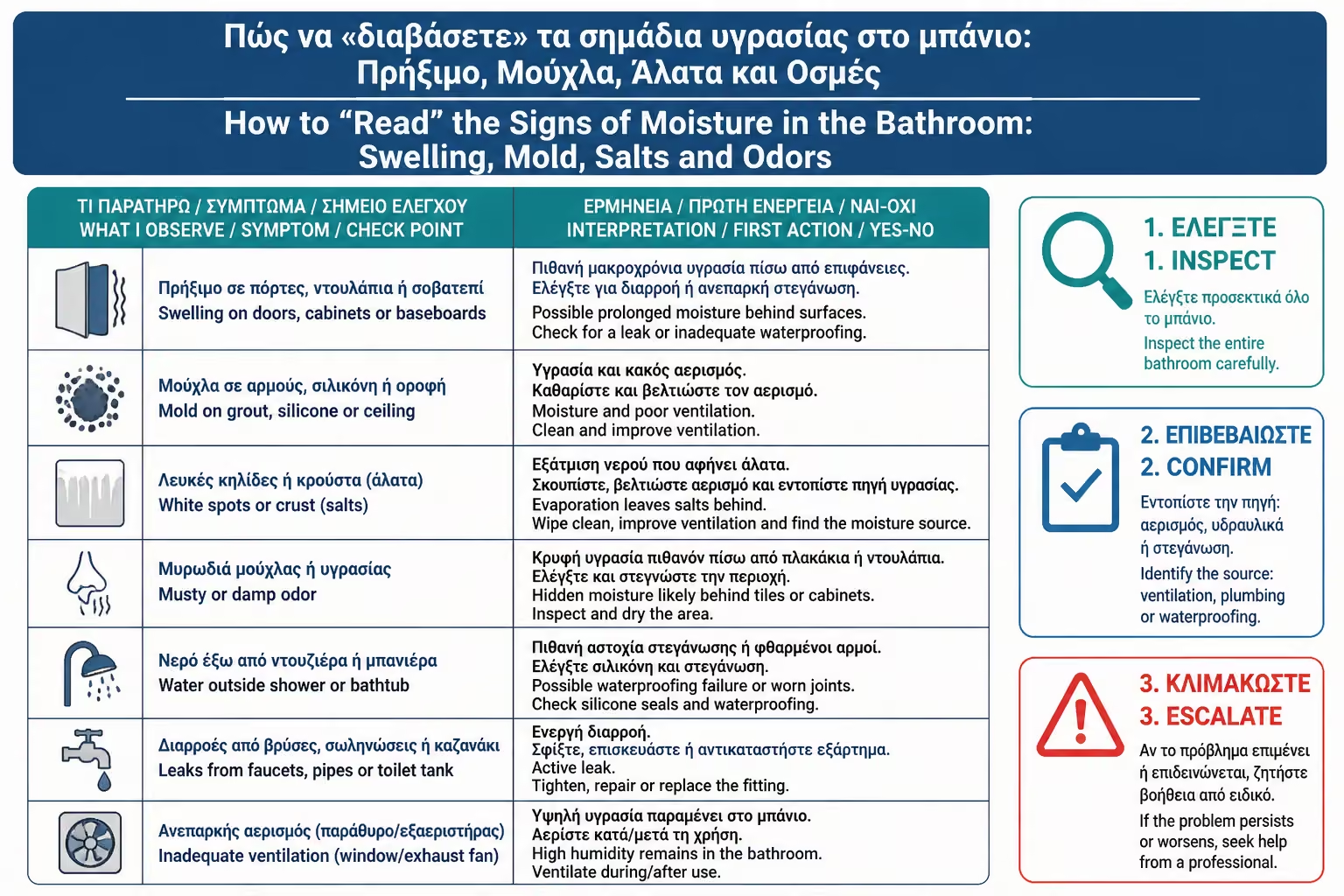
| Symptom | Possible cause | What to check first |
|---|---|---|
| Bloated color low | Hidden dampness, leakage, floor failure | Corners, siphon, adjacent shower, pipes |
| Black spots on top | Condensation, poor ventilation | Ventilation, thermal bridges, ceiling |
| Black silicone | Mold, permanent moisture, old silicone | Cleaning, slopes, movement, hidden moisture |
| White salts in the joints | Hard water or moisture inside the substrate | If they come back after cleaning |
| Musty smell | Hidden moisture or poor ventilation | Under the bathtub, behind furniture, false walls |
| Hollow tiles | Bad glue, gaps, possible moisture | Shower floor, faucet, joints |
| Cracked joints | Movement, wrong material, wear and tear | Corners, floor, substrate, glue |
| Blown wood outside bathroom | Water passed through a threshold or sideways | Marble floor, case, washing machine |
| Brown stain on the ceiling | Leak from above | Siphon, drain, shower upstairs |
| Moisture around window | Condensation, rain or shower water | Sill slope, external sealing, ventilation |
The table does not replace a technical diagnosis. But it helps to understand which direction to check first.
The first mistake is to immediately paint or putty the spot. If the cause continues, the new material will re-inflate. The second mistake is to put silicone everywhere without knowing where the water is coming from. Silicone can trap moisture or temporarily hide the problem.
The third mistake is to clean mold with strong chemicals and consider it solved. If the surface stays wet, the mold will return. The fourth mistake is to change only grout in a shower without checking the siphon, corners and waterproofing. If the water goes underneath, the new joint will be temporary.
The fifth mistake is delay. Damp rarely improves on its own when there is an active cause. The longer it stays, the more it destroys plasters, wood, adhesives, tiles and metal elements.
The right move is to observe, document and diagnose. Photos, dates, when it appears, after what use, if it grows, if it dries up. This information is very helpful to the technician.
A technical inspection is needed when moisture persists, when it grows, when it appears in an adjacent room or downstairs, when there is a musty smell without an obvious point, when wood swells or when there are hollow tiles in a shower zone. It is also needed when a pipe or drain leak is suspected.
For plumbing suspicions, a plumber is called. A caulking failure requires an experienced bathroom handyman or engineer, depending on the severity. In an apartment building, if a lower apartment is affected, the control must be done immediately and coordinated.
Non-destructive methods such as hygrometer, thermal camera, pipe pressure testing or local opening may be needed. The entire bathroom does not always need to be gutted, but gutting should not be ruled out if the failure is under the finish lining.
The right technician doesn't just look at the symptom. He is looking for the path of water.
| Inquiry | Yes / No |
|---|---|
| Does the mark appear after using the shower? | Yes / No |
| Does it appear even when the bathroom is not in use? | Yes / No |
| Does it grow over time? | Yes / No |
| Does it dry completely after good ventilation? | Yes / No |
| Is it low on the wall or close to the floor? | Yes / No |
| Are there any salts that return after cleaning? | Yes / No |
| Is there a musty smell even without visible mold? | Yes / No |
| Are there hollow tiles near the spot? | Yes / No |
| Are there cracked joints or exposed silicone? | Yes / No |
| Is there a wooden floor that swells outside the bathroom? | Yes / No |
| Is the spot near a pipe, siphon, cistern or window? | Yes / No |
| Do you have pictures to see if it's progressing? | Yes / No |
If several answers show persistence, repetition or a connection with water use, we are no longer talking about a simple aesthetic problem. Needs control.
> If you must keep only one thing, keep this: moisture leaves traces before much damage is done. Blown paint, mold, salts, odors and cracks in the joints are not just "dirt". They are clues. Do not immediately cover them with paint, silicone or cleaner. Notice when they appear, where they are and if they return. Getting it right early can save uprooting, wood damage, and problems downstairs.
Signs of moisture in the bathroom should be read as technical messages. Puffed paint means moisture is pushing behind the paint. Black spots indicate surfaces that remain wet. White salts may indicate water that evaporates and leaves behind salts. A musty odor often betrays hidden moisture before visible damage occurs. Joint cracks and hollow tiles indicate that the finished surface is under stress.
The important thing is not to rush to treat the symptom without finding the cause. Condensation from poor ventilation is one thing, pipe leakage is another, waterproofing failure is another, and silicone wear is another. The correct solution depends on the correct diagnosis.
In a bathroom, water can travel a long way from the original inlet. That's why the spot where we see the stain isn't always where the problem started. It may have started from a faucet, corner, supply, window, threshold or bathtub and appeared elsewhere.
For the owner, the best practice is observation and early reaction. Take a picture of the mark, note when it appears, check if it's related to showering, rain or pipe use, and request a technical inspection if it persists. Moisture should not be hidden. It must be interpreted.
Return to category.
Go to categoryReturn to the central guide.
Go to guide