
Bathroom Waterproofing & Moisture Protection
Return to category.
Go to categoryIn the bathroom, major damage doesn't always start with a major leak. Very often they start with something that seems insignificant: a thin crack in the corner of the shower, a silicone that has come off in one place, a joint that has opened, a small tan on the base of the tile or a line that "doesn't look right". The owner sees it, makes a mental note of it and puts it away for later. Except in the bathroom, "later" can mean hundreds of showers.
The damage is not done by one drop. It is done by repetition. Every shower sends some water to the same weak point. If there is an opening in the silicone or a crack in the joint, some of the water can pass behind the finished surface. If there is proper waterproofing underneath, the system has a second defense. But if the waterproofing is incomplete, old, punctured, or if there is none at all, water can get into the glue, cement mortar, plaster, plasterboard or masonry.
That's why the phrase "it's just a small crack" is dangerous. A one millimeter crack does not matter by itself. It matters where it is. If it's on dry wall, it may be a simple cosmetic problem. If it is in the corner of the shower, on the base of the bathtub, around the faucet, next to a glass cabinet or behind the battery, then it is in a daily wetting zone. There the small opening acts as a water inlet.
Dried out silicones and cracked joints are insidious because they give the impression that the problem is superficial. The corner darkens a little, the joint whitens a little, a capillary line is visible. But behind the surface a slow process can begin: moisture that is absorbed, salts that are carried over, adhesives that tire, plaster that swells, plasterboard that softens, wooden elements that swell and a musty smell that appears after months.
This guide explains why small cracks in silicones and joints should not be ignored, when they are simple maintenance and when they indicate a deeper problem, how water gets behind the tiles, which spots are most dangerous and what needs to be done before the "digging drip" turns into an expensive repair.
The corners of the shower are level change points. There you meet wall with wall or wall with floor. The two layers do not always behave as a single body. They may have micro-movements, different stresses, different expansion or small manufacturing deviations. That is why corners should not be treated as simple tile joints.
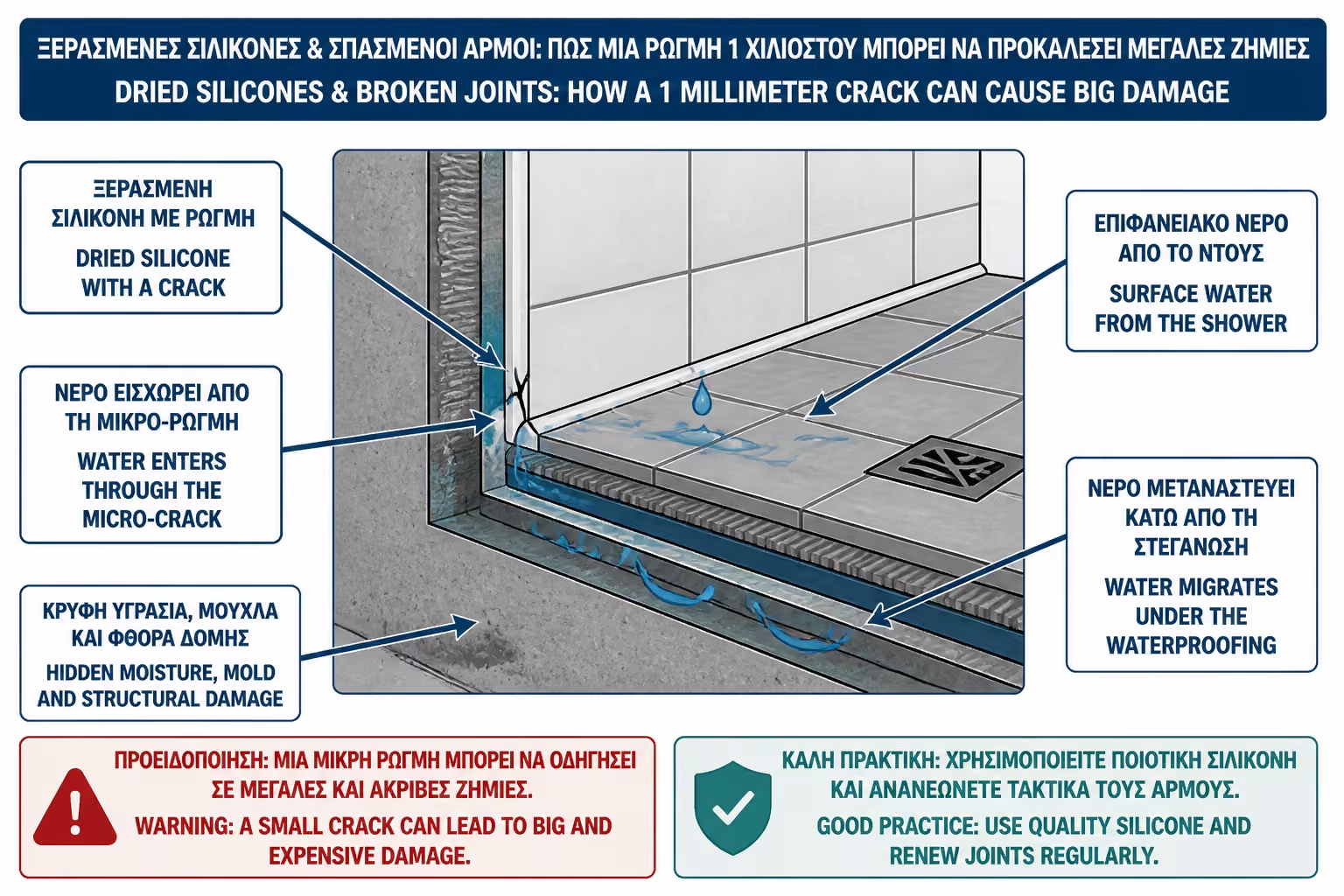
At the finished surface, corners should usually be sealed with a resilient material, such as a suitable sanitary silicone, rather than a rigid cementitious grout. Under the tiles, in the correct applications, the corner should have sealing tape integrated into the waterproofing. This is the real technical defense. Silicone on the surface is the final seal and first line of maintenance.
When a corner is filled with the wrong material or when the silicone ages, dries out or peels off, a path is created for water. Water does not need a large opening. It can go through a small crack, especially when it receives water every day. Over time, the crack opens up more, collects salts, soaps and mold, and becomes even more vulnerable.
The corner is a small detail only visually. Technically, it is one of the most critical parts of the shower.
Silicone doesn't stay the same forever. With time, humidity, cleaners, soaps, movement and temperature changes, it can lose its elasticity. It may harden, shrink, come off on one side, turn black or have small cracks. When this happens, it no longer functions as a proper rubber seal.
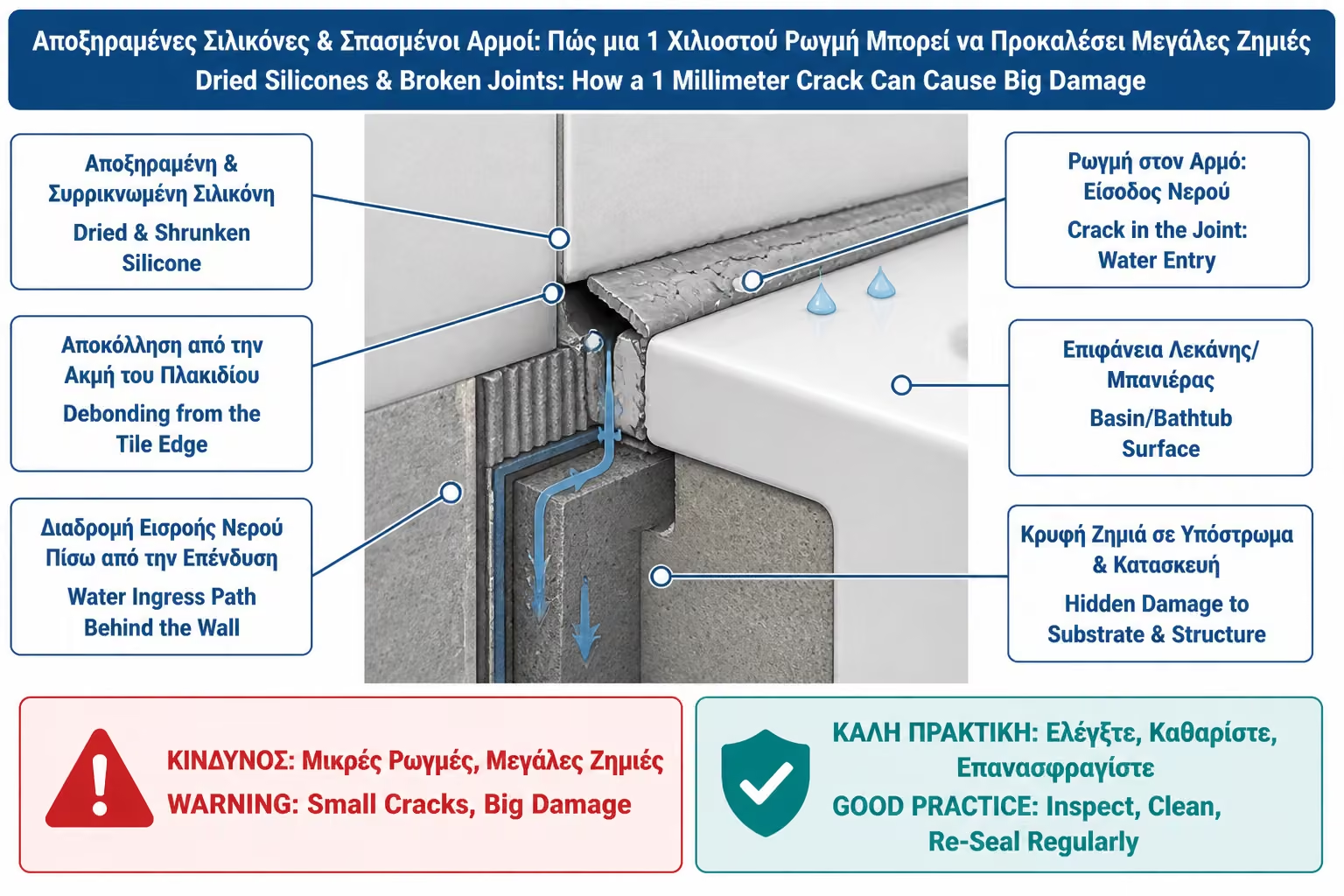
The silicone should adhere well to both sides of the joint. If it is detached in even one place, water can pass behind it. From the outside it may look like a fine line. Inside, however, there may be a small void that holds water. This water does not dry easily, because it is behind the silicone, in a dark and damp place. That's where mold grows and decay begins.
Dried silicone is often a result of age, but can also indicate poor initial application. If it was put on a wet, dusty or greasy surface, if it was put on old silicone, if the joint was too deep without a backer rod, or if the wrong product was used, it can fail quickly.
The correct solution is not to put new silicone on top. The old one must be completely removed, the surface cleaned and dried, and then a new application made.
A joint can crack for many reasons. It may be old, made with poor quality grout, misapplied, heavily stressed, or in a place where a rubber sealant would normally be needed. Small cracks in dry zones can be mainly a cosmetic issue. But it's different in the shower.
If the broken joint is in the shower floor, around the faucet, in the floor-to-wall corner, or on the wall that receives direct water, it should be treated as a possible water ingress. If the joint is blackened, if it holds water, if it emits white salts or if there are hollow tiles next to it, the problem is not simple aesthetic wear and tear.
A broken joint can also be a symptom of movement. If the substrate moves, if the adhesive has gaps, or if the tile does not make full contact, the new grout can crack again. So before a repair is made, it must be checked if the problem is only in the joint or if there is a deeper failure.
The joint is not waterproofing. When it breaks, it shows us that the finished surface has lost some of its protection. The question is what lies beneath.
Water does not need a large opening to enter. A thin crack can act as a small entrance, especially when it receives pressurized water from the shower, soaps and repeated wetting. Water can pass behind the silicone, through the joint or through a small gap between the tile and the frame/tub/profile.
From there on, the water follows the path it finds. It can get into the tile adhesive, move into gaps behind tiles, run down the corner, spread into the grout, or run into plaster. If there is proper waterproofing underneath, water must be contained. If not, it can continue to masonry or slab.
The problem is not the quantity each time. It's the repetition. Even a few drops per shower, over months, can keep a spot permanently moist. The material does not have time to dry. This creates a permanent wet environment.
This is the meaning of the "digging drop". It doesn't damage because it's big. It destroys because it keeps coming back to the same weak point.
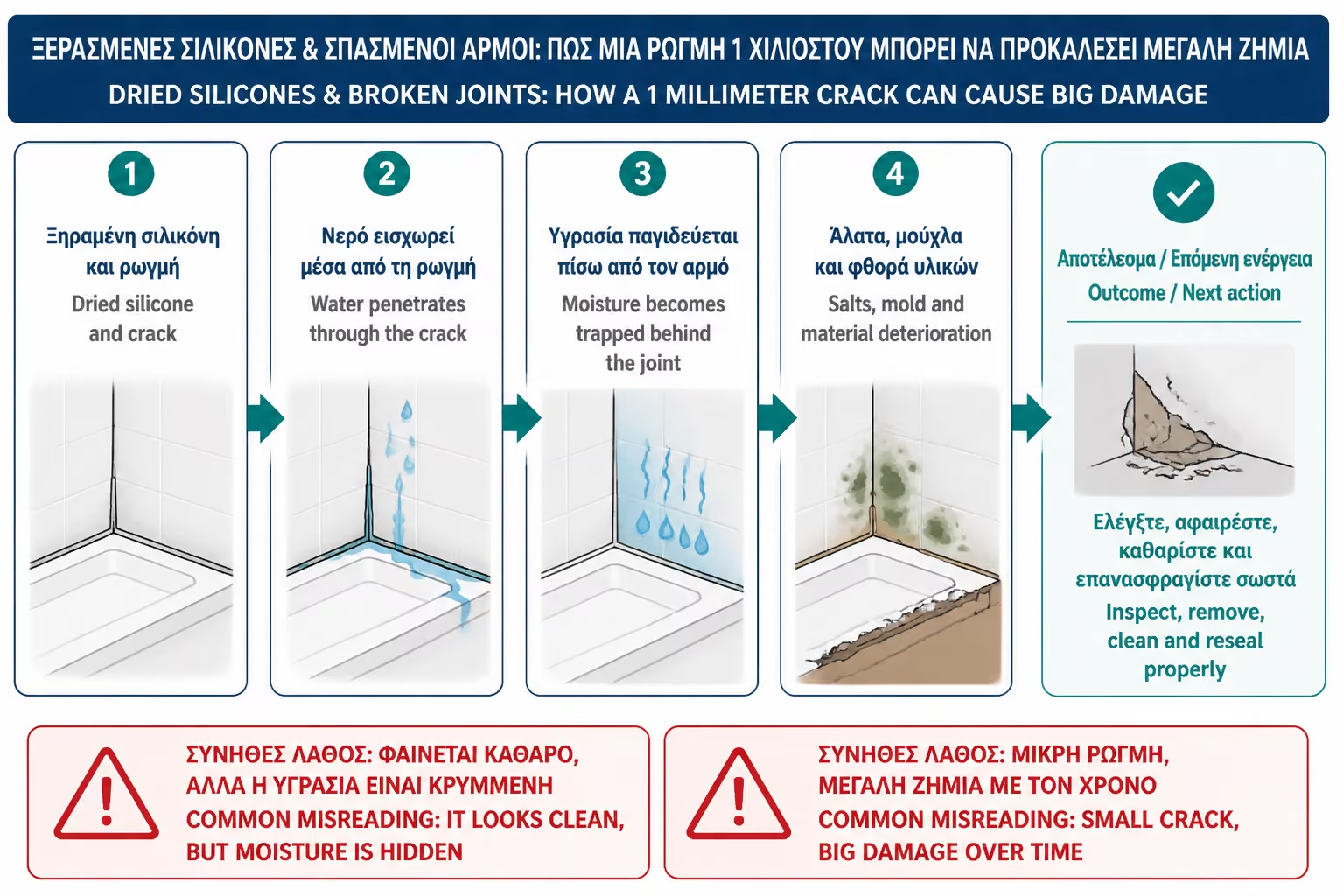
Leaks from broken joints and dried silicones are often slow. The water passes little by little and can remain hidden for a long time. The finished surface of the tile looks almost normal. The owner sees only a small tan or fine line. But behind, the moisture can spread.
Damage is seen when the material becomes saturated. Plaster begins to bubble on the adjacent wall. Silicone gets darker and darker. The joints release salts. A tile sounds hollow. A stain appears in the lower compartment. The musty smell gets stronger. Then the problem has already progressed.
The bathroom often gives warnings before major damage is done. The difficulty is that these warnings seem small. A millimeter crack does not worry us as much as a stain on the ceiling. But one can lead to the other.
Timely maintenance of joints and silicones is economical. Delayed repair of masonry is not.
Not all fractures have the same meaning. The most dangerous points are those that receive direct water or are in material and level changes. First are the corners of the shower: wall to wall and wall to floor. There, movement and water coexist.
Second point is the union of a bathtub or porcelain base with the tile. If the silicone there opens, water can get behind the tub or under the base. Third point is the siphon or linear channel. There the water constantly accumulates, and any small failure can be charged daily.
Fourth point is the pipe passages and the battery area. If water passes behind rosettes or through open holes, it can run down into the wall. Fifth point is the glass cabin profiles and screws. Any drilling in a wet zone needs proper sealing.
At these points, even a small opening must be checked immediately. We don't wait for him to grow up to deal with it.
Tanning of silicone is very common. It can be a result of poor ventilation, soaps, permanent moisture and age of the material. If it occurs after years of use and the silicone remains firmly attached, it may be mainly a maintenance issue.
But if the browning is accompanied by a peeling, a crack, a gap, a soft spot or a musty smell, then it's more worrying. Even more so if the silicone blackens again a few months after replacement. This may indicate that water is left behind by the silicone or that the surface never dries.
Mold on silicone is often the visible result of a liquid microcavity. If the water has entered behind the line, cleaning the surface is not enough. Needs removal, inspection, drying and reapplying. If there is an underlying cause, such as a wrong slope or a perimeter leak, that must be addressed as well.
Tanning is not always a sign of major damage. But when it returns quickly or is combined with an opening, it should be considered a warning.
White scum in joints can come from hard water drying on the surface. In this case, they are relatively easy to clean and appear mainly where water falls. But when salts return to a particular cracked joint, they may indicate moisture movement through the substrate.
When water passes through cementitious materials, it can dissolve salts and carry them to the surface as it evaporates. This creates white lines or crystals. If they appear near a corner, siphon or crack, it should be checked for water under the tiles.
Salts are a useful diagnostic sign because they indicate a water and evaporation path. They don't always mean an active leak, but when combined with a broken joint, moisture, or browning, they shouldn't be ignored.
Cleansing removes the symptom. If the moisture continues to move, the salts will return.
If a joint breaks repeatedly, the tile around it should be checked. A tile that sounds hollow may have insufficient adhesive or detachment from the substrate. If water passes through the joint and finds a gap behind the tile, it can move more easily and spread over a larger area.
Hollow tiles in the shower are more of a concern than hollow tiles in a dry zone. In the shower, the void can act as a small tank or water path. Over time, the adhesive can become more fatigued, joints can open and moisture can move to the substrate.
If there is proper waterproofing under the adhesive, the damage may be limited to the lining. If there isn't, the water can go deeper. That is why the control should not stop at "we will putty the joint again". It should be checked if the tile is stable.
A broken joint may be the pinnacle of the problem. The hollow tile may be his body.
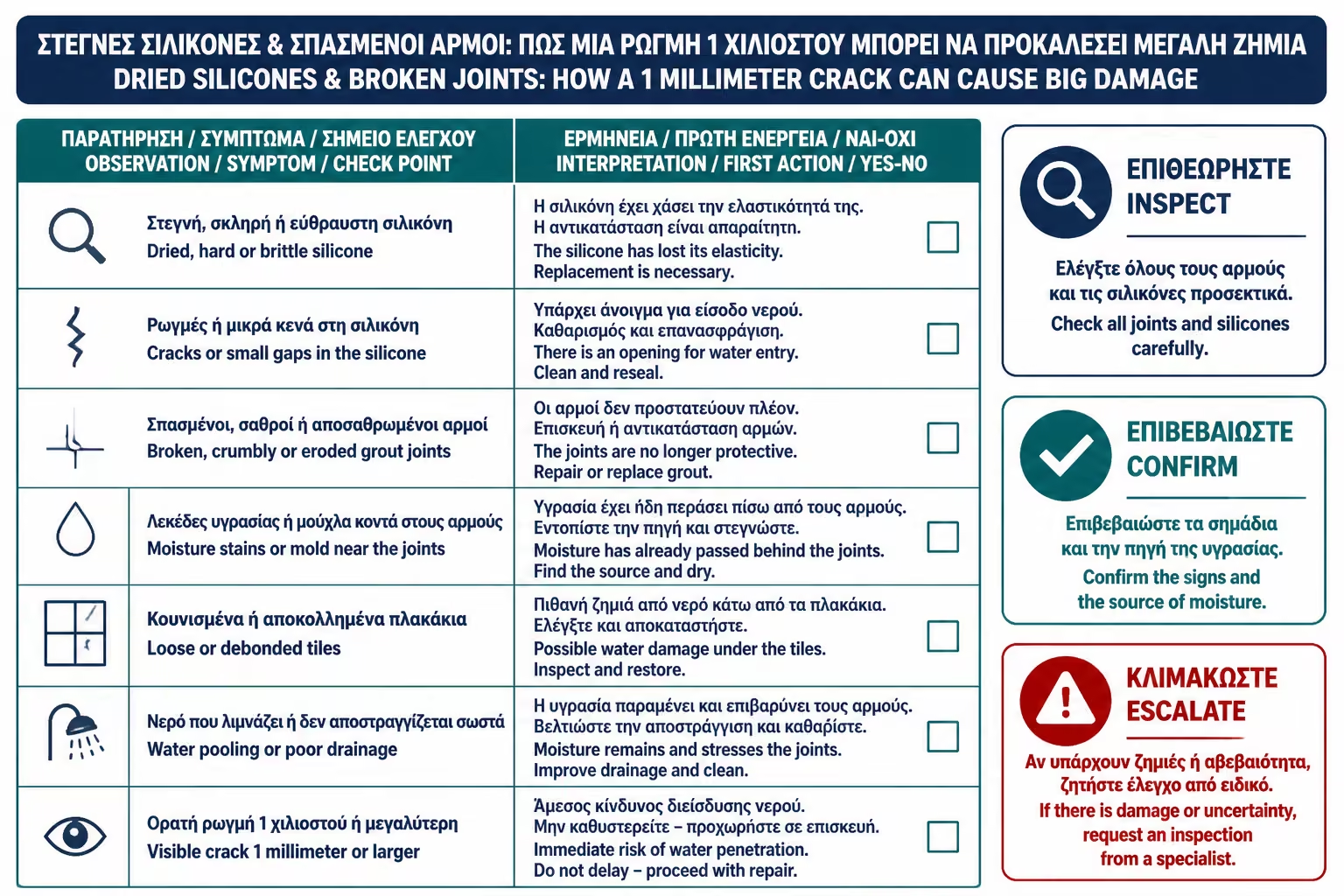
The first move is observation and control. We don't panic, but we don't ignore it. We look to see if the crack is in a zone of immediate wetting. We check if the silicone has come off, if the joint is soft or crumbles, if there is blackening, salts or smell. We observe whether the spot dries up after the shower or remains moist.
If it is silicone that has been opened, the correct repair is to completely remove the old silicone, clean, dry and reapply with a suitable sanitary silicone. We don't put new silicone on top. If it is a cracked grout, it needs to be checked if it is where it should have had an elastic joint or if there is movement/hollow tile.
If there are signs of hidden damp, such as swelling in the adjacent wall, returning salts or an odor, a technical inspection is needed before a simple surface repair. A hygrometer, thermal camera or dye testing may be needed.
A quick fix is only good when the cause is superficial. If there's a deeper problem, he's just hiding it.
Topical maintenance may be sufficient when the silicone is old but there are no signs of deeper moisture, when the joint has little surface wear at a point without movement, when the tiles are firm, when there is no scale or stain, and when the area dries normally after use.
In this case, silicone replacement or local joint restoration is preventive and correct. It is much better to do it early than to wait for water to pass. But maintenance must be done correctly: removal of old material, cleaning, drying, correct product and curing time.
Also, if the joint is in an angle, we don't just fill it with cementitious grout because "that's the way it used to be." Corners need elastic final sealing. If there is a proper waterproofing tape underneath, silicone maintenance maintains the first line of defense.
Local maintenance is effective when done before deep damage occurs.
A deeper inspection is needed when the crack reappears after repair, when there is moisture in the adjacent wall, when salts appear, when there is a musty smell, when the tiles are hollow, when the joint remains permanently wet or when there is a stain on the floor below.
In these cases, the problem may have gone below the finished surface. Simply changing silicone can temporarily improve the image but leave the moisture inside. If water has reached drywall, wood or plaster, it may need drying, restoration or local opening.
Testing may include a hygrometer, thermal camera, dye test, or controlled water use. If a pipe is suspected, a water meter is also checked. The order of checks depends on the symptoms.
When there is persistent moisture, the surface is the last chapter of the story, not the first.
Silicone is a final rubber seal. It is important, but it is not the basic waterproofing of the shower. If there is no proper membrane underneath, tapes on the corners, cuffs on the supplies and a proper connection to the siphon, the silicone is called upon to do a job that does not belong to it.
This is a common mistake in old bathrooms or sketchy renovations. The corner of the shower is based only on a joint or a line of silicone. As long as the silicone is new, everything seems fine. But when it dries up or opens, there is no second line of defense. Then the water passes directly to the structure.
When properly constructed, even if the finished silicone needs maintenance, the waterproofing underneath protects the substrate. That doesn't mean we ignore silicone. It means that its maintenance is part of a system, not the only protection.
If the safety of the bathroom depends solely on a silicone line, the risk is high.
Over the course of months, a small inflow of water can cause chain damage. First the glue or joint is wetted. Then the moisture passes to the substrate. If plaster is present, it may swell or crumble. If there is drywall, it can soften and develop mold. If there is wood or OSB, it can swell. If there is a lower floor, a stain may appear on the ceiling.
At the same time, moisture brings salts to the surface, blackens silicones, creates odors and fatigues the materials. The problem may spread beyond the initial point. A crack in the corner can lead to dampness low down on the adjacent wall because the water runs down and moves through the structure.
The cost then is no longer "a silicone". It's diagnosis, drying, possible stripping, tile replacement, wall repair, painting, maybe basement restoration. The delay is what makes the problem bigger.
The small crack doesn't do much damage in one day. It causes it because it stays open for many months.
| Error | Possible consequence | Correct approach |
|---|---|---|
| New silicone over old | Poor adhesion and quick peeling | Complete removal of old silicone |
| Ignore small corner crack | Gradual inflow of water | Direct control in shower zone |
| Rigid grout in an angle | Crack from micro-movements | Elastic end seal |
| Mold cleaning without joint repair | Back tan | Cause control and new application |
| Using the wrong silicone | Debonding or mold | Sanitary suitable for bathroom |
| Repair without drying | Trapped moisture | Completely dry before resealing |
| Hollow tiles are not checked | Repeated failure | Investment stability control |
| Painting adjacent wall without diagnosis | Return inflation | First locate the source of moisture |
Maintenance fails when it only deals with the image and not the water path.
Silicone replacement or local repair of a joint is a small cost compared to the damage that delay can cause. In a typical bathroom of about 5 sq.m. in the Greece of 2026, where a simple to medium renovation can cost around €3,200–5,500 and more demanding solutions with complete waterproofing, walk-in or special constructions can reach around €6,000–7,500 or even more, the preventive maintenance of joints and silicone is one of the most economical protection moves.
| Work | Indicative cost logic | What does it protect? |
|---|---|---|
| Topical silicone replacement | Small cost | Corners, bathtub, shower base |
| Local joint restoration | Small to medium | Finished tile surface |
| Control with hygrometer/thermometer | Average diagnostic cost | Avoiding wrong plucking |
| Hidden moisture repair | Medium to high | Plasters, tiles, lower floor |
| Partial removal of shower | Higher | Deeper waterproofing failure |
Prevention costs little because it is done while the problem is still on the surface. Repair costs a lot when water has gone into the structure.
A proper offer should not just say "silicone pass". It must state removal of old material, cleaning, degreasing, drying, use of appropriate sanitary silicone, proper joint formation and curing time before use. If moisture is suspected, provision must be made for inspection before the site is closed.
If the repair involves grout, it must be stated whether it is a simple local restoration or if there is a need to remove old grout in depth. If the crack is at an angle, it should be considered whether an elastic seal should be used instead of a grout. If there are hollow tiles, they should be mentioned as a possible additional problem.
If the damage has gone to the next wall or the floor below, the quote must separate the diagnosis from the restoration. First locate source, then repair, then dry and finally paint or restore surfaces.
The right quote doesn't just cover the crack. It describes how the water will stop.
| Inquiry | Yes / No |
|---|---|
| Is there a crack in the corner of the shower? | Yes / No |
| Has the silicone peeled off on one side? | Yes / No |
| Is there a tan that comes back after cleansing? | Yes / No |
| Are joints exuding white salts? | Yes / No |
| Are there hollow tiles near the spot? | Yes / No |
| Joint wet for hours after showering? | Yes / No |
| Is there a bulge in the adjacent wall? | Yes / No |
| Is there a stain downstairs? | Yes / No |
| Has the silicone ever been replaced or is it old? | Yes / No |
| Was the old silicone completely removed in the previous repair? | Yes / No |
| Is there adequate ventilation for the site to dry? | Yes / No |
| Has it been checked if there is waterproofing underneath? | Yes / No |
If several answers are "yes" to the points of concern, we are not talking about a simple aesthetic problem. It needs technical control.
> If you must keep only one thing, keep this: in the shower, a small crack is not judged by its size, but by its location. A millimeter at the floor-wall corner, around the faucet or at the tub-tile joint can receive water every day. If there is no proper waterproofing underneath, this small entrance can do a lot of damage over the course of months. Silicone and joint maintenance is cheap. Hidden moisture repair is not.
Dried out silicones and cracked joints aren't just a matter of appearance. In the shower zone, water entry points are possible. A small crack can allow a few drops to pass each day behind the tiles. If the waterproofing system underneath is correct, the risk is limited. But if it is missing or has failed, moisture can reach the masonry.
The damage is not done immediately. It is done gradually. At first it looks like a black line or small crack. Then there is salt, smell, wet joints, swelling on the next wall or a stain on the floor below. The longer the track is left open, the more expensive the repair becomes.
The correct treatment is timely maintenance and correct diagnosis. Silicones are completely removed and replaced properly. Broken joints are checked for movement and hollow tiles. Corners are not rigidly filled. If there are signs of deeper moisture, a hygrometer, thermal camera or targeted tests are used before a rough repair is made.
For the owner, the practical question is simple: "Does this crack get wet every day?" If the answer is yes, we don't let it. Because in the bathroom, the drop doesn't have to be big to dig. It just takes time.
Return to category.
Go to categoryReturn to the central guide.
Go to guide