
Bathroom Surface Materials & Finishes
Return to category.
Go to categoryWallpaper in the bathroom sounds, for many owners, like a bad idea. And not without reason. For years, classic wallpaper was associated with paper, glue, moisture, peeling edges, swelling and mold behind the surface. In a space with steam, water, cleaning agents and frequent temperature changes, paper had no place, at least not near a shower or bathtub.
In recent years, however, special wallpaper systems for wet areas have appeared, with fiberglass, vinyl linings, special adhesives, primers and protective resins. These are not to be confused with a simple decorative living room wallpaper or an ordinary peel-and-stick sticker. We are talking about different technology, different application and different level of protection.
The big promise is impressive: design, color, pattern, photorealistic image or texture, even inside the shower cabin, where we would traditionally only enter with tile, tread, stone or panel. In premium wet wallpaper systems, such as systems consisting of primer, special adhesive, fiberglass fabric and protective finish, the manufacturers describe them as complete wall covering systems for wet areas, with a total thickness of approximately 1.5 mm and the possibility of application even on pre-existing surfaces such as bathroom and kitchen tiles.
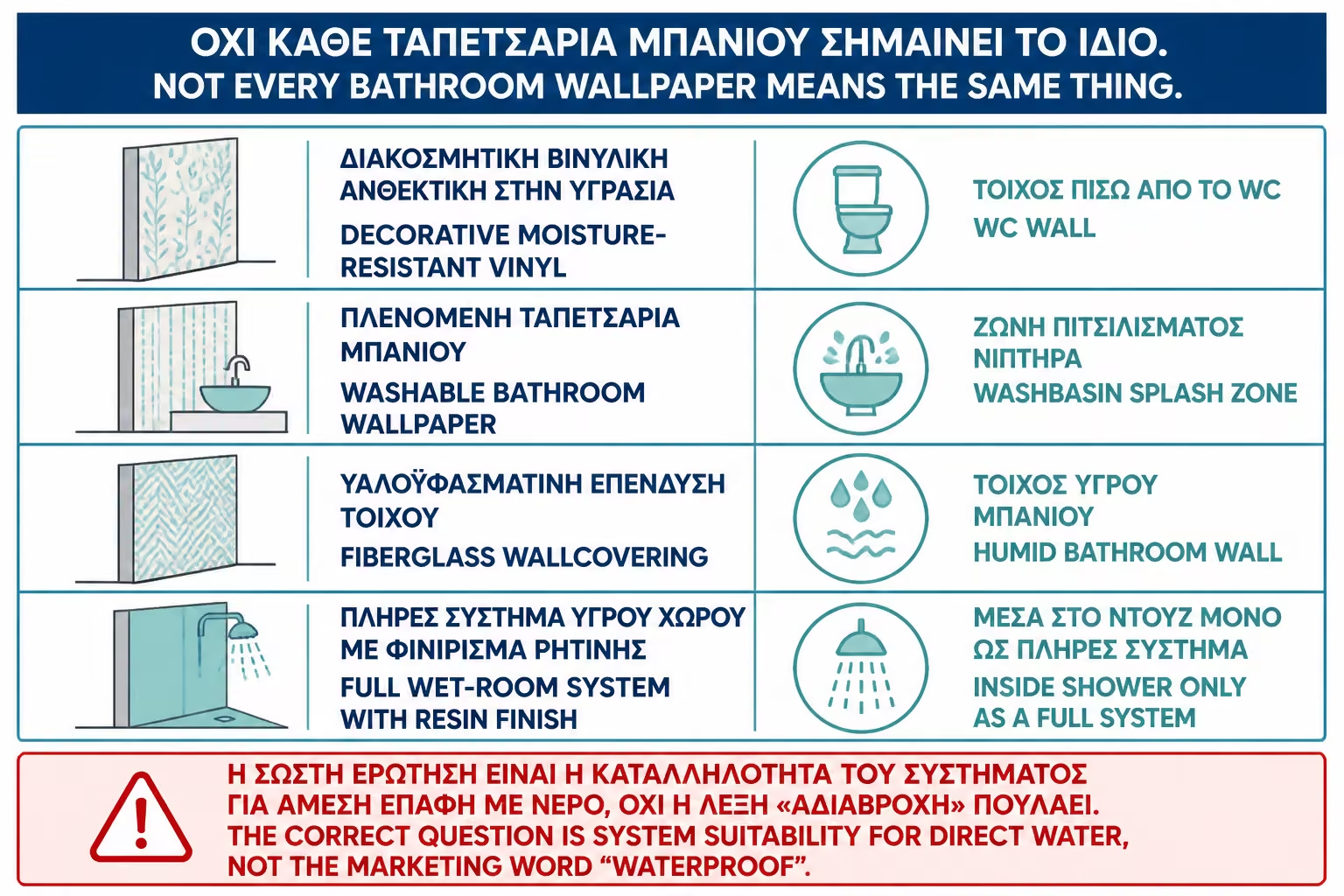
But this does not mean that every "waterproof wallpaper" is suitable for showers. Herein lies the most important pitfall. Another is a vinyl wallpaper that can withstand the humidity of a bathroom or splashes around the sink, and another is a complete resin fiberglass system designed for direct contact with water. Many vinyl or peel-and-stick options may be water-resistant or washable, but the suppliers themselves often recommend avoiding direct contact with water in the shower.
In this guide we'll look at what waterproof bathroom wallpapers are, what the difference is between vinyl and fibreglass, when they can actually go inside the shower, what role special resins play, what application specifications are needed and when it's better to stick with tile, tread or panel.
The term "waterproof wallpaper" is often used very generically. In the market it can mean many different things: vinyl wallpaper that withstands moisture, washable bathroom wallpaper, self-adhesive lining, fiberglass wallcovering or a complete system for wet rooms with a resin finish. These solutions do not have the same durability nor the same use.
A simple wallpaper listed as "bathroom friendly" may be suitable for a WC wall, a wall behind the sink, or a spot that has water vapor but no direct water flow. It doesn't mean it can go inside the shower cubicle. The shower is a much harsher environment: direct contact with water, shampoo, soap, salts, detergents and mechanical stress from daily cleaning.
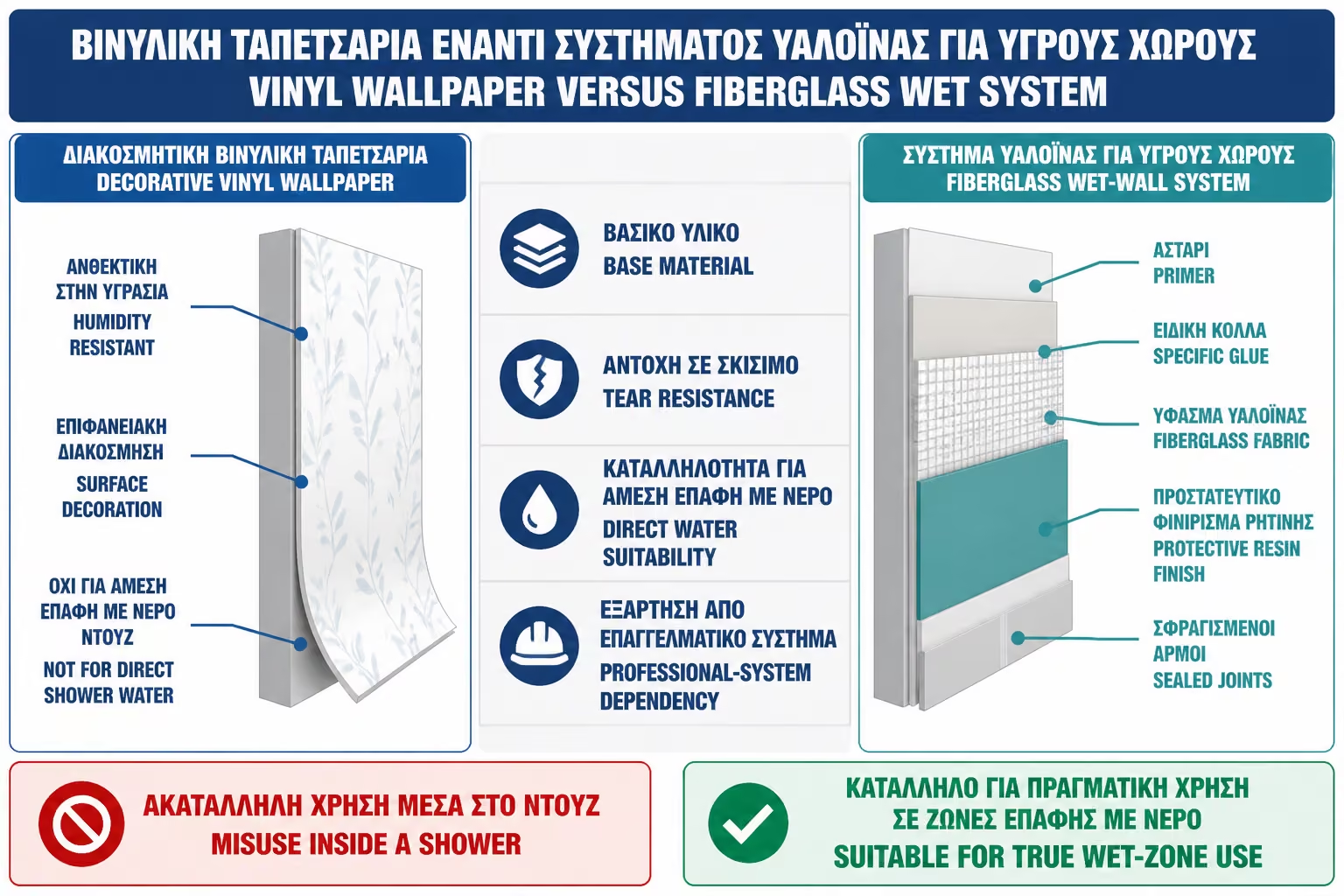
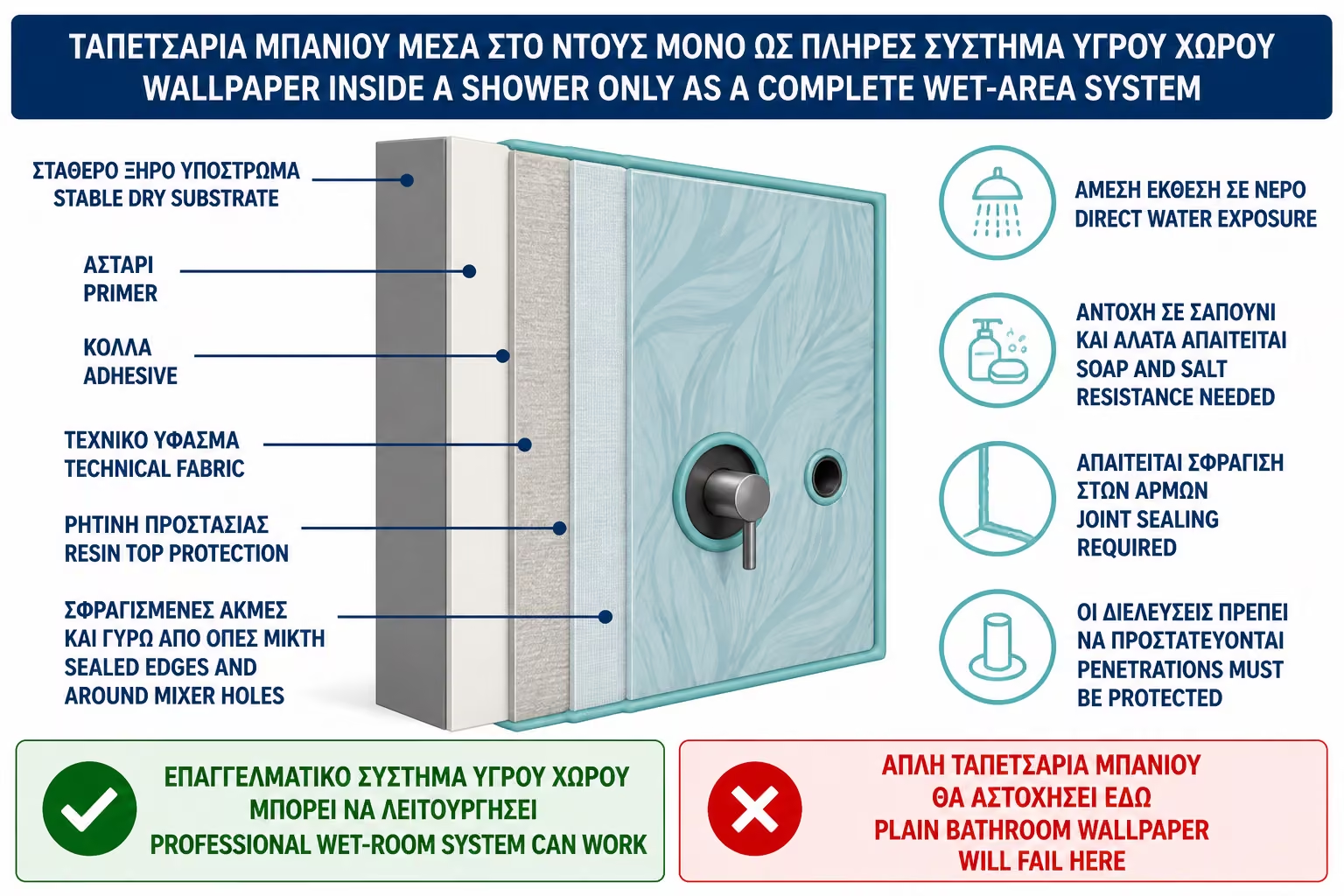
In contrast, real waterproof wallpaper systems for showers work like a multi-layer coating. They usually have a primer, a special adhesive, a technical fabric — often fiberglass — and a protective resin or varnish that seals the surface. Their durability does not derive from the decorative design. It arises from the system that protects it.
That's why the right question is not "is the wallpaper waterproof?". The right question is "is it a complete system for direct contact with water in a shower or just moisture resistant wallpaper?".
Vinyl wallpapers are among the most popular choices for bathrooms, because their surface has a laminated or non-porous layer that resists moisture better than a classic paper wallpaper. In a well-ventilated area, on a wall away from the shower, they can work well and give a very beautiful decorative effect.
They are suitable for guest WCs, for a wall above a tile, for a decorative surface behind a sink since it does not receive a lot of water, or for bathrooms where the use is mild. The vinyl surface is easier to clean and does not absorb moisture like paper. Recent bathroom guides report that the vinyl surface acts as a barrier that reduces absorption and helps stabilize the material in areas with water vapor.
The limit is direct contact with water. A vinyl wallpaper can withstand water vapor, but the glue, joints, edges and backing can be affected if they receive water every day. Especially inside the shower cubicle, water can seep through a small joint or edge and start peeling the material. This is why simple vinyl solutions should not be presented as equivalent to a tile or full wet system.
Fiberglass wallpapers or glass fabrics are a more technical solution. They are not paper based. Their material has glass fibers, so it is more stable, more resistant to tearing and more suitable for applications where strength is required. Combined with the right adhesives and protective resins, it can form part of a wet room system.
The difference is especially noticeable in the shower. A fiberglass wet system is not just wallpaper that "doesn't break easily". It is a coating that works together with primers, adhesives, resins and final seals. For example, some branded wet systems are described as complete systems with primer, specific glue, fiberglass fabric and protective finish, designed for wet environments such as bathrooms, showers and spas.
This is the technology that allows "wallpaper" to be inserted into a shower cabin. But the word wallpaper here can be misleading. We are not talking about a roll that someone sticks to the wall by himself. We are talking about a professional coating system, with specific layers and technical details. If one step is omitted, the strength is reduced.
Special resins are the element that makes the big difference in shower systems. The decorative surface alone is not enough. It must be sealed so that it does not receive water, soaps, salts and cleaning agents. The protective resin creates the final barrier and allows cleaning without damaging the design.
Depending on the system, polyurethane, epoxy or other special resin protections may be used. The purpose is to create a continuous, non-absorbent surface. In premium wet wallcovering systems, manufacturers emphasize resistance to detergents, washing, impacts and scratches, but always as part of a complete system and not as a simple wallpaper.
The important thing is the continuity of the resin. If there are gaps in the joints, poor edge fit or weak points around batteries and profiles, water can find its way behind the cladding. The resin only protects when applied correctly and in the thickness/layers provided by the manufacturer.
Yes, but only if we are talking about a system designed specifically for wet areas and applied by a professional according to the technical instructions. It is not safe to take a common "bathroom" wallpaper, put it on the shower wall and expect it to work like a tile.
Inside the shower cabin, the surface must withstand direct and frequent contact with water. It must also withstand soaps, cleaners, salts and scrubbing. Special resin fiberglass systems can do this under proper application. In fact, some bathroom manufacturers and companies explicitly state that fiberglass wallpaper can be used in the shower area, unlike non-woven or simple solutions intended only for areas without direct contact with water.
The crucial word is "system". If the correct primer is missing, if the wrong glue is used, if the correct resin is not applied, if the joints are not sealed, if the substrate is damp or if the battery holes are not protected, the result can fail. Water is stubborn. It does not need a large opening to pass behind the lining.
One of the most important technical points is that waterproof wallpaper should not be treated as a single waterproofing of the shower without checking the system. Even if the finished surface is watertight, the structure must be properly protected underneath, especially in a shower cubicle or wet room.
In a proper shower, the substrate, the corners, the siphon, the supplies and the joints must have been studied. If wet wallpaper is placed over old tiles, we need to know if the old tiles are stable, if there is moisture behind them and if the joints are in good condition. If the system gets on a wet or loose base, it can trap a problem instead of solving it.
Practically, in the shower, wallpaper should be considered a high-strength finish, not an excuse to skip proper waterproofing, sealing and substrate testing. This applies to any material in the shower: tile, tread, panel, resin or wallpaper.
One of the great advantages of wet wallpaper systems is that they can, in many cases, be applied over pre-existing surfaces such as old tiles. This reduces clutter, stripping, noise and time. For a bathroom renovation, especially when the owner wants a quick aesthetic change, this is very tempting.
But here too the rule applies: only if the base is suitable. Old tiles must be firm, clean, free of hollow spots, free of moisture, free of flaking silicones and free of serious irregularities. Joints must be smoothed or they may show through the finished surface. The surface must be primed with a compatible primer.
If there are old leaks, swelling, black joints or mold, coating is not a solution. First the problem must be found and solved. Waterproof wallpaper can renovate the image of the bathroom, but it is not a technical way to "hide" moisture.
Waterproof wallpaper makes sense where we want a bold pattern, color or photorealistic image that would be difficult or expensive to achieve with tile. A wall behind the sink, a guest WC, a wall behind a free-standing bathtub or a wall inside the shower cabin can acquire a very special character.
In small bathrooms, wallpaper can act as an accent wall. It doesn't have to go in everywhere. A bold botanical design, a stone texture, a geometric pattern or a discreet mural can change the whole space. But if it gets on all the walls, especially in a small bathroom, it can become tiring.
In the shower, it's worth it when we want something other than tile and are willing to pay for a full professional wet system. Not worth it when we want the cheapest or fastest solution. In wet areas, proper fit is more important than design.
Wallpaper, even moisture-resistant, should be avoided in areas with poor ventilation, permanent moisture, condensation problems, mold or loose walls. If the bathroom is not properly ventilated and the walls stay wet for hours, any surface material will suffer.
It should also be avoided near places where there is frequent mechanical stress, knocks, poor sealing or many holes for fittings. Every hole in the finished surface is a potential weak point. If the system is not properly sealed around faucets, showers, cabinet profiles or shelves, water can get through.
Simple vinyl and peel-and-stick solutions should be avoided inside the shower cubicle. It can be a good choice for a WC or a wall away from water, but it is not a complete wet room system. This distinction must be clear in the offer.
The first big advantage is the freedom of design. With wallpaper we can have patterns, images, textures, large designs and custom aesthetics that would be difficult or expensive with tiles. We can make a wall look like a work of art, with leaves, stone, fabric, geometry or photographic composition.
The second advantage is the absence of tile joints. This gives a clearer picture and fewer spots that collect dirt. In wet wallpaper systems, the surface can be continuous and easy to wipe, as long as the resin has been applied correctly.
The third advantage is that renovation can be done over an existing surface, reducing stripping. In bathrooms where we don't want to strip tiles, this can be important.
The fourth advantage is the small thickness. Some wet wallcovering systems have a total thickness of around 1.5mm, which makes them useful in renovations where we don't want to change the dimensions or finishes too much.
The first drawback is that success is application dependent. It is not a material that forgives sloppy work. If joints, edges or holes are not properly sealed, water can enter.
The second disadvantage is that repairs can be seen. If the surface is torn, scratched or dented, the local restoration may not be visible, especially on designs with a repeat or photographic image. On a tile, if you have a spare piece, you change a tile. On wallpaper, the repair can be more complicated.
The third disadvantage is the cost of the actual wet systems. It doesn't compare to a cheap wallpaper. It is more comparable to a special bathroom lining. If someone offers you a "waterproof shower curtain" at a very low price, you need to ask what exactly is included.
The fourth disadvantage is the dependence on ventilation. Even if the finished surface is water resistant, a poorly ventilated bathroom creates condensation, mold and moisture everywhere. Wallpaper does not fix poor ventilation.
Use the table below as a quick reference for the key points of this section.
| Category | Appropriate use | Can he get in the shower? | What to watch out for |
|---|---|---|---|
| Simple paper wallpaper | Dry areas | No | Moisture, swelling, mold |
| Vinyl bathroom wallpaper | WC, walls away from direct water | Usually not | Good for steam, not continuous water flow |
| Peel-and-stick vinyl | Quick decoration in soft zones | Not for a shower cabin | Risk of delamination at the edges |
| Fiberglass wallcovering | Wet areas, depending on the system | Only if it is part of a wet system | It needs special glue and protection |
| Full wet wallpaper system | Shower, spa, wet areas | Yes, under proper application | Primer, glue, fiberglass, resin, seal |
The table shows the main technical difference. The word "wallpaper" alone is not enough. We need to know the system.
Proper application starts with the substrate. The wall must be clean, dry, stable and smooth. If there are old tiles, they should be checked. If there are joints, they must be smoothed. If damp or mold is present, it must be treated before cladding.
Then the appropriate primer, the special glue, the fiberglass or the technical fabric, and then the protective layers of resin are applied. In places with direct contact with water, joints and edges must be sealed with utmost care. The finished surface should be continuous, without open spots.
Drying and curing times are also important. The cabin should not be used until the resin has fully cured. If used too early, the protection may not have developed full strength.
Wet system waterproof wallpapers are usually easy to clean because their surface is sealed with resin. They don't have tile joints, so the usual problem of blackened joints doesn't exist. This is a big plus, especially in the shower.
However, harsh cleaners, wire sponges or abrasive products should not be used randomly. The surface must be cleaned with products compatible with the protective system. If the manufacturer allows specific detergents, we follow these instructions. If there are no instructions, we don't improvise.
The salts are still there. On dark patterns or glossy surfaces they may appear more pronounced. A quick rinse and squeegee after showering helps a lot. As with the press or panels, easy maintenance does not mean zero maintenance.
The great strength of wallpaper is design. It can give botanical patterns, tropical leaves, geometric patterns, stone, marble, fabric, cement textures or custom images. In an otherwise simple bathroom, a wallpaper wall can become the main identity element.
In small WCs, you can be more daring. A bold pattern throughout the space can work because the use is short and the space is decorative. In a master bathroom, especially in the shower, it is good to have more balance. A strong design on a wall and calm surfaces around it give a more timeless effect.
In a shower cubicle, designs with too little detail can be tiring or show salt more easily. Larger, calmer patterns often work better. Wallpaper should look like a designed surface, not a hastily stuck poster.
In the Greek market of 2026, prices fluctuate widely because there are very different product categories. A simple vinyl bathroom wallpaper can be relatively economical as a material, but it should not be compared to a system for a shower cabin. The truly waterproof fiberglass wet systems are premium solutions and are priced as a special investment.
For example, for simple vinyl solutions on walls not in direct contact with water, the cost can range at more affordable levels, depending on the product and the work. For a complete in-shower system, with primer, adhesive, fiberglass, resin and professional application, the cost can approach or exceed solutions such as premium tile or tread, especially on small surfaces where there are minimal application fees.
A realistic approach to a wet system in a shower can be quite higher than a simple wallpaper, because it involves many stages and the responsibility of waterproofing. The final price should clarify whether it includes substrate preparation, smoothing of old joints, system materials, resins, VAT, transport and warranty. If the price sounds like simple wallpaper, we're probably not talking about a real shower system.
Use the table below as a quick reference for the key points of this section.
| Solution | Advantage | Disadvantage |
|---|---|---|
| Tile | Very proven solution, great durability, easy local replacement | Joints, more cutting work |
| Presser | Single minimal surface without tile joints | It depends a lot on the applicator and sealer |
| Bathroom panels | Fast coverage of large surfaces, few compounds | Limitations on designs/dimensions, silicone details |
| Wet wallpaper system | Great design freedom, uniform decorative surface | It wants a complete system, proper application and attention to joints |
| Vinyl wallpaper | Economical decoration in wet but not wet areas | Not for direct use in the shower |
Wallpaper does not replace all solutions. It is very good when planning is the main goal and the system is correct. For heavy, simple, everyday use without much care, tile or panels may be more predictable.
The first mistake is the confusion between moisture-resistant and waterproof. A wallpaper that can withstand water vapor is not necessarily suitable for showers.
The second mistake is the application on a bad substrate. If there is moisture, mold or a loose surface, wallpaper will not solve the problem.
The third mistake is omitting resins or using the wrong protector. In wet systems, the final resin is not optional. It is a key part of endurance.
The fourth mistake is bad associations. Water passes through edges, holes and finishes. That is where the greatest care is needed.
The fifth mistake is choosing a bold pattern without taking into account the size of the bathroom. In small spaces, the design should be chosen sparingly.
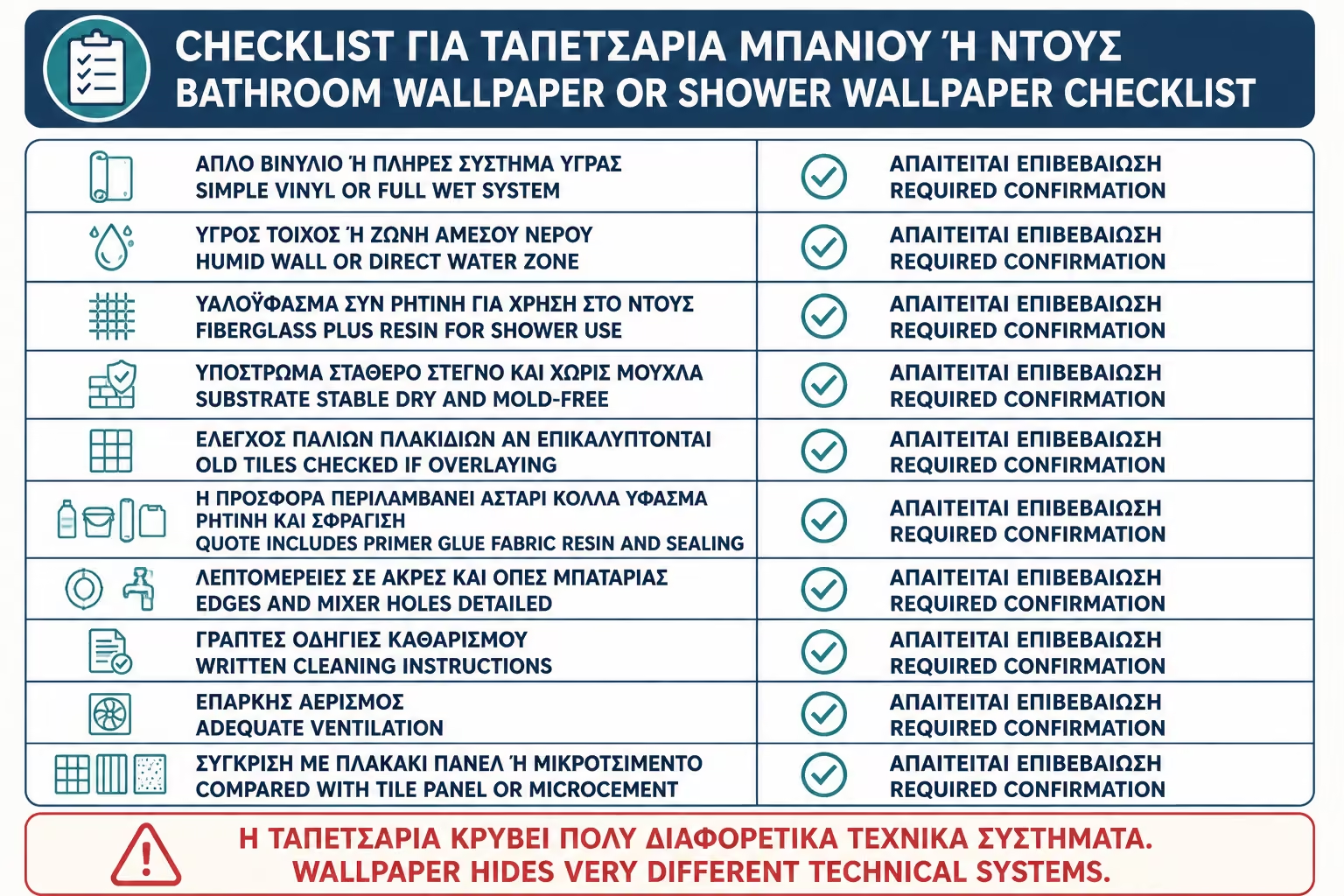
Use the table below as a quick reference for the key points of this section.
| Question | Yes / No |
|---|---|
| Do you know if the wallpaper is simple vinyl or a full wet system? | Yes / No |
| Will it go into a damp wall or in direct contact with water? | Yes / No |
| If it goes in the shower, is there fiberglass and protective resin? | Yes / No |
| Is the substrate firm, dry and mold-free? | Yes / No |
| If going over tiles, have voids and joints been checked? | Yes / No |
| Does the quote include primer, glue, fabric, resins and sealing? | Yes / No |
| Are the joints, edges and holes for batteries correctly provided? | Yes / No |
| Are there written cleaning instructions? | Yes / No |
| Is the bathroom adequately ventilated? | Yes / No |
| Have you compared costs with tile, panel or tread? | Yes / No |
If most of the answers are “no”, the choice is not yet safe. Especially for a shower cabin, you should not proceed without a full technical description.
If you want wallpaper inside the shower stall, don't just buy something that says “waterproof” or “bathroom wallpaper”. Ask for a complete wet system: suitable substrate, primer, special glue, fiberglass cloth, protective resin and proper sealing of edges, joints and supplies. Vinyl wallpaper can be great for bathroom walls away from direct water, but the shower needs another class of material. On the water, it's not usually the design that fails; it's the detail of application that fails.
Waterproof bathroom wallpapers have opened an impressive path in the decoration of wet spaces. They allow designs, patterns and custom surfaces that are difficult to achieve with tile, while full fiberglass wet systems can, with proper application, even be used inside the shower cabin. This is a real technological development, not just a decorative fad.
But a strict separation is needed. A vinyl bathroom wallpaper is not the same as a fiberglass and resin system for direct contact with water. The first may be suitable for water vapor and splashes. The second can be designed for a shower. If we confuse these two categories, the result can be delamination, swelling, moisture behind the surface and expensive repair.
The right choice starts with the use: WC, steam bath or shower cabin? Then comes the system, substrate, application, sealing and maintenance. When all of this is done right, waterproof wallpaper can transform a bathroom into a space with a real design identity. When treated like a simple sticker, it becomes a risk in one of the most demanding areas of the house.
Return to category.
Go to categoryReturn to the central guide.
Go to guide