
Bathroom Surface Materials & Finishes
Return to category.
Go to categoryPressed cement mortar, or microcement as it is more commonly called today, is one of the materials that has transformed the look of modern bathrooms. Where tile creates joints, breaks and repeated patterns, microcement gives a calmer, more continuous surface. The eye does not stumble on grout lines. The room feels cleaner, more architectural and often more spacious.
That is also why it has become so closely associated with minimal, boutique and Cycladic bathrooms. In the Cyclades, the feeling of a continuous white or off-white finish, curves, built showers, soft edges and natural tones creates a result that looks simple but actually demands very good technique. Microcement can deliver exactly that feeling: a surface without visible joints, with natural texture, subtle tonal variation and a handmade character.
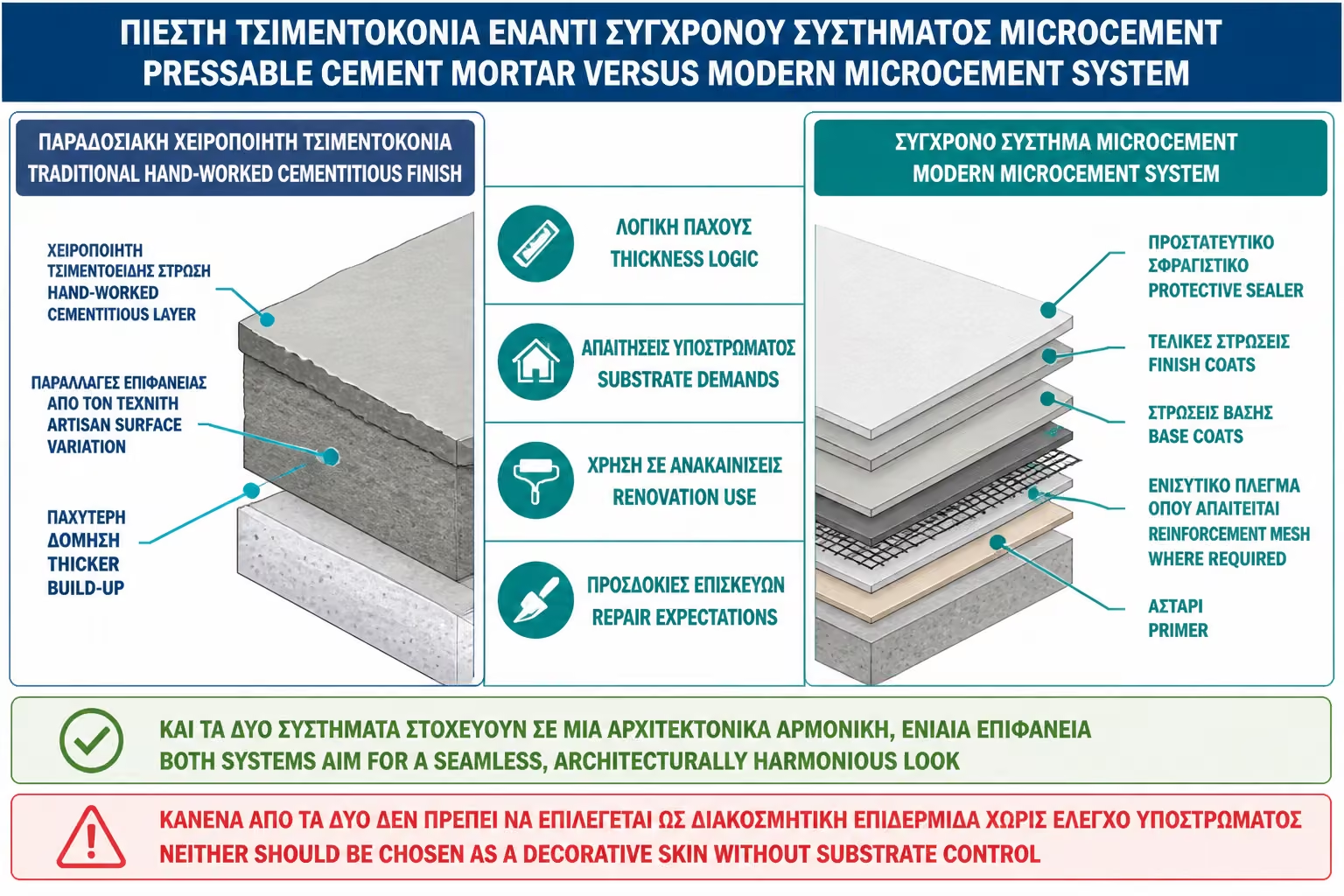
Its big advantage is not only visual. Because it has no classic tile joints, there are fewer places for dirt, limescale and mold to collect. That is why it is often presented as easier to maintain than tiled surfaces with many grout lines. But that statement needs context. Microcement is not a magic waterproof material. It is a multi-layer system that has to be applied correctly: substrate, primer, reinforcement where needed, microcement coats, sanding, final sealer or varnish, and proper curing. Applicators consistently stress that bathroom microcement always relies on a suitable sealer, while good preparation and proper waterproofing below the finish are critical in wet areas.
The most common mistake is to judge microcement as if it were just a color or a decorative skim coat. It is not. Especially in a bathroom, where there is water, steam, soap, cleaners, slopes and drains, it has to be treated as a technical system. Applied correctly, it can produce an excellent result. Applied carelessly, it can lead to cracks, peeling, stains, dull patches or moisture problems.
In this guide we will see what pressed cement mortar is, how it differs from tiles, why it has dominated modern and Cycladic bathrooms, which colors work best, where it can be applied, what to look out for in a shower and floor, how much it costs in the Greek market and what mistakes to avoid before deciding.
In everyday language, the terms "pressed cement mortar" and "microcement" are often used interchangeably. In practice, they describe related, but not always identical, applications. Traditional pressed cement mortar refers to a cement-based material that is applied and worked by hand, creating a smooth or slightly clouded finish. Microcement is usually a more modern, fine-grained, polymer-modified, low-thickness system applied in layers over existing surfaces or new substrates.
The defining feature of both is the seamless look. There are no classic tile joints. The surface reads as continuous, with small handmade variations, soft movement and tonal shifts. That is exactly what makes it so appealing. It is not industrially flat, but it is not rustic or crude either. Done properly, it can look extremely refined.
Microcement is usually applied in a very small thickness, often just a few millimeters, which makes it useful in renovations where we want to avoid major level changes. It can be applied over old tiles, cementitious screeds, suitable plasterboard, cement board and other stable surfaces, under the right conditions. But "it can go over tiles" does not mean "it can go over anything". The substrate still has to be solid, clean, free of hollow spots, free of moisture and properly prepared.
Microcement suits modern aesthetics because it removes visual clutter. It has no joints, repeated modules, dividing lines or loud patterns. A bathroom finished with microcement on the walls and floor looks more unified and calmer. That continuity is especially useful in small bathrooms, where too many grout lines and too many different materials can make the room feel tighter.
Its surface also has a handmade character. It is not perfectly uniform like an industrial tile. It carries soft clouding, tonal variation and the feel of a natural material. That controlled imperfection is part of its charm. In a modern bathroom, it adds warmth without needing a strong color.
Another advantage is how easily it works with other materials: wood, black taps, stainless steel, natural stone, terrazzo, built counters, glass screens and minimal sanitary ware. It can act as a neutral background or as the main material of the whole room.
The Cycladic aesthetic is based on simplicity, light, curves, white or earthy surfaces and a sense of built space. Microcement naturally fits this logic. It can create continuous surfaces, without obvious joints, reminiscent of whitewashed or sculpted walls, but with a more modern and technically controlled application.
In Cycladic bathrooms we often see built showers, built counters, curved corners, small niches, off-white tones, beige, sand, greige and natural stone. Microcement can wrap all of those in one continuous material. Instead of tile on the wall, tile on the floor and a different counter surface, we get a continuous language that makes the room feel almost carved out.
But the secret is not to confuse simple with rough. The Cycladic bathroom looks simple when done right. Behind the white surfaces are correct slopes, waterproofing, technical layers, sealing and corner details. If these are missing, the image quickly deteriorates.
The first advantage is the seamless image. The absence of tile joints makes the bathroom look cleaner, more minimal and often larger. In small spaces, that matters a lot. The walls and floor can read as one continuous surface, without constant visual breaks.
The second advantage is flexibility. Microcement can be applied to walls, floors, counters, built basins, niches, shelves and showers, as long as the chosen system is suitable for that use. That allows for more architectural solutions than a standard tile finish.
The third advantage is that the joints that need to be cleaned are reduced. Many applicator sources tout ease of cleaning as a key benefit of microcement because the smooth, jointless surface doesn't collect dirt the way tile joints do.
The fourth advantage is aesthetic customization. There are many shades, from white and sand to greige, grey, charcoal, terracotta and green or beige tones. The surface can become smoother, more matte, cloudier or more “concrete”, depending on the system and the applicator.
Microcement is not a risk-free solution. The first disadvantage is how dependent it is on the applicator. Unlike an industrial tile, where the material comes ready-made, microcement is created on site. The final result depends on preparation, workmanship, coat buildup, timing, sanding and the sealer.
The second disadvantage is that it can crack if the substrate moves, if the reinforcement is not done correctly or if it is applied on an unsuitable base. Microcement is a thin top layer. It does not fix structural problems. If there is a crack, moisture, hollow tile or poor grout underneath, the problem may appear on the finished surface.
The third disadvantage is the sensitivity of the final varnish. Durability in daily use depends largely on the sealer or protective varnish. If this is worn, scratched, misapplied or not maintained, the surface can become more vulnerable to stains and moisture. The application guides emphasize that microcement is a multi-product, multi-stage system, not a single material that is simply spread.
The fourth disadvantage is that repairs can be seen. If a spot is hit or scratched, the local restoration is not always invisible, because the surface has hand-made clouds and a uniform color.
Walls are usually the safest application for pressed cement mortar. They do not take foot traffic, they do not suffer the same mechanical stress as the floor, and they show the continuous texture very well. A wall behind the basin, a shower wall or the full wall envelope of a small bathroom can gain a calm, modern character.
On walls not in direct contact with water, the application is simpler. In the shower zone, however, the press should be treated as a wet application. It needs proper waterproofing underneath, a proper system and proper final protection. The sealer protects the surface, but it should not be the only thing that keeps water out of the structure.
In older bathrooms, microcement can only go over existing tiles if those tiles are stable and properly prepared. If there are hollow tiles, cracks, moisture or delamination, those problems must be solved first. Otherwise, the new finish simply inherits the old defect.
On the floor, the requirements are greater. The floor receives pressure, water, cleaners, small knocks, friction and possible slipping. So choosing a system should be based on durability and slip resistance, not just looks.
A very smooth, glossy finish may look beautiful, but in a wet bathroom it can be dangerous. For a bathroom floor, a matte or satin finish with a suitable anti-slip behavior is usually preferred. The applicator must explain what finish he is proposing and how it behaves when wet.
Also, the floor must be stable and without movement. If applied over old tiles, they must be very well adhered. If there is underfloor heating, the system instructions and the correct times must be followed. The treadle can give a great image to the floor, but it does not forgive a bad base.
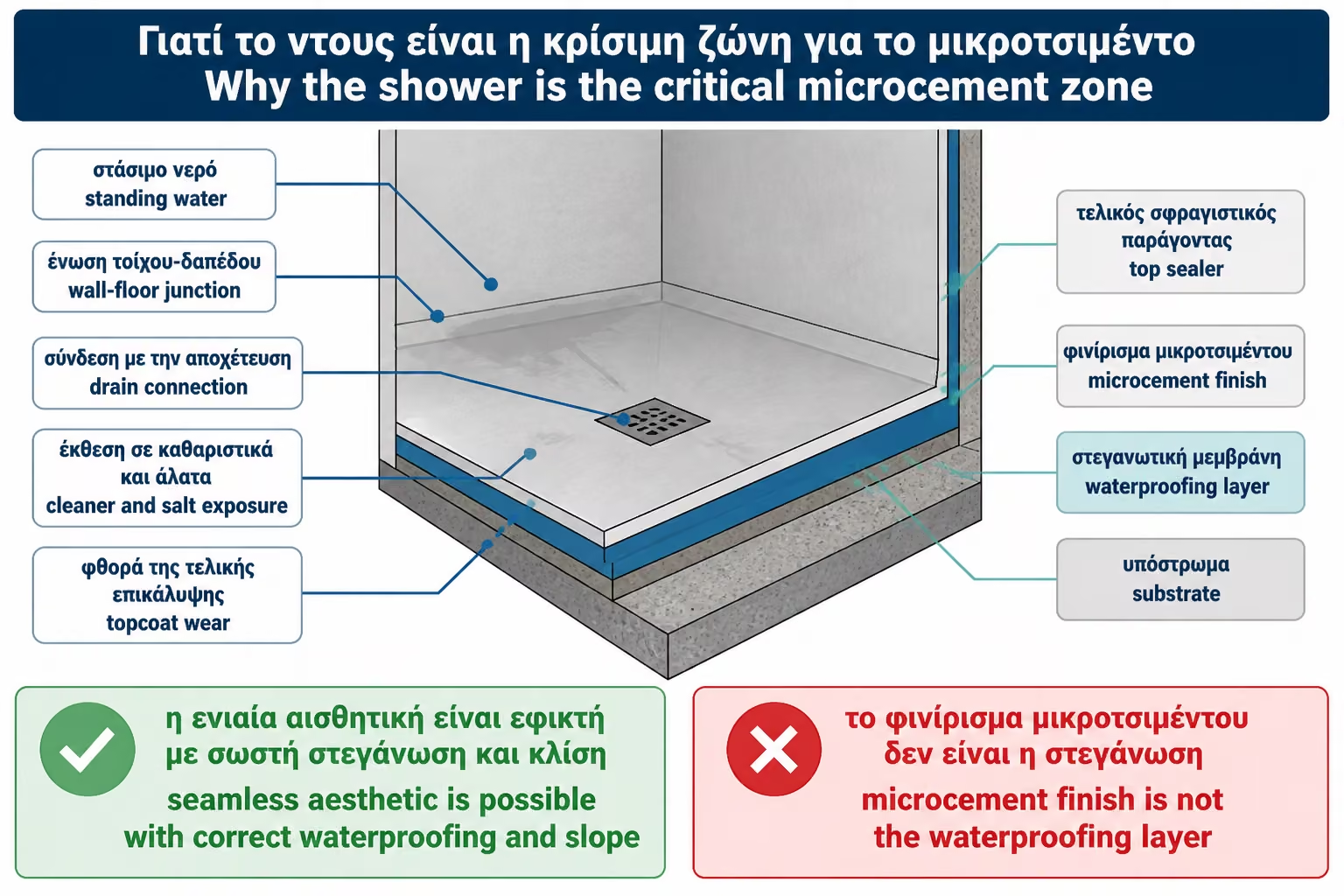
The shower is the most demanding application. There, the surface is exposed to constant water, soaps, shampoos, limescale, cleaners and temperature changes. If done correctly, it can create an impressive seamless result, especially in walk-in showers and Cycladic bathrooms. If done badly, it can create serious problems.
The main thing the owner needs to understand is that microcement does not replace waterproofing. In wet zones, a suitable waterproofing system is still needed under the finished surface. Recent microcement guides emphasize that while microcement can be water-resistant as a finish, long-term durability in wet areas depends on the correct waterproofing system underneath.
On the shower floor, the falls must be flawless. If water remains on the surface, stress increases and limescale appears faster. The drain, corners, wall junctions and meetings with other materials all have to be designed correctly. Microcement may look seamless, but the difficult points do not disappear. They simply need to be solved with more care.
One of the biggest advantages of microcement is that it has no tile joints. This makes the bathroom look cleaner and reduces places where dirt collects. But that does not mean there are no technical interruptions, corners, transitions or points that still need elastic sealing.
In every bathroom there are level changes, wall-to-floor joints, drains, taps, glass screens, furniture edges and frames. Those points need the right detailing. If microcement is simply carried everywhere without proper treatment at the joints, cracks or failures may appear.
The seamless image is an aesthetic result. The technical work behind it still has to respect building movement, moisture and changes of material. That is one of the reasons microcement needs a specialist applicator, not just a general handyman.
Color choice is decisive. Microcement is not like a printed tile that always looks exactly the same. Its appearance is affected by the buildup, the hand of the applicator, the light, the sealer and the overall texture. That is why a sample matters, ideally under realistic lighting conditions.
The classic Cycladic white or off-white gives brightness and clarity. It is ideal for small bathrooms, but needs attention because very white floors show hairs, marks and dirt more easily. Also, if the white is too cool, it can look "hospital" instead of natural.
Sand, beige and greige shades are often more practical and warmer. They give a Cycladic or spa feeling without the sensitivity of absolute white. They combine very well with natural wood, sanitary ware, built-in counters and black or bronze faucets.
Grays are more urban and minimal. A light gray can look elegant and clean, while a dark charcoal gives intensity but can darken a small bathroom. In hard water areas, very dark shades show salts more easily.
Use the table below as a quick reference for the key points of this section.
| Microcement shade | Sense of space | It suits me | What to watch out for |
|---|---|---|---|
| White / off-white | Cycladic, bright, clean | Wood, stone, sanitary ware | Shows dirt more easily on a floor |
| Sand / beige | Warm, natural, spa | Oak, bronze, white, natural stone | It needs proper lighting so it doesn't turn yellow |
| Greige | Contemporary and timeless | Black details, wood, beige | Very safe choice for residence |
| Light gray | Minimal, urban, clean | Inox, black, white | It can show cool woodless or warm light |
| Charcoal | Dramatic, premium | Large bathrooms, warm lighting | It shows saltiness and makes the space smaller |
| Terracotta / clay | Mediterranean, warm, special | Beige, white, natural wood | It needs moderation so it doesn't become intense |
| Green/olive | Natural, special, boutique | Stone, wood, white | Better as an accent or in a quiet space |
The table is a useful starting point. In practice, the final shade should always be approved from a sample, because microcement has natural variation and changes noticeably with the light.
One of the commercial advantages of microcement is that it can, under conditions, be applied over old tiles. This reduces stripping, debris, noise and time. In bathroom renovations, it is tempting: instead of stripping everything, the old surfaces are covered and a new unified image is created.
But proper control must be done. Old tiles must be firmly glued. There should be no hollow spots, cracks, loose joints, moisture behind the liner or peeling. If they exist, they must be corrected or removed. Otherwise, the new system rests on a problematic foundation.
Also, the joints of the old tiles must be properly filled and smoothed so that they do not show through the finished surface. Adhesion primers, reinforcing layers and a mesh or special system are usually required depending on the manufacturer. The correct application is not a simple pass over the old tiles.
In the bathroom, waterproofing matters more than the final image. Microcement may look seamless, but if there is no proper waterproofing system underneath, water can create problems over time. This is especially true in showers, corners, tap penetrations and wall-to-floor junctions.
The correct procedure depends on the system and the substrate. It may include cementitious or polyurethane waterproofing, corner tapes, special pieces around drains and proper preparatory layers before the microcement goes on. The final sealer should never be the only line of defense against water.
A practical example: in a walk-in shower, the owner only sees the beautiful seamless surface. But if the joint around the linear drain is not done correctly, the problem may later appear in the floor below or on the adjacent wall. Microcement does not forgive those mistakes, because repair is not as simple as replacing a single tile.
The final sealer or varnish is decisive for how microcement behaves in a bathroom. It is the layer that protects against water, stains and daily wear. If the sealer is unsuitable, too thin, badly applied or worn out, the surface becomes more vulnerable.
There are different types of protectors: matte, satin, glossier, polyurethane, water-based or other based, depending on the system. For a bathroom, a system suitable for a wet area must be chosen. The use of pH-neutral cleaners and soft cloths is often recommended for daily microcement maintenance, so as not to disturb the final protective layer.
The surface also needs curing time. It should not be used heavily immediately after application. Some application guides state that light use can begin after about 48 hours from the final sealer, while full attention continues for longer, even up to 14 days depending on the system. The exact time should always be given by the applicator and the manufacturer of the material.
Microcement is easy to clean when it has been applied properly and the sealer remains in good condition. The absence of tile joints is a major advantage. Mild cleaning with water and a neutral detergent is usually enough. There is no need for aggressive scrubbing of grout lines, as with tile.
However, very strong chemicals, acid or alkaline cleaners, hard sponges and abrasive products must be avoided, unless the system manufacturer expressly allows them. Common anti-salt bathroom cleaners can be harsh on the varnish or sealer. In areas with hard water, it is best to wipe the shower surfaces more often to prevent scale build-up.
Maintenance is not difficult, but it must be correct. If the surface begins to dull, retain water or stain more easily, the protective layer may need to be checked or renewed. This should be done by an applicator who knows the system, not a random varnish.
Microcement can be finished in different textures and sheens. That means slip resistance is not the same in every application. A very smooth finish may be easy to clean, but more slippery when wet. A rougher finish may be safer, but it can hold more dirt or limescale.
For a bathroom floor and especially for a shower, a clear answer must be sought from the installer: what anti-slip behavior does the proposed system have? Is it suitable for wet barefoot use? How is the surface cleaned? Is there a more slip resistant sealer or texture option?
Safety must come before a perfectly smooth image. In bathrooms with children, the elderly or intensive use, it is not worth sacrificing adhesion to make the surface appear more "velvety". In the shower, water and soap completely change the behavior of the floor.
The cost of microcement in Greece depends on the system, the applicator, the surface area, the level of preparation, whether it is used on walls or floors, whether there is a shower, whether it is going over old tiles and which sealer is specified. It is not correct to compare it directly with the price of a simple tile per square meter, because it involves more stages of work.
For a realistic picture, professional microcement application in Europe is often quoted in ranges of around €60–100/m2. or even 60–150€/sq.m. depending on country, substrate and difficulty, while custom bathrooms or complete systems can cost more as a total project. In the Greek market, for residences, a reasonable indicative approach can be around €45–90/sq.m. for simpler applications and higher for demanding bathrooms, showers, built-in elements, special varnishes or a lot of preparation. Actual prices strongly depend on area, surface, workshop, system, VAT and what is included in the offer.
Important: many contractors have a minimum project fee. In a small bathroom, the price per square meter can therefore be higher because there are many stages, small surfaces, corners, drying times and repeated visits. Microcement is not always cheaper than tile. It is often an aesthetic and technical choice rather than a budget one.
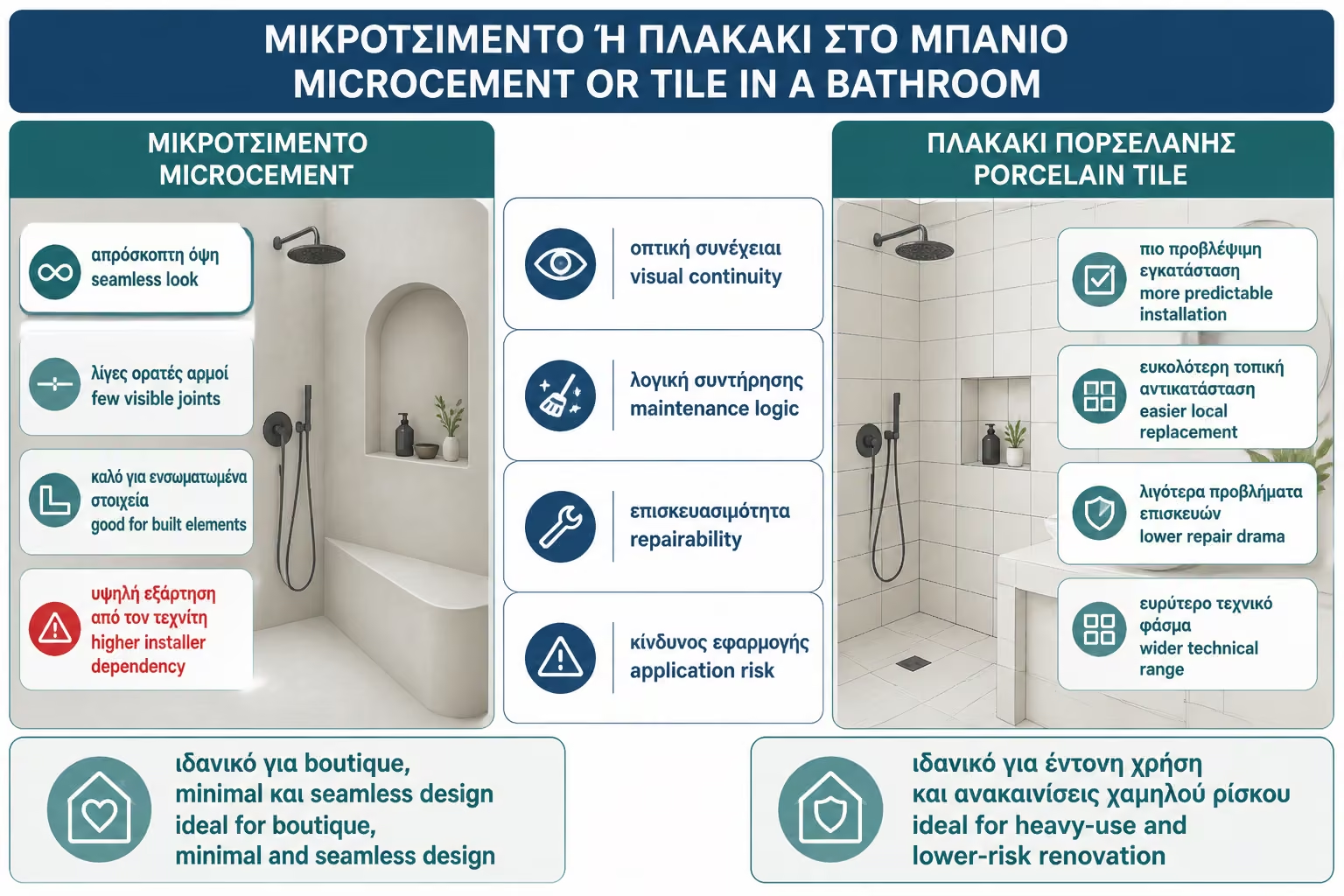
Microcement is ideal when we want a seamless, minimal, handcrafted surface without tile joints. It suits modern, Cycladic, boutique and spa bathrooms. It is especially strong when we want to wrap built elements, curves, counters or surfaces that would not look as clean in tile.
Tile is more predictable, easier to replace locally and has a huge variety of technical features. On heavily used floors, in rental properties, on projects where we want lower applicator risk, or where local repair is important, tile may be a safer choice.
There is no single right answer. There is only the right material for the intended use. An owner who wants a seamless Cycladic look and accepts the need for a good applicator and proper maintenance will probably love microcement. An owner who wants extremely hard use, easy local replacement and less dependence on application quality may prefer porcelain tile in a similar aesthetic.
Use the table below as a quick reference for the key points of this section.
| Criterion | Microcement | Tile |
|---|---|---|
| Aesthetics | Single, minimal, handmade | Wide variety of designs and textures |
| Joints | It does not have classic tile joints | Has joints that need cleaning |
| Application | It really depends on the applicator | More standard, but still needs a good craftsman |
| Maintenance | Easy if the sealer is right | Easy surface, but the joints need care |
| Repair | Local repair can be seen | If there is an identical tile, it is easier to replace |
| Shower | Very beautiful but demanding | More predictable with correct tile |
| Cost | Often higher due to multiple stages | Wide range, from budget to premium |
| Ideal use | Minimal/cycladic bathrooms, built-in elements | All uses, depending on technical characteristics |
The table shows that microcement does not simply replace tile. It represents a different construction logic and a different visual language.
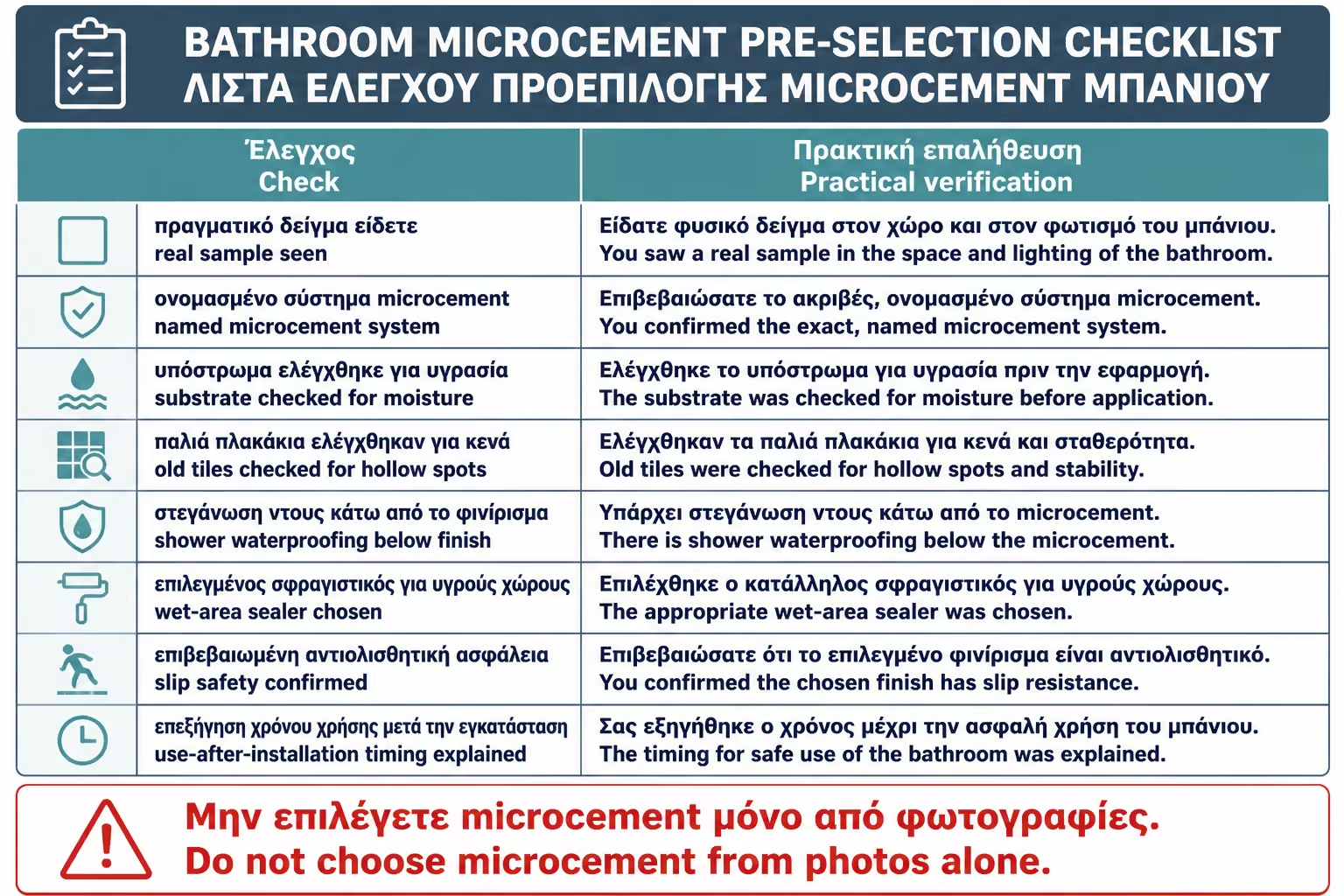
The first mistake is choosing from photos without seeing a real sample. Microcement has clouding, a handmade character and natural variation. The owner should understand from the start that it will not be perfectly uniform like tile.
The second mistake is applying it over a problematic substrate. If the old tiles are hollow or there is moisture underneath, microcement will not solve the issue. It will only hide it for a while.
The third mistake is the lack of proper sealing in the shower. The sealer does not replace the waterproofing under the system.
The fourth mistake is the use of inappropriate cleaners. Very strong or acidic cleaners can wear down the protective layer.
The fifth mistake is choosing a very dark color in a shower with hard water. The salts will appear more pronounced and the maintenance will be more demanding.
Use the table below as a quick reference for the key points of this section.
| Question | Yes / No |
|---|---|
| Have you seen an actual sample and not just a photo? | Yes / No |
| Do you know which microcement system will be applied? | Yes / No |
| Has the substrate been checked for stability and moisture-free? | Yes / No |
| If it goes over old tiles, have hollow spots been checked? | Yes / No |
| Is there proper waterproofing under the microcement in the shower? | Yes / No |
| Has a sealer suitable for a wet area been chosen? | Yes / No |
| Have you asked about non-slip on the floor and shower? | Yes / No |
| Do you know when the space can be used after the application? | Yes / No |
| Do you have cleaning and maintenance instructions from the applicator? | Yes / No |
| Does the quote detail layers, materials, sealer, VAT and preparation? | Yes / No |
If several answers are "no," the decision needs more technical clarification. Microcement is a beautiful option, but it should not begin without a clear application system.
If you want pressed cement mortar in the bathroom, do not choose it only because it "has no joints." Choose it because you want a seamless, handcrafted surface and you are willing to get the full system right. Check the substrate first, ask for proper waterproofing in the shower, choose a sealer suitable for wet areas and ask about slip resistance on the floor. Microcement can elevate a bathroom when it is done by a skilled applicator. When it is done casually, it does not hide problems; it reveals them later in a much more difficult form.
Pressed cement mortar is one of the most powerful aesthetic options for modern bathrooms. It gives uniform surfaces, without classic tile joints, with a natural texture and calm luxury. That is why it has dominated minimal, boutique and Cycladic applications. It can make even a small bathroom look cleaner, brighter and more architectural.
At the same time, it is not a material to treat lightly. Its success depends on the substrate, the waterproofing, the coats, the applicator's hand, the sealer, the slip resistance and the maintenance routine. Especially in the shower, microcement needs technical seriousness. It is not enough for it to look good on day one. It has to withstand water, soap, cleaners, limescale and everyday use.
For owners who want a seamless, natural and modern effect, microcement can be an excellent choice. For those who want a fully predictable surface, easy local replacement and less dependence on application quality, tile remains the safer option. The right decision is not which material is "best," but which one suits the bathroom, the way it will be used and the owner's willingness to maintain it.
Return to category.
Go to categoryReturn to the central guide.
Go to guide