
Bathroom Surface Materials & Finishes
Return to category.
Go to categoryCorian and solid surface materials in general belong to that category of solutions that impress not only with their design, but with their logic. It's not natural stone, it's not tile, it's not simple plastic, it's not classic laminate. They are solid, man-made materials that can be cut, thermoformed, joined, sanded, and create uniform surfaces with nearly invisible joints. That is why we often see them in hotels, medical facilities, professional bathrooms, sink counters, sanitary surfaces and modern minimal homes.
In the bathroom, their great advantage is cleanliness. A countertop with a built-in solid surface sink may not have a joint between the countertop and the trough. A solid surface panel shower wall can have far fewer joints than a tiling. A construction with thermoformed curves can reduce the corners where dirt, soaps and salts usually collect. Corian is referred to by its manufacturer as non-porous, easy to clean and available in many shades, while the seamless appearance is its main characteristic.
But here precision is needed in the wording. Many people say that Corian is “absolutely anti-microbial”. Technically, it is more correct to say that it is non-porous and, when made with the right compounds, does not leave easy places for liquids, dirt and microorganisms to enter. That is, it supports a very high level of hygiene, especially because it is easy to clean and has no joints like tile. Corian itself promotes the combination of "non-porous, seamless, low VOC" and the ease of disinfection as key advantages for healthcare spaces.
This does not mean that the surface is self-cleaning or care-free. Solid surfaces can be superficially stained, scratched, dulled or stressed by very high temperature, harsh chemicals or misuse. The difference is that because they are solid and homogeneous materials, many micro-damages can be smoothed out or repaired, which is not the case with laminate, painted surfaces or some thin decorative panels. The official Corian maintenance guide states that deeper scratches can be removed, but repair is best done by professionals.
In this guide we will see what solid surfaces are, where they are used in the bathroom, why they are considered such a healthy solution, how the "invisible" joints are created, what you should pay attention to in sinks and wall coverings, what are the advantages and disadvantages, how much do they cost in the Greek market and when is it really worth choosing them instead of tile, marble, quartz, tread or panels.
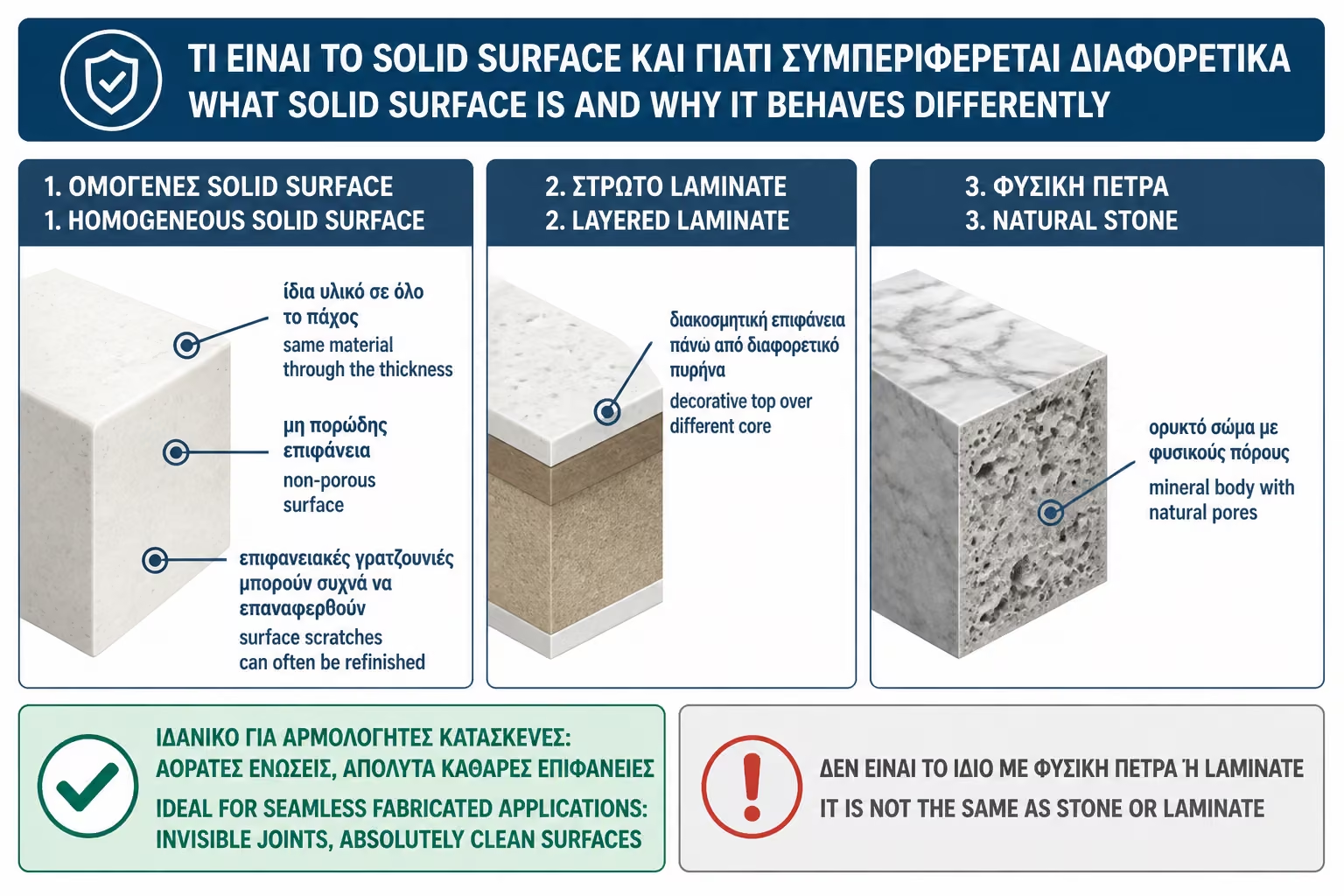
Solid surface materials are artificial solid materials that usually consist of acrylic or polyester resins, mineral fillers and pigments. Corian is the most well-known brand name, but there are other solid surface brands on the market. The basic idea is that the material has a single mass and is not just a thin decorative surface on top of a sensitive core.
This is of great importance. If a laminate is deeply etched, the substrate may be exposed. If a solid surface is surface etched, the wear is within the material itself and can, in many cases, be smoothed out. The surface has no natural resources like marble, no joints like tiles, and no woody core like many laminates.
The material can be cut into sheets, shaped into benches, glued with special glue in the same color, sanded and given an almost uniform appearance. It can also be thermoformed into curves, depending on the material, thickness and manufacturer. Corian states that the material can bend, curve, wrap and integrate seamlessly, which explains why it is used in custom constructions with curves and single elements.
The bathroom is a space with water, soaps, cosmetics, salts, cleaners and daily contact. He wants surfaces that are easy to clean, do not collect dirt in joints and do not stain easily. Solid surfaces answer exactly this need. They are not porous in the way that natural marble is, they do not have grout like tiles and they can create single structures.
In a sink counter, for example, the most difficult point is often the joint between the sink and the counter. Soaps, water, salts and silicone stains collect there. With an integrated solid surface washbasin, this joint can disappear visually and functionally. The result is not only more beautiful. It is also easier to clean.
The same applies to wall coverings. A shower wall with large solid surface panels has far fewer joint lines than tiles. This reduces the places where mold can grow or scale can build up. In business or public spaces, this is a big plus. At home, it translates to a cleaner look and less maintenance.
"Non-porous" means that the material does not allow liquids to easily enter its interior. This is the key difference compared to natural stones such as marble, which can absorb stains if not properly protected. On the solid surface, water, soap or everyday dirt stays on the surface and is easier to clean.
That doesn't mean it can't get dirty. A solid surface sink can collect scale. A white counter can show soap or make-up residue. A dark surface may indicate water more easily. But these are usually surface cleaning problems, not deep absorption like natural stone.
The non-porous nature of the material is also the reason it is used in areas with increased hygiene requirements. Corian promotes the material as seamless, nonporous and easy to clean in food service and healthcare environments, precisely because the surface has no pores and can be easily cleaned.
It is important not to overdo it. When we say that a solid surface is “antimicrobial”, the reader may understand that it kills germs on its own. This does not necessarily apply to all solid surfaces, unless there is special certification or additional antimicrobial technology. The more technically correct wording is that it is non-porous, easy to clean and, with proper construction without open joints, reduces places where dirt can accumulate or mold grow.
This is practically very important. In tiles, the grout is often the weak point. On countertops with undermount sinks, the silicone around the basin turns black. In natural stone, the pores can hold stains. On solid surfaces, when the joints are done correctly and the surface is cleaned regularly, these problems are greatly reduced.
So hygiene does not arise from a magical property. It results from design: non-porous material, uniform surfaces, fewer joints, correct joints and simple cleaning.
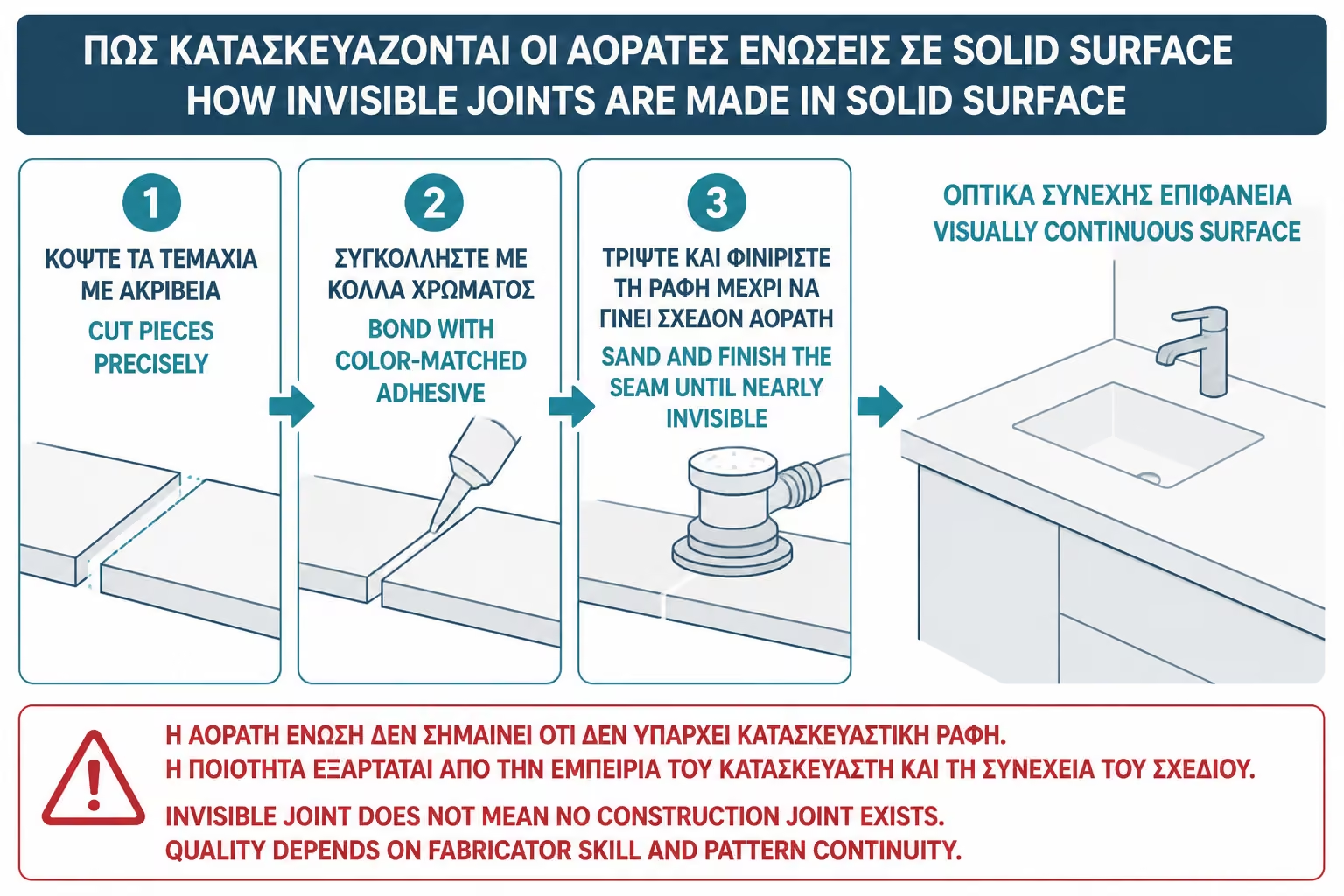
The great strength of Corian and solid surfaces is the possibility of creating almost invisible joints. The pieces are cut, glued with a special adhesive compatible with the material and then sanded/smoothed so that the joint disappears visually or becomes almost imperceptible. This allows for large structures, countertops with built-in sinks and trims with fewer visible interruptions.
In the bathroom, this has enormous practical value. A bench with a built-in trough does not have a classic joint where dirt collects. A shelf or an apron can appear as one body with the counter. A wall can have a large area without the grid of tile joints.
But we must make it clear that "invisible union" does not mean that there is no structural union. It exists, but it is processed so that it does not look and function as a single surface. The quality of the joint depends on the craftsman, material, color and texture. On completely monochromatic surfaces, a good joint can be almost invisible. In strong waters or marble effect designs, the continuity of the pattern can be more difficult.
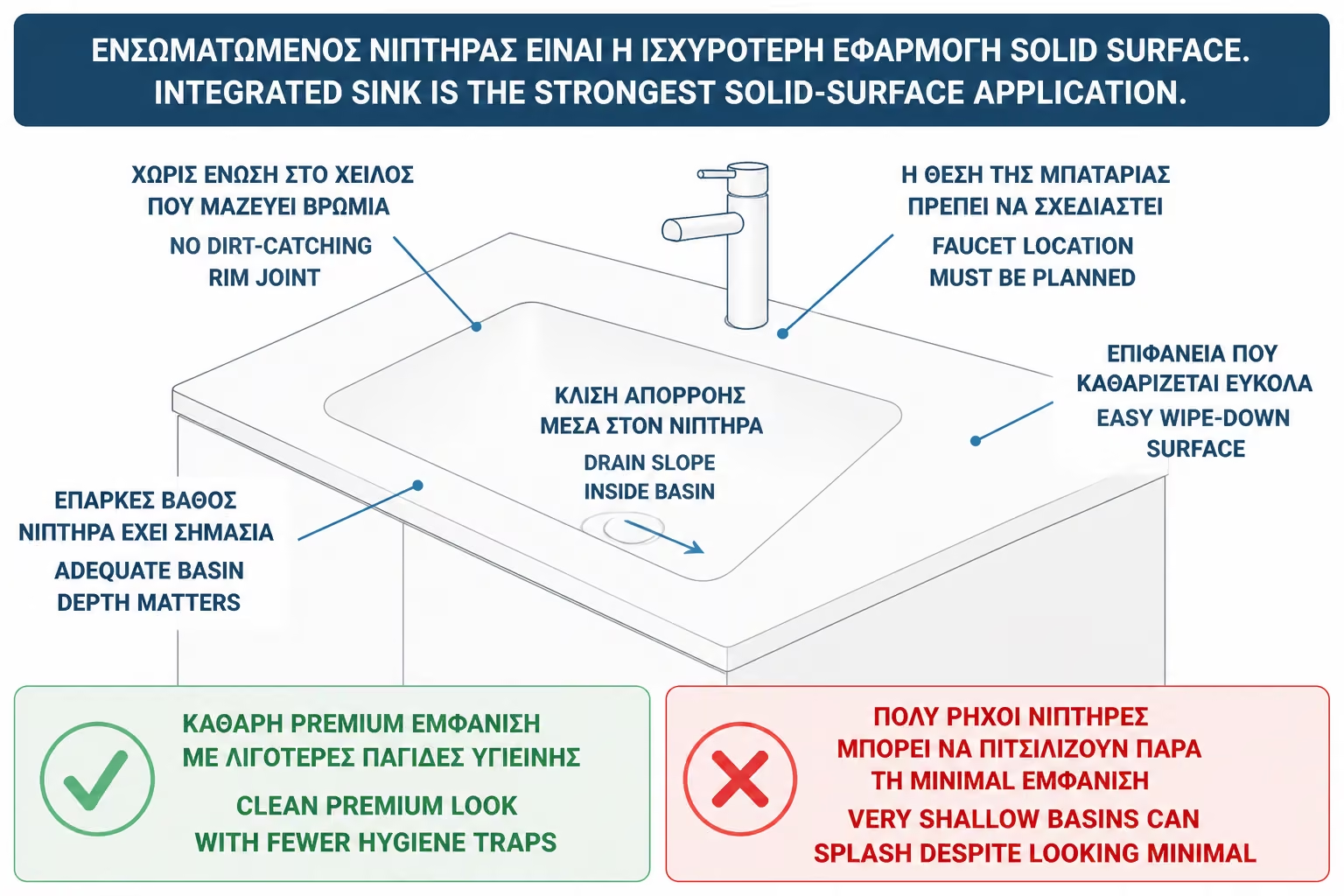
Built-in sinks are probably the most typical solid surface application in the bathroom. Instead of placing a separate sink on a countertop, the countertop and sink are built or joined as a single unit. The trough can be oval, rectangular, shallow, deep, single or double, depending on the design.
The result is very clean. There are no joints around the sink. There is no blackening silicone. Soap and water can be easily wiped away. In small bathrooms, this simplicity makes the space look more organized and premium. In hotel bathrooms, it provides quick cleaning and resistance to intense use.
But it needs proper planning. The trough must have a correct slope towards the drain, sufficient depth to avoid splashing, correct position of the battery and sufficient space around it. A very shallow minimal sink may look impressive in the photo but splash in everyday use. Aesthetics must be combined with ergonomics.
Solid surface panels can be used as wall coverings, even in showers, as long as the product and the installation system are suitable for wet areas. The advantage over tiles is fewer joints. A large shower wall can be covered with a few panels, reducing the places where scale and mold collect.
This does not mean that the details disappear. The joints in the corners, the meetings with the floor, the holes for batteries and the connection with siphons or showers must be properly sealed. The panel may be non-porous, but if water gets behind it, the problem will be in the substrate.
In showers, solid surfaces work best when designed as a complete system: walls, floor or base, aprons, corners and details. If a panel is simply glued onto an old problematic wall, we have not solved the waterproofing. We've just changed the final look.
A particular advantage of some solid surface materials is that they can be thermoformed. With a special process, the sheet is heated and takes curved forms. This allows constructions that are difficult with stone, quartz or tile: curved counters, rounded corners, custom sinks, curved linings and special design elements.
In the bathroom, curves are not only aesthetic luxury. They can help with cleaning. A rounded inside corner is easier to clean than an acute corner with silicone. A single bench with a curved trough has fewer dirt accumulation points.
The cost, however, is increasing. Thermoforming requires equipment, experience and time. Not every laboratory is equally capable of such applications. If you want curves or special constructions, you need to see samples of real works of the manufacturer.
Solid surfaces are relatively easy to clean. Mild detergent, water and a soft cloth are usually sufficient. They don't need sealers like natural marble or granite. This is a great advantage for bathrooms, where maintenance must be simple and daily.
However, harsh abrasive products, wire sponges and very aggressive cleaners should be avoided unless permitted by the manufacturer. The official Corian maintenance guide states that minor scratches can be treated, while deeper repairs are best left to professionals. This shows an important advantage: the surface is renewable, but it does not mean that it should be abused.
In bathrooms with hard water, the salts will also appear on the solid surface. The difference is that they do not penetrate the material as in porous stone. They remain superficial and clean. On dark surfaces, however, they are easier to see. If you don't want frequent descaling, avoid very dark solid surfaces in zones with daily water.
Solid surfaces are not indestructible. They are softer than stones such as granite or quartz in some uses and can be carved. In a bathroom, this is usually not a huge problem, because we don't cut food like in the kitchen. But metal objects, jewelry, razors, harsh cleaners or misuse can create marks.
On the plus side, minor scratches can often be smoothed out. Because the material is solid, wear does not remove a thin decorative film. This is a big difference from laminate or some coated surfaces. However, the repair must be done correctly, so that a different gloss or dullness is not created at the point.
Heat is another matter. In the bathroom we do not have hot pots, but we do have hair styling tools such as straighteners or scissors. They should not be placed hot directly on the surface, as this may cause a mark. This is especially important in bathroom counters where such devices are used daily.
The solid surfaces are available in white, off-white, beige, grey, dark, monochrome, speckled, marble-inspired and stone-inspired options. White remains the most classic choice for a bathroom, because it looks clean, bright and healthy. It is combined with wood, marble, black batteries, inox and minimal tiles.
Light shades are more practical than very dark ones, especially in saline areas. Dark surfaces show water, dust, scratches and soap residue more easily. They can show a lot of premium, but they want more care.
Matte or satin finishes are usually more calm and contemporary. High gloss ones look more impressive but reveal scratches and water more easily. In an everyday bathroom, practicality often leans towards softer sheens.
Solid surfaces are worth more where cleanliness and uniform construction make real sense. The washbasin counter with integrated trough is the most characteristic application. It has daily use, looks great and is easy to clean. That's where the material shows its value.
They are also worth shower wall coverings, especially when we want to avoid tile joints. In small bathrooms, a single white or light solid surface panel can make the space appear cleaner and larger. In professional areas, it reduces cleaning time.
In bathroom floors they are used less often and require attention to anti-slip. Not all solid surfaces are suitable for floors or showers. If it is a press, there must be a technical specification and a suitable finish.
Use the table below as a quick reference for the key points of this section.
| Application | Appropriateness | What to watch out for |
|---|---|---|
| Washbasin counter | Excellent choice | Correct inclination, protection from hot tools, descaling |
| Built-in sink | One of the best apps | Trough ergonomics, runoff, splash prevention |
| Shower wall covering | Very good choice | Sealing corners, holes and joints |
| Shelves / alcoves | Good choice | Correct tilt, easy cleaning |
| Full walk-in shower | Well thought out premium solution | Complete system, siphon and sealing details |
| Shower floor | Only with proper specification | Non-slip and correct tears |
| Bathroom furniture | Good choice as a surface | Cost, weight, proper support |
The table shows that solid surfaces are not just "another countertop material". It is a material for special, clean and uniform constructions.
Compared to natural marble, solid surface is easier to maintain and does not need sealer. However, it does not have the natural uniqueness and depth of marble. If the owner wants natural stone, marble has a different feel. If he wants cleanliness and practicality, the solid surface is more predictable.
Compared to quartz, solid surface is easier on invisible joints and built-in sinks, but is usually more sensitive to scratches and heat. Quartz is harder, but its compounds do not disappear in the same way and thermoforming is not the same.
Compared to tiles, solid surface has fewer joints and a cleaner image. The tiles, however, have a huge variety, very high resistance and usually lower cost in simple applications. In relation to PVC/SPC panels, solid surface gives a more premium and solid feeling, but is more expensive and requires a special workshop.
Use the table below as a quick reference for the key points of this section.
| Material | Advantage | Disadvantage |
|---|---|---|
| Solid surface / Corian | Non-porous, single joints, easy to clean, repairable | Higher cost, scratches, sensitivity to heat |
| Marble | Natural luxury and uniqueness | Porosity, stains, sealer, acid cleaners |
| Quartz | Tough, durable, low maintenance | Visible joints, less thermoforming |
| Tile | Durability, variety, affordable price range | Joints, more cleaning points |
| PVC/SPC panels | Faster and cheaper investment | Less premium feel, reliance on seals |
| Presser | Single minimal surface | It depends a lot on the applicator and sealer |
The right choice depends on whether the priority is hygiene, luxury, cost, speed or natural feel.
In the Greek market of 2026, Corian and solid surfaces usually move in a premium category compared to simple tiles, PVC panels or typical ready-made countertops. The cost depends on the brand, color, thickness, whether there are built-in sinks, thermoforming, special cuts, miter cuts, turning, wall coverings and difficulty of installation.
A simple custom solid surface countertop can be priced per piece and not just per square meter. If a built-in washbasin, apron, back, shelves or special joints are added, the price goes up. For wall coverings, the cost depends on the area, thickness, infrastructure need and joints.
As a general picture, solid surfaces are rarely the most economical solution. It is a choice for clean aesthetics, hygiene, custom construction and high quality. If the goal is simple economic covering of old tiles, panels are a more logical solution. If the goal is a countertop-washbasin without joints and with a premium feel, the solid surface deserves to be included in the comparison.
A proper quote for a solid surface in the bathroom should describe the material, brand or grade, thickness, color, finish, dimensions, joints, cuts, sink type, tap holes and finishes. If it is a wall covering, it should state how the support will be done, how the corners will be sealed and what is done around batteries and fittings.
It must also clarify whether transport, installation, VAT, stripping, infrastructure, silicones, special adhesives, sanding and warranty are included. In custom constructions, the measurement must be done accurately. A mistake in battery hole or bench dimension can be costly.
If the offer is generic and only says "Corian countertop", it is not enough. Technical description needed. The outcome will be determined by the details.
The first mistake is the excessive expectation that "nothing happens". The solid surface is durable and repairable, but can be scratched, dulled or marked by heat.
The second mistake is choosing a very dark surface in a bathroom with hard water. Salts, drops and micro-scratches are more visible.
The third mistake is the very shallow design sink that splashes. The unified image must not sacrifice practicality.
The fourth mistake is poor support or poor measurement. Custom solid surface components require precision.
The fifth mistake is confusing "non-porous" with "no need to clean". The hygienic surface remains hygienic when properly cleaned.
Use the table below as a quick reference for the key points of this section.
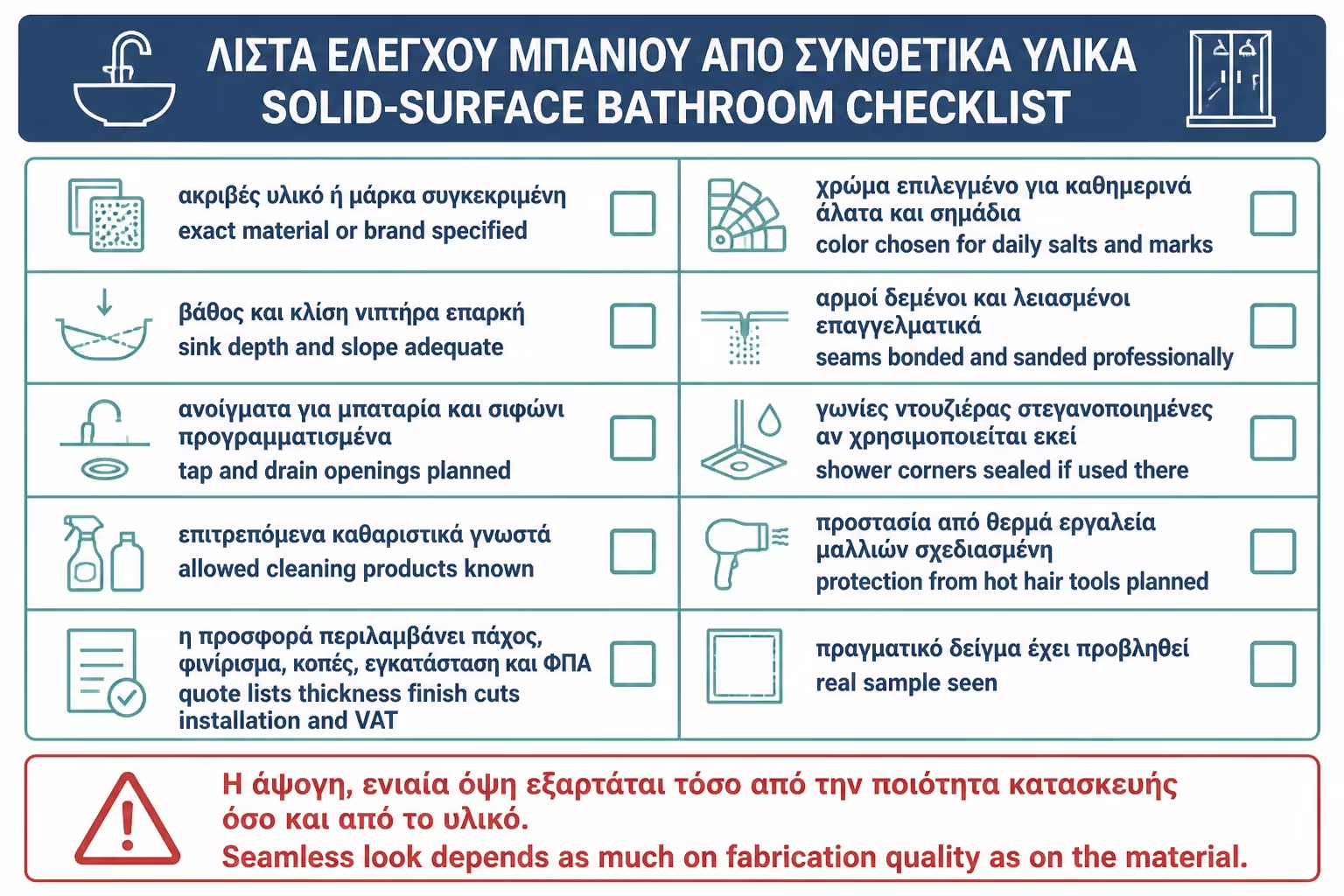
| Question | Yes / No |
|---|---|
| Do you know which solid surface material/brand will be used? | Yes / No |
| Has a suitable color been chosen for salts and daily use? | Yes / No |
| Does the sink have sufficient depth and the correct slope? | Yes / No |
| Will the joints be made with compatible glue and professional sanding? | Yes / No |
| Have the holes for batteries and drainage been studied? | Yes / No |
| If it goes into a shower, is proper sealing provided at the corners? | Yes / No |
| Do you know which cleaners are allowed? | Yes / No |
| Is protection from hot hair tools provided? | Yes / No |
| Does the quote describe thickness, finish, cuts, fitting and VAT? | Yes / No |
| Have you seen an actual sample and not just a photo? | Yes / No |
If the answers are unclear, ask for technical clarification before ordering. In solid surfaces, the detail of construction is as important as the material itself.
If you want Corian or a solid surface in the bathroom, use it where it has a real advantage: built-in sink, countertop without visible joints, linings with few joints and easy cleaning. Don't choose it just because "it's anti-microbial". The correct technical wording is that it is a non-porous, hygienic and easily cleanable material, especially when the joints are done correctly. Make sure the trough is practical, avoid hot tools directly on the surface and ask for clear specifications for joints, seals and maintenance.
Corian and solid surfaces are among the cleanest and technically interesting solutions for modern bathrooms. They don't just offer a beautiful surface. They offer the possibility of a single construction, non-porous material, almost invisible joints, integrated sinks and very easy cleaning. That is why they are used in places where hygiene and cleanliness are of great importance.
But it is not a solution without limitations. They need proper construction, attention to scratches and heat, proper cleaning and realistic color selection. On dark surfaces the salts are more visible. In very shallow troughs the water may splash. In bad joints the main advantage of the material is lost.
The correct usage is to treat it as premium custom hardware. Not as a simple panel and not as "indestructible plastic". If you want a bathroom with clean lines, minimal joints, a single counter-sink and a very high sense of hygiene, solid surfaces seriously deserve your attention. If the goal is simply an economical wall renovation, there are more affordable solutions. But if pure, unified and functional luxury is the goal, Corian remains one of the strongest materials in the category.
Return to category.
Go to categoryReturn to the central guide.
Go to guide