
Bathroom Surface Materials & Finishes
Return to category.
Go to categoryBathroom wall panels have become one of the most popular solutions for quick renovation, especially when the owner wants to change the image of the space without going through the process of removing tiles. Instead of screeds, rubble, dust, transport and multi-day nuisance, the panels can in many cases be glued directly onto the old tiles, creating a new surface with the look of marble, wood, stone, mosaic, cement or a monochromatic minimal finish.
The promise is very tempting: "new bathroom in one day". And in many cases it is realistic, at least for wall cladding. The large panels quickly cover large surfaces, do not need grouting like tiles and drastically reduce the places where dirt collects or blackened joints. Recent installation guides state that bathroom wall panels work as waterproof cladding systems in materials such as PVC, acrylic, laminate or composite, and that installation can be completed in 1–2 days for typical bathroom surfaces, depending on the project.
But the quick solution should not be presented as a magic solution for every bathroom. Panels can only be placed over old tiles when the base is firm, clean, without hollow spots, without moisture and without serious irregularities. If the wall has leaks, loose joints, bulges or peeling tiles, the panel will not solve the problem. He hides it. And in a damp space, hidden problems usually come back later in a worse form.
The most important technical point is the joints. The panel itself can be waterproof or very moisture resistant. But the shower does not always fail from the middle of the surface. It often fails on edges, profiles, corners, holes around batteries, shower or tub finishes and silicones. That's why the right application is not just "gluing panels". It is a complete cladding system with proper adhesive, mechanical preparation where needed, sealing and clean detailing.
In this guide we will see what bathroom wall panels are, what are the differences between PVC, acrylic and SPC panels, when they can be placed over old tiles, where they are worth the most, what risks exist inside the shower, how much they cost approximately in the Greek market of 2026 and what a proper offer should write.
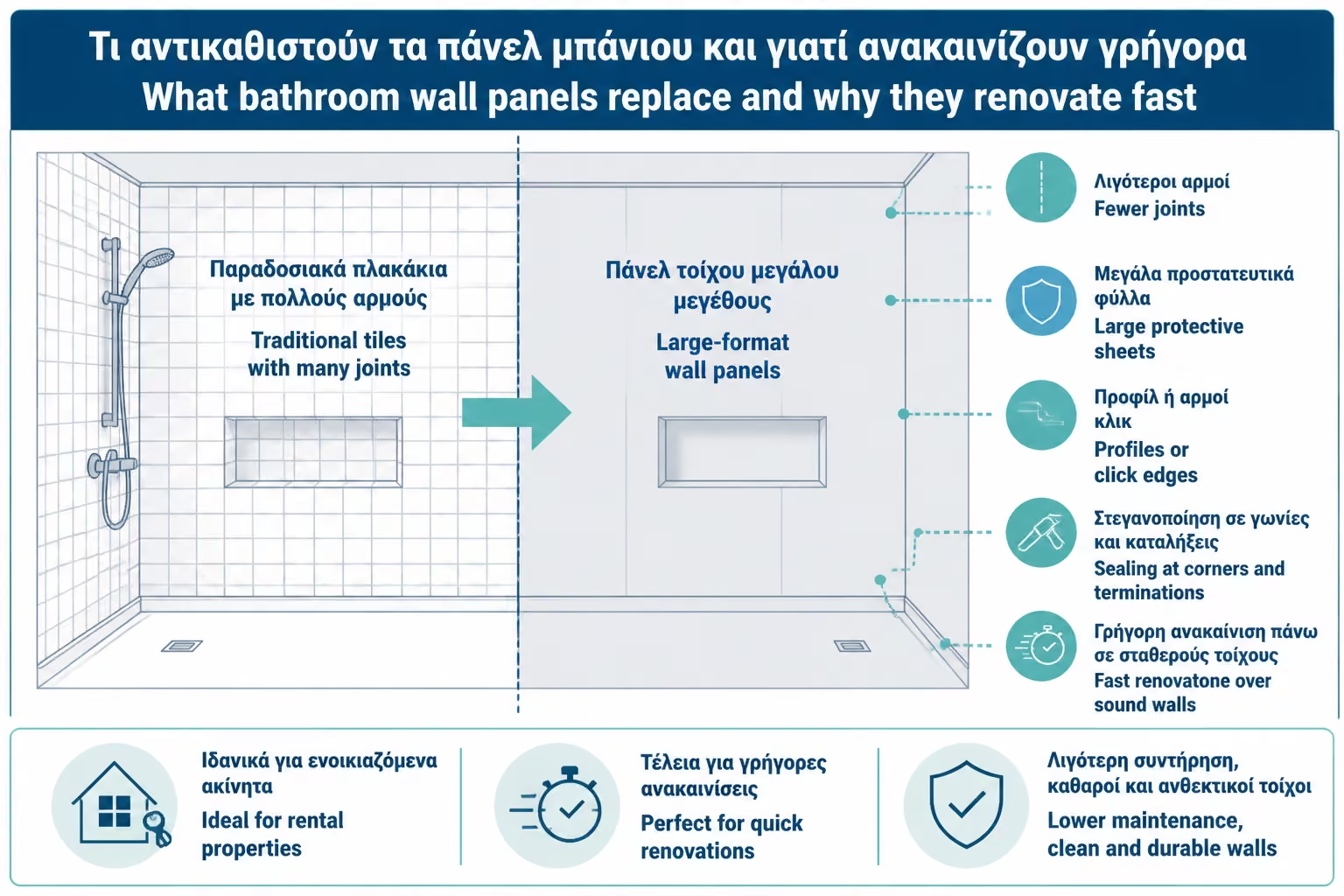
Wall panels are large decorative and protective surfaces used as an alternative to tiles. Instead of covering the wall with many small or large tiles and joints, large sheets or panel strips are placed that are joined together with special profiles, connection joints, click systems or seals.
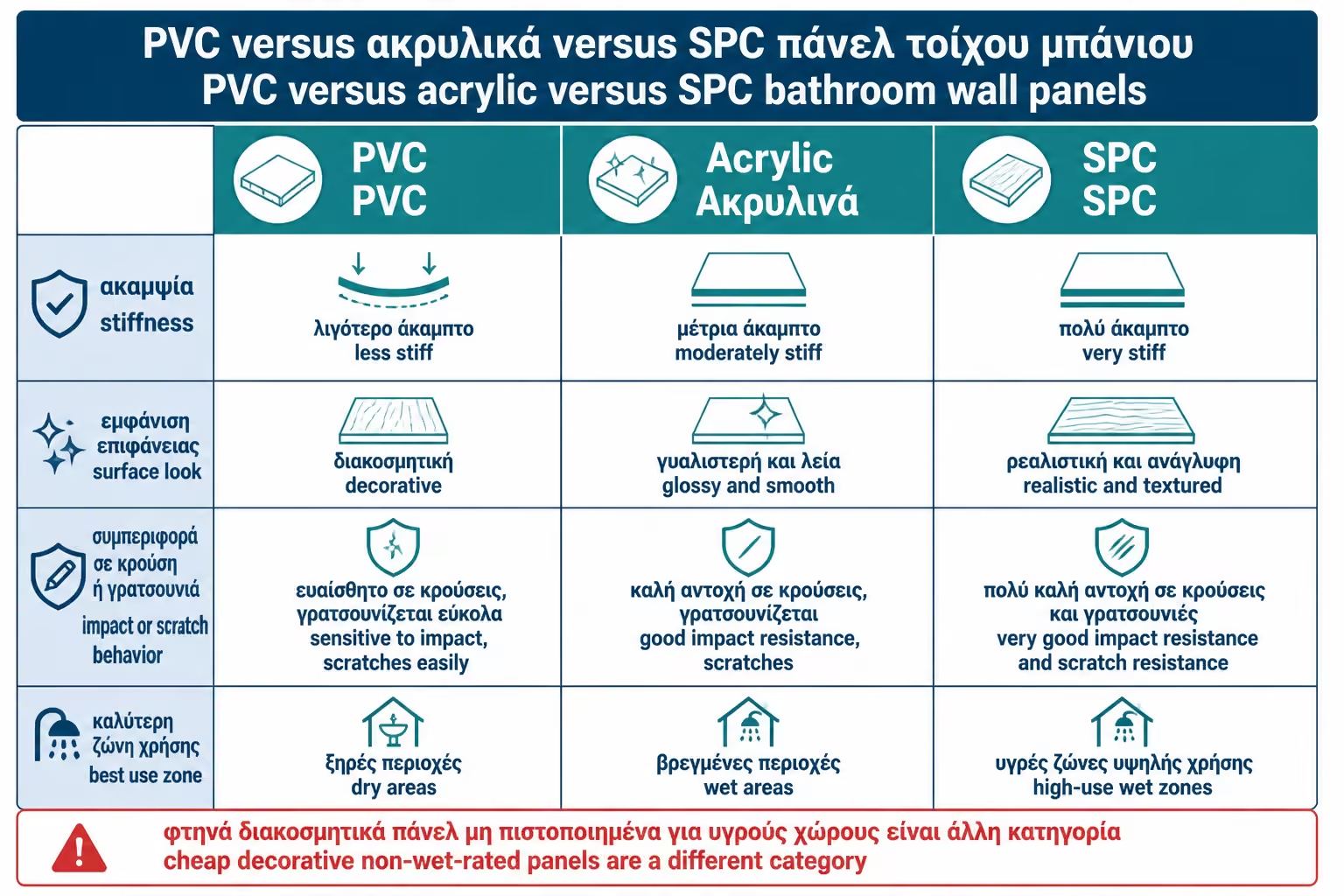
We find them in many forms: PVC panels, acrylic panels, laminate wet wall panels, compact panels, SPC panels, even composite panels with a core and a decorative surface. Their difference is not only aesthetic. It has to do with stiffness, impact resistance, behavior in water, weight, ease of cutting, finish and cost.
The big advantage is that they quickly cover large areas. A 2.40 m high panel can cover almost the entire height of a shower with minimal horizontal joints. This gives a clear image and reduces joints. That is why they are widely used in quick renovations, rental properties, Airbnb, student apartments, professional WCs, but also in homes where the owner wants less maintenance.
The main reason is that in many cases there is no need to remove the old tiles. If the tiles are firmly attached, clean and relatively flat, the panels can be glued on top with a suitable adhesive. This drastically reduces work time, debris, noise and dust. PVC panels installation guides state that they can be installed over existing tiles, without the need for removal, plastering or major disturbance, provided the existing surface is suitable.
In a typical bathroom, stripping tiles can bring unexpected tasks: loose plaster, old dampness, crooked walls, the need for cleaning, rubble, removal, dust all over the house and several days of work. With panels, much of this process is avoided. Not every technical issue disappears, but the extent of the operation is reduced.
This is especially useful in occupied homes. If the owner has only one bathroom, speed matters a lot. If it is a rental property, the reduction in downtime translates into a financial benefit. If it is an old WC that needs an aesthetic upgrade without a complete renovation, panels can be a very practical solution.
PVC panels are one of the most economical and widespread options. They are light, relatively easy to cut, come in many designs and can be installed quickly. Their surface does not absorb water like a porous joint and is easy to clean. This makes them practical for bathrooms, WCs, laundry rooms and utility areas.
Their big advantage is the cost-speed ratio. For a homeowner who wants to cover old tiles without a complete renovation, PVC can be a very good solution. In buying guides, PVC wall panels are described as economical, waterproof, easy to install and available in many colors and finishes, but it is often noted that they can be less durable or less premium aesthetically than other options.
Their downside is that they don't always have the same rigidity or premium feel as acrylic, compact or SPC panels. In cheap series, the print may look less natural, the surface may scratch more easily, and the joints may be more visible. Also, no random PVC panel should be selected for any shower zone. It must be a product suitable for bathroom/wet use and installed according to the manufacturer's instructions.
Acrylic panels give a smoother, glossier and clearer image. They are often used for modern bathrooms, splashbacks, showers and walls where we want a high-gloss effect. They can resemble glass or a lacquered surface, but with less weight and easier processing than real glass.
Their aesthetic advantage is the shine. In small or dark bathrooms, an acrylic surface can reflect light and make the space appear cleaner and brighter. Also, because the surface is smooth, it is easy to clean from soaps and splashes.
The downside is that glossy surfaces show scratches, water, fingerprints and salts more easily, especially if they are dark. Also, not all acrylic panels have the same impact or cleaning resistance. The cleaners recommended by the manufacturer should be used and abrasive sponges should be avoided.
In a daily use bathroom, the acrylic panel is a good choice when the owner wants a smooth, bright surface and is willing to clean it properly. In very hard use, perhaps a more durable composite or SPC panel is more suitable.
SPC panels, i.e. Stone Plastic Composite, derive from the technology of SPC/LVT floors and are now also used as wall coverings. They have a more rigid core, usually with a stone/plastic composition, a decorative surface and a protective layer. They are thin, relatively stable and available in marble, wood, stone, cement and minimal monochromatic finishes.
Their big advantage is the rigidity and the more robust feeling compared to many PVC panels. Some manufacturers report that SPC wall panels are waterproof, have a durable structure and are intended for use in bathrooms, kitchens and laundry rooms. Other technical descriptions point out that SPC panels have a rigid core, a protected surface and are intended for residential and commercial wall applications.
But we must be careful with phrases like "100% waterproof". They often concern the panel material itself, not necessarily the entire mounting system. Water may not damage the core, but if it gets behind the panel through a bad joint, the problem will show up in the substrate. So also in SPC panels, the correct sealing in joints, corners and finishes is decisive.
The aesthetics of the panels have been greatly improved. In the past, many plastic panels clearly looked like cheap imitations. Today there are better prints, larger dimensions, matte surfaces, stone textures, marble look, wood effect and terrazzo/mosaic designs that can give a very good result.
But the quality shows in the details. A marble look panel can look convincing when it has a large surface area, proper design continuity and discreet joints. It can look cheap if the print repeats heavily, if the joins cut the veins badly, or if the finish is too glossy without depth.
Wood effect panels also need attention. Wood in the bathroom gives warmth, but if the imitation is too orange, too plastic or with a repetitive texture, the effect looks sketchy. Terrazzo or mosaic panels are an interesting solution, but in a small bathroom they can visually overload the space if the pattern is too intense.
The rule of thumb is simple: the bolder the design, the better the print quality and the more careful the placement. In budget solutions, a calm matte stone, beige, gray or white panel is often safer than a very dramatic Calacatta that looks fake up close.
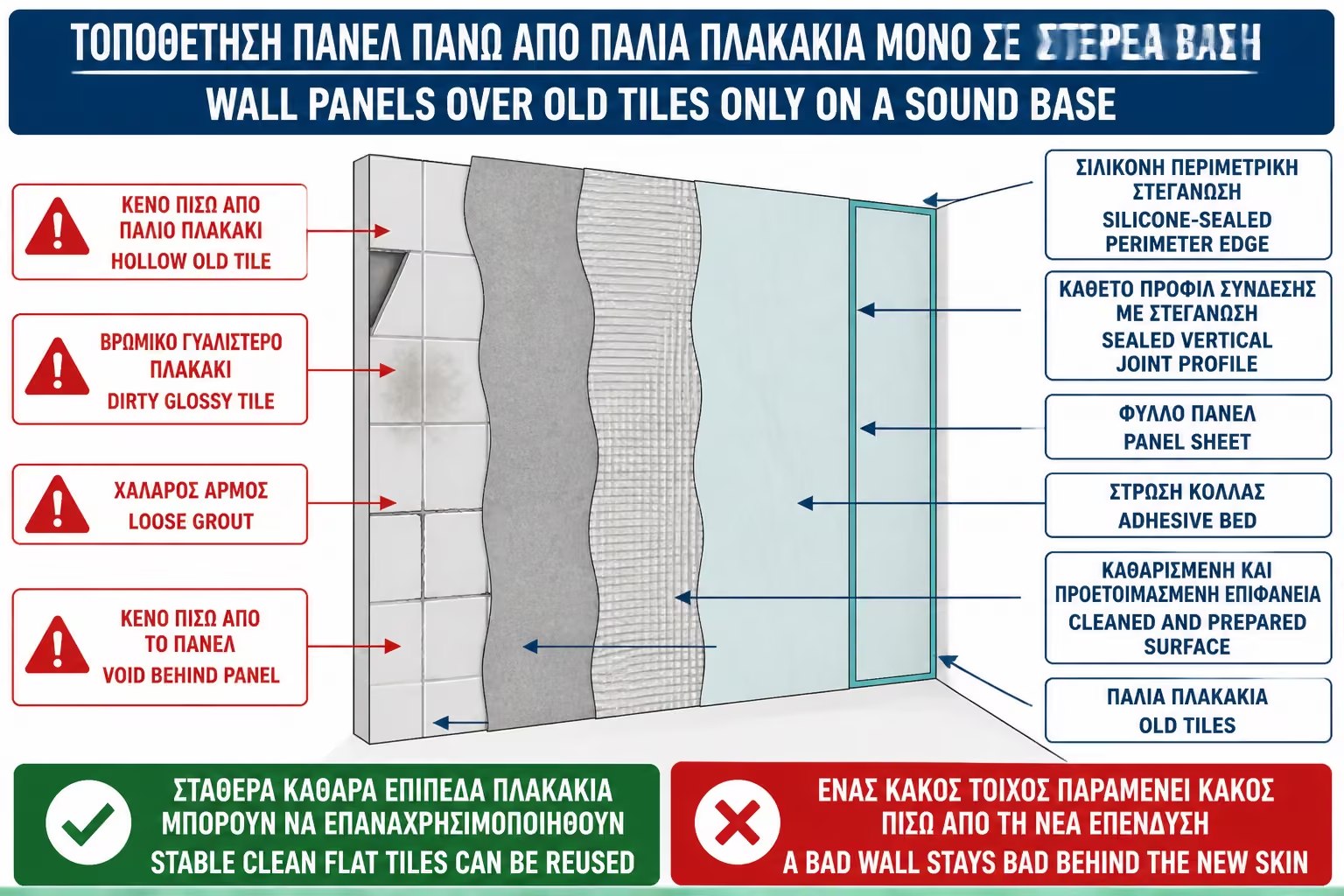
Yes, in many cases they can. But this assumes that the old tiles are a suitable base. They must be well glued, clean, without loose joints, without moisture, without mold and as flat as possible. If there are loose or hollow tiles, they must be removed and the voids filled. If the wall has large irregularities, the panel may not press properly or gaps may be created behind it.
In wet wall panels installation guides it is stated that installation over tiles is possible when the tiles are clean, firm and level, while any loose tiles must be removed, filled and smoothed before installation. This is critical. If the panel is stuck to a problematic wall, the new surface may look good at first, but the problem will be left behind.
The surface must also be degreased. In the bathrooms there are soaps, salts, silicones, cleaners and grease from years of use. If they are not cleaned properly, the glue may not work properly. Especially on glossy tiles, proper preparation according to the manufacturer's instructions may be necessary.
The panels must not be glued with any "sticky" glue. An adhesive compatible with the panel material, the substrate and the moisture environment is needed. Another adhesive may require a PVC panel, another an acrylic, another an SPC or composite panel. The wrong glue can lead to delamination, swelling, warping or edge failure.
Also, the glue must be applied correctly. If it enters in a few places and there are large gaps behind the panel, the surface may sound hollow, bend or lack proper support. If too much is put in without venting or without proper pressing, unevenness may occur.
In a shower, glue is not the only means of protection. Proper sealing of the edges is also needed. Water must not be able to pass behind the panel. If it gets through, it can get trapped between the old tile and the new panel, creating ideal conditions for moisture and mold.
The panel itself can be waterproof. The joining of two panels, however, must be done correctly. The finish on the floor, in the bathtub, in the shower, in the corners and around the faucets must be sealed with suitable materials. That's where the quality of the work shows.
Many panel failures are not due to the material, but to bad silicone or the wrong profile. If the silicone is not suitable for bathing, if it is applied to a dirty or wet surface, if it is not pressed properly or if it is not maintained, it can open. Water will pass through there.
The corner of the shower, the connection with the floor and the points around the batteries need special attention. Any hole in a panel is a potential weak point and must be properly sealed. If the battery, shower telephone or cabin supports are screwed over a panel, we need to know how the passage of the screw and pipe is protected.
The panels can work very well in the shower, as long as they are products suitable for wet areas and installed with the right system. Many wet wall panels are designed precisely to replace tiles on shower walls, offering continuous surfaces without joints. Guides and product experts report that wet wall panels are grout-free, quick to install and designed to protect against moisture, provided installation instructions are followed.
The risk lies in the wrong product choice or the wrong application. A decorative panel for dry wall is not necessarily a panel for a shower. A cheap PVC panel can withstand water vapor, but not have the rigidity or profiles needed in a daily shower. An SPC panel can be waterproof as a material, but its joints must be properly sealed.
In built-in showers or walk-in applications, the meeting with the floor must also be considered. If the floor is tile, laminate or other material, the connection with the panel must be done technically correctly. A simple silicone line is not enough if there is bad geometry or pooling water behind.
The first big advantage is speed. Panels go in much faster than tiles, especially when covering old cladding. No grouting, no waiting time for tile adhesives, and no cutting of small pieces required.
The second advantage is work cleanliness. No stripping, dust and debris are reduced. This is important in residential homes, apartment buildings and properties that need to be returned to use quickly.
The third advantage is maintenance. Because there are no tile joints, there are fewer spots where the joints darken or dirt collects. The surface is easier to clean, as long as the correct cleaners are used.
The fourth advantage is the small thickness in several systems. For example, some SPC panels are listed with a thickness of around 4 mm, taking up less space than ceramic tiles, while offering strength and rigidity as a wall covering. In small bathrooms, even a few millimeters can matter in doors, profiles and fittings.
The first disadvantage is that panels do not always have the timelessness or materiality of a good tile. A premium porcelain or natural stone has a different feel. Panels can look very good, but at low qualities they can look plastic or temporary.
The second disadvantage is the dependency on compounds. There are many joints in the tiles, but if a joint breaks it is fixed locally. In panels, a bad joint can affect a large area. Silicone and profiles are critical.
The third disadvantage is temperature, UV, impact and cleaning limitations, depending on the material. Some panels are more easily scratched, some do not withstand harsh cleaners, some can be deformed if they come close to very high temperatures. Manufacturer's instructions must be followed.
The fourth disadvantage is that if there is a problem behind the old tiles, the panel can hide it. If there is an active leak or moisture, the "express" solution can become a trap. First the technical problem is solved and then the wall is aesthetically covered.
Use the table below as a quick reference for the key points of this section.
| Material | Advantages | Disadvantages | Good use |
|---|---|---|---|
| PVC panels | Economical, light, quick installation, wide variety of designs | They may look more plastic, lower stiffness in cheap series | WC, auxiliary bathrooms, quick renovation |
| Acrylic panels | Smooth glossy surface, modern image, easy to clean | Scratches, fingerprints, salts in dark colors | Showers, wash basin walls, modern bathrooms |
| SPC panels | More rigid, thin, waterproof material, good surface feel | They want proper sealing of joints, quality variation by product | Showers, full linings, more demanding solutions |
| Laminate/compact wet panels | Premium image, large surfaces, good stability | Higher cost, weight, requires proper cutting | Master bathrooms, hotel style |
| Cheap decorative panels not wet rated | Low cost | Not for showering, risk of swelling/detachment | Arid or semi-arid areas only |
The table shows that there is no "best" panel for everything. Use determines hardware.
In the Greek market of 2026, bathroom panels have a wide price range. Economical PVC panels can start from around €15–30/sq.m. as material, depending on thickness, design and quality. Better PVC, SPC or acrylic panels can be around €30–70/m2, while premium wet wall panels, compact surfaces, large marble slabs or special series can go much higher.
The work depends on whether they go over old tiles, how many cuts there are, if it is a shower, if they need profiles, holes for batteries and proper sealing. In simple applications, installation can be more economical and faster than tiles. In showers with many details, difficult corners or premium panels, the cost goes up.
Realistically, a simple wall covering with panels can be significantly faster than a full tiling. But not only the price per square meter of material should be compared. The complete project must be compared: preparation, glue, profiles, silicones, cuts, VAT, transport and warranty. A cheap panel price can become less attractive if a lot of special finishes are needed or if the quality is poor.
In many cases, yes, the visual renovation of the walls can be completed in one day, especially if the surfaces are few, the walls are straight, the old tiles are stable and the panels are already measured/cut correctly. In more complex bathrooms, with showers, windows, alcoves, many fittings and difficult corners, it may take 1–2 days or more.
"One day" should not mean rushing the sealings. Silicones and adhesives take time according to their instructions. The room may look ready, but the shower should not be used immediately. The installer must give clear instructions: when water can fall, when it is cleaned, when parts are inserted.
In a proper express renovation, the quick result comes from good preparation, not from skipping steps. Measurements, panel selections, profiles and cut points must be decided before the workshop arrives.
A correct quotation for bathroom panels should state the type of panel, thickness, suitability for wet areas, covering surface, profiles, adhesives, silicones, cuts and whether the preparation of the old tiles is included. If it is a shower, it must be explicitly stated that the system is suitable for direct contact with water.
It should also clarify what is done with hydraulic components. Will the batteries be removed? Will new holes be made? How are they sealed? What about the cabin? Will it be placed back on the panel? How are the screws protected? These details are important.
If the quote only says “installation of panels over tiles”, it is incomplete. The owner must know exactly what he is buying and what the workshop's responsibility is.
The first mistake is laying on problematic tiles. If there are voids or moisture, the panel does not solve the problem.
The second mistake is choosing an inappropriate shower panel. Not all decorative panels are wet panels.
The third mistake is bad silicone. The joints are the weak point. If done casually, the water will pass through.
The fourth mistake is underestimating cuts. Windows, batteries, sockets, profiles and niches need precision. A bad panel cut shows up a lot.
The fifth mistake is choosing too cheap a design that shows plastic. If the goal is a master bathroom upgrade, it's worth seeing a large sample rather than just a photo.
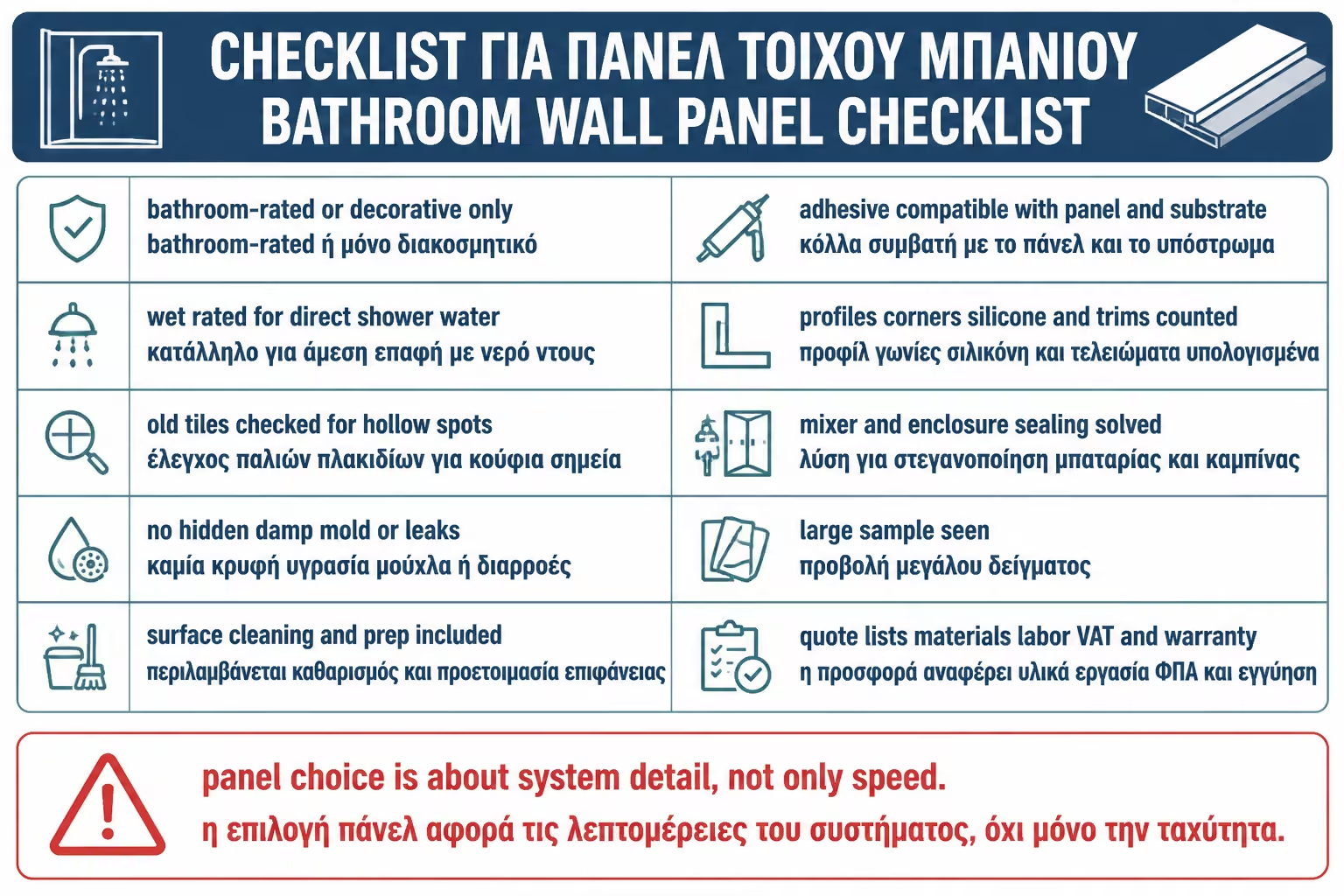
Use the table below as a quick reference for the key points of this section.
| Question | Yes / No |
|---|---|
| Is the panel suitable for a bathroom or just decorative? | Yes / No |
| If it goes in the shower, is it wet rated for direct contact with water? | Yes / No |
| Have the old tiles been checked for hollow spots? | Yes / No |
| Is there moisture, mold or active leakage behind the existing liner? | Yes / No |
| Is cleaning and surface preparation planned? | Yes / No |
| Is the adhesive compatible with the panel and the substrate? | Yes / No |
| Have profiles, angles, silicones and finishes been calculated? | Yes / No |
| Has the sealing around batteries and cabin been studied? | Yes / No |
| Have you seen a large surface sample and not just a photo? | Yes / No |
| Does the quote include materials, labour, VAT and warranty? | Yes / No |
If the answers are unclear, don't go ahead just because the solution is quick. Speed is only an advantage when it does not sacrifice technical safety.
If you want express renovation with panels over old tiles, check the wall first, then the pattern. Panels can give a dramatic change without dust and debris, but only if the base is solid and the joints are properly sealed. In the shower, don't settle for "it's waterproof". Ask if the product is suitable for wet areas, what glue is used, how corners and taps are sealed, and when the shower can be used after installation. In panels, failure doesn't usually start in the middle of the slab; it starts at the edge.
Wall panels made of PVC, acrylic, SPC or other composite materials are one of the most practical solutions for a quick bathroom renovation. They can cover old tiles, reduce debris and dust, give a new look in hours or days and provide surfaces without the many tile joints. For rental properties, utility rooms, old WCs or quick upgrades, it is often a very good choice.
But success depends on choosing the right product and the quality of the application. Another PVC panel for light use, another glossy acrylic panel, another SPC with a more rigid structure, and another premium wet wall system for shower. The fact that a panel is waterproof as a material does not mean that the whole installation is automatically safe. The joints, corners, profiles, silicones and holes around the components are decisive.
The correct approach is to see the panels as an express cladding system, not as a rough camouflage. If the wall is sound, the product suitable and the installation careful, you can achieve a very big change with little inconvenience. But if there is dampness, hollow tiles or bad seals, the quick fix can hide a problem that will later cost more. In bathroom renovation, fast is only good as long as it remains technically correct.
Return to category.
Go to categoryReturn to the central guide.
Go to guide