
Bathroom Surface Materials & Finishes
Return to category.
Go to categoryLaminate has been loved because it gives the image of wood at a much more affordable cost, with quick installation and a pleasant feeling to the touch. In bedrooms, living rooms, corridors and offices it is a very common solution. But when the conversation reaches the bathroom, things get more complex. The bathroom is not just a place with a little moisture. It is a space with water, water vapor, possible leaks, mopping, condensation, basin, sink and many joints where water can find its way.
In recent years, laminate floors characterized as water-resistant or waterproof laminate have appeared on the market. This has created the impression that laminate can now go everywhere, even in the bathroom, without any particular risk. The reality is more careful. There are indeed laminate products with improved water resistance, better click systems, processed joints and a more durable HDF core. But laminate is still, in most cases, based on a wood or fiberboard core. If the water gets through and stays there, the risk of swelling remains.
The important distinction is between "can withstand splashes and temporary moisture" and "can live daily in a wet environment without consequences". According to market guides, most laminates are considered water-resistant and not truly waterproof because the woody composite core can swell when exposed to prolonged moisture. For areas with increased humidity, such as bathrooms and basements, vinyl and SPC are often considered more reliable options.
This does not mean that water-resistant laminate is prohibited in every bathroom. It can work under certain conditions: well-ventilated bathroom, separate shower cubicle that does not throw water, proper placement, perimeter sealing, care around basin and pipes, and immediate wiping of water. But it is not material for a shower, wet room or bathroom where the floor gets wet systematically. There SPC, LVT, porcelain tile or other purely moisture resistant systems are safer options.
In this guide we will see what "waterproof laminate" really means, what is the difference with water-resistant laminate, what role do the joints and the click system play, how is the sealing done at the joints, when it can be used in the bathroom and why SPC is usually considered a safer solution for areas with water.
Laminate is a multi-layered floor. It usually consists of a stabilizing bottom layer, an HDF or MDF core, a decorative film imitating wood or other material, and a protective wear layer on the surface. The finished surface can withstand wear, scratches and daily use well. The problem is mainly in the core and joints.
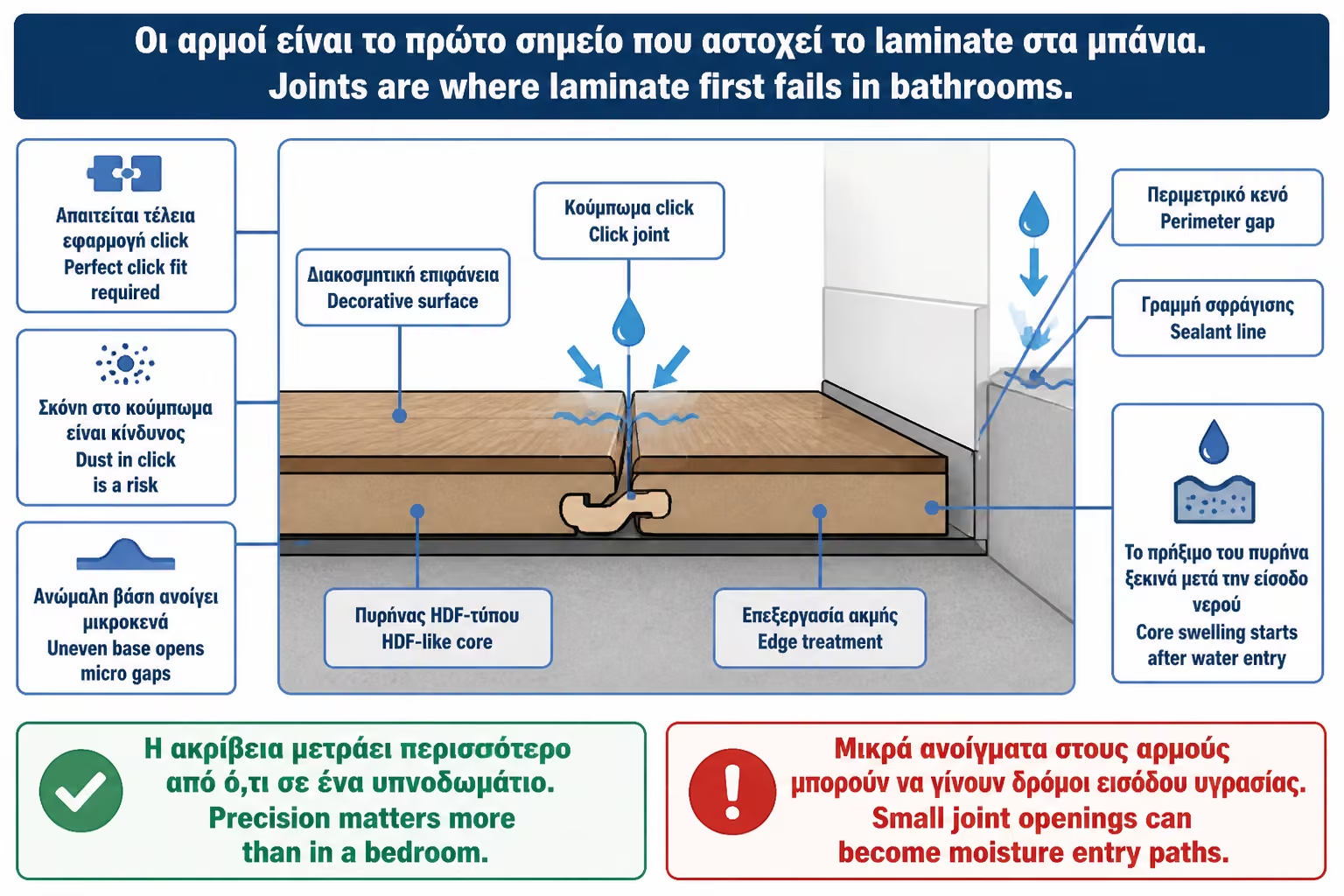
The core of the laminate is usually high-density fiberboard. This material may be affected by water. If water stays on the surface for a while and is wiped off, a good water-resistant laminate may not be harmed. However, if water passes through a joint, through a cut, through a perimeter gap or underneath, it can cause swelling. The result looks like puffy ends, raised joints, rippling or permanent distortion.
That is why bathrooms are a difficult application. The water does not always fall "clearly" in the center of the board. It goes on the edges, around the basin, under the furniture, in the threshold, in the cuts and in places where the craftsman has left gaps. This is where the real durability of the floor is judged.
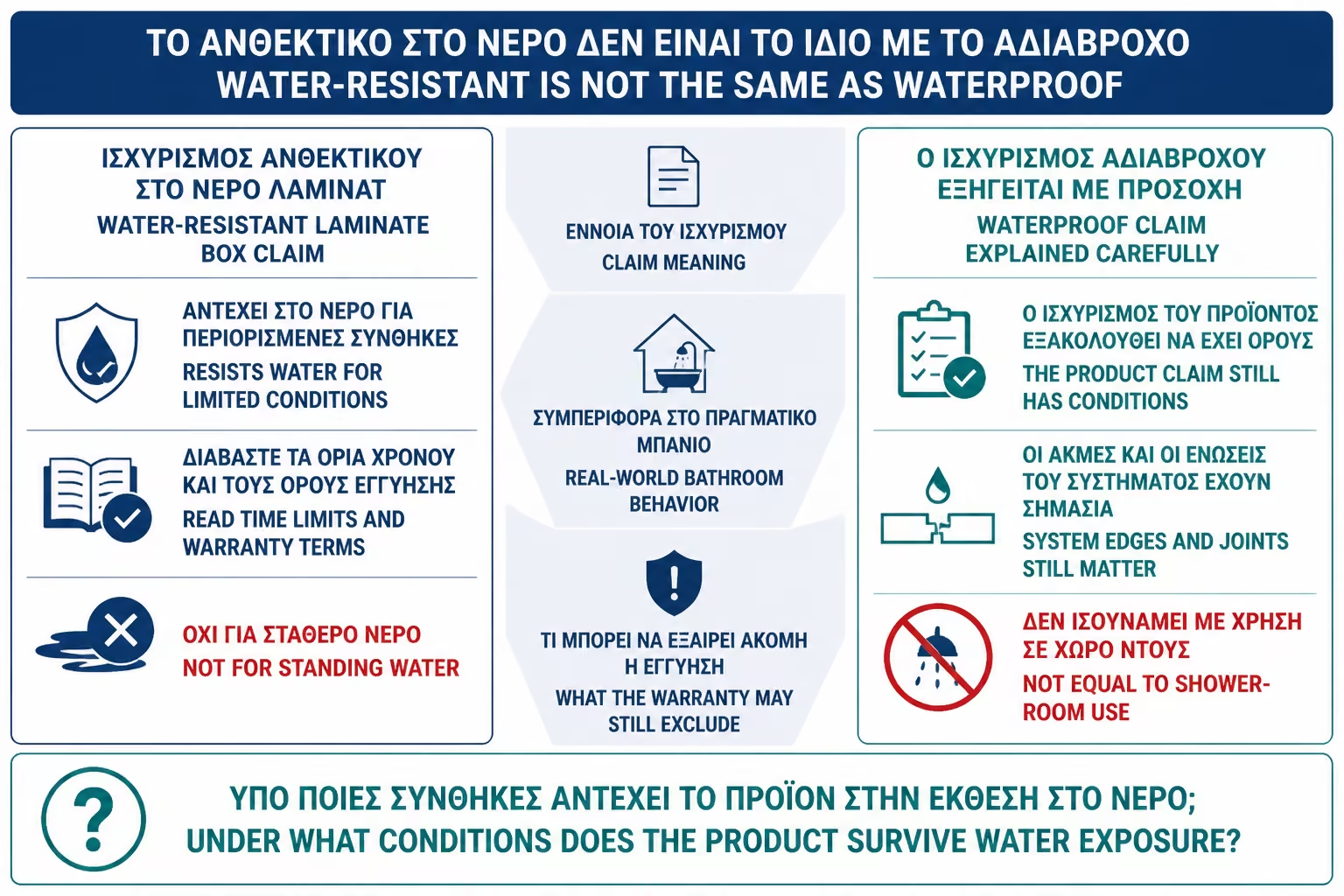
The terms water-resistant and waterproof are often used as if they are the same, but they are not. Water-resistant means that the product resists water for a certain period of time or under specific conditions. Waterproof means that the material itself is not affected by water. In laminate, even when the term waterproof is used, we must read the warranty conditions.
NALFA, the North American laminate flooring association, has published a white paper on the performance of laminate in water, with the aim of clarifying the differences between products characterized as waterproof or water-resistant and to provide a common evaluation framework. This shows exactly the market problem: the consumer sees a word on the box, but needs to understand what it means test-wise, time-wise and practically.
Many water-resistant laminate products are tested for a specific time of exposure to surface water. This does not mean that water is allowed to stay on the floor overnight, nor that it can go into the shower. Even in "waterproof laminate" installation instructions it is often stated that standing water should not be allowed on the floor.
So, in the bathroom, the question is not only "does it say waterproof?". It is "for how long does it withstand water, in what conditions, with what installation and what does the warranty exclude?".
It can, but not in every bathroom and not every laminate. A water-resistant laminate can be used in a guest WC, in a bathroom without a shower or in a bathroom where the shower is completely closed and the floor is not systematically wet. It can also work in an area with good ventilation, careful use and proper sealing.
It is not the right choice for a wet room, for a bathroom where water often comes out of the cabin, for a shower floor, for a cottage that stays closed with moisture or for a place where there are frequent leaks. There the risk is much greater.
A practical example: in a WC 2 sq.m. without a shower, water-resistant laminate can be a perfectly reasonable choice if we want a wooden aesthetic and a warm touch. In a family bathroom with children getting out of the tub and filling the floor with water, the same option is much more risky. The material is not only evaluated by the technical brochure, but by the use of the space.
In laminate, the joints between the boards are the most sensitive point. The surface can be quite durable, but if water gets through the joint and reaches the core, it can cause swelling. That is why water-resistant laminate products place great emphasis on click systems, processed edges and the good fit of the boards.
If the boards do not click perfectly, if there is dust in the click, if the substrate is not flat or if the boards are pressed incorrectly, small gaps can be created. These are not always visible on the first day. With use, mopping and micro-movements, they can become entry points for moisture.
In a bathroom, this is even more important. Water does not need a large vacuum. A small failure in a joint is enough, especially in a place where water stays for a while. That is why water-resistant laminate must be installed with great precision, not like a simple bedroom floor.
In bathrooms, perimeter sealing is essential. Laminate, like other floating floors, needs a perimeter expansion gap. However, this gap should not be left open in a wet area. It must be sealed with a suitable elastic silicone or with a system recommended by the manufacturer, without hindering the operation of the floating floor.
Special care is needed around the basin, bathroom furniture, pipes, threshold and bathtub or cubicle. If water passes through the perimeter and goes under the laminate, it can become trapped. Then the problem is not immediately apparent. It may appear later with swelling, odor or mold on the substrate.
Some laminate manufacturers give special instructions for bathrooms, such as the use of foam strips on the perimeter joints or special sealants. An example is a water-resistant laminate technical brochure that states that installation in bathrooms requires the use of expansion joint foam strip around the perimeter. This shows that water resistance is not only a property of the board; it is also a method of installation.
Laminate needs a proper substrate. If the base has moisture, the new floor can trap it. If the base has irregularities, the boards may not snap together properly or be stressed at the joints. If it is placed over old tiles with deep joints or strong "teeth", the click system can be strained.
In a bathroom renovation, laying over old tiles is tempting. But before it is done, it must be checked whether the tiles are stable, whether there are hollow points, whether there is moisture in the joints and whether the surface is sufficiently flat. If there are deep joints, smoothing may be necessary. If there are broken tiles, they must be repaired.
Laminate is not a material that corrects a problematic base. If the floor underneath has an issue, the new floor will follow suit. And in the bathroom, the base is even more important because any movement can open micro-gaps in the joints.
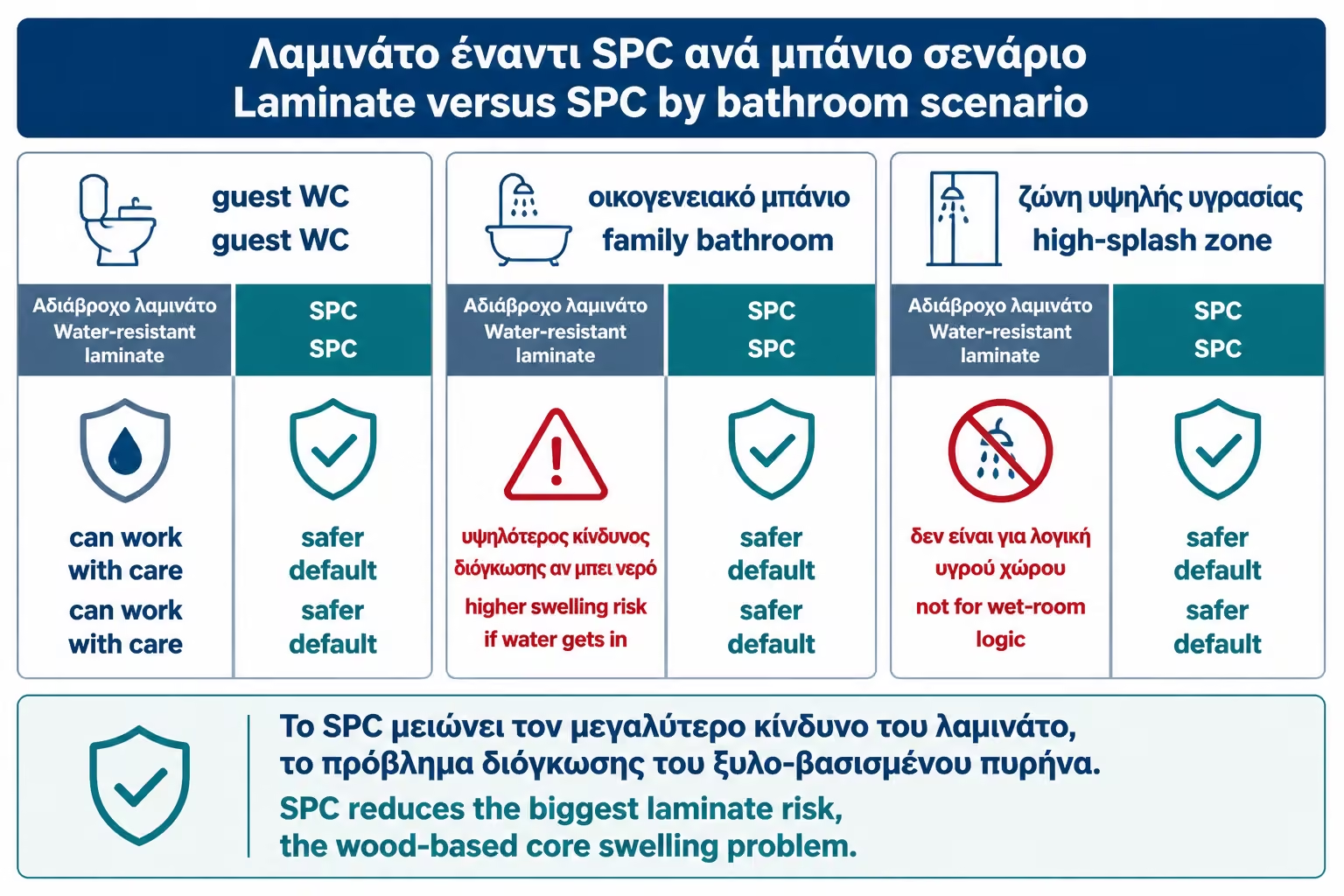
In a WC without a shower, water-resistant laminate can be a very good solution. The area is mostly damp from cleaning and occasional splashes from the sink. If there is good ventilation and proper sealing, the risk is relatively low.
In the master bathroom, the decision is more careful. If there is a closed shower cabin, proper use and the floor is not wet often, it can be considered. If there is a bathtub without good protection, children, daily water or mats that stay wet, laminate is more risky.
Inside the shower, laminate is not a good choice. Even if it is water-resistant, it is not an investment for direct and continuous water flow, siphon, slopes and soaping. There, materials designed for wet areas must be chosen, such as tiles, special panels, a press with the right system, resins or other suitable solutions.
SPC is considered safer for bathrooms because its core is not HDF wood but stone/polymer composite. This means that the material itself does not swell with water as can happen with laminate. That is why SPC is often presented as 100% waterproof and suitable for bathrooms, kitchens and basements. In flooring comparisons, SPC is referred to as a waterproof option for damp areas, while laminate is usually characterized as water-resistant and not fully waterproof, because its core can swell.
This does not mean that SPC automatically makes the bathroom watertight. As with LVT, water can seep through edges or joints and reach the substrate. But the material itself has a greater tolerance to water. If there is a small leak or water gets on the surface, SPC does not have the same risk of swelling as laminate.
In practice, if the owner wants a wooden look and a warm touch in a bathroom, SPC is usually a safer choice than water-resistant laminate. If you want the safest and most proven solution for a wet floor, porcelain tile still has the edge. If he wants quick renovation with low disturbance, SPC is a very interesting intermediate option.
Use the table below as a quick reference for the key points of this section.
| Criterion | Water-resistant laminate | SPC |
|---|---|---|
| Core | Usually HDF/wood composite | Stone Plastic/Polymer Composite |
| Water resistance | Withstands splashes and surface moisture under conditions | The material itself is usually waterproof |
| Risk of swelling | It exists if water passes through the core | Much lower for the material itself |
| Wood feel | Often closer to a laminate/wood feel | More rigid vinyl feel |
| Place | Click floating floor | Usually click floating floor |
| Bathroom | Only with care and proper sealing | Safer choice for wet areas |
| Shower / wet room | No | Of course not; only if a special system allows it |
| Cost | Often competitive | Similar or slightly higher in quality |
| Repair | If it swells, it is difficult to recover | More resistant to moisture, but still needs proper installation |
The table shows why SPC has gained ground in bathrooms. It's not perfect for everything, but it does reduce laminate's biggest risk: swelling of the woody core.
The most dangerous places for laminate in the bathroom are not always the large open sections of the floor. It's the cuts and the meetings. Around the basin, the floor must be cleanly cut and properly sealed. If there is a small leak from the base of the basin, the laminate can be damaged before the owner realizes it.
Around the sink, the floor receives splashes and water from washing. If there is a piece of furniture with legs, the water can pass under it and stay. If there is hanging furniture, the floor is more visible and should have clean cuts.
In the bathtub or cabin, the joint must be protected. If water often comes out of the cabin and falls on the laminate, even a water-resistant product can suffer. If there are children or frequent use, the risk increases.
Water-resistant laminate should not be cleaned like tile. It does not want excessive water, soaking, steam cleaners or harsh cleaners, unless the manufacturer allows them. Best practice is a fresh mop, immediate wiping of water and cleaners suitable for laminate.
Standing water should be avoided. If water falls, it is wiped off. If a bath mat gets wet, it should not be left on the floor for hours. If there is a leak in the basin or sink, it must be fixed immediately. These may sound obvious, but in the bathroom they make the difference between a floor that holds and one that swells.
In a well-ventilated bathroom, with careful use, the laminate can remain in good condition. In a bathroom with constant humidity and poor ventilation, the risk increases. The floor cannot compensate for poor ventilation.
In the Greek market of 2026, water-resistant laminate usually moves at affordable to medium prices, depending on thickness, class of use, click system, water resistance and surface quality. Economical options can start at around €12–20/sq.m., while better water-resistant or premium laminates can range from around €20–40/sq.m. or more.
SPC is often at similar or slightly higher levels, around €18–45/sq.m. for regular good ranges, with premium products going higher. Installing a click floor can be more economical than tiles, but in a bathroom you have to calculate cuts, seals, profiles, possible basin removal, preparation of old tiles and perimeter finishes.
For simple installation of click laminate or SPC, the labor costs can be around €8–15/sq.m. on simple surfaces, but small bathrooms are often priced as a total project due to many details. If leveling of the substrate, self-leveling or plumbing work is required, the cost increases.
Worth it when the bathroom is more "dry" than "wet". That is, in a WC without a shower, in a guest bathroom, in an area with a good cabin that does not let water in, in a residence with careful use and good ventilation. It is also worth it when the main goal is wooden aesthetics, warm pressing and quick renovation.
Not worth it when you know the floor will get wet regularly. If every bathroom leaves water on the floor, if there is a bathtub with children, if the cabin does not close well, if the ventilation is poor or if there is old moisture, laminate is not the wisest choice.
In these cases, SPC or LVT is usually safer. If the space is very humid or functions as a wet room, the tile or other complete wet system remains more suitable.
The first mistake is to think that water-resistant means that we can leave water on the floor. It doesn't apply. The water must be wiped away.
The second mistake is poor sealing of the perimeter. If we leave open spots around walls, basins or pipes, water can pass underneath.
The third mistake is laying on old tiles without checking. Hollow tiles or irregularities will affect the new floor.
The fourth mistake is using it in a shower or wet room. Laminate is not a material for direct continuous water flow.
The fifth mistake is choosing only based on appearance. The bathroom needs a technical check, not just a nice wood shade.
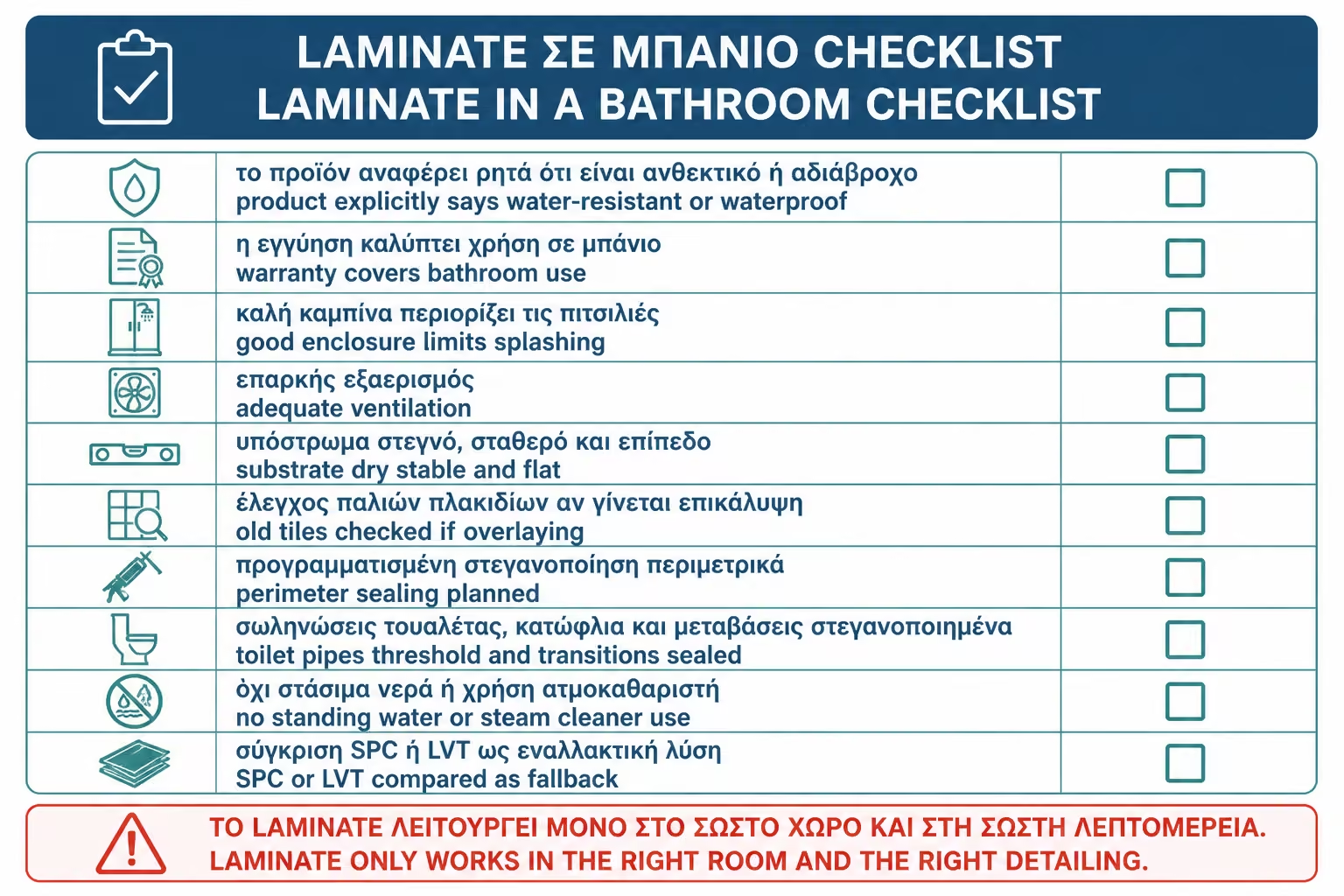
Use the table below as a quick reference for the key points of this section.
| Question | Yes / No |
|---|---|
| Is the laminate specifically water-resistant or waterproof according to the manufacturer? | Yes / No |
| Does the warranty cover use in a bathroom? | Yes / No |
| Does the bathroom have a good shower cubicle or bathtub that doesn't splash water? | Yes / No |
| Is there adequate ventilation? | Yes / No |
| Is the substrate dry, firm and level? | Yes / No |
| If going over old tiles, have hollow spots been checked? | Yes / No |
| Is proper perimeter sealing provided? | Yes / No |
| Are basin, piping, threshold and joints properly sealed? | Yes / No |
| Will stagnant water and a steam cleaner be avoided? | Yes / No |
| Have you technically compared laminate to SPC/LVT? | Yes / No |
If several answers are "no", laminate is not the safest choice for this particular bathroom.
If you want laminate in the bathroom, don't just rely on the word "water-resistant". Ask to see if the manufacturer specifically allows bathroom use, what it requires for sealing the joints and how the perimeter should be protected. Laminate can work in a WC or a carefully used bathroom, but it is not a material for a shower or an area with frequent water on the floor. If you want a wooden look with more security against moisture, SPC is usually a more reasonable choice, because its core does not have the same risk of swelling.
There is laminate that holds up better in the bathroom than the old classic laminates. Modern water-resistant products have better click systems, more durable edges and improved behavior against splashes and temporary moisture. In the right conditions, they can be used in WCs, guest bathrooms and bathrooms where the floor is not systematically wet.
But laminate remains more sensitive than SPC when water penetrates the joints or reaches the core. Success depends on joints, fastening, perimeter sealing, substrate, ventilation and use. It is not a material that forgives standing water, bad cabin, leaks or wet room applications.
For the owner who wants a wooden aesthetic and a warm touch, water-resistant laminate can be a solution in selected cases. For a bathroom with more moisture, SPC or LVT is usually a safer choice. For a shower or fully wet floor, the tile or a complete wet system remains the most reliable technical direction.
Return to category.
Go to categoryReturn to the central guide.
Go to guide