
Bathroom Surface Materials & Finishes
Return to category.
Go to categoryEpoxy floors began in places where durability was more important than decoration: industries, warehouses, workshops, laboratories, hospitals and professional areas. What was required there was a floor that was hard, continuous, easy to clean and resistant to chemicals, oils, abrasions and heavy use. In recent years, however, the same technology has also been used in the home, mainly through industrial, minimal and loft aesthetics.
In a home, epoxy flooring can give the impression of a single surface without tile joints, with a glossy or satin finish, a monochromatic effect, flakes, metallic effects or a calmer resinous surface. It can be used in garages, warehouses, kitchens, professional-type domestic spaces, auxiliary spaces and, subject to conditions, in bathrooms. Its charm is clear: it looks clean, modern, durable and "technical".
But in the residence we have to look at it realistically. Epoxy is not just a "floor paint" that you put over the old tiles and you're done. It is a resin system with specific requirements: substrate control, sanding or mechanical preparation, primer, possible grouting of joints, resin layers, curing times, non-slip shaping and final protection where necessary. Sherwin-Williams, in a guide to resinous flooring, states that one of the main disadvantages of epoxy floors is that they require more substrate preparation than anyone outside the industry would normally expect, and inadequate preparation is one of the most common reasons for failure.
You also need to be careful about over-promising. A properly applied epoxy system can be extremely durable, non-porous, easy to clean and very resistant to many chemicals and cleaners. This does not mean that it is invulnerable to everything, that it does not slip when wet, that it never scratches, or that it can always be safely applied over any old tile. The space itself, the humidity, the adhesion, the use and the final texture determine the result.
In this guide we'll look at what epoxy floors are, where they're worth it in a home, when they can be put over old tiles, what "waterproof" means in practice, what the benefits and risks are, what to look out for in a bathroom or kitchen, and how to evaluate a quote without being swayed by the phrase "industrial floor, nothing gets hurt".
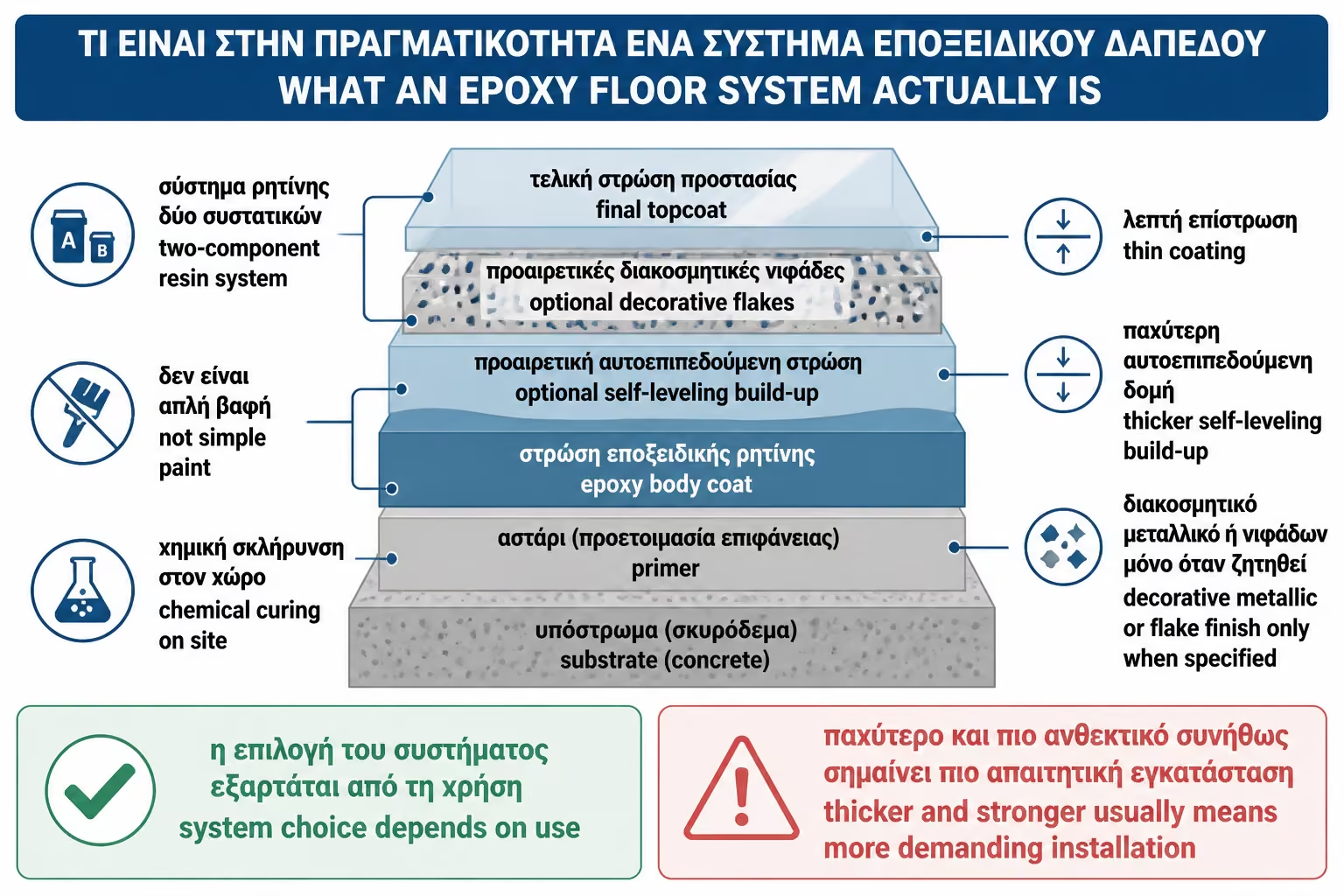
Epoxy flooring is a two-component resin system, usually a base and hardener, that are mixed on the job and create a hard, continuous surface after curing. It's not just a color. It is a chemical system that, when applied correctly, adheres to the substrate and forms a highly resistant protective layer.
There are different categories of epoxy applications. Another is a thin epoxy coating, another a self-leveling epoxy floor of greater thickness, another a system with flakes and another a decorative metallic epoxy. As system thickness and quality increase, so do durability, cost, and application requirements. Resinous flooring guides state that epoxy and resinous floors can have a wide range of thicknesses, and the thicker the system the greater the stress resistance can be, always depending on chemistry and application.
In the home, epoxies are usually used either for practical reasons, such as garages and warehouses, or for aesthetic reasons, such as industrial floors, single surfaces or special decorative effects. The important thing is to choose a system for the space and not just "epoxy in general".
The industrial aesthetic is based on materials that look technical, clean and functional: metal, visible concrete, black details, glass, resins, large uniform volumes and fewer decorations. Epoxy floors fit this logic because they create a continuous surface without the joints and dimensions of the tile.
In modern kitchens, loft apartments, renovated warehouses, studios or homes with a minimal style, an epoxy floor can give the feeling of a professional space that has been transferred to the residence. Instead of a "warm" material like wood, it offers a cleaner and more technical background. It is combined with black metal details, wooden furniture, concrete look walls, white kitchens or stainless steel elements.
The catch is that industrial doesn't mean sketchy. A poorly applied epoxy floor does not look "industrial". It just looks bad. Blisters, dust under the resin, roll marks, incorrect gloss, visible old joints and peeling can completely spoil the image. The austere aesthetic needs even more technical precision, because it has no decorative elements to hide the mistake.
Epoxy floors are often described as waterproof. At the finished surface level, a properly applied epoxy system is non-porous and does not absorb water like a natural material or a cementitious joint. This is a big advantage. Liquids remain on the surface and can be cleaned.
But we must separate the surface from the construction. If the epoxy layer is continuous, properly bonded to the substrate and free of cracks, it performs extremely well against water. But if there are failures at the edges, joints, siphons, corners or substrate, water can find a way. Epoxy does not negate the need for proper structural sealing in areas such as showers or wet rooms.
For example, in a garage or warehouse, a waterproof surface is a great advantage. In a shower, however, the whole must be considered: slopes, siphon, corners, substrate, walls and details. It is not enough to say "resin does not absorb water". The showerhead does not always fail from the middle of the surface. It often fails at joints.
One of the key advantages of epoxy floors is their resistance to many chemicals, oils, cleaners and stains. This is the reason why they are used in industrial and professional areas. Sherwin-Williams reports that resin floors can protect the substrate from chemicals and stress, resist stains and are easy to clean.
In a home, this means that an epoxy floor can withstand cleaners, water, oil, dust and everyday use better than many more porous surfaces. It is very practical in garages, laundry rooms, warehouses and auxiliary spaces. In a kitchen, it can hold up well to stains as long as the system is residential and not overly shiny or slippery.
There are limits. Not all epoxies are the same. Another system has high chemical resistance, another is mainly decorative. Certain substances, strong solvents, very aggressive cleaners or permanent exposure may affect the surface. Also, the top layer may scratch, dull, or wear away over time, depending on use. So you need a site-by-site system option, not a blanket promise.
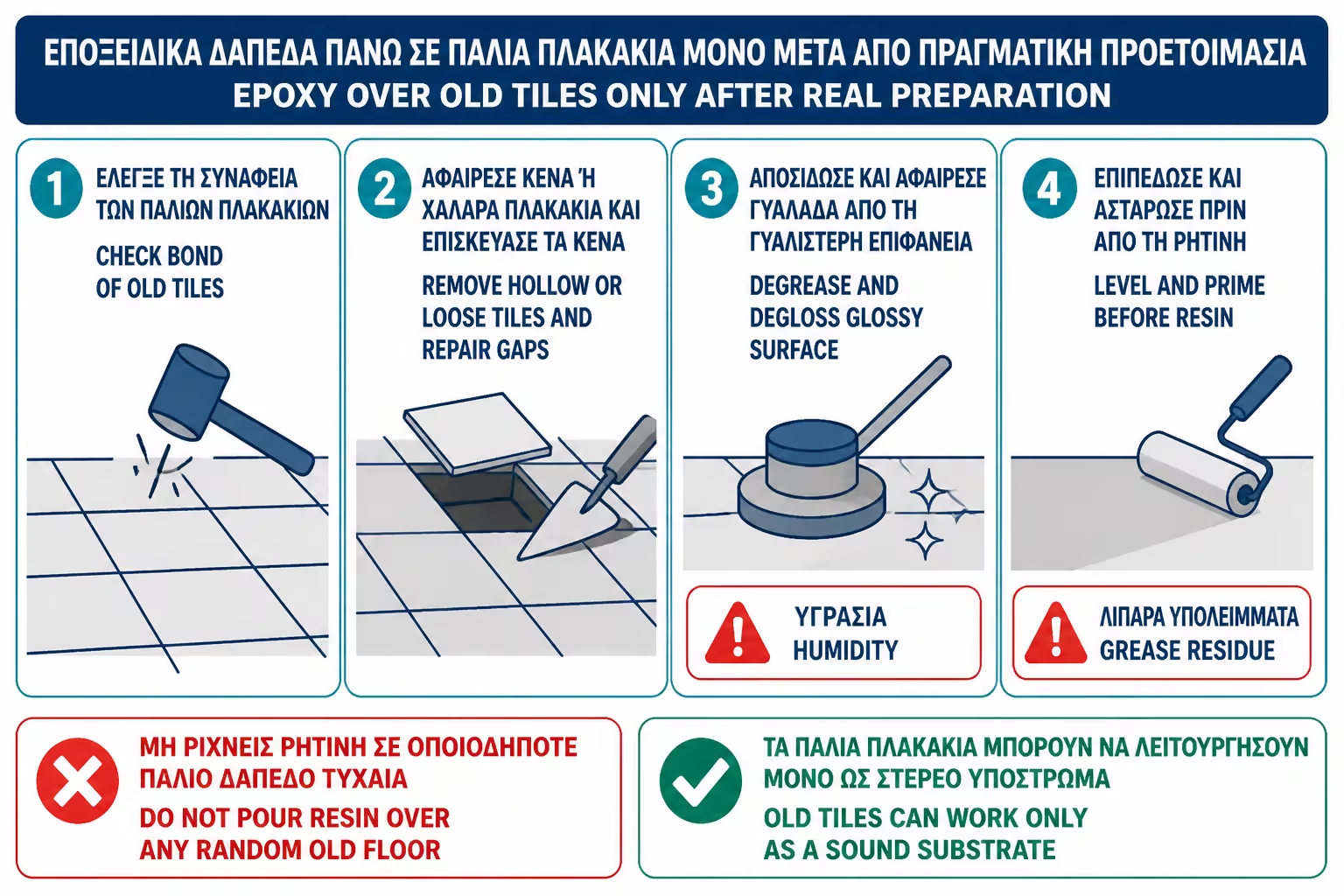
The phrase "goes directly over old tiles" is commercially enticing, but technically it needs clarification. Yes, in some cases an epoxy system can be applied over existing tiles. No, it should not be applied lightly over any old floor.
The old tiles must be firmly bonded, clean, without hollow spots, without moisture, without grease, without a shiny surface that has not been prepared and without joints that will "show" through the new floor. Some application guides state that applying epoxy over tile is possible, but requires proper pretreatment, proper primer, and smooth surface treatment.
There is also a stricter view on the market. Epoxy technicians point out that adhesion on ceramic tile is difficult and may require intense mechanical preparation or removal of the glossy surface, while in several cases it is recommended to avoid application on tile due to the risk of detachment. The correct position for the owner is not to take the application over tiles for granted. It should be checked by a professional.
Proper preparation is where success is judged. Epoxy needs mechanical adhesion and a clean, stable base. On smooth non-porous surfaces, such as tiles, sanding, roughening or other mechanical treatment is often required for the resin to "stick". Instructions for epoxy bonding on smooth surfaces state that non-porous surfaces must be sanded or textured so that the epoxy has a mechanical “key” of adhesion.
If there are tile joints, they must be grouted or smoothed, otherwise there is a risk of the old joint mesh showing through the finished floor, so-called ghosting. If there are broken tiles, they must be repaired. If there are hollows, they must be removed. If there is moisture underneath, the application may fail.
Preparation may include sanding with a diamond disc, industrial broom, adhesion primer, putty, self-leveling material or intermediate coats. These add to the cost, but are not optional luxuries. It is the reason the floor will stay in place.
Epoxy floors are particularly valuable in areas where durability, easy cleaning and a uniform surface are of practical benefit. The garage is the most classic application. There's oil, mud, dust, tires, tools and heavy use. A proper epoxy or polyaspartic/PU system can greatly upgrade the functionality of the space.
They are also suitable for warehouses, laundry rooms, technical areas, workshops, utility kitchens and home studios. In these spaces, the industrial origin of the material matches the use. Appearance is secondary but can be very clean and modern.
In living rooms, bedrooms or main living areas, the choice is more aesthetic. It can look impressive in a loft, but it doesn't suit everyone. Foot feel, acoustics, gloss, coolness and potential for scratches should be assessed. It is not a material that gives the warmth of wood or the naturalness of stone. It gives a technical, continuous, industrial feel.
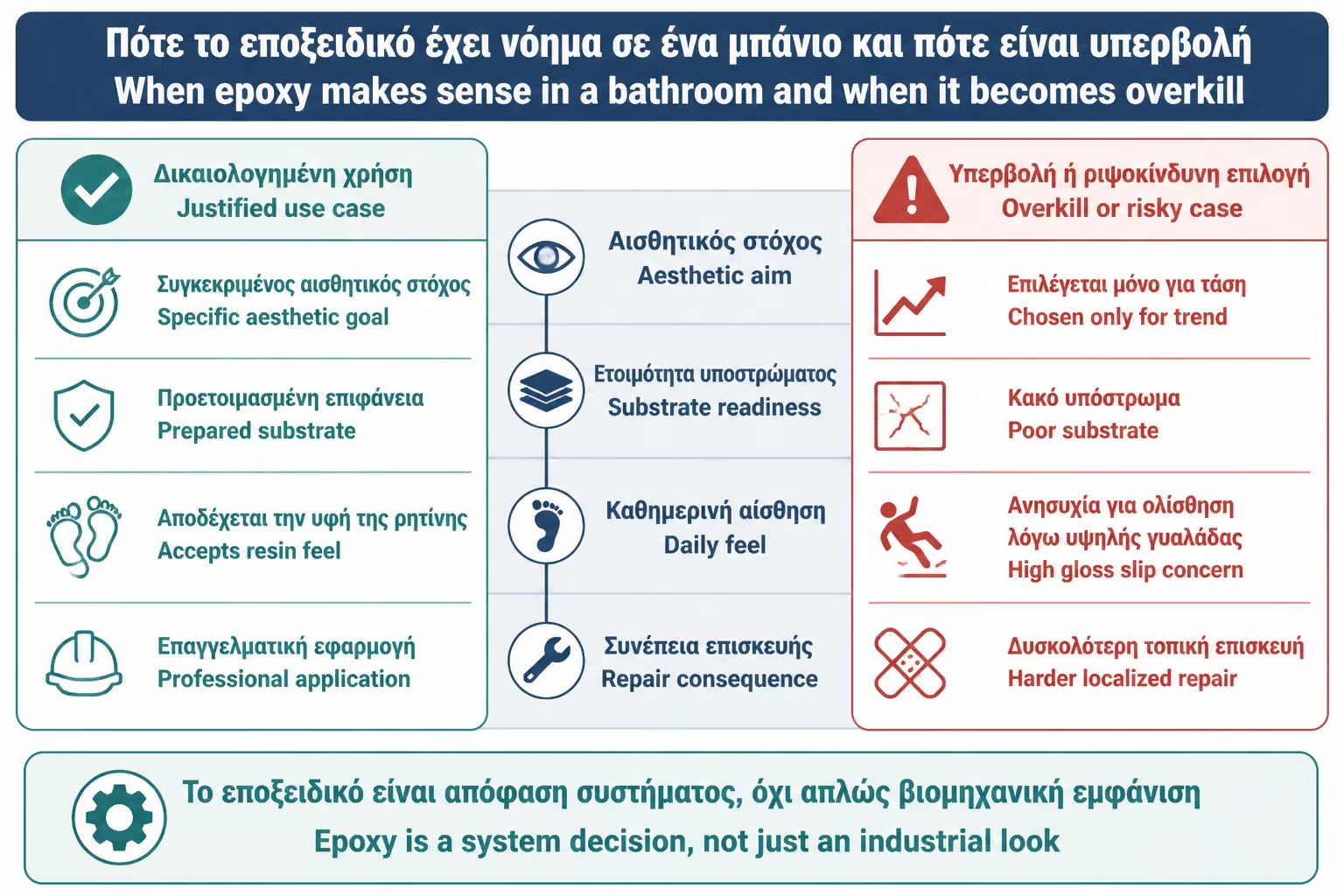
In a bathroom, epoxies can provide a uniform, non-porous surface and high water resistance. But the application is demanding. The bathroom has faucets, corners, walls, steam, slopes, bare feet, soaps and salts. It is not a simple flat industrial plate.
In bathroom flooring, the key issue is non-slip. A glossy epoxy can become slippery when wet. Several epoxy flooring guides point out that glossy epoxy surfaces can become slippery in the presence of water if a proper anti-skid texture or finish system is not added. For this in a bathroom, you should not only choose the smooth, glossy look. There must be a non-slip configuration.
In the shower, things get stricter. It needs a complete waterproofing system, correct slopes, correct siphon connection and a final finish that can withstand permanent wet use. In many homes, a good porcelain tile or properly applied tread may be a more common and predictable solution than a decorative epoxy. Epoxy has a place, but not without a skilled applicator.
In the kitchen, epoxy can be practical because it resists stains and is easy to clean. If water, oil or food falls, the surface does not absorb easily. This is an advantage. However, slipperiness must be considered, especially if the finish is glossy. In a kitchen where oil or water can get in, a completely smooth epoxy is not always the safest choice.
In laundry rooms and auxiliary areas, the use is more appropriate. There is water, cleaners, washing machines, detergents and a need for easy cleaning. That's where a durable resin floor can be very practical, especially if it has the right non-slip texture and perimeter finishes that don't let water seep under cabinets or appliances.
In warehouses and technical areas, epoxy has an even clearer role. It is not chosen for "warmth", but for durability, cleanliness and functionality.
Epoxy floors can have a different aesthetic effect. Monochrome gloss epoxy gives a clean industrial look, but shows dust, scratches and water more easily. A matte or satin finish is more subtle and often more practical for housing because it doesn't reflect as strongly and doesn't show every imperfection.
Flakes are small colored pieces that are thrown into the system, creating a speckled surface. They are very popular in garages and utility areas because they hide dust, small marks and everyday use. They can also help with slip resistance when paired with the right topcoat.
Metallic epoxies give impressive waters, like a liquid metal surface. They are very special, but not suitable for every home. In a small space they can become excessive. Also, the result depends a lot on the hand of the applicator. If the owner wants a calm, timeless floor, perhaps a monochromatic or flakes system is more practical than a bold metallic one.
Classic epoxies do not always have good UV resistance. In areas with direct or strong natural light, some epoxies can yellow, dull or change color over time. This is important in homes with large patio doors, sunrooms, storefronts or open garages.
Industry sources point out that epoxy floors can yellow or discolor when exposed to UV, and that a UV-stable polyurethane or other suitable topcoat is often needed for protection. This does not mean that all epoxies will turn yellow immediately. It means that UV exposure must be discussed before application.
For outdoor spaces, balconies or places with direct sunlight, classic epoxy is not always the best choice. A polyurethane, polyaspartate or other system with better UV resistance may be needed. The choice should be made by an applicator who knows the use and not just by the color palette.
A smooth epoxy surface can be impressive, but in areas with water it can become dangerous. This applies to bathrooms, kitchens, garages when water comes in from a car, laundry rooms and entrances. Anti-slip is not a detail. It is a basic specification.
There are ways to increase adhesion: adding anti-slip aggregates, flakes, quartz sand, special topcoats or more matte/structured finishes. The point is to find a balance. A very rough surface is more difficult to clean. Very smooth glides more. Space and use determine the right choice.
In a residence, especially in a bathroom, kitchen and garage, a clear proposal for anti-slip should be requested from the installer. The phrase "don't worry, it doesn't slip" is not enough. The final texture should be described and, where critical, specifications or a sample should be provided.
Use the table below as a quick reference for the key points of this section.
| Space | Appropriateness | What to watch out for |
|---|---|---|
| Garage | Very good choice | Substrate preparation, hot tire pickup, traction |
| Warehouse / technical area | Very good choice | Resistance to impacts and cleaners |
| Laundry room | Good choice | Water, detergents, non-slip texture |
| Kitchen | With care | Slipperiness, scratches, aesthetic compatibility |
| Bathroom | With strict specifications | Siphons, slopes, moisture, anti-slip |
| Shower | Only with specialized system | Waterproofing, wet area topcoat, details |
| Living room / loft | Aesthetic choice | UV, scratches, acoustic, cold feeling |
| Balcony / exterior | Not with simple epoxy | UV resistance, weather conditions, alternative systems |
The table shows that epoxy is not a "one-size-fits-all". It's a very powerful material when it fits the space, but it needs the right system.
Use the table below as a quick reference for the key points of this section.
| Advantage | What it means in practice |
|---|---|
| Single surface without joints | Easier cleaning and industrial/minimal image |
| Non-porous surface | Liquids stay on the surface, they are not easily absorbed |
| Chemical and stain resistance | Good solution for garages, utility rooms and intensive use |
| Application over existing surfaces | Possible under conditions, with proper preparation |
| Wide variety of aesthetic options | Monochrome, flakes, metallic, matte, glossy |
| Disadvantage | What it means in practice |
|---|---|
| It requires excellent preparation | A bad base means peeling or bulging |
| Can be slippery when wet | It needs a non-slip finish in wet areas |
| UV sensitivity | It can turn yellow without a proper topcoat |
| Difficult local repair | The patch may be visible |
| Odors and ripening times | It needs ventilation and proper planning of use |
This comparison is important because epoxy is often presented only on its merits. In practice, disadvantages are not a reason for rejection, but a reason for proper specification.
In the Greek market of 2026, the cost of epoxy floors depends on the system, thickness, preparation, surface, whether it goes over old tiles, finish, anti-slip additives and space. There is no single price for "epoxy floor".
For simple coating applications on relatively easy surfaces, one can find indicative prices of around €25–45/sq.m. For more complete systems, self-levelling, flakes, metallic, high resistance topcoats or application over prepared tiles, prices can range from €45-90/m2. or more. In small bathrooms, showers or special details, costing can be done as a total project with a minimum charge, not just per square meter.
It should always be clarified whether the price includes mechanical preparation, primer, joint filler, base coat, final topcoat, anti-slip additive, VAT and transport. A cheap offering may just be thin coating without proper preparation. In such a case, low cost can lead to detachment and rework.
A serious quote for epoxy flooring should describe the system. It must state what will be done to the substrate, whether it will be sanded, whether it will be primed, what resin will be used, how many layers, what thickness approximately, what topcoat, if there is UV protection, if there is an anti-slip formulation and what are the times of use.
If the application is over old tiles, the quotation must state how the joints, hollow tiles, gloss surface and possible moisture will be dealt with. If the space is a bathroom or kitchen, it must mention what happens with water and slipperiness.
The phrase "epoxy floor complete" is not enough. Full for what space? With what system? With what guarantee? With what preparation? These questions separate the professional from the simple applicator who promises a quick fix.
The first mistake is underestimating preparation. If the substrate is not correct, the epoxy can peel off. The fit isn't as good as the resin; it's only as good as the base.
The second mistake is the application on old tiles without control. Hollow tiles, shiny surfaces and poorly grouted joints can cause problems.
The third mistake is an overly glossy finish in a wet area. The gloss is impressive, but it can slip and show scratches more easily.
The fourth mistake is the use of simple epoxy in a room with helium without a UV-stable topcoat. Yellowing can spoil the image.
The fifth mistake is the expectation that maintenance will never be needed. Even durable floors need proper cleaning and, in some cases, refinishing after years of use.
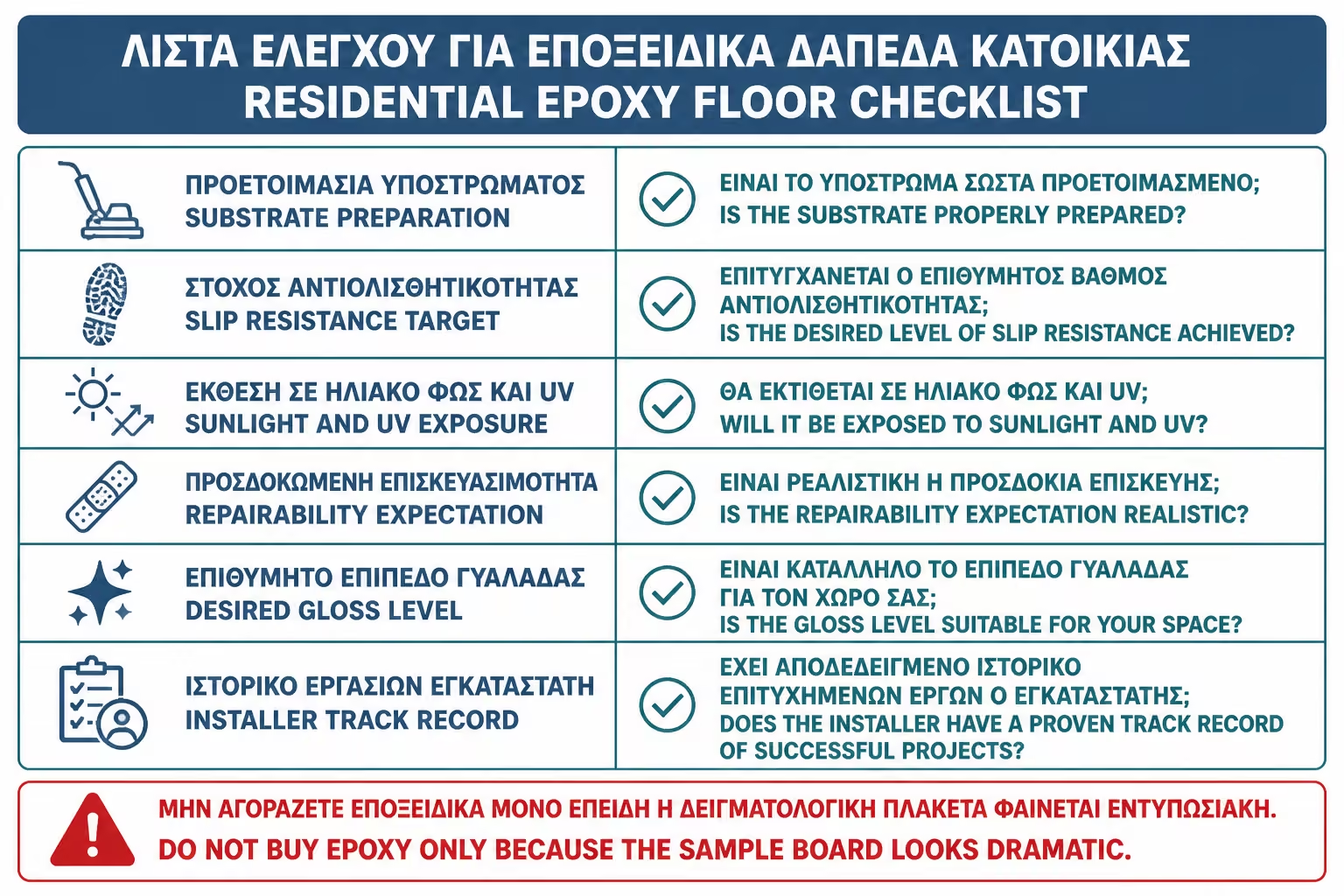
Use the table below as a quick reference for the key points of this section.
| Question | Yes / No |
|---|---|
| Has the substrate been checked for stability and moisture-free? | Yes / No |
| If going over old tiles, have hollow spots been checked? | Yes / No |
| Is mechanical preparation or appropriate roughening of the surface provided for? | Yes / No |
| Have old tile joints been grouted or smoothed? | Yes / No |
| Do you know if the system is coating, self-levelling, flakes or metallic? | Yes / No |
| Is there anti-slip provision for wet areas? | Yes / No |
| If there is sun, is a UV-stable topcoat provided? | Yes / No |
| Does the quote say how many layers and what materials will be applied? | Yes / No |
| Have you been informed about drying and full curing times? | Yes / No |
| Do you know which cleaners are allowed and which are not? | Yes / No |
If enough answers are "no", the application should not start. With epoxies, what is not visible before application is usually what creates the problem afterwards.
If you are considering epoxy flooring over old tiles, don't think of it as "painting the floor". Ask for an adhesion and substrate test first. The tiles must be strong, clean, not shiny after preparation and without hollow spots. Also ask for non-slip finish where there is water and UV-stable topcoat where there is sun. Epoxy is a very strong material, but only when applied to a proper base. Otherwise, the strength of the resin does not matter, because the adhesion will fail.
Epoxy floors and resins have gained a place in the home because they offer something that classic materials hardly provide: a uniform, non-porous, durable surface with a clean industrial aesthetic. In garages, warehouses, laundry rooms, technical areas and some kitchens they can be an excellent solution. They can be used in bathrooms and showers, but only with very strict technical specifications.
The phrase "goes over old tiles" is correct only under conditions. If the old tiles are hollow, shiny, dirty, wet or poorly glued, epoxy will not save them. Trouble will follow. The same goes for waterproofing: the epoxy surface can be extremely water resistant, but the details, edges, corners and substrate remain critical.
The right choice is to treat epoxy as a complete floor system. Not as a quick overlay. Ask about preparation, primer, coats, slip resistance, UV protection, curing times and maintenance. When these are done correctly, the result can be durable, practical and very modern. When ignored, even the best resin can fail.
Return to category.
Go to categoryReturn to the central guide.
Go to guide