
Bathroom Surface Materials & Finishes
Return to category.
Go to categoryOld joints can ruin the image of an otherwise decent bathroom. The tiles may be strong and clean, but the joints may have turned grey, black, yellow or uneven. The result is a bathroom that looks permanently dirty, even if it has just been cleaned. In such cases, the owner often thinks that the only solution is to scrape the joints and start over. This is the most correct technical solution when the joints are loose, but it is not always necessary.
There is an intermediate solution: renewing or painting joints with special markers, joint pens or more professional grout colorants. These products are not simple office "fixer" nor common paint. Good grout colorants are special joint coatings, often water-based, polymer-modified or waterborne epoxy, that recolor, seal and protect the surface of the existing grout. Mapei describes UltraCare Grout Refresh as a ready-to-use, water-based, polymer-modified colorant and joint sealer that can be applied and bonded over cement, epoxy, urethane and acrylic grouts.
This means that when the joint is healthy but stained or discolored, it can be freshened without a complete dislocation. The picture changes dramatically. A grayish white knuckle can turn white again. An old beige joint can become warm gray or greige. An uneven joint can acquire a uniform color. In some cases, we can even completely change the aesthetic: from white to gray, from beige to anthracite, from old yellowish to a more modern tone.
But realism is needed here. Pens and joint paints do not repair weak joints. They don't fill deep gaps. They do not kill mold that has set in deep. They do not dissolve moisture under the tiles. They do not turn a cracked joint into a new one. It is an aesthetic and surface protection solution for joints that remain stable. Aqua Mix describes Grout Colorant as a waterborne epoxy that recolors, seals and rejuvenates dirty or discolored existing grout joints, while emphasizing in the technical sheet that the joint must be clean, dry and free of previous sealers, cleaners or chemical residues.
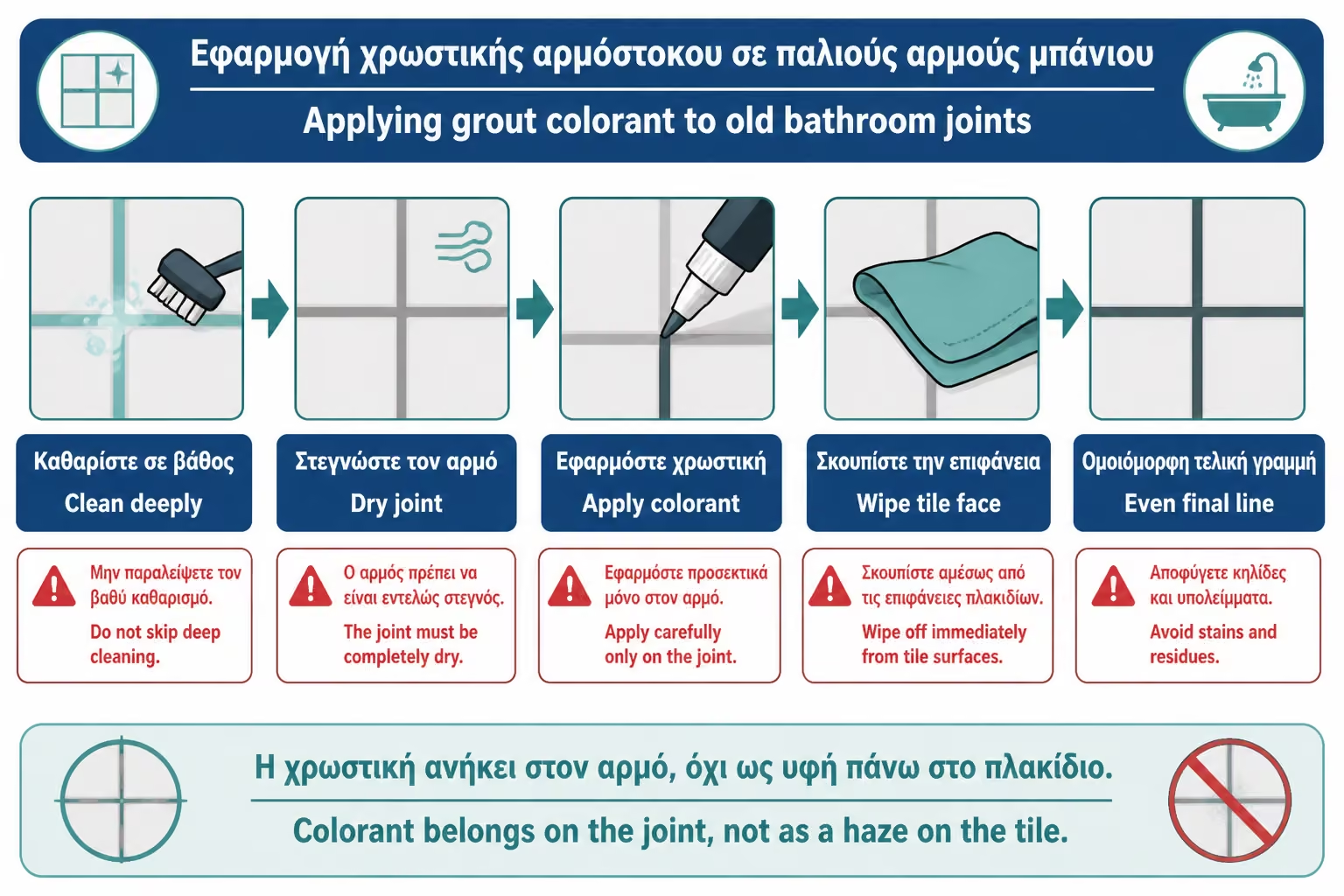
So the right guide is not "take a marker and paint over it". They are: check that the joint is healthy, deep clean, remove mold and scale, let dry, test, apply the product correctly, wipe the excess off the tile and let it cure before rewetting. If these are followed, joint renewal can be one of the most economical and impressive DIY projects in the bathroom.
Grout refresh means restoring or changing the visible color of existing joints without fully removing the old grout. It is done with products that are applied to the surface of the joint and create a new colored layer. The simplest are grout pens or markers. The more durable option is a grout colorant, applied with a bottle, brush, sponge or dedicated applicator.
The process is particularly popular on bathrooms, kitchens, floors, walls, sink tiles, splashbacks and old floors with grayed joints. The goal is to make the joint look clean, even and more modern again.
It should not be confused with regrouting. In regrouting, part of the old joint is removed in depth and new grout is installed. In grout refresh, the old joint stays in place and only the surface is recolored or sealed.
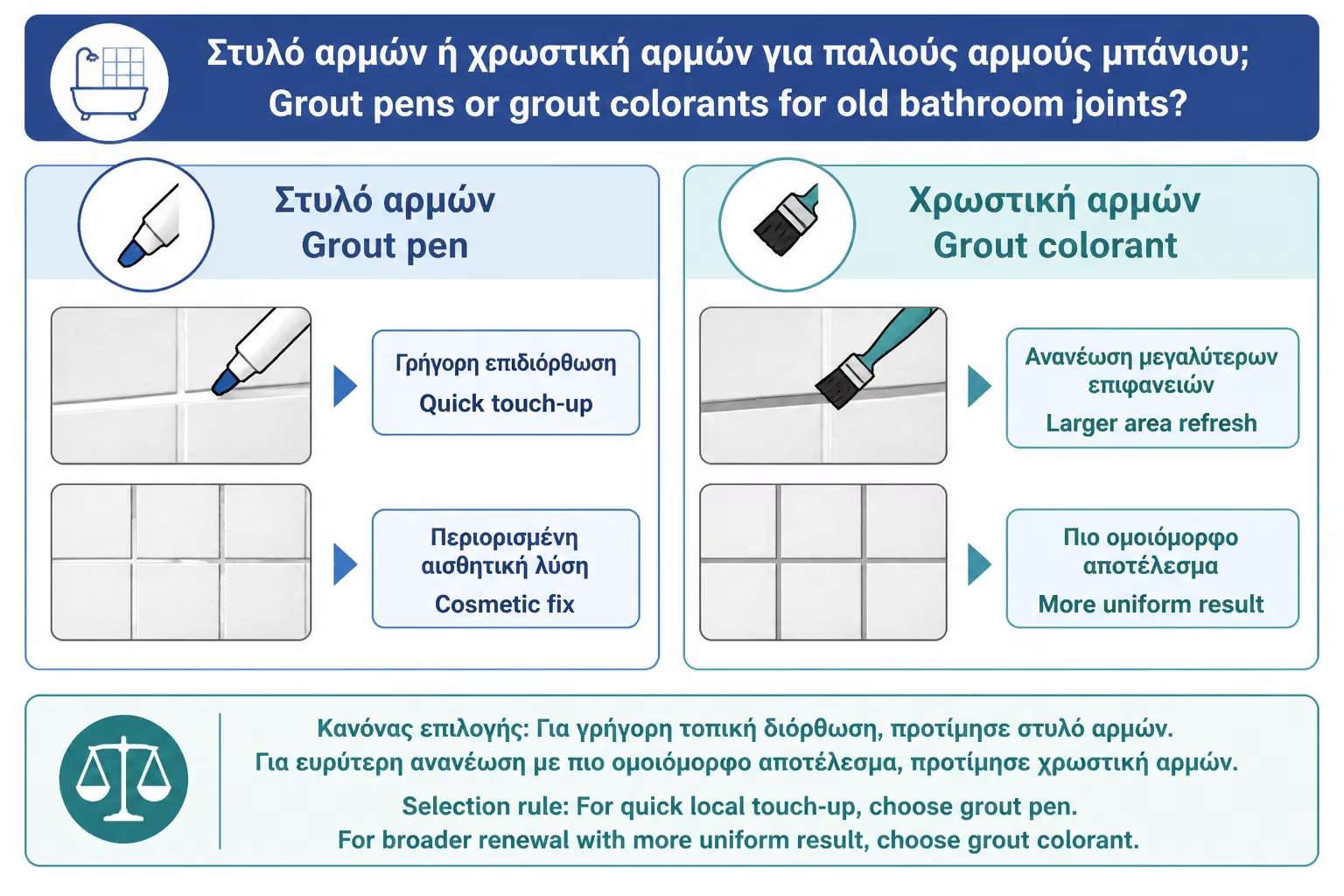
The joint marker is the simplest DIY solution. It looks like a pen or marker and passes a white or colored layer over the joint line. It is easy, economical and useful for small surfaces, walls, WC or quick freshening. Its downside is that it often has less durability, less coverage, and can wear out faster on floors or water spots.
Grout colorant is a more professional category. It is usually more durable, covers better, can seal the joint and often offers stain protection. Aqua Mix Grout Colorant, for example, is referred to as a professional grade waterborne epoxy that recolors, seals and rejuvenates existing grout joints.
If you want to freshen up a few joints on a wall, a marker can be enough. If you want a more durable upgrade for a floor, a shower area or a large bathroom, grout colorant is usually the better option.
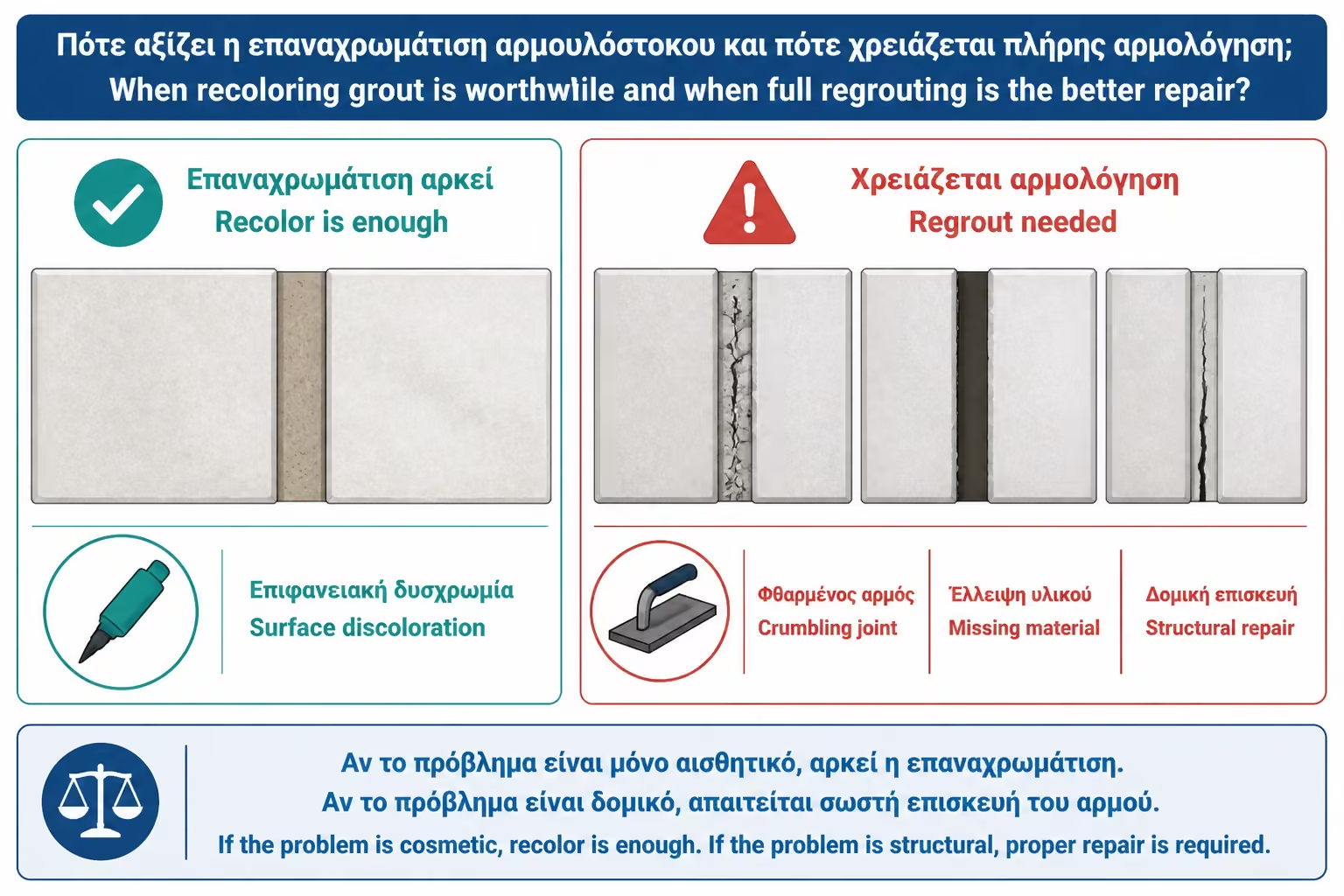
It is worth it when the joints are firm but stained, discolored or uneven. If the grout is old but not missing pieces, not chipped and not deeply cracked, a colorant can deliver a dramatic improvement at a low cost.
It's also worth it when you want to change the look without new tiles. For example, old white tiles with yellowed joints can show much more clearly with a new white or light gray joint. Marble look tiles can look more premium with a joint near the base. Subway tiles can take on a more intense character with gray or charcoal grout.
It is especially worth it in rentals, in quick renovations, in bathrooms that we don't want to strip, and in cases where the grouting was a color failure but technically sound.
It is not worth doing when the joints are loose. If you scratch them lightly with a screwdriver and the material turns to dust, there is no point in recoloring them. The product will sit on a weak base and fail. In that case, the joint needs to be removed and replaced with new grout first.
It is not worth it when pieces are missing, there are deep cracks or the joint has been opened in depth. Colorant is not a filler. It can visually cover minor imperfections, but it doesn't really fill gaps. If there is substrate movement or hollow tiles, painting will just temporarily hide the symptom.
It is not worth doing over active mold or ongoing moisture. If the joint turns black because it holds water, because there is a leak, or because the silicone in the corner has opened up, the finish will fail. The moisture problem has to be solved first.
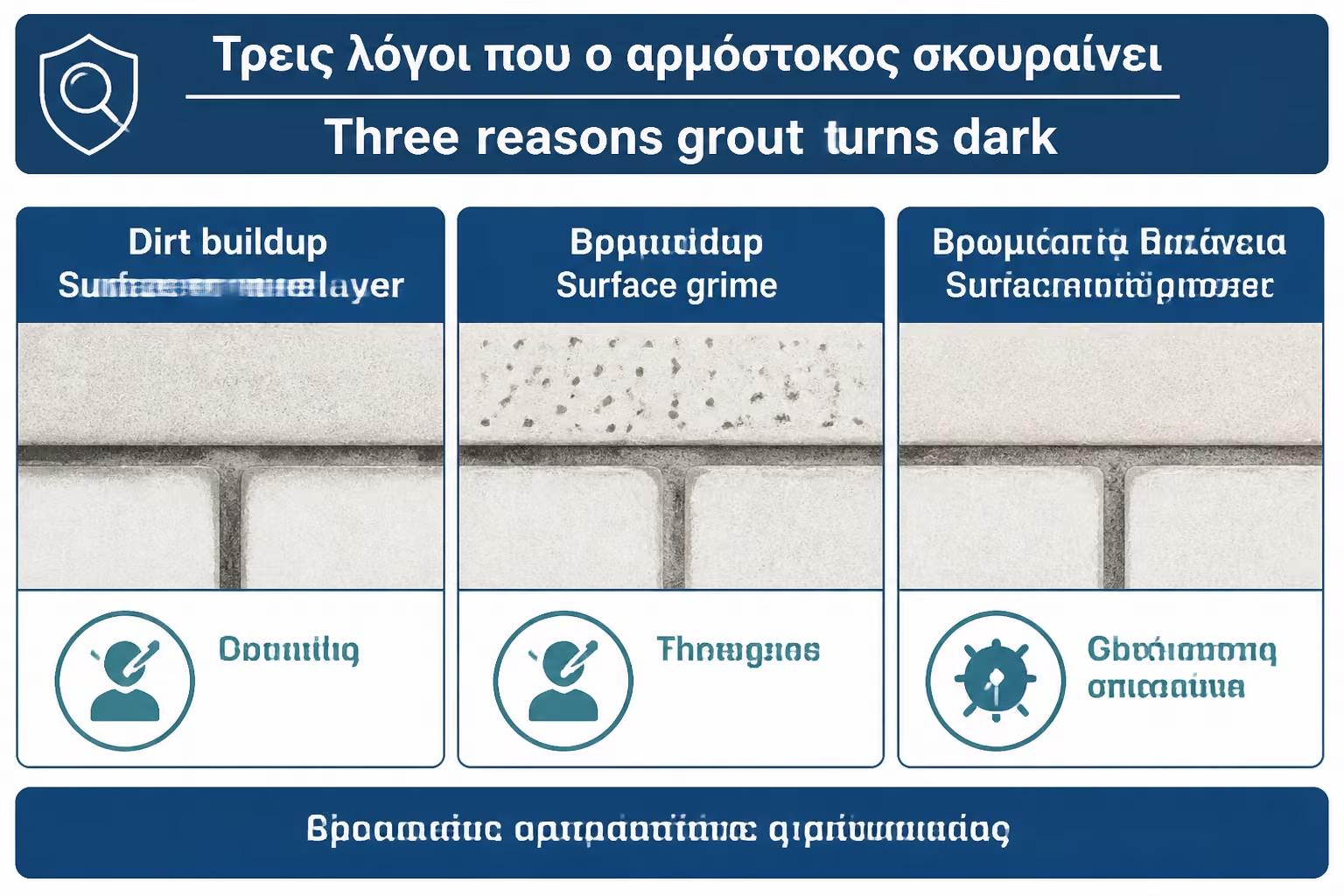
Before painting a joint black, you need to understand why it is black. If it is surface dirt from use, it can be cleaned and then painted. If it is mould, it must first be removed with a suitable anti-mould product and allowed to dry completely. If it is discoloration from chronic moisture, maybe the colorant will cover it, but the cause must be stopped.
If the joint only darkens in the shower or in the corners, consider silicones and ventilation. If it turns black on a bathroom floor, see if there is water left or if the cleaning is insufficient. If it turns black near a siphon, there may be a moisture or poor drainage issue.
Painting over black mold is wrong. You will cover the problem under a coat of paint and it will probably reappear.
Preparation is 80% of success. The joint must be clean, dry and free of residues of cleaners, soaps, salts or old sealers. Aqua Mix Grout Colorant TDS clearly states that the joint must be clean, dry and free of previous sealer, cleaner or chemical residue.
This means that a simple mop is not enough. Needs deep cleaning. In a bathroom, joints have soaps, salts, body fat, cleaners and possible mold. They have fats in the kitchen. They have dust and cleaners on the floor. All this prevents the colorant from setting.
After cleaning, the joint must be completely dry. If you apply paint to a wet joint, the adhesion will be poor and the result may peel or come out uneven.
Start with a good joint cleaner or degreaser, depending on the space. For bathing, clean soaps and salts. For kitchen, skim off fats. If mold is present, use an anti-mold cleaner and rinse as directed. Then let it dry.
There are also special pre-treat cleaners for grout colorants. Aqua Mix has Grout Colorant Pre-Treat Cleaner, described as a ready-to-use cleaner for removing dirt, soil, soap scum and hard water deposits from joints, while preparing non-epoxy grout joints with light etching for better colorant bond.
If the joint has old sealer, the colorant may not set. Sealer removal or adhesion testing is then required. This is common on floors that have been treated with protective liquids in the past.
We always test on a small, inconspicuous spot. We want to see three things: if the paint covers, if it sticks to the joint, and if it cleans properly from the tile. On glazed tiles the excess is usually easier to clean. On matte, embossed, anti-slip or natural stone, it can water or leave a film.
Testing is especially important when you want to change color from dark to white or from white to charcoal. The cover may need a second hand. In porous joints, consumption may be higher.
In natural stone, be even more careful. If the colorant gets into porous stone next to the joint, it can stain. There you may need protection or another method.
The marker is simple. Shake it, press the tip until the color comes off and carefully go over the joint line. Work in small sections and have a fresh and a dry cloth nearby to immediately clean any smudges on the tile.
The surface should not get wet immediately afterwards. Instructions for using grout reviver pens state to let the paint dry before applying a second coat and to wait a few hours before wetting the tiles.
Markers are convenient for small tasks but tedious on large surfaces. The tip can wear, dry out or not cover evenly in very porous joints. For a floor or large bathroom, grout colorant is usually a better choice.
The grout colorant is usually applied with a small brush, applicator bottle, sponge or special tool. Spread it over the joint, making sure it covers the surface well. You don't have to be totally surgical, but the less you stain the tile, the easier it will be to clean.
On smooth or glossy tiles, you can often run the colorant into the joint and then, at the right time, wipe the excess off the tile. Mapei gives instructions with "early wash" and "late wash" methods depending on the surface and how full the joint is.
On matte or embossed tiles, work more carefully because the colorant can catch on the texture. Masking or very precise application may be required.
On slightly discolored joints, one coat may be sufficient. Very black, dark or uneven joints may require a second coat. The second coat is applied after the first coat has dried, according to the product instructions.
Do not load too much material in one pass. If the colorant is applied too thick, it may crack, peel or dry unevenly. Better two thin controlled hands than one heavy one.
In products that also work as a sealer, the correct coverage is important because it also provides protection. Mapei UltraCare Fuga Fresca is reported to renew or change the color of cement joints, has an excellent covering effect, protects the joints and makes cleaning easier.
Durability depends on product, preparation, use and site. On walls it can hold quite well. On floors, showers and frequently scrubbed areas, the wear and tear is greater. Professional grout colorants last longer than simple markers, especially when they also work as a sealer.
Aqua Mix Grout Colorant is reported to provide maximum stain protection, recolors, seals and rejuvenates existing grout joints and simplifies future cleaning. But this assumes that it was applied on a properly cleaned and dry joint.
In a master bathroom with daily use, it's good to see it as maintenance that may need to be renewed after years, not as a permanent technical grout replacement.
It can, as long as the product allows it and the joint is healthy. But the shower is a demanding zone: hot water, soaps, salts, cleaners and constant humidity. If the joint is loose or has deep mold, colorant will not solve the problem.
In a shower floor, especially with tiles, the joint surface is large and the stress is intense. There, regular re-grouting with a suitable grout may be preferable, especially if the joints are worn.
If the shower has an active leak or moisture behind the tiles, do not paint the joints. First diagnosis and repair.
White gives a clean, bright image, but shows future dirt more easily. On walls it works very well. Floors and showers may require more maintenance. Light gray is more practical for floors because it looks clean without being as sensitive as white.
Warm grey, greige, sand and taupe are very good choices for beige, natural, stone look or wood look tiles. Charcoal or black gives strong contrast but shows salt and white spots, especially in hard water areas.
If you are not sure, choose a color close to the midtone of the tile. Joint replacement usually looks more premium when the joint "bonds" with the tile, not when it screams.
| Solution | Where does it fit? | Advantages | Disadvantages |
|---|---|---|---|
| Joint marker | Small surfaces, walls, WC | Cheap, easy, fast | Less endurance, tiring on large surfaces |
| Fine tip joint pen | Details, corrections | Great accuracy | Small coverage per piece |
| Grout colorant | Floors, bathrooms, larger surfaces | Better coverage and durability | He needs better preparation |
| Waterborne epoxy colorant | More demanding applications | Recolors and seals | It needs proper application and cleaning of excess |
| Full regrouting | Loose/cracked joints | Technically correct repair | More work and dust |
For serious bathroom renovation, grout colorant is usually more reliable than simple marker.
| Joint condition | Dyeing/Colorant | Scraping & new joint |
|---|---|---|
| Simple discoloration | Yes | Not necessarily |
| Surface dirt being cleaned | Yes, after cleaning | No |
| Superficial mold browning | Only after it is completely cleaned | If it returns or is in depth |
| Fragile joint turning to dust | No | Yes |
| Cracks and gaps | No | Yes |
| Hollow tiles around the joint | No | First tile repair |
| Moisture under tiles | No | First moisture diagnosis |
| Uneven color from incorrect grouting | Yes | Only if there is a technical fault |
If the joint is healthy, it is painted. If the joint is damaged, it is repaired.
In the Greek market of 2026, joint markers are the most economical solution, but they cover a smaller surface and have a more limited durability. Grout colorants cost more, but have better coverage, more colors and often work as a sealer as well. The cost depends on the surface, width and number of joints.
In a small bathroom with large tiles, the quantity is small. In mosaics or small tiles, the joints are many and the work multiplies. There the cost in time can be significant, even if the material is not expensive.
Compared to regular re-joint, joint painting is more economical and less invasive. Compared to simple cleaning, it is more expensive but it radically changes the image.
The first mistake is to paint dirty joints. The colorant does not adhere properly to soaps, salts and fats.
The second mistake is the application on a wet joint. Moisture reduces adhesion and creates unevenness.
The third mistake is to use a marker on loose joints that need re-joining.
The fourth mistake is to hastily use the shower before the product has dried/cured.
The fifth mistake is applying to matte or porous tiles without testing, resulting in stains next to the joint.
The sixth mistake is choosing an off-white joint on a heavily used floor, when a light gray shade would be much more practical.
| Inquiry | Yes / No |
|---|---|
| Is the joint stable and not crumbling? | Yes / No |
| Are there no deep cracks or gaps? | Yes / No |
| Has it been cleaned of soaps, salts, grease and mold? | Yes / No |
| Is the joint completely dry? | Yes / No |
| Has it been tested in an inconspicuous spot? | Yes / No |
| Is the product suitable for your type of joint? | Yes / No |
| Does the tile around the joint not stain from the colorant? | Yes / No |
| Do you have cloths for instant cleaning of excess? | Yes / No |
| Will you allow the required drying time before it gets wet? | Yes / No |
| Have you chosen a practical color for the use of the space? | Yes / No |
If the answers are "yes", joint replacement has a high chance of success.
> Don't treat joint marker like a magic fixer. If the grout is strong but dirty or discolored, a good grout colorant can change the entire bathroom at little cost. But if the joint is loose, has gaps, cracks or deep mold, it must be removed and redone. First we clean, dry and check. Then we paint. Joint paint is a great maintenance and aesthetic refresher — not a repair for poor grouting or moisture.
Renewing joints with markers, pens or grout colorants is one of the fastest and most economical interventions to make an old bathroom look cleaner and more modern. Without loosening, without dust and without re-grouting, you can change the image of the space in a few hours.
The secret is to use it in the right situation. If the joints are sound but stained or discolored, grout refresh is a smart solution. If the joints are loose, cracked, deeply moldy or wet, painting is only temporary camouflage. In that case, the area needs cleaning, diagnosis and possibly full regrouting.
For small areas, a marker may be sufficient. For floors, bathrooms for daily use and a more permanent effect, a good grout colorant that recolors and seals is a better choice. As always in renovation, the result is not judged only by the product, but by the preparation.
Return to category.
Go to categoryReturn to the central guide.
Go to guide