
Bathroom Surface Materials & Finishes
Return to category.
Go to categoryClear varnishes and top coats are the final layer in many DIY projects: painting old tiles, restoring a vanity unit, chalk paint on cabinets, stenciling a floor or changing the color of old surfaces. It is the material that promises to "lock" the color, protect it from water, scratches, stains and cleaners. And indeed, when used correctly, a good top coat can dramatically increase the life of a painted surface.
But the phrase "makes it 100% waterproof and scratch resistant" needs correction. No clear coat applied on site to old tiles or furniture will make the surface indestructible, nor will it turn it into factory porcelain, industrial laminate, or glass. The top coat improves durability, reduces absorption, increases washability and protects the color from daily use. It does not eliminate the need for proper preparation, does not correct poor adhesion, does not seal active moisture, and does not withstand unlimited scrubbing with harsh cleaners.
The correct technical wording is: a top coat can make a painted surface much more resistant to water, stains and wear, but not 100% waterproof or indestructible. Especially in the bathroom, where there are water vapors, splashes, hot water, soaps, cosmetics, cleaners and frequent use, the top coat should be selected as part of the system. It's not a general polish that goes on top of anything.
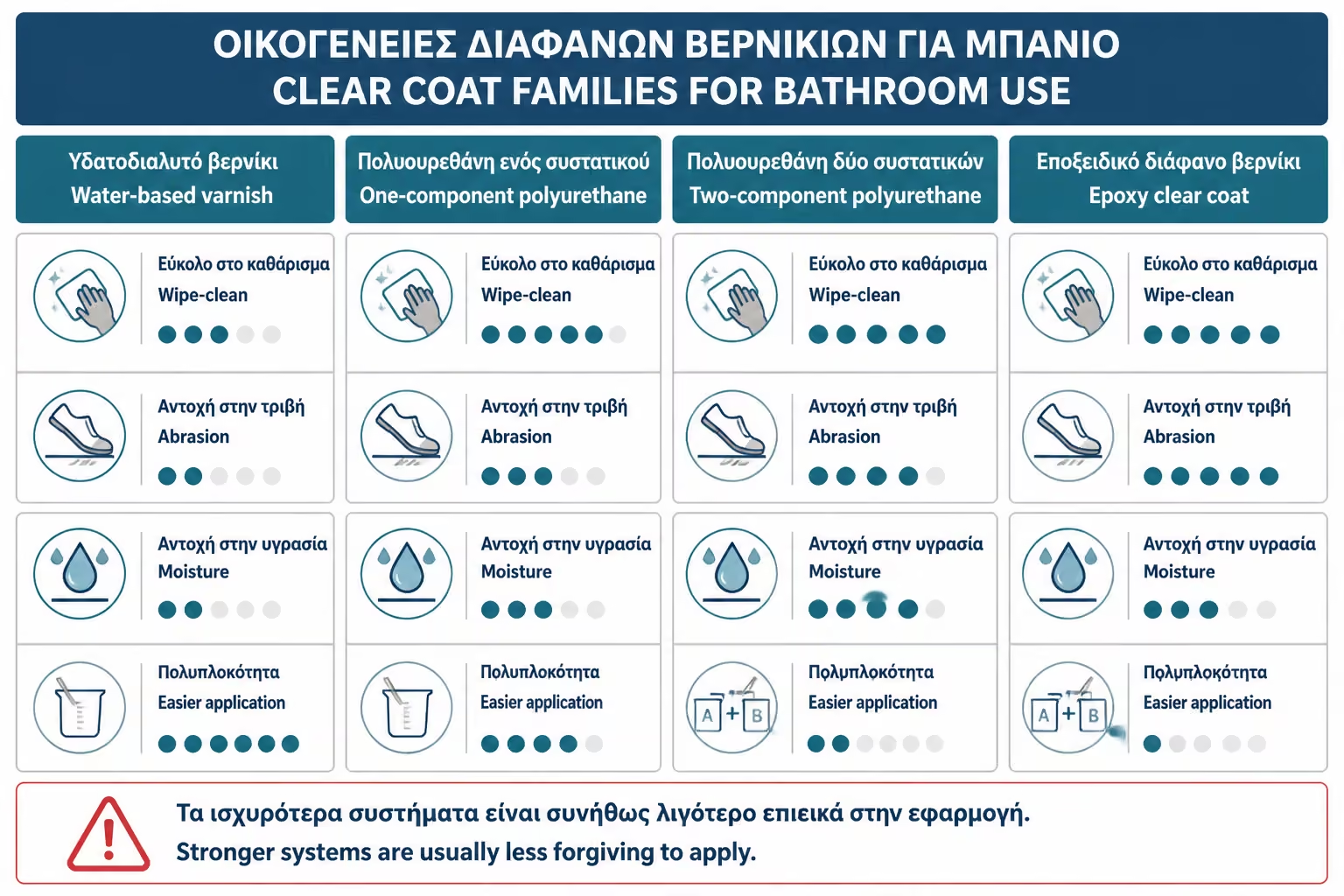
The most common top coats for DIY applications are water-based varnishes, polyacrylic lacquers, water-based polyurethane varnishes and, in more demanding applications, two-component 2K polyurethane or epoxy top coats. For example, Varathane Water-Based Floor Polyurethane is described as an acrylic polyurethane that offers excellent scratch and stain resistance, with tool cleaning with soap and water. Accordingly, professional two-component water-based clear topcoats for furniture and stairs are referred to as fast drying, hardness and high resistance to blocking.
On painted bathroom furniture, a top coat is often necessary when using chalk paint or matte decorative paints. Chalk paint gives a beautiful matte surface, but if left unprotected in a bathroom, it can stain, dull or wear out. Annie Sloan describes Chalk Paint™ Lacquer as a hard-wearing water-based polyacrylic varnish used over Chalk Paint for a more durable finish. On painted tiles or countertops, some systems have a special clear coat or additive, while others should not be covered with random varnish because there may be incompatibility.
In this guide we will see what exactly a top coat does, what types there are, when it is needed on tiles and furniture, how it is chosen for a bathroom, how it is applied correctly and where its limits are.
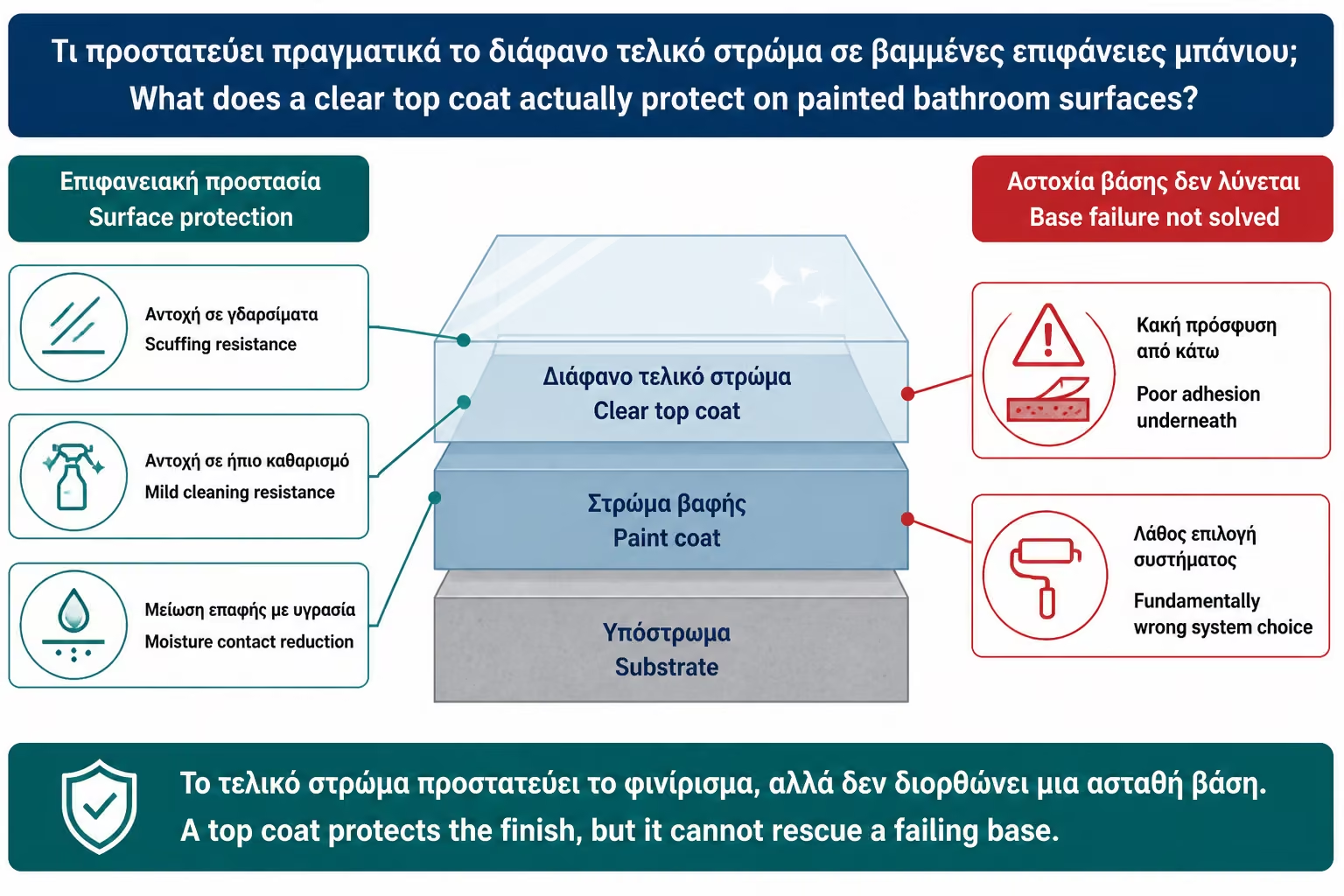
Top coat is the final protective layer over paint, stain, chalk paint, stencil or other decorative finish. It can be clear varnish, polyacrylic, polyurethane, epoxy or a special protective film. Its role is to protect the underlying paint from wear, water, stains, abrasion and cleaning.
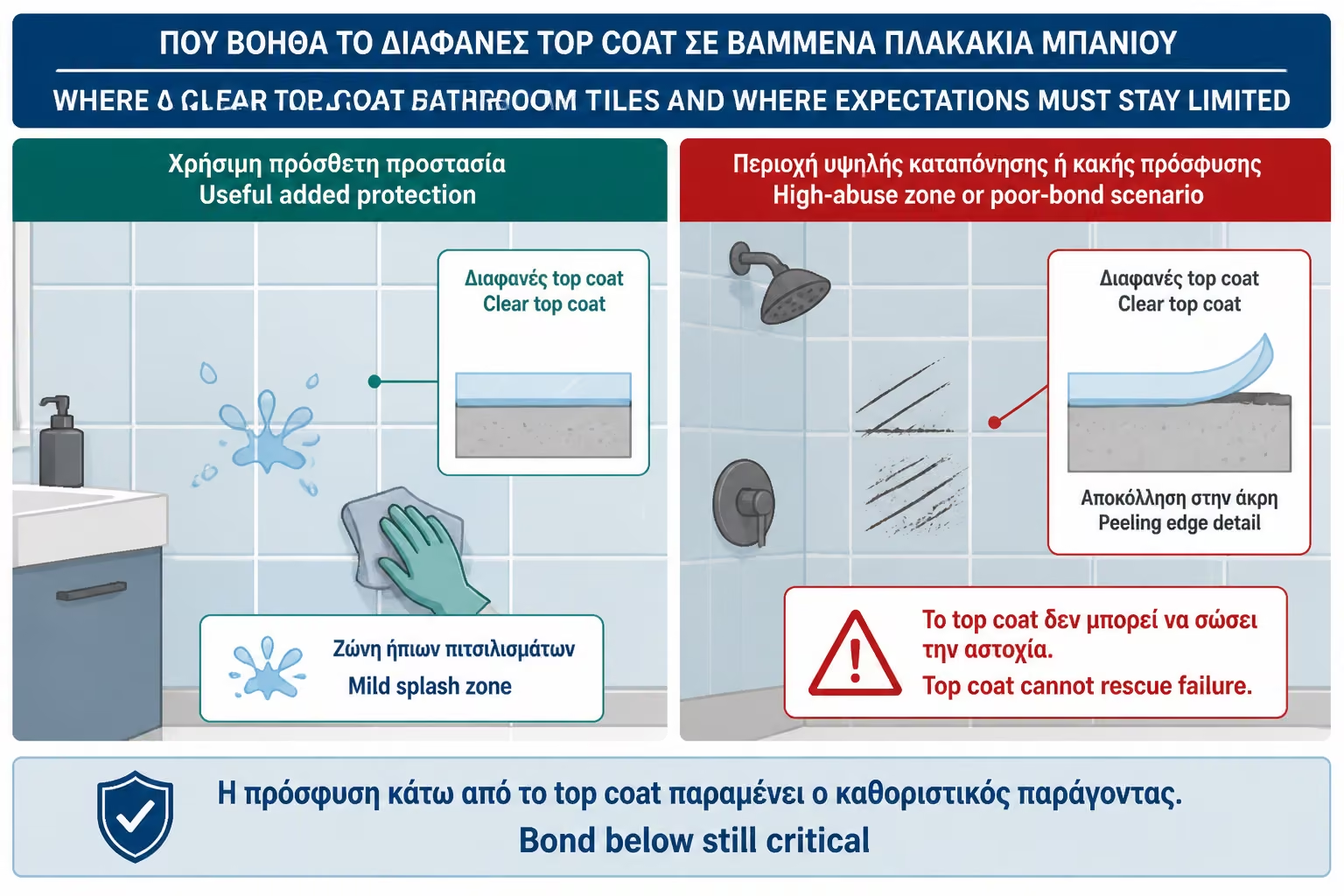
On a bathroom piece of furniture, the top coat protects against splashes, hands, soaps and cleaners. On painted wall tiles, protects against water vapor and cleaning. On a painted floor, it tries to reduce foot wear. In stencils, it protects the design from rubbing and fading.
But it is not an autonomous solution. If the paint underneath doesn't adhere well, the top coat will come off with it. If the substrate is damp, the top coat can trap the problem. If the surface is dirty, the top coat will lock in the dirt.
A good top coat can protect from mild to moderate daily use. Reduces staining from water, soaps, cosmetics and light cleaners. It makes the surface more washable. Increases resistance to surface scratches. On furniture, it reduces marks from hands, nails, knobs and moisture.
In more durable products, especially polyurethane or 2K, the protection can be significantly better. Water-based floor polyurethanes, for example, are designed for wood floors and claim scratch and stain resistance.
That doesn't mean they all hold up the same. A simple craft varnish over chalk paint does not have the same behavior as a 2K polyurethane. A top coat for furniture is not necessarily suitable for flooring. A top coat for wood is not necessarily suitable for tile or epoxy paint.
It does not make the surface 100% waterproof. It can resist water, but if you let water sit for hours or days, especially at edges, joints and joints, water can find a way. On MDF, for example, the top coat on the flat surface does not fully protect the edges, screw holes or connection points if they are not properly sealed.
It does not make the surface invulnerable to scratches. It increases durability, but a metal object, a wire sponge, a harsh cleaner or dragging heavy objects can scratch it. It does not make the painted tile equal to factory glazed tile.
It does not correct poor preparation. If the color under the top coat has not taken well, the final coat does not save it. It may make it look better, but the adhesion remains as weak as the base coat.
Water based varnishes are popular because they dry relatively quickly, have a lower odor than many solvent based ones, are easier to clean and don't yellow as much as some old varnishes. It is a good choice for furniture, chalk paint, decorative surfaces and interior applications.
Their advantage in the bathroom is convenience and clean appearance. They can give a matte, satin or glossy finish. On a vanity unit, a good water-based polyacrylic or polyurethane can make the painted surface much more practical.
The downside is that not all are suitable for high humidity or floors. A simple decorative varnish may be enough for a shelf, but not for a sink or floor. We need to read usage, durability, application and curing time.
Water-based polyurethane varnishes are more durable than many simple acrylic varnishes. They create a harder film, with better resistance to abrasion, stains and cleaning. They are widely used on wooden floors, furniture and surfaces that need a durable clear finish.
On bathroom furniture, such a varnish can be a very good final protection over chalk paint or other paint, as long as it is compatible. On painted tiles, however, we do not use random polyurethane over any tile paint. The final color must allow top coat or belong to a system that provides for it.
Varathane Water-Based Floor Polyurethane is an example of acrylic polyurethane for wood floors with scratch and stain resistance. This indicates the strength class, but does not mean that every such product is suitable for a bathroom, tile or shower. The surface of use counts.
2K, i.e. two-component polyurethane top coats, usually have much greater durability than simple one-component ones. Base and hardener are mixed, creating a tougher and chemically resistant film. They are used in professional applications, high resistance furniture, floors, stairs and special coatings.
Professional two-component water-based clear topcoats are listed as ideal for furniture and stairs, with fast drying, hardness and durability. In a bathroom, a 2K top coat can make sense in a professional restoration of furniture, countertops or painted floors, where higher durability is required.
The downside is the difficulty. It needs proper mixing, pot life, ventilation, protective agents and precise application. Not always the best choice for a DIY beginner. Done wrong, it can leave lines, bubbles, smudges or spots that don't mature properly.
Epoxy clear coats are very hard and chemical resistant, but they are not always the best choice for every clear bathroom protection. They may yellow with UV, be thicker, shinier and less flexible. They are useful on special surfaces, counters, resins or systems where the manufacturer provides.
For painted tiles or furniture, we do not put epoxy clear coat arbitrarily over acrylic or chalk paint. Incompatibility, wrinkling, yellowing or peeling may occur. We use clear coat that belongs to the same system or has been tested for compatibility.
On floors, epoxies have good durability, but can be slippery without an anti-slip additive. In the bathroom, this is a serious matter.
Chalk paint needs final protection, especially in a bathroom. If you leave it unprotected, the matte surface will get dirty and marked. On a vanity sink, splashes and cleaners will wear it down quickly. For this, lacquer or water-based polyacrylic varnish is preferred instead of simple wax, unless the furniture is located in a place with low humidity.
Annie Sloan states that Chalk Paint™ Lacquer is a hard-wearing water-based polyacrylic varnish with UV protection and that 1 liter covers approximately 19 m², depending on surface and application.
On bathroom furniture, two thin coats of lacquer are usually safer than a heavy one. Be careful around edges, around knobs and under the sink. That's where the surface wears out first.
Many ripolins and cabinet paints do not need a top coat. They are already designed as a final durable film. If you put random varnish on top, you can change the gloss, create yellowing or cause incompatibility. In such systems, the top coat is only applied if the manufacturer allows it or if it is tested.
If the surface will receive intense use, you can choose a more durable cabinet paint from the start instead of trying to "save" a simple color with varnish. Choosing the right finish color is often better than adding an extra layer.
On bathroom furniture, good quality satin cabinet paint usually cleans up well and doesn't need another top coat. If you want a chalk look or a very matte decorative surface, then the top coat becomes more important.
On painted tiles, the top coat must belong to the paint system or be compatible with it. Many tile paints are self-contained and do not require a clear coat. Other renovation systems have a special clear coat or additive. Dulux Renovation Range Tiles & Benchtops, for example, is a water-based coating for kitchen, bathroom and laundry benchtops and wall tiles, while the system mentions primer for better results and specific repainting times.
If you paint wall tiles outside of the shower, a compatible top coat can increase washability. If you paint a floor, clear coat is almost always important, but it must be floor-rated. If you paint a shower zone, a general top coat does not make the system suitable for everyday water flow.
The biggest mistake is to think that "if I put varnish on top, it has become waterproof". If the paint underneath is not suitable for tile or moisture, the top coat does not turn it into a professional wet-area system.
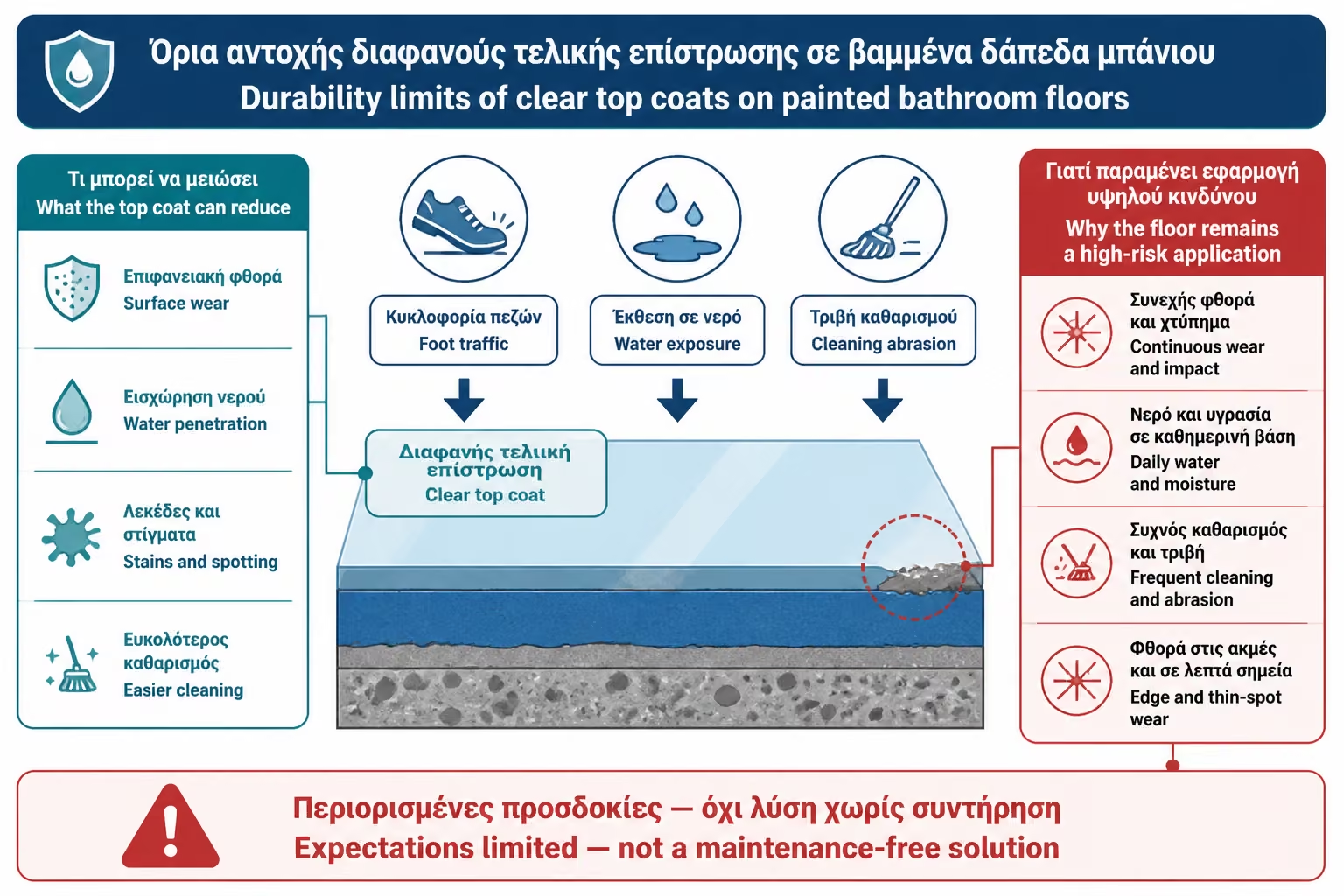
The floor is the most difficult application. Accepts steps, water, mats, cleaners and friction. If a tile floor has been painted, the top coat must be suitable for floors and have sufficient abrasion resistance. Anti-slip should also be considered. A glossy clear coat can become dangerous when wet.
On a painted bathroom floor, a satin or matte floor-rated clear coat is preferred, possibly with an anti-slip additive if the system allows it. We do not use simple furniture varnish on the floor. It won't last.
Even with a proper top coat, painted flooring remains more sensitive than new tile, LVT/SPC or epoxy flooring. It needs gentle use and maintenance.
Matte gives a more natural and modern look, but may show signs of water and cleaning more easily, depending on the product. Satin is usually the most practical choice for a bathroom: it cleans better than matte, but doesn't show blemishes as much as glossy. Glossy gives a high shine and a better clean feel, but shows every blemish, dust, roll line and scratch.
In bathroom furniture, satin is often the best balance. In chalk paint, matt lacquer keeps the aesthetics but gives a less "plastic" look. On floors, satin or matte with suitable anti-slip is safer than high gloss.
The choice of gloss is not only aesthetic. It affects cleaning, visibility of defects and safety.
The surface must be clean, dry and fully cured from the previous paint. If the paint underneath has not dried or the recoat time has passed, the top coat can trap moisture or solvents. This results in a foggy, sticky surface or poor adhesion.
The top coat is applied to thin hands. No thick layers. Thick hands make bubbles, runs, milky dullness or an uneven sheen. A good brush or roller suitable for varnish is used. On large surfaces, we work with a steady direction and do not go too far again when it starts to pull.
A very light sanding with fine sandpaper may be required between coats, if the product allows it. Then every trace of dust is removed. The times between coats and the full curing time must be observed.
Top coat can dry to the touch in a few hours, but may take days or more for full strength. Until it matures, it is more vulnerable to water, scratches, cleaners, hot steam and objects resting on it.
This is especially important in a vanity unit. If you immediately place bottles, baskets, cosmetics or wet items, they may leave marks. If you take a hot shower and the space fills with water vapor on the same day, the surface may be affected.
On floors, uptime is even more critical. Pressing too early can leave marks or dull the finish. Manufacturer gives drying, repainting and full use times; not decorative information.
Not every top coat goes over every color. A water-based polyacrylic can work flawlessly over chalk paint, but not necessarily over epoxy or tile paint. A thinner can "lift" or wrinkle acrylic paint. A 2K might be too strong for a soft base. A clear coat can yellow over white.
Before applying, test. Ideally, in a sample or hidden spot. Check if it changes color, dulls, sticks, wrinkles or pulls the base. In white and very light colors, the risk of yellowing is significant.
The safest option is to use a top coat from the same system as the paint. If not, confirm compatibility from technical brochure or supplier.
| Application | A more suitable choice | Comment |
|---|---|---|
| Chalk paint on bathroom furniture | Water-based polyacrylic lacquer | Better than wet room wax |
| Ripolin/cabinet paint | Usually none, if it's a final system | Only if the manufacturer allows it |
| Painted wall tiles | System clear coat compatible | Not random polish |
| Painted tile floor | Floor-rated polyurethane/top coat | Beware of slip resistance |
| Bathroom counter | 2K or special countertop clear coat | High stress from water/cosmetics |
| MDF near sink | Durable water-based PU + edge sealing | Water finds compounds |
| Shower zone | Wet-area system only | General top coat is not enough |
| Stencil on floor | Floor-rated clear coat, 2–3 coats | It needs full curing |
The table shows that the top coat is chosen by the use, not just by the gloss we want.
| Claim | Reality |
|---|---|
| “It seals the color” | Yes, it protects the paint on top |
| “Makes it 100% waterproof” | No, it increases water resistance but does not make it completely waterproof |
| "It's never boring" | No, it improves durability but is not indestructible |
| "Goes on every color" | No, it needs compatibility |
| "Saves bad traction" | No, if the color underneath doesn't catch, they will go away together |
| "Makes painted tile look factory" | No, it remains in place overlay |
| "Protects chalk paint" | Yes, if lacquer/top coat is suitable |
| “Can be used on floor” | Only if it is floor-rated |
The top coat is reinforcement. It's not a miracle.
In the Greek market of 2026, simple clear water varnishes are relatively economical. Good polyurethane and polyacrylic lacquers cost more, but have better durability. 2K polyurethane or epoxy top coats are more expensive and often more professional, but give superior protection when used properly.
Cost depends on surface, hands, consumption, gloss and use. In a small bathroom furniture, the quantity is small, so it is worth choosing a good product. On a painted floor, quantity and quality matter more.
Skimping on top coat can undo all the work. If the chalk paint smudges or the painted floor scratches quickly, it will need to be redone. On the other hand, it makes no sense to put expensive 2K over bad paint or bad prep. The system must be balanced.
The first mistake is the excessive promise: "I will make it waterproof with varnish". If there are edges, joins, joints or MDF, the water can go elsewhere.
The second mistake is applying top coat before the paint is completely dry.
The third mistake is using the wrong product: furniture varnish on a floor, water-based lacquer on incompatible epoxy, solvent on acrylic without testing.
The fourth mistake is fat hands. They create haze, bubbles and slow curing.
The fifth mistake is failing to test on white or very light colors, where yellowing or a change in tone can be seen.
The sixth mistake is the use of harsh cleaners immediately after application, before full curing.
| Inquiry | Yes / No |
|---|---|
| Has the paint underneath dried/cured enough? | Yes / No |
| Is the top coat compatible with the paint? | Yes / No |
| Is the surface free of dust, grease and moisture? | Yes / No |
| Has it been tested in a hidden spot? | Yes / No |
| Is the product suitable for bathing or humidity? | Yes / No |
| If it is floor, is it floor-rated? | Yes / No |
| If MDF, are edges and joints sealed? | Yes / No |
| Do you know how many hands are required? | Yes / No |
| Do you know the repaint and full use time? | Yes / No |
| Have you shied away from the “100% waterproof” promise? | Yes / No |
If the answers are yes, the top coat has a much better chance of working as it should.
> The top coat is the protection belt, not the magic shield. In chalk paint on bathroom furniture it is almost essential. In ripolin or cabinet paint it may not be necessary, if the color is already a final system. On painted tiles it must be compatible with the tile paint. On the floor, it must be floor-rated and have proper anti-slip behavior. And in all cases, don't promise 100% waterproofing. If the base has poor adhesion, if there are MDF edges that absorb water, or if the surface stays wet for hours, varnish will not save the project.
Water-based clear coats, polyurethanes and 2K top coats are valuable tools for protecting painted bathroom tiles and furniture. They can make a surface more resistant to water, stains, cleaning and surface scratches. They can turn a simple decorative chalk paint into practical bathroom furniture and protect stencils or painted floors from rapid wear.
But they don't work miracles. They do not create a 100% waterproof surface, do not make the painted tile equal to factory porcelain, do not save poor adhesion and do not withstand unlimited rubbing. Their durability depends on the substrate, color, compatibility, application, hands, curing time and use of the space.
The right approach is to choose a system: right preparation, right color, right top coat and right maintenance. When these are matched, the top coat can significantly extend the life of the DIY project. When they don't match, the top coat just becomes a shiny layer over a problem that will reappear.
Return to category.
Go to categoryReturn to the central guide.
Go to guide