
Bathroom Surface Materials & Finishes
Return to category.
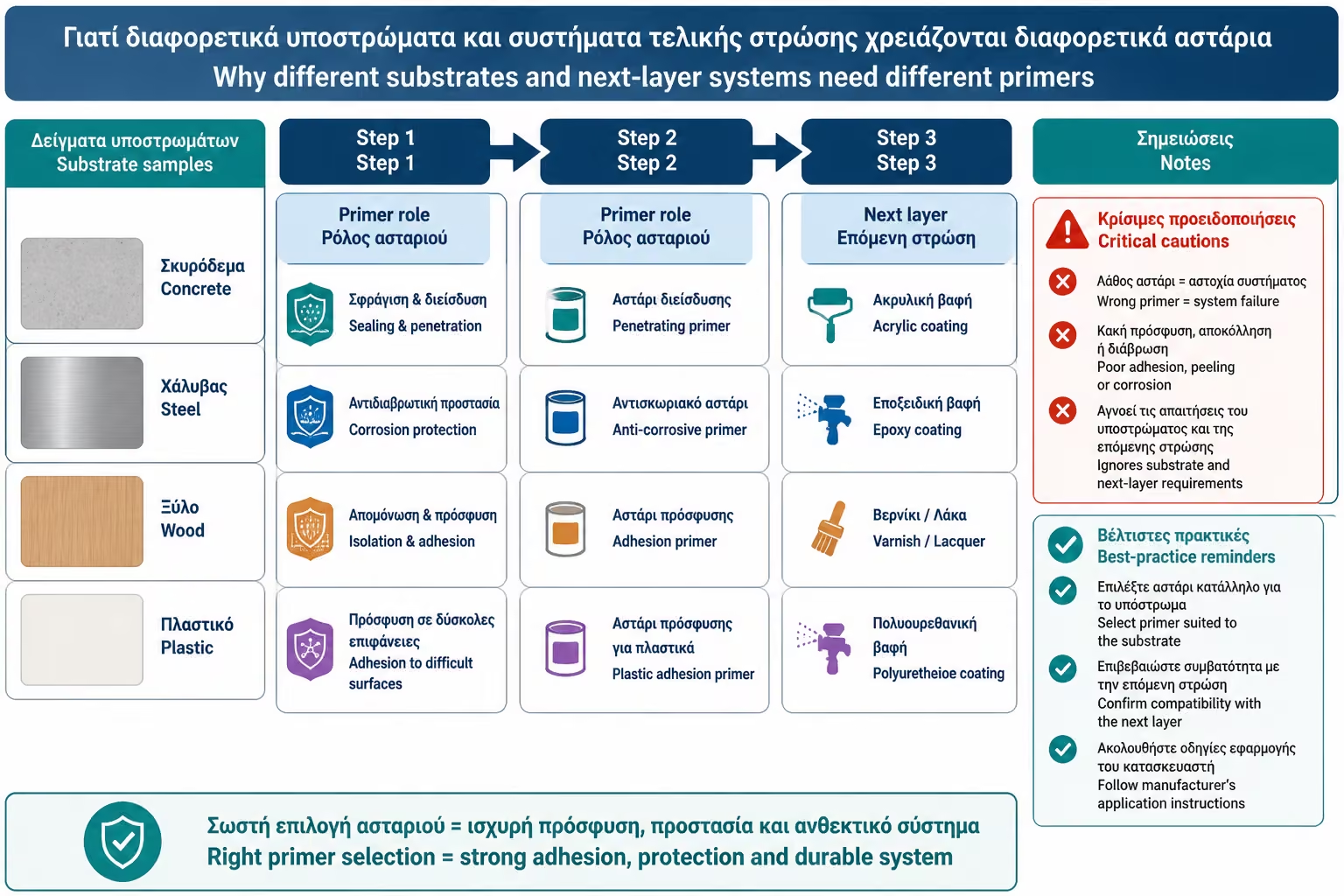
Go to categoryPrimer is one of the most misunderstood materials in bathroom renovation. Others consider it an unnecessary expense, others put it everywhere "for good", others use the wrong type on the wrong substrate. In reality, primer is not a magical liquid that makes everything stick. It is part of a substrate preparation system. It comes in when the substrate has a specific problem: very absorbent, not absorbent at all, dusty, has low surface consistency or needs an adhesion bridge before adhesive, self-leveling, waterproofing or microcement.
In a bathroom renovation, the substrate can be cement mortar, plaster, plasterboard, cement board, concrete, old tile, mosaic, natural stone, painted surface or waterproofing. All of these do not behave the same. An absorbent plasterboard can quickly “absorb” the glue water and reduce the working time. An old glossy tile may not absorb at all and may not give mechanical adhesion. An old, dusty grout can let the adhesive stick to the dust and not the actual substrate.
This is why primers are not generally selected but diagnostically. BAL, in a guide to priming before tiling, explains that priming is used to reduce absorbency, limit the risk of chemical reactions with cementitious materials and add surface strength to weak or friable surfaces. Bostik similarly emphasizes that identifying the surface is the first step in primer selection, because even standard materials can have different absorbencies on the job.
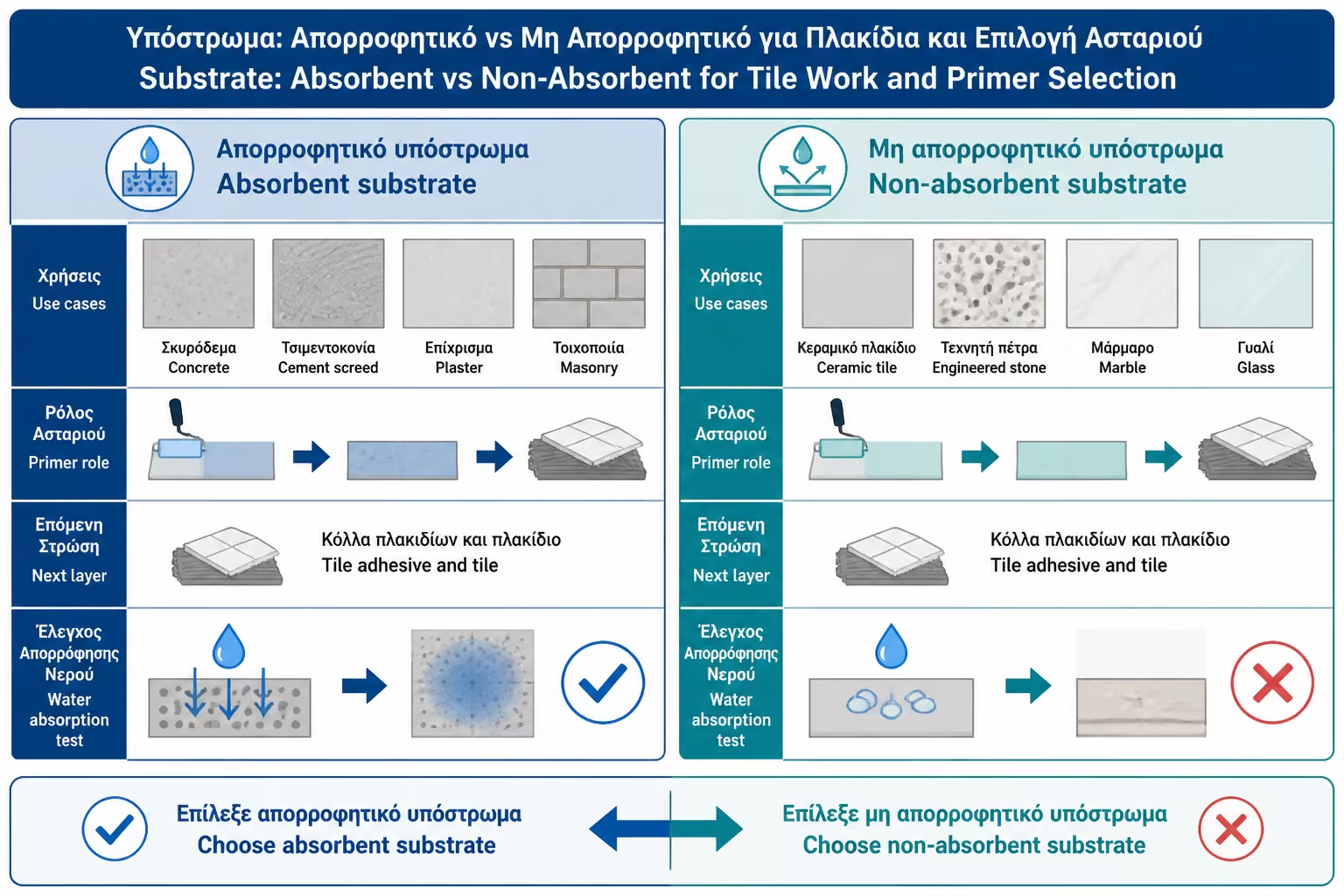
The simplest distinction is between primers for absorbent substrates and primers for non-absorbent / smooth substrates. On absorbent substrates, such as plasterboard, plaster, cement mortar or porous concrete, the primer regulates absorption and stabilizes the surface. On non-absorbent substrates such as old tiles, glossy mosaic, terrazzo or smooth surfaces, the primer acts mainly as an adhesion bridge, often with quartz sand or special polymers that create a rough surface. Mapei describes Eco Prim Grip Plus as a primer ideal for laying tiles over existing tiles and specifically for smooth substrates with low absorbency.
In the bathroom, the right primer is even more important because the glue doesn't work on its own. Works with waterproofing, grout, silicones, substrates, temperature and humidity. If the primer is wrong, it can create more problems than it solves: reduced adhesion, swelling, delayed drying, incompatibility with adhesive or peeling. So the goal is not "we always put a primer". The goal is "put the right primer, on the right substrate, before the right next material".
Adhesion primer is a preparation material that is applied to the substrate before tile adhesive, self-leveling, waterproofing, resin or microcement. It can be acrylic, synthetic resin, quartz, polyurethane, epoxy or special product per system. Its form can be liquid, milky, thick or granular.
His role is not one. On a very absorbent substrate, it reduces the absorbency so that the glue does not lose its water quickly. On a dusty surface, it binds dust and improves surface consistency. On a non-absorbent tile, it creates an adhesion bridge. On a pre-self-leveling substrate, it helps prevent bubbles and spread the material properly.
But it should be noted that primer does not correct structural problems. It does not make a hollow tile stable. Does not cure active moisture. It does not fix loose cement mortar that rubs in deep. It does not make a peeling painted surface suitable. First the substrate is corrected and then primer is applied.
There are "universal primers" on the market, but even these have limits. A primer that works on absorbent cement mortar is not necessarily right for shiny old tile. A quartz primer that gives roughness to a smooth substrate can be an exaggeration or a mistake on a very absorbent plaster if the system does not provide for it. An epoxy primer can be great in tough situations, but expensive and unnecessary for simple installation.
The choice must start from three questions: what is the substrate, what will go on top and in what conditions will the space work. For example, if we have plasterboard in the bathroom and tile adhesive will go in, we want a primer that adjusts absorption and is compatible with the adhesive and waterproofing. If we have an old glossy tile and a new tile will be put in, we want a primer for a non-absorbent surface or mechanical preparation plus primer, depending on the system.
Bostik states that before smoothing operations on impervious surfaces such as tiles, a primer is needed specifically for impervious surfaces. Accordingly, tile-on-tile systems emphasize that standard adhesive on smooth ceramic surfaces increases the risk of detachment, while tile-on-tile primer and special adhesive ensure long-term adhesion.
Absorbent substrates draw water from the adhesive or subsequent material. This can cause rapid surface drying, reduced open time, difficulty in application, bubbles in self-levelling or uneven adhesion. In such cases the primer acts as an absorption regulator.
In drywall, the issue is even more critical because the surface can be sensitive to moisture and absorb quickly. If cementitious adhesive is applied directly to overly absorbent drywall, the adhesive may lose water quickly and not develop its properties properly. The primer helps to create a more controlled surface.
In cement mortars and plasters, the primer reduces absorption and binds light surface dust. Sika, in a product data sheet for Sika Primer-11 W+, states that it is applied before tile adhesives, waterproofing mortars or self-leveling compounds, mainly to reduce absorbency and improve adhesion.
Non-absorbent substrates have the opposite problem. They do not absorb any water and are often smooth. The glue does not find enough "key" adhesion, especially if the surface is shiny, dirty or has cleaning residues. Here the primer is not inserted to reduce absorption, but to create an adhesion bridge.
On old tiles, especially if they are glossy, preparation usually includes stability control, cleaning, degreasing, possible mechanical roughening and special bonding primer. Mapei describes Eco Prim Grip as a ready-to-use synthetic resin primer with silica aggregates, which improves the adhesion of mortars on existing ceramic and difficult substrates.
The same goes for old mosaic, terrazzo or natural stone of low absorbency, as long as they are stable and clean. If polishes, waxes, sealants or oils are present, they must be removed. The primer should not get on top of a layer of dirt. If it gets stuck in dirt, the system fails with the dirt.
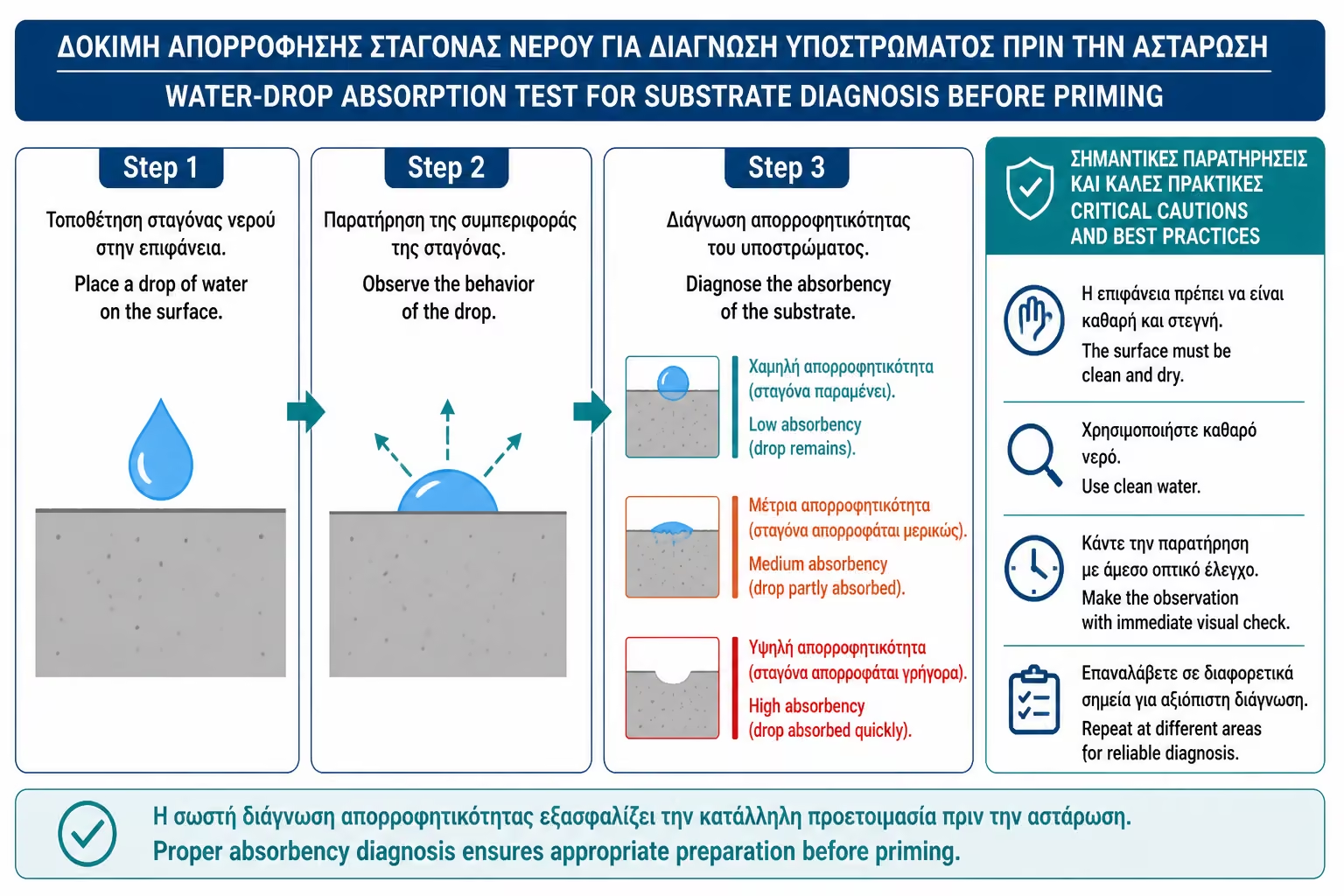
A simple way to understand the substrate is the absorption test. Pour a few drops of water on a clean surface. If the water is absorbed immediately and the surface darkens, the substrate is absorbent. If the water remains in drops on the surface, it is non-absorbent or sealed. If it is absorbed unevenly, the surface has instabilities or different zones.
This test does not replace the craftsman, but helps to understand why the same primer cannot be used everywhere. A drywall and an old shiny tile are two opposite problems. In the first case we want to check the "suck". In the second we want to give traction to a smooth, closed surface.
In real projects, there are often mixed surfaces. A wall may have old tiles, plaster repairs, bits of plasterboard and cement sealant. There a careful selection must be made per zone or a system must be used that meets the requirements of all surfaces.
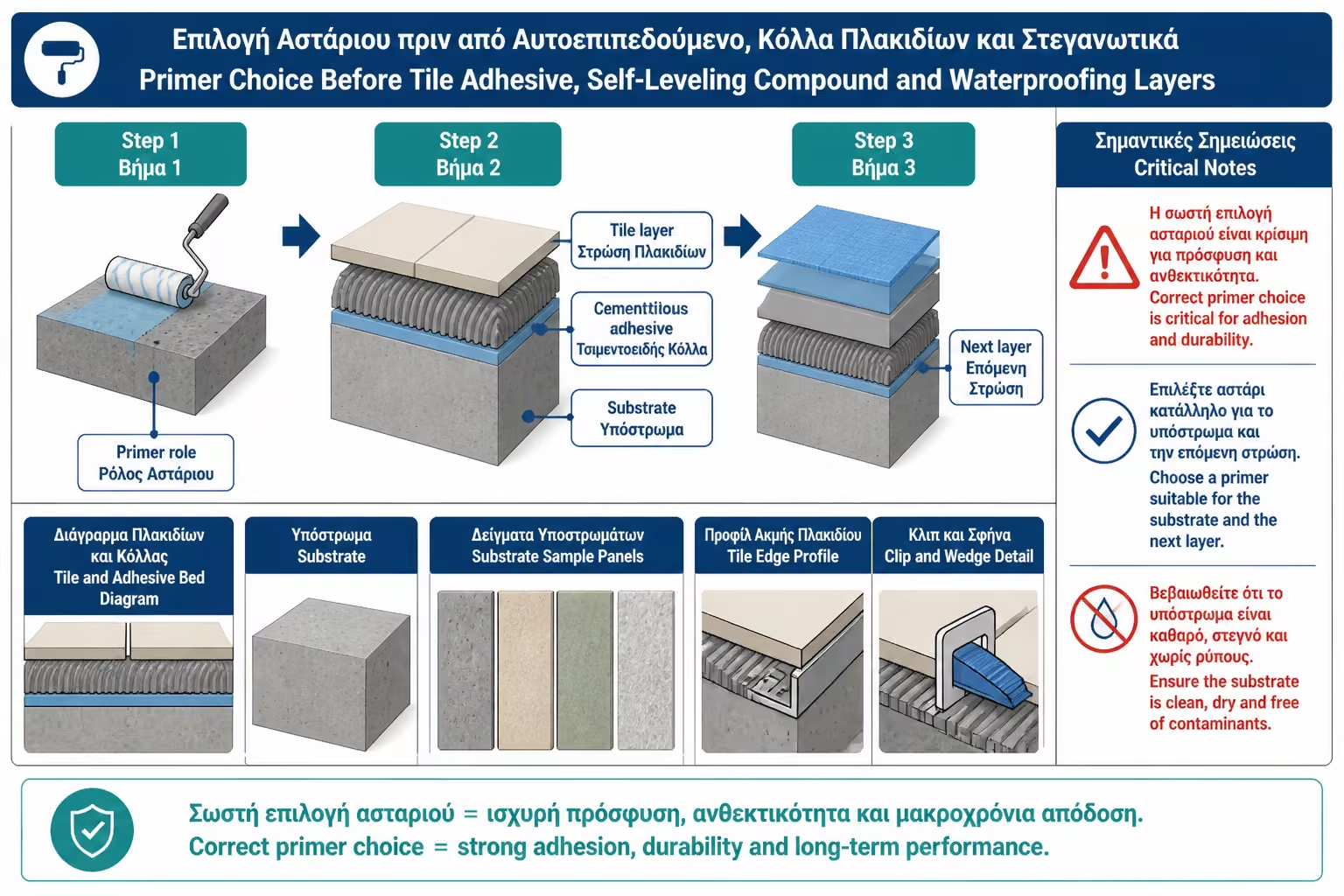
Before tile adhesive, primer is needed when the substrate requires it. In absorbent substrates, it stabilizes and regulates. In non-absorbent, it creates an adhesion bridge. On difficult substrates, it can be part of a system with a specific adhesive.
A primer is not always needed on every cement mortar or concrete if the substrate is correct and the adhesive allows it. Some adhesives have their own requirements. Some substrates need to be just clean and lightly dampened, not primed, depending on the product. That's why we read the technical brochure of the glue.
The big mistake is to use primer as a substitute for cleaning or repair. If the substrate has dust, oil, old peeling paint or hollow tiles, these are solved first. Primer is the final stage of preparation, not the cure all of the previous ones.
Self-leveling materials are particularly sensitive to the substrate. If the base is too absorbent, the material may lose water, bubble or not flow properly. If the base is non-absorbent, it may not set. That is why before self-leveling the primer is often necessary.
Sika mentions primers such as Sikafloor-02 for non-absorbent substrates before cementitious leveling compounds and tile adhesives. Ceresit gives different directions per substrate: for absorbent cement mortars and concrete aqueous dispersion primer, for absorbent, impervious, dusting or unstable surfaces PU primer, and for rising humidity or mechanical/chemical stresses epoxy primer.
This shows that the primer before self-leveling is not a detail. It is a key stage for the material to spread, stick and cure properly.
In bathrooms and showers, before cementitious sealants or other membranes, a primer is often needed, especially on absorbent or dusty surfaces. The purpose is to stabilize the substrate and ensure uniform adhesion of the waterproofing.
But not all sealants are the same. Some are applied on a slightly wet substrate, some need a primer, some don't need specific primers, some have their own system. If the wrong primer is applied, it can create a film that prevents the sealant from adhering.
For this in a shower it is good to work with an integrated system: primer, waterproofing, corner tapes, tile adhesive and grout compatible with each other. "I got a general purpose primer" is not enough in a critical wet area.
Microcement on old tiles or other substrates needs very careful preparation. Adhesion primer is usually applied, joint filling, reinforcement layer with mesh where necessary and then microcement layers. If the substrate is non-absorbent, such as old tile, we want a primer that creates a bridge. If it's absorbent, we want absorption adjustment.
Microcement is a thin system. This means that imperfections, joints, dust and poor adhesion are quickly visible. If the primer is wrong or if it is applied on a dirty surface, detachments, cracks or "ghosts" of the old joints may appear.
In such applications the microcement manufacturer's system should be followed. We don't choose a random tiling primer because it "gets everywhere". Microcement has its own resins, times and requirements.
Some surfaces are not just absorbent. They are weak or dusty. If you rub the hand and dust comes out, the glue will not stick to the actual substrate, but to a weak surface layer. There it needs cleaning, possible mechanical removal of loose materials and stabilization primer.
The primer can penetrate to a shallow depth and bind the surface. But it has limits. If the cement mortar rubs deep or the plaster crumbles, a primer will not "save" it. The base must be removed and repaired. Primer is not a reconstruction adhesive.
In old renovations, this diagnosis is very important. Many floors look fine, but under old tiles or adhesives there is a loose layer. If left unchecked, the new system will peel off along with this layer.
Quartz primers usually contain synthetic resin and aggregates, such as silica or quartz sand, to create a rough surface. They are ideal for smooth, non-absorbent substrates where a mechanical "key" is needed. Old tile, terrazzo, polished concrete, smooth concrete or some painted surfaces may need such a primer if the system allows.
Mapei states about Eco Prim Grip that it is a primer with silica aggregates in dispersion, designed to improve the adhesion of mortars on existing ceramic and difficult substrates. This type of primer usually leaves a rough surface after drying so that the adhesive or the next material will adhere better.
However, it should not be used on dirty tiles or on polishes. The surface must be clean and stable. Also, in some cases mechanical sanding is required before the primer. Primer is not always a substitute for primer.
PU and epoxy primers are more specialized solutions. They are used on difficult or demanding substrates, on surfaces with moisture problems, on floors with mechanical or chemical stress, on substrates that need strong sealing or in resin and self-leveling systems. They are more expensive and more technically demanding than simple acrylic primers.
Ceresit, for example, separates applications where PU primer can be used for absorbent, impervious, dusting and unstable surfaces, while epoxy primer is recommended for rising moisture or surfaces exposed to mechanical and chemical stresses. This shows that the strongest primers are not for "making sure" in general, but for specific technical conditions.
In homes, epoxy primer may be needed on special floors, resins, garages, difficult renovations or damp situations. For simple bathroom tiling, a proper acrylic/quartz primer per substrate is usually sufficient, unless the system calls for something else.
There are cases where the primer is unnecessary or wrong. If the adhesive or sealant calls for a specific substrate without a primer, we do not improvise. If the primer forms a film on a surface that should have mechanical adhesion, it can reduce performance. If it gets on a dirty surface, it traps the dirt. If it gets into a wet substrate that shouldn't be wet, it can trap moisture.
We do not apply primer to avoid cleaning. We don't put primer on old peeling paint and expect tile to last. We don't put primer on hollow tiles and think they are made solid. We don't put a random primer between two materials if we don't know it's compatible.
Primer is only useful when it solves the real problem of the substrate. If the problem is different, another solution is needed.
Use the table below as a quick reference for the key points of this section.
| Substrate | Problem | Usual type of primer |
|---|---|---|
| Gypsum board / absorbent surface | Draws water quickly | Acrylic / deep primer for absorption regulation |
| Cement mortar / plaster | Absorption, dust | Primer for absorbent substrates |
| Dusty old stand | Low surface cohesion | Stabilizing primer, if the base is not fragile in depth |
| Old shiny tiles | Non-absorbent, smooth | Quartz / bonding primer for non-absorbent |
| Terrazzo / mosaic | Closed, smooth surface | Adhesion bridge primer after cleaning/sanding |
| Wooden substrate | Movement, special grip | Special system primer, not random |
| Substrate with rising humidity | Moisture underneath | Special epoxy/PU moisture barrier only if the system allows it |
| Natural stone | Possible sensitivity / porosity | Compatible primer or natural stone system |
The table is a practical guide, not a substitute for a technical brochure.
Use the table below as a quick reference for the key points of this section.
| Next material | What is needed from the primer |
|---|---|
| Tile glue | Adjustment of absorption or traction bridge |
| Self leveling | Bubble control, adhesion, uniform absorption |
| Waterproofing | Stable substrate and membrane/mortar compatibility |
| Microcement | Strong adhesion and avoidance of ghosting of old joints |
| Resin / epoxy floor | Very special system primer |
| New tile on top of old | Primer for non-absorbent substrates and suitable adhesive |
| LVT / SPC with smoothing | Primer for self-leveling, not necessarily tile primer |
The next material determines the choice a lot. It is not the same primer for tile adhesive and the same for resin.
Proper application begins with a clean surface. Dusts, oils, soaps, salts, brittle materials and old silicones are removed. The substrate must be as dry as the product requires. The primer is stirred well and applied with a roller, brush or brush, according to the instructions.
Quantity is critical. Too little primer does not cover properly. Too much can create films, pools or weak coating. On absorbent substrates, thinning or a second coat may be required, depending on the product. In quartz primers, an even layer must be applied so that there is a rough surface everywhere.
The drying time must also be observed. If glue gets on top of a primer that hasn't dried, adhesion can be reduced. If too much time passes or the surface becomes dirty, a recheck may be necessary. The technical brochure gives the limits.
The first mistake is putting in the wrong type of primer. Absorbent primer on glossy tile does not solve the adhesion problem.
The second mistake is to use primer on a dirty surface. The primer sticks to the dirt and not the substrate.
The third mistake is too much. The primer should not pool.
The fourth mistake is applying glue before the primer dries.
The fifth mistake is using primer to cover serious problems, such as hollow tiles, active moisture or a loose base.
The sixth mistake is mixing products from different systems without checking compatibility.
In the Greek market of 2026, primers are a relatively small cost compared to tiles, adhesives and labour, but they are of great importance to the success of the project. A simple acrylic primer of absorbent substrates is economical. Quartz adhesion primers for old tiles or non-absorbent surfaces cost more. PU and epoxy primers are more expensive and are used in special applications.
Consumption depends on the absorbency and texture of the substrate. Mapei states for Eco Prim Grip Plus that coverage depends on substrate absorbency, with indicative yields that can vary significantly by application. This is of practical importance: on a rough or absorbent base, the consumption can be much higher than the owner expects.
Economy in primer is usually wrong. If the project requires primer, its cost is small compared to tile delamination or microcement failure. If it is not required, we do not put it out of habit. In both cases, the decision must be technical.
A proper offer should not just say "primer". It must state what substrate is present, what primer will be used and why. For example: “quartz adhesion primer on existing glossy tiles before C2TE S1 adhesive”, or “absorption setting acrylic primer on plasterboard before sealing/adhesive”.
It must also state whether cleaning, degreasing, mechanical sanding, loose material removal, or hollow tile repair will be performed. Primer alone is not enough. The quote must show that the technician has diagnosed the substrate.
If the quote says "general purpose primer will pass" without any other information, ask for clarification. In a bathroom, old tiles, microcement or difficult surfaces, generality is a risk.
Use the table below as a quick reference for the key points of this section.
| Question | Yes / No |
|---|---|
| Is the substrate recognized? | Yes / No |
| Do we know if it is absorbent or non-absorbent? | Yes / No |
| Has there been a water test or absorption test? | Yes / No |
| Is the surface clean of dust, salts, grease and soaps? | Yes / No |
| Are there hollow tiles or loose spots that need to be removed? | Yes / No |
| Is the primer compatible with the adhesive, waterproofing or microcement that will follow? | Yes / No |
| Do you need a quartz primer for a smooth non-absorbent surface? | Yes / No |
| Do you need a deep primer for absorbent plasterboard or cement mortar? | Yes / No |
| Is proper drying time provided? | Yes / No |
| Does the offer say a specific product and not just "primer"? | Yes / No |
If the answers are unclear, the primer selection is done at random. And when the base is wrong, the best tile does not save the project.
The primer is not "one coat to be sure". It is substrate diagnostics in product form. In plasterboard or absorbent cement mortar we need a primer that adjusts the absorption. On old glossy tiles we want an adhesion bridge primer, often quartz, and only after the surface has been cleaned and tested. On a dusty base we want stabilization, but if the base is shaky deep down, it needs repair, not just primer. The right primer is what solves the real problem of the substrate.
Adhesion primers are a small material with a big responsibility. They regulate absorption, improve adhesion, stabilize surfaces and prepare the substrate for adhesive, self-leveling, waterproofing or microcement. But they are not all the same and not all are used everywhere. Absorbent plasterboard needs a different treatment than an old glossy tile. Dusty cement needs a different logic than terrazzo. The microcement other than the new tile.
The right choice starts with a check: is the substrate stable, clean, dry, absorbent or non-absorbent? Are there old materials, dust, oils, loose spots or moisture? What will be applied on top? Only after these are answered, a primer is selected. Not before.
For the owner, the practical conclusion is not to accept general phrases like "we will pass a primer". Demand to know who, why and on what. A proper primer can save a difficult application. A wrong primer can become the weak layer that fails first.
Return to category.
Go to categoryReturn to the central guide.
Go to guide