
Bathroom Surface Materials & Finishes
Return to category.
Go to categoryThe bathroom doesn't have to be just tiles, white walls and a mirror. In recent years we have seen more and more spaces where a single wall completely changes the atmosphere: a wall behind the sink with a concrete look, a metallic style behind the mirror, a sand effect in earth tones or a textured surface that gives depth without overloading the bathroom. These decorative paints can make a simple bathroom look architectural, warm and designed.
Textured paints, or patterns, are not just plastic paints. They are decorative systems that are applied with a roller, spatula, brush, special glove, metal spatula or a combination of tools, in order to create surfaces with depth, movement and materiality. They can imitate concrete, tread, oxidized metal, sand, stone, silk or metallic luster. Dulux describes Concrete Effect as a water-based interior specialty finish that mimics the aesthetics of polished concrete on feature walls, applied by roller and finished with a metal trowel.
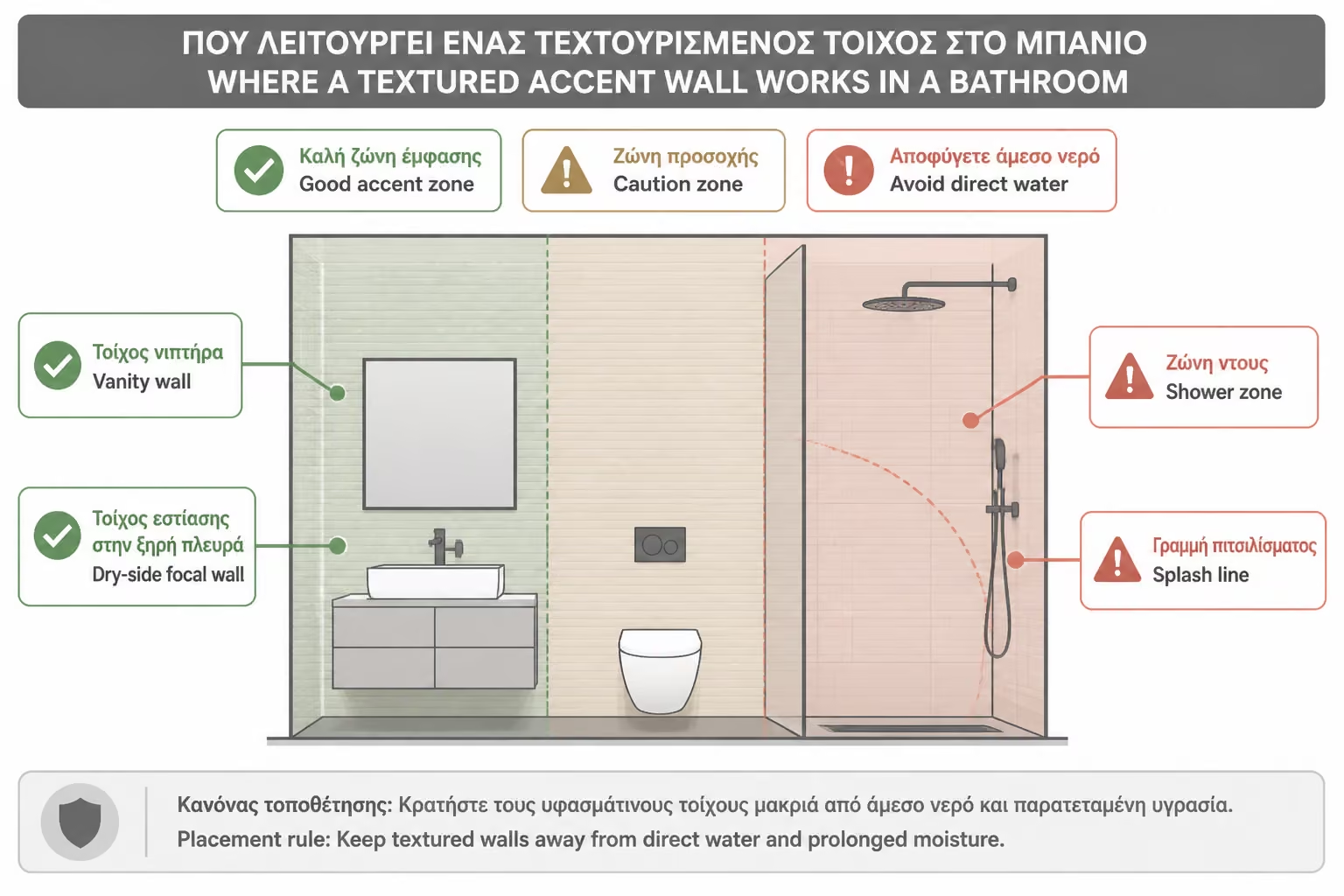
In the bathroom, however, the key word is where. These decorative paints are ideal for areas without direct contact with water: behind the sink if it does not receive constant splashes, on a wall behind a basin, on the dry side of the bathroom, in a WC, on a wall opposite the bathtub or around a mirror. They are obviously not suitable for the inside of the shower, the shower floor or places where water falls every day. If we want such a texture in a wet area, we enter another category: microcement, continuous coatings, special wet-room systems or protective top coats that are explicitly declared for water.
The distinction is critical, because many decorative finishes are designed for interior feature walls and not for surfaces that get wet every day. Dulux itself mentions about Concrete Design Effect that it is ideal for feature walls and for spaces such as living room, bedroom or study, not as a shower material. On the other hand, there are more technical continuous cladding systems, such as San Marco Continuo, developed for homes with a need for good water, wear and stain resistance in bathrooms, laundries and kitchens.
So the right guide doesn't just say "put concrete effect in the bathroom". It says: choose the right belt, the right product and the right protection. An accent wall behind the mirror can be made great with decorative art. The wall inside the shower should not be painted with simple textured paint because it "looks like a tap". There you need a system that is technically suitable for water.
Textured paints are decorative coatings that give not just color, but materiality. Instead of a flat matte or satin surface, they create small variations, water, shadows, grains, spatula lines, metallic reflections or a sandy texture. The light falls on them differently during the day and the wall acquires depth.
Unlike tiles, they have no joints. Unlike wallpaper, they are more "built" and can fit better into a minimalist or industrial bathroom. Unlike pressed cement mortar, many of them are more simple decorative paints and not full technical coating systems.
The class is big. There are water-soluble decorative paints, acrylic/siloxane coatings, metallic finishes, lime-based techniques, sand effect paints and systems with a final protective varnish. Each product has different strengths and limitations.
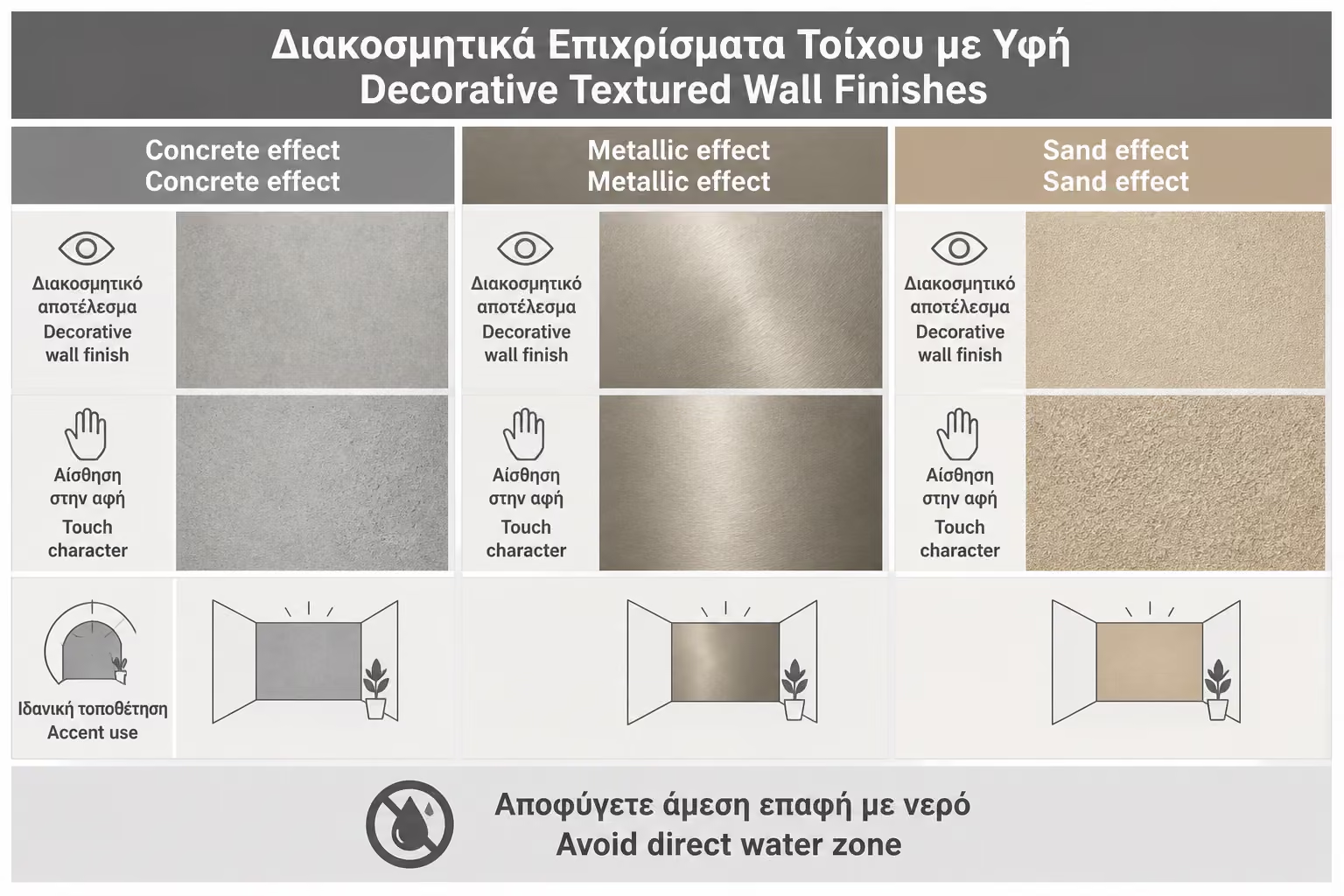
The concrete effect is probably the most popular choice for bathrooms. It gives an industrial, minimal and architectural feel without the need for real visible concrete or concrete. It can be light gray, warm greige, charcoal, beige-cement or almost white. If applied correctly, it gives depth without necessarily darkening the space.
There are purely decorative paint products and products closer to a decorative coating. San Marco Concret_Art, for example, is described as an acrylic-siloxane decorative coating with a concrete effect, which gives a fair-face concrete character, has a high surface hardness, good breathability and resistance to rainwater.
In a bathroom, concrete effect fits very well behind a mirror, on a wall with black metal accessories, with a wooden sink unit, with white sanitary ware or with gunmetal/black batteries. The mistake is to use it as a cheap press in the shower without a technical system.
Metallic styles add shine, depth and luxury. They can resemble bronze, aged gold, copper, steel, gunmetal or oxidized metal. In a bathroom they work very well in small doses: behind a mirror, in an indirectly lit niche, on a WC wall or in a powder room.
There are simple pearlescent/metallic decorative paints but also more technical systems with real metallic powders or two-component resins. Novacolor, for example, has decorative finishes such as Metallo_Fuso, which is described as a coating for interior vertical surfaces with selected metal alloy powders and bi-component epoxy resin compounds.
Metallic finishes look very impressive in the right lighting, but are more demanding. They show imperfections, need an applicator hand and can be more sensitive to water or cleaners if not properly protected. It is not a material to be placed arbitrarily in a place that gets wet every day.
The sand effect colors give a softer, natural and earthy feeling. They imitate sand, lime, rough plaster or the microtexture of natural material. They are less "cold" than concrete and calmer than metal ones. In a bathroom they can give a spa feel, especially in shades of sand, beige, greige, terracotta or soft gray.
Their advantage is that they hide small imperfections better than a simple matte paint. The downside is that the texture holds more dust and can be harder to clean. In a steam bath, this means choosing a product that allows gentle cleaning or applying a protectant where appropriate.
A sand effect on a dry bathroom wall can be excellent. In a daily splash zone, it needs a lot of care because the texture can hold soaps and salts.
The best way to use textured colors in the bathroom is as an accent wall. You don't have to cover the whole room. A single wall is enough to change the atmosphere. The most popular is the wall behind the sink and mirror, because it is immediately visible and connected to the main point of use of the bathroom.
Another good option is the wall behind the basin, especially in a small WC. There is less moisture there and the effect can work as a decorative background. In larger bathrooms, a wall opposite the bathtub or a dry side can be made very beautiful with concrete or sand effect.
Avoid walls where water falls directly, such as the inside of a shower, unless the product is part of a special wet-area system. Also avoid areas where you will frequently scrub with cleaners, as styles do not like aggressive maintenance.
No direct contact with water means the surface receives water vapor and maybe a few occasional splashes, but it doesn't get wet daily from showers, doesn't have standing water, isn't constantly scrubbed with anti-salts, and doesn't act as a waterproofing surface. A wall behind a mirror can take a few splashes from the sink. This is different from a wall inside the shower stall.
The distinction is important because many decorative paints are for interior feature walls, not wet rooms. If the manufacturer does not mention use in a bathroom or wet area, caution is needed. If it only says living room, bedroom or study, we don't arbitrarily put it next to a shower. Dulux Concrete Design Effect, as mentioned, is shown for feature walls in a living room, bedroom or study.
For the bathroom, therefore, we choose either a product that mentions suitability for indoor areas with humidity or we protect it with a compatible clear coat where provided. And even then, keep it away from direct water.
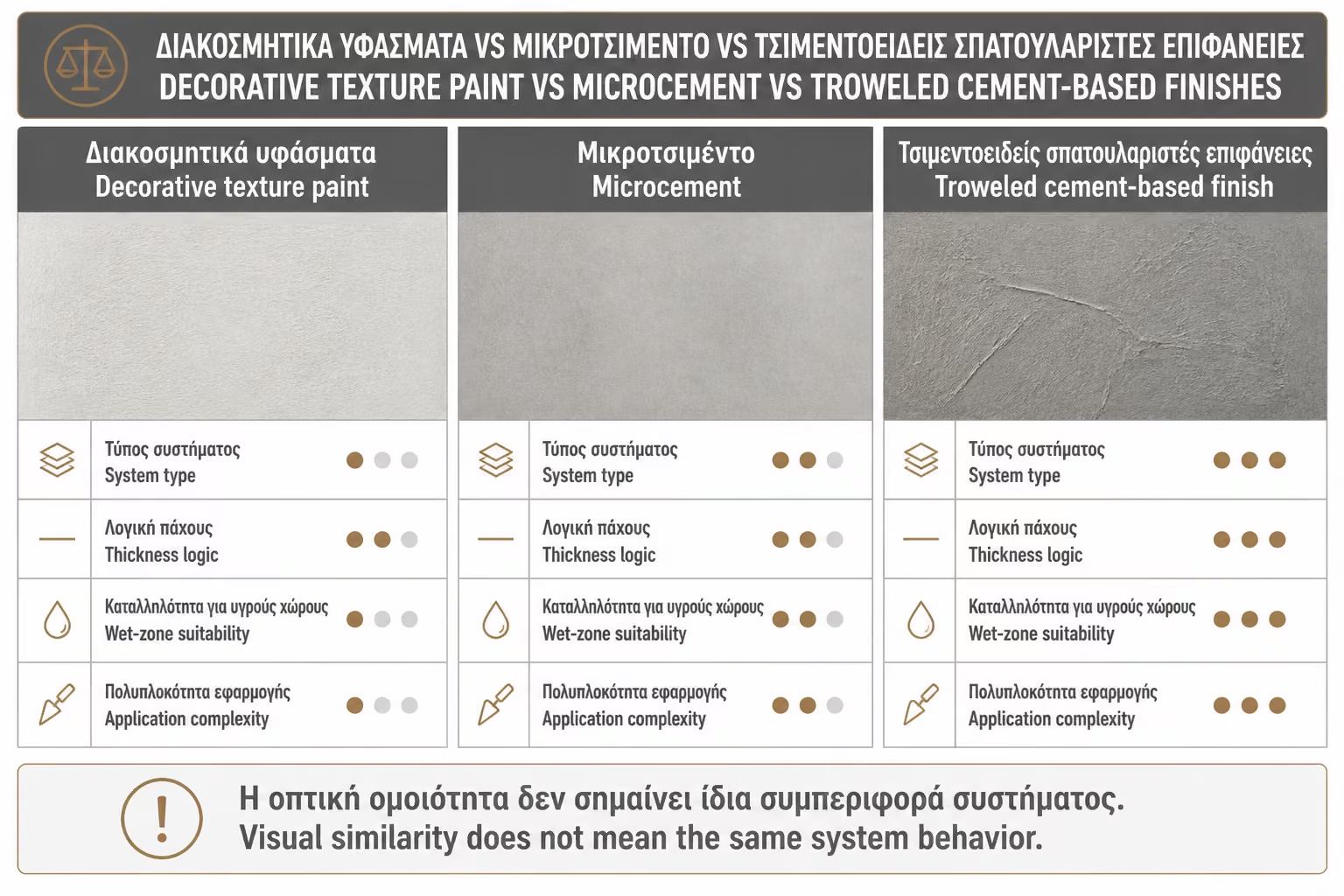
Many people see concrete effect paint and think it is pressed cement mortar. It's not the same. Decorative paint is mainly a visual effect. It can give the appearance of concrete, but usually has a lower thickness and less technical resistance to water. The press or microcement is a multi-layer system, with primer, base coat, grid where necessary, final layers and sealer.
Of course, there are intermediate systems of continuous coatings, such as San Marco Continuo, which is more technical than simple effect paint and is indicated for residential areas that need good resistance to water, wear and stains, such as bathrooms, laundries and kitchens.
So if you just want a dry accent wall, decorative paint is enough. If you want a surface near water or a shower, look at microcement/wet system, not simple technique.
Styles look best on a well-prepared wall. The surface must be firm, clean, dry and free of loose paint. Holes, cracks and imperfections must be plastered. If we want a smooth concrete effect, the substrate must be smooth enough. If we want a rougher sand effect, small imperfections are more forgiving.
In a bathroom, any mold or moisture must be treated first. We do not apply decorative paint on a moldy or swollen wall. If the wall has old plastics that peel off from moisture, they are removed and primed. If there is an active leak, the technique waits.
Primer is important. Some systems need a special fondo/substrate, often colored or primed. Others need quartz primer for adhesion. We follow the manufacturer's system and do not put random wall primer because it is "excess".
The concrete effect is often applied with a roller and finished with a metal spatula. The spatula creates water, clouds, small lines and the feel of cement. If you push too hard or work discontinuously, the result can become "patchy". The application needs rhythm.
Metallic effects can be applied with a brush, spatula, roller, glove or special tool, depending on the technique. Light is critical: if there is linear lighting or a spot from the side, every movement of the tool will be seen. This can be desirable or a problem.
Sand effects are usually worked with a brush, roller or spatula. Because they have a grain, they want an even distribution. In a small bathroom, it is advisable to test a sample before applying it to the entire wall.
The concrete effect suits grey, greige, off-white, anthracite and warm concrete shades. If the bathroom is small, prefer light concrete gray or warm greige. Very dark charcoal can be impressive, but needs good lighting.
Metals are best suited for small surfaces. Bronze with wood, brushed gold with sanitary ware, gunmetal with black batteries, copper with terracotta or warm shades. Be careful not to make it too "hotel" or heavy.
Sand effects work great with wood, stone, beige tiles, white sanitary ware and plants. They give a more natural and relaxed atmosphere. It is a good choice for those who want a spa but don't want a strong taupe or industrial gray.
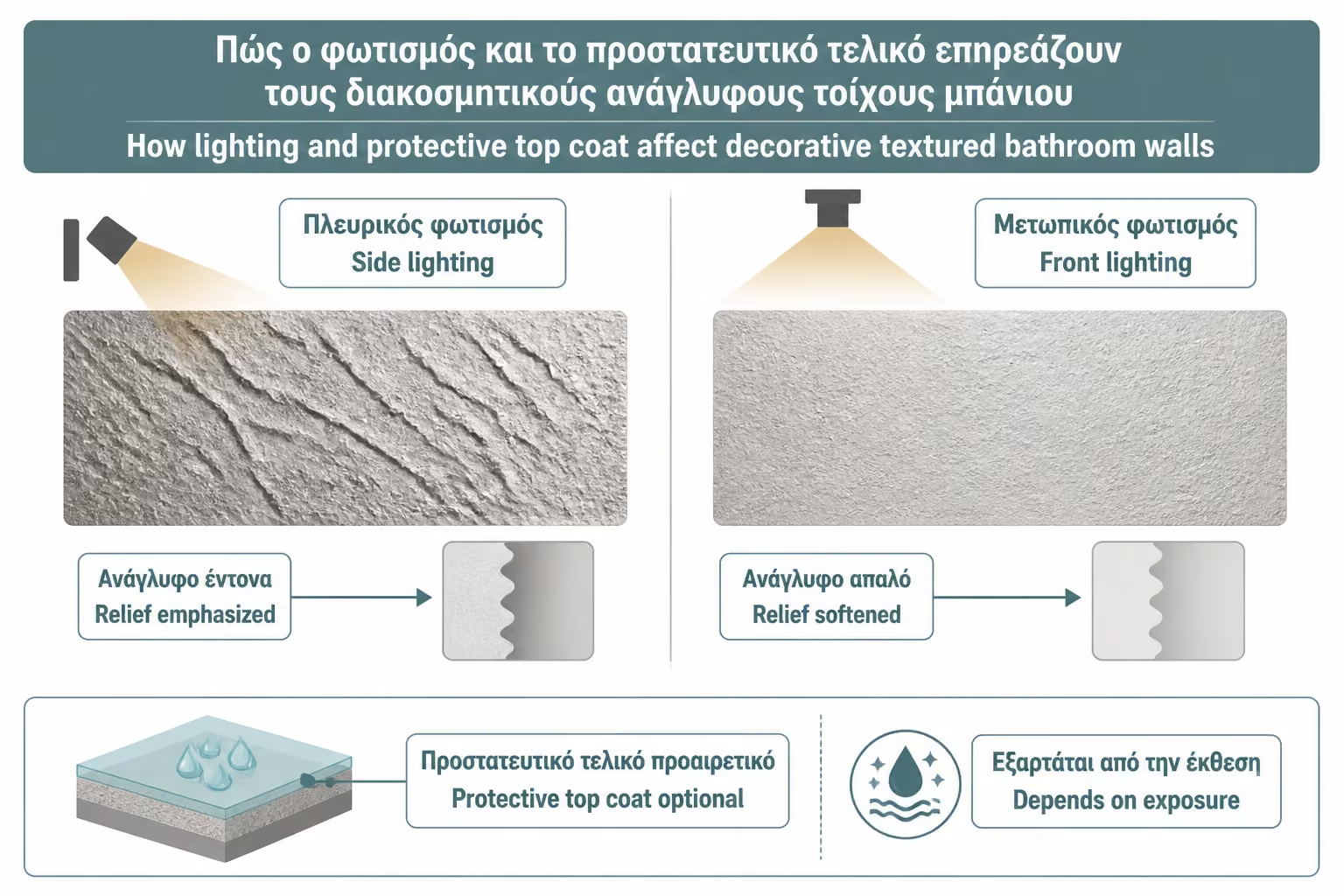
Styles live by light. A simple flat color looks about the same in any lighting. A textured or metallic finish changes with the angle. If you light from above, it looks calmer. Lighting from the side brings out the texture. If you put hidden lighting behind a mirror, a concrete effect can look much more expensive.
But lighting can also reveal mistakes. In glossy or metallic styles, patches, joins, and tool movements show up strongly in side light. If the wall is poorly stocked, the effect will not save it. It can highlight him.
Before choosing a style, consider the lighting of the bathroom. If the wall will be brightly lit from the side, it needs a better application and a more careful product.
In a bathroom, often yes, especially if the design is near a sink or gets splashed. Top coat can increase resistance to stains, water and cleaning. But it must be compatible with the decorative system. A random polish can change the color, gloss or texture.
Some companies have special protectors for exposed interior walls such as bathrooms and kitchens. Novacolor has presented Nova_Wall Care as a water-based transparent protection for particularly exposed interior walls, such as bathrooms and kitchens.
The guard does not automatically make the style suitable for a shower. Helps with splashes and cleanup. It does not replace a wet-room system.
Styles are not cleaned like a tile. We do not scrub with wire, hard sponges, strong anti-salts or bleach without instructions. We use a soft cloth, mild detergent and limited water. If there is a top coat, follow its instructions.
On textured surfaces, dust and water vapor may settle more easily into the texture. Good ventilation helps. If the surface is behind a sink, immediately wipe up splashes of toothpaste, soap or cosmetics.
If you want a surface that can be washed aggressively, choose a tile, panel or technical coating. Decorative paints are for aesthetic and controlled use.
Some techniques can only be applied over old tiles if a suitable primer and joint bridging system is used. But this is not simple paint. If you apply concrete effect over old tiles without smoothing, the joints will show. Cannabus "ghost" can be created.
To cover old tiles with a continuous pattern, it usually requires cleaning, adhesion primer, joint filler, maybe a base coat and then a final effect. This is closer to a microcement or decorative coating system than a simple paint.
If the goal is a quick accent wall and the wall is already tiled, it may be better to use a panel, non-water wet-rated wallpaper or a full microcement system, depending on the spot.
In the Greek market of 2026, decorative styles cost more than simple paint. The material is more expensive, the consumption varies by texture and the work requires hand. If done by a professional stylist, the cost can be quite higher than a simple painting, but the result is also much more special.
For DIY, material costs include primer, base coat where required, decorative finish, special application tools and possible top coat. With a single accent wall, costs remain controlled. Throughout the bathroom, it goes up a lot and can become aesthetically overwhelming.
The smartest use is a wall. So you get the decorative value without burdening the space or the budget.
| Type | Aesthetics | Where does it fit? | Attention |
|---|---|---|---|
| Concrete effect | Industrial, minimal, architectural | Behind mirror, WC wall, dry accent wall | Not in the shower unless it is a wet system |
| Metallic effect | Luxurious, dramatic, boutique hotel | Small surfaces, niches, powder rooms | It shows imperfections and needs proper lighting |
| Sand effect | Spa, natural, earthy | Walls out of water, calm bathrooms | The texture holds powder/soaps |
| Lime / mineral finish | Natural, matte, with depth | Mediterranean aesthetics, earthy bathrooms | It needs a proper sealer in a wet area |
| Microcement system | Continuous, modern, seamless | More demanding zones, if they are wet-rated | It's not simple paint, it needs a craftsman |
| Pearlescent/silk effect | Soft glow | Accent wall, feminine/luxury style | Beware of excess and moisture |
The choice should match the use of the wall, not just the inspiration photo.
| Bathing point | Suitable for textured paint | Comment |
|---|---|---|
| Behind mirror/sink | Good, with protection if there are splashes | Ideal accent wall |
| Behind basin | Very good | Dry and visible zone |
| Wall opposite bathtub | Good | If it does not accept water |
| Ceiling | With care | Better anti-mildew paint, not heavy texture |
| Shower interior | Not for simple decorative paint | Wet-rated system only |
| Bathroom floor | Not for simple textured paint | It needs floor coating/microcement |
| Behind furniture with poor ventilation | With care | Mold/condensation hazard |
| Small guest WC | Excellent application | Low humidity, high aesthetic benefit |
The right point is half the battle.
The first mistake is the use of decorative paint in a shower without a wet-area specification.
The second mistake is the application on a wet, moldy or loose substrate.
The third mistake is exaggeration: textured effect on all the walls of a small bathroom can make the space heavy and tiring.
The fourth mistake is the choice of very dark concrete in a bathroom without natural light.
The fifth mistake is skipping top coat on a splattered spot.
The sixth mistake is DIY application of metallics without testing, because metallics show every discontinuity.
| Inquiry | Yes / No |
|---|---|
| Does the wall not have direct daily contact with water? | Yes / No |
| Is the surface dry, stable and mold-free? | Yes / No |
| Is the product suitable for indoor damp areas or is it protected with a compatible top coat? | Yes / No |
| Has the correct primer/base coat been selected? | Yes / No |
| Has it been sampled before it is applied to the whole wall? | Yes / No |
| Has wall lighting been considered? | Yes / No |
| Does the texture practically clean for bathroom use? | Yes / No |
| Not used as a tile substitute in the shower? | Yes / No |
| Does the color match the tiles, furniture and sanitary ware? | Yes / No |
| Have tooling and top coat costs been calculated? | Yes / No |
If the answers are yes, the technique can work very nicely and with realistic durability.
> Textured colors are great for adding character to a bathroom, but they need to be in the right zone. A concrete effect wall behind the mirror can look expensive and architectural. The same material inside the shower can fail if it is not a wet-rated system. Before choosing a style, look at three things: humidity, cleaning and lighting. If the wall gets wet, if it will be rubbed often or if it has mold, first solve the technical issue. The technique is an aesthetic topcoat, not waterproofing.
Textured paints can transform a bathroom without changing tiles or fixtures. Concrete effect, metallic finishes and sand textures give depth, character and sense of custom design. They are ideal for accent walls, small WCs, walls behind mirrors or dry areas of the bathroom.
But not all are suitable for water. Most decorative paints are for interior walls and controlled humidity, not for showers or floors. If a surface with daily exposure to water is needed, a special wet-room system, microcement or other technical coating must be selected. Top coat helps, but doesn't turn every decorative paint into a waterproof film.
The safest strategy is to use techniques like a targeted tool: a wall, proper belting, proper primer, compatible shielding, and good ventilation. Thus, the bathroom acquires character without sacrificing technical reliability.
Return to category.
Go to categoryReturn to the central guide.
Go to guide