
Bathroom Surface Materials & Finishes
Return to category.
Go to categoryThe color we choose for a bathroom is not judged only by the shade. The same white can look soft and calm in matte, bright and clear in satin, or intense and almost "ceramic" in glossy. The same gray can appear warm and architectural in a low gloss, but colder and harsher when strongly reflecting light. The gloss of the paint, i.e. the finish or sheen, changes the way we see the paint, the way it cleans and the way it withstands moisture.
In the bathroom, this choice is more important than in a bedroom or living room. The space has water vapor, splashes, condensation, cleaners, often limited natural light and surfaces that need to be easily cleaned. A very matte color may look elegant at first, but smudge, retain moisture or shine locally when rubbed. A high gloss can be easily cleaned, but show every imperfection of the wall and create strong reflections. Between these two, satin is often the more balanced choice for most bathroom walls.
It is no coincidence that major color guides recommend satin or semi-gloss for bathrooms, precisely because these finishes are more resistant to moisture and easier to clean than flat/matte. Sherwin-Williams states that for bathroom areas, satin or semi-gloss are ideal because they can withstand moisture, while flat/eggshell are better when we want to hide imperfections. Home Depot also notes that experts recommend satin over eggshell in areas exposed to moisture, such as bathrooms and kitchens.
Gloss is practically measured as how much light the surface reflects. Benjamin Moore explains that sheen is a measure of how much light is reflected off a painted surface, and that different levels of sheen can change the way paint looks and add dimension to a space. Tikkurila even presents gloss as a scale from 0, which is almost completely matte, to 100, which is very shiny.
So when we say "matte, satin or glossy?", we're not just talking about taste. We are talking about practical performance. How much light do we want returning to the space? How visible are the imperfections? How often will the wall be cleaned? Is there a shower? Is there a window? Is there ventilation? Is the ceiling perfect or full of minor imperfections? All these questions lead to the right choice of finish.
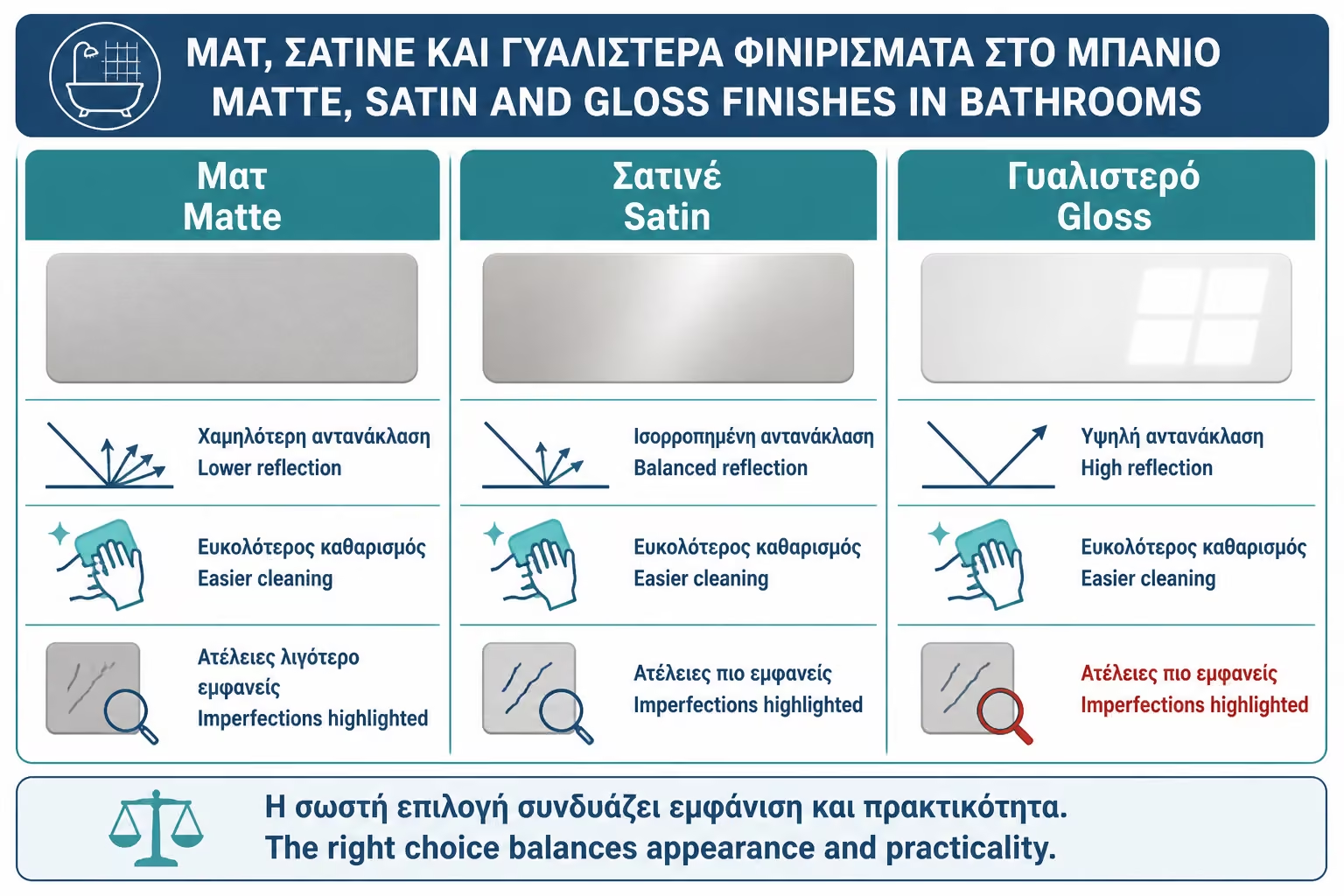
Finish is the degree of gloss the paint has when dry. In practice, the more matte a color is, the more it absorbs light and the calmer the surface looks. The glossier it is, the more it reflects light and the more sharply contours, shadows and imperfections are seen.
The main categories are matte or flat, eggshell, satin or satin/pearl, semi-gloss and high gloss. The names vary by company, but the logic is the same: as you go up in gloss, resistance to washing and moisture usually increases, but so does how visible imperfections are.
Benjamin Moore, for example, lists standard levels such as flat/ultra flat, matte, eggshell, satin/pearl, semi-gloss and gloss/high-gloss, while giving indicative reflectance rates for several categories. This helps us understand that "satin" is not just an aesthetic word. It is a measurable level of gloss.
The bathroom is a wet place. Even if the wall does not get wet directly, it receives water vapor and condensation. The ceiling, especially above the shower or bathtub, receives the greatest load. If the paint is very matte and not bathroom-specific, it can absorb moisture, get dirty more easily and be harder to clean.
The glossier finishes usually have a more closed and durable film. This makes them more resistant to cleaning, splashes and moisture. KILZ describes satin as a pearl-like finish that is easy to clean and has moderate durability, while semi-gloss characterizes it as more resistant to mildew, moisture and wear.
This is why satin and semi-gloss have become practical choices for bathrooms. Not because they are always the most beautiful, but because they better withstand the real conditions of the space.
The matte is aesthetically gorgeous. It gives a calm, deep and more "precise" image, especially in earthy or dark shades. It hides imperfections much better than glossy finishes, because it doesn't reflect light as strongly. If the wall has small stucco, ripples or old imperfections, matte is more forgiving.
In the bathroom, however, the classic matte has a disadvantage: it is more difficult to clean and is less resistant to water vapor, if it is not a special bathroom paint. In areas that are frequently splashed or wiped, it may leave glosses, marks or local wear. That's why simple matte plastic is not a good choice for a bathroom ceiling with a shower.
Of course, there are modern special matte paints for high-quality bathrooms, resistant to moisture and mold. There the mat can work, but it must be a product designed for high humidity, not a simple wall mat.
The eggshell has a slight sheen, a little more than matte. It gives a soft effect, hides imperfections quite well and cleans better than flat. In bedrooms, living rooms and areas of moderate use it is very popular.
In the bathroom, however, it is a limited choice. In a guest WC or bathroom without a shower it can be perfectly acceptable. In a master bathroom with daily hot showers, steam and cleaning, satin is usually safer. Home Depot notes that although eggshell and satin are popular for walls, experts recommend satin instead of eggshell in areas exposed to moisture, such as bathrooms and kitchens.
So eggshell is nice when we want a calmer surface, but it is not always the "worker" of the bathroom. It is more of a choice for mild humidity and good ventilation.
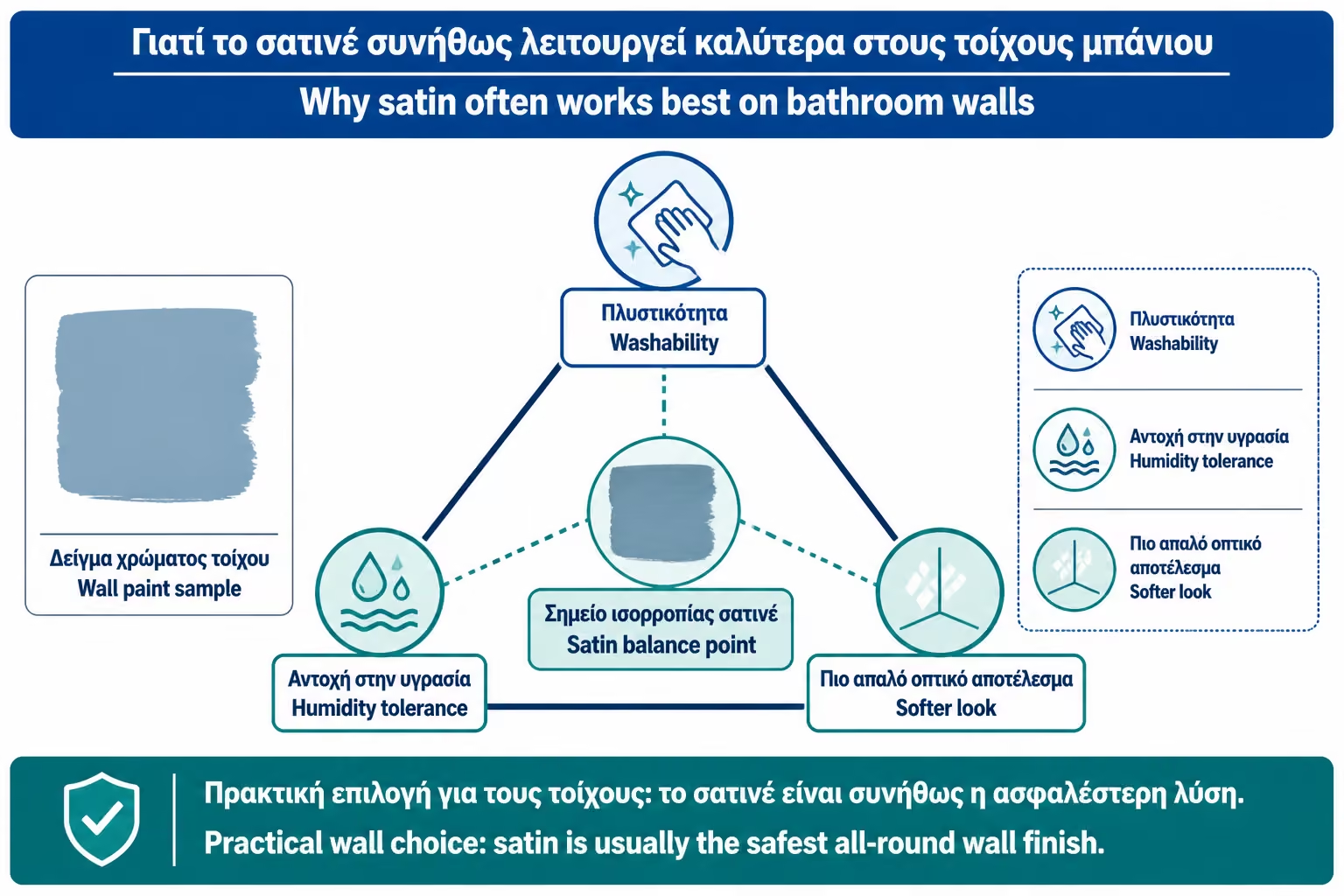
Satin is the golden ratio. It has enough gloss to clean up and resist moisture better, but not so much that it makes the wall look plastic or show every little imperfection. This is why it is often the best choice for bathroom walls, especially in everyday family bathrooms.
The satin surface subtly reflects the light. In small bathrooms, it helps not to "blur" the space, but without the intense reflections of semi-gloss. It is easier to wipe than matte, better resists splashes and suits both whites and colors.
KILZ describes satin as a pearl-like finish that is easy to clean and has moderate durability, while Sherwin-Williams places it together with semi-gloss as an ideal choice for bathroom areas due to its resistance to moisture. This explains why satin is often the most practical recommendation: it is neither too matte nor too shiny.
Semi-gloss is glossier than satin. It reflects more light, is easier to clean and has greater resistance to moisture and abrasion. It is excellent for doors, cases, wooden or metal elements, furniture, skirting boards and places that we often touch.
On bathroom walls it can work, especially in areas with a lot of moisture or areas that are cleaned frequently. But it has a drawback: it shows imperfections. If the wall has waves, stucco, old repairs or roll marks, semi-gloss will highlight them. Also, in a small bathroom with intense lighting, it can create excessive reflections.
Benjamin Moore often recommends it for trim, doors, cabinets and wainscotting, i.e. areas with higher use and need for cleaning. For basic bathroom walls, semi-gloss is a more technical and "harder" choice. Satin is usually more balanced.
High gloss is almost mirror-like. It reflects a lot of light, is easy to clean and can look very luxurious in the right fit. But on bathroom walls it is demanding and often excessive. It shows every imperfection, every roll line, every stucco and every ripple.
Usually high gloss is best suited to selected details: doors, frames, special decorative elements or small surfaces. On the entire ceiling or all the bathroom walls, it can become tiresome and reminiscent of the old "oil paint" logic.
If you want a glossy effect for cleaning purposes, semi-gloss is more practical. If you want balance, satin is usually better. High gloss requires a perfect substrate and expert application.
The gloss affects how the light "turns" in the room. In a small bathroom without a window, a satin or semi-gloss can help the space appear brighter, because it reflects more light than a flat mat. This does not mean that we have to make all the walls shiny. It means that the finish participates in the lighting.
In a bathroom with strong natural light or spots that hit sideways, gloss can become a problem. The glossier the color, the more visible shadows, imperfections and application marks. That's why on old walls with imperfections, a high-gloss finish is a risk.
The satin gives enough reflection for practicality, but does not make the space too "shiny". This is another reason why it is such a good choice for bathrooms.
As the gloss increases, the paint film is usually tighter and easier to clean. In a bathroom this is important: toothpaste, soaps, dust, water vapor and salts can sit on the walls. A matte color can be marked when we clean it. A satin is easier to clean.
Semi-gloss is even easier to clean, but with the aesthetic burden we mentioned. For this, on the walls, satin is often the most practical balance. On doors, cases and furniture, semi-gloss or satin enamel is often better than matte.
It does not mean that all satins are cleaned the same. The quality of the paint and whether it is a special bathroom paint play a big role. A cheap satin can lag behind a premium matte bathroom paint. So we look at both finish and product category.
The gloss reveals. A wall that looks "fine" with matte can show full ripples with semi-gloss. The side light from a window or mirror light highlights every little imperfection. In bathrooms that have a lot of repairs due to moisture, old stucco or imperfect plaster, this is crucial.
If the wall has imperfections, satin is safer than semi-gloss and much more practical than matte. If the wall is really bad, maybe a special matte bathroom paint is better for aesthetics, but you have to accept that it will be less convenient to clean than satin.
Sherwin-Williams notes that flat or eggshell finishes are best when we want to cover or hide imperfections. This is also true in the bathroom, but must be weighed against the need for moisture and cleaning.
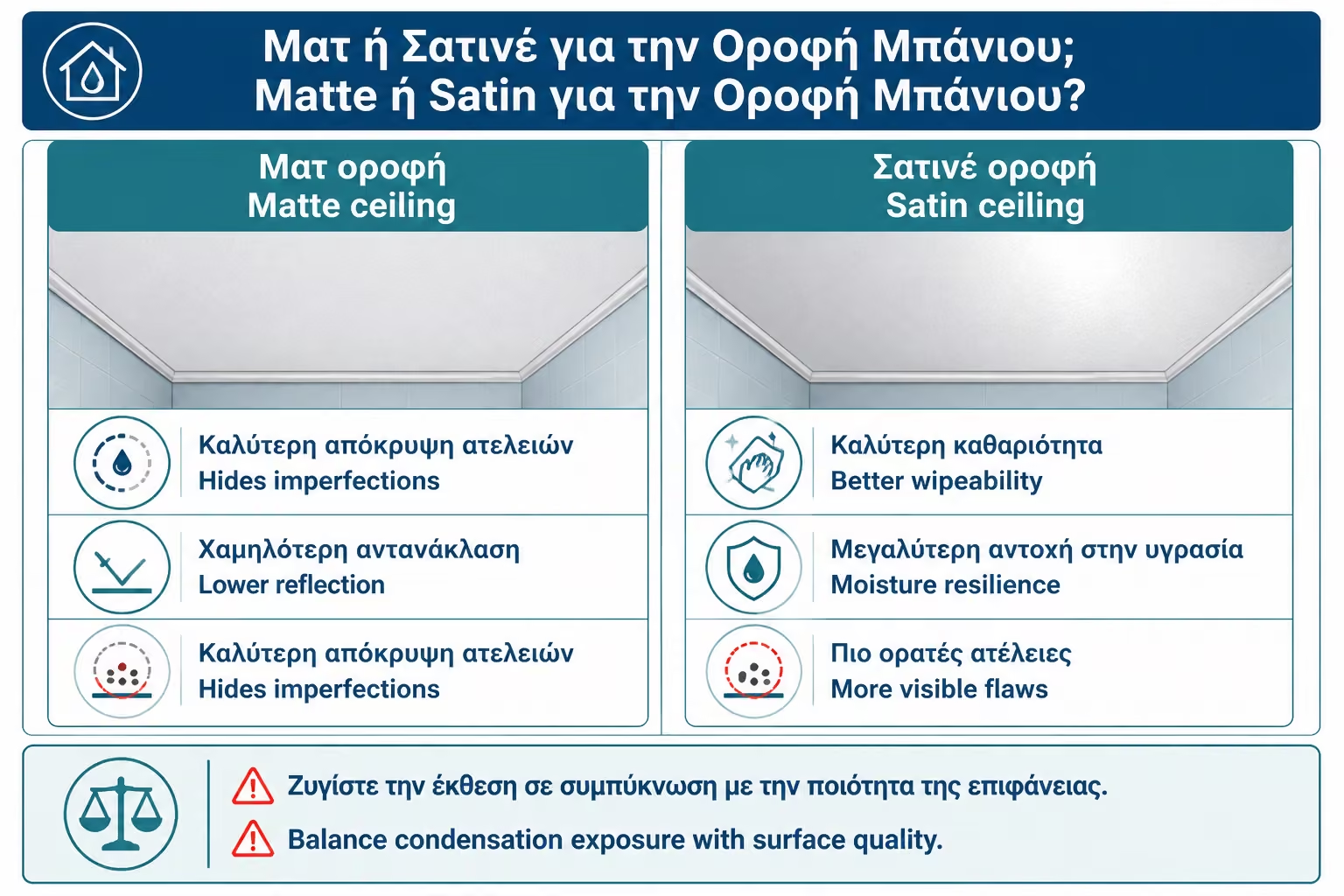
The ceiling is a special case. On the one hand, it receives a lot of water vapor. On the other hand, if we paint it too glossy, it can show imperfections, waves and old repairs. Traditionally, ceilings are painted matte to hide imperfections and not create reflections. In the bathroom, however, simple matte is not always a good idea.
The best choice is usually either a high-performance bathroom matte or a low-satin / soft-sheen finish in bathrooms with a lot of humidity. If the ceiling is smooth and you want easier cleaning, a soft sheen can work well. If it has visible imperfections, a specialist anti-mould matte or a very low-sheen bathroom paint is usually safer.
In small bathrooms without windows, the ceiling must withstand condensation. So the choice should not be "the most matte there is", but "the most suitable for moisture that does not look bad".
In many Greek bathrooms, the tiles rise to a height and there is a painted wall above. This zone receives water vapor and less direct water. Here the satin is almost ideal: cleans up, reflects some light and doesn't look overly shiny.
If the bathroom is a guest WC without a shower, you can choose eggshell or even a good matte for a more elegant effect. If it is a master bathroom with daily showers, satin or bathroom soft sheen is safer.
Be careful in the areas near the sink. There are splashes, toothpaste and cleaning. If the wall behind the sink does not have tile or a backsplash, the finish must be washable. The mat will suffer.
In the bathroom doors, cases and windows, we do not choose the same finish as the walls. Wood and metal components are touched, knocked and cleaned frequently. Here satin, semi-gloss or gloss enamel are more suitable than matte.
For a modern bathroom, water satin ripolin is a very good choice. It gives a clear image without excessive glare. For a more classic door or frame, semi-gloss can give a more traditional sheen and better cleaning.
In white cases, the choice of water or waterborne alkyd helps to avoid yellowing, as we saw in the case of ripolins. The finish here isn't just aesthetic; it's about durability and maintenance.
Dark colors behave differently. In matte they look deep and luxurious, but are more easily marked. In satin, they look more vibrant and clean up better, but may show wrinkles or blemishes. In glossy they become very dramatic, but they hardly forgive mistakes.
In a small bathroom, a dark satin can be striking on an accent wall, but not necessarily throughout the room. Dark semi-gloss on the walls can look luxurious, but they need a perfect substrate and lighting.
For everyday bathroom, if you want a dark color, prefer premium bathroom paint in low satin or washable matte especially for wet areas. So you get depth without too much gloss.
| Finish | Light / reflection | Cleaning | Imperfections | Suitability in the bathroom |
|---|---|---|---|---|
| Mat / Flat | Low | Harder | It hides better | Only special bathroom matte or mild use |
| Eggshell | Mildly | Moderate | It hides enough | Good for low humidity WC or bathroom |
| Satine / Satin | Moderate | Good | Moderate forgiveness | The most balanced choice for bathroom walls |
| Semi-gloss | High | Very good | It shows imperfections | Good for trim, doors, cases, demanding belts |
| High gloss | Very high | Very easy | It shows everything | Mainly for details, not usually for all walls |
Satin wins because it provides enough durability without sacrificing aesthetics too much.
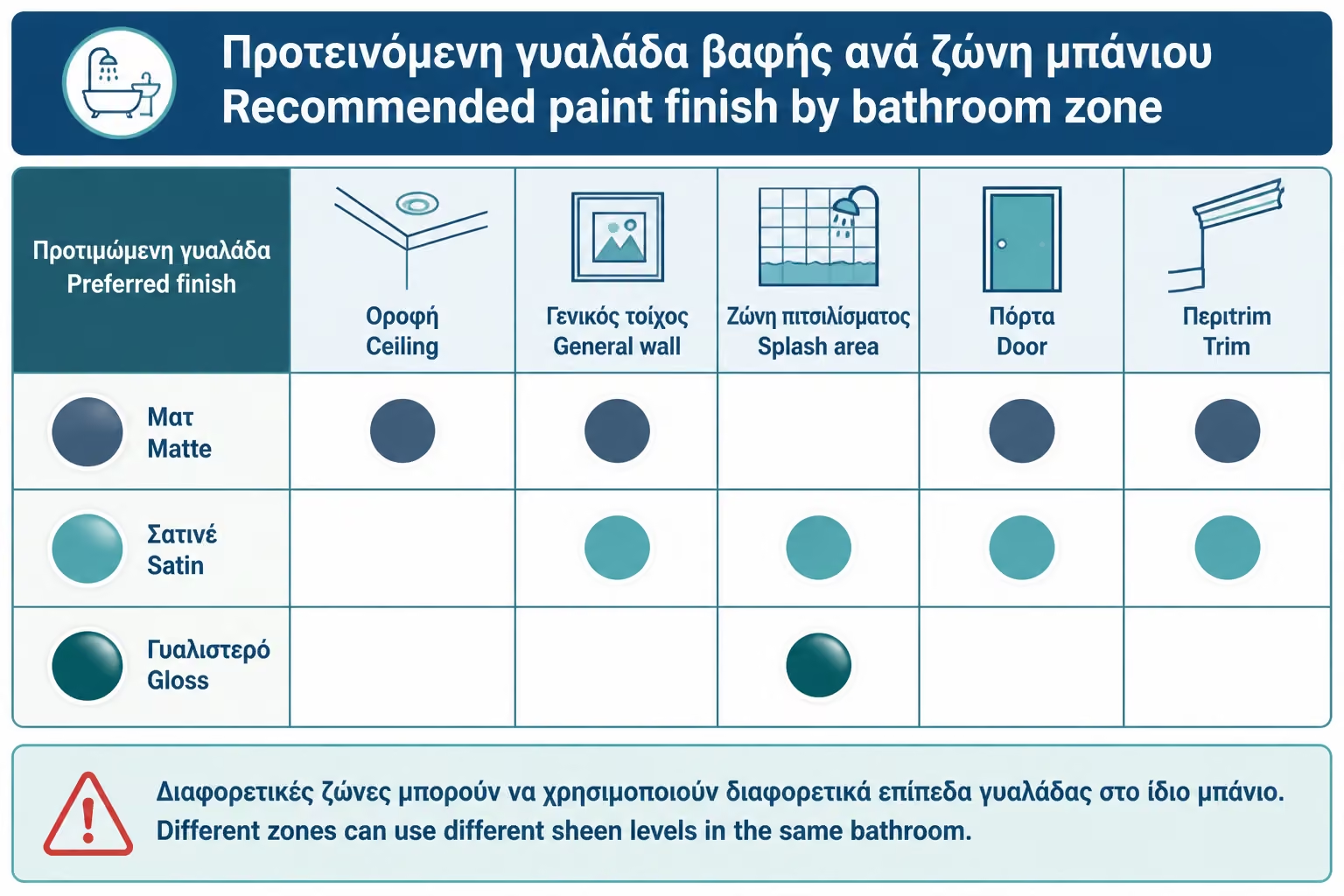
| Point | Recommended finish | Why |
|---|---|---|
| Bathroom ceiling with shower | Bathroom matte or soft sheen/satin | Water vapor resistance without excessive reflections |
| Walls over tiles | Satin | Clean + balanced appearance |
| Guest WC without shower | Eggshell or satin | Less humidity |
| Wall behind sink without tile | Satin or semi-gloss | Splashes and cleanup |
| Bathroom door | Satin or semi-gloss enamel | Hand and cleaning resistance |
| Cases / windows | Satin or semi-gloss | Washable and durable |
| Dark colored accent wall | Satin or premium washable matte | Depending on light and imperfections |
| Very old wall with imperfections | Bathroom matte or low sheen | Hides imperfections better |
There is no one answer for all bathrooms. Often the right combination is satin on the walls, special matt/soft sheen on the ceiling and semi-gloss on the wood.
Satin looks beautiful when applied cleanly. Not as forgiving as matte, but not as harsh as semi-gloss. It needs a good roll, the right amount of paint and a consistent direction. On bathroom walls, work in small zones and keep a "wet edge" so no joints show.
The surface must be properly prepared. Everything that is plastered must be sanded and primed. If you apply satin over unprimed patches, they may appear as different glosses. This is called flashing and is very common in semi-gloss finishes.
In the bathroom, do not paint immediately after a hot shower. The wall must be dry and the area well ventilated. Humidity affects drying and final finish.
The finish is not a substitute for anti-mold technology. A general purpose satin paint is not necessarily better than a special high quality bathroom matte. Ideally, in the bathroom we choose a color that is both suitable for humidity and the right finish.
Many bathroom paints are available in soft sheen, satin or especially washable matte. If the bathroom has a history of mold, choose a product with anti-mold protection and a cleanable finish. Gloss helps, but the composition of the paint is just as important.
If there is poor ventilation, no finish alone will solve the problem. It will help with cleaning, but the moisture needs to be controlled.
In the Greek market of 2026, special bathroom paints and quality satin/soft sheen cost more than a simple matte plastic, but in a bathroom the quantity is usually small. The cost difference is small compared to the cost of repainting if the plain paint gets stained, moldy or peeling.
Semi-gloss and wood/metal enamels also cost more than plain wall paint, but are the right materials for doors and frames. Painting a bathroom enclosure with plain plastic to save money is false economy.
If the substrate has imperfections, calculate preparation costs: plastering, sanding, primer, anti-mould cleaning. The glossier the finish, the better the preparation should be.
The first mistake is the use of simple matte plastic on the ceiling of a bathroom with daily showers.
The second mistake is choosing semi-gloss on a bad wall full of imperfections.
The third mistake is using glossy paint throughout the small bathroom, resulting in strong reflections.
The fourth mistake is choosing matte behind a sink without a backsplash.
The fifth mistake is the satin paint over stucco without a primer, which creates different glosses.
The sixth mistake is to only look at the color of the fan and not the finish in the actual bathroom light.
| Inquiry | Yes / No |
|---|---|
| Does the bathroom have a shower or is it just a WC? | Yes / No |
| Is there good ventilation? | Yes / No |
| Do the walls have imperfections that will show with gloss? | Yes / No |
| Does the wall accept splashes or cleaning? | Yes / No |
| Does the ceiling have a history of mold or condensation? | Yes / No |
| Do you want to increase the brightness of the space? | Yes / No |
| Is the color bath/humidity specific? | Yes / No |
| Are grouts and patches primed? | Yes / No |
| Will the doors/casings be painted with enamel and not plastic? | Yes / No |
| Have you tried the bathroom light finish? | Yes / No |
If you answer these before buying paint, you will avoid most wrong choices.
> In the bathroom, satin is often the king because it balances three things: moisture resistance, ease of cleaning and tolerable appearance on real walls with minor imperfections. Matte is more elegant but requires a special bathroom product and good use. Semi-gloss cleans better but shows every imperfection and is more suited to cases, doors and trim. For most bathroom walls, start with satin. For the ceiling, choose a special bathroom matte or soft sheen depending on the imperfections and humidity.
The color finish in the bathroom is a technical choice, not just an aesthetic detail. Matte hides imperfections and looks calm, but it is more difficult to clean and needs a special composition for wet areas. Gloss and semi-gloss are easy to clean and last longer, but highlight every imperfection and can become visually harsh. Satin is in the middle and is therefore the most practical choice for most bathroom walls.
Gloss also affects light. In small or dark bathrooms, a satin can help the space appear brighter without creating too much glare. On walls with imperfections, we avoid very shiny ones. On doors, cases and windows, we choose more durable enamel, usually satin or semi-gloss.
The best solution is not always a be-all and end-all. It is often a combination: special bathroom matte or soft sheen on the ceiling, satin on the walls, semi-gloss or satin enamel on the wood and the frames. Thus the bathroom remains bright, clean, practical and aesthetically balanced.
Return to category.
Go to categoryReturn to the central guide.
Go to guide