
Bathroom Surface Materials & Finishes
Return to category.
Go to categoryPainting old tiles can dramatically change a bathroom without chipping, dust and debris. But the big question is not whether to "paint" the tile. It is dyed. The real question is what is it painted with and where will it last. It is one thing to change the color of a WC wall that hardly ever gets wet, and another to paint tiles around a bathtub, inside a shower cubicle or on a floor that is stepped on and cleaned every day.
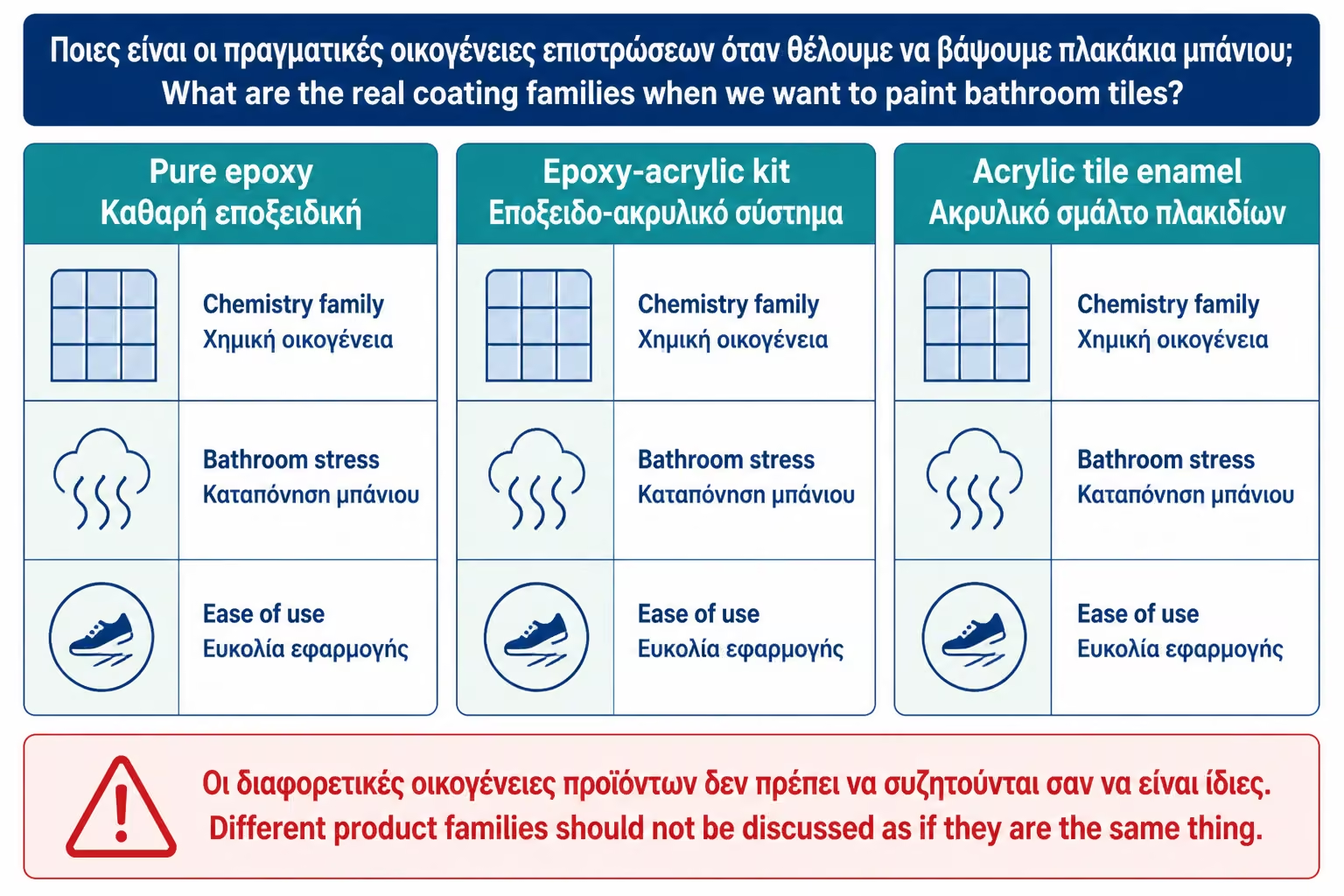
This is where the comparison between epoxy paints, epoxy-acrylic tub & tile kits and acrylic tile enamels begins. In the market, the names are confusing. One product may be called "tile paint", another "bathroom tile paint", another "epoxy acrylic", another "renovation range", another "2-component coating". Not all have the same durability. Not all are suitable for flooring. Not all are suitable for a shower. And certainly not all withstand hot water, salts, cleaners, soaps and scrubbing equally.
Two-component epoxy systems usually have the advantage in strength. They create a harder, more chemically resistant surface and are often used in applications where adhesion and moisture resistance are required. For example, Rust-Oleum Tub & Tile Refinishing Kit is described as a 2-part epoxy acrylic for refinishing ceramic tile, porcelain, fiberglass, acrylic, cast iron and steel tubs/sinks, with good adhesion, durability and color retention in high humidity areas. At the same time, the same technical material sets limits: it is not for galvanized steel, flexible plastic or areas of extreme heat.
Acrylic or alkyd/acrylic tile glazes are usually easier to DIY, with lower odor, simpler application, and better color versatility. They can give a very good aesthetic effect on bathroom, kitchen or WC walls, but often have limitations on floors, counters and high stress surfaces. A tile paint technical sheet based on alkyd/acrylic resin combination states that it is for interior wall tiles in kitchens, bathrooms and toilets, but not for exterior use, floor tiles or kitchen countertops.
The conclusion from the beginning is practical: for walls outside of direct water, a good special acrylic/tile enamel may be sufficient. For bathtubs, sinks, high-moisture areas and more demanding surfaces, a two-component epoxy-acrylic or epoxy system is usually a more durable choice. For floors and showers, even more care is needed — and often the right answer is that paint isn't the best permanent solution.
In the retail market, these terms are often used loosely. A homeowner sees “tile paint” on the label and assumes every product does the same job. That is not true. There are simple acrylic tile paints, alkyd/acrylic enamels, enamel paints, water-based renovation coatings, two-component epoxy-acrylic kits and pure epoxy coatings.
Acrylic tile glazes are more DIY-friendly. They are usually applied with a roller or brush, have a simpler process, are easier to clean, smell less and are offered in many shades. It is a very good choice for aesthetic renewal of walls, especially when there is no continuous water flow.
Epoxy or epoxy-acrylic systems are more technical. They usually have a base and activator/hardener, a specific working time, stronger odors and a need for better ventilation. If applied correctly, they give a harder and more durable surface. It is closer to the logic of "refinishing" than simple painting.
There are also hybrid renovation systems, such as water-based coatings with additive and clear coat, which are placed somewhere in between. The Dulux Renovation Range Tiles & Benchtops, for example, is described as a water-based interior coating for kitchen, bathroom and laundry benchtops and wall tiles, with a low odor, durable/chip-resistant finish and the possibility of using a primer for a better result.
A bathroom is not one single condition. The wall behind the basin is one thing, the wall next to the sink is another, the bathtub apron is another, the shower enclosure is another, and the floor is another again. When we say that a paint "works in a bathroom", we have to ask more precisely: does it resist steam, splashes, frequent wetting, cleaners, rubbing, standing water and hot water?
A product may be moisture-resistant but not suitable for flooring. It may be suitable for wall tiles but not for countertops or shower floors. It can withstand occasional moisture but not standing water. This is clearly seen in the technical data sheets: some tile paints declare use on wall tiles and not floor tiles, while epoxy-acrylic refinishing kits declare use on tubs, sinks and ceramic tiles, but with restrictions on extreme heat or specific materials.
So the right choice is not made by a vague phrase like "for bathrooms". It is made by the exact use zone: wall outside the shower, wall inside the shower, floor, countertop, tub or sink.
Epoxy coatings usually have better mechanical and chemical resistance than simple acrylics. That is why they are used in floors, technical areas, industrial applications and surfaces with increased requirements. A water-based epoxy floor paint, for example, is described as a two-component epoxy paint for interior floors made of concrete and other materials, with good mechanical and chemical resistance.
In bathroom tile, the advantage of epoxy is the harder final film. It withstands cleaning, moisture and chemicals better than simple paint. In tub & tile refinishing kits, the epoxy/epoxy-acrylic logic is precisely designed for glossy, non-porous surfaces such as porcelain, ceramic tile, fiberglass, acrylic, cast iron and steel tubs/sinks.
The downside is the fit. It requires strict mixing, specific pot life, very good ventilation, protective means and attention to timing. It is not as forgiving as a simple acrylic. Done wrong, it can leave marks, bubbles, lines or unevenness that are difficult to correct.
Many popular "tub & tile" products are not pure industrial epoxy. They are two-component epoxy-acrylic systems, designed for renovating bathtubs, sinks and tiles. They combine better adhesion and durability than simple acrylic with a more accessible application for DIY or semi-professional use.
The Rust-Oleum Specialty Tub & Tile Refinishing Kit is described by the company's support as a 2-part epoxy acrylic for excellent adhesion, durability and color retention in high moisture areas, suitable for ceramic tile, porcelain, fiberglass, acrylic, cast iron and steel tubs and sinks. The same source also states that it should not be used in galvanized steel, flexible plastic, areas of extreme heat or constant high humidity environments.
That last one is important. Even special refinishing kits have limits. It does not mean that because a product is epoxy-acrylic we can put it everywhere. We must strictly follow the usage surface declared by the product.
Acrylic enamels and special water-based tile paints are very attractive for DIY. They dry easier, have less odor, clean up with water, come in many shades and apply without the intensity of a two-component product. For bathroom walls out of direct water, they can be a very good solution.
The limits are shown in the technical data sheets. Craft Colors Tile Paint, based on alkyd/acrylic resin combination, is declared as moisture-resistant and suitable for durable hygienic color coating on wall tiles in kitchens, bathrooms and toilets, but not for floor tiles and kitchen countertops. This is not a weakness; it is an honest specification.
On a practical level, acrylic enamel is a good choice when we ask for aesthetic renewal and not heavy technical resistance. If the surface is rarely wet and gently cleaned, it can last well. If it will be rubbed, stepped on or exposed to hot water daily, it is a riskier choice.
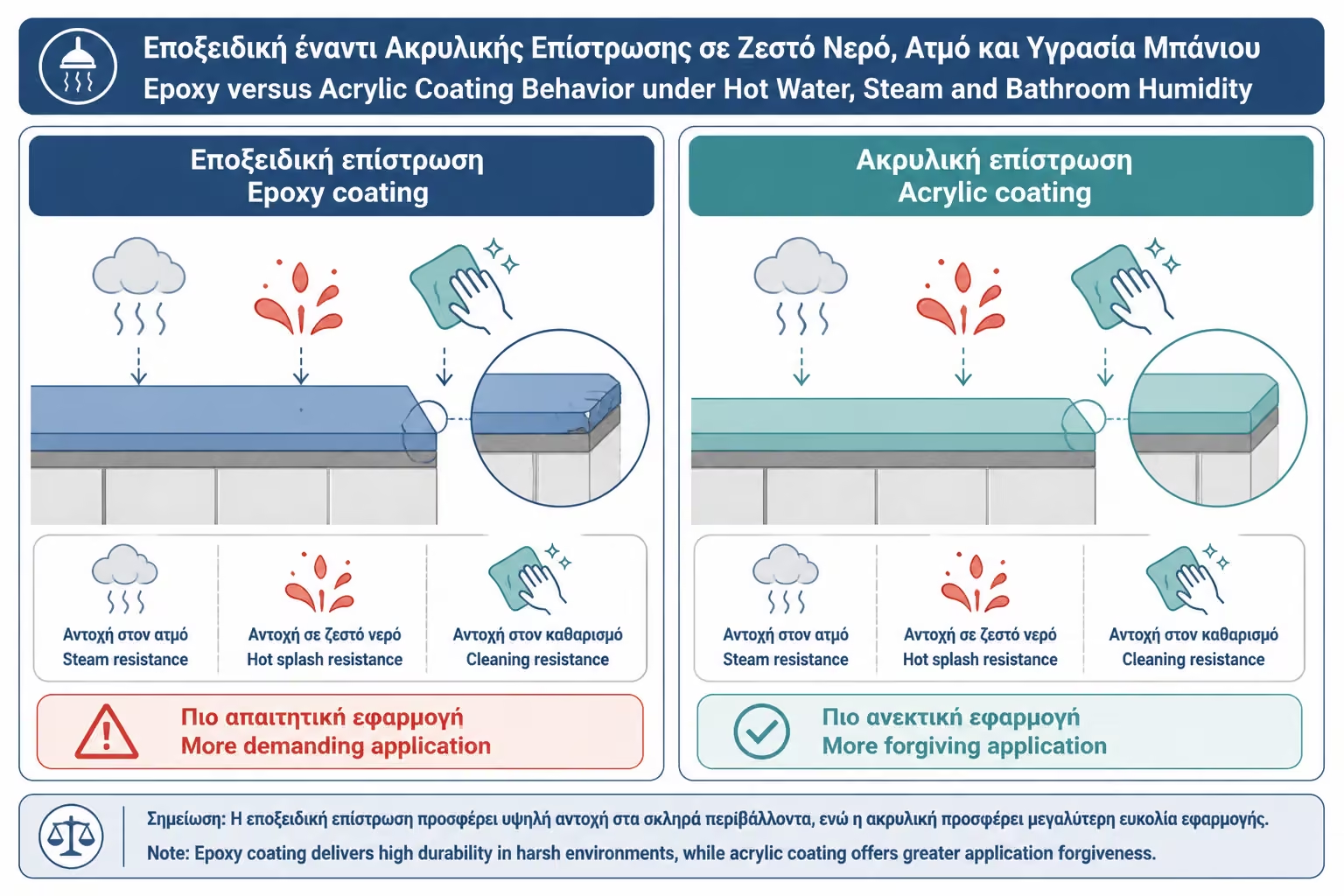
In hot water and steam, the epoxy/epoxy-acrylic system usually performs better, especially if it is designed for tub & tile. The tough, chemically resistant film withstands heat and moisture stress better than a simple acrylic tile paint.
However, "hot water" does not mean the same as "permanent exposure to standing water". Many products withstand splashes, steam and cleaning, but not continuous immersion or a permanent pool of water. Some renovation systems report that they can withstand ponded water for days without damage under normal use, with the expectation that the water will dry or wipe away before it becomes a problem. This is better durability than plain paint, but that doesn't mean we have to let water pool.
For a wall outside the shower, a good acrylic/renovation coating may be sufficient. For a surface that will be wet with hot water every day, a two-component system or a special tub & tile coating is preferred.
Epoxy systems excel in chemical resistance. It is no coincidence that epoxy coatings are used on floors where there are cleaners, chemicals and mechanical stress. Technical data sheets of water-based epoxy paints refer to specific chemical resistance tables against substances such as acetic acid, sodium hydroxide, sulfuric acid and hydrochloric acid, with resistance ratings per reagent.
In the bathroom, the chemicals are not laboratory acids every day, but we have anti-salts, chlorides, bathroom cleaners, soaps, shower gels, shampoos and disinfectants. An epoxy or epoxy-acrylic coating will usually hold up better than plain acrylic. This does not mean that it can withstand unlimited harsh scrubbing with bleach or acidic cleaners. It means it has a greater margin of endurance.
Acrylic enamels need gentler cleaning. They can withstand soaps and mild cleaners, but frequent use of strong anti-salts or abrasives can dull, soften or wear the membrane more quickly.
In sanding, epoxy wins again. The finished surface is harder and more durable. That's why it makes sense in bathtubs, sinks and more demanding surfaces. However, even epoxy coating should not be cleaned with wire sponges or harsh abrasives. It is not a baked tile.
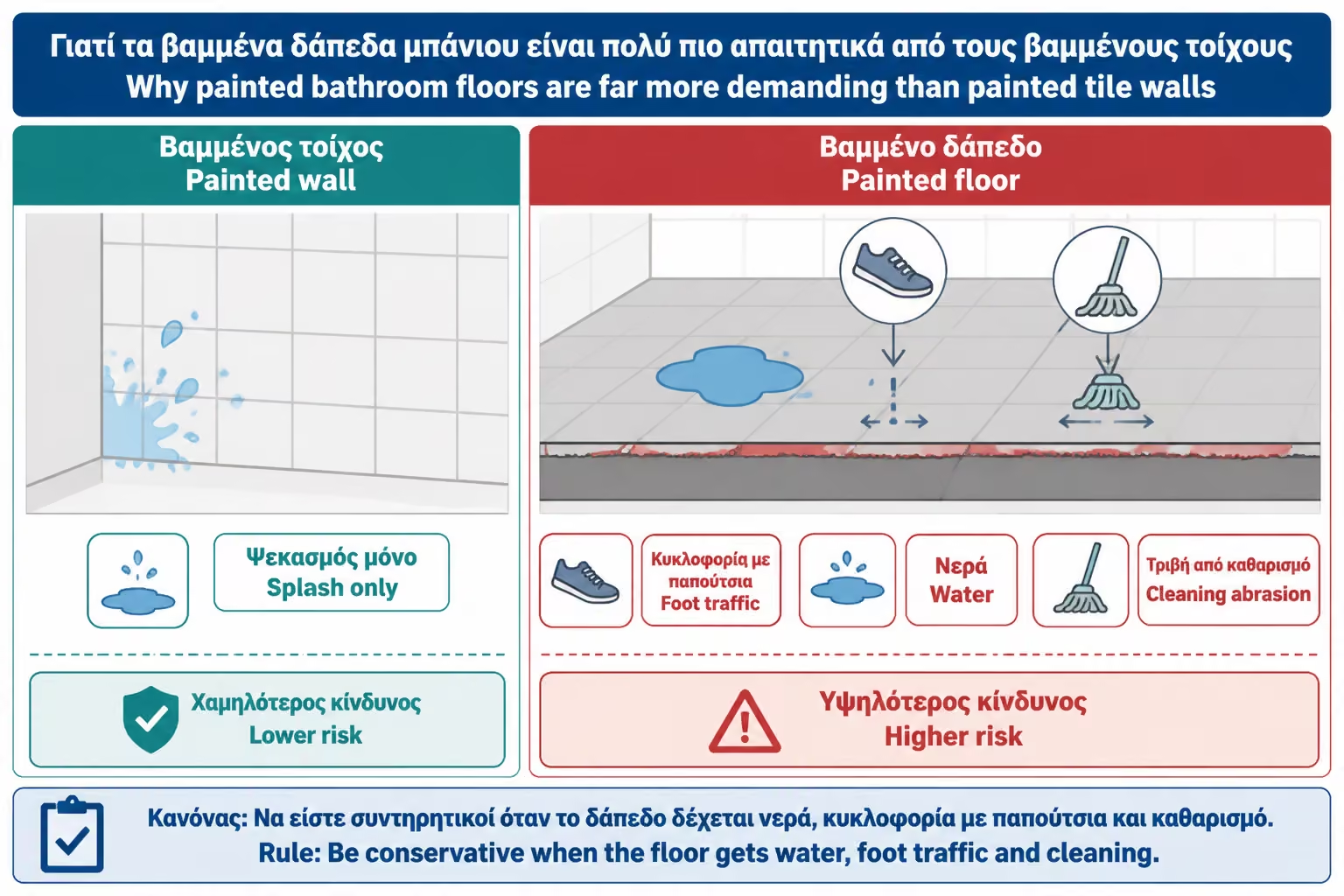
Acrylic enamels can chip or polish unevenly if rubbed frequently. On walls there is no big problem. On the floor, however, the wear and tear from stepping and cleaning is significant. This is why many drivers point out that tile paint works better on vertical, less stressed surfaces, while on floors or heavy water exposure the duration is shorter.
The practical conclusion: if the surface will be rubbed often, it needs a tougher system and gentle maintenance. If it will be stepped on daily, paint is a compromise.
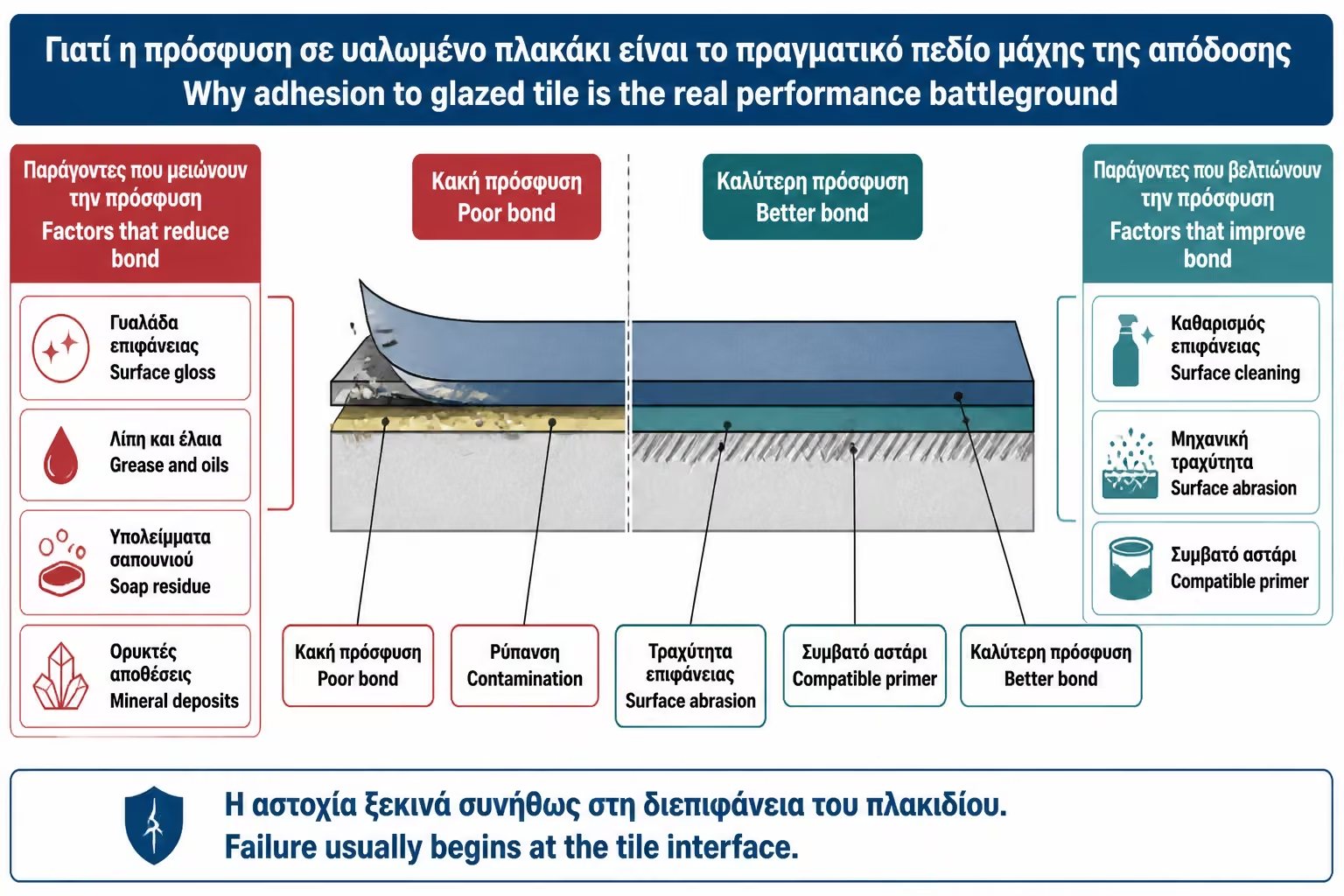
The biggest problem is not only the durability of the paint. It is the adhesion on the tile. Tiles are smooth, dense, often glossy surfaces. The paint does not penetrate like plaster or wood. Any soap, scale, silicone or grease residue dramatically reduces adhesion.
That's why preparation is just as important as choosing a color. Cleaning, degreasing, silicone removal, joint repair, sanding/deglossing and primer where necessary. Tile painting guides stress that painting can fail if applied over dirt, mold, grease or the wrong surface, and that cleaning, sanding and priming are critical for long-lasting results.
Even the best epoxy won't last if it gets on soapy water. And the best acrylic enamel can perform well if it goes into a perfectly prepared low stress wall.
For bathroom walls out of direct water flow, a good acrylic/alkyd tile enamel or water-based renovation coating is usually sufficient. It is easier to DIY, smells less, works more comfortably and gives a clean aesthetic result. If the wall is behind a sink, next to a piece of furniture, or in a zone that receives only water vapor, you don't always need to go for heavy epoxy.
However, if the wall is above a bathtub, behind a sink with strong splashes or near a shower, the option must go up. There we prefer a product that explicitly states bathroom/high moisture use and ideally a system with a primer or additive. If there is frequent direct contact with water, epoxy-acrylic or a special tub & tile coating makes more sense.
For a wall inside the shower cubicle, "tile paint for bathroom" is not enough. The product must explicitly state use in a wet/shower area. Otherwise, the paint may start to bubble or peel at the edges and joints.
The floor is much more demanding than the wall. It is stepped on, rubbed, cleaned, receives water, mats, dust and mechanical wear. Here acrylic tile enamels are usually a poor choice, unless the product is specifically stated for use on floor tiles and has a suitable topcoat.
For floors, if you insist on painting, we look at systems for floors: epoxy floor coatings, special renovation floor coatings or two-component products with clear coat. Even so, you have to accept that it is not the same strength solution as new tile or LVT/SPC. Some expert guides mention that painted tiles can be a temporary solution and that the duration is strongly affected by traffic, moisture, paint type and sealant.
In a daily use master bathroom, I would personally see floor painting as an economical refresh, not a permanent technical solution. For longer life, better options are new tiles, LVT/SPC, microcement or panels where appropriate.
For bathtub and sink, we enter another category. We are not talking about simple painting of tiles but about refinishing. Special tub & tile kits are preferred here, usually two-component epoxy-acrylic. These are designed for surfaces such as porcelain, ceramic, fiberglass, acrylic, cast iron and steel, under the conditions given by the manufacturer.
The preparation is even more rigorous: degreasing, descaling, sanding, chip repair, complete drying and protection. The bathtub accepts hot water, soaps, body, cleaners and possible impacts. A simple acrylic enamel is not a good choice.
Even with an epoxy-acrylic kit, you must avoid harsh cleaners and fully observe the curing time before getting water. Premature use is one of the most common reasons for failure.
The shower cubicle is the most difficult place to paint tiles. There is daily hot water, soap, salts, steam, thermal changes and cleaners. If the paint has a small failure at a joint or edge, water can work its way underneath and cause peeling.
Therefore, for the shower zone, I would not choose simple acrylic enamel. I would only use a product that specifically states wet areas/shower use or a special epoxy-acrylic refinishing kit, again with a realistic expectation. If the bathroom is for daily use, the most durable solution remains a technical coating system: new tiles, panels or microcement/wet coating system.
For a shower floor, painting is even more limiting due to pooling and slip resistance. It is not the option I would suggest as a "proper permanent solution".
| Criterion | Epoxy / Epoxy-Acrylic | Acrylic Tile Enamel |
|---|---|---|
| Water resistance | Higher if suitable for wet areas | Good for water vapour/splash, not always for continuous water |
| Resistance to hot water | Better | Limited per product |
| Resistance to cleaning agents | Better chemical resistance | It needs mild cleansers |
| Abrasion resistance | Better | Moderate, especially on floors |
| DIY application | More difficult | Easier |
| Odor / ventilation | Usually more demanding | Usually milder |
| Working time | Limited to 2K systems | More comfortable |
| Color options | Often more limited | Usually more |
| Suitable for non-shower wall | Yes | Yes |
| Suitable for flooring | Special floor system only | Only if explicitly stated |
| Suitable for bathtub/sink | Yes, with a special tub & tile kit | Usually not |
| Cost | Higher | Lower to medium |
The table shows that there is no "best" paint. There is a right paint for a right zone of use.
| Point | Recommended option | Comment |
|---|---|---|
| WC wall | Acrylic/renovation tile paint | Very good DIY application |
| Bathroom wall out of water | Acrylic enamel or renovation coating | With primer where necessary |
| Sink area | Strong tile paint or epoxy-acrylic | Due to splashes and cleaning |
| Above the bathtub | Epoxy-acrylic or special wet-area coating | Higher humidity |
| Shower interior | Special wet/shower rated product only | High risk |
| Bathroom floor | Floor-rated epoxy/renovation system | Not simple wall tile paint |
| Shower floor | Usually avoid paint | Very high stress |
| Bathtub/sink | Tub & tile epoxy-acrylic refinishing kit | Not just enamel |
If the product does not specifically mention your application, consider it unsuitable until confirmed.
A good acrylic or alkyd/acrylic tile enamel is sufficient when the goal is aesthetic renewal on a low to moderate stress vertical surface. That is, on WC walls, old kitchen tiles, bathroom walls outside the shower, or zones with water vapor but not continuous water.
It is also enough when you want an economical solution, easy application, fast refresh and accept that the duration depends on the use. In a rental home or temporary renovation, it is often a very reasonable choice.
It is not enough when you want durability like factory tile, when you want to paint a floor, when there is a daily flow of water or when cleaning with harsh anti-salts and scrubbing.
It is needed when the surface receives water, chemicals, abrasion or mechanical wear. Tubs, sinks, high splash areas, floors and high humidity areas need a stronger system. The epoxy-acrylic tub & tile kit is specially designed for such applications, as long as it suits the substrate and the use.
It is also needed when the owner wants more durability and is willing to accept more difficult application, odors, preservatives and rigorous curing. Epoxy rewards discipline. It punishes sloppiness.
For a DIY beginner, it might be better to start with a wall rather than a bathtub or floor. For demanding master bathroom, professional application may be safer.
Whether you choose epoxy or acrylic, preparation is non-negotiable. Tile clean, degreased, without salts, without silicone, without mold, without loose joints. Light sanding or deglossing where needed. Primer if the system requires it. Dry completely before painting.
Acrylics are a little more forgiving in application, but not in cleaning. Epoxies are even less forgiving. If the adhesion is lost, the strength of the film does not matter, because the film will peel off from the base.
Practically, in an old bathroom, cleaning and scrubbing take more time than painting. If this seems excessive to you, it is better not to start. Success is judged before the paint can is opened.
No painted tile surface should be cleaned like unpainted porcelain. We avoid wire sponges, abrasive powders, hard pads and very strong chemicals. We use mild detergents, soft cloth, good rinsing and wiping water.
Epoxies last longer, but are not indestructible. Acrylics require even more careful maintenance. In places with salt, it is better to wipe frequently than to let it build up and then scrub aggressively.
If minor peeling occurs, it is corrected early. If left, water and cleaners will seep under the coating and the damage will grow.
In the Greek market of 2026, acrylic tile enamels are usually a more economical and DIY-friendly solution. The cost increases if primer, special cleaner, sanding materials, rolls, tapes and second/third hand are needed. However, for a wall or small bathroom, it remains much lower than new tiling.
Epoxy and epoxy-acrylic systems cost more as a material and require more care. If done by a professional, the work raises the cost. But in a bathtub, sink or surface that receives water, the cheapest acrylic can prove more expensive if it peels quickly.
The correct economic criterion is not the price of the liter. It is the price per year of use. If a cheap paint needs repair in 8 months and a better system lasts several years when properly applied, the second is more economical.
The first mistake is to use plain acrylic wall enamel on bathroom tiles. It doesn't have the traction and durability it needs.
The second mistake is the use of wall tile paint on the floor. If the product does not state floor use, we do not use it on the floor.
The third mistake is painting inside the shower with a product that can only withstand water vapors or splashes.
The fourth mistake is the omission of cleaning and scrubbing.
The fifth mistake is premature use before full curing.
The sixth mistake is the use of harsh cleaners immediately after painting or in general on a painted surface.
| Inquiry | Yes / No |
|---|---|
| Does the product specifically say it's for tiles? | Yes / No |
| Does it say if it is for wall, floor, tub or shower? | Yes / No |
| Is it one component or two component? | Yes / No |
| Does it need a primer or an additive? | Yes / No |
| Does it withstand high moisture or only occasional splashes? | Yes / No |
| Are floor tiles allowed if you are painting a floor? | Yes / No |
| Is there a clear repainting and full curing time? | Yes / No |
| Do you know what cleaners are allowed afterwards? | Yes / No |
| Has the surface been thoroughly cleaned, sanded and dried? | Yes / No |
| Have you accepted that paint is not as durable as new tile? | Yes / No |
If you cannot answer the above, the choice of paint is based on packaging and not technical suitability.
> For bathroom walls that do not get directly wet, a good acrylic or renovation tile paint can deliver an excellent visual result at a reasonable cost and with manageable DIY difficulty. For tubs, sinks, heavy splashes, hot water and tougher cleaning, prefer a two-component epoxy-acrylic system or a specialist tub & tile refinishing product. For floors, use only a product that explicitly states it is suitable for floor tiles, and accept that it will still need careful maintenance. For the inside of the shower, do not trust a generic "tile paint" label. You need a product that clearly declares wet-area or shower suitability; otherwise, choose a different solution.
The right paint for bathroom tiles depends on the point of use. Acrylic tile enamels are easy, economical and very useful for walls, WCs and areas with water vapor or mild splashes. But it is not the best choice for floors, bathtubs, sinks or everyday water zones.
Epoxy and epoxy-acrylic systems offer greater resistance to hot water, chemical cleaners and scrubbing. It is a more correct choice for demanding surfaces, but they require strict application, proper mixing, ventilation, protective agents and full curing time. It's not "paint and use tomorrow".
If you just want to change the look of an old wall, acrylic tile paint may be the most logical choice. If you want to refresh a tub or surface that receives hot water and detergents, you need a stronger two-component system. If you want a permanent floor or shower solution, paint should be seen as a compromise — not a complete replacement for new flooring.
Return to category.
Go to categoryReturn to the central guide.
Go to guide