
Bathroom Surface Materials & Finishes
Return to category.
Go to categoryNatural stone in the bathroom has something that is difficult to completely copy from industrial materials. It is not perfectly uniform, does not have a perfectly repeating pattern and does not look "printed". It has depth, texture, subtle differences in tone and a sense of earthy calm. That is why it is often used in bathrooms that want to resemble a spa, a hotel, a nature reserve or a Mediterranean residence.
Two of the most typical applications are river pebbles, i.e. natural pebbles, and porous stone linings such as porolite or related limestone stones. Pebbles on the floor of the shower offer a strong natural feel and a kind of gentle foot massage, while pumice stone on the walls gives a warm, Mediterranean texture reminiscent of traditional stone, natural wall and spa architecture.
But natural stone in the bathroom is not a simple decorative choice. It is a porous material. It can absorb water, soaps, body oils, salts and cleaners. It can stain, dull, hold dirt in recesses, or require special maintenance. The Natural Stone Institute recommends cleaning natural stone with neutral cleaners, stone soap or a mild liquid detergent with warm water, and a good rinse and dry with a soft cloth, precisely because the wrong cleaners can cause surface problems.
The most critical technical concept here is sealing, i.e. sealing or waterproofing the stone with a suitable impregnating sealer. The sealer does not make the stone "plastic" nor does it turn it into porcelain. But it significantly reduces absorbency, helps water stay on the surface instead of seeping in, and makes stains easier to treat. For natural stone in everyday showers, natural stone experts often recommend penetrating sealer about once a year, depending on the type of stone, use and product.
In this guide we will see when natural stone is worth it in the bathroom, how to use river pebbles in the shower floor, what to look out for in pumice stone and porous stones, what are the critical sealing steps, what cleaners to avoid and when it is better to choose porcelain imitation stone instead of real stone.
Natural stone works differently than a simple tile. The eye immediately recognizes natural texture, differentiation, small imperfection and depth. In a bathroom, this translates into a sense of relaxation. Instead of the space looking like a "wet room", it acquires a character closer to a hammam, spa or natural bath.
The river pebbles create a special experience when pressed. The sole does not rest on a perfectly flat surface, but on rounded natural stones. This gives a feeling of natural massage, especially if the pebbles have a smooth, not overly rough texture. In a shower, this sensation can be very pleasant for some users.
Porolite and porous stones on the walls give a warmer, architectural image. They combine beautifully with tap, wood, beige shades, black batteries and natural lighting. In small doses they can transform a simple space. In excessive use, however, they can load the space and increase maintenance.
River pebbles are usually laid in sheets, like mosaics. The shingles are glued to a mesh and placed on the substrate with glue, then grouted and then sealed. The image is reminiscent of a natural river bed or beach, especially when the pebbles have calm shades of gray, beige, white, brown or green.
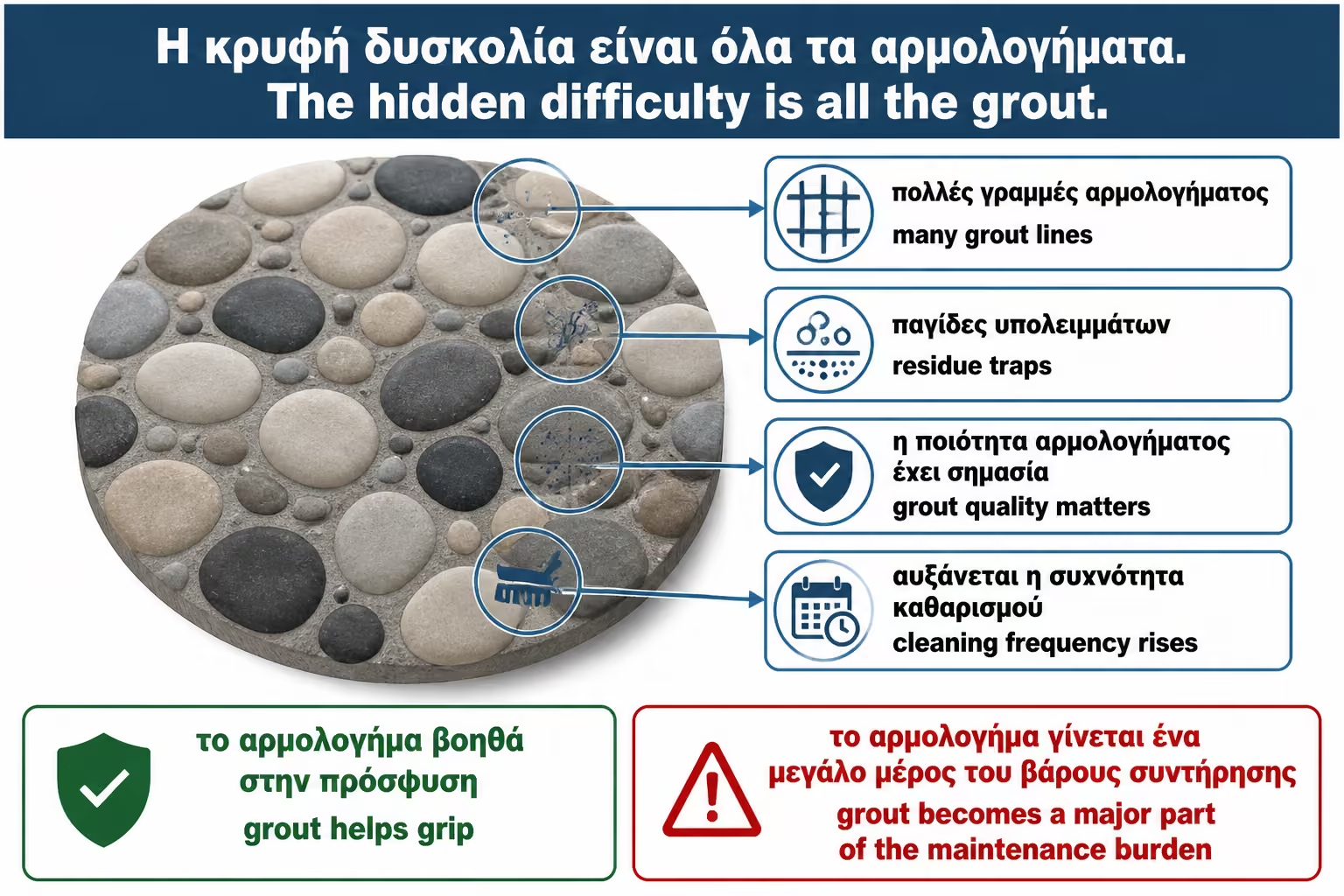
The main practical advantage is traction. Because there are many small pebbles and a lot of jointing, the tread treads on a surface with many small breaks. This can help slip resistance, especially over a large smooth tile. But the slip resistance depends on the type of stone, the finish, the joint and whether the surface holds soaps or salts.
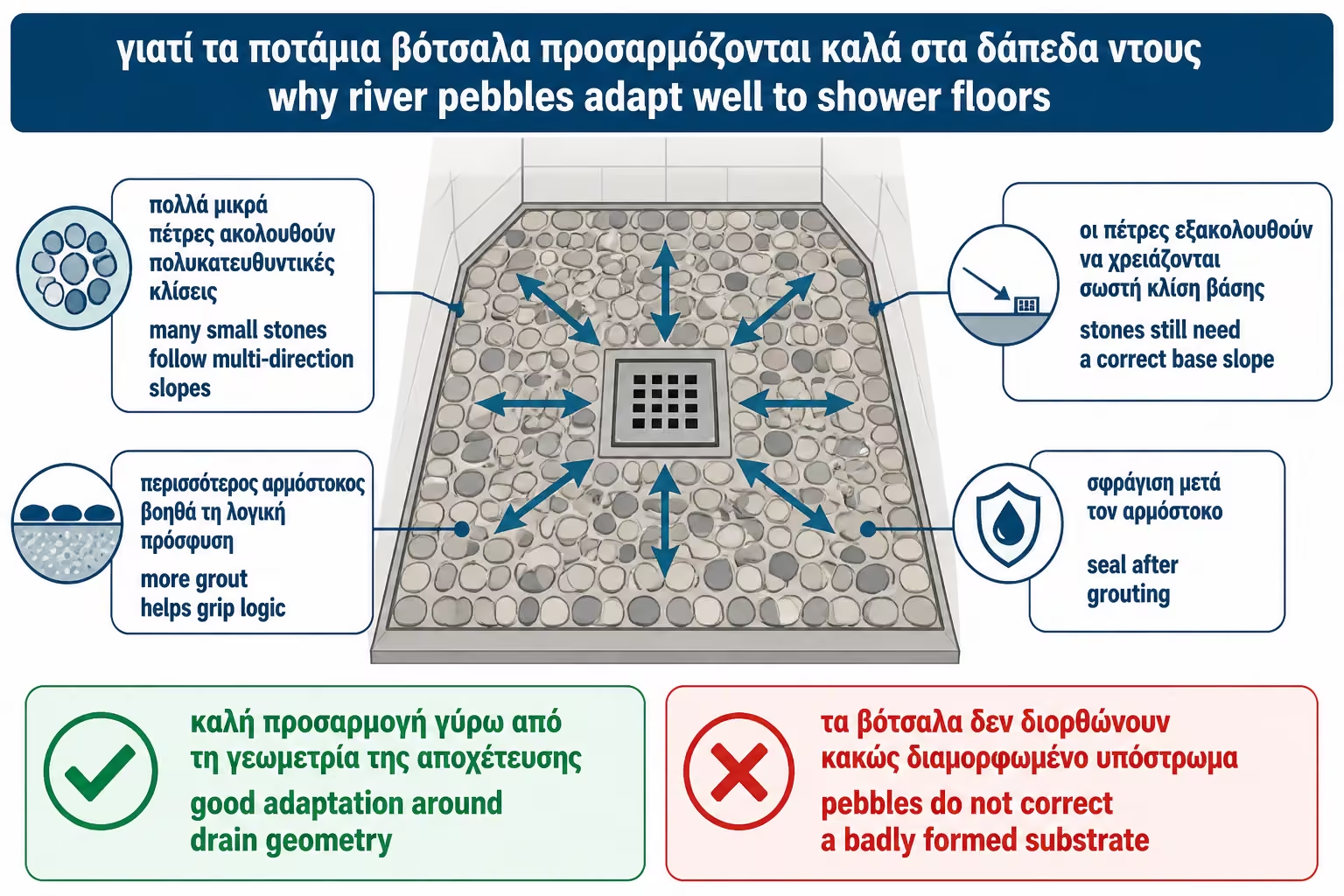
The second practical advantage is that small elements follow gradients more easily. In a shower with a central siphon, where the floor must "fall" from several sides, pebbles can be adapted better than a large tile. This does not mean that they correct wrong inclinations. The base must be properly prepared before installation.
The feeling of river pebbles on the foot is personal. Some find it relaxing and natural. Others find it tiring, especially if the pebbles are very textured, uneven or protrude too far from the joint. In a bathroom used by children, the elderly or people with sensitive feet, the choice needs testing.
There are two main categories: rounded pebbles and sliced/flat pebbles. Rounded have a stronger natural feel and more "massage", but can be less comfortable and hold more water between the curves. Sliced pebbles have a cut, flatter surface and are usually more comfortable in everyday use, while maintaining the aesthetics of pebbles.
Before you decide, ask for a sample and press it barefoot. The photo is not enough. A shower floor is not just a picture; it's a daily experience.
Pebbles have a very high joint ratio. This helps with traction, but increases maintenance. Joints can hold soaps, salts, hair and dirt. If they are not applied correctly or if the wrong grout is used, they can turn black, crack or become difficult to clean.
In a shower floor, the grout is not a secondary detail. It is a large part of the surface. It must be suitable for a wet area, completely fill the voids and be properly cleaned from the surface of the pebbles. In more demanding applications, epoxy grout can be considered, although application to textured natural pebbles requires great care and an experienced craftsman.
A frequent mistake is for the owner to be impressed by the image of the sample and not to think about everyday life. If you don't want to sweep, clean joints and do periodic sealing, river pebbles may not be the most practical solution for the main bathroom of the house.
Porolith has a strong natural texture and a warm, Mediterranean image. On a bathroom wall, it can give the feeling of a natural wall, especially in combination with wood, wood and earth tones. But it is a porous material. This means it can absorb water, dust, soaps and stains if not properly protected.
On dry or semi-dry walls, pumice stone can act as a decorative lining with the right sealer. Inside the shower, the choice becomes much more demanding. Water, salts and cleaning agents will strain him every day. Pores and irregularities can hold salts and dirt.
If you want poristone in a shower, a very careful discussion should be made with a natural stone professional. It needs a proper sealer, proper adhesive, proper grouting, excellent ventilation and acceptance of increased maintenance. For many owners, the best solution is the paver stone on an accent wall outside of direct water flow and a more practical material inside the shower.
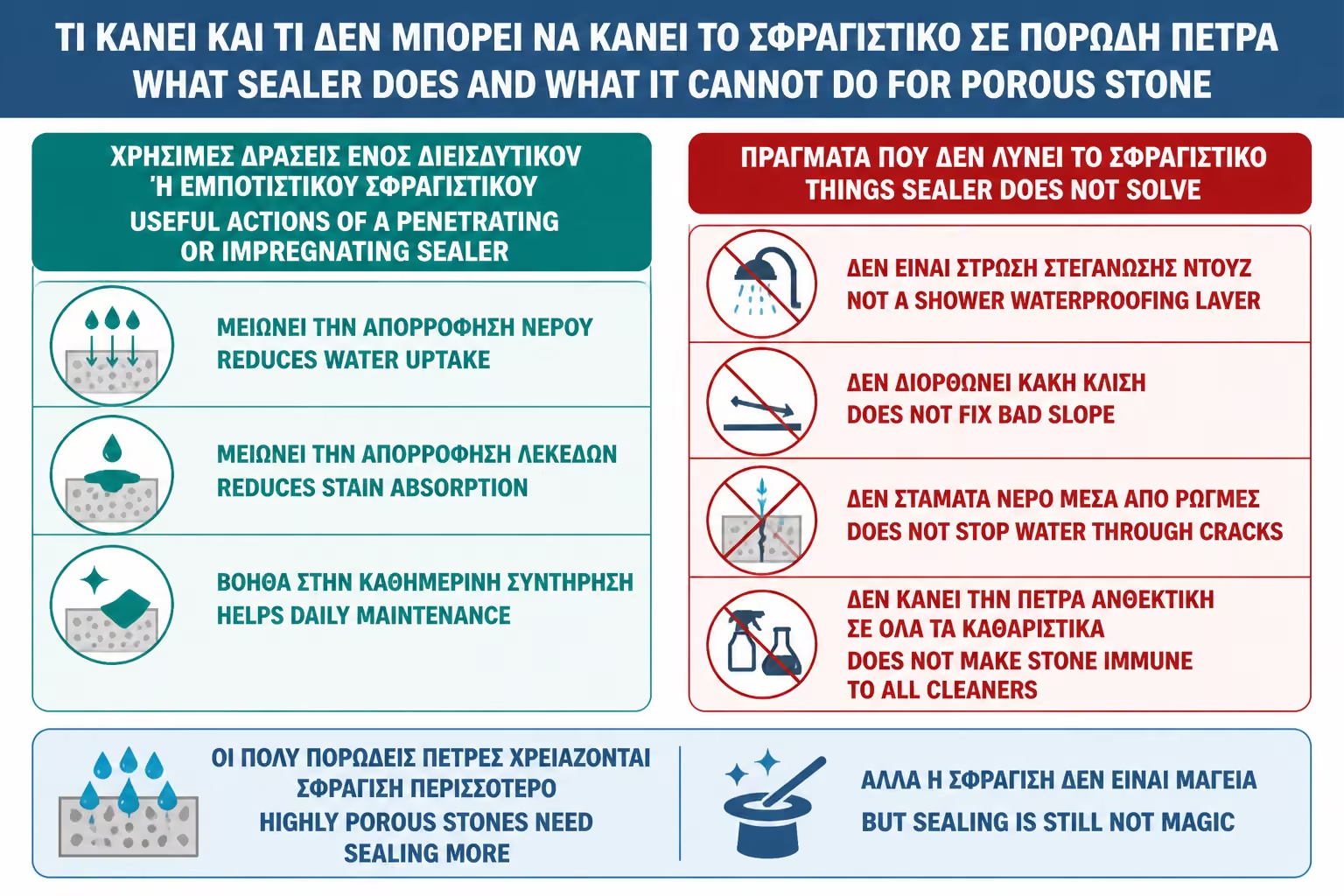
Sealing is the application of a special protective agent to the stone. Usually for natural stones in a bathroom, penetrating or impregnating sealers are used, which penetrate the pores and reduce the absorption of water and stains. The Natural Stone Institute states that in many cases it makes sense to use a quality sealer that is water and oil resistant to make the stone more resistant to everyday dirt and stains.
But the sealer does not make the stone invulnerable. It does not replace shower sealing, it does not correct bad slopes, it does not stop water if there are cracks and it does not make the stone resistant to all cleaners. It is a protective layer inside the pores of the stone, not a magical membrane.
In porous stones, such as limestone, travertine or porous stone, the need for sealing is greater. Some guides for travertine and porous stones in wet areas state that in very porous materials and bathrooms a higher potency premium impregnating sealer may be required.
In natural stone, especially when it is porous, it is often pre-sealed before grouting. The reason is simple: the grout can stain the stone or penetrate its pores. A first coat of sealer can help the surface to clean up easier after grouting. After grouting and cleaning, final sealing is done.
The exact process depends on the stone, grout and sealer. It should not be done arbitrarily. If the wrong sealer is applied before the glue or at the wrong stage, it can create an adhesion problem. If applied to wet stone, it can trap moisture. If the excess is not properly wiped off, it can leave a sheen or dullness.
In river pebbles, the process needs even more attention because there are many small elements and a lot of jointing. The craftsman must know how the particular product behaves. It is not enough to apply "a varnish" at the end.
There is no one answer for all stones. It depends on the type of stone, the product, the use, the frequency of cleaning, the water in the area and whether the surface is inside the shower. In daily use showers, many professionals recommend resealing about once a year for natural stone.
For walls outside of direct water flow, thinner may be needed. For a river pebble shower floor, especially if the water is hard or used daily, an annual check is very reasonable. It doesn't mean that every year it will always need a complete redo, but it should be checked.
A practical way is the water drop test. Pour a few drops of water on a clean, dry stone. If the water stays on the surface, the protection works. If it absorbs quickly and darkens the stone, it needs maintenance. This is not a substitute for a professional appraisal, but helps the owner understand the situation.
In natural stone, cleaners are a critical issue. Many common bathroom cleaners are acidic because they are designed to remove scale. These can damage limestone, marble, travertine, sandstone and other porous materials. Even vinegar, often recommended for salts, is not a safe choice for natural stone. Recent shower cleaning guides remind us that vinegar should not be used on natural stones such as marble or granite because it can cause damage.
The right choice is a pH-neutral cleaner suitable for natural stone. The Natural Stone Institute recommends neutral cleaner, stone soap or a mild liquid detergent, with good rinsing and drying. In saline areas, special products are needed that are safe for natural stone, not random anti-salt from the supermarket.
Using the wrong cleaner can dull the stone, wear away the sealer or create marks. In porous stones, damage can be difficult to repair.
The shingle shower floor must have proper slopes. Pebbles can follow the flow better than large tiles, but they cannot fix a bad foundation. If water remains between the pebbles, salts, soaps, odors and possible blackening of the joints will form.
The siphon must be placed so that the water drains away quickly. In a central siphon, pebbles are a practical solution because they follow gradients from many sides. In a linear siphon, they can also work, but there must be a smooth flow and a correct level so that no "pools" are created.
A common mistake is to put pebbles on a floor that already has small bellies. After grouting, the bellies fill with water and the problem is seen every day. Before installation, the base should be checked with water or a suitable tool, not just by eye.
River pebbles can be non-slip due to their texture and joints, but that doesn't mean they're always safe for everyone. If the pebbles are too rounded and the joint low, the tread may be unstable. If they are too intense, they can be tiring or painful in daily use. If they get filled with soap or salts, the surface can become more slippery.
For the elderly or people with balance difficulties, strongly rounded pebbles are not always a good choice. Flatter sliced pebbles or smaller non-slip tiles may be safer. Also, if a shower chair is needed, pebbles are not the most stable surface.
Safety must come before the spa feeling. A beautiful natural floor only makes sense if the user feels stable and comfortable.
The pumice stone in the shower is an aesthetically very strong choice, but technically demanding. It has a porous surface, often an open texture and can hold moisture, salts and soaps. If not sealed properly, it can darken, stain, or develop hard-to-clean spots.
If used on a wall that does not receive direct water, the risk is reduced. If it is used on the wall where the shower falls every day, you have to accept the increased maintenance. Also, due to its texture, it is not as easy to clean as a smooth porcelain panel or tile.
For many owners, the best solution is pumice stone as an accent outside the shower and a more practical material inside the shower. But if natural stone is a key aesthetic concern, it must be applied with a professional system and a clear maintenance program.
Use the table below as a quick reference for the key points of this section.
| Material / Application | Advantages | What to watch out for |
|---|---|---|
| River pebbles on the shower floor | Natural feel, grip, slopes follow | Many joints, salts, cleaning, comfort to press |
| Sliced pebbles | More comfortable than rounded, natural image | Again they need sealing and a proper joint |
| Pebble stone on the wall outside the shower | Mediterranean, natural, spa aesthetics | Powder, porosity, sealer |
| Pebble stone in the shower | Very special image | High maintenance, salts, cleaners, sealing |
| Travertine / limestone stone | Warm natural effect | Acid sensitivity, need for annual sealer |
| Porcelain stone imitation | Low maintenance, great durability | Less physical materiality |
The table shows that natural stone is not a single category. Each stone has different porosity, different feel and different requirements.
In the Greek market of 2026, natural stone cladding has a wide variation in cost. Sheet river pebbles can start at medium prices as a material, but the final price is affected by the type of stone, whether it is sliced or rounded, quality, color and sorting. As an example, simpler shingle tiles can range from around €25–45/sq m, while more select series or specially selected natural stones can go up quite a bit.
Slab and natural stone veneers are priced according to thickness, cut, shape, origin and workmanship. Installation is usually more demanding than a simple tile, especially if it requires sealer, special adhesive, pre-sealing, grouting and final cleaning.
On a shower floor, the job can cost more due to slopes, many joints and careful application. Sealers, natural stone cleaners and possible annual maintenance must also be calculated. A natural stone that seems economical as a material can become more expensive as a complete system when proper application and maintenance are calculated.
If you want the ultimate natural feel, real stone has an edge. No porcelain gives exactly the same texture, temperature and randomness. River pebbles in particular have a real tread experience, not just an image.
But if you want easy maintenance, less risk from salts, cleaning with common products and stable behavior, imitation stone porcelain is more practical. There are very good stone look tiles, non-slip, with low absorbency and no need for sealer. For everyday showers, it's often a safer choice.
An intermediate solution is to use real stone in a small zone or on a wall out of direct water, and practical material on the floor of the shower. So you get the spa feel without loading the entire bathroom with high maintenance.
The first mistake is the omission of sealer. Natural stone in a bathroom, especially in a shower, should not be left unprotected.
The second mistake is the use of acidic cleaners. Vinegar, lemon and many anti-salts can damage porous and limestone stones.
The third mistake is the bad slope on the shingle floor. If water remains, salt and dirt will become a daily problem.
The fourth mistake is choosing very textured pebbles without testing the foot. The spa feel can become a nuisance.
The fifth mistake is underestimating cleaning. Natural stone is beautiful, but it is not a zero maintenance solution.
Use the table below as a quick reference for the key points of this section.
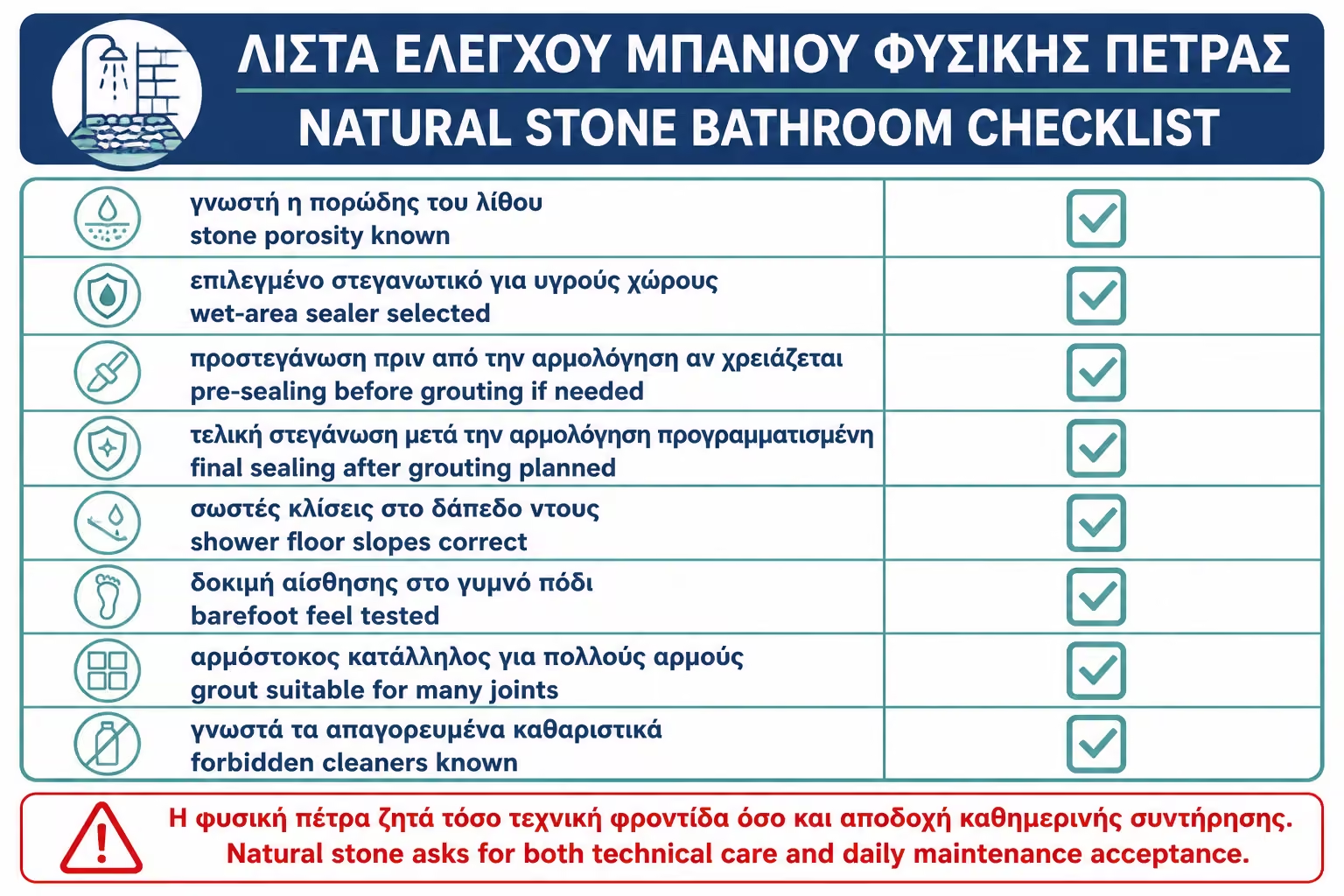
| Question | Yes / No |
|---|---|
| Do you know if the stone is porous and needs a sealer? | Yes / No |
| Has a sealer suitable for wet areas been selected? | Yes / No |
| Will it be pre-sealed before grouting where necessary? | Yes / No |
| Is final sealing provided after grouting? | Yes / No |
| Does the shower floor have the right slopes? | Yes / No |
| Have you tried the feeling of pebbles on your bare feet? | Yes / No |
| Is the grout suitable for a shower and many joints? | Yes / No |
| Do you know which cleaning products are prohibited? | Yes / No |
| Have you accepted an annual check or repeat sealer? | Yes / No |
| Have you compared the porcelain stone look option as an alternative? | Yes / No |
If most of the answers are “no”, natural stone needs more study before entering the bathroom. Its beauty is worth it, but only when it is technically supported.
If you want river pebbles in the bathroom, don't treat them as simple decoration. Natural stone is porous and inside the shower receives water, soaps, salts and cleaning agents every day. Ask for proper sealer for wet areas, provide for pre-sealing before grouting where necessary, final sealing after, and annual inspection. In shingle flooring, slopes and grout are just as important as stone. If you want almost zero maintenance, go for stone imitation porcelain. If you want real natural feel, accept the care that comes with it.
Natural stone cladding can make a bathroom stand out. The river pebbles on the floor of the shower give a natural pressure, a massage sensation and a spa image. Porolit and porous stones in the walls bring warmth, Mediterranean character and architectural texture. When used correctly, they create an effect that simple industrial materials are difficult to fully imitate.
But natural stone is not a low-maintenance solution. It needs the right choice, the right base, the right slopes, the right glue, a good grout, sealer and cleaners safe for stone. Salts, soaps and acidic cleaners are real enemies, especially on porous stones and shower floors with many joints.
The right decision is weighing the experience you want against the maintenance you're willing to do. If you want authentic spa, natural texture and living material, stone can be a great choice. If you want easy cleaning, almost zero sealer and daily durability without special care, a good porcelain stone look might be more practical. In the bathroom, natural beauty must always be accompanied by technical discipline.
Return to category.
Go to categoryReturn to the central guide.
Go to guide