
Bathroom Surface Materials & Finishes
Return to category.
Go to categoryGlass bricks are one of the materials that many remember from old apartment buildings, stairwells, skylights, windowless bathrooms and interior partitions that let the light through without clearly showing the space behind them. For several years they were considered obsolete. But today they are making a comeback, not as a nostalgic detail, but as a smart solution for bathrooms that need light, privacy and architectural character.
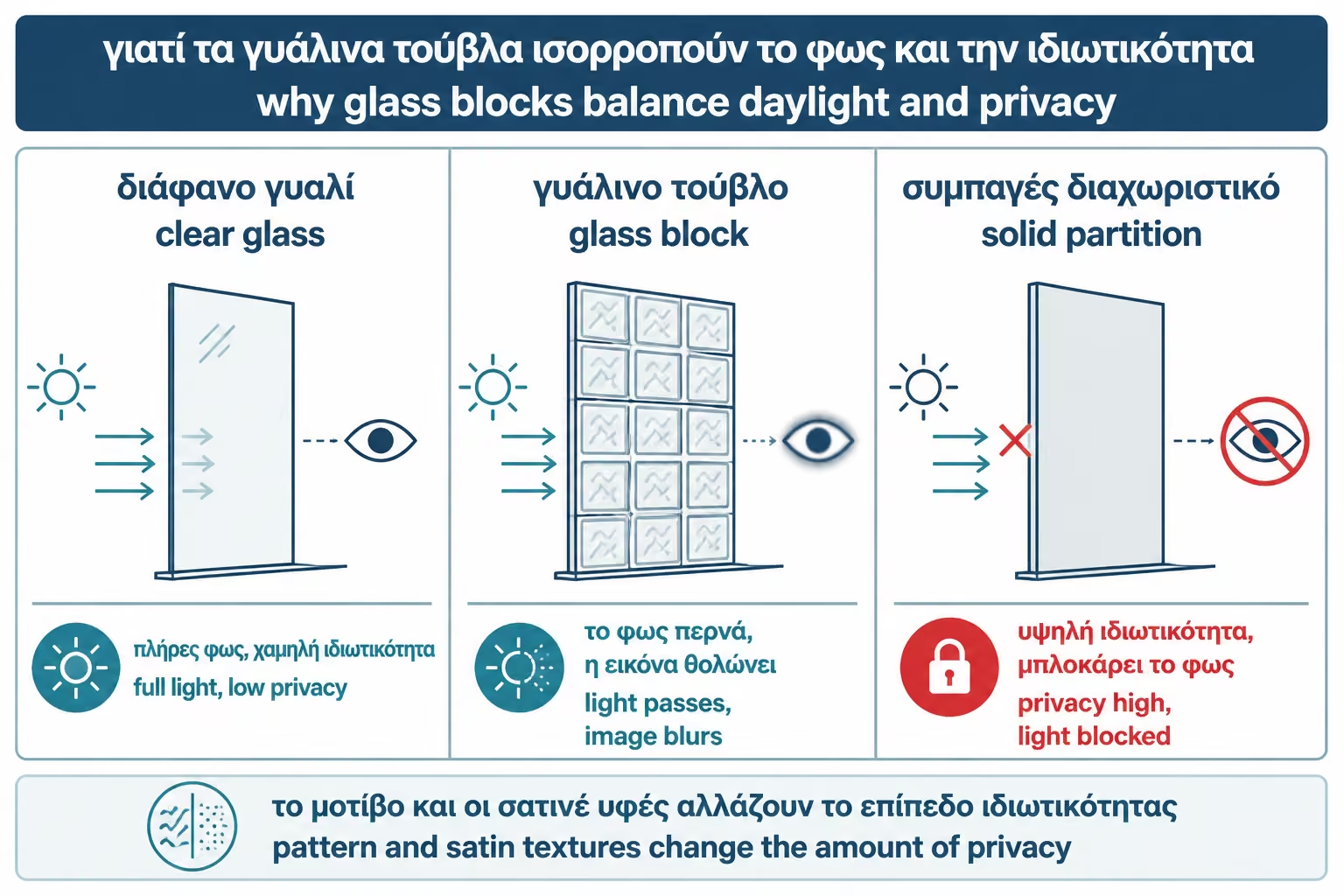
Their return makes sense. Modern bathrooms often try to achieve two opposite things: an open, bright feeling and at the same time discreet isolation of the shower. A complete built-up wall cuts off the light and makes the space smaller. A simple glass cabin lets light in, but doesn't always provide the privacy the user wants. Glass bricks are right in the middle: they bring natural light deeper into the bathroom, blur the image and create a more solid, architectural feel than a thin glass surface.
In the shower, the glass blocks can be used as a divider, i.e. as a small partition that separates the wet zone from the rest of the bathroom. They can replace a fixed glass section, create a walk-in shower side wall or act as a translucent wall between shower and sink. The result can be retro, industrial, Mediterranean, minimal or even luxurious, depending on the type of glass block, joint, lighting and other materials.
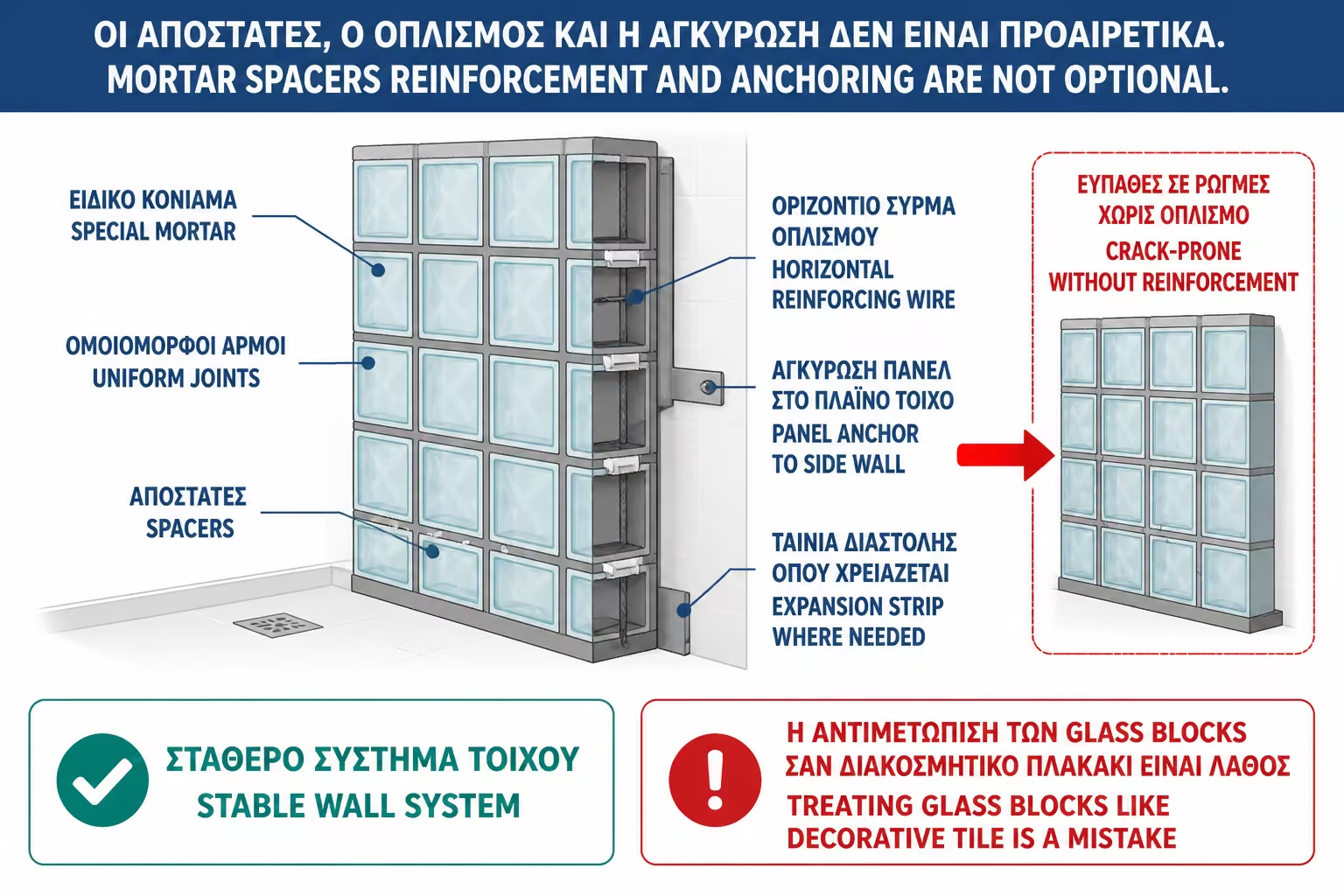
But the glass bricks are not a simple decorative surface. It is a structural separator with weight, joints, anchors, need for proper support and sealing details. They should not be built casually "like tiles" nor treated like a light panel. Technical installation instructions for glass block walls refer to the use of wall anchors, reinforcing reinforcement in horizontal joints and special expansion strips at regular intervals, so that the panel works properly and is not pressured by building movements.
In this guide we will see how glass blocks are used in the bathroom, what are their advantages and disadvantages, how to design a shower partition, what to look out for in terms of weight, support, joints and sealing, what mistakes are often made and when it is better to choose fixed glass, a built wall or panels instead of glass blocks.
Glass blocks are structural elements made of glass, usually hollow inside, which are joined together with mortar, special spacers, profiles or dry construction systems. They have a "brick" shape but do not function like a common brick. They are designed to allow light to pass through, while at the same time blurring or distorting the image, offering privacy.
The most classic glass blocks are square, usually around 19x19 cm, but there are also rectangular, wavy, satin, clear, colored, corner or special trim pieces. Their surface can be smooth, wavy, patterned or very cloudy. The more intense the texture, the more the light diffuses and the more privacy they offer.
In the bathroom, the most common use is in shower partitions, windows, interior partitions and light zones. It is not a material to hang heavy objects on, nor to act as a load-bearing wall. It is a self-supporting or semi-supporting panel that needs proper support and anchoring.
The return of glass bricks is related to the need for light and materiality. Modern bathrooms want to look more open, but not always completely transparent. The glass cabins provided a minimal solution for many years, but in some areas they look cold or too "showroom bathroom". Glass bricks add rhythm, thickness, texture and a more architectural feel.
Compared to a simple glass, the glass brick has depth. Plays with light, creates shadows, reflections and a slightly retro feel. In a bathroom with tread, terrazzo, black details or wooden furniture, it can become a very interesting element. It doesn't have to resemble an old staircase. With proper line, clean joint and modern materials, it looks very current.
Also, in small bathrooms without much natural light, an opaque wall can make the shower dark. Glass blocks allow light from a window or from the main bathroom area to pass into the inside of the shower, without removing the sense of privacy.
The strongest feature of glass blocks is that they let light through but do not act like clear glass. The image behind them blurs, breaks or distorts. This is ideal for a bathroom, where we want brightness but not complete transparency.
In a walk-in shower, for example, a fixed transparent glass makes the space appear larger, but leaves everything visible. A built wall gives privacy, but cuts out the light. The glass brick allows for a more balanced solution: light passes through, but the user is not fully exposed.
Privacy depends on the type of glass block. The more transparent ones allow shapes to be discerned. Corrugated or satin glass blocks cloud more. Highly patterned blocks offer more concealment, but can give a more retro look. The choice must be made with a sample, because the image changes a lot depending on the light behind the panel.
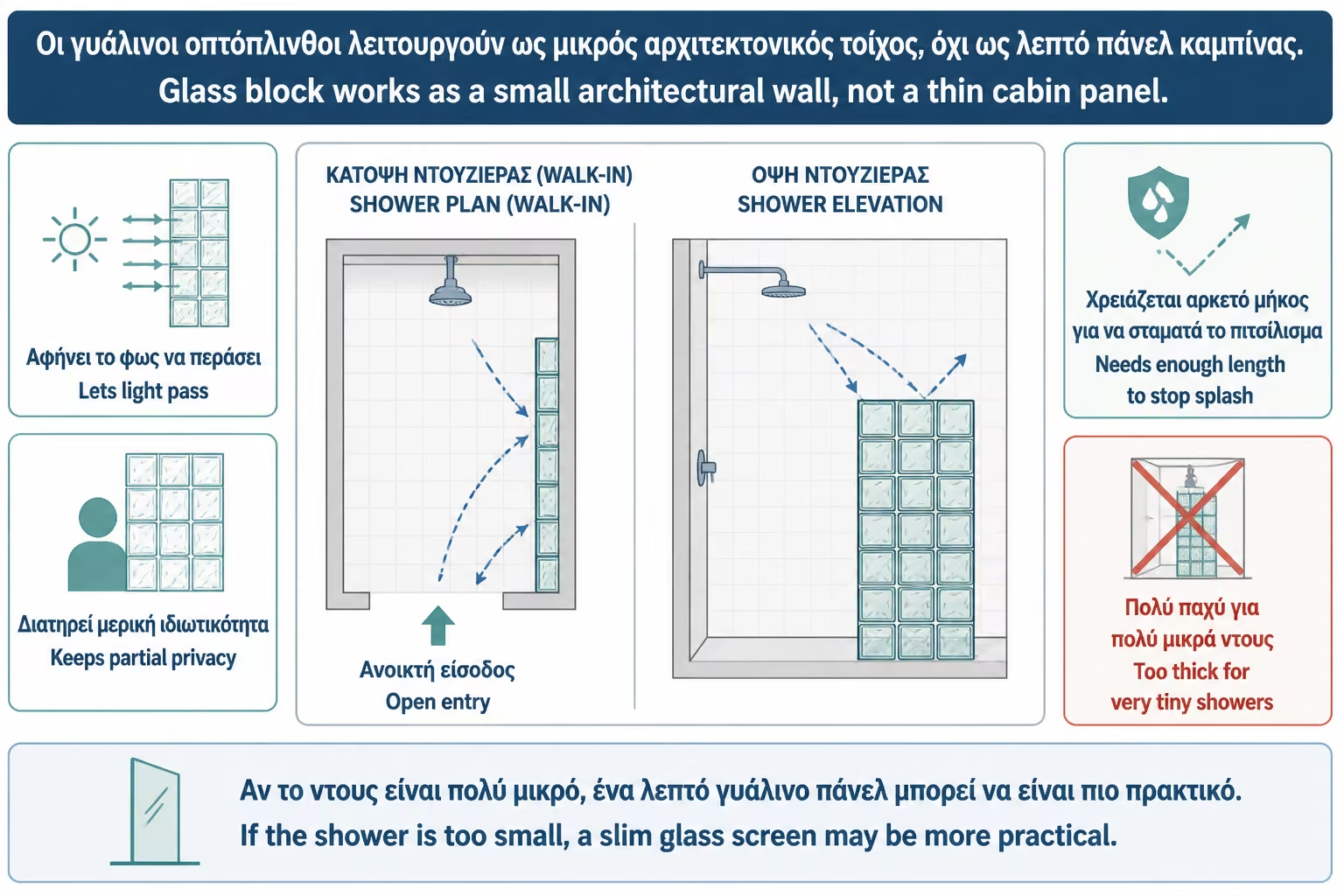
As a shower screen, glass blocks work best when we're not trying to make them look like a slim cubicle. It is a thicker and heavier material, so it should be used as a small architectural wall. It may start from the floor and reach a certain height, or rise almost to the ceiling leaving an opening for ventilation.
The height and length of the partition must be designed based on the use of the shower. If the panel is too short, the water will come out. If it is too big, it can darken or "weigh down" the space. In a small bathroom, a medium length, properly placed, can provide enough protection from water without visually closing the space.
In practice, glass blocks work very well in walk-in showers where there is a linear entry. They can create a stable side partition and leave the entrance open. But if the shower is too small, the thickness of the glass block can take away useful space. There a thin glass cabin might be more practical.
An important technical point is that glass blocks should not be considered a load-bearing wall. They are not used to carry loads, support structural elements or act as common masonry. It is a partition or light panel. It can be stable and durable when properly installed, but it is not a structural element of the building.
This has practical consequences. We do not hang heavy cabinets, batteries or accessories on glass blocks without special study. We do not use them to support a cab or door that will open and pull the panel, unless there is proper infrastructure. We do not leave them free without an anchor if they are of great height or length.
Glass block shower walls technical discussions and installation guides emphasize that glass block walls must be anchored to at least one side of the existing wall so that they do not move independently of the construction.
Glass bricks are heavy. This is often underestimated because they look "glassy" and transparent. In practice, a panel with several rows of glass blocks has a significant weight and needs a stable base. If it is placed on a weak floor, on poor cement mortar or on a surface with hollow tiles, problems can arise.
In new construction, the foundation must be provided from the beginning. In a renovation, it must be checked where the divider will press. If there is an old tile underneath, it must be stable. If there is a wooden floor or light construction, a special check is needed. Some glass block shower walls installation guides emphasize reinforcement under the glass block wall and fixed vertical elements on the wall where the panel will be anchored.
For a homeowner, this means that they should not decide on glass bricks based on aesthetics alone. He has to see if the venue can technically accept them. Especially in old apartment buildings, small bathrooms and floors with previous renovations, checking the foundation is essential.
The traditional installation of glass bricks is done with a special mortar or mortar, spacers, horizontal reinforcement and anchors. There are also systems with profiles or prefabricated panels that reduce time and increase accuracy. In any case, the joints must be even, full and suitable for a wet area.
In glass block shower walls, panel anchors to the existing wall and reinforcing wire at horizontal joints are often used. Installation instructions state that reinforcing wire, panel anchor and expansion strip are placed in specific rows, often in two courses, so that the panel has stability and can deal with small movements.
This is not a detail. If a partition is built without reinforcement and without proper anchoring, it may show joint cracks, micro-movements or instability. Glass bricks should be installed by a craftsman who knows the system, not a workshop that treats them like decorative tiles.
In the shower, joints are critical. The glass of the glass block does not absorb water, but the joints and perimeter joints must withstand everyday moisture. If the joint is poorly filled or cracked, it can collect dirt or allow water to pass where it shouldn't.
Perimeter joints with wall, floor and side elements need proper sealing. Instructions for glass block walls mention the use of silicone sealant in continuous beads where the glass block panel meets the frame or perimeter construction, top, bottom and sides.
In practice, this means that the glass block is not a shower seal by itself. The shower base, slopes, floor, spout and angles must be correct. The glass block partition works as a divider and protection against splashes, not as a solution for incorrect waterproofing.
Glass blocks protect against water as well as a fixed partition, provided it is of the correct length, height and position. If they are placed too close to the shower head or if the inlet opening is incorrectly designed, water may escape. Hardware does not solve bad shower design.
The position of the battery, the direction of the water, the intensity of the head, the slope of the floor and the length of the partition must be considered. In a walk-in shower, the divider should be large enough to cut off the basic flow of splashes. If the space is small, additional fixed or movable glass may be needed.
A common mistake is to make a small glass partition partition because it "looks lighter", and then water comes out in the bathroom. Practicality must come before photography.
In small bathrooms, the choice of glass bricks can be excellent when we want to visually hide the shower without darkening the space. This is especially true if there is a window in or near the shower area. A built wall would cut off the natural light. The glass brick diffuses it.
The same applies in bathrooms where the sink is next to the shower. A low or medium-height glass block partition can provide discreet concealment, but still allow the bathroom to remain bright. If it is even lit from behind or from the side, it can also function as a decorative element.
Privacy is not absolute, especially with clear glass blocks. In strong backlight silhouettes can be seen. If the goal is more concealment, choose satin, wavy or patterned blocks. If the goal is more light and less obscuration, choose a cleaner surface.
The classic glass bricks 19×19 cm give the familiar retro image. If we want a more modern result, we can use a cleaner joint, white or gray mortar, black metal profiles or a combination with minimal materials such as pressed, large format tiles and wood. The same material can look very different depending on its environment.
There are also more modern options, such as rectangular glass blocks, thinner systems or blocks with a special texture. Wavy gives a more retro feel. The satin more calm, modern and soft image. Colors need attention because they can look too intense or old-fashioned if not combined correctly.
In a small bathroom, clear, colorless or slightly cloudy glass blocks usually work best. Bright colors can be tiring. In a boutique or retro project, however, a controlled color can become a feature.
Glass bricks go very well with materials that have a clean, calm base. With pressed cement mortar, they give a Cycladic or minimal feeling with retro light. With terrazzo they create a more playful, Mediterranean effect. With white tiles or subway tiles they resemble a more classic bathroom. With black profiles and concrete they acquire an industrial character.
Care must be taken with marble look tiles. If the veins are pronounced and the glass blocks have a strong texture, visual tension can be created. It is better if one material is the protagonist and the other more calm. If the glass bricks are the main element, the rest of the surfaces should be kept simpler.
With wood or wood effect, the effect becomes warmer. A glass block partition next to wood furniture or wood-type flooring can balance retro glass with natural warmth. This combination works very well in small bathrooms that we don't want to look cold.
Glass bricks are relatively easy to clean because the glass is non-porous. But the salts still appear, especially if the blocks are in the shower and receive water every day. On wavy or patterned surfaces, the salts may sit in the textures and need more frequent cleaning.
Joints also need care. If the wrong material is used, or if the joint is left porous and wet, it may become blackened or stained. For a shower, it is important to have proper end grouting and perimeter bath silicone.
A practical tip is to choose glass blocks that do not have an excessively deep outer texture on the side that receives water. The stronger the texture, the longer it holds salt. If the glass block has a smoother side and a more textured side, the placement must be done with thought.
Glass bricks are moisture resistant and have good mechanical behavior when installed correctly. They do not rot, do not swell and are not afraid of water vapor. That is why they are suitable for bathrooms and showers. But they are not unbreakable and should not accept loads or impacts as if they were a solid wall.
In the shower, the issue of acne should also be considered. A glass block partition must be finished cleanly, with suitable trim pieces, profiles or smooth edges. We don't want sharp or rough edges where the user is walking around barefoot and bare.
Also, if there are children or the elderly, it must be designed so that it does not act as a support point that someone can push hard. If handrails are required, they should be anchored to normal construction, not the glass block.
In the Greek market of 2026, the cost of glass bricks depends on the type, dimension, quality, if they are plain or special, if there are corners/finishes and on the installation system. Plain glass bricks can be relatively affordable as a material, but the final price is significantly affected by labor, reinforcement, mortars, profiles and seals.
For small shower enclosures, costing is often done as a total project rather than just piece by piece. A small partition may require a few glass blocks, but a lot of work in carving, base, anchoring and finishing. If special systems or prefabricated panels are used, the cost may go up but the time will be reduced and the accuracy will be improved.
Realistically, you shouldn't just compare the price of glass brick to the price of a tile. Compare complete solution: material, mortar, reinforcement, anchoring, silicones, profiles, labor, VAT and possible adjustments to the floor or walls. A cheap build without anchoring and proper sealing can cost more later.
Fixed glass is thinner, more minimal and usually easier to clean as a single surface. It gives an open feeling and does not take up much space. It is ideal for very small bathrooms where every centimeter counts.
Glass bricks offer more privacy, more architectural character and better light diffusion. It is heavier, thicker and more "permanent" construction. They are not a solution for every bathroom, but when they match, they give a very special effect.
If you want an absolute minimal effect, fixed glass is probably better. If you want retro-modern character, light and privacy, glass bricks are a very interesting solution. If complete concealment is desired, a masonry wall or other opaque material may be more appropriate.
The first mistake is rough anchoring. A glass block partition should not stand just because it "looks heavy". It wants a solid connection to the perimeter construction.
The second mistake is a bad base. If it steps on a weak substrate or hollow old tiles, cracks may appear at the joints.
The third mistake is the wrong dimension. Very small partition does not cut the water. Too big weighs down the space.
The fourth mistake is the omission of perimeter sealing. Water enters through the joints, not through the glass.
The fifth mistake is choosing strongly patterned glass bricks without considering the rest of the bathroom. The result can look old-fashioned instead of retro-modern.
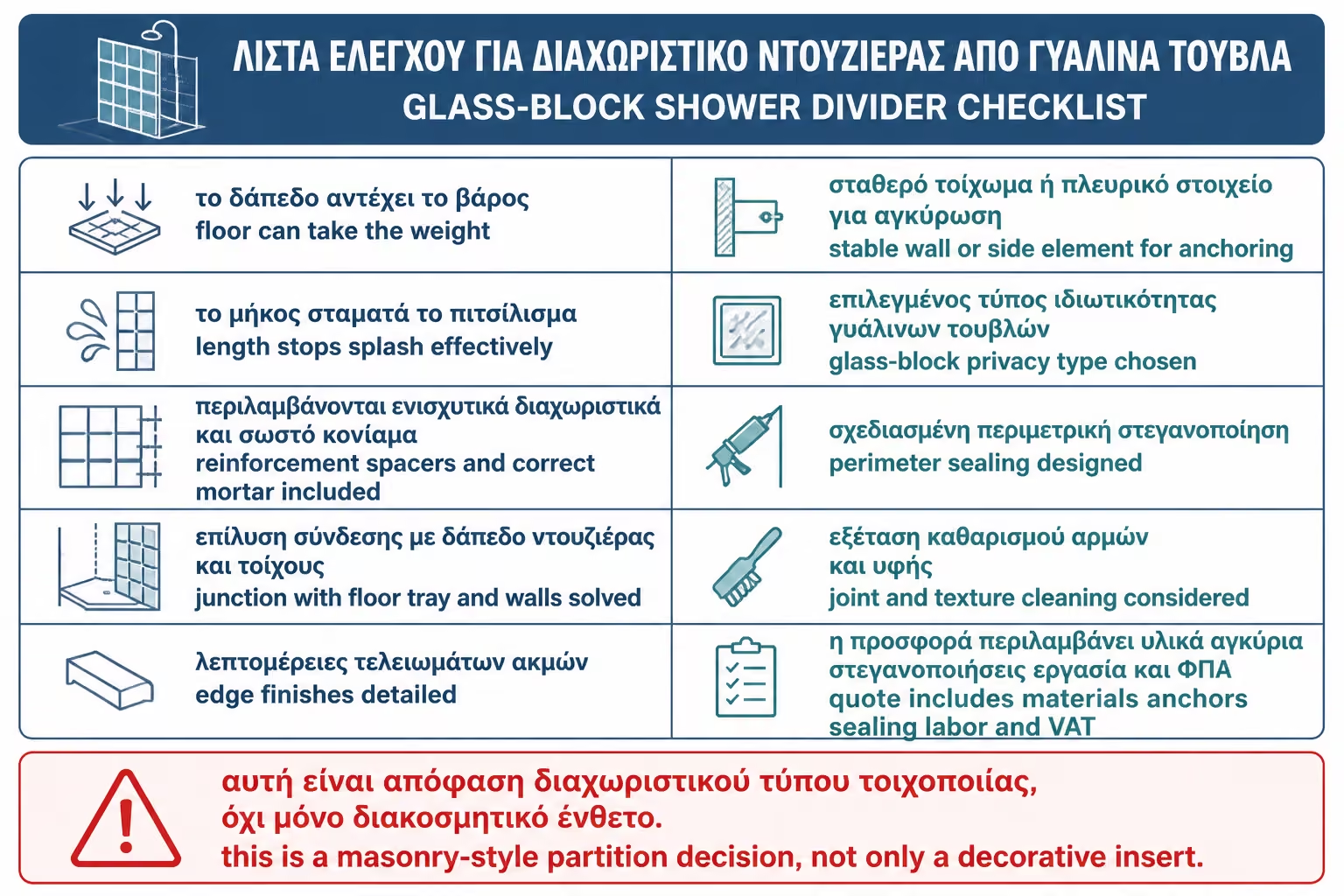
Use the table below as a quick reference for the key points of this section.
| Question | Yes / No |
|---|---|
| Has the floor been tested to support the weight? | Yes / No |
| Is there a fixed wall or side element for anchoring? | Yes / No |
| Has the correct length been calculated so that water does not come out? | Yes / No |
| Is a glass block type selected with the privacy you want? | Yes / No |
| Are reinforcement, spacers and appropriate mortar/system provided? | Yes / No |
| Is proper perimeter sealing designed? | Yes / No |
| Has the union with floor, shower and walls been solved? | Yes / No |
| Is there a way to clean the joints and textures from salts? | Yes / No |
| Are clean edge finishes provided? | Yes / No |
| Does the quote include materials, anchors, labour, VAT and seals? | Yes / No |
If most of the answers are “no”, don't start building just because you liked the picture. Glass bricks are a beautiful solution, but they need proper technical design.
If you want glass bricks in the shower, think of them as a small architectural wall and not as a simple decorative cladding. They need a solid foundation, anchoring, reinforcement, proper joints and very good sealing at the joints with the floor and walls. Their great advantage is that they bring light and privacy at the same time. Their big risk is sloppy placement. If they are not designed properly, it will not be the fault of the glass block; it will be the fault of the construction around it.
Glass bricks are making a comeback because they offer something that hardly any other material can: natural light, privacy, moisture resistance and strong architectural character. In a bathroom, they can transform the shower from a simple wet zone into a design element. They can let the light through, blur the image and give a retro-modern feel that fits well with today's trend for more personal and material bathrooms.
But their success is not only aesthetic. It depends on the base, anchorage, joints, perimeter sealing and correct spacer dimension. Glass blocks are not load-bearing, should not be built casually, and do not solve waterproofing or wrong slope problems by themselves. It is a durable and beautiful system when installed correctly.
For the owner who wants light without complete transparency, glass bricks are an excellent choice. For very small spaces where thickness matters, perhaps a fixed glass is more practical. For complete concealment, a masonry wall may be best. The right solution is the one that serves the light, privacy, daily use and technical safety of the bathroom.
Return to category.
Go to categoryReturn to the central guide.
Go to guide