
Bathroom Surface Materials & Finishes
Return to category.
Go to categoryThe doors, cases and windows in the bathroom are among the surfaces that seem "secondary", but they greatly affect the final image of the space. A yellowed frame next to white tiles, an old door with signs of moisture or a wooden window with blown ripolin make the bathroom look old even if the rest has been renovated. That's why choosing the right ripolin is not just a matter of color. It's a matter of strength, grip, moisture and finish.
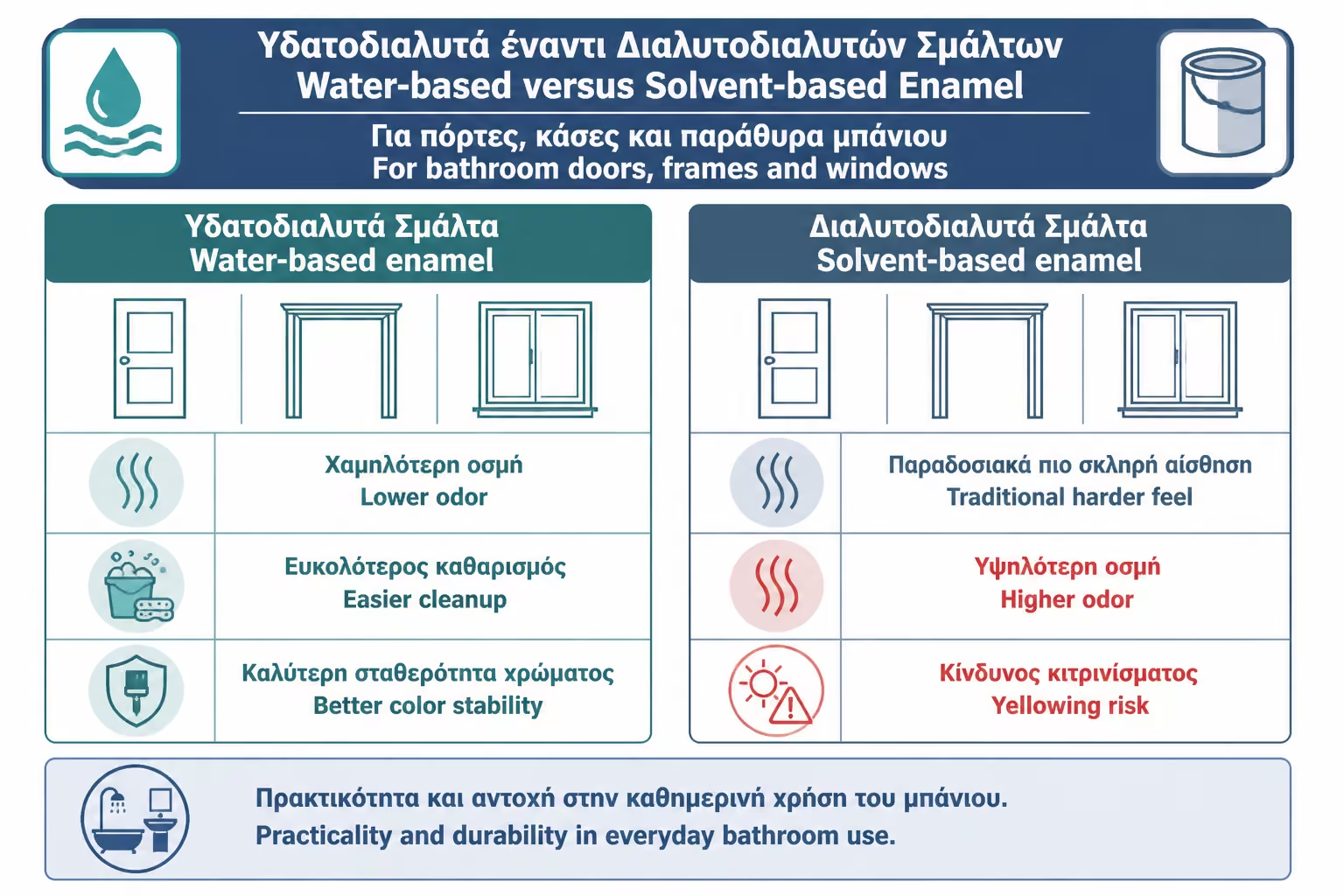
The basic dilemma is well known: water ripolin or solvent ripolin? Traditionally, solvent ripolin was considered the “strong” choice for woods and metals. It spread beautifully, gave a hard film, had very good leveling and was resistant to use. But it had a strong odor, slow drying, cleaning tools with solvent and, especially in the white and light shades, a tendency to yellow over time.
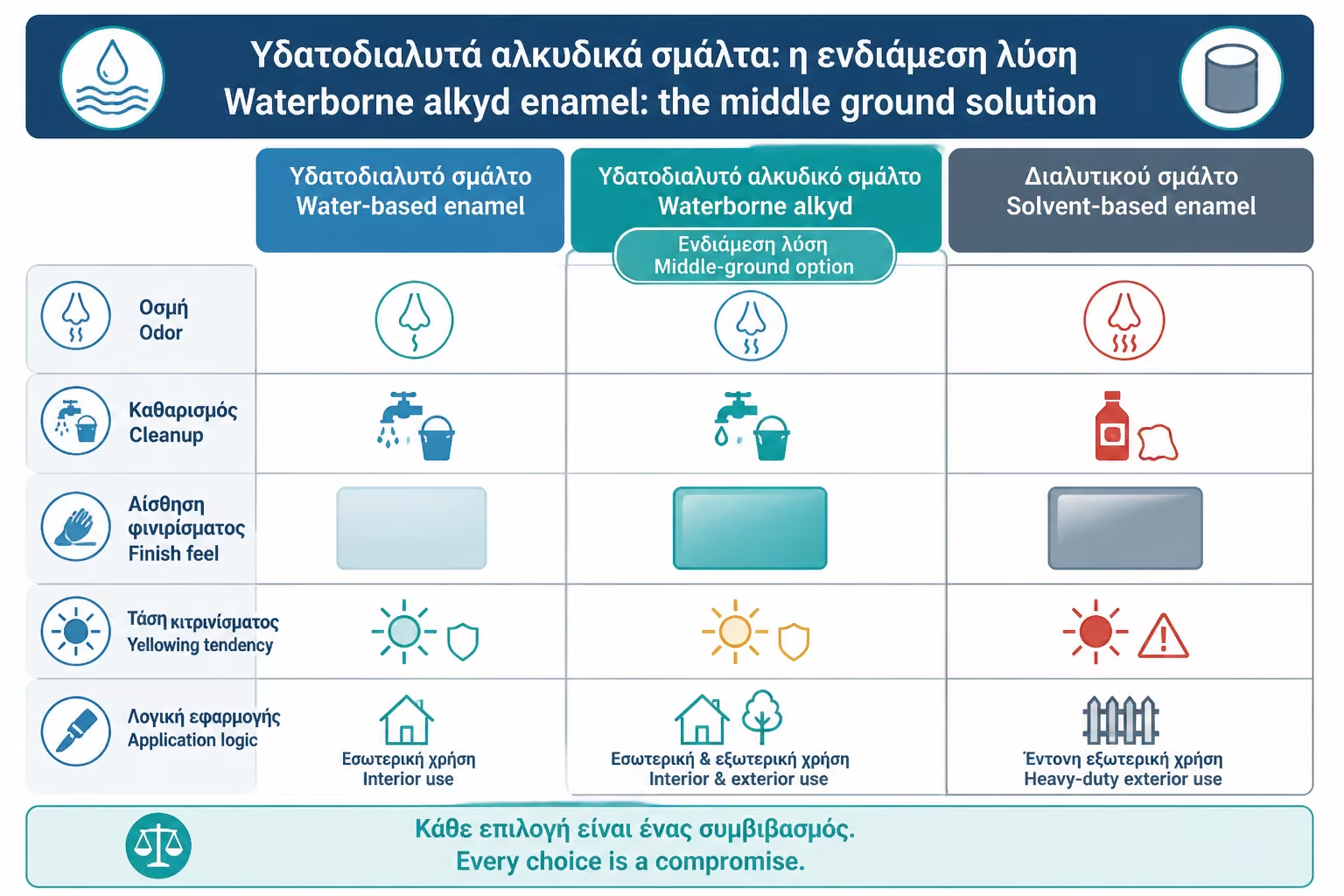
Modern water-based ripolins have changed the landscape quite a bit. They are not the old "weak" waterborne enamels that scratched easily and showed brush marks. There are now water-based satinwoods, waterborne alkyds and hybrid enamels that offer better flow, good durability, lower odor and a much lower risk of yellowing. Benjamin Moore describes Advance Waterborne Interior Alkyd as a waterborne alkyd that offers the application properties and performance of a traditional solvent-based enamel, while still cleaning up with soap and water, and its data sheet highlights excellent flow and leveling, strong durability and minimal yellowing.
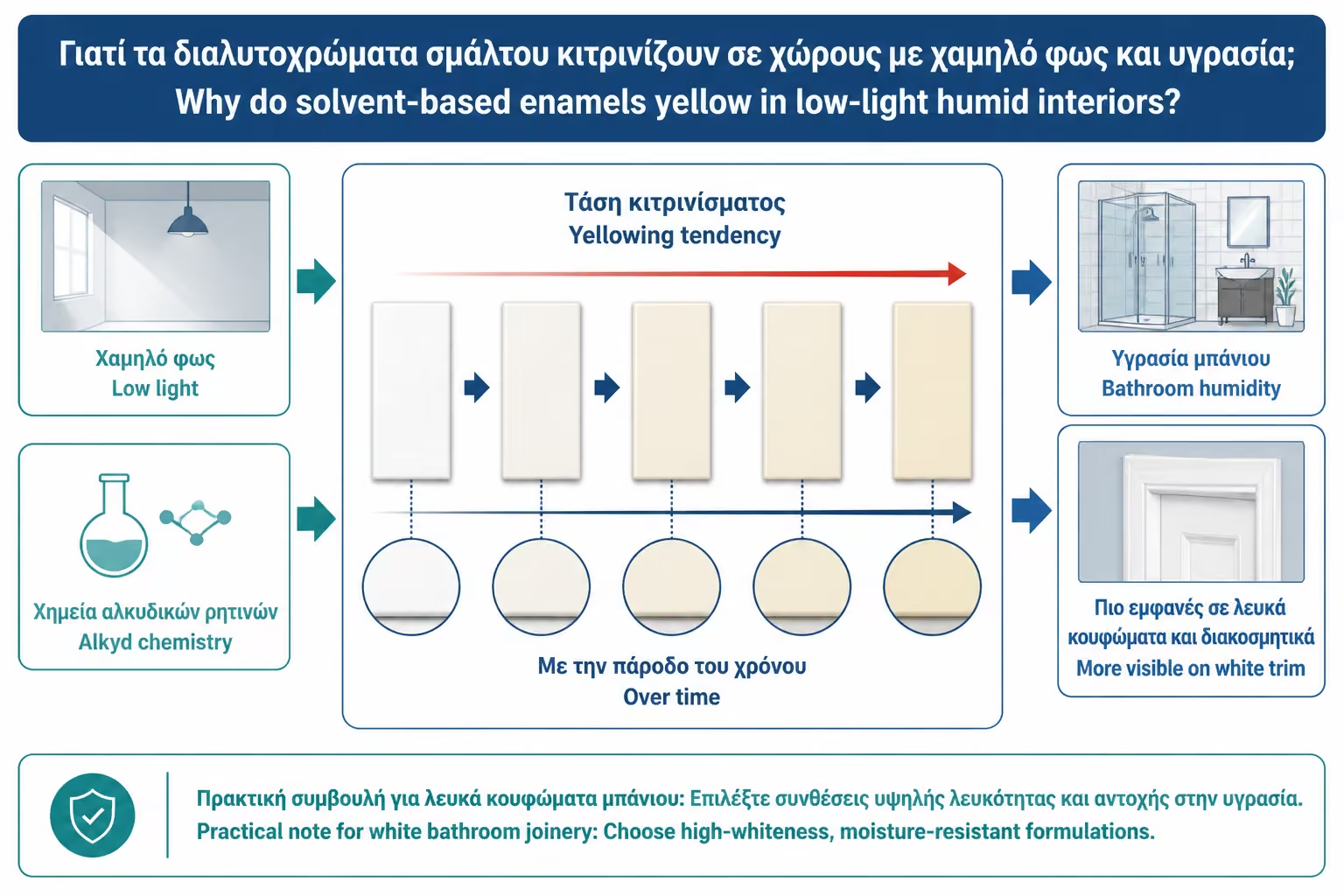
In the bathroom, this difference matters a lot. The room has humidity, limited ventilation, often less natural light and frequent exposure to cleaning products. All of that affects ripolin performance. Traditional alkyd and oil-based whites can yellow more in dark or enclosed areas, such as inside frames, behind doors or in poorly lit corners. Dulux Trade explains that "yellowing" is a natural ageing phenomenon of alkyd and oil-based enamels and is more apparent in places with poor natural light, such as inside frames, behind furniture or inside cupboards.
So the practical modern answer is fairly clear: for white or light-coloured doors, frames and bathroom windows, a quality waterborne alkyd is usually the safest option if you want to reduce the risk of yellowing. Solvent-based ripolin still has a place in certain cases, especially where you want exceptional flow, higher hardness or compatibility with older solvent-based systems, but you have to accept the higher yellowing risk in white shades and the stronger smell.
In the Greek market, the word "ripolin" is often used generically for wood and metal paints with a harder, washable and smooth finish. It can be water, solvent, alkyd, acrylic, hybrid or waterborne alkyd. They are not all the same. Some are for indoor use, some for outdoor use, some for doors and cases, some for metals, some for furniture.
Classic solvent ripolin is based on alkyd resins and solvents. It dries by oxidation, that is, through a chemical process that continues with time. This gives it resistance and good drying, but is also linked to the yellowing phenomenon.
Water ripolin is a more general term. It can be acrylic, hybrid or waterborne alkyd. The best modern options try to combine the advantages of solvent — flow, leveling, strength — with the advantages of water: lower odor, faster drying and less yellowing.
In the bathroom, ripolin must withstand three main stresses. First, humidity and water vapor. Second, cleaning and daily hand contact. Third, visual stability, especially if it is white or off-white. A bath tub may not get wet directly, but it receives water vapor and thermal changes every day.
We also want good traction. Doors and cases often have old ripolin, old varnishes, shiny surfaces, marks from hands, dust and cleaners. If the new paint doesn't adhere well, it will peel on the edges, around the knob or on the bottom of the door.
Finally, we want a smooth finish. On doors and cases, the touches are visible. A bad roll or a fat hand spoils the picture. The quality of the material helps, but the application technique is just as important.
The biggest advantage of ripolin water in the bathroom is lower yellowing. On white doors, frames and windows, this is decisive. Solvent/alkyd white ripolins can turn cream or yellow over time, especially in low light areas. Water usually keeps white more stable.
Second advantage is the lower odor and the more comfortable application indoors. In a small bathroom, solvent paint can be annoying and requires very good ventilation. Water ripolin is more friendly for residential house and tools are cleaned with water.
Third advantage is quick drying. Products such as Dulux Trade Quick Dry Satinwood are described as an advanced water-based satin finish for interior wood and metal, with a recoat time of 4–6 hours and use on trims. This helps a lot with bathroom doors that need to be reused soon.
Water ripolin can be more demanding to wash. It dries faster, so it leaves less time for the touch to "work". If we go over it again and again with the brush while it starts to draw, it can make lines. It needs a good synthetic brush or a proper roller and a fast, clean technique.
In some economical water ripolins, the final hardness may be lower than a good solvent. This can be seen in doors that are slammed, cases that are rubbed or windows that are frequently used. That's why we don't just compare "water vs solvent". We compare product quality.
Also, if applied over old solvent polish without proper preparation, it may have poor adhesion. It needs sanding, cleaning and often a suitable adhesion primer.
Solvent ripolin still has advantages. It has very good spread and leveling. It often gives a smoother "traditional" finish, especially with a brush. It takes longer to dry, but this allows the color to spread and close the strokes. In experienced hands, the result can be extremely smooth.
It also has good hardness and impact resistance after full curing. For old wooden doors, cases with many imperfections or metal elements, it can work very well. In dark shades, where the yellowing is not so visible, it remains an interesting choice.
If the existing surface is old solvent and is stable, the new solvent can "set" more predictably, always after sanding and cleaning. But this does not mean that it is always the best choice for a white bathroom.
The biggest drawback is yellowing. White and light alkyd enamels yellow over time, especially in dark areas and low lighting. Dulux Trade explains that yellowing is a natural discolouration effect that occurs when alkyd/oil-based enamel is used indoors, and is more noticeable in areas with poor natural light. Dulux's Australian Technical Guide also states that the phenomenon is linked to chromophores created during the drying process and affected by light.
Second disadvantage is the smell and the solvents. A small bathroom needs intense ventilation. Tools are cleaned with a solvent. In an inhabited house, this is practically more difficult.
A third disadvantage is time. It dries and matures more slowly. The door may stick to the frame if closed early. Dust and insects can sit on the fresh paint. In a bathroom that is used every day, this creates difficulties.
Yellowing of alkyd and oil-based enamels is a known phenomenon. It is linked to the chemical drying and ageing of the alkyd resin. In areas with natural light, the effect may be less obvious because light partly slows or masks the yellowing. In darker areas, such as inside frames, behind doors or in windowless bathrooms, the change is more noticeable.
Moisture, low temperature and exposure to certain chemicals can speed it up. Some technical sources state that all oil-based enamel paints yellow over time, while low temperature, high humidity and exposure to ammonia can increase yellowing.
In a bathroom, therefore, where there is humidity and often limited light, solvent white is a riskier choice if we want it to remain pure white for years.
Waterborne alkyds are an intermediate category. They try to give the spread and hardness of traditional alkyd ripolin, but in a water-soluble form. That is, they have a lower odor, clean with water and less yellowing compared to classic solvents.
Benjamin Moore reports that Advance waterborne alkyd coatings offer the flow and leveling characteristics of oil-based paint with soap and water cleaning while maintaining low VOCs. This type of product is often a great choice for doors, cases and furniture, because it combines a nice finish with a more contemporary attitude.
The downside is that it needs a good product and proper application. Also, some waterborne alkyds have a longer repaint time than simple waterborne acrylics, because they need time to level and cure. So they are not all "fast", but they often give a better finish.
For a white or light colored bathroom door, I would choose a quality waterborne alkyd, waterborne alkyd or hybrid enamel. The reason is mainly non-yellowing and lower odor. If the door is in a windowless bathroom, the solvent has a greater chance of yellowing over time.
If the door is already painted with old solvents, it needs sanding and adhesion primer or a suitable undercoat before water. We do not run water on solvent polish without preparation. The edges of the door, especially the lower part and the point near the frame, must be well protected because moisture hits there.
For dark shades such as charcoal, navy, deep green or black, the yellowing difference is not visible. There you can also choose a solvent if you want a very good laundry, as long as you accept the smell and slow drying. In a residential house, however, water remains more practical.
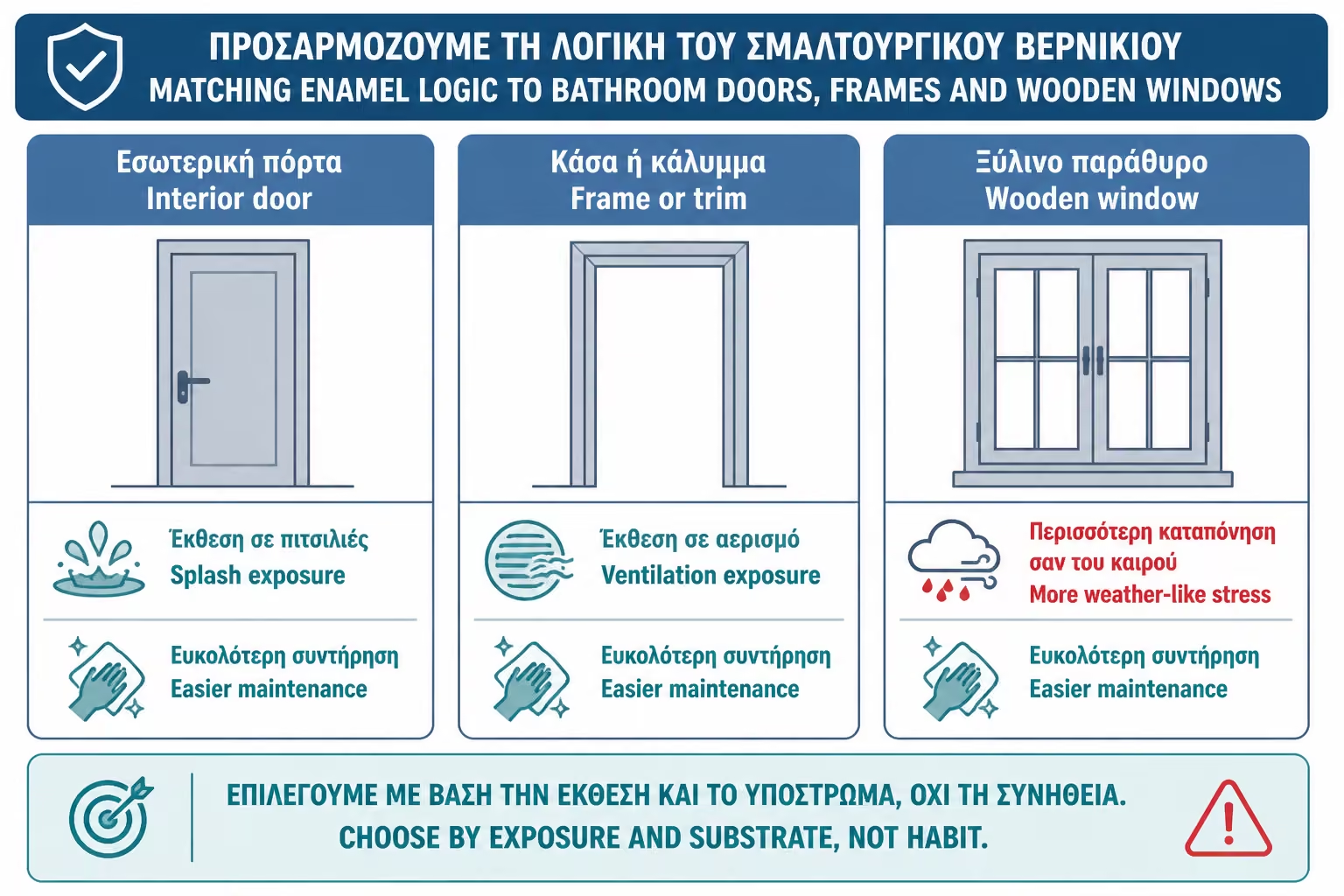
Door frames are more vulnerable to yellowing because they have corners, shade, less light and are often hidden behind an open door. If they are painted white with a solvent-based enamel, they may turn cream or yellow faster than the door leaf itself. The usual technical explanation, yellowing in poorly lit zones, fits bathroom frames perfectly.
For bathroom frames, especially white ones, water-based ripolin is usually the most sensible choice. But it still needs proper preparation. Frames collect hand oils, knocks, old paint layers, dust, silicones and sometimes moisture at the bottom edge. If the old paint is loose, it has to be scraped back. If it is glossy, it needs sanding. If there are stains or timber that "bleeds", a stain-blocking primer should be added.
Finishing the cases is best done with a good synthetic brush and a small roller for flat spots. Pay attention to the corners where paint collects and makes "tears".
The bathroom window has even more exposure to condensation. If it is wooden, the paint must also protect against moisture. Here the issue is not only the yellowing, but also the preservation of the wood. If the old paint has swelled, it must be removed. If the wood is blackened or softened, it should be checked for rot.
For the inside of a bathroom window, a quality water-based ripolin or hybrid enamel can work well. If the window has external exposure, the external side needs an external use system. Do not paint the outer side with inner ripolin because it is "excess".
The bottom of the window, where condensation sits, needs special protection. The water should not stagnate. The finish should be continuous, without gaps at the edges.
Proper preparation begins with cleaning. Doors, cases and windows have grease from hands, dust, soaps and old cleaners. Then there is rubbing. Not necessarily deep sanding down to wood unless the old paint is damaged. We want to dull the surface and remove frills.
Flaking spots are scraped to a firm base. The holes are plastered. Old paint drops are rubbed off. The edges are softened slightly to hold the color better. Then all the dust is removed.
If there is old solvent and you want water, use a suitable primer/undercoat to transition. If there is wood with tannins or stains, use a stain-blocking primer. If there is metal, anti-rust primer is needed where required.
Primer is needed when the surface is bare wood, stuccoed, stained, highly polished, solvent aged, metal, MDF or has uneven absorption. In old bathroom doors, there are usually several of these reasons.
On wood, the primer reduces absorption and helps the final color to come out evenly. On old shiny ripolin, it helps grip. In stains, it blocks the passage. In MDF, it seals the material.
If the existing paint is stable, well sanded and compatible, a final color can be applied directly if the product allows it. But in the bathroom, where moisture increases the risk, the right primer is often cheap insurance.
The smooth finish does not come from a thick hand. It comes down to thin layers, the right tool and patience. Use a good synthetic brush for water and a good natural/mixed hair brush for solvent depending on the product. For flat doors, a small roll of low-pile mohair or microfibre gives a more even surface.
Don't overwork the color. Spread, straighten and leave. Water ripples in particular start to pull quickly. If you brush again when they start to dry, you will leave streaks. Dulux Trade Quick Dry Satinwood TDS gives practical advice to use a good quality brush for water-based paints and to slightly dampen both the brush and the surface for better flow out.
Between hands, light sanding with very fine sandpaper removes minor imperfections. After dusting and a second coat. This is the difference between DIY and "like a pro".
For a bathroom, satin is often the most balanced choice. It cleans better than matte, shows fewer imperfections than full gloss and suits modern frames. Gloss gives a more traditional, shiny effect and cleans up well, but shows every imperfection, every bump and every crooked touch.
Matte on bathroom doors is more risky, unless it is a special durable matt trim paint. On cases and windows, matte can stain more easily and shine locally to the touch. For white bath cases, satin or eggshell are much more practical.
On an old wooden door with imperfections, a soft satin can hide the marks better than a glossy gloss. If you want a perfect shine, the preparation must be much better.
| Criterion | Water ripolin | Solvent Ripolin |
|---|---|---|
| Yellowing of white | Much smaller | More likely, especially in dark places |
| Odor | Lower | Intense |
| Drying | Faster | Slower |
| Cleaning tools | Water/soap | Solvent |
| Leveling | Good at quality products, but more demanding | Very good traditionally |
| Hardness | Good in modern hybrid/waterborne alkyds | Very good after ripening |
| Application in a residential bathroom | More practical | More difficult due to smells/time |
| White bathroom cabinets | Usually a better choice | Risk of yellowing |
| Dark doors | Good | Good, the yellowing is not visible |
| Easy for a beginner | Cleaner but needs fast technique | It goes on nicely but smells and lingers |
For white bathroom frames, waterborne alkyd is usually the most sensible modern choice.
| Surface | Recommended option | Comment |
|---|---|---|
| White bathroom door | Quality ripolin of water / waterborne alkyd | To prevent yellowing |
| White case without natural light | Satin water ripolin | Solvent yellows more easily |
| Dark door | Water or solvent | Choice depends on finish/smell |
| Wooden window inside | Water resistant ripolin or hybrid | Beware of condensation |
| Exterior side of window | External use system | Not a simple internal ripline |
| Old solvent in good condition | Sanding + primer + water or new solvent | Pay attention to compatibility |
| Metal/old iron cases | Antirust primer + suitable enamel | Rust control |
| MDF linings/doors | Primer + water enamel cabinet | Edge sealing |
The surface and the use precede the “water or solvent” preference.
In the Greek market of 2026, quality water ripolins and hybrid enamels may cost more than economical solvent ones, but they offer much better practicality in residential bathrooms. The material cost for a door and frame is not great compared to the labor. So it's not worth saving on cheap ripolin that will yellow or leave a bad finish.
Solvent can be economical and with a good drape, but you have to factor in solvents, odors, drying time, and possible yellowing. If repainting is needed in two years due to yellowing, the economy is lost.
If a professional does it, the cost depends more on the preparation: scraping off old paint, puttying, sanding, primer, number of hands and finishing. Painting a door "right" isn't just a quick pass.
The first mistake is using white ripolin solvent in a bathroom without natural light and then being surprised when it turns yellow.
The second mistake is water ripolin on old solvent polish without sanding and primer.
The third mistake is the fat hand. It creates streaks, slow drying and poor leveling.
The fourth mistake is closing the door before it is completely dry, causing it to stick to the frame.
The fifth mistake is painting in a wet bath right after a shower.
The sixth mistake is using the wrong brush. Water ripples need a good synthetic brush and fast technique.
| Inquiry | Yes / No |
|---|---|
| Is the surface dry and moisture free? | Yes / No |
| Has it been cleaned of grease, dust and soaps? | Yes / No |
| Has the old glossy paint rubbed off? | Yes / No |
| Are loose and flaky spots removed? | Yes / No |
| Has proper primer been put in where needed? | Yes / No |
| If you want white, have you avoided the classic yellowing solvent? | Yes / No |
| Do you have a suitable brush/roller for the product? | Yes / No |
| Will you go for thin arms instead of a thick one? | Yes / No |
| Is there good ventilation in the bathroom? | Yes / No |
| Will you leave the door open until it dries completely? | Yes / No |
If the answers are "yes", you have a much better chance of a smooth and durable result.
> For white doors, frames and windows in the bathroom, the safest modern choice is usually a quality waterborne alkyd or waterborne alkyd in a satin finish. It will yellow much less, smell less and work more comfortably in an inhabited house. The solvent still has an excellent spread and hardness, but in white shades, especially in bathrooms with little light, it has a real risk of yellowing. Whatever material you choose, a smooth finish comes from preparation: cleaning, sanding, proper primer, fine hands and a good tool.
The choice between water and solvent ripolin in the bathroom is not a matter of old habit, but of circumstances. The bathroom has humidity, often limited light and surfaces that must remain clean and white. In this environment, modern water-based ripolins, hybrid enamels and waterborne alkyds have a great advantage: less yellowing, lower odor, faster repainting and more practical application.
The solvent ripolin has not disappeared. It can give a very smooth and hard finish, especially in experienced hands and on dark shades. But on white bathroom doors and cabinets, yellowing is a real danger. If you want pure white that will not turn cream over time, prefer quality water.
The final result does not depend only on the material. It depends on the substrate, primer, sanding, tool, thin hands and drying time. A good ripolin in a bad preparation will fail. A properly applied water ripolin on a well-prepared door can give a clean, smooth and durable finish for years.
Return to category.
Go to categoryReturn to the central guide.
Go to guide