
Bathroom Surface Materials & Finishes
Return to category.
Go to categoryIn the bathroom, when we hear the word "seal", the mind almost always goes to silicone. And rightly so, because sanitary silicone is the classic choice for sinks, bathtubs, showers, tile corners and sanitary ware. But there is another category of sealants that often appears in more construction applications: polyurethane mastics, also known as PU sealants.
PU mastics are not just "another silicone". They are elastomeric sealants based on polyurethane, usually one component, that cure with the humidity of the atmosphere. They are widely used in constructions, floors, expansion joints, concrete, metal joints, prefabricated elements, industrial areas and places where good adhesion, mechanical strength and paintability are needed. Sika describes, for example, Sikaflex Construction Sealant as a one-component, moisture-cured, polyurethane-based, non-sag elastomeric sealant, designed for horizontal and vertical joints and for elastic sealing between materials with different coefficients of expansion.
Their primary place in the bathroom and renovation is not to replace the silicone around the sink or tub. They are to be used where we have a construction joint, an expansion joint, a union of different materials, a floor with mechanical stress or a point where we want a more "structural" and durable rubber seal. For example, a joint in the floor between tile and cement mortar, a joint with a metal profile, a perimeter gap in an industrial floor, or a joint in a balcony may require PU or another construction sealant, not simple sanitary silicone.
Polyurethane has good adhesion to many porous materials, such as concrete, mortar, brick, stone and some metals. It is often stronger and more resistant to mechanical stress than a standard silicone. That is why we see special PU sealants for floors and pedestrian joints. Sikaflex SL 1, for example, is described as a self-leveling elastomeric polyurethane for expansion joints in concrete floors and decks, where flexibility is required as well as abrasion and puncture resistance.
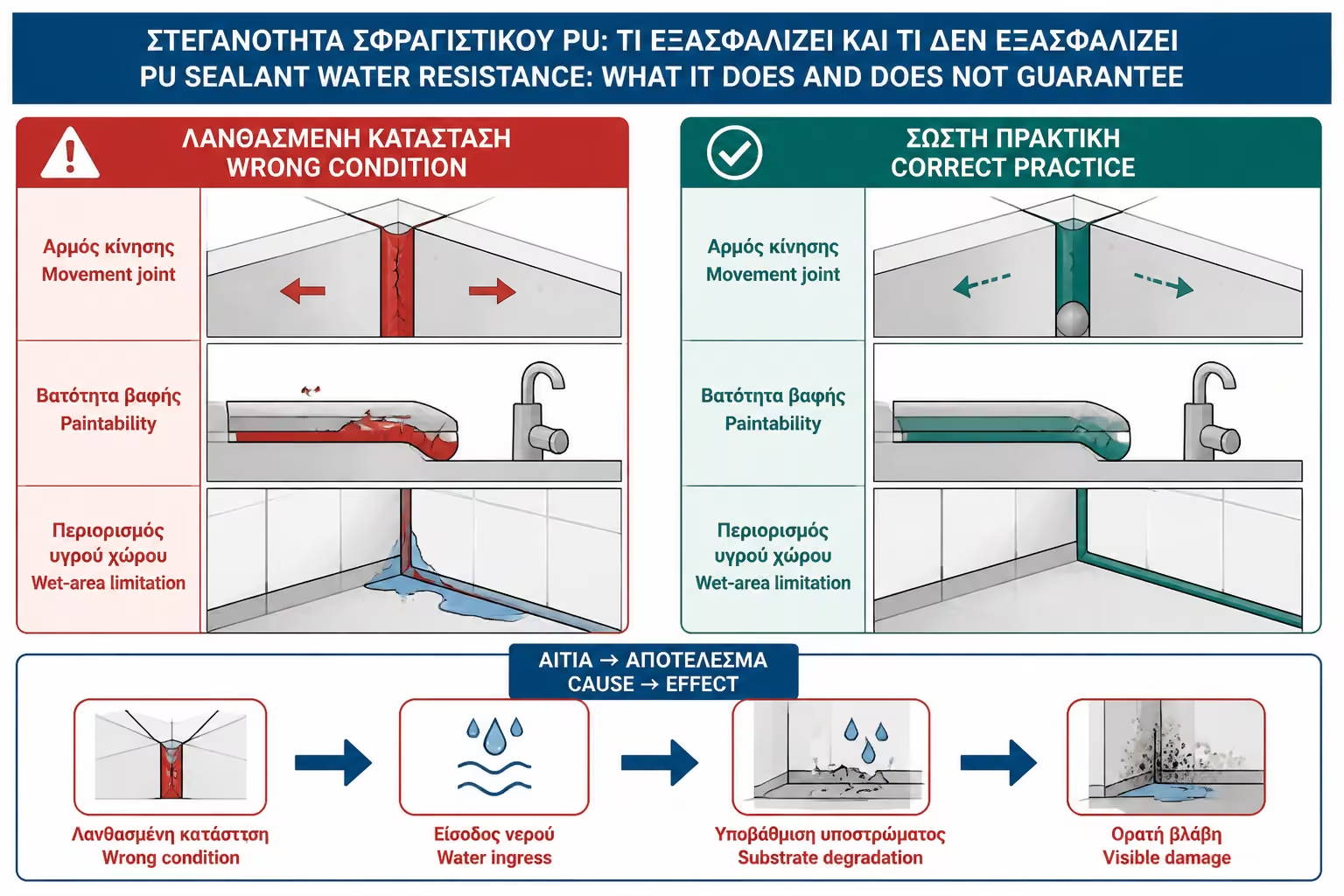
The crucial point is water resistance. PU mastics can have very good resistance to rain, humidity and occasional contact with water, depending on the product. But not all of them are suitable for permanent immersion, continuous stagnant water or classic sanitary compounds in a shower. For purely sanitary applications, the European standard EN 15651-3 concerns sealants for sanitary areas inside buildings exposed to non-pressurized water, while EN 15651-4 concerns sealants for pedestrian walkways, i.e. joints on surfaces with pedestrian traffic. This shows that it is not enough to say "it is polyurethane". We need to see to which category of use the particular product belongs.
In this guide we will look at what polyurethane mastics are, when they are used instead of silicone, where they should not be used, what is their relationship with water, what is meant by an expansion joint in the floor, how to apply them correctly and what should be written in a technically correct quote.
Polyurethane mastic is a polyurethane-based elastic sealant. It usually comes in a cartridge or salami, is applied with a gun and cures with the humidity of the air. After curing, it creates an elastic, durable mass that can follow joint movements and adhere to various materials.
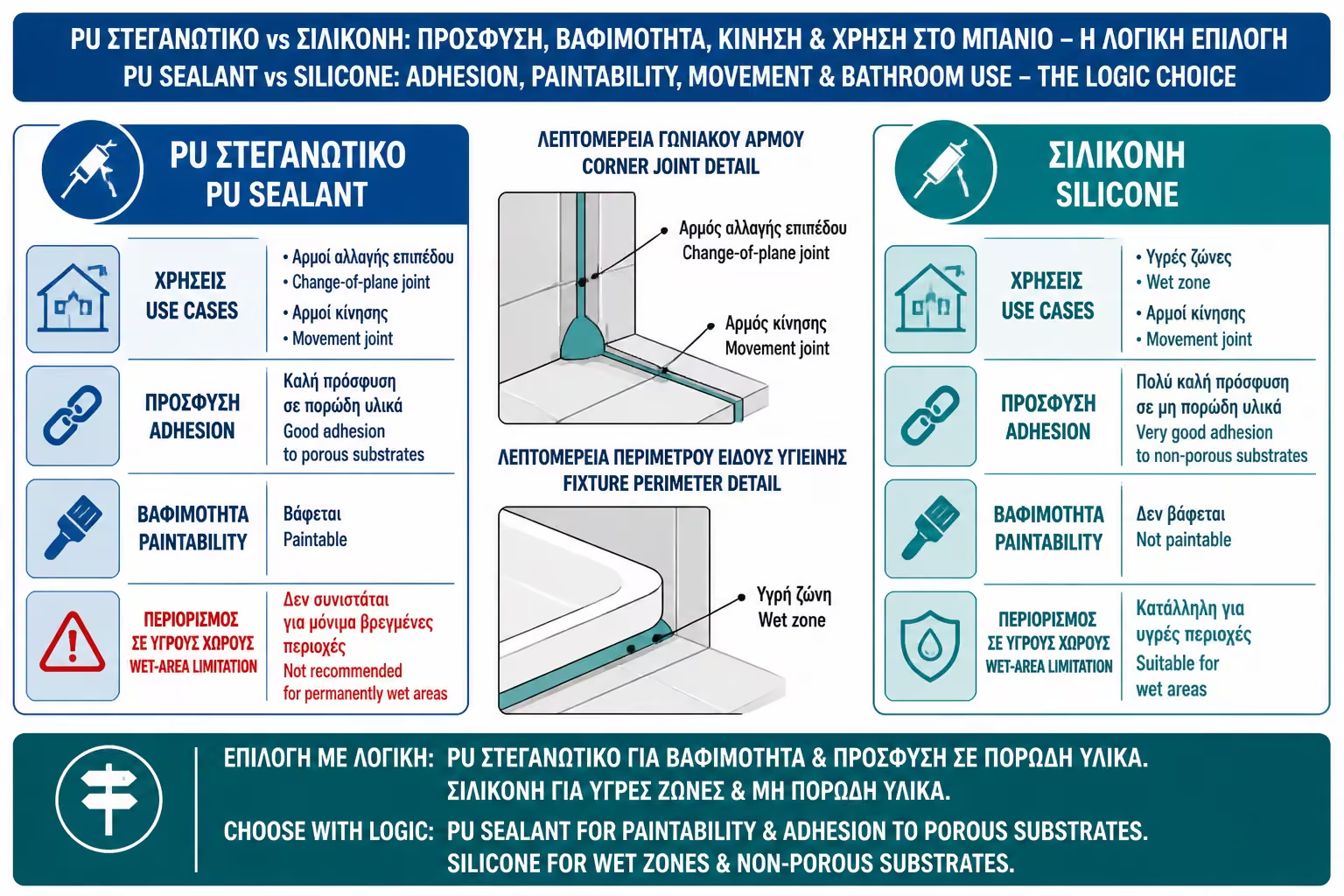
Its difference from silicone is in chemistry and behavior. Silicone is very strong in wet sanitary applications, has excellent water resistance and remains very elastic. Polyurethane often has better mechanical strength, better adhesion to porous substrates and can be painted in many cases. That is why it is used more in construction joints, floors, concrete and material joints.
But there is no one PU mastic for everything. There are non-sag products for vertical joints, self-leveling products for horizontal floors, products for concrete joints, products for facades, products for circulation floors and products with different resistance to water, UV and chemicals. The selection must be made from the technical brochure.
Silicone is usually the first choice in bathrooms, basins, tubs, showers and glass enclosures, especially when we are talking about sanitary silicone with anti-mold protection. It has very good water resistance, excellent elasticity and is suitable for sanitary joints.
Polyurethane mastic is more "constructive". It has strong adhesion to many materials, better withstands mechanical wear and often can be painted. It is a good choice for expansion joints in floors, concrete joints, exterior constructions, metal profiles, stone, joints between different materials and points that receive friction or pressure. In a material comparison, Soudal reports that PU sealants stand out for strong adhesion, paintability and durability, while silicones often excel in UV and classic liquid applications.
In simple words: silicone is the classic choice for bathroom "finishes". PU mastic is often better for the “construction joint” or the joint that is subjected to mechanical stress.
PU mastic is used instead of silicone when the joint needs greater mechanical strength, adhesion to porous materials or paintability. Examples are expansion joints in floors, joints between tile and grout, joints in balconies, where tile meets metal or concrete, and some construction joints indoors or outdoors.
In the bathroom, it can be used in perimeter or construction joints where we are not talking about a clean sanitary seal around a sink or bathtub, but about substrate movement or connecting different materials. For example, if a tile floor meets a metal channel, threshold, concrete surface or other material with potential movement, a suitable PU sealant may make more sense than simple silicone.
In joints that will be painted, PU also has an advantage, because many silicones do not paint well. If the joint is to be joined to a painted surface, polyurethane or a hybrid MS polymer sealant may be a more suitable choice.
PU mastic is not automatically the best choice for a bathtub, sink, shower cubicle or glass. In these applications, a good sanitary silicone is usually more appropriate because it is designed for wet environments, mold, water vapors and constant bathroom cleaning.
It should also not be used in joints with permanent immersion or standing water, unless specifically permitted by the specific product. The phrase "waterproof" does not mean "can withstand being under water". Several product guides separate water resistance from immersion suitability. In an article comparing polyurethane and silicone it is stated that PU sealants can be weather-resistant but are not generally suitable for joints with temporary or permanent immersion, except for special products.
Therefore, we do not put PU mastic in a shower just because it is "stronger". We check whether the product is certified/recommended for sanitary wet areas and can withstand cleaning agents, permanent moisture and use. Otherwise, we choose sanitary silicone.
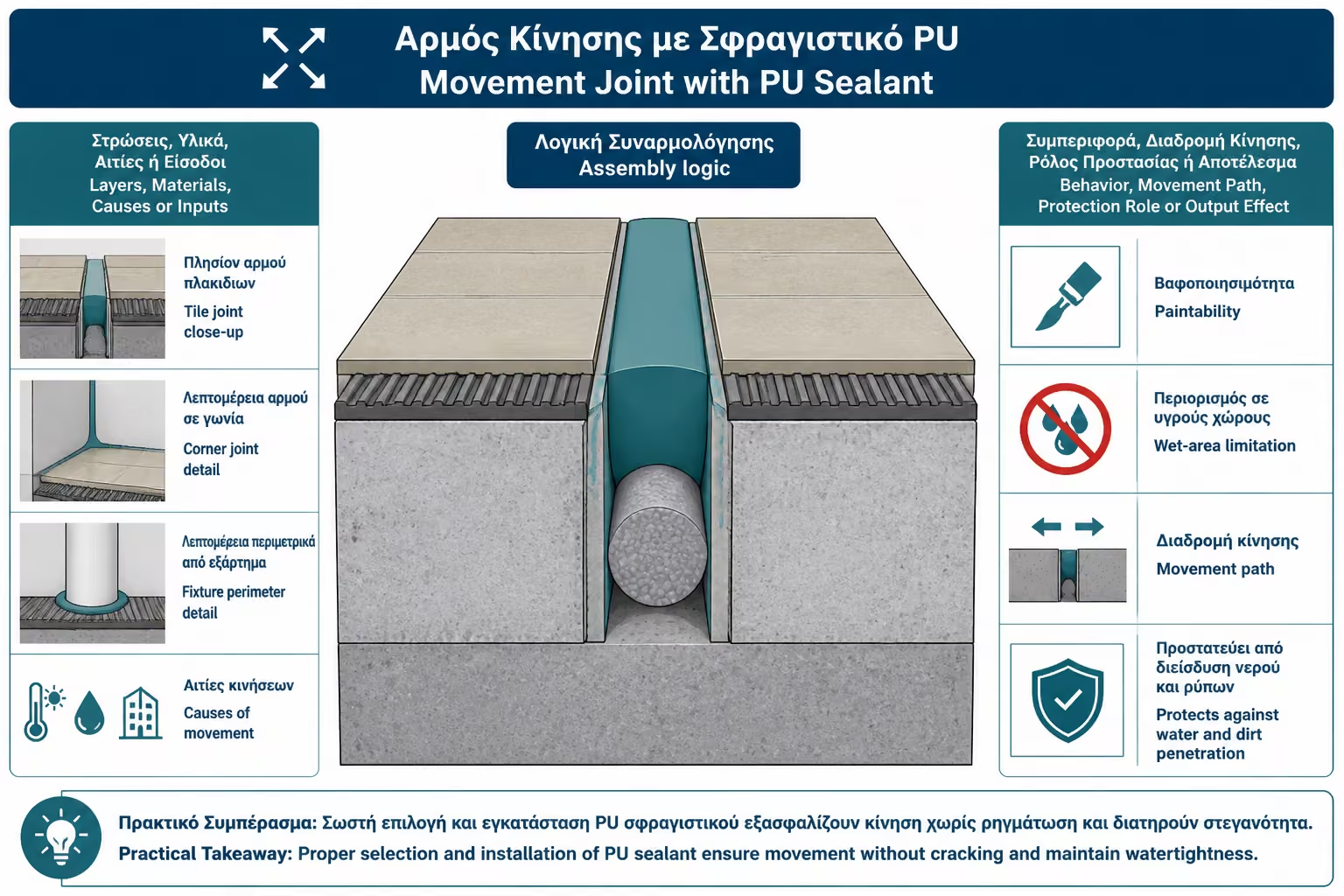
Expansion joints are points that allow the structure to move without breaking the finished surface. On floors, especially on large surfaces, underfloor heating, outdoor spaces or joints of different substrates, expansion joints are essential. They should not be filled with hard cementitious grout because it will crack.
That's where a rubber sealant comes in. If the joint is on a floor that is stepped on, a sealant with resistance to abrasion, puncture and mechanical stress is needed. Polyurethane is a common choice in such joints. Sikaflex SL 1, for example, is a self-leveling polyurethane mastic for expansion joints in concrete floors and decks, where flexibility is required as well as abrasion and puncture resistance.
In a residential bathroom, the surfaces are smaller, but the principles remain the same. If there is an expansion joint in the substrate or a joint of different materials in the floor, it must not be "buried" under tile and hard joint. It must be transferred to the finished surface and sealed with a suitable rubber material.
When two different materials meet, they usually move differently. Tile with concrete, tile with metal, stone with aluminum, cement mortar with wood, SPC with tile, or floor with threshold: all these have different thermal and mechanical behavior. If the joint is filled with rigid material, it may crack.
PU mastic is useful because it has elasticity and adhesion to different materials. It can act as a bridge in joints that need movement. PU sealants technical brochures often mention use between materials with different coefficients of expansion, which is exactly this problem.
But compatibility must be checked. Certain materials, such as natural stone, mirrors, sensitive metals, acrylics or certain plastics, may require a primer or special sealant. PU is not a universal glue for everything.
PU mastics generally have good moisture and weather resistance, but this does not mean that every PU is suitable for continuous water. Water resistance should be read against the product: can it withstand rain? Does it withstand temporary contact? Does it withstand chemical cleaners? Can it withstand permanent submersion? Can it withstand a pool? These are different questions.
In the bathroom, the most common requirements are non-pressurized water, steam and cleaning agents. EN 15651-3 concerns sealants for sanitary areas within buildings exposed to non-pressurized water, i.e. the logic of applications such as bathrooms and kitchens. If a PU mastic is not declared suitable for such applications, we do not choose it blindly.
For floors, we may be more interested in EN 15651-4 or suitability for pedestrian walkways. This applies to joints that are pressed and subjected to mechanical stress. So the same question "is it waterproof?" it is not enough. We want to know what use it belongs to.
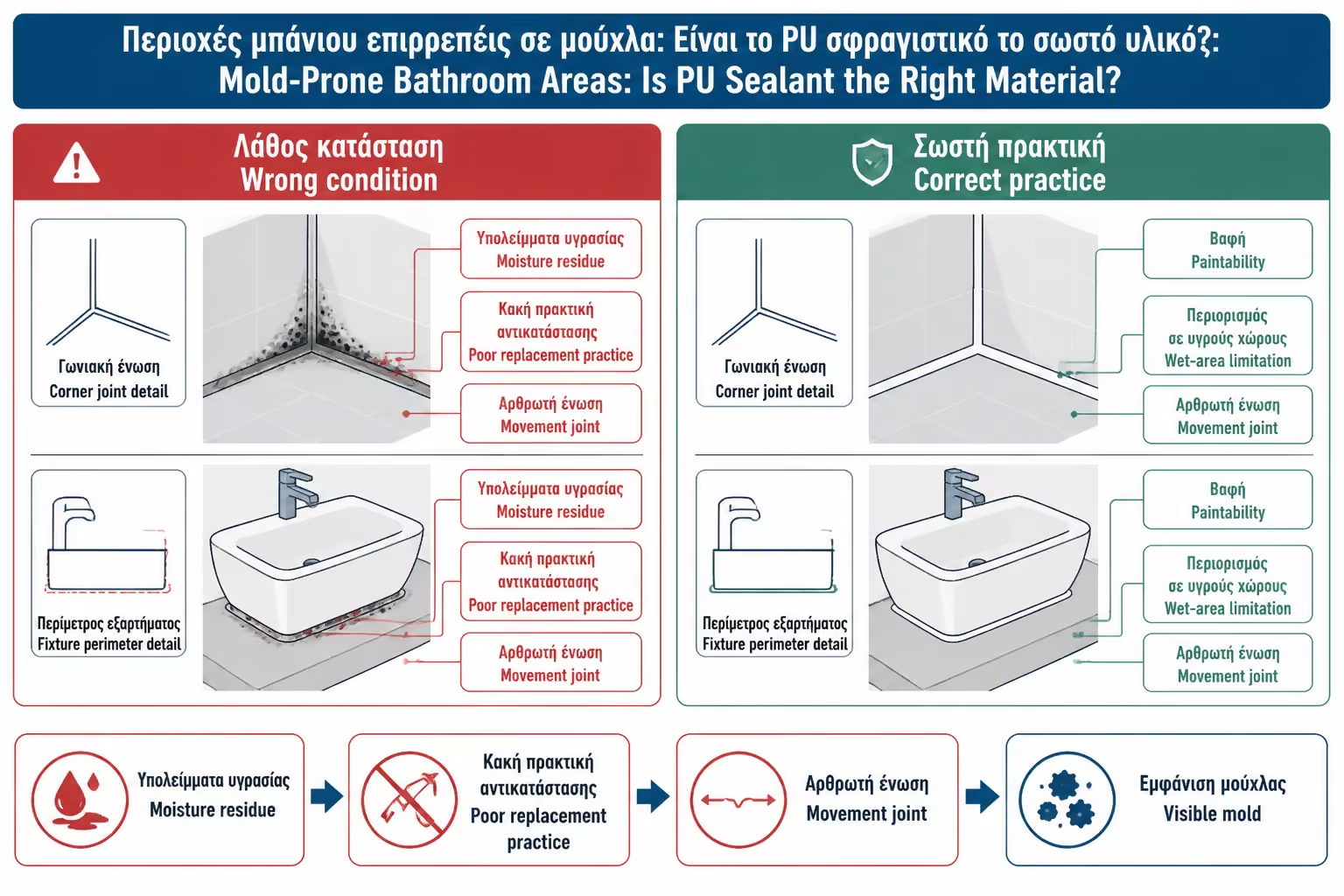
Polyurethane mastics are not necessarily anti-mold like sanitary silicones. Some may have special properties, but many are designed primarily for construction joints, not for permanently wet bathroom corners. If used in an area with soaps, hot water and poor ventilation, they can become dirty or develop surface mold like any material that holds organic debris.
For this, around bathtubs, sinks and showers, sanitary silicone is often preferred. It is designed for exactly this environment. PU makes more sense in floor joints, expansion joints and construction joints where mechanical strength and adhesion to porous materials are more important than anti-mould behavior.
If you want PU to be used in a wet area, ask for a product that explicitly mentions suitability for wet areas or at least resistance to the specific conditions. Don't assume that every PU is "bathroom".
There is also an intermediate category on the market: hybrid sealants, MS polymers or SMP sealants. These combine some characteristics of silicone and polyurethane: good elasticity, paintability, good adhesion to many materials and often better moisture behavior than classic PU in some applications.
In many modern renovations, hybrid sealants compete with PU mastics for construction joints. It's not just a matter of "PU or silicone". MS polymer may be the right solution, especially in compounds with different materials, paintable surfaces or areas where we want lower odor and good adhesion.
Soudal, in comparing silicone, polyurethane and hybrid sealants, presents hybrids as a third category that often offers a combination of adhesion, elasticity and practicality for modern construction substrates. So the final choice should be made based on the joint and not on a general material preference.
In tile joints, PU can adhere well, but attention must be paid to finish, cleanliness and potential stains. On glossy tiles, the excess can be cleaned up more easily if done immediately. On matte, porous or embossed tiles, a stain or film may be left if not used correctly.
Natural stone needs even more care. Some sealants can cause stone edge staining or plasticizer/oil migration, depending on the product. For marble, travertine, pumice stone or natural stone, a sealant compatible with natural stone must be used or tested before application.
If the joint is in a prominent location in a luxury bathroom, the sealing material must be selected together with the supplier of the stone or system. The wrong sealant can damage an expensive surface.
As with silicone, PU mastic should not accidentally fill a gap. The joint must be of correct width and depth. For larger gaps, a backer rod is used, so that the sealant has a correct cross-section and sticks to both sides, not to the bottom.
If the sealant sticks on three sides, its elastic movement is limited and it can tear. If the joint is too deep, the mastic may take time to cure and waste material. If it's too thin, it won't have enough mass to absorb movement.
In floor joints, the cross-section is even more important because the joint is pressed. An incorrect depth or finish can lead to tearing, peeling or dirt retention.
Many PU mastics have good primer-free adhesion to several substrates, but this is not the rule for all. Porous, dusty, wet or special materials may need a primer. Especially in joints with water, floors or outdoor use, adhesion must be absolutely reliable.
Before application, the substrate must be clean, dry, free of dust, oil, old sealants, loose materials or moisture. If there is old silicone, it must be completely removed. PU does not stick well to silicone residue. If old mastic is present, it must be evaluated for removal or compatibility.
The technical brochure of the product gives the appropriate substrates and if a primer is required. This must be followed, especially in high liability joints.
An advantage of many polyurethane sealants is that they can be painted, unlike most silicones which do not paint properly. This is important in wall joints, skirting boards, external elements or joints that need to be aesthetically integrated.
But the paint is not always self-explanatory. Color type, curing time and compatibility must be checked. If painted too soon, the mastic may not have matured. If the paint lacks elasticity, it may crack on the moving joint. If the mastic has a lot of movement, the paint must be able to follow it.
In a bathroom, the ability to paint is especially valuable in construction joints outside the direct water zone. In a shower, we usually don't paint the sealant. There we choose a suitable material color from the beginning.
Self-leveling PU sealants are often used for horizontal floor joints. These are more fluid and "lay" on their own inside the joint. They are not suitable for vertical surfaces because they will run. Instead, for walls and vertical joints, non-sag products are used that keep their shape.
This is important because many people buy "PU mastic" without looking at whether it is self-leveling or non-sag. On floors, a non-sag product may not give a smooth finish. On a wall, a self-leveling will run. The product must correspond to the joint.
On bathroom or balcony floors, the surface of the sealant must finish properly: not too low to hold water, not too high to be stepped on and torn. Level detail is practically very important.
Use the table below as a quick reference for the key points of this section.
| Application | Usually a better choice | Why |
|---|---|---|
| Washbasin with bench | Sanitary silicone | Moisture, cleaning, anti-mold protection |
| Tiled bathtub | Sanitary silicone | Continuous wet use and elasticity |
| Shower cubicle with tile/glass | Sanitary silicone | Glass, water, sanitary use |
| Floor expansion joint | PU or special floor sealant | Mechanical strength and movement |
| Joining tile with concrete/cement mortar | PU or hybrid | Adhesion to porous materials |
| Joint to be painted | PU or hybrid | Silicone usually does not paint well |
| Natural stone | Special stone-compatible sealant | Risk of stains |
| Permanent plunge / pool | Special product only | Generic PU or silicone is not enough |
The table shows that the choice is not a matter of "which is better", but which fits the joint.
Use the table below as a quick reference for the key points of this section.
| Capacity | What does it mean practically? |
|---|---|
| Good adhesion to porous materials | Useful on concrete, mortars, stone, cementitious substrates |
| Mechanical strength | Good for floors and joints under stress |
| Elasticity | It follows joint movements, as long as it has the correct cross-section |
| Can be painted | Advantage in construction joints |
| Moisture resistance | Good, but depends on product and usage |
| Not always sanitary | It does not always replace anti-mold silicone |
| Not always for immersion | Standing water requires a special specification |
| It needs proper application | Backer rod, clear base, primer where required |
PU mastics are technically strong materials, but they need the right choice.
In the Greek market of 2026, PU mastics usually cost more than a simple acrylic mastic and often similar or slightly more than a good silicone, depending on the brand, packaging and special use. Products for floors, expansion joints, high mechanical strength or special applications cost more than simple general purpose cartridges.
The job can also cost more when old material removal, joint cleaning, backer rod installation, primer and proper finishing are required. In large floor joints or outdoor areas, the amount of material increases. In a small bathroom, material costs are lower, but technical precision remains important.
Economy should not be done with the wrong product. If an expansion joint is filled with cheap silicone or acrylic material that cannot withstand stress, it will open and require rework. The right sealant is a small cost compared to joint failure.
The first mistake is to use PU mastic in a bathtub or shower without it being a sanitary-rated product. Sanitary silicone is often better there.
The second mistake is to use the same PU for horizontal and vertical joints. Another self-leveling, another non-sag.
The third mistake is the application without a backer rod in a deep joint. The sealant sticks on three sides and tears.
The fourth mistake is applying to a wet or dusty substrate. Adhesion is reduced.
The fifth mistake is the assumption that "PU means waterproof forever". Water resistance depends on product, use and exposure.
Use the table below as a quick reference for the key points of this section.
| Question | Yes / No |
|---|---|
| Is the joint structural or sanitary? | Yes / No |
| Is there mechanical stress or pressure? | Yes / No |
| Is the product suitable for a horizontal or vertical joint? | Yes / No |
| Do you need self-leveling or non-sag mastic? | Yes / No |
| Does the product withstand the water exposure that the joint will have? | Yes / No |
| Is there a need for sanitary/mould-resistant properties? | Yes / No |
| Does the substrate need a primer? | Yes / No |
| Is a backer rod needed for proper cross section? | Yes / No |
| Are the materials compatible with PU, especially if there is natural stone? | Yes / No |
| Does the offer state a specific product and use? | Yes / No |
If the answers are unclear, it is not enough to say "we put polyurethane". A specific sealant must be selected for a specific joint.
Polyurethane mastic is an excellent material for expansion joints, floors and joints of different materials, but it is not automatically better than silicone in the bathroom. Around sinks, bathtubs and shower cubicles, a good sanitary silicone is often the right choice. In a floor joint, in a joint with concrete, metal or cement mortar, PU may be much more suitable. The key is to look at the joint: if it is stepped on, if it moves, if it gets wet, if it will be painted, and if the materials are porous or smooth. There is no "one size fits all".
Polyurethane mastics are strong, elastic and durable sealants for construction joints. They are used where simple silicone is not the best solution: in floor expansion joints, joints of different materials, concrete, metal profiles, balconies, construction joints and places that need mechanical resistance or paintability. Their strength lies in their adhesion, durability and behavior in "working" joints.
They behave well in water when the product is suitable for the exposure it will receive. But this does not mean that every PU mastic is suitable for showers, permanent standing water or sanitary compounds that need anti-mould protection. For these applications, sanitary silicone, or a special sealant with EN 15651-3 suitability, often remains a more correct choice. For floor joints and pedestrian use, we look at products designed for such stresses.
The right choice is made not by the name of chemistry, but by the technical brochure: use, substrate, joint movement, water resistance, need for primer, paintability and mechanical stress. If these match, PU mastic can give a very durable and professional seal. If it is used simply because it is "stronger", it may be the wrong material in the wrong place.
Return to category.
Go to categoryReturn to the central guide.
Go to guide