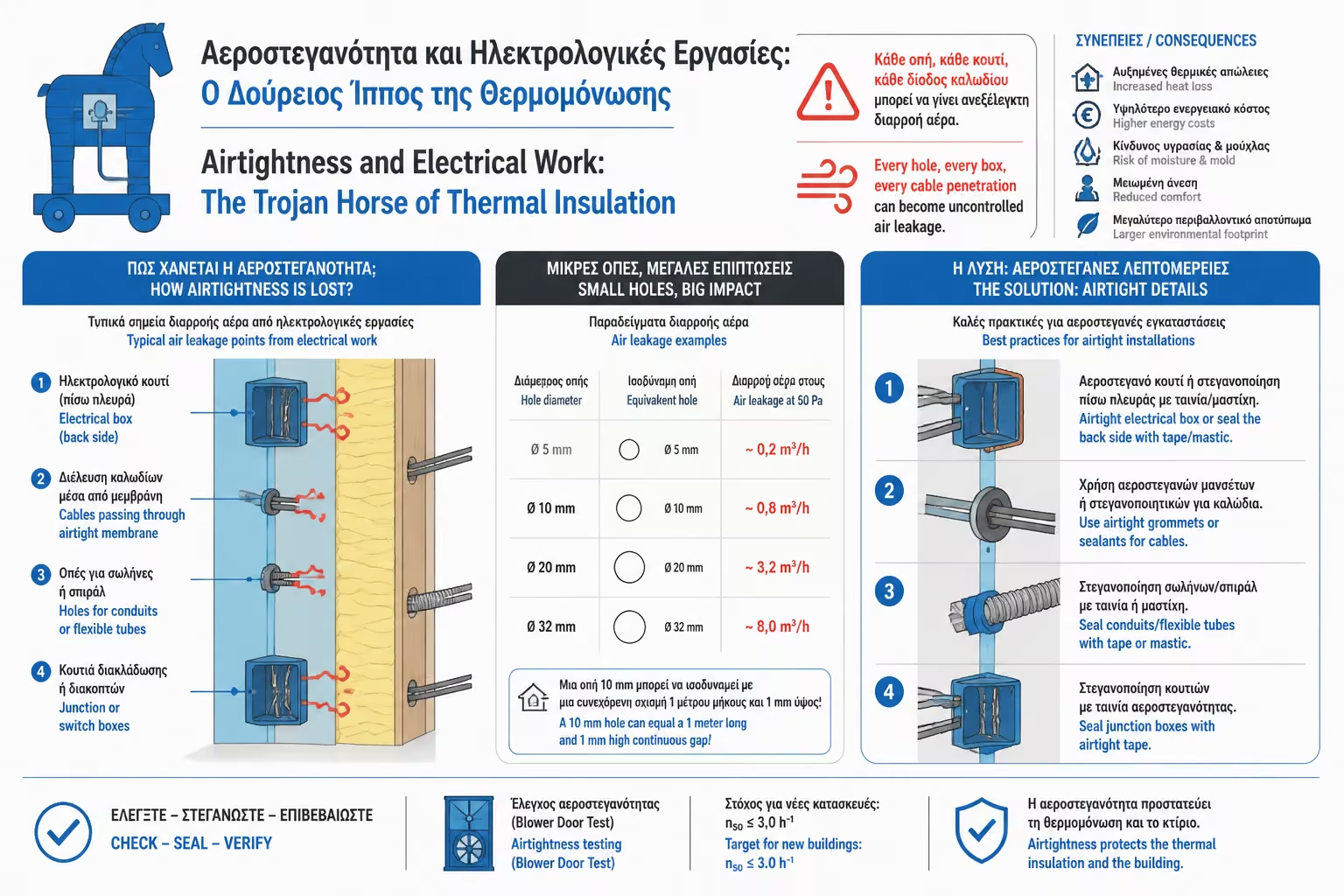
Insulation alone is not enough
Without airtightness, air movement carries heat loss straight through the insulated envelope.
In a modern high-performance home, thermal insulation alone is not enough. If the envelope is not airtight, cold air and moisture find routes through every weak point and undermine part of the whole investment.
Electrical installations are among the most deceptive weak points of all. Switch boxes, conduits, service entries and penetrations through the air barrier can behave like an invisible Trojan horse inside the wall.
The issue is not just a little extra heat loss. It is the creation of thermal bridges, cold-air pathways, interstitial condensation and eventually mould inside places the owner may never even see.
Thermal insulation is like a thick sweater: it retains heat, but if air can pass through it, performance drops sharply. Airtightness is the windproof layer that stops that uncontrolled passage.
In modern buildings, ventilation is no longer expected to happen through gaps and random leakage. It is expected to happen through controlled mechanical systems and an envelope that is as sealed as possible.
That means every penetration, every badly sealed box and every hollow air path inside a conduit stops being a minor detail and becomes part of the overall building physics.
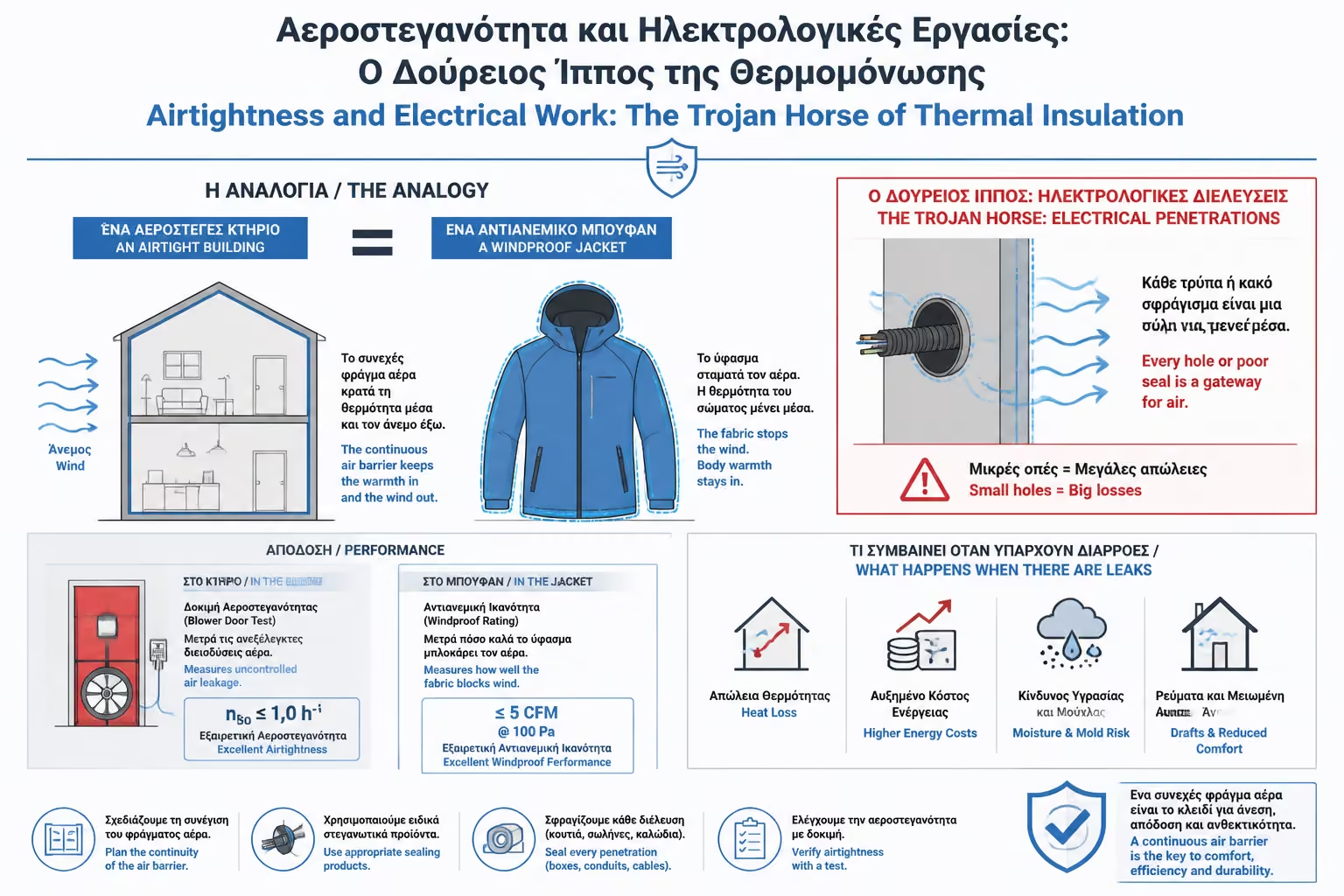
Without airtightness, air movement carries heat loss straight through the insulated envelope.
Modern systems work properly only when uncontrolled leakage is kept low.
In high-performance buildings, small electrical defects scale up into meaningful energy problems.
It is not a theoretical luxury but a measurable property of the building.
An ordinary switch box has open entries, loose conduit penetrations and no sealing logic at all. When it is installed in an external wall or insulated drylining system, it creates a direct air-leak path.
The same happens through the conduits themselves. A route linking a basement, cold void or other uncontrolled space to a heated room can work like a miniature chimney carrying cold air into the interior.
If you add the local removal of insulation around deep boxes or service openings, electrical work often creates not one but several simultaneous airtightness and thermal-bridge failures.
They were designed for ordinary installations, not for Passive House-level envelope performance.
A hollow conduit can become an invisible chimney inside the wall build-up.
Recessed boxes remove material right where the envelope is already vulnerable.
Air leakage, membrane discontinuity and thermal bridging often appear together.
When warm, humid indoor air passes through a socket opening and reaches the cold zone of an external wall, it cools and can condense. That water accumulates in places that are neither ventilated nor easily inspected.
Moisture may appear inside conduits, on conductors or behind drywall and insulation layers. That is where corrosion, copper oxidation and mould growth begin, damaging both the building and the indoor-air quality.
For that reason, electrical detailing in these buildings is not just about better energy performance. It is also about hygiene, durability and the long-term reliability of the envelope itself.
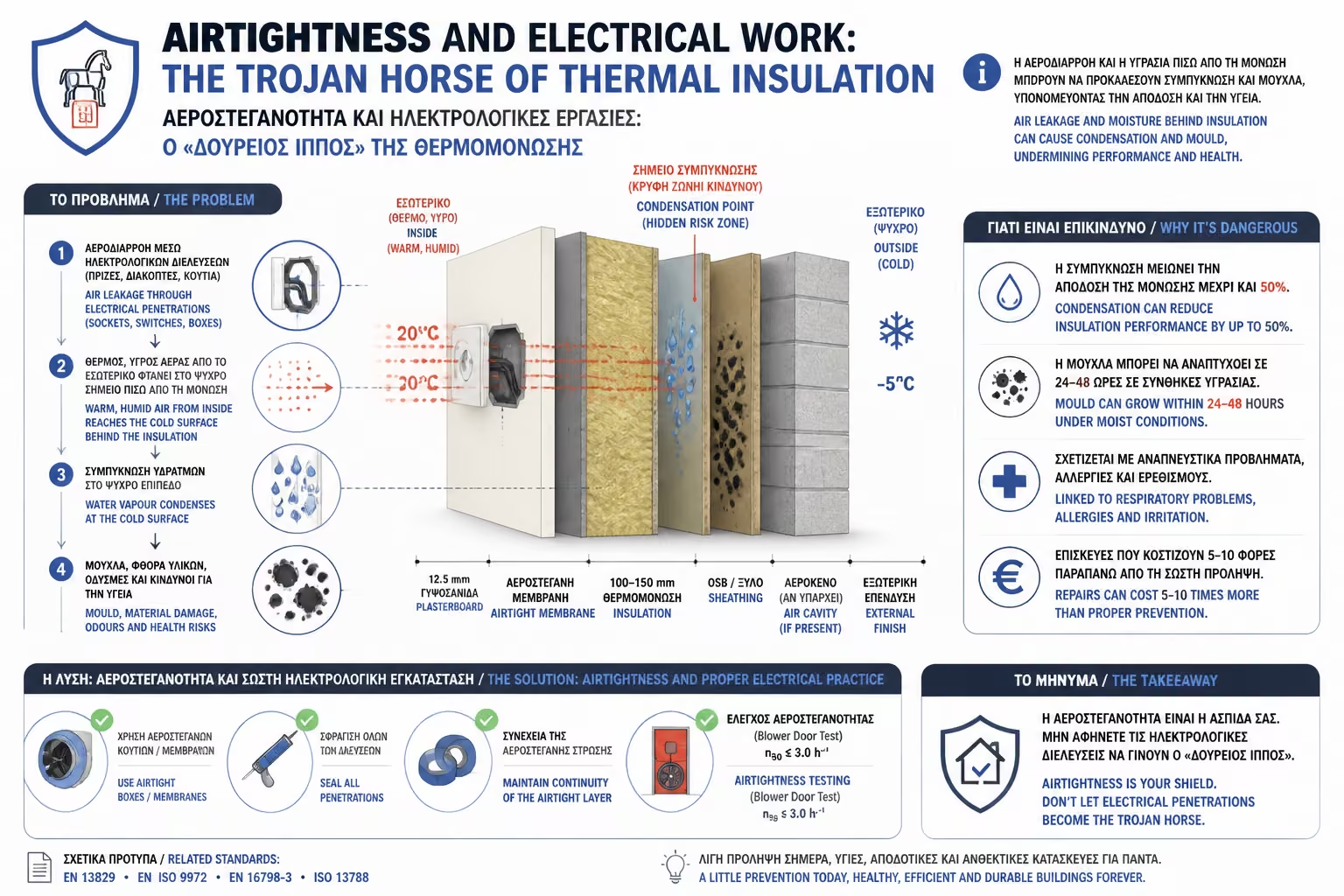
It forms inside the wall build-up, not necessarily on the visible face of the socket.
Poor electrical airtightness can trigger both building defects and electrical deterioration.
Hidden mould behind linings and drywalls affects the air the occupants breathe.
A cheap preventive detail during the electrical phase avoids much larger remediation later.
In passive and very efficient buildings, airtightness is not left to site impressions. It is tested through a blower-door setup that creates a pressure difference and makes air leakage measurable.
In a poor electrical installation, the leaks can be felt even with your hand in front of sockets and switches. That is the clearest sign that conventional boxes and open conduits are no longer acceptable.
The conclusion is straightforward: the new strategy has to specify airtight boxes, sealed penetrations and a different detailing logic from the outset. The industry already provides the tools, but they have to be chosen intentionally.
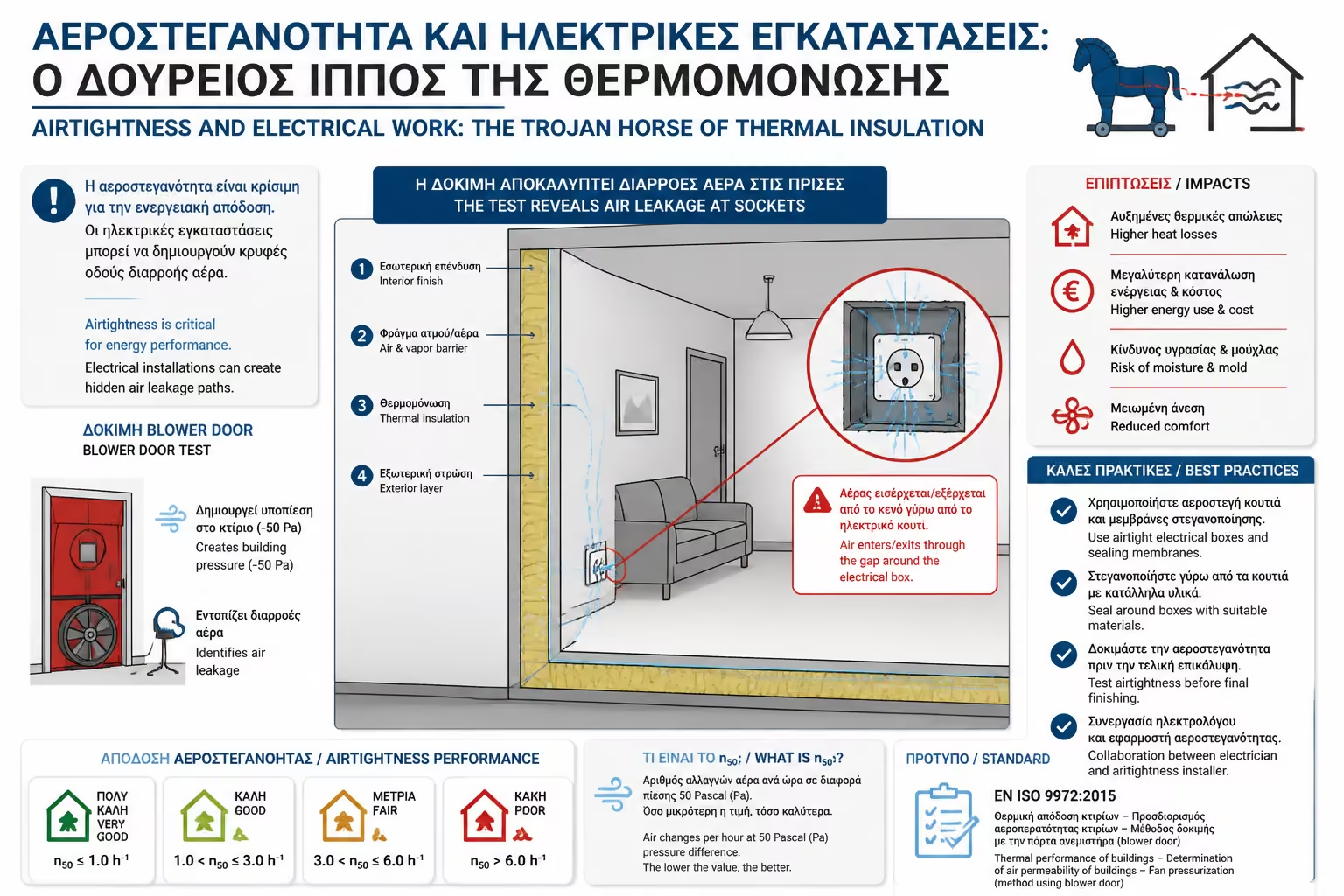
It is not a matter of intuition but the outcome of a quantified performance test.
If you feel air movement at the electrical points, the envelope strategy is already compromised.
It requires components and methods designed specifically for airtight construction.
If the electrician is informed too late, many of the best solutions have already been lost.
Return to category.
Go to categoryReturn to the central guide.
Go to guide