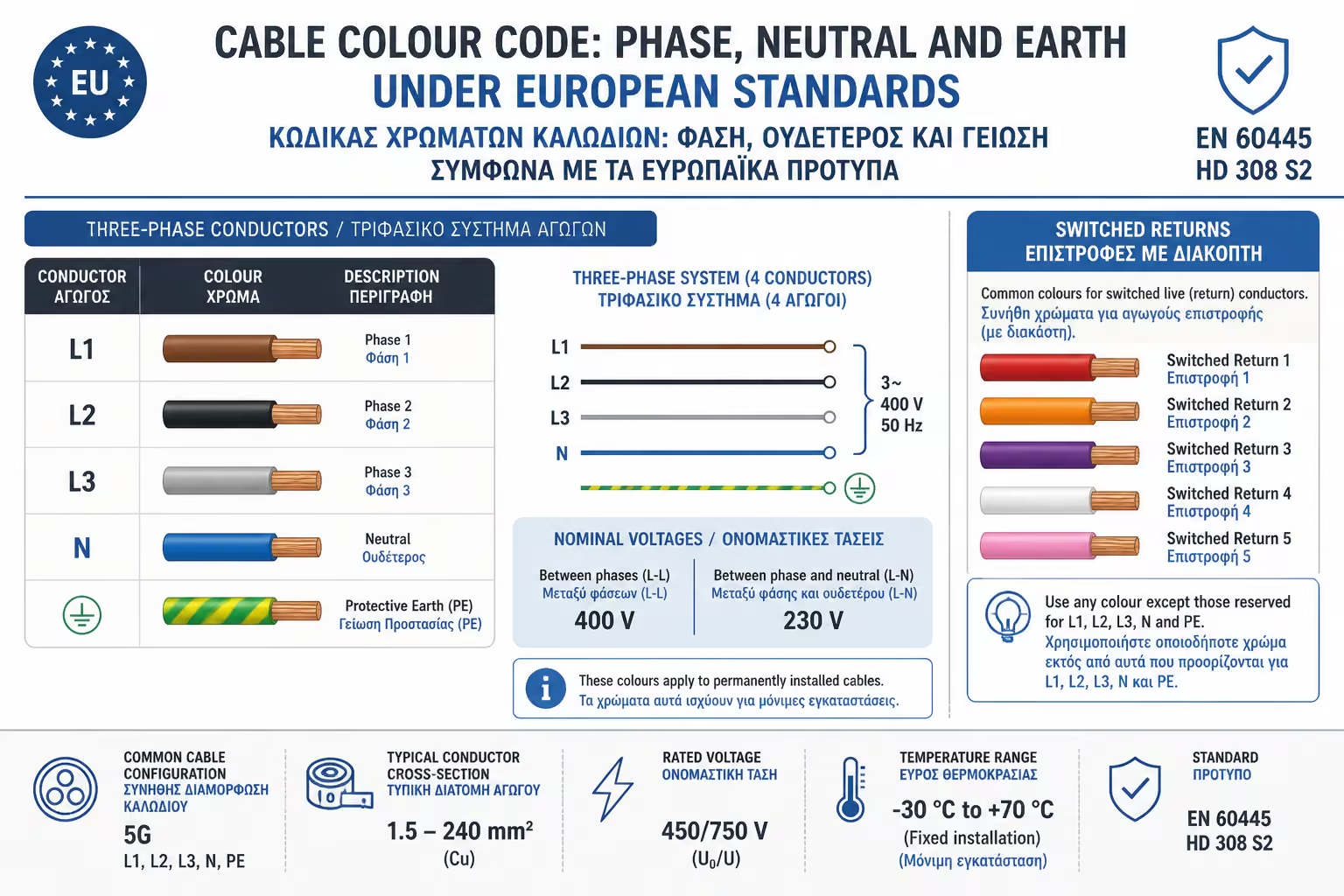
Brown = live phase
It carries voltage to the outlet, switch or appliance.
Cable colours are not decorative choices. They form a strict language that allows any electrician to identify immediately which conductor carries voltage, which returns current and which protects the user during a fault.
Despite their importance, colours alone are never enough when working on older homes. Knowing the standard is the starting point, but verification with instruments is the only safe rule.
Even though modern standards brought order, every intervention in an existing home should start with testing, not assumptions. Colours help, but instrument testing is what ultimately prevents dangerous mistakes.
This matters even more in renovations, where a new luminaire, a new switch or a circuit extension has to coexist with wiring installed under different standards, in different decades and often by different tradespeople.
In modern installations the phase is brown, the neutral is blue and the protective earth is yellow-green. This standardisation now applies across Europe and makes maintenance and future expansion much safer.
The brown conductor is the dangerous live conductor, the blue completes the circuit as neutral and the yellow-green conductor must never be reassigned because it is the protective earth.
This standardisation exists so that every electrician, technician or engineer can immediately read the role of each conductor, whether the circuit feeds a socket, a panel or a luminaire.
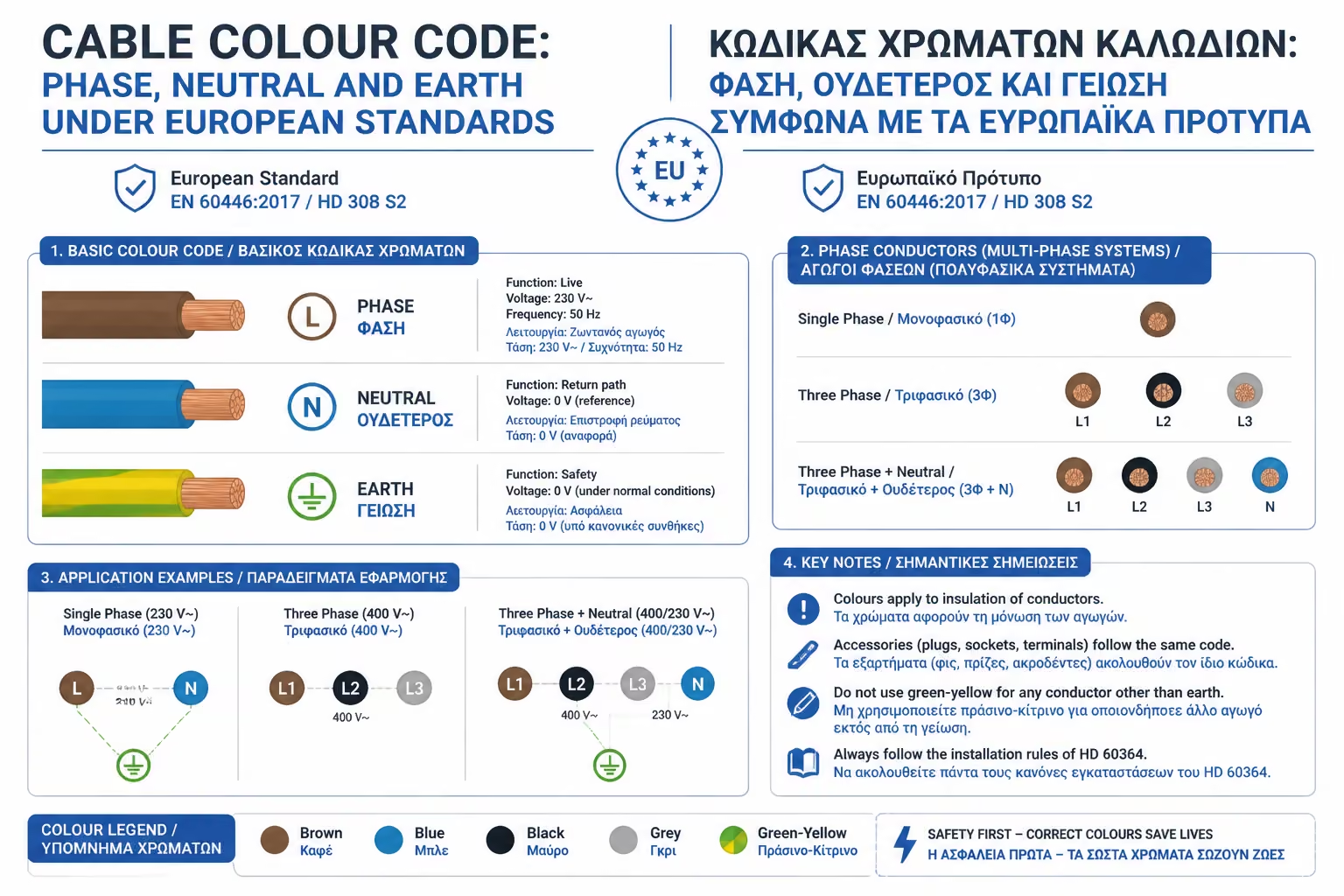
It carries voltage to the outlet, switch or appliance.
It completes the circuit by returning current toward the supply network.
It is not a working conductor but the critical safety path against electric shock.
It must not be reused as a switched return or live conductor just because one wire is missing.
In three-phase systems the three phases are normally brown, black and grey, together with the blue neutral and the yellow-green protective conductor. This makes it easier to separate heavy loads, sub-boards and three-phase equipment correctly.
In lighting circuits and especially two-way switching, you also encounter switched returns. These may be black, grey or white and can carry live voltage when the switch is on, so they must never be confused with neutral or earth.
In three-phase supplies, separating the three phases helps not only correct termination but also proper load balancing, especially when larger appliances or sub-panels are involved.
Brown, black and grey provide clear identification of the three phases.
A black or grey conductor may still be carrying live voltage after the switch.
Role changes must follow the rules and be clearly marked where permitted.
Clear colour coding is part of the safety system itself.
In older Greek installations, colours may follow previous conventions or no consistent convention at all. Red, black, grey or yellow may each have been used as phase, neutral or earth depending on the period and the installer.
That means identification by instinct or assumption is extremely dangerous. A red wire in one 1970s apartment may be earth, while in another it may be live.
Switched returns are another reason why remembering only brown, blue and green-yellow is not enough. In lighting boxes and two-way switching, black, grey or white often mark functional phase routes.
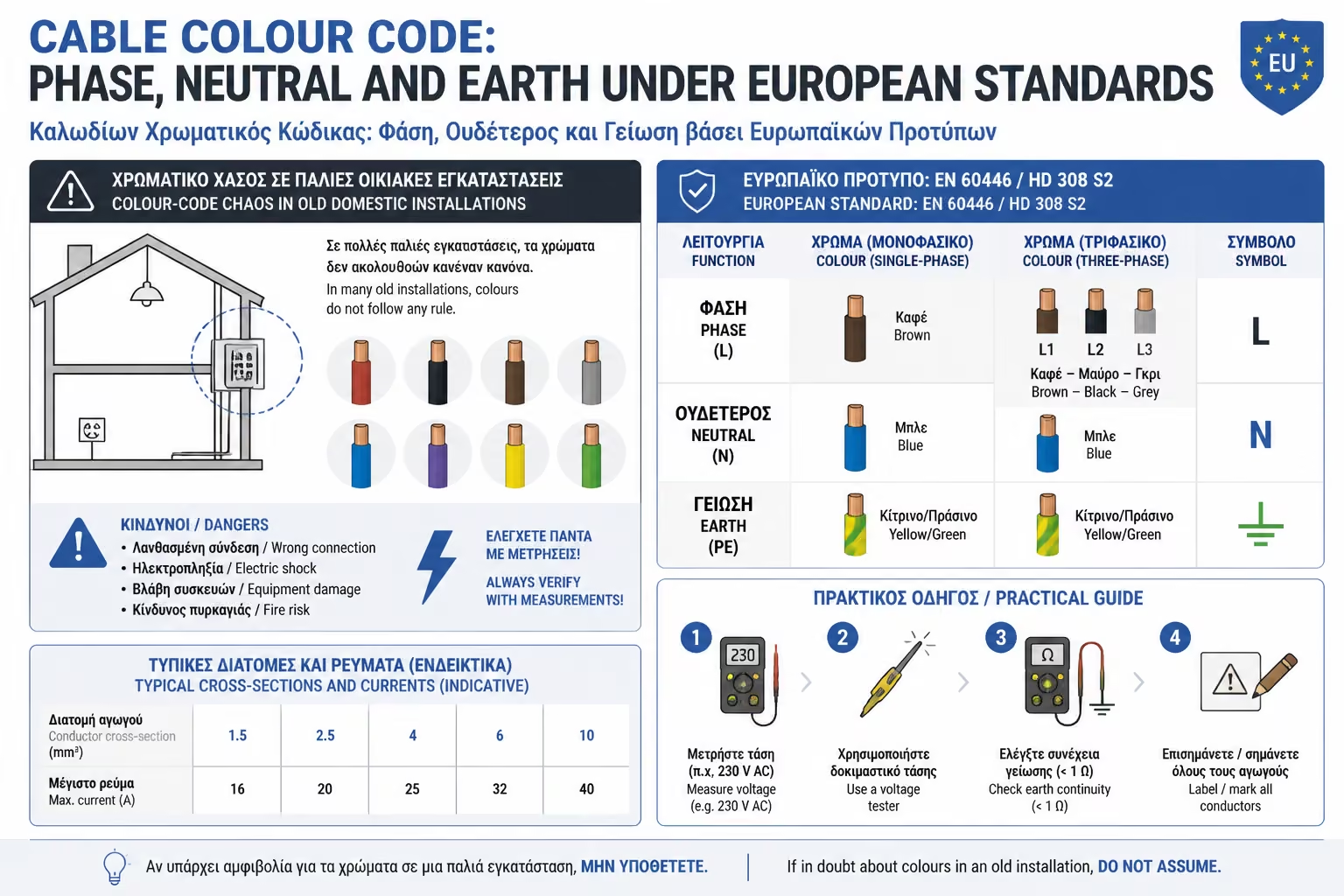
Before harmonisation, practices differed by decade and often by individual team.
Rough renovations and extensions often make the situation even more confusing.
Trusting colour alone on an old circuit can lead directly to serious injury.
In older systems the theoretically correct colour may not match the real function.
Before touching any conductor, use a tester, multimeter or other suitable instrument to identify voltage and function. The check must always be done with proper isolation procedure and then repeated after the main switch is turned off.
In short, colours are a useful map but not proof. Proof comes only from measurement.
In older homes, however, all of this may collapse completely. The safe method is always the same: identify the live conductor with a tester or meter, confirm the neutral and work only after the main switch is off.
In other words, colour coding is the language of correct design, but measurement is the language of real safety when you touch an existing circuit.
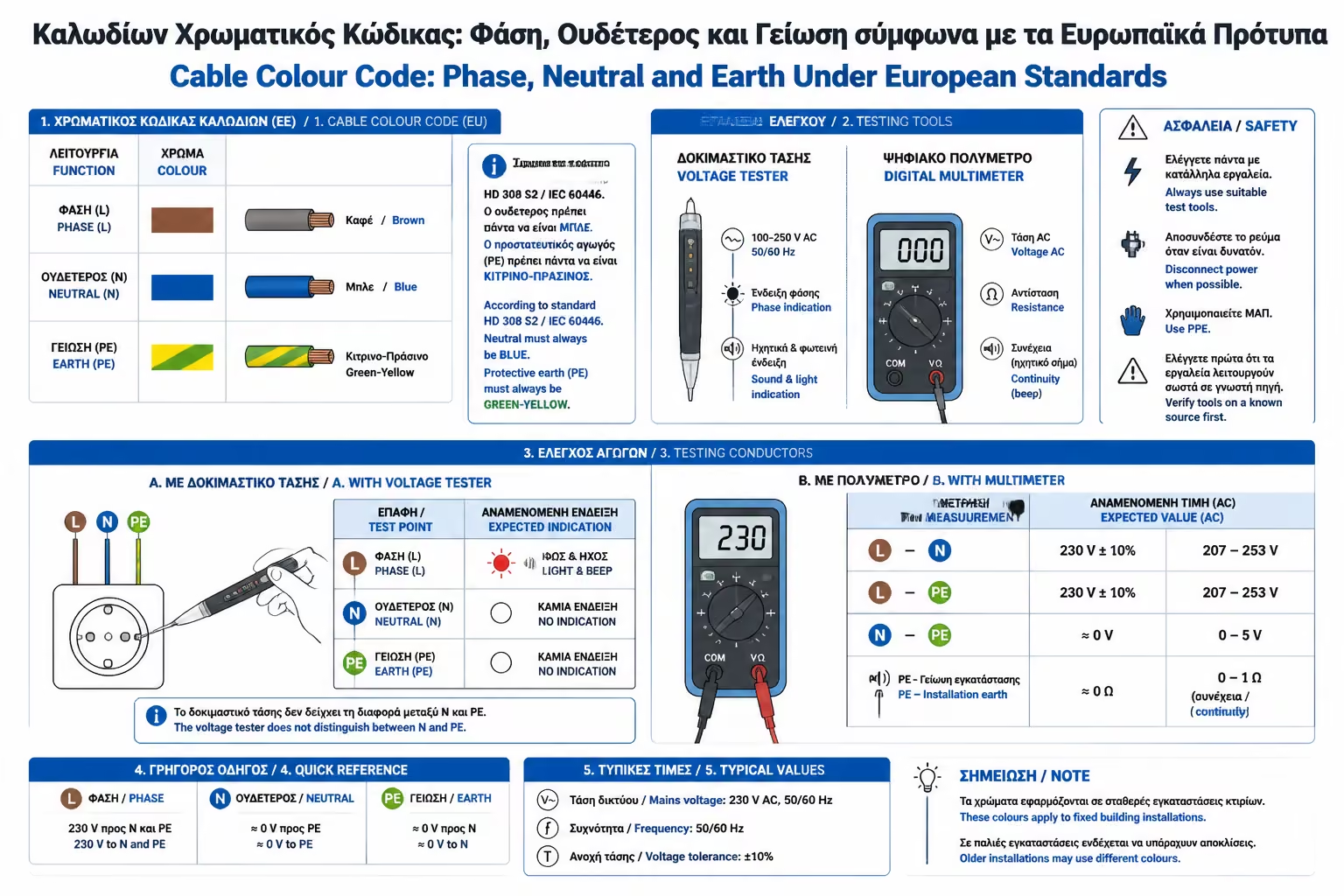
They are useful for first identification, though they do not replace proper measurement when needed.
Measuring between live and neutral or earth shows the real status of the conductors.
After identifying the conductors, turn off the main switch and verify again before starting work.
If there is uncertainty, treat every conductor as if it may still be live.
In electrical work, colour helps, but only measurement proves what a conductor really is.
Return to category.
Go to categoryReturn to the central guide.
Go to guide