Socket Consumption Meters (Smart Plugs with Energy Monitoring): Are they
worth it for home use and how accurate are they?
So far we have looked at the "big picture": How do we measure
whole houses, floors or three-phase panels. But what if the problem is
very specific?
You notice your electricity bill is inflated and your suspicions turn to
the 15-year-old refrigerator you inherited. Or wondering how much that
gaming PC that runs all night, or that little air heater you have under
your desk, is really costing you.
Calling an electrician to put a rail meter on the panel just to measure
one outlet is excessive, expensive, and often technically impossible
(since the same line can power ten different outlets).
This is where one of the most useful tools in the modern home comes in:
the smart plug with energy monitoring. These small devices are excellent
diagnostic tools for identifying which appliances are actually driving
your electricity bill. Let's look at how they work, how accurate they
are and what overload risks you must not ignore.
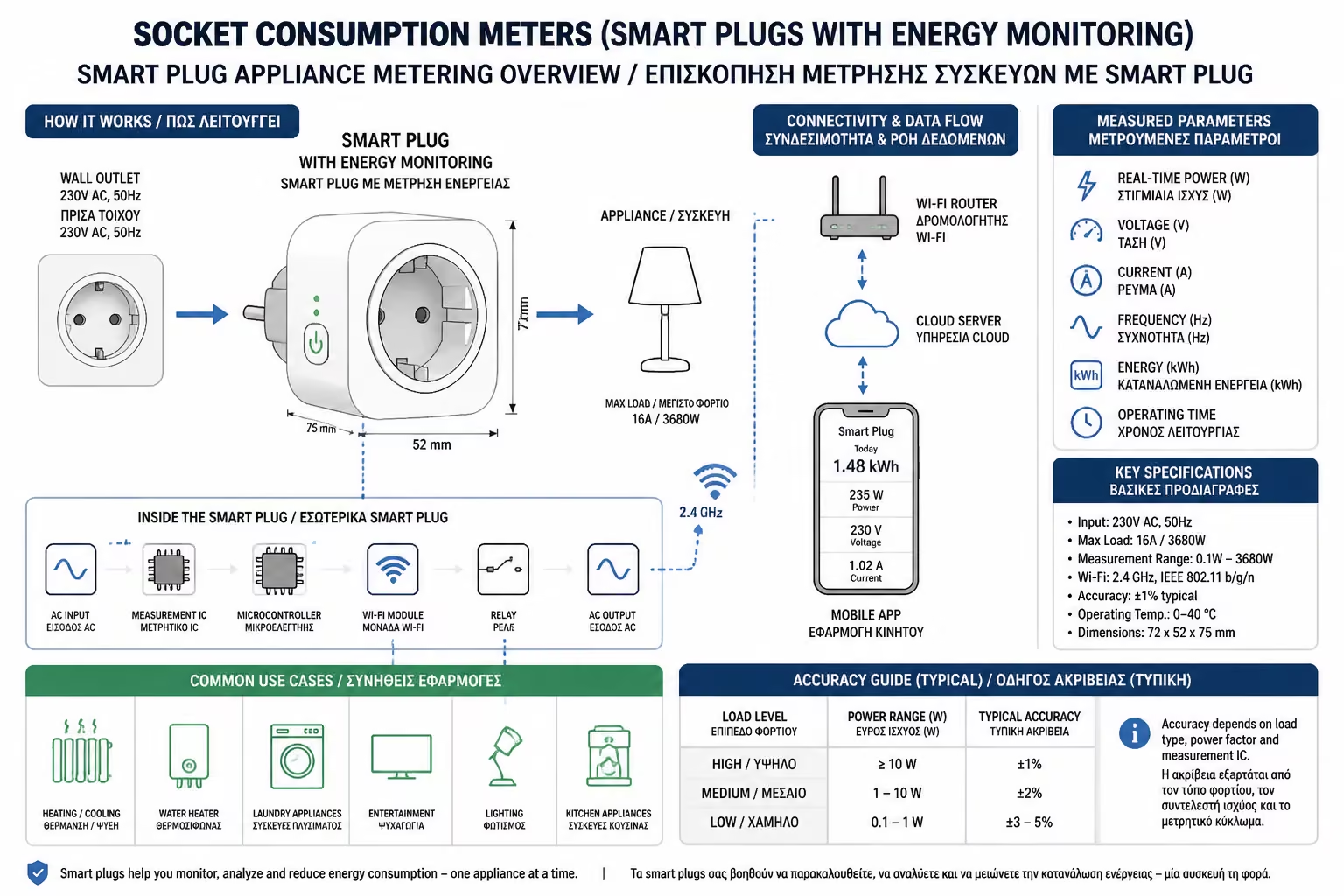
1. What is it and how does it work?
The philosophy is the epitome of "Plug & Play". The
smart plug is an adapter. You plug it into your wall outlet, and then
plug the device you want to control into it.
Inside its small casing it hides:
A relay (switch): To turn the device on and off from your mobile
(via Wi-Fi, Zigbee or Bluetooth).
A measuring chip (Power Metering IC): Which reads the Volts, the
Amperes and calculates the Watts that the device "draws"
in real time.
The device sends the data to your mobile, allowing you to see graphs
of how many kilowatt-hours (kWh) your fridge burned yesterday, last
week or the whole month.
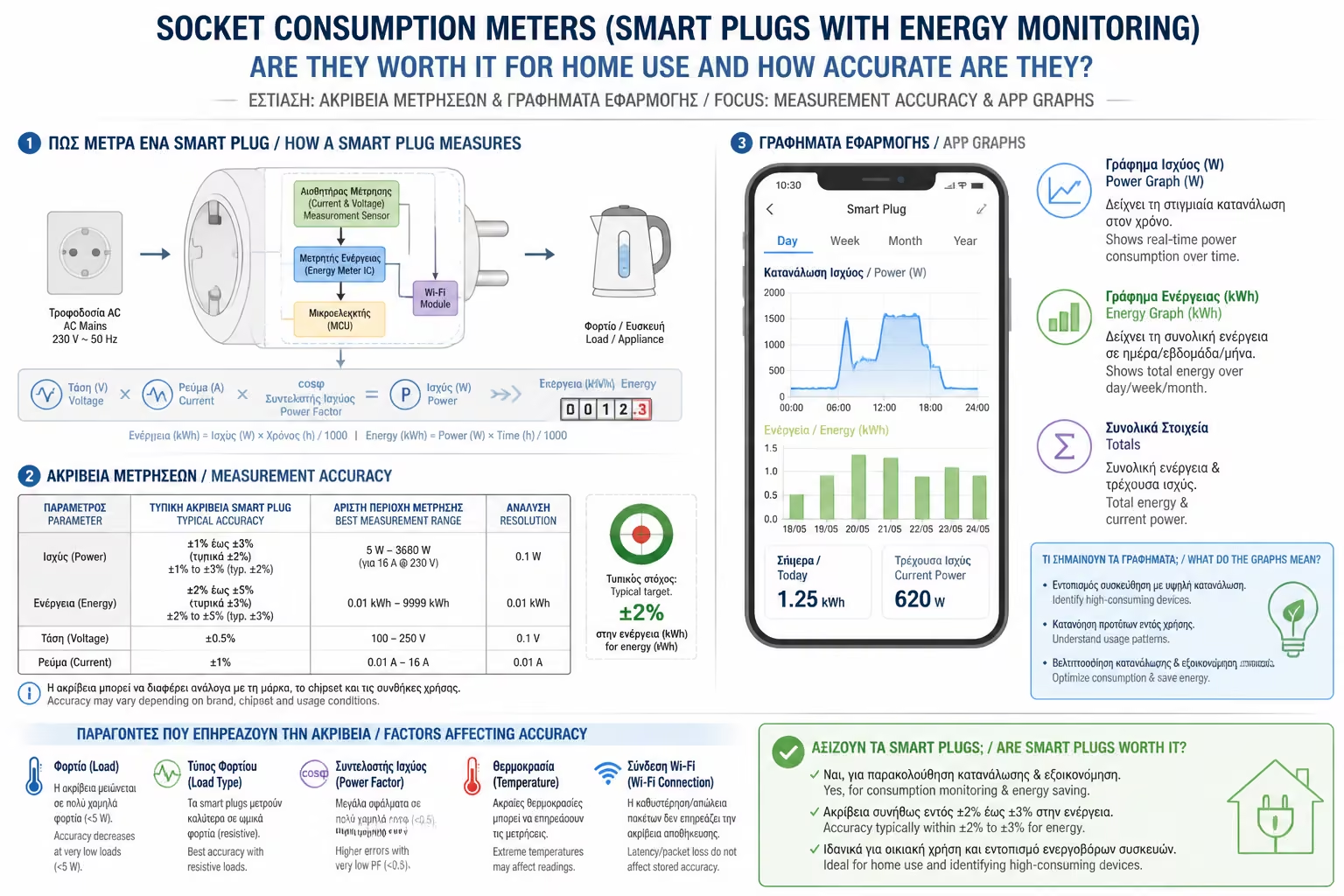
2. Are they really accurate?
Many consumers are hesitant: "How can a plastic object of 15
euros count correctly?"
The truth is impressive: Yes, they are extremely accurate. Modern
measuring chips (such as those used by companies like TP-Link/Tapo,
Shelly, Sonoff or Eve) have a margin of error usually between 1% and
2%. For home use and diagnostic purposes (that is, to find out which
device is "burning" your money), this accuracy is more than
satisfactory.
Be careful, though: as we learned in the previous article, these
devices are not MID certified. That means their readings have no legal
standing for billing. If you use one to split costs with a roommate,
that arrangement is based on trust rather than formal metering
validity.
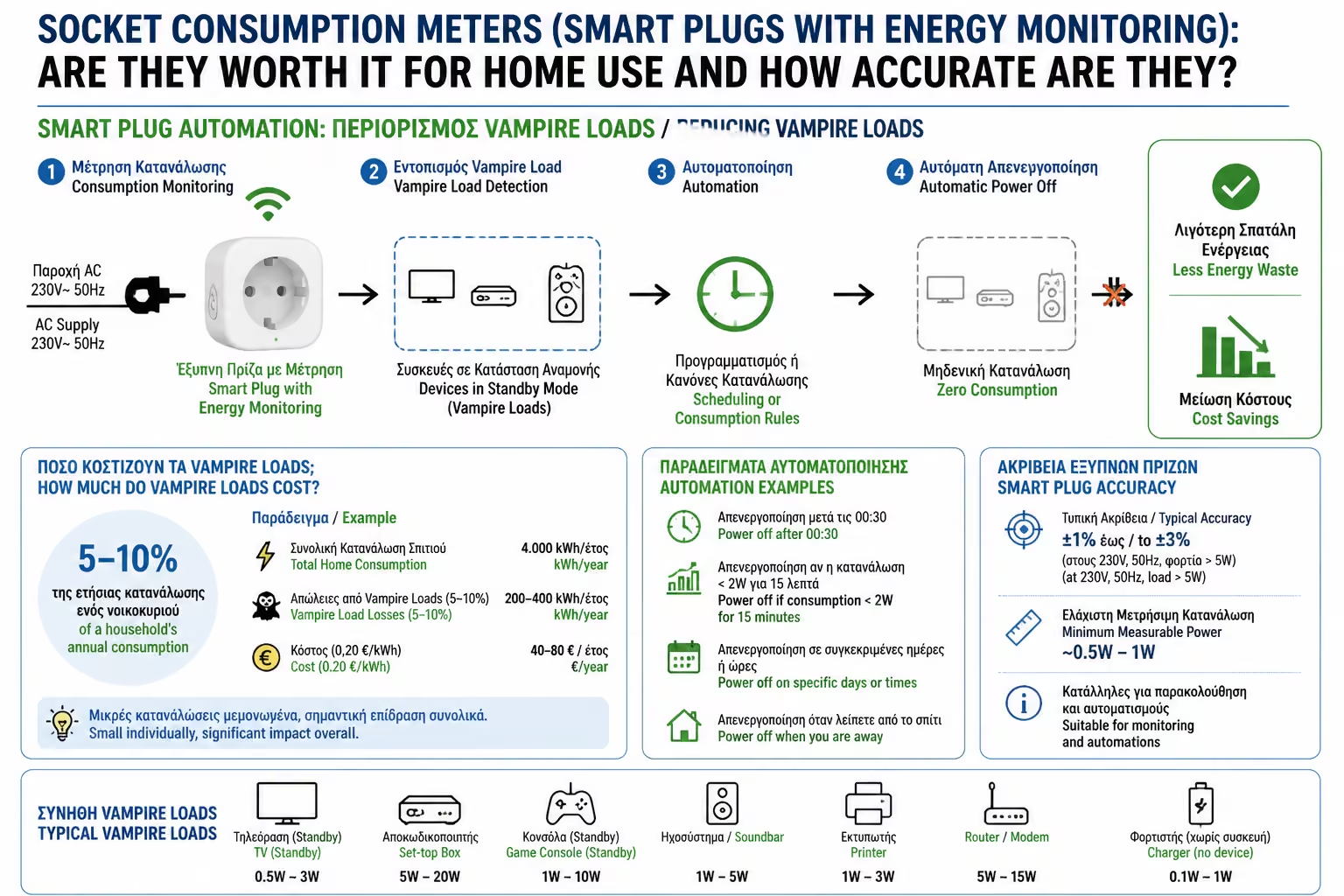
3. The Double Value: Measurement and Automation
The biggest advantage of smart plugs is not just that they measure,
but that they can also act. Because they contain a built-in switch,
you can create routines that reduce waste immediately.
The Water Cooler example
You measure the water cooler in the office and see that it burns
electricity all night and on weekends just to keep the water cold
(while no one is there). You set the smart socket to "cut"
the power to it every evening at 18:00 and to turn it on again at
07:00 in the morning.
Vampire Power (Waiting)
Measure your TV, sound system and consoles. You see that even when
they are "off" (in Standby), they draw a total of 20W. You
simply set the outlet to close completely when you go to sleep,
zeroing out the invisible consumption (Vampire Power).
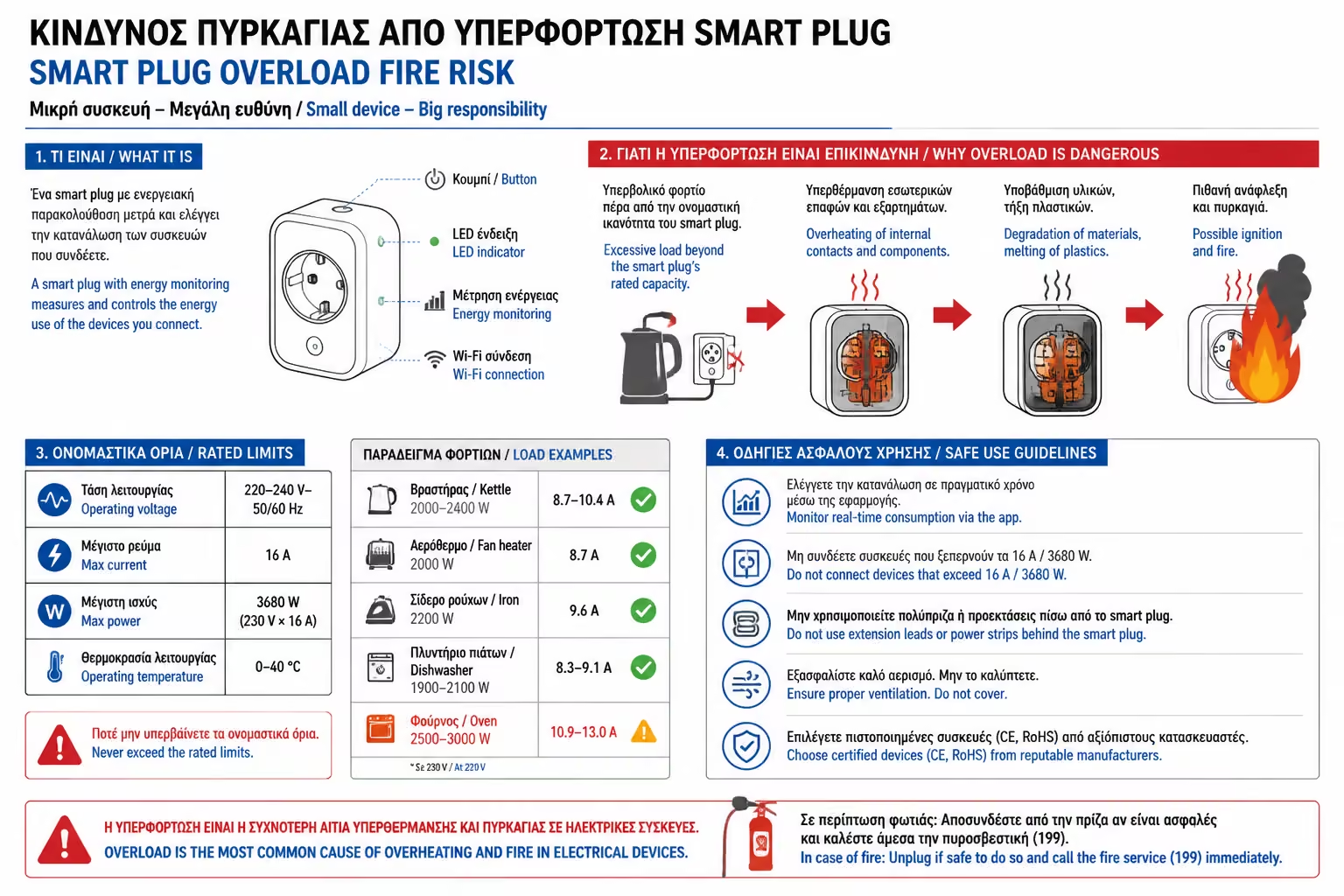
4. The Deadly Danger: The Overload
Here we come to the most critical point of the guide. Smart plugs are
fantastic for TVs, computers, fridges, lights and fans. But they are
dangerous for "heavy" loads.
If you read their box, most say "Max Load: 16A (3680W)".
This is often a theoretical lab number. In fact, the internal relay
and contacts of these devices are tiny. If you put on such an outlet a
"heavy" device with resistors that works non-stop at full
capacity, the smart outlet will heat up dramatically. Its plastics
will melt and there is a serious fire hazard.
Devices that MUST NEVER be plugged into commercial smart plugs:
Water heaters (either current or boiler).
Large electric radiators / water heaters that work for hours.
Washing machines and (mainly) Dryers.
Kitchen ovens.
The Engineer's Rule: Use Smart Plugs without fear for devices that
draw less than 2000W continuously. For anything larger, measurement
and control must be done through the electrical panel (with rail
relays and CT Clamps), where the devices are built to withstand such
thermal loads.
Summarizing
A smart plug with energy monitoring, typically costing around €15 to
€25, is one of the most practical diagnostic tools you can keep at home.
Use it methodically: one week on the fridge, the next on the PC, the
next on the air conditioner. You will quickly identify which appliances
are actually responsible for a high bill, while making sure not to use
it on heavy resistive loads.
Next Step: We completed Class A (Smart Meters) by learning all about
home applications. But how does all this data communicate when we are
dealing with a huge factory or a hospital with 500 meters?
We continue to the last guide of this section: Communication Protocols
for Large Buildings: How industrial meters "talk" (Modbus,
M-Bus, Zigbee).