
Consumption Management & Energy Monitoring
Return to category.
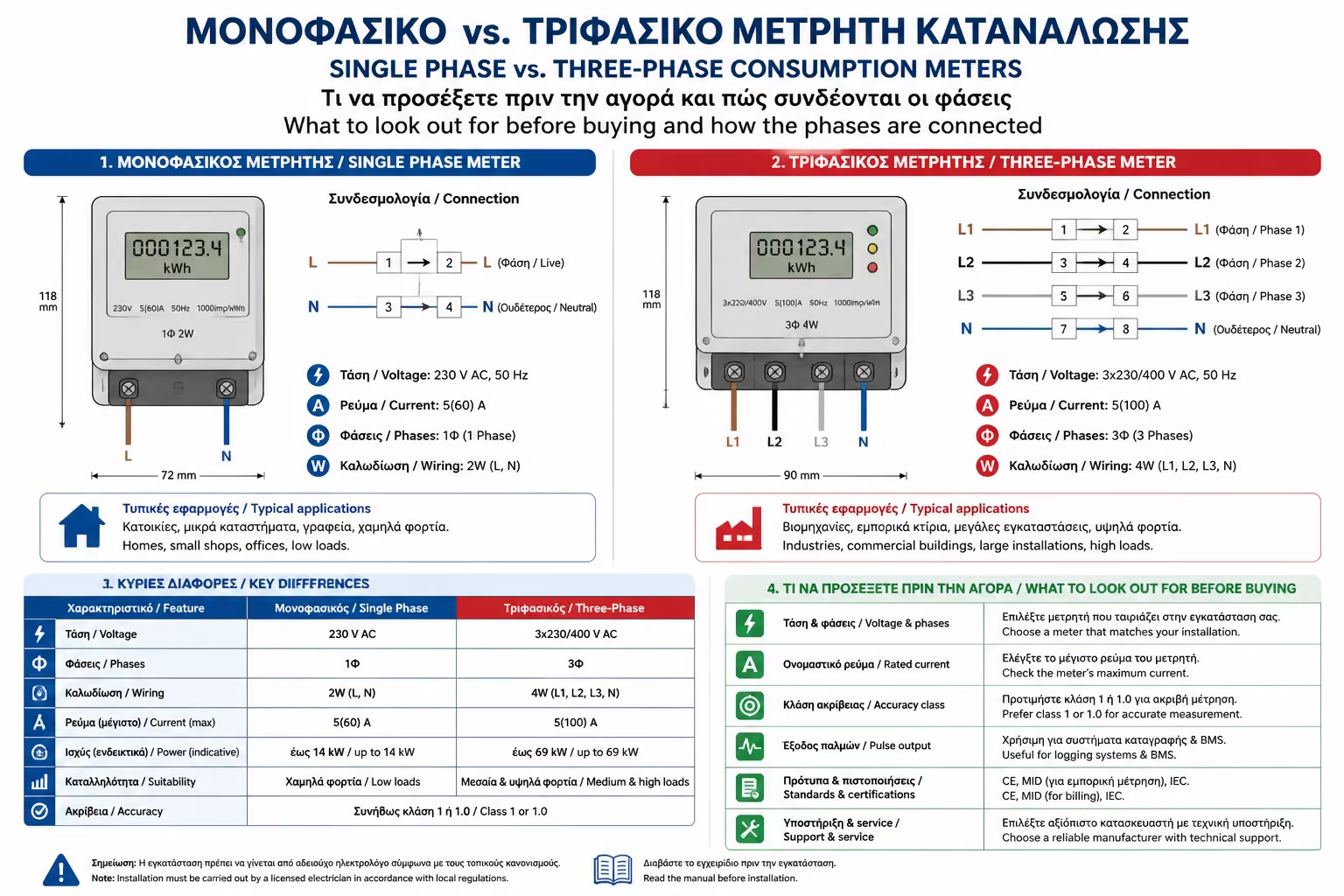
Go to categorySo far, our examples have been based on the simple, classic scenario of a small house with "single-phase" current. But what if you have a large detached house, a commercial space, a swimming pool, a heat pump or an electric car charger?
In those cases, the property usually has a three-phase supply. That means electricity does not arrive through a single live conductor, but through three separate phase conductors, typically referred to as L1, L2 and L3.
Trying to measure a three-phase system hides huge pitfalls. Many hobbyists buy the wrong equipment or make wiring mistakes, resulting in their consumption graphs showing completely absurd numbers. Let's see as engineers how to distinguish the meters and what is the golden rule of three-phase installation.
The most common question we get is, "I have three-phase power. Can I buy a simple, inexpensive single-phase meter and multiply the number I see by 3?"
The answer is an emphatic NO. In a house, the "loads" are never perfectly distributed.
If you put the single phase meter (or one CT Clamp) only on Phase 2, you will think your house is burning very little, when in fact the furnace and air conditioners on the other phases are "writing" thousands of watts. To get a correct picture in a three-phase panel, you need to measure all three wires at the same time.
A three-phase rail meter (either direct or indirect with Wi-Fi, such as the popular Shelly 3EM or Shelly Pro 3EM) is essentially "3 meters crammed into 1 device".
This is where 90% of the mistakes are made by electricians who are not familiar with Smart Electronics.
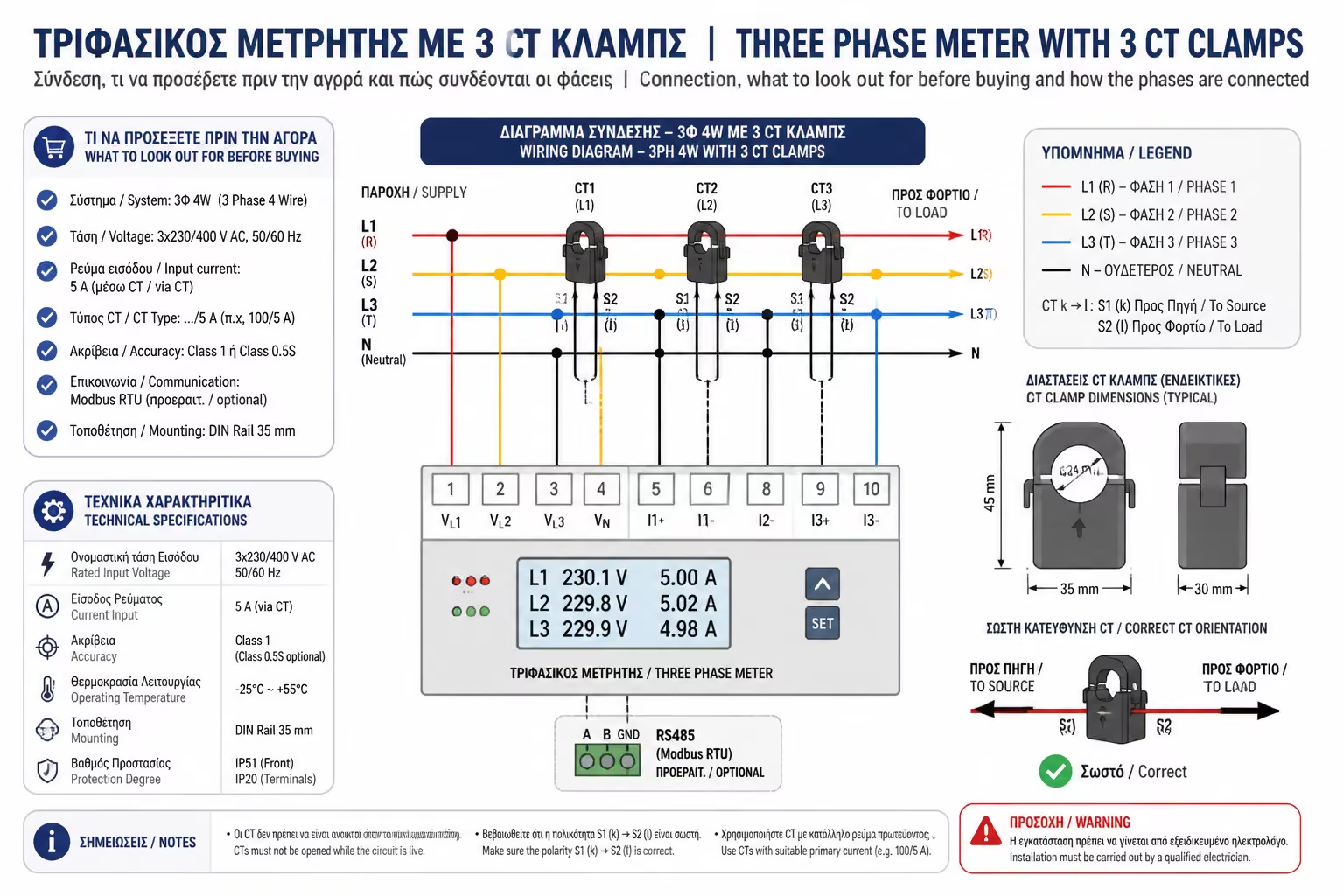
For a three-phase meter to calculate power and power factor correctly, it is not enough to read the current from the CT clamps alone. The device must also know the voltage of each corresponding phase. That is why the meter has separate voltage terminals, typically marked VA, VB and VC.
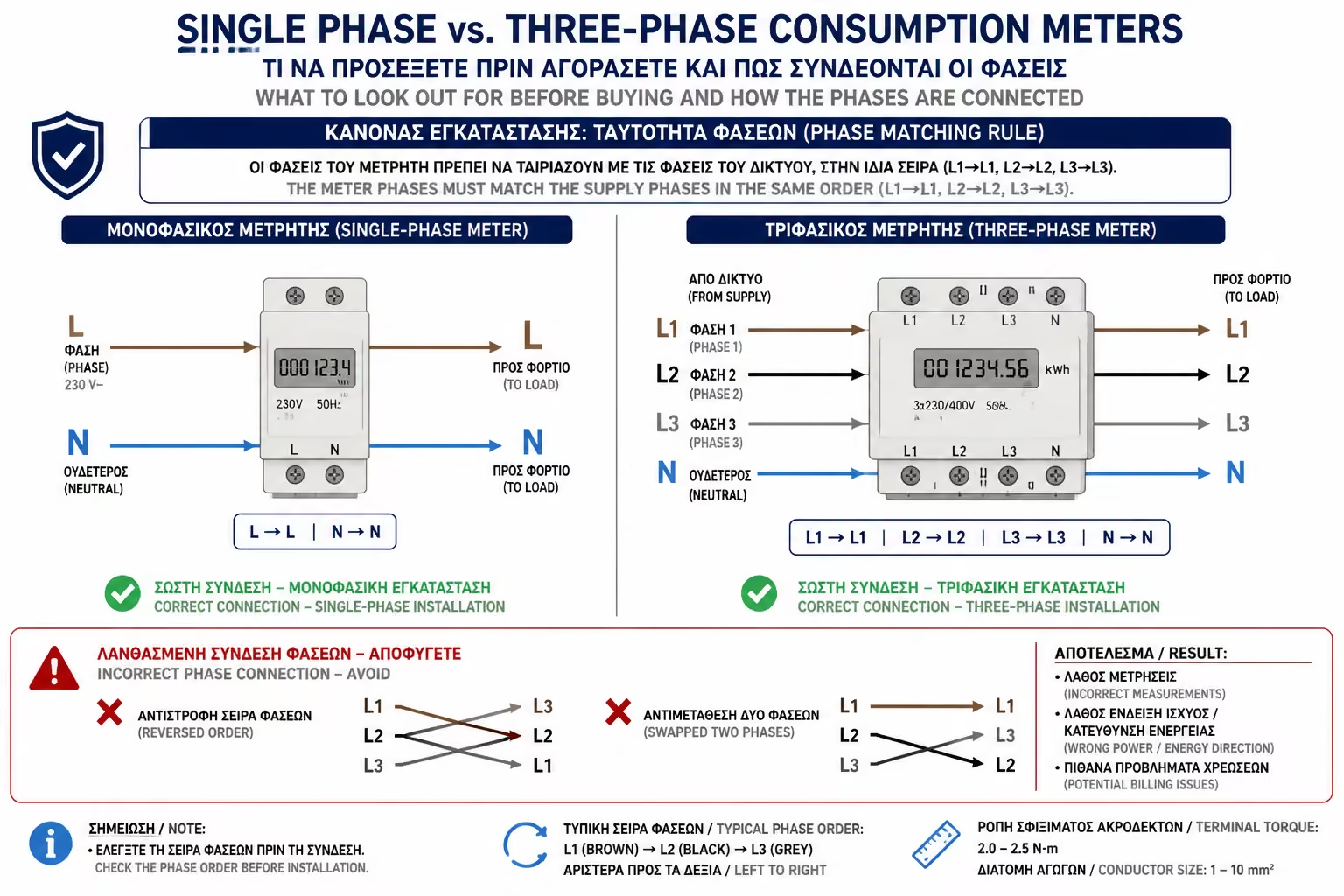
The Absolute Rule (Phase Matching):
What happens if they are mismatched? If CT Clamp A measures current on Phase 1 but voltage input A is taken from Phase 2, the software will calculate the waveform incorrectly. Because the phases are 120 degrees apart, the meter may interpret the current as reversed. You may see negative power factor values and graphs suggesting the house is exporting electricity even though no PV system exists. If that happens, the phase matching must be corrected.
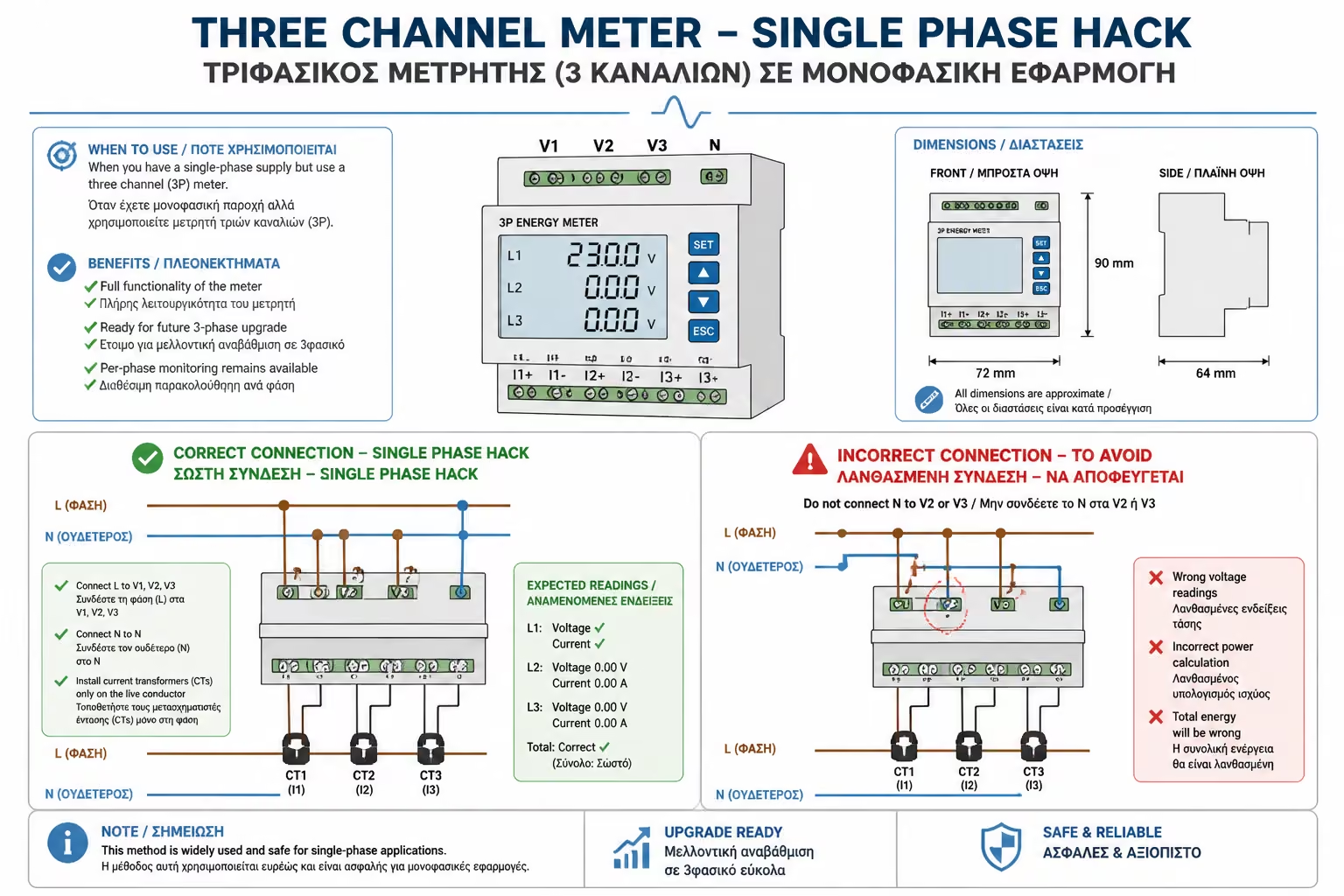
If you have a single-phase house, you can (and often it is better) to buy a three-phase meter (eg Shelly 3EM)! Why?
Because through the app you can tell the device not to sum the three clamp readings, but to treat them as three independent measurement channels. That allows one device, taking up minimal panel space, to do the following at the same time:
With this "hack", you save buying 3 different single-phase meters.
When you have a three-phase installation, half-meters do not fit. Buying a proper, certified three-phase meter is a one-way street. Just stress to your installer how critical phase matching is between the meter's supply voltage and the placement of the CT Clamps so that the data you see on your mobile screen is 100% true.
Next Step: We talked enough about how we see our consumption. But what if you have an Airbnb or renters and you want to bill (charge) them based on your meter numbers? If your meter does not have a certain certification, you risk legal penalties.
We continue with the crucial guide: MID (Measuring Instruments Directive) certification: When your meter is legally and commercially valid to bill third parties.
Return to category.
Go to categoryReturn to the central guide.
Go to guide