The Start-Up Surge
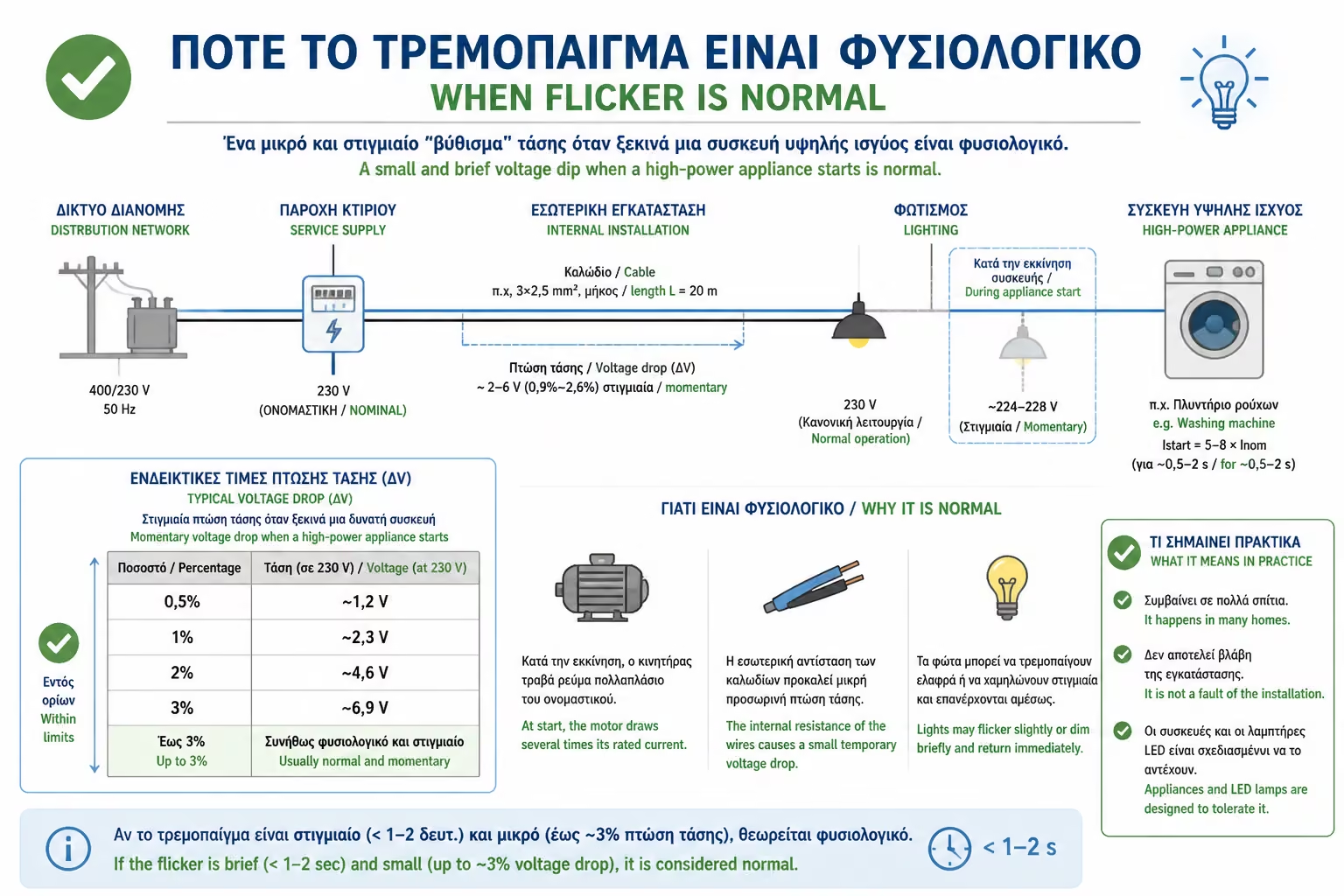
At start-up, these motors can draw several times their normal running current.
It is a familiar scene in many homes. The room lights are steady, then the air-conditioner compressor, washing machine or pump starts, and for a split second the lamps dip before returning to normal.
Many people assume that the installation is failing or that the supply is unstable. In reality, a brief dip is often normal. But persistent or exaggerated flicker can also be an early warning of poor connections, bad circuit design or utility-side voltage problems.
The key is to understand why heavy loads momentarily pull voltage down, and when that behaviour crosses the line from normal to problematic.
To understand the problem, think of your home installation as a network of water pipes. If you are taking a shower with constant pressure and someone suddenly pulls on the faucet, the water pressure in the shower will drop momentarily until the tank is full.
It's the same with electricity. Appliances that have large, heavy electric motors inside them (such as the air conditioner, refrigerator, washing machine, water pump, or vacuum cleaner) need enormous effort to overcome inertia and start turning.
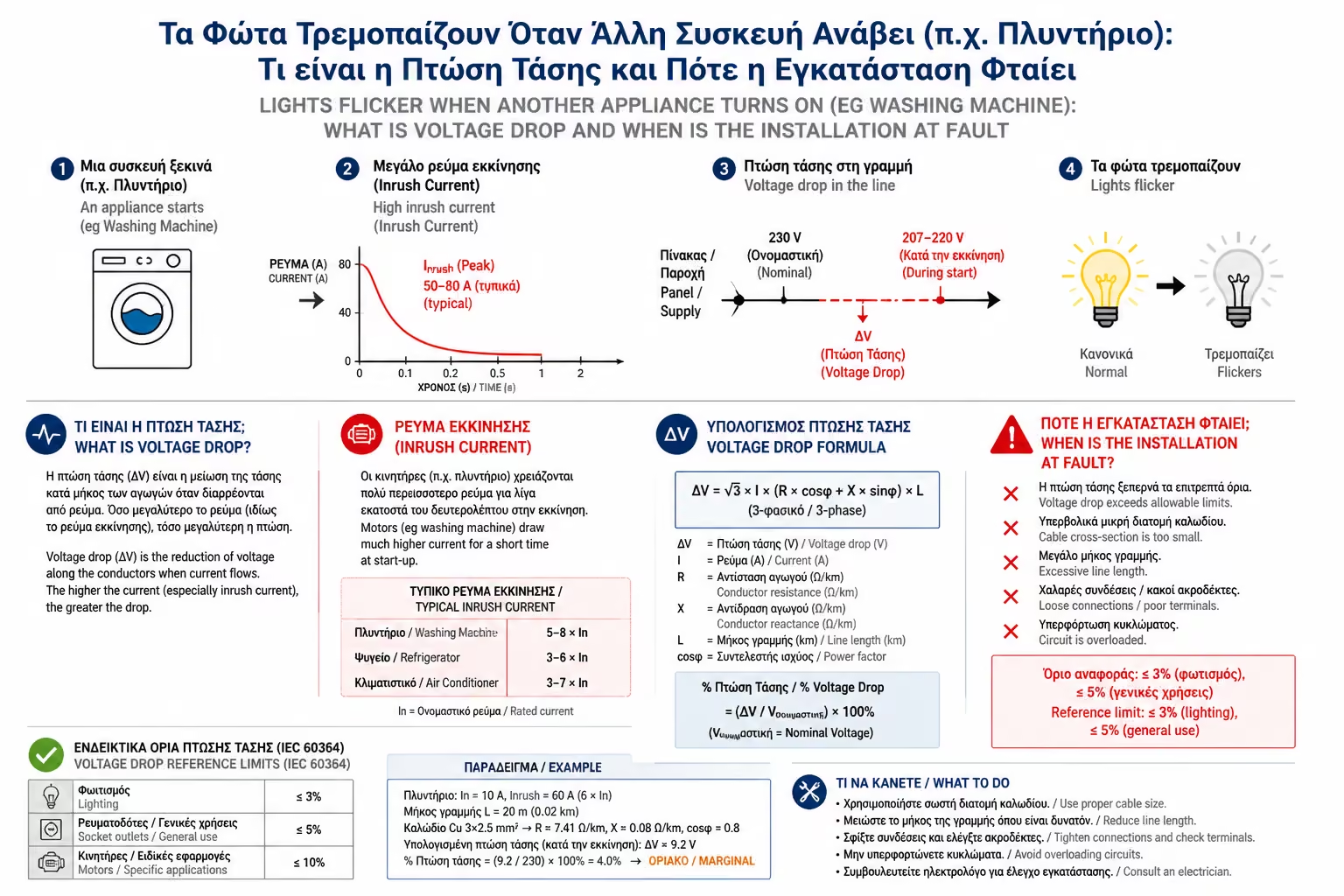
At start-up, these motors can draw several times their normal running current.
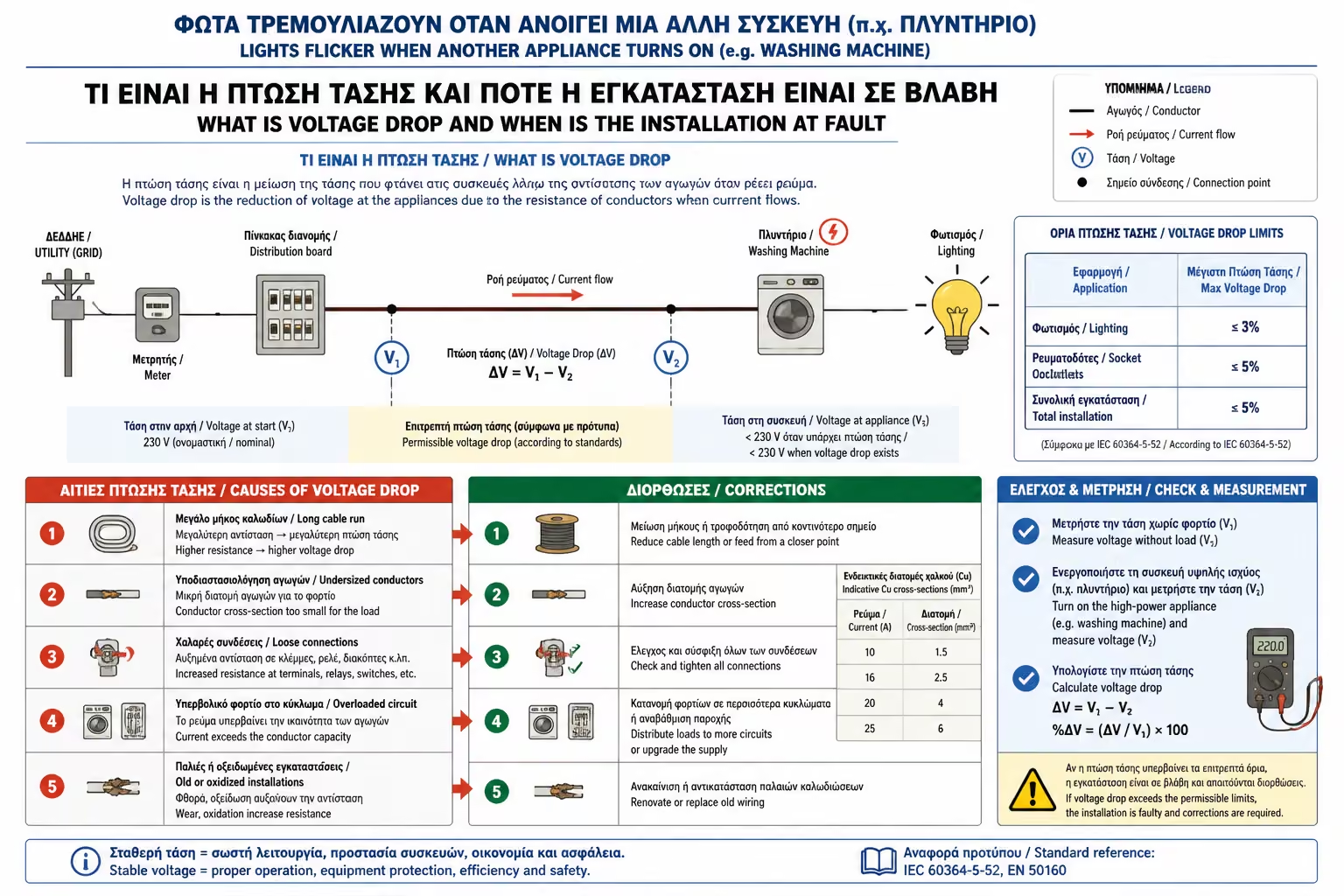
That sudden demand causes a brief voltage drop across the installation.
Lamps, especially LEDs and older lighting circuits, react instantly to that dip, so you see a momentary flicker until the motor settles.
You do not need an electrician every time a motor starts. Brief flicker is generally harmless when all three of these conditions are true:
Note on LED bulbs: Very cheap LED bulbs don't have good capacitors in their internal circuit (driver) to "smooth out" these voltage fluctuations, so the effect is much more pronounced in them than in old incandescent bulbs.
If the behaviour goes beyond a brief dip, then the installation deserves investigation. Watch for these patterns:
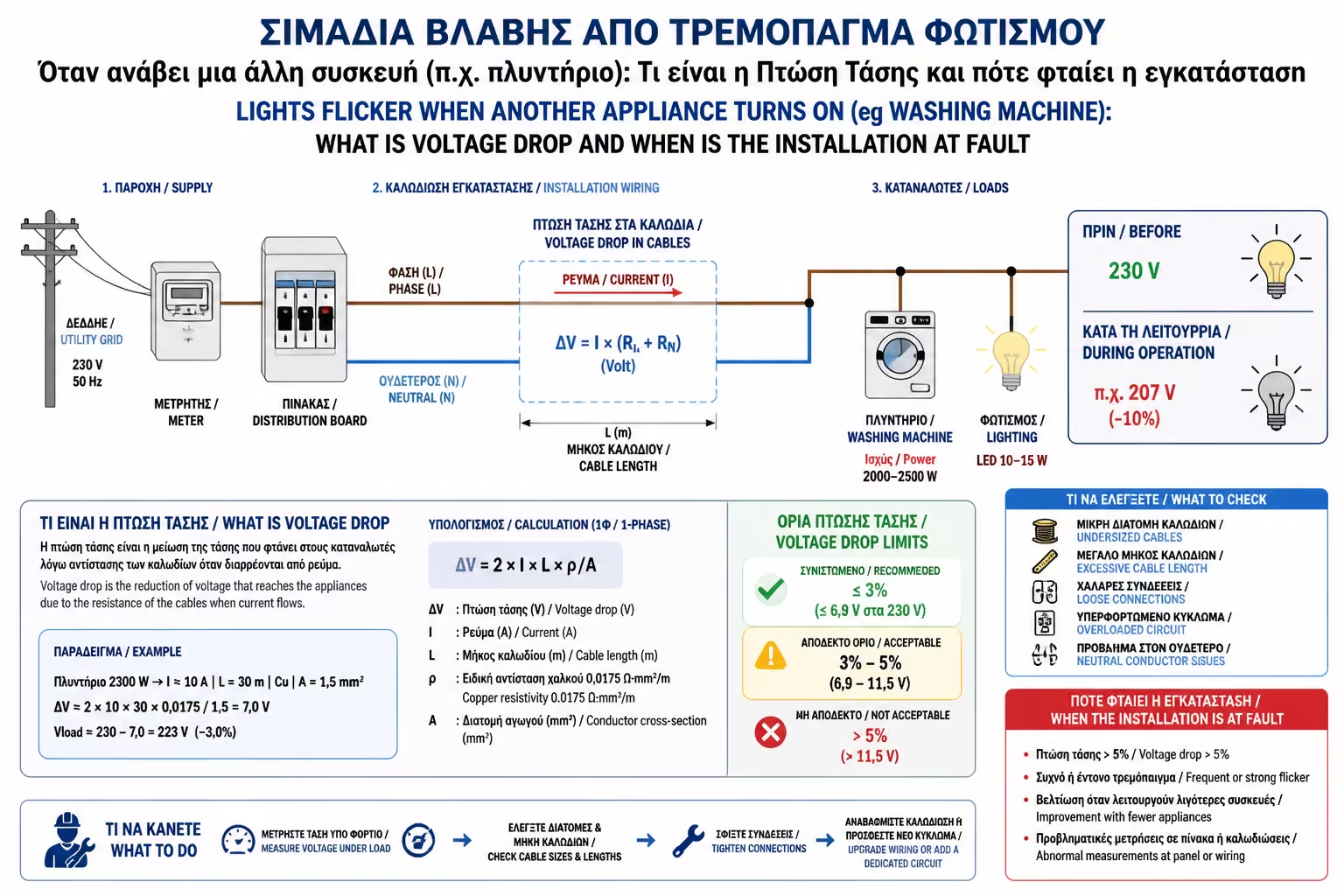
If the lights are flashing rhythmically or flickering like a disco the entire time the washer is running, it's not just a voltage drop.
If the lights dim when you turn on the heater and stay dimmed while the heater is running.
If the lights flicker when you turn on a toaster, a hand mixer, or just your computer printer.
If you have the above symptoms (the red flags), then the voltage drop is not caused by the laws of physics, but by faulty wiring:
A loose terminal on a main breaker, feeder or neutral bar can create enough resistance to make the whole house voltage sag whenever current demand rises.
In older homes, lighting and socket loads may share the same circuit. When a heavy appliance starts on that line, the lamps on the same branch see the voltage drop directly.
In three-phase properties, a heavy appliance may sit on the same phase as sensitive lighting while another phase is lightly loaded. Rebalancing the distribution can improve performance significantly.
Sometimes the issue lies upstream. Long feeder runs or weak neighbourhood infrastructure can leave the property with low baseline voltage, so every motor start creates a much larger visible dip.
A brief flicker when a compressor, pump or washing machine starts is usually just the effect of inrush current. But if flicker becomes frequent, lasts longer, appears with small loads or comes with heat and noise at the panel, it should be treated as a diagnostic warning rather than a harmless quirk.
Next Step: When trying to check if an outlet or circuit is working, most people use the classic (and often dangerous) test screwdriver. But there is a much more reliable tool.
Next we move to the first diagnostic tool every careful homeowner should understand: how to use a multimeter safely for basic voltage and continuity checks.
Return to category.
Go to categoryReturn to the central guide.
Go to guide