
Why Does the RCD Keep Tripping? 5 Common Causes and How to Isolate the Fault

It's Saturday night. You're relaxing watching a movie in the living room, the washing machine is running in the background, and suddenly... complete darkness.

You walk to the electrical panel with your phone flashlight and see that the residual-current device, or RCD, has tripped. You reset it, and with a sharp click it trips again immediately. The house refuses to come back on.

Panic is the worst possible response. Before you blame the utility or imagine the wiring is about to catch fire, remember this: the RCD trips because it is doing exactly what it is designed to do. It has detected leakage current somewhere in the installation and is trying to protect you from electric shock.

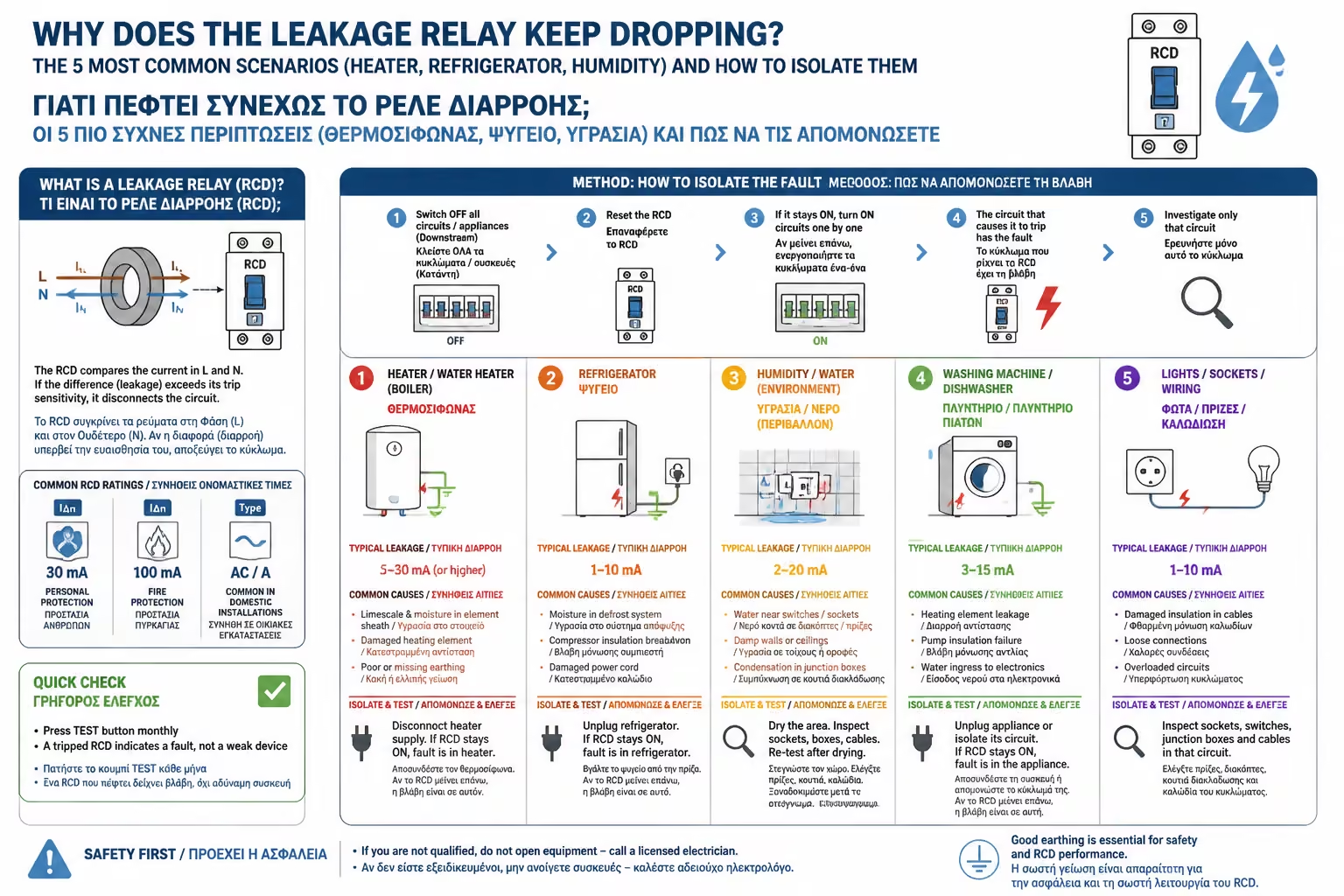
Here is the electrician's isolation method for finding the culprit circuit quickly, followed by the five most common sources of leakage in a home.

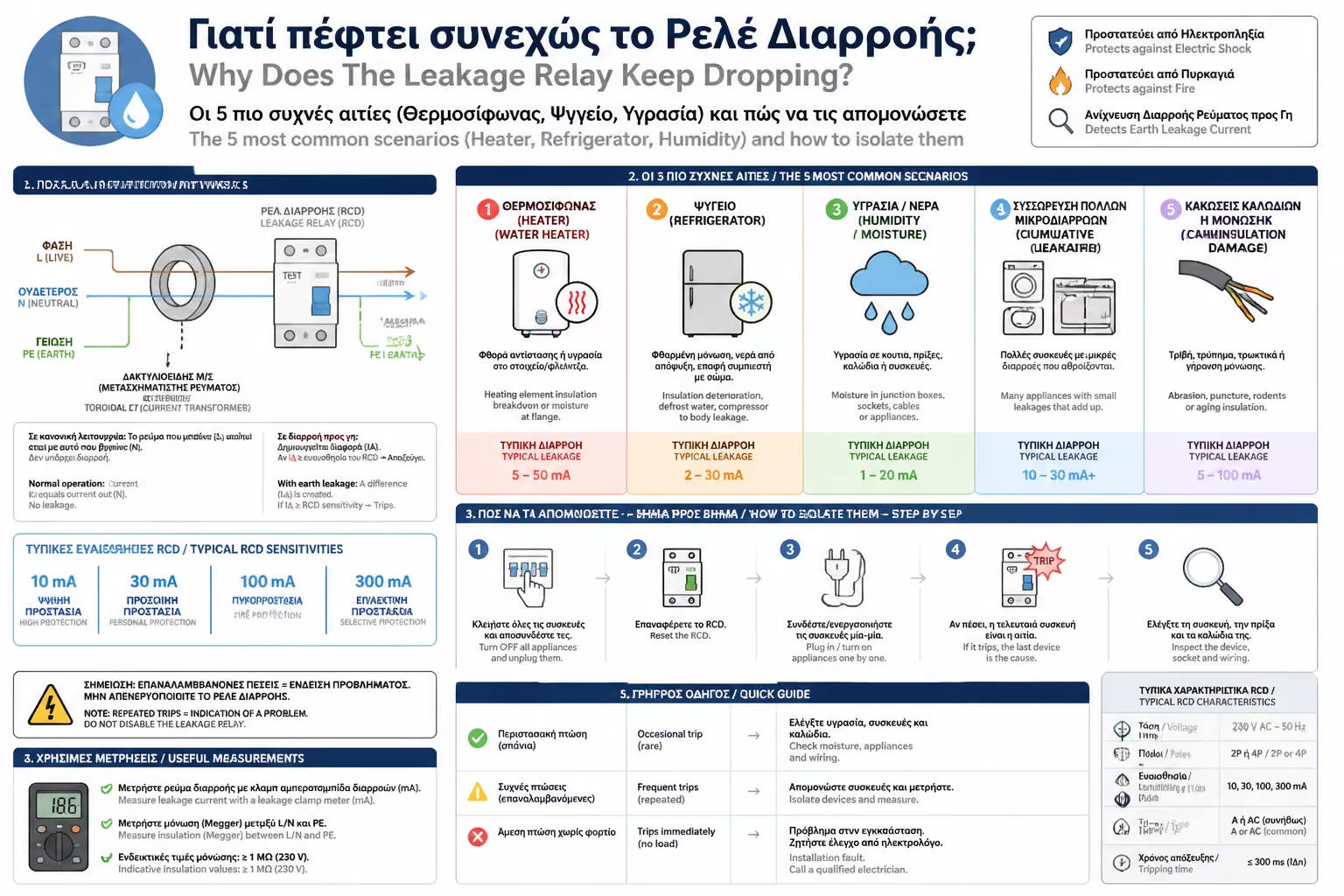
1. The Isolation Method (Troubleshooting in 3 steps)

You do not need a multimeter or specialist knowledge for this first step. You only need calm thinking and enough light to work safely at the panel.

Step 1: Switch all the individual circuit breakers in the panel down, leaving only the main isolator and the RCD active. Step 2: Reset the RCD. In normal conditions it should now stay on, because all downstream circuits are disconnected. If it still trips with every circuit breaker turned off, the fault is likely in the panel wiring itself or in the RCD, and you should call an electrician immediately. Step 3: Turn the individual breakers back on one by one. As soon as you energise the faulty circuit, the RCD will trip again. At that point you have identified the problem line. Leave that breaker off and restore the rest of the house.

Illustration for 1. The Isolation Method (Troubleshooting in 3 Steps)

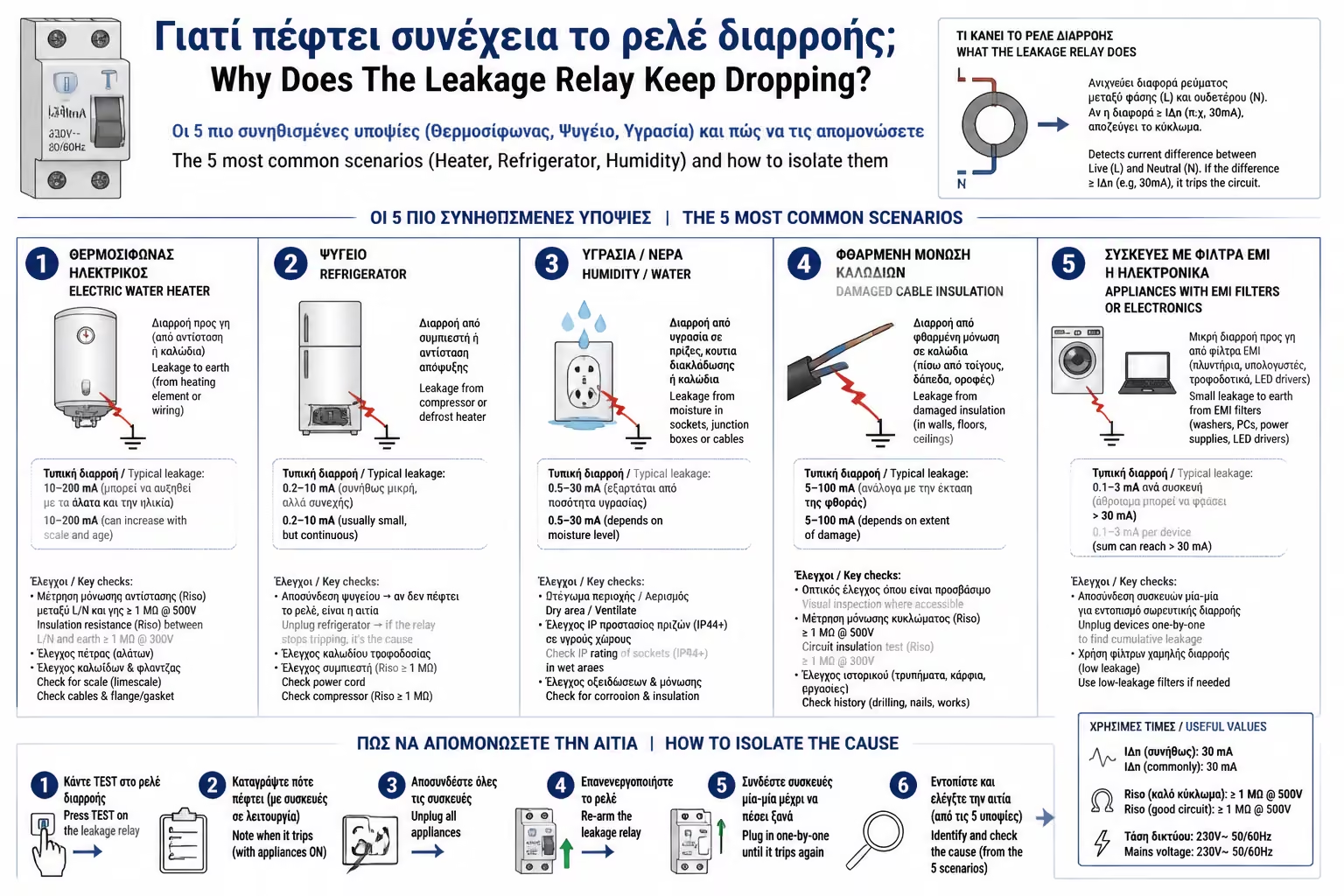
2. The 5 Usual Suspects (Who's Throwing the Relay?)

Illustration for 2. The 5 Usual Suspects (Which Device Is Tripping the RCD?)

Once you know which breaker is causing the trip, the next step is to identify which appliance or fitting on that circuit is leaking to earth.

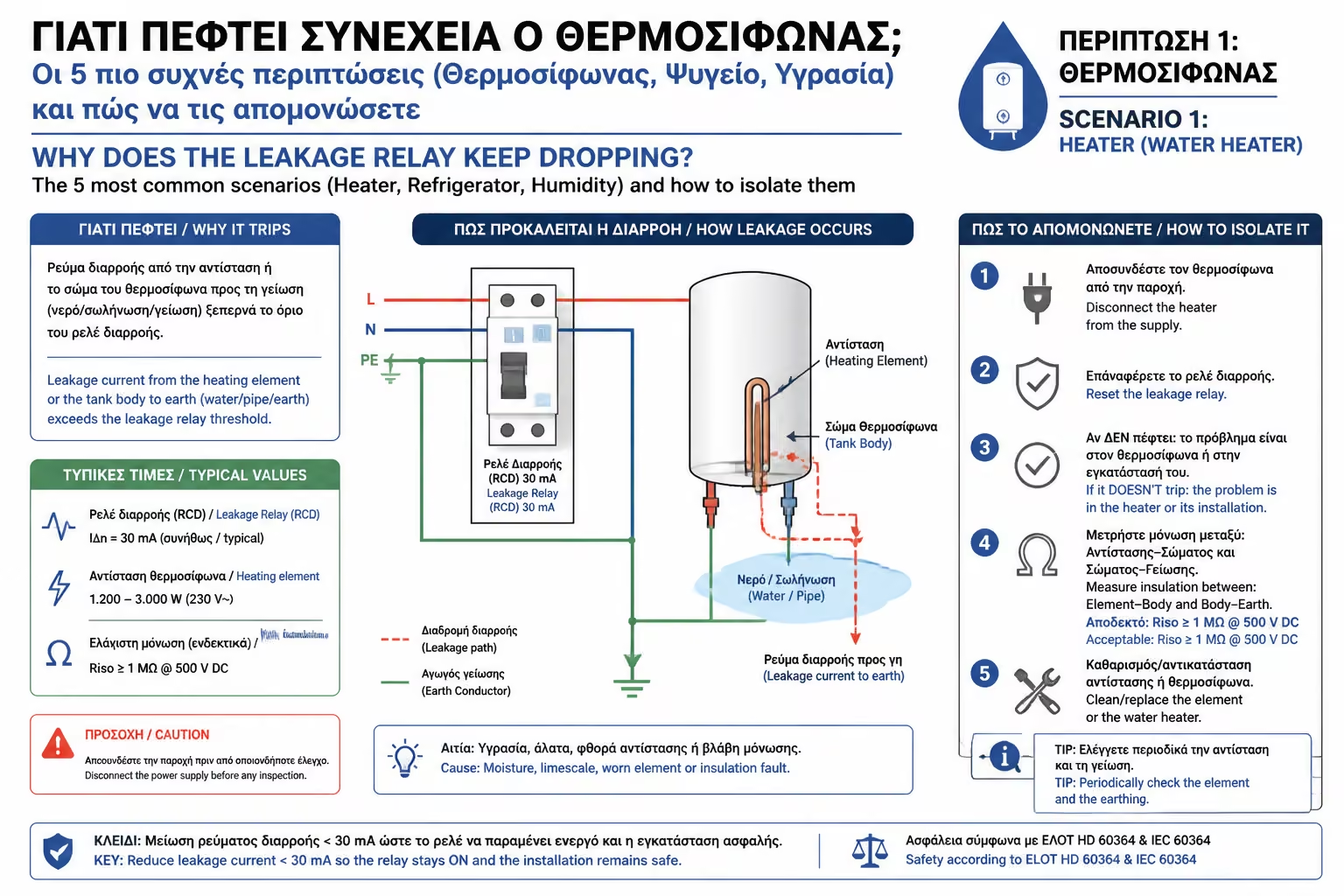
Suspect #1: The Electric Water Heater

One of the most common causes in Greek homes. The heating element sits permanently in water, and over time salts and corrosion attack its metal sheath. Once leakage develops, the RCD trips the moment the water heater is switched on. The usual fix is replacement of the element, often together with descaling and inspection of the unit.
Suspect #2: The Refrigerator

Refrigerators are easy to forget because they are often built in and always left plugged in. Modern frost-free units contain defrost heaters, fans and drain systems, all of which can develop moisture-related faults. If unplugging the fridge stops the tripping, you likely need an appliance technician rather than general electrical work.

Suspect #3: Outdoor Lighting and Moisture

Garden lights, outdoor outlets, balcony fittings and pool circuits are frequent seasonal offenders. If the RCD trips during rain, irrigation or whenever exterior lighting is switched on, water ingress is the first thing to suspect. Junction boxes, luminaires and outdoor accessories should all be inspected for moisture and contamination.

Suspect #4: Small Appliances That Heat Water

Irons, kettles, coffee machines, dishwashers and washing machines all contain heating elements that can leak current to the metal chassis. If the trip happens exactly when the appliance starts heating, unplug it fully from the outlet and test again. Simply switching the appliance off is often not enough.

Suspect #5: A Neutral-to-Earth Fault

This is one of the most frustrating cases. Even with the breaker off, the RCD may still trip because many protective devices disconnect only the phase conductor, while the neutral remains connected. If neutral touches earth somewhere in the circuit, the fault persists. Finding it usually requires insulation testing with a Megger and should be handled by an electrician.

3. Nuisance Tripping

Sometimes the RCD appears to trip for no obvious reason, perhaps once a month, often early in the morning, and then resets normally as if nothing happened.

This is called "Nuisance Tripping".

Illustration for 3. Nuisance Tripping

Normal Leaks

Every electronic device with input filters, such as TVs, computers, chargers and inverters, leaks a tiny amount of current to earth by design. On their own these values are harmless, but together they can add up close to the trip threshold. A small network disturbance can then trigger the RCD even though no single appliance is actually faulty.

The Broken Relay

RCDs also age. A worn device may become oversensitive and start tripping well below its nominal threshold, which creates repeated nuisance trips and deserves replacement.

Summarizing (What NOT to do)

Illustration for Summary: What Not to Do

If the RCD trips, there is a reason. Never tape it in the ON position and never bypass it. The current it is interrupting could otherwise pass through the body of the person touching the faulty appliance. Isolate the faulty circuit methodically, identify the suspect device, and call a professional if the cause is not obvious.

Next Step: That covers the case where the RCD trips. But what happens when the RCD stays on and instead the main breaker trips, or even worse, the fuse at the meter disconnects the supply?

Next we move to the difference between overload and short circuit, and why the main breaker or meter protection may trip instead.

Related Articles

Preview