Electrical Panel Thermographic Inspection: How the thermal camera
detects cables at risk of catching fire before they even smell
You have pressed the Test button on your leakage relay and everything is
working like clockwork. You open the electrical panel door, take a look
at the fuses, everything looks neat and tidy. Close the door and feel
safe.
But here lies a huge pitfall of human perception: Our eyes cannot see
temperature. Inside this seemingly perfect board, a screw on a fuse may
have come loose just a little. The current passing through there meets
resistance and starts heating the metal. The temperature rises silently
to 70°C, then to 90°C. The plastic sheath of the cable starts to
"bake" internally. There is no smoke, no flame, and the smell
of burnt plastic has not yet come out of the closed box. When it finally
smells, the fire will be seconds away.
This is where modern prevention technology intervenes: Thermographic
Control. Let's see how engineers use the thermal camera to
"see" the invisible and prevent disaster.
1. What is Infrared Thermography?
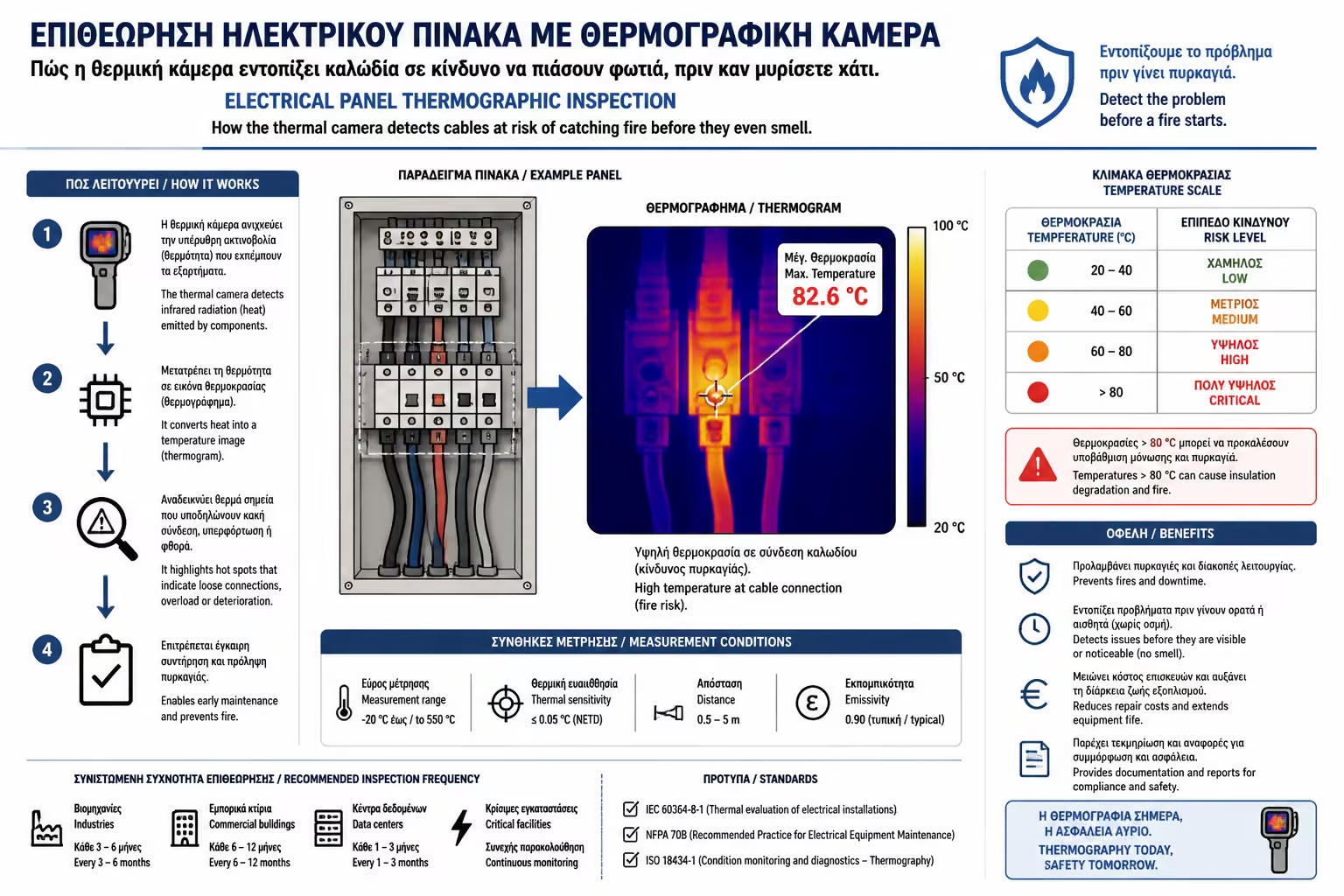
All objects around us, because they have temperature, emit infrared
radiation. We cannot see it, but the Thermal Imager can.
This device converts heat into a visual, colorful image (Heatmap).
Cold spots appear in dark colors (blue, purple, black).
Hot spots are shown in warm colors (yellow, orange).
Dangerous hot spots "glow" in pure white or bright red.
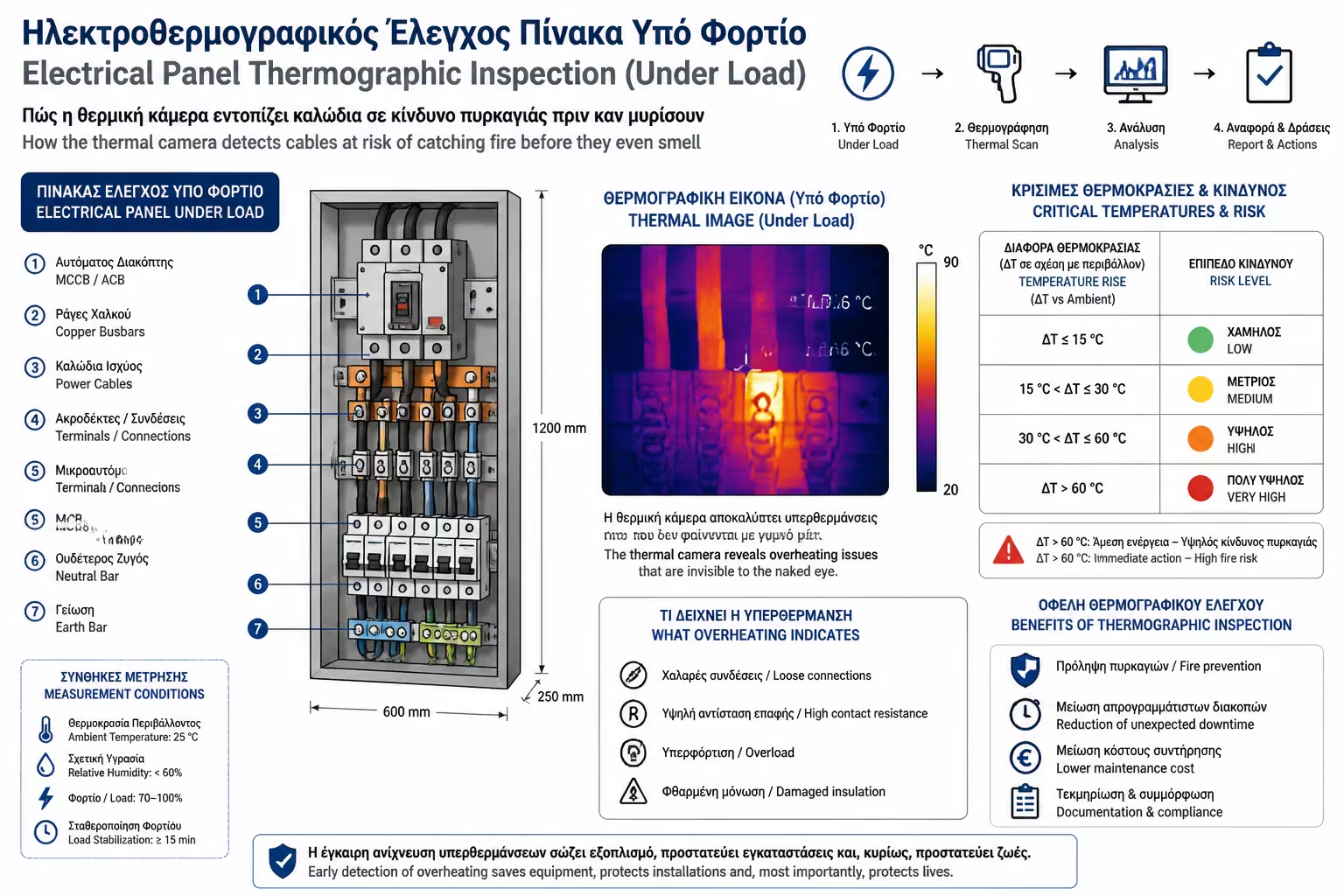
2. How to Check the Table (Real Time)
The huge advantage of thermographic control is that there is no need
to cut the power. On the contrary, it must be done when the home or
business is operating at full capacity (under full load).
The Preparation: The electrician asks you to turn on the
"heavy" appliances (water heater, air conditioners, oven,
heat pump).
The Scan: Removes the plastic cover of the panel (leaving the wires
bare) and targets with the thermal camera all the fuses, relays and
connection terminals.
The Diagnosis: On the camera screen, most of the panel will be
blue/yellow (normal operating temperatures around 30°C - 45°C).
Suddenly, the lens detects a connection point at the base of a fuse
that reaches 85°C and glows like a torch on the screen! The culprit
was just caught red-handed.
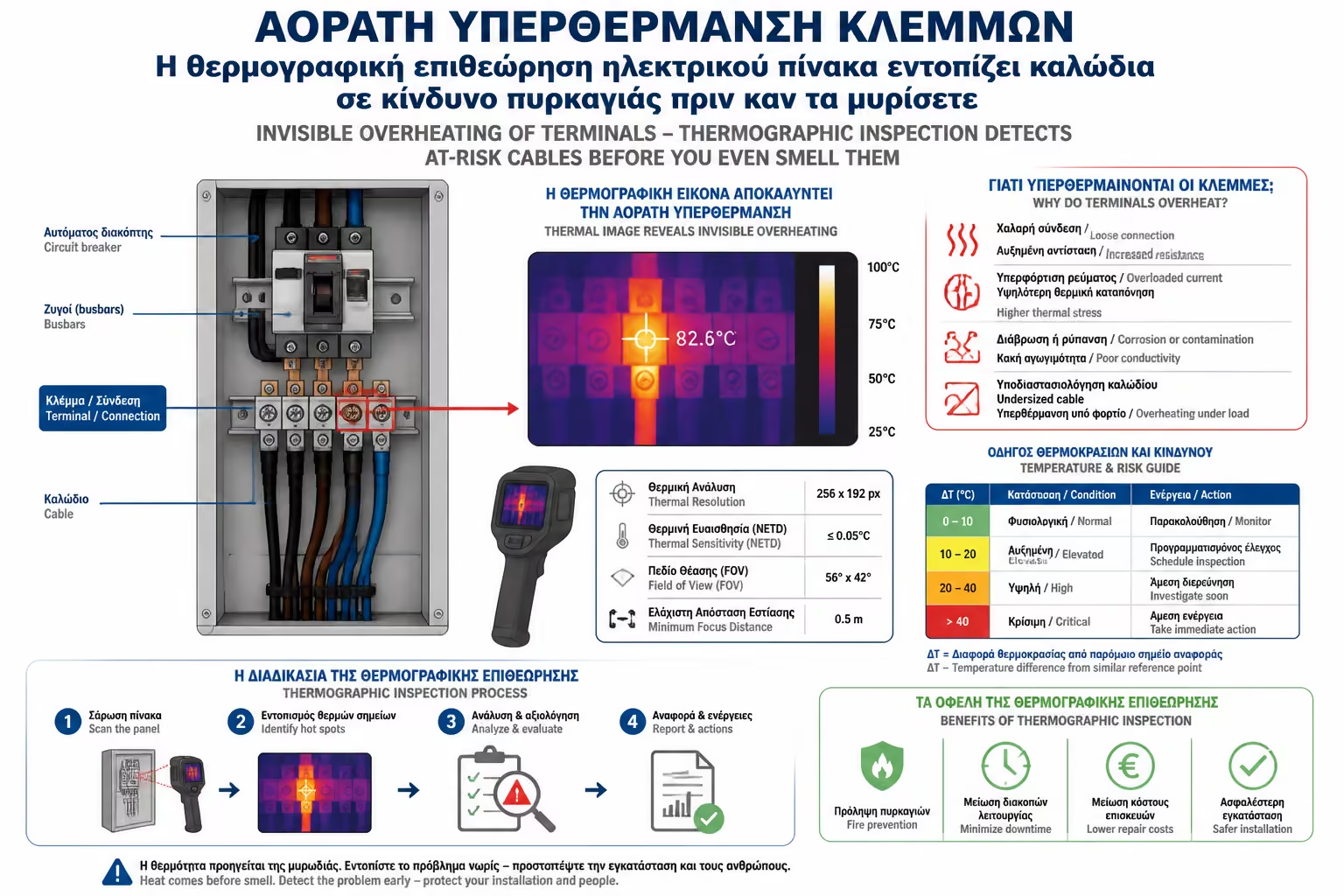
3. What are the causes of "Invisible" Overheating?
The thermal camera reveals the results of three main problems:
A. Loose Contacts (The #1 Killer)
When copper is heated (when current is passed) it expands, and when
it cools it contracts. This constant micro-motion causes the screws
that hold the wires to the fuses to loosen over the years. Loose
contact reduces the surface area through which current flows,
creating huge "resistance". The resistance creates extreme
heat, which melts the wire.
B. Circuit Overload (Imbalance)
In three-phase panels, the camera can show that one of the three
center wires is "on fire" while the other two are cold.
This means that the original electrician did not correctly
distribute the loads in the house. All heavy equipment draws current
from the same Phase (same wire), pushing it to the limits of its
endurance.
C. Defective Materials
Sometimes, the screw is tight, but the problem is inside the switch.
If an old fuse is "fatigued" internally and its contacts
have oxidized, the thermal imager will show the entire plastic body
of the fuse glowing red.
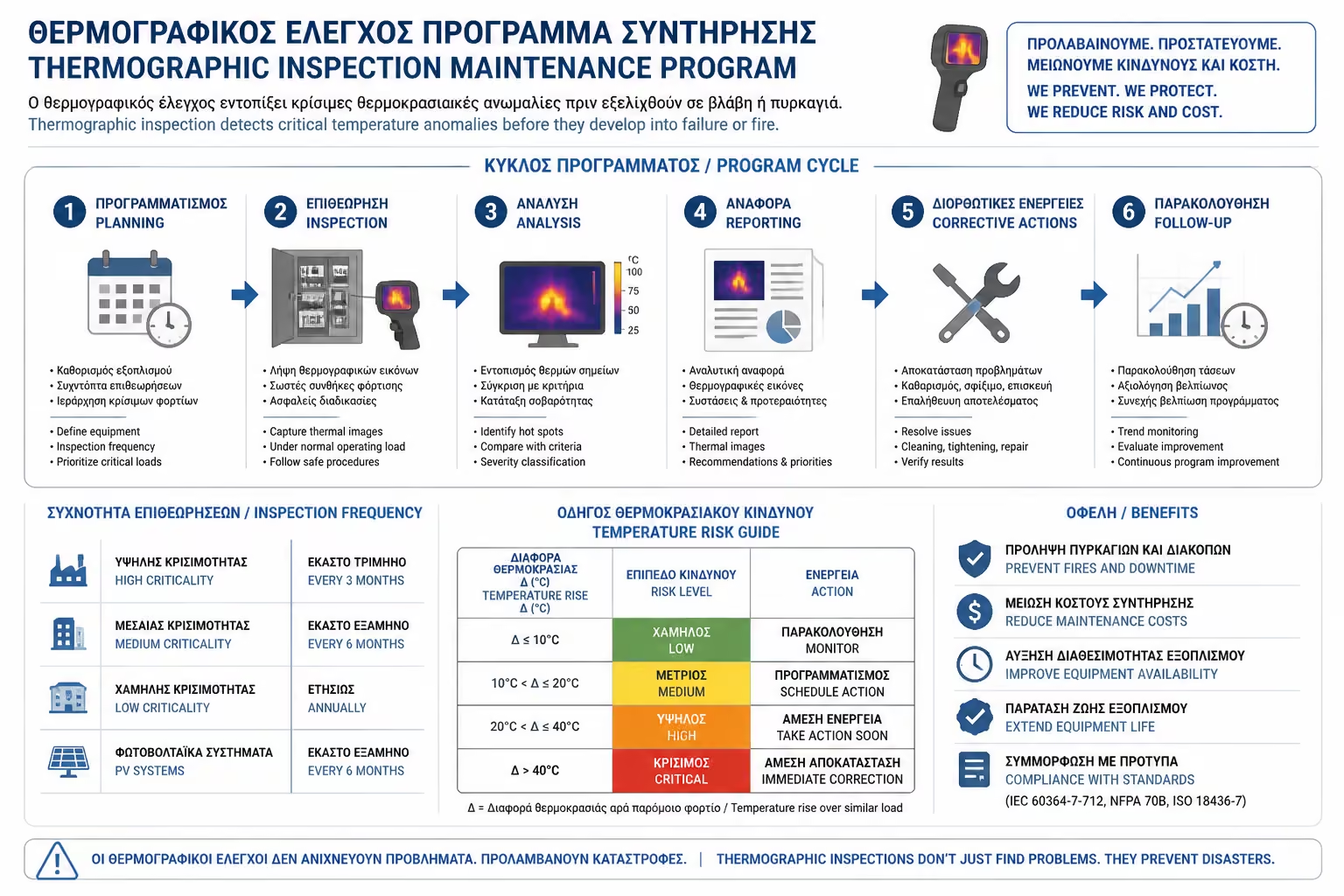
4. When should it be done (and who needs it)
Thermographic testing is a non-invasive, quick procedure (takes less
than 15 minutes).
Domestic Use
It is recommended that it be done during periodic maintenance of the
panel (every 5 to 7 years), or immediately if you notice the lights
flickering when the water heater is turned on.
Business Spaces & Hotels
It is required every 1 year before the start of the tourist season
or summer. Hotels and factories have hundreds of fuses. A loose
screw in the main distribution board (MDB) can lead to a whole
building blackout or a catastrophic fire in the boiler room. Often,
major insurance companies require an annual Thermographic Survey
Report to renew a business's fire insurance policy!
Summarizing
Prevention in electrical engineering is not about fixing what's already
broken, but about spotting what's about to break down. Thermographic
inspection using an infrared camera gives the electrician
"superhuman vision". It turns the invisible, dangerous heat of
loose wires into a clear picture, allowing you to replace a €5 fuse
before it turns into tens of thousands of euros worth of damage.
Next Step: We've seen how the thermal camera detects the number 1
danger: loose screws. Once we've identified it, the fix is remarkably
simple and is the single most important maintenance job an electrician
can do on your panel.
We continue to treat the problem: Tightening Panel Contacts: The number
one preventive task that saves homes from short circuits and sparks.