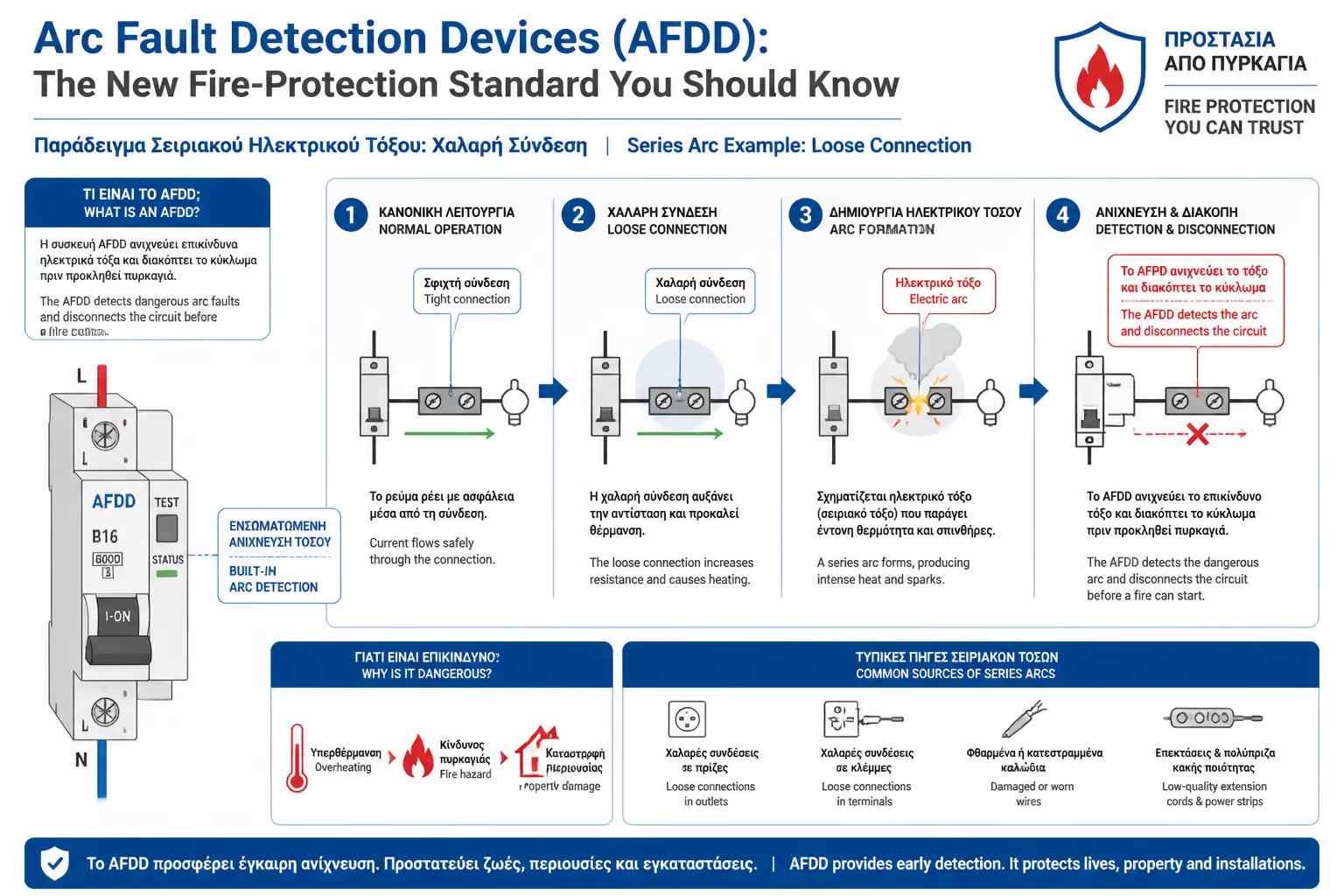
An arc does not always mean huge current
It can be thermally destructive without resembling a classic short circuit.
One of the most dangerous electrical hazards is neither the classic short circuit nor the ordinary earth leakage event. It is the arc fault created when a connection loosens, a conductor is damaged or a contact point starts to spark repeatedly without producing enough current to trip the breaker.
That is exactly where classical protections have a blind spot. The MCB protects against overcurrent and the RCD against leakage. But if sparking exists without a clean short circuit or meaningful leakage to earth, the installation may continue operating while insulation around the fault is being thermally degraded.
The AFDD was created to close that gap. It does not replace the other devices, but it completes the system by recognising the characteristic electrical signature of a dangerous arc before it becomes a genuine fire source.
A loose terminal, a damaged extension lead, a cable crushed by furniture or a connection that has degraded over time can produce repeated sparking. In such cases, the current often does not rise enough to trigger the magnetic protection of the breaker.
The result is dangerous and subtle: extremely high local temperatures develop, insulation is progressively damaged and nearby materials are heated without the visible drama of a major short circuit. That is why many electrical fires begin at points that seem harmless until ignition finally occurs.
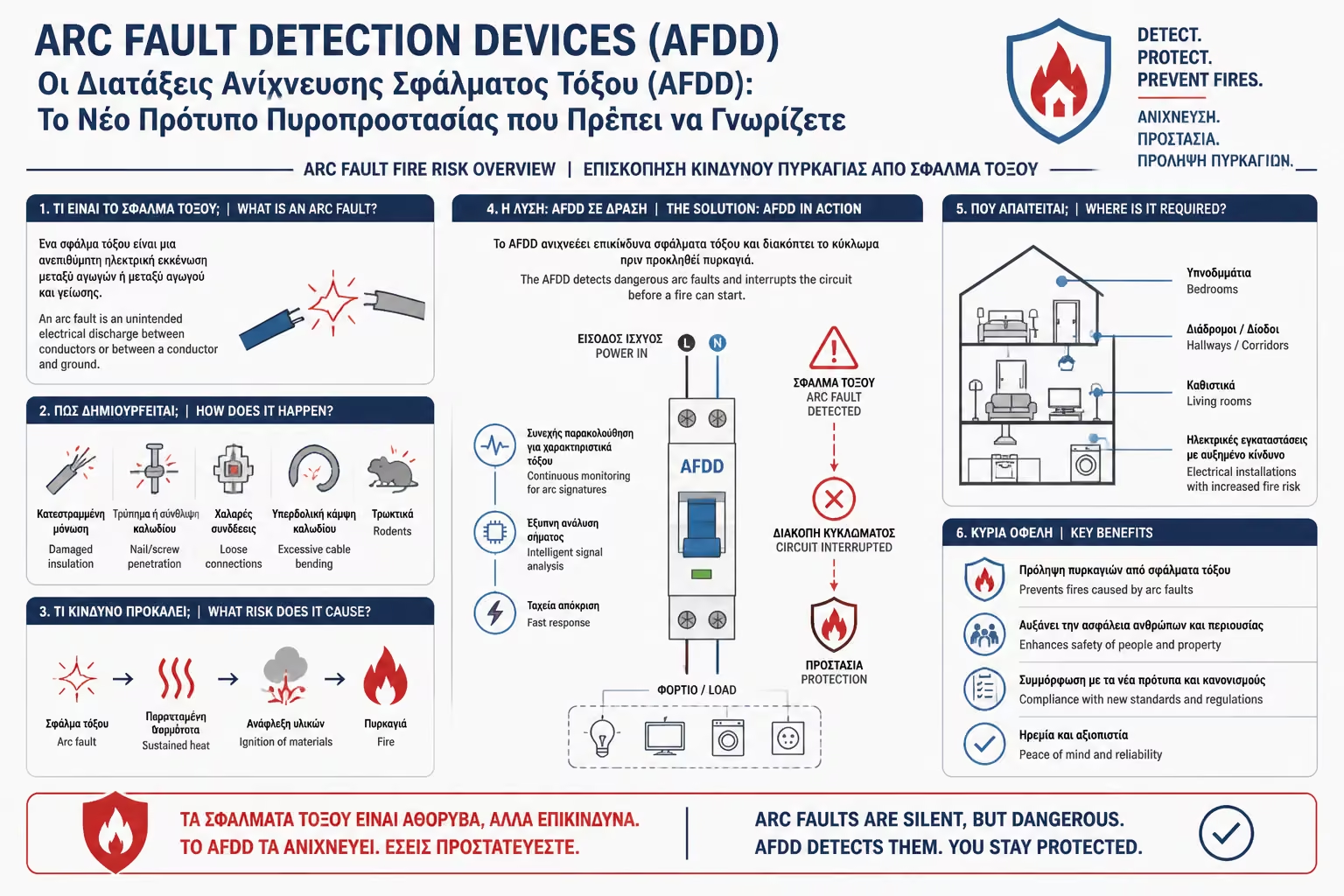
It can be thermally destructive without resembling a classic short circuit.
Small mechanical imperfections can become serious ignition sources.
The installation often keeps working while the weak point is being destroyed.
Sockets, junction boxes and cables inside walls are not easy to inspect daily.
Unlike classical protective devices, an AFDD does not rely only on current magnitude. It analyses waveform behaviour and looks for the high-frequency patterns and distortions associated with dangerous arcing. In simple terms, it electrically listens to the noise signature created by a fault spark.
The goal is to distinguish a dangerous installation arc from normal electrical behaviour created by certain loads. A well-designed AFDD is precisely this intelligent discrimination: it does not trip because any electronics exist, but because it recognises a pattern genuinely associated with fire risk.
It recognises signal quality and the pattern of the electrical event.
The key is separating harmless noise from dangerous arc behaviour.
An AFDD works with RCDs and breakers instead of taking their place.
It aims to stop the escalation before it becomes a fire.
In homes with bedrooms, timber elements, older wiring, textile-heavy spaces or areas that are difficult to supervise, AFDD protection has strong logic. It also makes sense in renovations where part of the installation remains old, because it adds another layer of fire protection to a mixed-quality network.
That does not mean every circuit in every apartment must automatically receive AFDD protection. It does mean the designer should assess where concealed arc risk is disproportionately high relative to the cost of the device and select the most critical circuits accordingly.
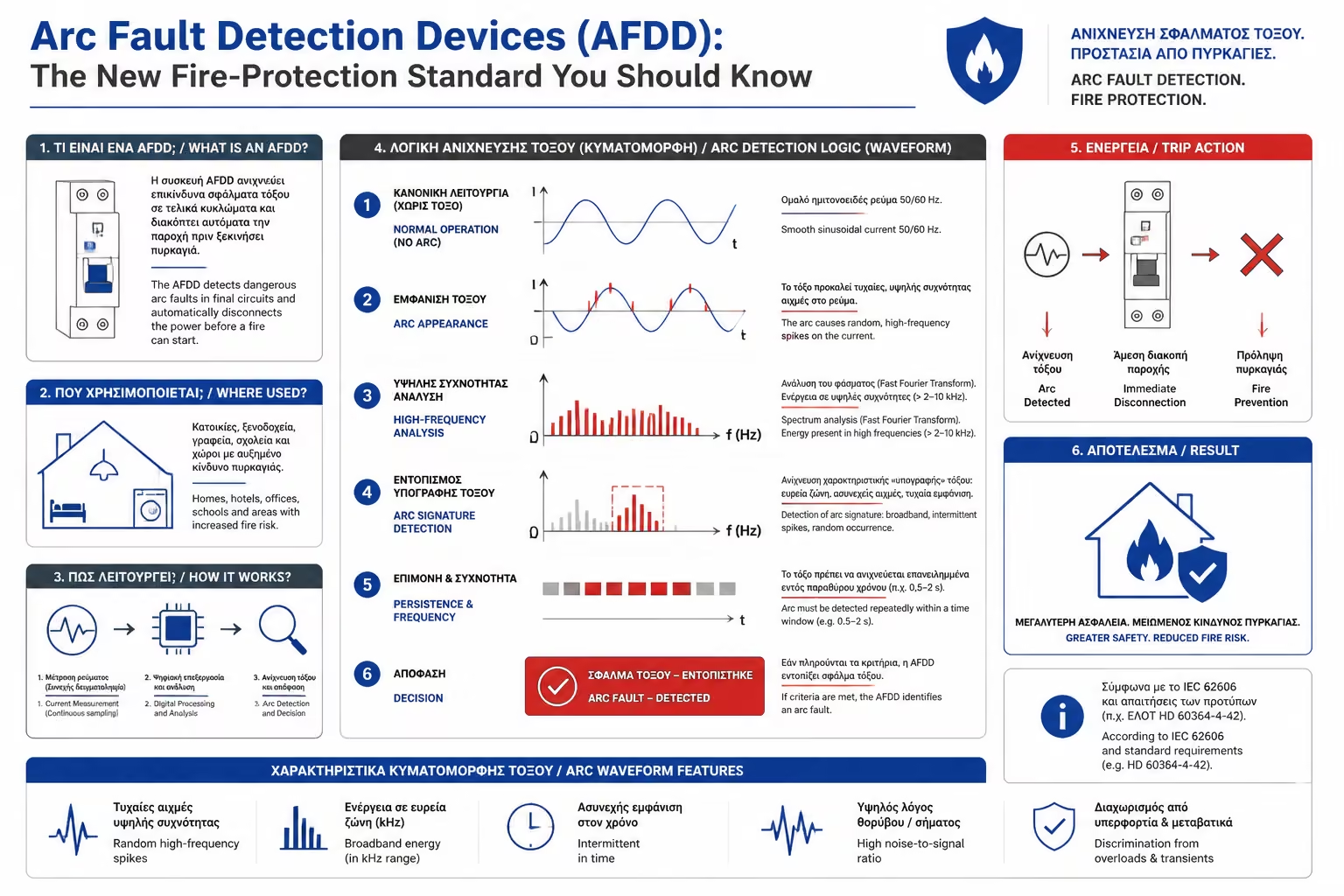
Early fire interruption has maximum value where people actually sleep or remain.
Aging connections and insulation increase the relative risk.
Meaningful benefit does not always require blanket coverage.
Selection should follow risk rather than slogans.
It is sometimes described as excessive or overly sophisticated. That usually happens when it is compared with outdated installation habits instead of the real modern house, full of connected loads, electronics, extension leads, chargers and hidden joints behind furniture.
Its real place is clear: wherever we want to protect life and property not only from obvious faults but also from more subtle thermal developments. In that sense, the AFDD is a natural evolution of electrical safety rather than a flashy accessory from a catalogue.
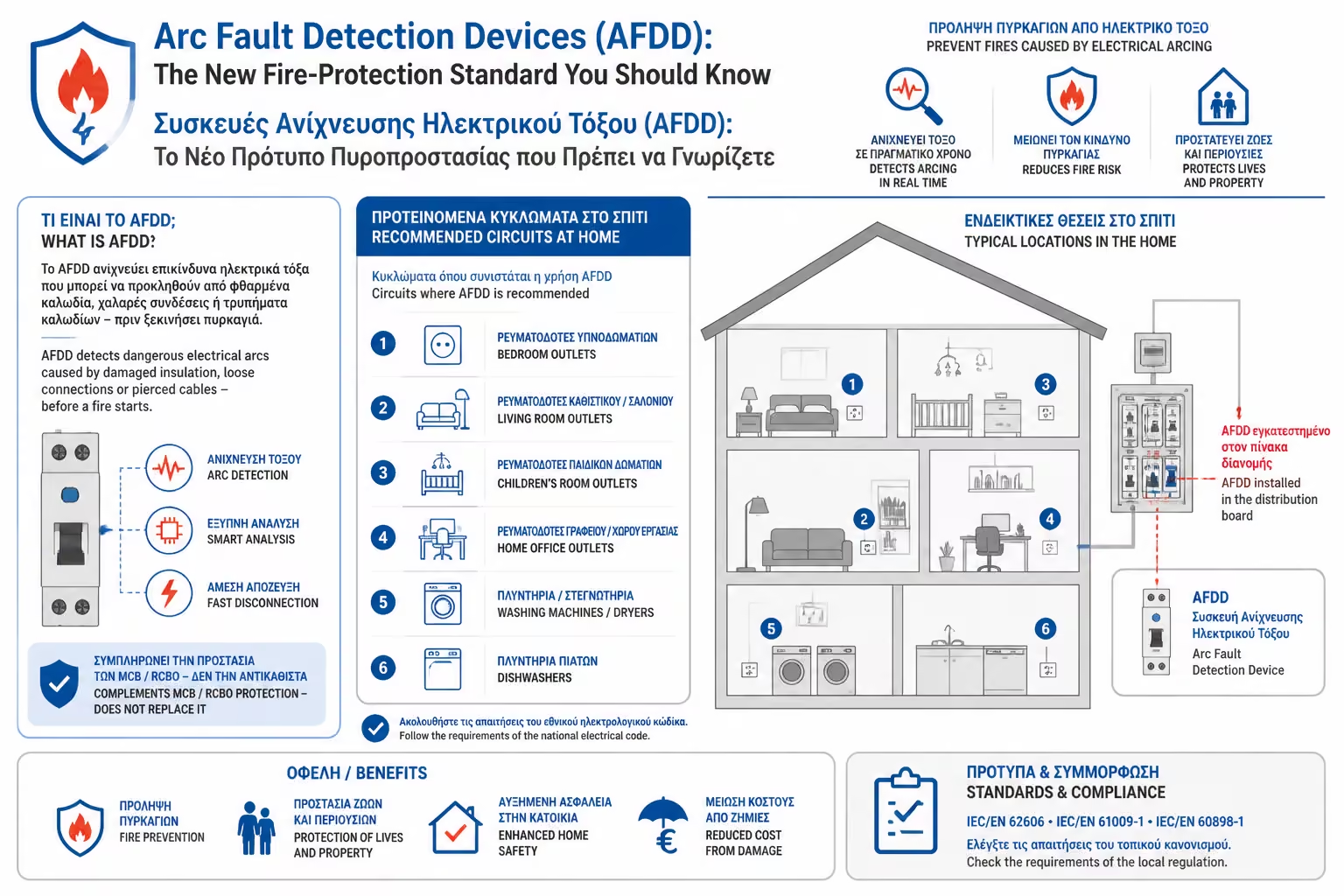
It detects phenomena that classical protections do not always see.
There are more possible sources of hidden sparking than in the past.
Proper evaluation should consider the scale of the loss being prevented.
An engineer should examine it wherever risk is materially elevated.
An AFDD does not wait for you to see the fire. It tries to stop the electrical draft of that fire first.
Return to category.
Go to categoryReturn to the central guide.
Go to guide